Disclosure: Some links in this post are affiliate links. As an Amazon Associate I earn from qualifying purchases, at no extra cost to you. Learn more
Specs are compiled from manufacturer listings and verified buyer reviews and can change over time — please confirm the key details on the product page before buying.
Lossless audio only reaches your ears if every link in the chain holds up — the file, the Bluetooth codec, the driver, and the seal in your ear canal. Get one link wrong and you are paying premium money to hear a compressed version of your music. This guide separates buds that carry a lossless signal end to end from those that only list a codec on the box.
This guide is built by comparing the manufacturers’ published specifications and the patterns across verified customer reviews, so you get each pick’s real strengths and trade-offs instead of marketing spin.
Some picks here are wired in-ear monitors that skip Bluetooth entirely, others are true wireless sets running LDAC or aptX Lossless. The right answer depends on where you listen and which codec your phone supports — which is exactly what this list of earbuds for lossless audio sorts out for you.
Top Picks


How To Choose The Best Earbuds for Lossless Audio
Lossless means the file arrives intact. Your job is to make sure nothing between the file and your eardrum throws information away. That happens in four places, and each one has a spec you can check before you spend anything.
Codec support decides whether wireless lossless is even possible
LDAC and aptX Lossless are the two wireless codecs that carry high-resolution audio. LDAC comes from Sony and works on many Android phones; aptX Lossless needs a Qualcomm Snapdragon chip on both ends. If your phone supports neither, a wireless pair will fall back to a lower-quality codec and you will never hear the difference you paid for. Check your phone’s spec sheet first — this single fact rules out more earbuds than any other.
Wired always wins on resolution, but it costs you freedom
A wired in-ear monitor has no codec to compress anything and no battery to run down. The trade-off is a cable, and usually a dongle if your phone dropped its headphone jack. If you listen at a desk, on a stage, or while mixing, wired is the honest answer for lossless.
Driver count and driver type shape what you actually hear
A single dynamic driver handles the whole frequency range with one diaphragm. A hybrid adds balanced armature drivers for mids and treble, plus sometimes a planar or piezoelectric unit for the top end. More drivers is not automatically better — it is better only when the crossover keeps them in phase. Look for the crossover design, not just the driver count.
Fit and seal are the spec nobody prints on the box
A poor seal leaks bass and forces you to turn the volume up, which masks detail. This is why every serious set here ships multiple tip sizes, and why some ship foam as well as silicone. If a pair will not sit sealed in your ear, its lossless badge means nothing.
Side-by-Side Comparison
| Model | Best For | Connection | Driver Setup | Codec / Cable | Amazon |
|---|---|---|---|---|---|
| Shure SE846 PRO Gen 2★ Best Overall | Studio-grade wired monitoring | Wired | Quad balanced armature, three-way | Detachable 3.5mm / MMCX | Amazon |
| SoundPEATS Air5 Pro+Budget Wireless Lossless | Budget wireless lossless | Bluetooth | Hybrid (10mm dynamic + MEMS) | LDAC / aptX Lossless | Amazon |
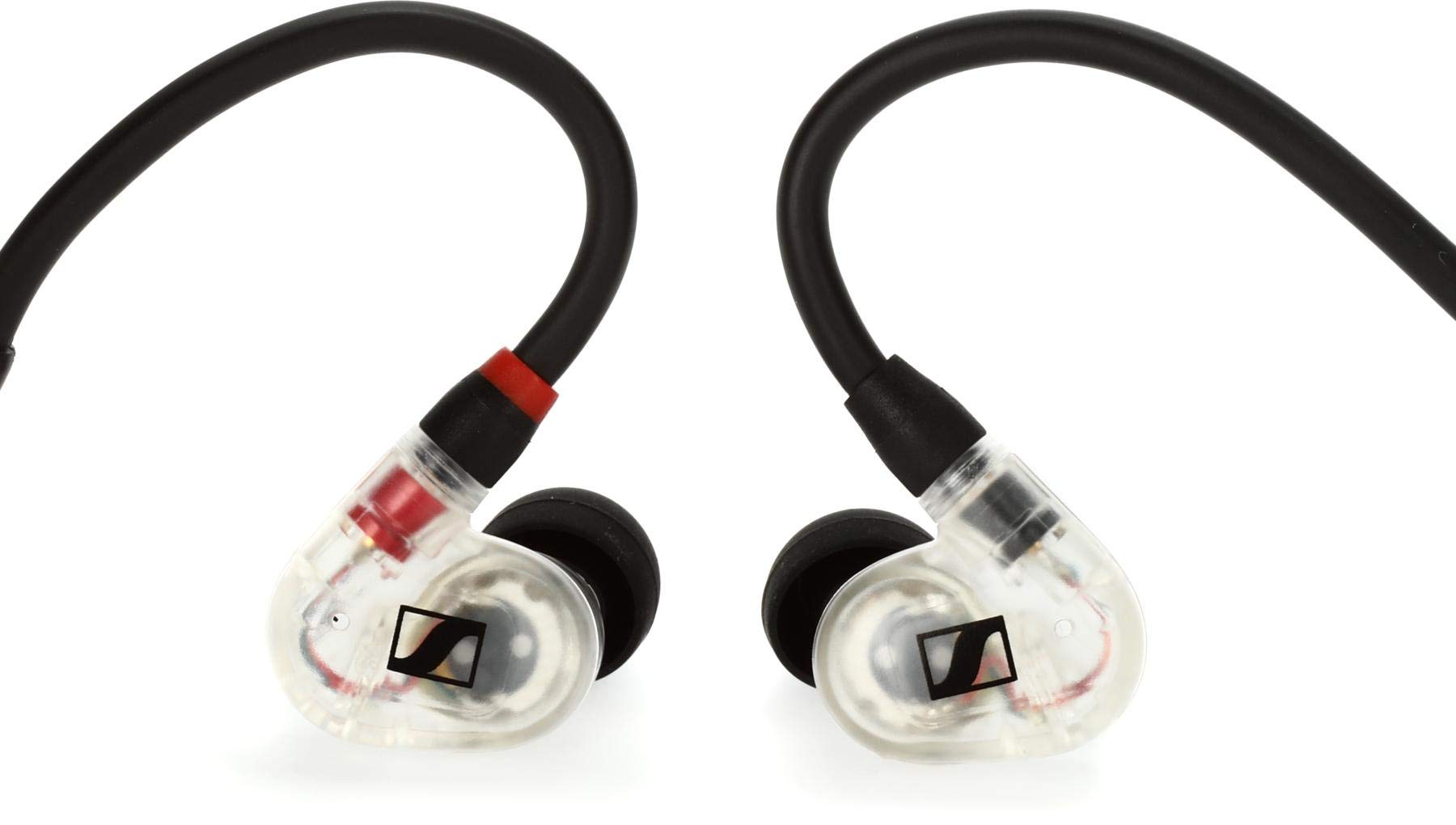
| Sennheiser IE 100 PROStage Ready | Stage and rehearsal use | Wired | 10mm dynamic | Detachable cable, 3.5mm | Amazon |
| Cambridge Audio Melomania A100 | Long-battery wireless listening | Bluetooth | 10mm dynamic | aptX Lossless / LDAC | Amazon |
| Sennheiser IE 200 | Entry-level wired audiophile | Wired | 7mm dynamic TrueResponse | MMCX braided cable | Amazon |
| SIMGOT SuperMix 4 | Detail and gaming imaging | Wired | 1DD + 1BA + 1 Planar + 1 PZT | 0.78mm 2-pin detachable | Amazon |
| JBL Tour Pro 3 | Smart-case control and spatial audio | Bluetooth | Dual driver (BA + 10.2mm dynamic) | LDAC | Amazon |
| Status Pro X | Audiophile tuning, true wireless | Bluetooth | Triple: 12mm dynamic + dual Knowles BA | LDAC | Amazon |
| Bowers & Wilkins Pi8 | Reference sound, case retransmission | Bluetooth | 12mm carbon cone dynamic | aptX Lossless / aptX Adaptive | Amazon |
Detailed Reviews
1. Shure SE846 PRO Gen 2 Sound Isolating Wired Earbuds – Gray
Our pick — 4.0+★ from 200+ verified ratings; the strongest balance of quality and price.
Four balanced armature drivers per ear and a cable you can swap — this is the wired reference point on this list.
Four drivers per ear, split into a three-way configuration so low, mid, and high frequencies each get their own dedicated driver. Inside that low-end path sits a low-pass filter the maker describes as delivering true subwoofer bass without sacrificing detail. In plain terms: the bass has its own engine instead of borrowing power from the midrange, so vocals stay clean while the low end does its work. For lossless listening, that separation is the whole game — nothing gets smeared together on the way to your ear.
The Gen 2 upgrade adds a fourth nozzle filter to the original balanced, warm, and bright options. You physically unscrew the nozzle and swap it to change the frequency response — deeper bass one day, brighter treble the next. One long-time Shure owner who moved up from the SE535 says the red filter delivers the treble and bass lift they were hoping for, with “sweet midrange” in between. That same listener notes the SE846 wants power, and runs it balanced through an outboard DAC and amp to get there. Worth knowing: a phone’s headphone jack alone may not drive these to their ceiling.
You hear the detail instead of the room, because a quiet ear canal is the practical cousin of lossless. One player reports running these through a GoXLR (a gaming audio mixer) and calls the noise isolation far better than a competing set, thanks to the triple-flange tips (three-layered silicone tips that seal deep). Musicians on stage keep coming up in the feedback. The kit is unusually complete: Comply foam sleeves in XS through L, soft flex sleeves in S through L, triple flange, yellow foam, a premium case, a 1/4″ adapter, and a 2-year warranty. Buyers rate them 4.0+ stars across 200+ ratings. The recurring note is that they cost about twice the next-priciest model here — a real outlay, but a wired set a working musician can repair rather than replace.
Where the SE846 earns its money
- Quad balanced armature, three-way design keeps bass, mids and highs on separate drivers
- Four nozzle filters let you retune the sound without buying new buds
- Detachable MMCX cable converts to wireless later or takes a replacement cable
- Aluminum housing described by a gigging player as far more durable and maintainable than cheaper sets
- Fit kit covers foam, silicone and triple-flange in multiple sizes
What you are signing up for
- Wired only — no Bluetooth in the box, so your phone needs a jack or a dongle
- Wants real amplification; a bare phone output leaves headroom on the table
- The heaviest financial commitment on this list, roughly double the next priciest pick
Built for: anyone mixing, gigging, or listening at a desk who wants an uncompressed signal and a cable they can replace.
Think twice: if you listen on the move and refuse to carry a dongle, a wireless pick further down this list will serve you better.
2. SoundPEATS Air5 Pro+ Wireless Earbuds
aptX Lossless and LDAC in a budget set — the cheapest genuine lossless wireless entry on this list.
Two things make this set interesting for lossless: it carries aptX Lossless and LDAC, and it uses a hybrid driver pairing a 10mm dynamic unit with a MEMS speaker. The MEMS piece is the unusual bit — it is a solid-state driver rather than a moving coil, and the maker tunes it for the high frequencies. Sound quality is the thing the review pages return to most, and by a wide margin; it is the aspect that dominates feedback and the reason these punch above their tier. The default tuning leans bassy and dark, but the PeatsAudio app carries a 10-band EQ plus a hearing-test custom profile, so you can flatten it out if you prefer a neutral lossless presentation. Latency is listed at 60 milliseconds, which is fine for video and workable for casual gaming.
Here is the honest catch, and it is worth stating plainly: battery life is the most mixed subject in the feedback. Listeners running LDAC or LE Audio report around three to four hours per charge with ANC active, and one frustrated owner tracked a drop to 60% in under two hours. The case brings total playtime to 30 hours with 6 hours per charge as the rated figure, and charging takes about an hour. If you listen in long stretches, budget for a mid-day top-up or accept the shorter runtime as the price of the lossless codec. As owners put it about the drain: “nearly dead each use.”
You get a low-risk way into your first lossless wireless set. Noise cancellation is rated at 55dB (decibels, a measure of how much sound is blocked) with an adaptive mode, and the consensus is that it is good but a step below the big-name flagships. One listener who came from a SoundPEATS Capsule 3 Pro+ calls it a slight upgrade, “not Sony-level.” Transparency mode (which pipes outside sound in) works well enough to order a coffee without pulling the buds out. Multi-point Bluetooth keeps two devices connected at once, and soft silicone tips and a light shell keep the fit secure and comfortable.
Best-fit scenario: you have an Android phone with LDAC or a Snapdragon device with aptX Lossless, you listen in sessions under four hours, and you want the codec without paying flagship money.
Where it gives ground: long-haul listeners will notice the runtime, and anyone chasing the deepest noise cancellation should look at the premium picks below.
Reach for this if: lossless codecs matter to you but the flagship budget does not stretch.
Look elsewhere if: you need all-day playback with ANC on — the four-hour ceiling will catch you out.
3. SENNHEISER IE 100 PRO Headphones
A single 10mm dynamic driver, a cable built for stage abuse, and a price that undercuts almost every wireless option here.
You buy these for durability and fit, not driver count. One 10mm broadband dynamic transducer (a single driver that covers the full range) handles everything, and Sennheiser says a single-driver design lets the shell sit slimmer and more securely in more ear shapes. The cable runs through an internal duct and ends in a detachable connector — exactly the part that fails on cheaper wired sets. A production company that runs these as its only road earpiece reports the 1/8-inch connector seats firmly in an IEM bodypack (the belt pack that feeds in-ear monitors) and the cable survives demanding use. That is the longevity wired buyers are actually shopping for.
You should hear the split on sound honestly. Sound quality is the most-discussed topic in the reviews, and Amazon’s own read marks it mixed — some listeners call it balanced with a treble lift that pushes snares and cymbals forward, while others describe the bass as muddy or boomy. One first-time IEM buyer finds “the sound very crisp and detailed” but admits the fit took learning and left an itch after long wear. That fits an in-ear built for monitoring rather than casual listening: it tells you the truth about a recording, which is not always flattering.
Comfort and value are the two things buyers agree on — comfort ranks among the most-praised aspects and value even higher. Bendable ear hooks help hold the cable behind the ear, and the tip selection includes both silicone and foam. One quirk worth flagging before you buy: the internal foam inside the nozzle shapes the tuning, so handle that area carefully when you swap tips. The protective case is soft and compact at 5.28 ounces, though the included pouch draws complaints for being minimal.
Who this suits: performers and worship-team players who need a wired monitor that survives a bodypack and a flight case.
The tuning question: if you want a warm, bass-forward everyday listen rather than a flat monitoring curve, this is not the one — the IE 200 below is the friendlier voiced Sennheiser at this price.
Top pick for: stage and rehearsal use where the cable takes more punishment than your ears do.
Not for: listeners who want a forgiving, bass-rich sound from the start.
4. Cambridge Audio Melomania A100 Earbuds
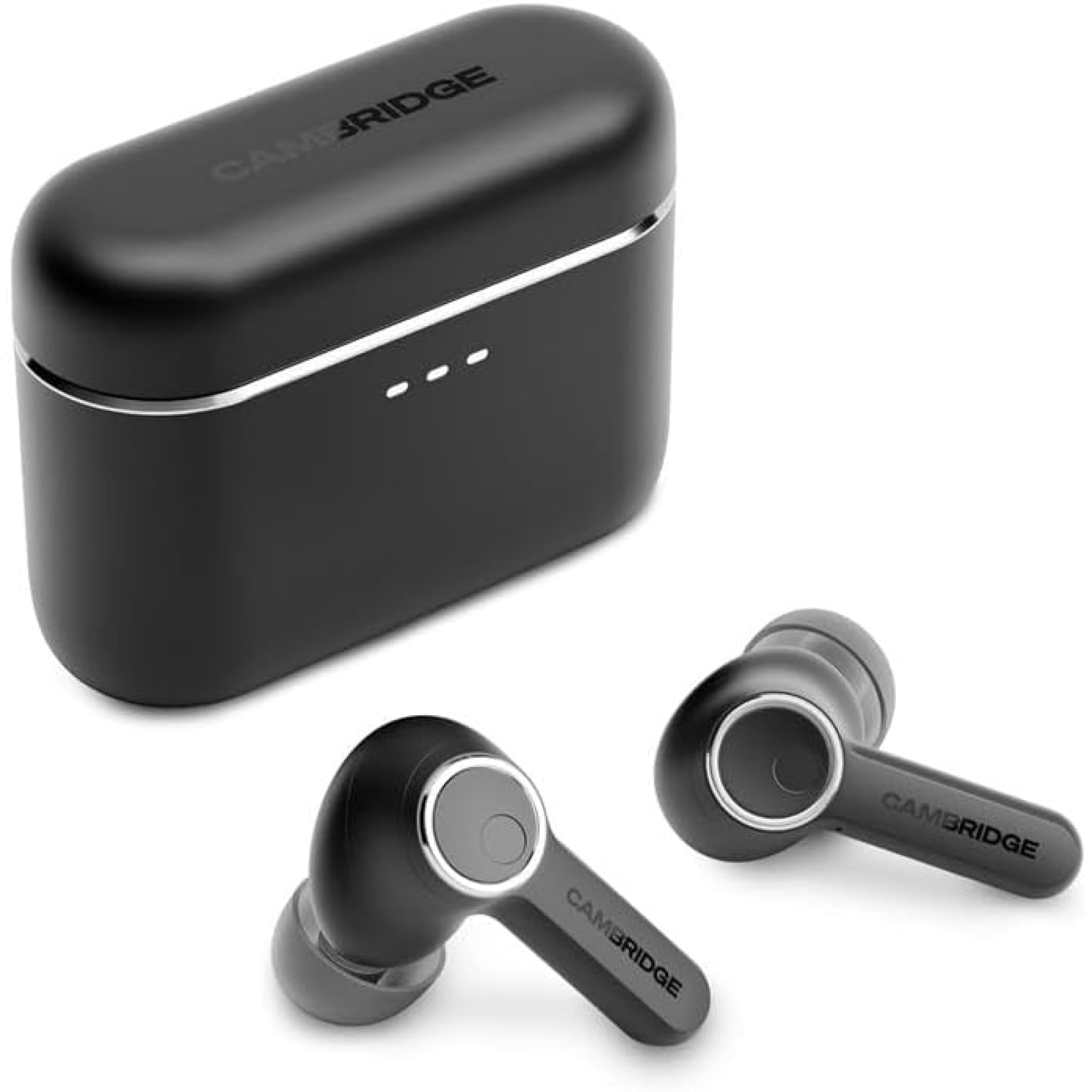
Thirty-nine hours with the case and both lossless codecs — the runtime champion among the wireless picks.
Where the SoundPEATS set above asks you to charge midday, the Melomania A100 answers that problem directly: up to 39 hours of total playtime using the charging case. Pair that with aptX Lossless and LDAC support plus a 10mm dynamic driver, and you have a wireless set built for long sessions without the codec compromise. A 7-band adjustable EQ in the Melomania app lets you tune the response, and the long-stem design seats snugly for a stable fit. Six microphones handle calls, and the IPX5 rating means sweat and light rain are not a concern.
Sound is the pick’s strongest card. Buyers keep landing on the same two points — a solid, tight bass with real instrument definition, and a soundstage that runs wider than you would expect from a true wireless set. One listener judges them clearer than a highly rated Sony model they had been using, describing that rival as muted by comparison. ANC is solid rather than class-leading; the honest framing from owners is that it works but stops short of the biggest names. Wireless charging and Google Fast Pair round out the convenience side.
The friction point here is physical rather than acoustic. These buds sit deep in their case and take a deliberate grip to pull out — several buyers describe the retrieval as fiddly, and dropping one mid-pull is a real risk. Call quality also draws mixed notes, with recipients sometimes hearing a thinner voice than the wearer expects. Neither issue touches the music, but both are things you will live with daily.
The draw for long-session listeners
- 39 hours with the case, so charging becomes a weekly chore rather than a daily one
- aptX Lossless and LDAC both supported for high-resolution streaming
- 7-band EQ lets you shape the sound to taste
- IPX5 water resistance covers workouts and weather
- Soundstage and bass definition draw repeated praise in the feedback
What to brace for
- The buds sit deep in the case and are awkward to pull out
- Call quality runs mixed for the person on the other end
Right call when: you want lossless codecs and never want to think about the charger.
The caveat to accept: daily case handling takes a little patience.
5. Sennheiser IE 200 Headphones

A 7mm driver built for neutrality, and a dual-position tip mount that lets you dial the bass yourself.
Small driver, big intent. The 7mm TrueResponse transducer is precision-matched at the factory so two units from the same pair sound alike, and the tuning is flat and neutral by design. That flatness is the point for lossless: nothing is boosted, so nothing is hidden. The dual bass-tuning design is the clever part — the ear tip mounts in one of two positions, and the deeper seating position asks for a fuller low end while the forward one tightens it. Owners who take the time to reseat the tips deeper report the bass and balance snapping into place, which turns an initially thin sound into a proper one.
Go in knowing comfort is genuinely divisive. Sound quality is the most-discussed topic across the feedback, and Amazon’s read marks the overall sentiment mixed — plenty of buyers find the neutral presentation a revelation, while others find the fit nearly impossible to seat properly and the sound accordingly flat. The seal does the heavy lifting: one listener who uses foam tips reports no ear creep even while eating. A musician owner says these double as stage monitors, with AirPods Pro sounding harsh by comparison.
The cable is the weakest link in the kit. It is braided and detachable via MMCX, so it is replaceable, but it runs short when you sit and long when you walk, and it tangles readily. One desk listener reports the internal metal in the ear-molding strip snapping after months of use without affecting sound. A dongle DAC is a sensible add-on if your phone lacks a headphone jack — an owner with an iPhone recommends one specifically to get the most out of these.
Who it rewards: anyone starting down the wired audiophile path who wants a neutral baseline and an EQ-friendly curve.
The honest drawback: the stock cable feels inexpensive against the rest of the package, and the fit demands experimentation.
Choose these for: a truthful, uncolored starting point that you shape with EQ and tip position.
Pass if: you want a bass-forward sound straight from the start with no seating ritual.
6. Linsoul SIMGOT SuperMix 4 in Ear Monitor

Four driver technologies in one ear and a four-way crossover holding them in phase — detail-hunting is the whole brief here.
Count the types: one 10mm dynamic driver for the low end, one balanced armature for mids and highs, one planar magnetic for the treble, and one piezoelectric transducer extending the ultra-treble. A four-way RC crossover with independent acoustic ducts keeps those four from stepping on each other. That is what makes the sub-bass rumble sit under a clean vocal instead of bleeding into it — the detail is genuinely layered, and listeners rank imaging among the strengths. Gaming benefits most visibly: footsteps become locatable without any virtual-surround processing switched on, and first-person shooter players call that out specifically.
The build is a translucent black resin shell with a matte metal faceplate and a detachable 0.78mm two-pin oxygen-free copper silver-plated cable. Comfort earns its own praise — the shape works with different ear shapes without pressure, and one owner reports the seal holding overnight. The wiring is replaceable, which matters on a wired set, though the stock cable is stiffer than most and the chin slider is the weak point of an otherwise good kit.
Longevity is the subject you cannot skip. Reliability and quality control draw the most mixed feedback of any aspect here, with a portion of buyers reporting one channel going quiet — a right-side failure after three months is the pattern described. That is not universal, and plenty of buyers report durable resin and metal shells, but it is a real risk on a wired IEM with no battery to blame. Also worth knowing: the open nozzle tubes are vulnerable to earwax moisture, so keep the included cleaning tools handy and store them in the case.
Sound signature read: bright and V-shaped through the mids, quick bass without excessive thump. Not for bassheads or treble-sensitive ears — the top end can edge toward sibilance on demanding tracks.
The reliability note: buy from a seller with a clear return path, and give both channels a proper listen during the first week.
Worth it for: gamers and detail-chasers who want to hear every layer in a track.
Choose carefully if: you need long-term durability with zero fuss — the failure reports deserve weight.
7. JBL Tour Pro 3 True Wireless Earbuds

A 1.57-inch touchscreen on the charging case, and LDAC carrying the high-resolution signal behind it.
Your high-resolution files arrive without being squeezed, thanks to the dual-driver setup: a balanced armature (a tiny driver tuned for highs) for the treble and a 10.2mm dynamic driver for the bass, with LDAC (a high-bitrate Bluetooth codec) carrying the audio from your phone. JBL claims LDAC moves three times more data than standard Bluetooth, and that extra bandwidth is what makes it work. The case is the headline, though. Six microphones with crisp call processing and Zoom certification make these a genuine work-call tool as well as a music set. The 1.57-inch case screen lets you pause, skip, check battery, and see who is calling without touching your phone, and the case supports wireless charging.
Battery, on the other hand, is the most mixed subject in the feedback, and the reported spread is wide. Some listeners get six to seven hours per bud and praise the runtime; others see roughly four hours out of the gate or a 10% drop in under ten minutes of idle time. Firmware updates appear to close that gap for some — one buyer reports hitting eight hours after updates with AAC and the Smart Talk feature disabled. The rated figure on the box is 40 hours total with the case. Treat that as a ceiling, and consider turning off power-hungry features if you want to approach it with LDAC running.
Sound draws consistent praise — deep and crisp, with an extra bass mode for when you want more, and strong adaptive noise cancellation with a usable hear-through mode. Spatial audio with head tracking anchors sound around you rather than inside your head, which suits movies more than music. The small print: a few buyers describe the buds not disconnecting when lifted out of the case, and pairing a second device occasionally takes patience.
Standout feature: that touchscreen case genuinely removes phone-checking from your listening routine.
Reality check: the 40-hour headline assumes friendly settings; LDAC plus adaptive ANC will shrink it, so plan accordingly.
Suited to: commuters and call-heavy workers who want lossless on tap and controls at their fingertips.
Less suited to: anyone who wants to hand a bud to a friend — the multi-device pairing gets awkward.
8. Status Pro X Wireless Earbuds

Three drivers per ear, LDAC lossless, and an 8-band EQ — a true wireless set that thinks it is a wired IEM.
Twelve-millimetre dynamic driver for bass, two Knowles balanced armature drivers for the mids and treble, and LDAC carrying the signal. The tuning from the start is a soft V-shape, but the Status Hub app includes an 8-band EQ plus an “audiophile” Harman preset that flattens the response noticeably. The result is a sound one listener places above a far pricier wired set for detail, and near a much more expensive pair in timbre and separation. That is the strongest claim in this whole category, and it is worth weighing when you compare price tiers.
The connectivity package leans forward rather than backward: Bluetooth 5.3, multipoint pairing, LE Audio, the LC3 codec, and Auracast — which lets you tune into a broadcast audio stream in a venue rather than a single paired phone. Ambient Aware transparency has multiple levels and earns warm words for feeling natural rather than processed. Noise cancellation is rated at 52dB, and the verdict is very good rather than class-leading; a small weakness on outside treble is the recurring note. Six beamforming mics with voiceloom AI speech enhancement keep calls clear even near a mower or in a noisy room.
Calibrate your battery expectations: the rated figure is 8 hours per charge and 32 hours with the case, but reports vary from about four to seven hours depending on ANC (active noise cancellation) and codec, and the case itself drains quickly enough to need frequent topping up. The ear-detection sensor is also easy to trigger by accident — brushing a finger can restart your music. The shape is unusual but comfortable with a strong seal, and the IP55 rating (protection against dust and water jets) handles sweat and dust.
Why it competes above its tier
- Three drivers per ear including dual Knowles balanced armatures
- 8-band EQ with an audiophile preset that flattens the stock V-shape
- Bluetooth 5.3 with LE Audio, LC3, Auracast and multipoint
- 52dB hybrid ANC plus a multi-level Ambient Aware mode
- IP55 dust and water resistance
Check these before committing
- Runtime reports run below the rated 8 hours once ANC is on
- The touch sensor is easy to trigger by accident
- Stock ear tips are thin; a wide-bore replacement improves the seal and bass
For the tuning obsessive: the EQ depth here is class-leading on this list.
The trade-off: you are buying sound first and battery second.
9. Bowers & Wilkins Pi8 Wireless Earbuds

12mm carbon cone drivers lifted from full-size headphones, feeding Qualcomm aptX Lossless over the air.
The driver is the giveaway. Those 12mm carbon cone units are adapted directly from Bowers & Wilkins’ Px8 over-ear headphones, and the tuning reflects it — a full, deep low end, balanced mids, and crisp highs that stay clean even at high volume. One listener who returned theirs for other reasons still calls the sound the best they have heard in an earbud. aptX Lossless and aptX Adaptive handle the transmission, adjusting the bitrate as conditions allow, and the 5-band EQ in the app pairs with lossless services for a genuinely high-resolution chain.
The case does something most rivals cannot. It retransmits audio — you can feed it from a laptop, an in-flight entertainment screen, or a TV over the included cable and it sends the sound to the buds wirelessly. That solves a real travel problem, and buyers who use it on long flights are among the most enthusiastic in the feedback. Fast charging gets you 2 hours of playback from a 15-minute charge, with 8 hours of earbud life per charge, and fits include XS through L.
Now the part you need before you spend reference money. The feedback is genuinely mixed on noise cancellation and connectivity. Some owners mention Bluetooth dropping several times on a half-hour walk, and the ANC draws criticism for adding a faint hiss or failing to cut mid-and-high frequency noise. Charging is slow in some reports, and the app is minimal compared with rivals. It is the priciest set here, and the polish outside the sound does not always match the price.
The strongest case for it: as a sound-first wireless earbud whose case doubles as a transmitter for anything with a cable.
The honest caveat: if strong ANC or rock-solid connectivity is your priority, the Status Pro X or JBL Tour Pro 3 deliver more consistency for less.
Buy it for: the driver and the retransmitting case, not for the noise cancellation.
skip it if: connectivity wobbles would drive you up the wall on a daily commute.
Know the Specs
LDAC vs aptX Lossless
LDAC was developed by Sony and is supported by many Android phones, while aptX Lossless needs a Qualcomm Snapdragon chip on both the phone and the earbuds to work. Both aim to carry high-resolution audio without compressing the detail you paid for. The practical check before you buy: look up which codec your phone supports, because a pair that only speaks the other one will drop back to a standard Bluetooth signal and quietly undo the whole point.
Driver Types Explained
A dynamic driver is a moving coil with a diaphragm — it moves air and produces bass naturally. A balanced armature driver is a tiny precision part better at mids and detail. A planar magnetic driver uses a flat diaphragm for low-distortion treble, and a piezoelectric transducer adds sparkle at the very top. Hybrid sets combine them and rely on a crossover to blend the handoffs; when the crossover is well executed the seams disappear, and when it is not you hear a disjointed sound.
Wired vs Wireless for Lossless
A wired connection has no codec, no compression, and no battery — the audio arrives as recorded. Wireless convenience trades some of that away for freedom of movement, and even the best codecs need a compatible phone on the other end. If you listen at a desk or on stage, wired is the cleaner path to resolution; if you commute or work out, a wireless pair with LDAC or aptX Lossless gets you close enough for most ears.
Why Impedance and Power Matter
Balanced armature and planar drivers often need more power than a phone’s headphone output can supply cleanly. Running them from a dedicated DAC and amplifier gives them the current they want, and the result is better control of the low end and a cleaner top end. If you run a wired IEM from a basic phone jack, expect it to sound slightly lean until you add amplification.
Common Questions
Will LDAC earbuds give me lossless audio on an iPhone?
Is aptX Lossless or LDAC better for high-resolution streaming?
Do I need a DAC to get the best from wired IEMs?
Can wireless earbuds really deliver lossless audio?
Why does my lossless earbud sound worse than my old pair?
How long can I listen to lossless wireless earbuds on one charge?
Should I choose a wired IEM or a wireless pair for lossless listening?
Do lossless earbuds work with my computer or laptop?
What ear tip should I use for the strongest seal?
Are lossless earbuds worth it over a standard wireless pair?
Can I replace the cable on a wired in-ear monitor?
The Bottom Line
For most buyers chasing earbuds for lossless audio, the Shure SE846 PRO Gen 2 is the pick to beat — four balanced armature drivers (tiny drivers tuned for detail) in a three-way layout, four swappable nozzle filters, and a replaceable cable a working musician can maintain instead of replace. If you want lossless without the cable, the Status Pro X carries LDAC (a high-bitrate Bluetooth codec) across three drivers and an 8-band EQ that lets you flatten the stock tuning to taste. And for long sessions where the charger never seems close, the Cambridge Audio Melomania A100 delivers up to 39 hours with the case and both lossless codecs in one package.
Match the pair to your phone’s codec and your listening environment first, then weigh sound and fit. Get that order right and every link — file, codec, driver, seal — carries the signal intact.
How we choose
We do not accept paid placement. Every pick is matched to a real buyer and a real use-case; we do not hands-on test units.
Sources
Specifications: manufacturer listings and product documentation. Review insights: verified customer reviews, as of October 2026. Pricing: not shown on this page (it changes often); check the current price via the retailer link.
As an Amazon Associate, Aappliancez earns from qualifying purchases. This does not affect which products we feature.