Disclosure: Some links in this post are affiliate links. As an Amazon Associate I earn from qualifying purchases, at no extra cost to you. Learn more
Specs are compiled from manufacturer listings and verified buyer reviews and can change over time — please confirm the key details on the product page before buying.
If you walk out of a show with ringing ears and muffled voices for the next day, you do not have to give up live music. The fix is a pair of earplugs that lowers the volume while keeping the vocals and cymbals clear. This guide separates the plugs that stay clear in a loud room from the ones that muffle the mix.
This guide is built by comparing the manufacturers’ published specifications and the patterns across verified customer reviews, so you get each pick’s real strengths and trade-offs instead of marketing spin.
Most concertgoers do not need a gadget with a screen or an app — they need a seal that stays put and a filter tuned for music. Here is how the best earbuds for concerts differ, and which pair fits your ears.
Top Picks

How To Choose The Best Earbuds for Concerts
Your first call is simple: do you want plain hearing protection, or a device that also plays audio? A plain earplug sounds more natural live, because only a filter sits between the music and your ear. A Bluetooth protector is handy when you want to stream music while you mow, but a concert asks something different — how the filter shapes the sound, not how loud it gets.
The Noise Reduction Rating Is Your Starting Number
Every serious product here lists a reduction rating. That number tells you how much of the loud peak gets taken out. It shows up two ways: SNR (sound reduction figure, common on European-style music earplugs) or NRR (Noise Reduction Rating, the figure used for US safety gear). Here are the exact figures. The Zound plugs sit at 21 dB SNR, the MIPEACE at 29 dB, the Loop Experience 2 at 17 dB SNR plus an extra 3 dB with the Mute add-on, the Walker’s at 29 DB, the 3M WorkTunes at 26 dB NRR, the Elgin Discord at 31dB NRR, and the Qozybuds at 30dB SNR. A 21 dB reduction like the Zound’s takes the bite out of a loud set while keeping the vocals clear. If you work beside a mower or a saw, you want the higher end.
Clarity Beats Sheer Blocking
Here is the mistake first-time buyers make: they chase the biggest number and end up with something that muffles the singers into mush. A music-tuned filter lowers every frequency by the same amount, so the mix stays even and the drums still hit. That is why a 21 dB earplug tuned for live music sounds clearer than a 30 dB workshop protector at a show.
Fit And Tip Material Decide Whether You Keep Them In
A plug only works if the tip seals your ear canal and stays sealed while you move. Silicone tips, like the soft tips on the Zound and the 3M’s conformable earcups, are easy to wipe clean and comfortable for short bursts. High-density memory foam, like the Elgin’s replaceable foam tips, molds to the shape of your ear canal for a deeper seal — though a couple of owners find it gets sore over a long wear. If your ears run small, check that the model comes with multiple tip sizes.
Battery Only Matters If You Are Streaming
Plain earplugs have nothing to charge. Bluetooth protectors do, so runtime becomes a real factor: the MIPEACE runs 19 hours, the Walker’s holds up to 10 hours, the Elgin offers 14 hours, and the Qozybuds lists 120 hours. Those figures matter far more for a work shift than for a two-hour set, so weigh them against how you will actually use the product.
Side-by-Side Comparison
| Model | Best For | Reduction Rating | Bluetooth | Battery / Power | Amazon |
|---|---|---|---|---|---|
| Qozybuds Bluetooth 6.0 Hearing Protection Headphones★ Best Overall | Lawn mowing and workshops | 30dB SNR | 6.0 | 120 hours | Amazon |
| Zound Concert Earplugs Cosmic BlushBest for Live Music | Live shows and festivals | 21 dB SNR | — | — | Amazon |
| Loop Experience 2 Plus Ear Plugs | Dancing at the front of the crowd | 17 dB SNR | — | — | Amazon |
| Walker’s Rope Hearing Enhancer Earbuds | Shooting and range training | 29DB | Yes (rechargeable) | 10 hours | Amazon |
| 3M WorkTunes Connect Wireless Hearing Protector | Machinery and metal shops | 26 dB NRR | Yes | 50+ hours | Amazon |
| Elgin Discord Gen 3 Bluetooth Earplug Earbuds | Heavy construction sites | 31dB NRR | 5.3 | 14 hours | Amazon |
Detailed Reviews
1. Qozybuds Bluetooth 6.0 Hearing Protection Headphones
Our pick — 4.5+★ from 950+ verified ratings; the strongest balance of quality and price.
The muffs that swallow a lawnmower whole and still run for days on one charge.
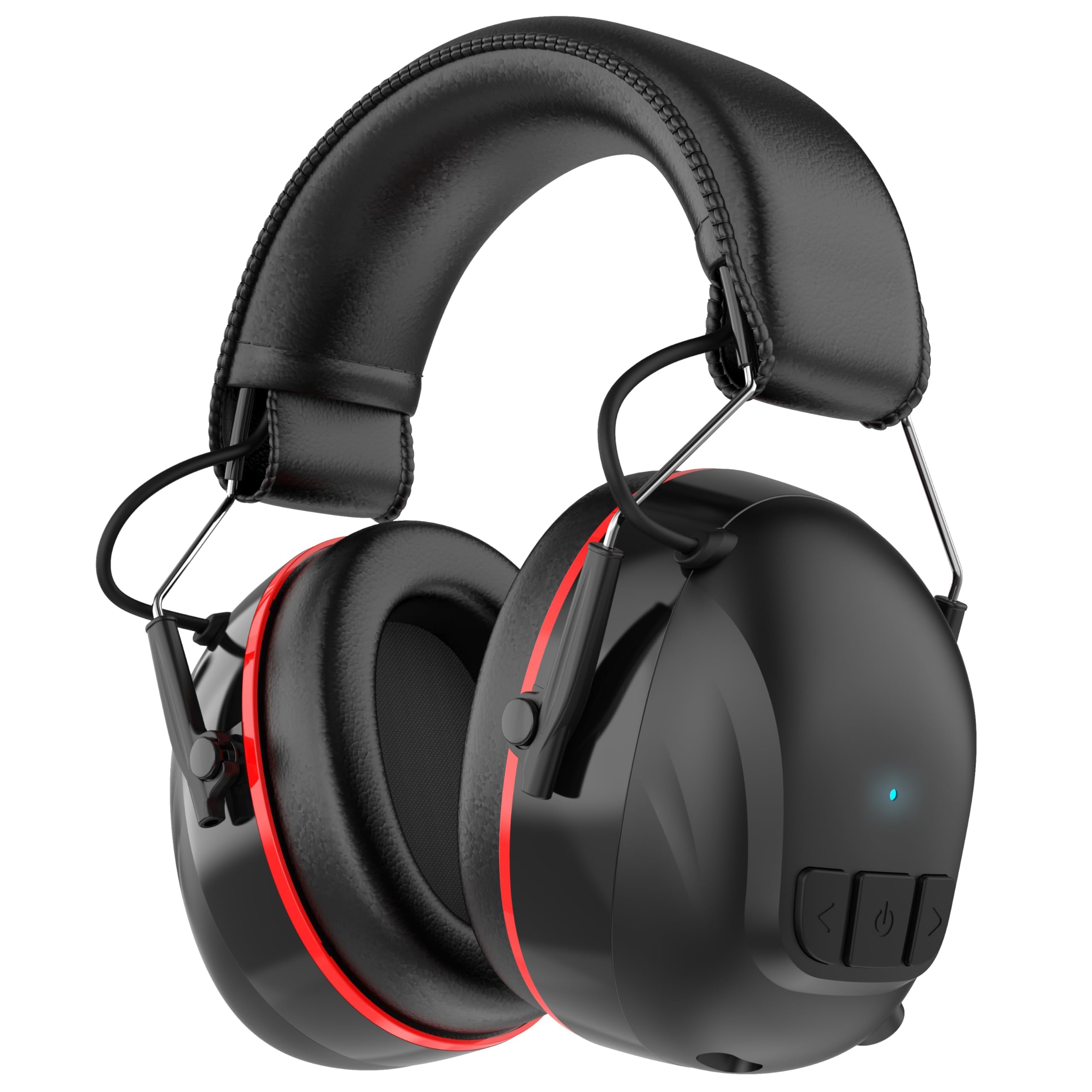
The Qozybuds win this roundup on a single number: 30dB SNR, the shield strength that lets them swallow a mower deck, a workshop bench, or a plane cabin. They are over-ear muffs (circumaural, meaning the pad surrounds the whole ear instead of sitting inside it), so they clamp over a hearing aid without the squeal you get from in-ear gear. Owners describe them blocking the overwhelming majority of sound — often between 90 and 100%.
What wins people over is the battery. You get 120 hours of playtime from the 1200mAh rechargeable cell. Owners go further: as one put it, they logged “133 hrs at 70% volume over 14 days before ‘please charge’ repeats every minute.” That is not two weeks of shows — that is a whole summer of yard work. The bundled fast-charge earns its keep too: 5 minutes on the cable buys you 4 hours of music, and a full charge takes about 2 hours.
The trade-off is bulk. These are large muffs, awkward to carry, and the snug fit that seals so well can feel inconsistent day to day. The compressed ear pads soften over time too, and some owners swap in gel pads. This is also the most advanced Bluetooth in the whole roundup — the Qozybuds use Bluetooth 6, newer than the MIPEACE’s Bluetooth 5.3. The recurring gripe is volume: a few owners want more of it. For a concert specifically, they are a shield first and a music source second, which is a different job from the in-ear picks below.
What holds up in use
- 30dB SNR blocks the heavy end of ambient noise for lawn mowing, workshops, and planes.
- 120-hour battery on a 1200mAh cell, with 5 minutes of charging returning 4 hours of play.
- Larger buttons designed to be pressed with gloves on, plus Siri and Google Assistant support.
- Hybrid connection: Bluetooth 6.0 wireless, or a 3.5 mm AUX cable for a wired fallback.
What to know before you buy
- Bulky — awkward to tuck into a bag compared to a pocket-sized earplug.
- Some owners find more volume would help; a few also report the fit varies day to day.
- The ear pads compress over time, and some owners upgrade to gel pads.
Reach for these if: your loud places are the mower, the shop floor, or a flight, and you want one charge to last weeks.
Think in-ears instead if: you want something that disappears into a pocket before a live show.
2. Zound Concert Earplugs Cosmic Blush
The pocket pair that turns the volume down without turning the band into mush.
A 21 dB filter is why these earn their spot. The Zound plugs cut 21 dB of noise, deliberately gentler than the workshop-grade protectors here — the Qozybuds cut 30 dB, for instance — so the music still sounds like music. A softer filter takes the sting out of a loud set without flattening the detail, so you hear the vocal and the cymbal instead of a muffled wall.
Clarity and protection at the same time is what the review pages rave about. Buyers report the noise canceling on these was “top tier” and that they used them at a concert and “was amazed.” They also stay where you put them — no constant re-seating mid-set — and the soft silicone tips, which come in two sizes, are described as comfortable enough for all-day wear. The included case clips on, so they live on your keys.
Because they are passive earplugs, there is no battery, no charging, and no Bluetooth to drop mid-show — you just wash them and go. The honest catch: at 21 dB, they may not cut it for a punishing front-row stack or for industrial noise. If that is your world, the 3M muffs or the Elgin earbuds below suit you better. A very small number of owners also note that silicone tips do not fit every canal shape. If that is you, a foam-tipped option below may seal better — not because the Zound is a bad pair, but because ears vary.
The reason it earns its spot: a 21 dB filter that lowers volume while keeping the mix clear, a two-size silicone tip set, and a compact carry case that lives on your keyring, all with nothing to charge.
If the music must stay crisp: these are the ones for a live show, a festival, or a Broadway pit, and the little case makes them pocket-permanent.
If your noise is a jackhammer: step up to a higher-rated protector — 21 dB is tuned for a band, not a building site.
3. MIPEACE Bluetooth Work Earplugs Headphone

Earplugs that hide under a collar and stream your shift without a recharge.
A 29 dB reduction rating is what earns the MIPEACE its place. That is a serious amount of noise cut for something this small, and this is the shape that makes sense for a long work shift where you want protection plus a podcast. These are in-ear earbuds built to look like earplugs, so they sit discreetly under a shirt collar or a helmet, with a soft tri-flange tip and a wire owners describe as durable.
The battery is the other headline: 19+ hours on a full charge, and it holds up in real use. Owners mention the level barely moved after days, with one describing how the battery lasted “36+ hrs over 3-day weekend at low volume.” The Bluetooth 5.3 (a pairing standard that connects quickly and holds a steady link) reconnects automatically and reaches up to 33 feet, or 10 meters, so you can set the phone down and keep moving. The IPX5 rating (a water-resistance grade for splashes and sweat) means it shrugs off sweat and light rain, and there are 2 wire clips to keep things tidy.
Be honest about two things before you buy. The sound is clear for voice and podcasts but not loud — a few owners wish for more volume, so it is not the pick for a bass-heavy night out. Durability is the recurring worry: there are scattered notes of a wire failing after a few days and foam plugs feeling tight for small ear canals. Most owners are happy with the value, but if you have narrow ears or little patience for fiddly cables, size it honestly. Charging the cell takes about 3.5 hours.
Where it lands: a 29 dB reduction, 19 hours of playtime, Bluetooth 5.3, and IPX5 sweat resistance in a package that disappears under a helmet — a workhorse, not a party device.
Good for the long shift: warehouse, construction, and mowing crews who want protection and steady audio without a recharge.
Less suited to a rave: the volume ceiling and the lack of thump make it a poor choice if big bass is the whole point.
4. Loop Experience 2 Plus Ear Plugs

The festival pair built to stay put while you jump around for hours.
Seven tip pairs are why the Loop wins the dancers. If you move instead of sitting, fit comes first — and this is the pick that solves it. The Loop Experience 2 lowers the volume with 17 dB SNR of filtered reduction, and it ships with a remarkable spread of tips: 4 sets of silicone (XS, S, M, L, with M pre-installed) plus 3 sets of foam (S, M, L). That is seven different ways to get a seal, which is why owners with smaller ear canals report it locks in even during heavy movement.
You also get the removable Loop Mute accessory, which adds an extra 3 dB when you want more coverage — say, right up against the stacks. Owners wear these at metal and rock shows, sometimes three nights front row, and report the sound stays close to what a naked ear hears even before the Mute goes in. Filtering rather than blocking is the point, so the detail survives. The carrying case clips to a keyring, so it rides along.
Two honest notes. The Mute pieces are small and easy to misplace, so keep them with the case. A small number of buyers also report receiving the wrong model rather than a defect with the plugs themselves — if that worries you, check the box contents against the listing on arrival. On pure comfort, this is the pair most people reach for when they want something they can forget they are wearing for a whole night. Total noise reduction sits at 17 dB, or up to 20 dB with the Mute in.
Best reason to choose it: seven tip pairs and a 17 dB filter — plus 3 dB more with the included Mute — make this the most adjustable seal in the group.
The dancing crowd’s pick: front-row movers and small-ear-canal listeners who need a plug that never shifts.
Not the one for: anyone chasing maximum attenuation — pair the Mute in if a show is punishing, or look at the higher-rated protectors above.
5. Walker’s Rope Hearing Enhancer Earbuds

The range-day earbuds that boost a voice and deaden a shot at the same time.
Quiet on the bang, loud on the voice — that is the job the Walker’s set does. A 29 DB reduction rating plus hi-gain omnidirectional microphones (mics that pick up sound from every direction, so nothing sneaks past) lets it both deaden a loud crack and lift the quiet sounds around you. Sound-activated compression does the switching, with a high and a low mode to choose from.
Wear-wise, the flexible rubber cord lets you hang them around your neck between strings, and the set is light enough for all-day use. You get 3 pairs of foam tips (small, medium, large) so you can dial in the fit, an EVA storage case, and a 12-inch USB charging cable. The rechargeable LI-ON battery is rated to hold up to 10 hours straight, so a full day at the range is realistic — about one long session per charge.
Owner feedback here is genuinely split, so size your expectations carefully. Some owners praise the sound deadening and the noise reduction, while others run into wind noise, weak amplification, and the occasional early failure. The fit also draws mixed notes. None of that makes it a bad buy for its intended job — a well-liked range tool for plenty of shooters — but if you want a sure thing for a concert, the passive plugs above are the safer bet. It is a specialist, not a crowd-pleaser.
Why it fits the range
- 29 DB reduction plus omni-directional microphones that lift voices while cutting the shot.
- Sound-activated compression with a high and a low mode.
- Up to 10 hours on a rechargeable LI-ON battery, with an EVA case and 3 foam tip sizes.
Where it can disappoint
- Feedback is genuinely divided — some units work well, others report failures or wind noise.
- Amplification strength and fit get mixed notes from owners, so try the tip sizes early.
- A specialist tool — not the natural pick for a music venue.
Made for the shooting line: hunters and range shooters who need a quiet bang and a loud voice.
Look elsewhere if: you want a low-risk pair for a loud concert — the passive plugs are more predictable.
6. 3M WorkTunes Connect Wireless Hearing Protector

The jobsite earmuff that streams for two straight work weeks between charges.
Two full work weeks on one charge is why the 3M WorkTunes makes the list. When your loud noise runs all day, five days a week, the runtime is the selling point: owners describe the battery lasting more than 50 hours without a charge, with one logging two full 45-hour work weeks at roughly 10% drain per 8:45 shift. The new USB-C port is called the best single upgrade over the older version. The 26 dB NRR sits below the Qozybuds’ 30 dB and the Elgin’s 31dB — a real gap — but you trade some blocking for that runtime.
The build is the other strong suit. It is water and sweat resistant, with soft conformable earcups, a vented headband, and a low-profile shape that stays comfortable through sawing, mowing, and drilling. The Bluetooth connects quickly and holds a stable link, so you can take calls without pulling the muffs off. There are headband cutouts that avoid the button on a hard hat, and customers note it fits a large head well.
Comfort is where the feedback splits. The cups work for short bursts and everyday shifts, but a handful of owners find the headband digs in during very long stretches — one says the older model had a more forgiving headband shape. The metal-shop reviewer who praised the strong noise blocking also noted it is hard to hear speech with them on, so plan around that. It is a work tool first, a music source second.
What tips the decision: a 26 dB NRR, USB-C charging, and a runtime measured in work weeks rather than hours — a value pick against gear costing far more.
Built for the long shift: job-site, metal-shop, and farm users who want protection and audio all day long.
Not ideal for everyone: the headband can bite in over very long hours, so if you wear ear gear for 10-hour stretches, try the fit first.
7. Elgin Discord Gen 3 Bluetooth Earplug Earbuds
The highest-rated reduction in the group, tuned for noise that never lets up.
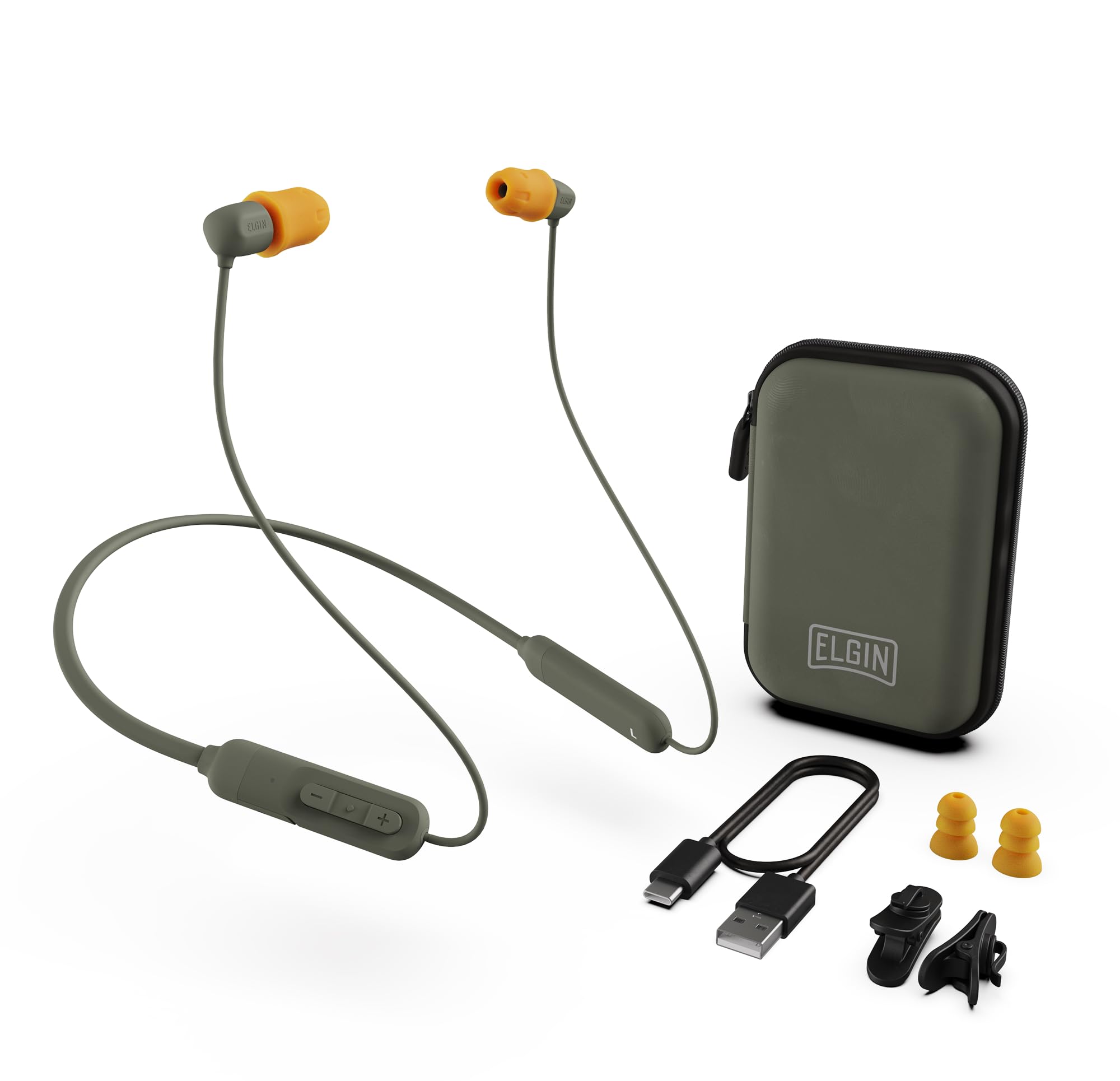
31dB is the top NRR in this whole list, and that is why the Elgin earns its spot. That is well above the 26 dB NRR of the 3M and the 29 dB of the MIPEACE. It is certified to ANSI standards (the US safety benchmark for this kind of gear) and built for construction, industrial, and manufacturing environments. Inside, an 8mm PET dynamic driver and a precision-molded acoustic chamber hold a 20 – 20,000Hz response range (the span of pitches you can hear, from deep bass to treble), so it stays clear for calls and music in echo-prone rooms.
Protection plus comfort is what owners like. They describe the seal as letting them hear everything around them while working, wearing them for hours, and the 14-hour battery stretching almost a full work week without a charge. The magnetic earbuds snap together around your neck when not in use, and the memory foam and silicone tips are replaceable, so hygiene and fit stay fresh over time. It is waterproof against sweat, dust, and moisture.
Two real-world wrinkles. The foam tips give the best seal, but a couple of owners find them sore and swap to the silicone for comfort. One warns to keep the foam dry, since wet foam swells and will not recompress. And while most units run for years, a single owner had a right earbud fail after about three months of use — a rarity for an otherwise well-regarded pick, but worth knowing if you want the longest possible service life. The earbuds reach 50 feet over Bluetooth 5.3 and fully charge in about 3 hours.
The reason it climbs the list: 31dB of ANSI-certified passive protection, an 8mm PET dynamic driver with a 20 – 20,000Hz range, and a 14-hour battery — the most aggressive noise cut here with sound that stays useful.
For the loudest rooms: construction, industrial, and manufacturing workers who want maximum certified protection with audio.
Mind the foam tips: they seal best but may need a swap for comfort, and they must be kept dry to keep recompressing.
Know the Specs
SNR and NRR — two ways to measure the same idea
Both numbers tell you how much quieter the world gets when you wear the gear, but they come from different standards. SNR is the general sound reduction figure you tend to see on earplugs made for music, like the 21 dB on the Zound or the 17 dB on the Loop. NRR is the rating used on US safety gear, like the 31dB on the Elgin. Higher means more protection, but it is not the whole story. A 21 dB earplug tuned for live music can sound clearer than a 30 dB protector built for a workshop.
Bluetooth version and pairing behavior
The Bluetooth number (6.0 on the Qozybuds, 5.3 on the MIPEACE and Elgin) tells you which generation of wireless standard the product uses — newer versions generally pair faster and hold a steadier link. A higher number does not mean better sound; it means a more efficient connection. If your phone is older, check that it can talk to the newer Bluetooth version before you buy.
Battery, and when it actually matters
Passive earplugs have no battery, so they never need charging. If a product streams over Bluetooth, the runtime is what you should compare: the MIPEACE runs 19 hours, the Walker’s up to 10, the Elgin 14, and the Qozybuds 120. The number matters far more for a work shift than for a two-hour set.
Tip material and the quality of the seal
Silicone tips (used on the Zound and as an option on the Elgin) are easy to wipe clean and comfortable for many, but foam (like the Elgin’s high-density memory foam) conforms closer to the shape of your canal and often seals tighter. Foam needs replacing more often and cannot get wet. The best pick for your ears is the one whose tip keeps that seal while you move.
Common Questions
Will earplugs make the concert sound muffled?
What SNR or NRR rating do I actually need for a concert?
How do I know which tip size to use?
Will the earbud-style protectors stay in while I dance?
Can I wash my earplugs, and how often should I?
Do I need Bluetooth for a concert?
How long should concert earplugs last?
Which is better — a muff-style protector or an in-ear plug?
Will a hearing-aid wearer be comfortable with these?
Do the Bluetooth protectors work for a live show, or only for work?
The Bottom Line
The best pick overall is the Qozybuds Bluetooth 6.0 Hearing Protection Headphones, because a 30dB SNR cut and a 120-hour battery make it the strongest shield for the loud places most people actually face — the mower, the shop, the flight. If your loud place is a stage and you want the music to stay crisp, grab the Zound Concert Earplugs for their 21 dB of music-friendly reduction. And if you are standing up top of the crowd all night, the Loop Experience 2 Plus earns its spot with seven tip pairs and a 17 dB filter that holds its seal while you move.
Across the whole group, the pick that most buyers will be happy with is the Qozybuds — it tops the roundup on rating and depth without asking for a premium for it. Whatever you choose, match the rating to your noise, then match the tip to your ear. That combination is what keeps