Disclosure: Some links in this post are affiliate links. As an Amazon Associate I earn from qualifying purchases, at no extra cost to you. Learn more
Specs are compiled from manufacturer listings and verified buyer reviews and can change over time — please confirm the key details on the product page before buying.
Wind roar at highway speed is the real reason your ears ring after a long ride, and the right pair of plugs fixes it without shutting you off from traffic. The picks below all cut that roar while leaving room to hear your intercom, your music, and the siren behind you.
This guide is built by comparing the manufacturers’ published specifications and the patterns across verified customer reviews, so you get each pick’s real strengths and trade-offs instead of marketing spin.
You will see how noise reduction ratings, filter design, and helmet fit work together. The list leans on the corded Fusion pair as the strongest all-round pick for the money. It finishes with a full breakdown of ear protection for motorcycle so you can choose in one pass rather than guessing.
Top Picks

How To Choose The Best Ear Protection for Motorcycle
You have two jobs for a plug on a bike: kill the wind buffeting that wears your ears down, and keep enough of the world audible that you still ride safely. Those two jobs pull in opposite directions, and the rating on the package is your starting point, not the finish line.
Start with the noise rating, then read the filter
The Noise Reduction Rating (NRR) is a single number that estimates how much sound a plug blocks, in decibels. A 27 dB NRR plug blocks hard; a 17 dB SNR plug is gentler and keeps more of the world audible. SNR is the European version of the same idea, so compare it against NRR with that in mind.
Solid plug or filtered plug
A solid plug cuts everything, which is great for a loud job and less great when you want to hear your intercom. A filtered plug uses a small membrane to let speech and music through while trimming the harsh high-frequency wind whistle. Pick the first for pure quiet, the second if you ride with a headset.
Fit under a helmet is half the battle
A plug that sits proud of your ear canal gets nudged loose every time you pull the helmet on. You want a low-profile body that sits flush and a stem or grip you can pinch without pushing the plug deeper. If a plug needs a tool to remove it, that is a real daily annoyance.
Side-by-Side Comparison
| Model | Best For | Noise Rating | Type | Pairs Included | Amazon |
|---|---|---|---|---|---|
| Howard Leight Fusion★ Best Overall | All-round value and long-wear comfort | 27 dB NRR | Corded multi-use | 10 pairs | Amazon |
| Alpine MotoSafe TourBest for Intercoms | Riders who want intercom and music through | 17 dB SNR | Filtered | — | Amazon |
| Alpine MotoSafe Race | Highway wind roar on long rides | 17 dB SNR | Filtered | — | Amazon |
| Mack’s High Fidelity | Concerts and mixed use with riding | 12 dB NRR | Filtered | 1 pair, 2 tip sizes | Amazon |
| SureFire EP10 | Shooters who also ride | — | Flanged in-ear | 1 pair | Amazon |
Detailed Reviews
1. Howard Leight RTSFUS30HP Fusion Multiple-Use Earplug
Our pick — 4.5+★ from 550+ verified ratings; the strongest balance of quality and price.
The 27 dB plug that quietly mutes the wind and still lets you hear the road.
Here is the number that decides it: 27 dB NRR, the highest noise reduction of any pick on this page. That is a measurement of how much sound the plug blocks, and on a bike it means the buffeting roar drops to something you can ride behind for hours without your ears aching. You get ten pairs in the pack, so you can leave a set in the tank bag, one in the jacket, and one on the shelf.
These plugs stay put because of how they’re built. A firm FlexiFirm stem gives you something solid to grip when you insert them, while soft SoftFlange tips seal your ear canal without pressure. A detachable nylon cord runs between the pair, so you can hang them around your neck at a fuel stop and never dig for them again. Quality is the most-praised trait across the listings, and buyers report the long-wear comfort holds up; as one review page puts it, these are plugs that “dont fall out or hurt your ears after long periods of time.”
The catch is that 27 dB cuts hard. That is great for wind, and less great if you want to hear your intercom or a conversation at a stop light, because the same blocking that saves your ears also mutes the chatter. If you ride with a headset and want to keep it audible, the filtered Alpine pairs below suit you better.
What earns the top spot
- 27 dB NRR blocks the most wind of any pick here
- Ten pairs in one box, so you always have a spare
- Firm stem plus soft flange makes them easy to seat and kind on long wear
- Detachable cord keeps the pair together
Where it gives ground
- The heavy blocking mutes intercom and conversation
- Not the choice if you want to hear a headset clearly
Reach for these if: you want maximum wind relief and don’t ride with a headset.
Think twice if: hearing your intercom through the plug is a must.
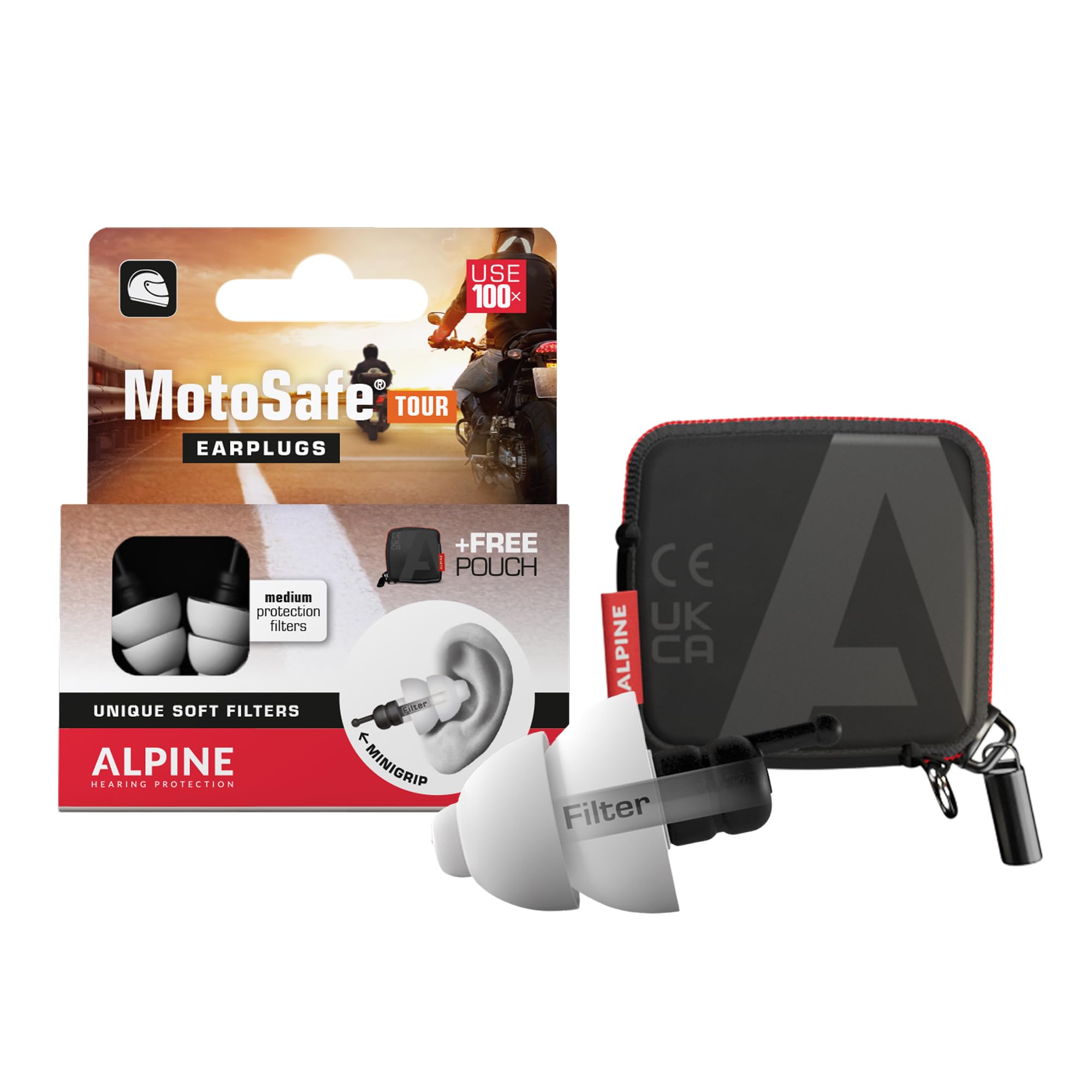
2. Alpine MotoSafe Tour
The filtered plug for riders who want the wind gone but the intercom still talking.
If you bought a helmet headset and found foam plugs made the music tinny and the directions unhearable, this is the pick for you. The Alpine MotoSafe Tour uses a filter rated at 17 dB SNR (a European measure of noise reduction, gentler than the 27 dB the Howard Leight blocks), and the point is that it trims the harsh wind without flattening speech. Owners describe it as a full music experience rather than a muffled one, with map directions staying crisp while the bike noise drops away.
Long rides don’t leave you sore because the material is the patented AlpineThermoShape, a silicone-free compound that warms and softens to the shape of your ear canal. A mini-grip tab lets you pull them out without a tool. Noise cancellation is what wins people over most, but the fit is mixed: some find it great and easy to place, while others with smaller canals find it too small and fiddly to pull out. The removable tab has been known to snap, so treat that grip gently rather than yanking.
Compare it honestly against the Fusion above: the Alpine lets you hear clearly because it blocks less, which is exactly the trade you are making. As riders put it after long trips: “After a 100+ mile ride, riders report the wind roar drops sharply, the plugs stay comfortable, and the helmet goes on and off without dislodging them.”
The filter advantage: a 17 dB SNR filtered plug keeps intercom audio and music clear while cutting the wind whistle, so you don’t have to choose between protected ears and a working headset.
The honest limit: that same gentle filtering means it blocks less than the 27 dB Fusion — if pure quiet is the goal, it falls short of the solid plug.
Suits the headset rider: you want to hear music and calls while the wind fades.
Less ideal for: tiny ear canals, where the smaller fit can be tricky to remove.
3. Alpine MotoSafe Race
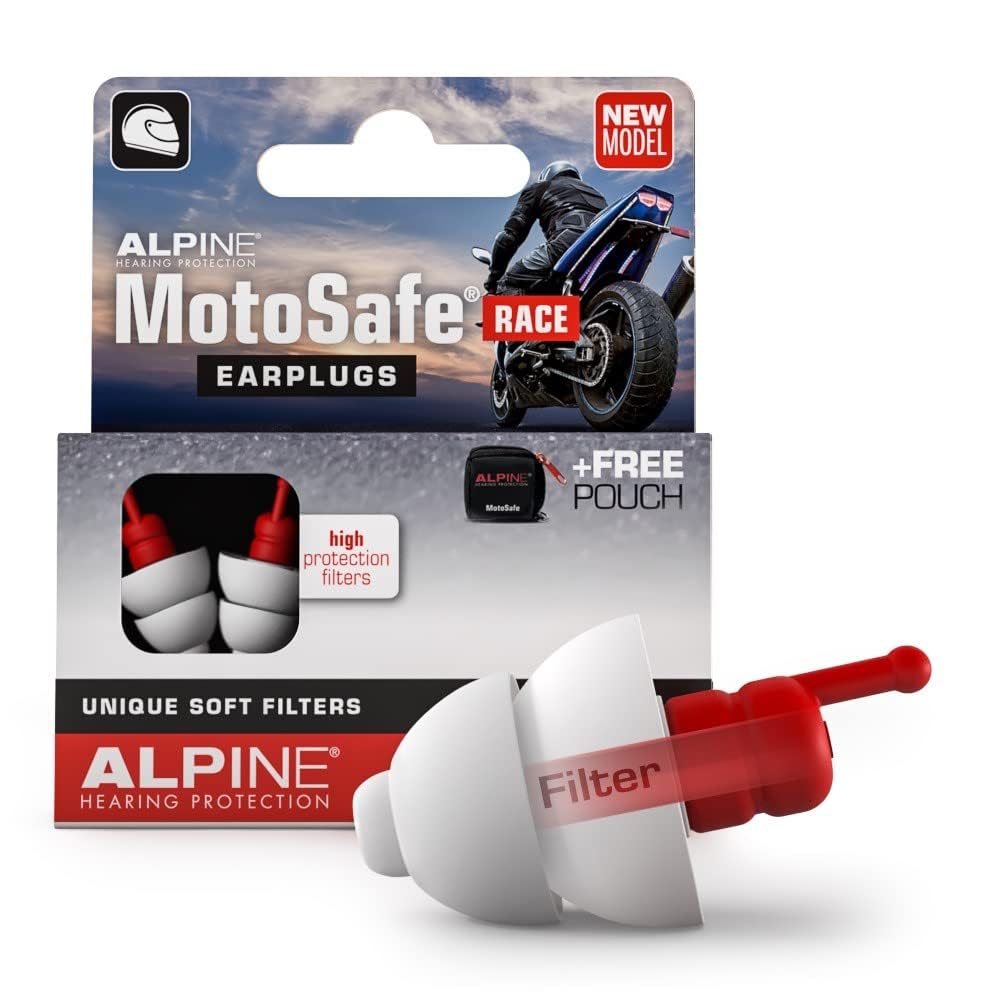
The long-haul plug that turns an 80 mph wind roar into a passing breeze.
Where the Tour version eases back the noise, the Race version leans harder on the wind. Same 17 dB SNR filter rating on paper, same AlpineThermoShape material, but the tuning is aimed at the sustained roar of highway miles. Riders describe cutting the wind at 80-85 mph so effectively that Bluetooth music plays several volume steps below max instead of pinned wide open with foam plugs in.
What makes it a keeper is how it holds position once seated. It stays put through the helmet rub, and the mini-grip lets you extract it without fuss. The thing riders praise most is the noise cancellation, and the comfort holds up — one long test kept it snug for 3.5 hours, where foam plugs lasted 30 minutes. The recurring gripe is longevity: the silicone softens over time and eventually stops seating well, so plan on replacing the pair every few months of hard use.
Stacked against the Tour above, the Race is the one for distance riders who ride fast and often; the Tour is kinder if you want to keep conversations at stops. A rider’s summary of a long run captures it: “After a 100+ mile ride, riders report the wind roar drops sharply, the plugs stay comfortable, and the helmet goes on and off without dislodging them.”
Distance-day companion: the highway wind damping and the hours-long hold make it the pick for sustained high-speed miles, and the filtered body still lets your surroundings through.
The wear caveat: the silicone stops seating firmly after roughly 100-150 days of steady use, so budget for a fresh pair each season.
Built for the long haul: fast, frequent highway riders who want the roar crushed.
Know before you buy: figure on a fresh pair every few months of hard riding.
4. Mack’s High Fidelity Ear Plugs

The one pair that pulls double duty from the concert pit to the saddle.
If you ride with music in your helmet and also want to save your ears at gigs, this is the crossover pick. The open-air membrane filter is rated at 12 dB NRR — the most gentle of any plug here — and its job is to lower the volume without the muffling that foam causes. The full spectrum of sound stays intact, so a guitar still sounds like a guitar and your helmet audio still sounds like music, just quieter.
If a single-size plug feels either loose or too tight, two comfort tip sizes cover small to large ear canals. An aluminum travel case clips to a keychain or belt loop, so the plugs ride along clean. Sound reduction is the most-praised trait, but the fit splits buyers: some find it comfortable, others say it doesn’t settle well in the ear, so expect a little trial with the two tip sizes to find your seat.
Against the Alpine pairs, the Mack’s blocks less wind but keeps the tonality of your music truer, which is why riders who care about sound quality reach for it. The trade-off is the gentle 12 dB — on a very loud highway it will not quiet things the way the 27 dB Fusion does.
Sound-first choice: the 12 dB NRR filter preserves natural tone and pitch, so it is the plug for music lovers who ride and gig, and the two tip sizes help dial the fit.
The gentle trade: lightest blocking on the page, so it can’t crush highway roar like the Fusion’s 27 dB.
Best if: you want one pair for rides, gigs, and gig-bag duty with tone intact.
skip it if: you need maximum highway silence.
5. SureFire EP10 Sonic Defenders Ear Plugs (1 Pair)
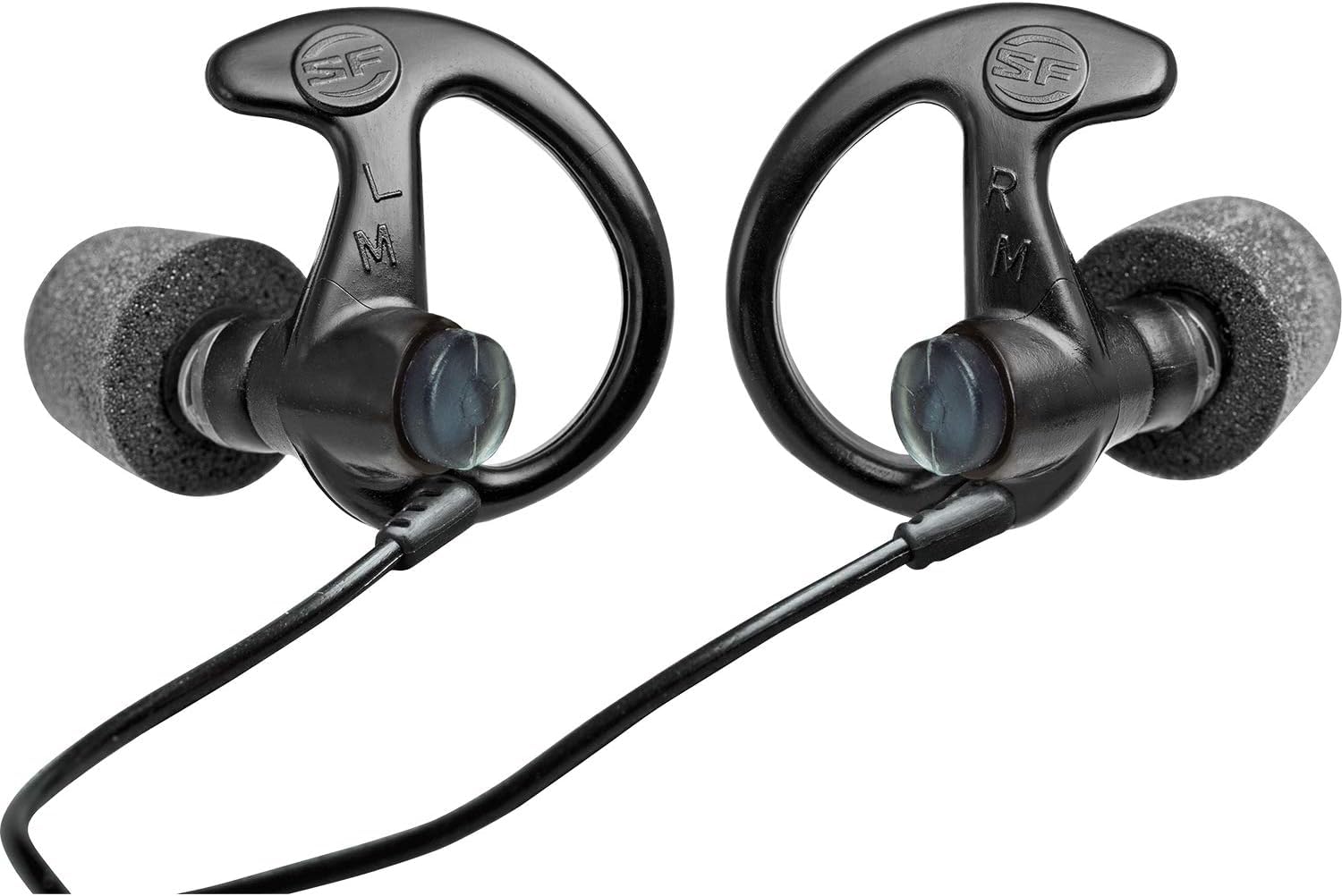
A shooter’s plug that happens to ride well under a helmet too.
If you also spend weekends at the range and want one earplug that covers both, this is the pair for you. The flanged body sits low and light at 18.14 g (about six tenths of an ounce), so it tucks flush under a helmet without pressure. Owners shooting handguns and rifles up to 7.62×39 at outdoor ranges report enough sound reduction to skip doubling up, and the same low-profile build keeps it from catching as you pull the helmet on.
Functionality is what owners rave about most, and they describe it as one of the few products that just works with no fuss. A flanged tip that conforms on insertion gives an easy, secure seat, and the plastic body holds up over repeated use. One sharp caveat from the range: during a high cheek weld or while talking, the plug can walk outward, so check the seat before you ride fast.
The one head-to-head that matters: against the Fusion, the SureFire’s flanged design seats quicker but blocks with less force than the 27 dB plug, so it is the convenience pick rather than the maximum-quiet one. If your priority is range protection that doubles as riding earwear, this earns its spot.
Range to road: a low-profile flanged plug that sits flush under a helmet and earns rave reviews for plain functionality at the range.
The loosen note: a hard cheek weld or conversation can walk the plug outward, so re-seat it before a fast stint.
For the range-and-ride buyer: one plug that does both jobs without doubling up.
Worth knowing: it seats fast but blocks lighter than the 27 dB Fusion.
Know the Specs
Noise Reduction Rating (NRR)
The NRR is one number that estimates how much sound a plug cuts, in decibels. A higher figure — like the 27 dB on the Fusion — means more blocking, which is great for wind and less great when you want to hear a headset. A lower figure like the 12 dB on the Mack’s is gentler and more hearing-friendly.
SNR and Filtered Design
SNR is roughly the European version of NRR, used on the Alpine pairs at 17 dB. A filtered plug pairs that rating with a small membrane that trims harsh high wind while letting speech and music through. That membrane is what separates a filtered plug from a solid one: it trims the wind whistle while leaving speech and music intact.
Fit and Helmet Clearance
A plug needs to sit flush so the helmet doesn’t tug it loose. Low-profile bodies and grip tabs help. If a plug needs a tool to remove, that is a daily annoyance worth weighing before you buy.
Material and Wear
Silicone-free compounds like AlpineThermoShape adapt to your canal, while nylon stems and flanged tips seat firmly. Softer materials can lose their grip over time, so expect to refresh a hard-used pair now and then.
Common Questions
Will filtered earplugs still let me hear my intercom and music while riding?
What noise reduction rating do I need for motorcycle wind noise?
Will earplugs fit under a full-face helmet without coming loose?
Can I hear traffic, sirens, and my engine with earplugs in?
How often should I replace motorcycle earplugs?
Is a solid plug or a filtered plug better for highway riding?
Can I clean and reuse my earplugs?
Do earplugs work for both riding and shooting?
What is the difference between NRR and SNR?
The Bottom Line
For most riders, the ear protection for motorcycle winner is the Howard Leight Fusion because its 27 dB NRR (Noise Reduction Rating, the US measure of how much sound it blocks) blocks the most wind and its corded ten-pair pack lasts, while the stem and soft flange keep long rides comfortable. If you ride with a headset and want the intercom and music through, the Alpine MotoSafe Race is the one to reach for. And for a pair that doubles from the concert pit to the saddle, the Mack’s High Fidelity keeps tone intact at a gentle 12 dB. Pick the plug that matches your riding, and keep a spare pair in your jacket so a lost or worn plug never ends a ride early.
How we choose
We do not accept paid placement. Every pick is matched to a real buyer and a real use-case; we do not hands-on test units.
Sources
Specifications: manufacturer listings and product documentation. Review insights: verified customer reviews, as of October 2026. Pricing: not shown on this page (it changes often); check the current price via the retailer link.
As an Amazon Associate, Aappliancez earns from qualifying purchases. This does not affect which products we feature.