Disclosure: Some links in this post are affiliate links. As an Amazon Associate I earn from qualifying purchases, at no extra cost to you. Learn more
Specs are compiled from manufacturer listings and verified buyer reviews and can change over time — please confirm the key details on the product page before buying.
A polyester cotton blend fights back against most dye. The cotton half drinks color in, and the polyester half shrugs it off, which is exactly why so many home dye jobs come out patchy and pale. The fix is a dye whose own instructions cover blends, plus a fixative that locks color into the cotton half. Below are five ways to win that fight, sorted by what each one actually does well.
This guide is built by comparing the manufacturers’ published specifications and the patterns across verified customer reviews, so you get each pick’s real strengths and trade-offs instead of marketing spin.
Blends are the tricky middle ground between plant fibers and synthetics, so the right pick changes with your fabric mix. Read on for the dye that matches your fabric mix and how much stirring you will tolerate.
This breakdown covers the best dye for polyester cotton blend projects, from paint-style color on tees to liquid dye that revives tired pants.
Top Picks


How To Choose The Best Dye for Polyester Cotton Blend
A polyester cotton blend is two fabrics wearing one label. The cotton portion is a plant fiber that soaks up dye readily. The polyester portion is a synthetic that resists water-based color, which is why a blend often comes out lighter than the swatch on the box.
Match the dye to the fiber share
For a blend that leans mostly cotton, an all-purpose liquid dye or a fiber-reactive powder does the heavy lifting. Where the polyester share climbs, one maker’s own listing points you to a dedicated synthetic-fiber dye instead. Check the care tag before you buy anything.
Fixative is not optional
A fixative is a liquid you add after dyeing that helps hold color in place and reduce bleeding into white areas. On a blend, the cotton grabs color fast and the polyester releases it slowly, so a fixative evens out that mismatch. It also helps color survive repeat trips through the wash.
Powder, liquid, or paint
Powder dye is concentrated and you mix it fresh, which gives the brightest result but a messier process. Liquid is pre-mixed and simpler for a single garment. Fabric paint sits on the surface rather than soaking in, so it suits designs and handprints more than a full-color overhaul.
Side-by-Side Comparison
| Model | Best For | Form | Stated Fabric Coverage | Fixative Included | Amazon |
|---|---|---|---|---|---|
| Chalky Crown Permanent Fabric Paint Set★ Best Overall | Designs and handprints | Liquid paint | 5-10 square feet per milliliter | — | Amazon |
| Rit Dye Wide Selection of Colors with Color FixativeBest for Reviving | Reviving faded garments | Liquid | Cotton, Silk, Linen, Nylon | Yes | Amazon |
| All Purpose Concentrated Rit Dye Powder | Full-garment color change | Powder | 1 lb dry fabric per package | Yes | Amazon |
| Rit Dye Multi-Purpose Liquid 8 OZ. 2-Pack | Toning down bright colors | Liquid | Cotton, Linen, Nylon, Wool, Silk, Rayon, Ramie | — | Amazon |
| Jacquard Tie Dye Kit | Pattern work and groups | Fiber-reactive powder | Cotton | Yes (soda ash) | Amazon |
Detailed Reviews
1. CHALKY CROWN Permanent Fabric Paint Set
Our pick — 4.5+★ from 650+ verified ratings; the strongest balance of quality and price.
The blend answer for anyone who wants color exactly where they put it.
Here is the honest truth about most polyester cotton blends: the polyester share will not soak up dye the way cotton does. Chalky Crown sidesteps that by being paint rather than dye — it sits on the surface of the fabric instead of soaking into the fibers. That makes it the pick for handprints on a Christmas tree skirt, lettering on a tote, or a design across a tee where a polyester blend would otherwise come out patchy and weak. Six-hour dry time is stated, so plan a full day before the first wash.
The 15-shade range across classic, neon and metallic finishes is the set’s biggest draw. You get 15 shades split across classic, neon and metallic finishes, in 60 ml tubes that squeeze cleanly and store back in the box. Ten brushes come along too, including liner, script, round, chisel blender, flat, angular, fan and dagger shapes, so fine lettering and broad fills use different tools. Buyers report the wash test is where it proves itself: “Vibrant colors and worked great on our christmas tree skirt to put our children’s handprints.”
Stated coverage of 5-10 square feet per milliliter shrinks fast on thick coats, so thin layers stretch a 60 ml tube further. It is not waterproof, so a garment you plan to launder hard will need the recommended cure time respected. And the finish is not soft to the touch — a swatch test describes the dried feel as like thin vinyl, flexible and crack-free when stretched, but not invisible on the hand.
Where the set earns its place
- 15 colors across classic, neon and metallic, in 60 ml squeezable tubes
- 10 brushes in liner, script, round, chisel blender, flat, angular, fan and dagger shapes
- Stated 6-hour dry time and a portable storage box to keep it all together
- Holds color through repeat washes once the 6-hour cure is complete
What to plan around
- Not waterproof, so heavy laundering needs care
- Dried finish feels like thin vinyl on the fabric, not soft
- Paint sits on the surface — this is not a full-garment dip dye
Reach for this if: you are decorating a blend rather than recoloring the whole thing, and you want kid-safe paint plus every brush in one box.
Think twice if: your goal is an even new color across an entire pants leg — a liquid dye does that job better.
2. RIT Dye Wide Selection of Colors with Color Fixative
A bottle of dye plus the fixative that stops a blend from bleeding out.
Faded black jeans and blotchy bleach spots are the reason this bundle exists. You get the liquid dye and a bottle of ColorStay Fixative together — the fixative is a post-dye treatment that holds color in place, cuts bleeding into white areas, and helps slow fading on fabrics that would otherwise wash pale. For a blend, that pairing matters, because the cotton half takes color quickly and the polyester half needs help keeping it.
The listing names cotton, silk, linen and nylon as its targets, plus furniture, carpet and wigs if you have a bigger project in mind. All you need is hot water, a plastic container, a washing machine or a stainless-steel sink. That low barrier shows in how people use it: “I did three pairs of pants in a stainless steel sink.” Constantly stirring for 30 minutes and soaking overnight is the method that produces an even result.
The catch worth knowing is color intensity. Some buyers see vibrant results, others find it fades over time — so a single pass may land lighter than the box swatch on a poly-heavy blend. A second dip, or slightly more dye, closes that gap. One pack also arrived with a leak in transit, so check the seal before you start.
What the fixative buys you: the pairing is the whole point here. Dye on its own can bleed into every white stripe of a blend; the ColorStay step is what keeps the color where you put it and extends its life across washes.
The most common disappointment with any liquid dye is uneven patches from leaving it to sit.
The strongest fit: garments you are trying to save rather than replace, especially dark cottons and blends that have gone dull.
Your trade-off: the color can land lighter than the swatch, so budget for a second application on poly-heavy fabric.
3. Rit Dye Powder Black
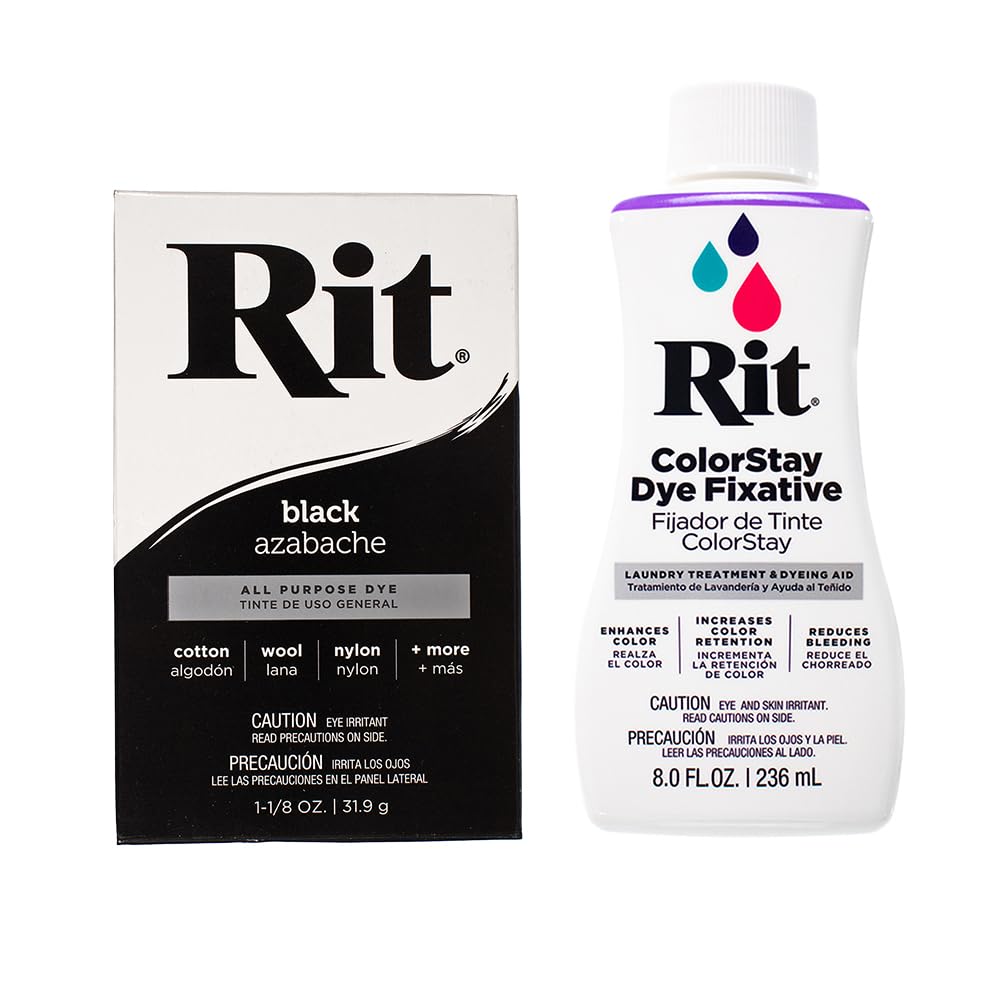
Concentrated powder that recolors a whole garment, if you use enough of it.
One package dyes up to one pound of dry fabric — roughly a pair of pants or a couple of shirts. That number is the one to plan around, because it decides whether you buy one box or two. The powder is concentrated and you mix it fresh, which is why it suits a full color change better than a spot touch-up. It also works for tie-dye, dip-dye and other techniques, and you can dial the amount down to lighten or up to darken the result.
The packet reflects the approximate color you will get on 100% white cotton. That qualifier matters on a blend: the polyester share takes less color, so a black on a poly-cotton shirt can read softer than the box. The quality of the powder itself holds up well, and the process is genuinely easy — one full pack over a single beige pair of pants was more than enough, with no color setter needed if you add a cup of salt.
The honest caveat is color payoff. Some results come out duller than expected, and the strongest fix is simply buying more than one box up front: “I wish i had bought 2 boxes because the color turned out dull!” It is also a messy process, so lay down protection before you start pouring.
Buy the right count first: the single biggest lever on how this powder performs is quantity. Match the number of packs to the dry weight of fabric and the depth of color you want, and the result lines up with the box.
Powder versus liquid: powder gives a more intense result per ounce and lets you custom-mix a deep shade. Liquid is simpler if you only want a light refresh on one item.
Choose this when: you want a deep, even color across a whole cotton-heavy garment and you are willing to mix it yourself.
The limit to know: on a poly-heavy blend, a poly-cotton shirt will come out lighter than the swatch — plan for a second pass.
4. Rit Dye Liquid 2-Pack Dark Brown

Two bottles that warm up a garish color without turning it to mud.
The strength of a neutralizing shade shows up when you are not trying to go dark — you are trying to calm something down. A camel brown tones down a too-bright fabric and warms it without the muddy look a black dip can leave behind. You get two 8 oz bottles, which is enough for one project with a second pass in reserve. The maker’s own note is the one to read closely: if your fabric is 35% or more acetate, acrylic or polyester, it points you to a dedicated synthetic-fiber dye instead.
That note is your real guide on a blend. A poly-cotton garment that leans mostly cotton will take this liquid well; one that leans polyester will give a paler, softer result, so plan a longer soak or a second application. Beyond clothing, the listing covers wood, wicker, paper and cork, and the 35+ color range opens up tie-dye, ombre and dip-dye patterns. A fixative is a wise extra — skipping it is where fading starts.
Color accuracy is the honest catch. Dye goes on lighter than the swatch, and one batch of “dark green” came out a peacock blue-teal on three cotton shirts — beautiful, just not what the box named. Swatch a hidden seam before you commit the whole garment.
The color-direction trick: this is the pick for knocking the loudness out of a bright garment. A warm mid-tone mutes a loud color gently instead of smothering it, and it is easy to build a second coat if the first is too light.
Where it falls short: the color can shift from the label on blends and cotton alike, so a test swatch on an inside hem saves a whole project.
Best for: anyone who wants a softer, warmer tone over an existing bright color rather than a total color change.
Not your pick if: the fabric is 35% or more polyester — the maker’s own guidance says to use a synthetic-fiber dye there instead.
5. Jacquard Tie Dye Kit (F-JAC9320)

Fiber-reactive powder, separate soda ash, and a color that outlasts the shirt.
Fiber-reactive dye bonds chemically with cotton instead of sitting on the surface, so it outlasts paint through repeated washing. Jacquard splits its kit into pre-measured Procion MX powder in magenta, turquoise and yellow, plus a separate soda ash fixer you mix fresh. That separation is the point: fresh mixing gives a higher color yield and a wash-fast result. You also get four squirt bottles, gloves, rubber bands and instructions, with a bonus mixing bottle.
What wins people over here is the color, and it earns it. Procion MX holds its color through repeat washes, and one schoolteacher reports shirts dyed 15 years ago still vivid. Kids take to it easily, and the kit comes with everything for a birthday party or classroom session. Bring extra rubber bands and gloves beyond the single pair included — reused bands snap under the alkaline fixer.
The clear limit is quantity. One kit’s dye falls short of the 15 shirts the box suggests unless you mix carefully, so heavier use means buying two. And because Procion MX is built for cotton, a blend with a larger polyester share will take a softer color than a pure-cotton tee.
What makes the color last: Procion MX chemically bonds to cotton fibers, so the result survives laundering in a way surface paints do not. The separate soda ash is what triggers that bond, and mixing it fresh rather than pre-mixed is the difference in brightness.
The quantity to plan for: one kit covers a modest session and can be stretched with careful mixing. For a crowd of shirts, two kits and more rubber bands keep the colors clean.
Pick this when: you want the most wash-resistant color on cotton-heavy blends, or you are running a group project with kids and want bottles and fixer in one box.
Watch for: the dye and rubber bands run short on large batches, so buying a second kit up front keeps a big session from stalling.
Know the Specs
Fiber-reactive versus all-purpose dye
An all-purpose liquid or powder dye is made for a broad range of fabrics, including cotton, linen, silk and nylon. Fiber-reactive powder is built to bond chemically with plant fibers like cotton, which is why it holds color longer. On a polyester cotton blend, the reactive route suits the cotton share best; the polyester share takes color more weakly either way.
Why a fixative matters on a blend
A fixative is a liquid you add after dyeing to lock color in place and reduce bleeding into white areas. On a blend, it evens out the mismatch between a cotton half that grabs color fast and a polyester half that releases it slowly. Skipping it is one of the fastest routes to a faded result after a few washes.
Reading coverage on the label
Coverage tells you how much fabric one package handles. Powder dye states it in dry weight — one package for up to one pound of fabric — while liquid states it per bottle and paint states it in square footage per milliliter. Match the number to your garment’s weight before you buy, or the color comes out lighter than the swatch.
Color accuracy on mixed fabric
The color on a packet reflects the approximate result on 100% white cotton. A blend changes that result because the polyester share takes less dye, so the finished color often reads softer or shifted. Swatching an inside seam first tells you more than the box does.
Common Questions
Will regular dye work on a polyester cotton blend?
Do I need a fixative when dyeing a blend?
How much powder dye do I need for one pair of pants?
Is fiber-reactive dye better than all-purpose dye for blends?
Can I use fabric paint instead of dye on a poly-cotton shirt?
How long should I soak a blend in liquid dye?
Will the color bleed onto my white areas?
Can I dye a blend in a washing machine or sink?
How many shirts will one tie-dye kit handle?
Why did my black dye come out purple or dull?
The Bottom Line
For a blend you want to decorate rather than recolor, the Chalky Crown Permanent Fabric Paint Set is the winner — 15 colors, 10 brushes and a surface treatment that does not care whether the fibers are cotton or polyester. If you are saving a garment that has gone faded or blotchy, the Rit Dye bundle with ColorStay Fixative gives you the dye and the color-locking step together, which is exactly the pairing a blend needs. And for a full-garment color change on a cotton-heavy blend, the Rit all-purpose powder delivers the deepest result once you match the pack count to the fabric weight.
How we choose
We do not accept paid placement. Every pick is matched to a real buyer and a real use-case; we do not hands-on test units.
Sources
Specifications: manufacturer listings and product documentation. Review insights: verified customer reviews, as of October 2026. Pricing: not shown on this page (it changes often); check the current price via the retailer link.
As an Amazon Associate, Aappliancez earns from qualifying purchases. This does not affect which products we feature.