Disclosure: Some links in this post are affiliate links. As an Amazon Associate I earn from qualifying purchases, at no extra cost to you. Learn more
Specs are compiled from manufacturer listings and verified buyer reviews and can change over time — please confirm the key details on the product page before buying.
If you want that soft silver haze of Russian sage but your bed is too tight for a four-foot thug, the answer is a compact cultivar and a plant that arrives with roots already gripping soil. Perovskia atriplicifolia is the species behind nearly every plant in this list, and the dwarf forms — Little Spire and Little Lace — are the ones that hold their shape without swallowing your path. The bigger question is delivery condition, because a live plant that ships dry or bare-root has already lost half the battle before you dig a hole.
This guide is built by comparing the manufacturers’ published specifications and the patterns across verified customer reviews, so you get each pick’s real strengths and trade-offs instead of marketing spin.
What follows is a straight read on pot size, listed height, hardiness zone, and how each plant actually lands on your doorstep, so you can match one to your border without guesswork. Below you’ll find the clearest comparison of best dwarf russian sage, built on the specs that decide whether a plant thrives or sulks.
Top Picks

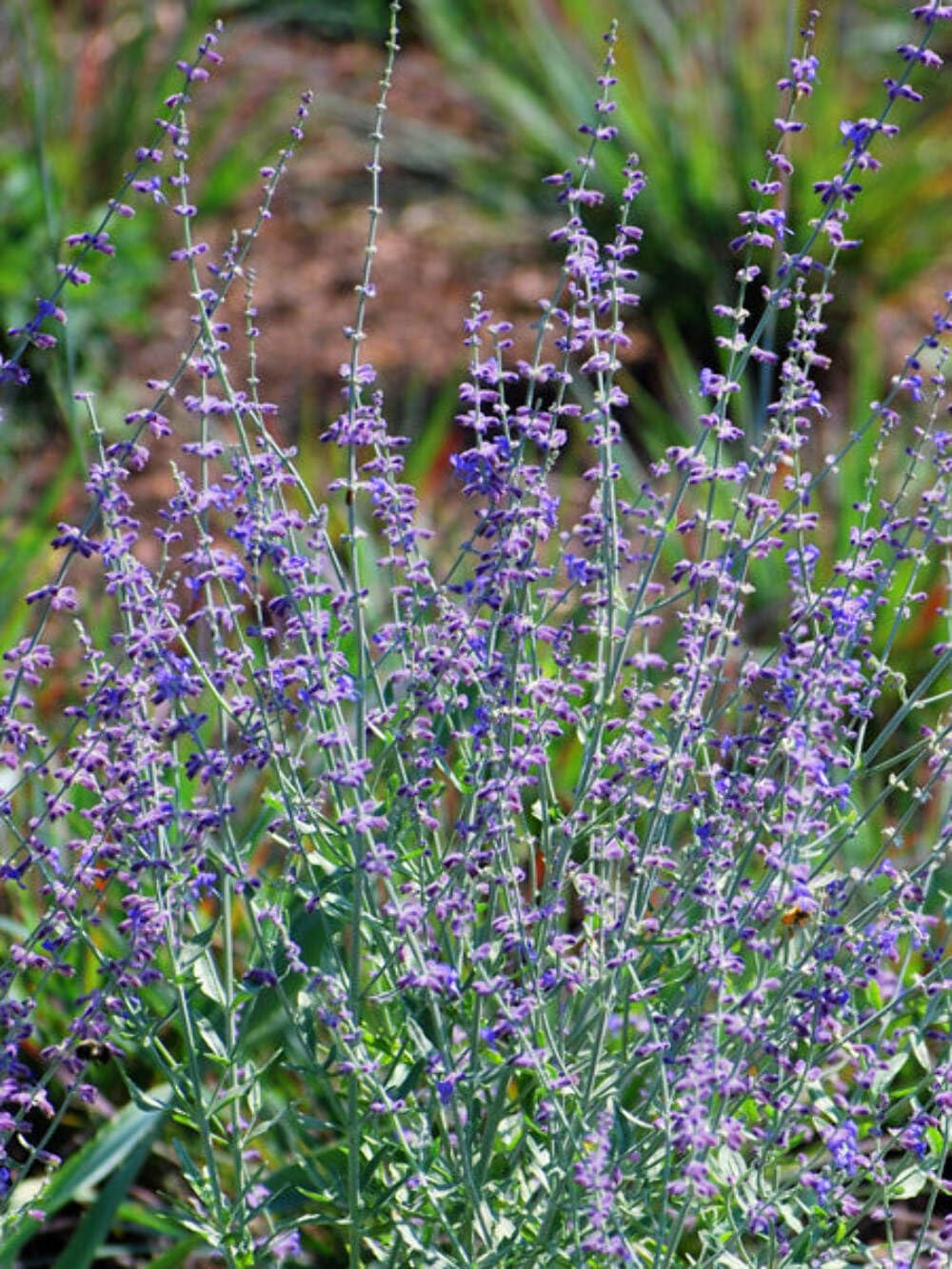
How To Choose The Best Dwarf Russian Sage
Russian sage is a woody sub-shrub, not a soft herbaceous perennial, and that single fact changes how you shop. It wants sun, it wants drainage, and it resents wet feet at the crown in winter. Get those three right and the plant does the rest — silver stems, lavender-blue spikes, and a scent that carries across a patio.
Start with the pot size, not the picture
The container size on the listing is your best proxy for how much root mass is travelling to you. A #1 container holds a plant described as fully rooted and ready to set in the ground right away. A 0.65 gallon pot is smaller — the grower states those ship 6 to 14 inches tall and roughly a year old. A quart or 4-inch pot is smaller still, and those plants will need a season to fill out before they read as a border. None of these is bad. They are simply different starting lines, and a small plant in good health beats a large one that cooked in a truck.
Match the listed height to the space you actually have
This is where dwarf varieties earn their keep. The full species is listed at a mature 3 to 4 feet tall and 2 to 3 feet wide, and one listing notes it can spread to about 4 feet across. That is a shrub, and it will flop over a narrow walkway. The compact named cultivars are the fix — Little Spire is listed at 30 inches in height, Little Lace at 24 inches. Read those numbers as the intended garden footprint, not a promise for the first summer, because a freshly potted perennial spends its energy on roots first.
Check the hardiness zone against your own winter
The zone range printed on each listing is the plant’s cold tolerance, and ignoring it is the most common way a healthy plant disappears by April. The Russian sage entries here list zones 5-8, 4-9, and 5-9 depending on the cultivar. Wider is more forgiving. One listing goes further and says it will grow in any US zone with a note that it is hardy in zone 4 and warmer. Cold is only half the story, though — Russian sage in a wet, heavy soil can rot at the crown even inside its zone, which is why sandy or exceptionally well-draining soil keeps recurring in the plant care notes.
Side-by-Side Comparison
| Model | Best For | Container | Listed Mature Height | USDA Zones | Amazon |
|---|---|---|---|---|---|
| Perovskia atriplicifolia (Russian Sage) Perennial★ Best Overall | Planting straight into a border | #1 Size Container | 4 feet | 5-8 | Amazon |
| Perovskia atriplicifolia ‘Little Spire’ (Dwarf Russian Sage)Dwarf Performer | Compact borders in cold gardens | Quart | 30 inches | 5-9 | Amazon |
| 0.65 Gallon ‘Sage Advice’ Russian Sage | Hot, exposed, windy sites | 0.65 gallon | 6 inches (at shipment) | 4-9 | Amazon |
| Perovskia Little Lace Russian Sage | The smallest footprint | 4.5″ container | 24 inches | 4-9 | Amazon |
| Clovers Garden Russian Sage Plants (2-Pack) | Filling two spots at once | Two 4″ pots | — | All US Zones | Amazon |
| Halatool 1 Inch Rockwool Cubes (300 Pcs) | Starting sage from seed indoors | 6 sheets, 300 cubes | — | — | Amazon |
| Greenwood Nursery Bath’s Pink Dianthus | A low front-of-border companion | 1 pint pot | 12 inches | 3-8 | Amazon |
Detailed Reviews
1. Perovskia atriplicifolia Russian Sage
Our pick — 4.5+★ from 40+ verified ratings; the strongest balance of quality and price.
A #1 container of fully rooted, soil-grown Russian sage you can plant the day it arrives.
Buy the Green Promise Farms Perovskia atriplicifolia if you want to skip the nursery-baby stage entirely. It ships in a #1 size container, which the listing describes as fully rooted in soil and ready to plant immediately on arrival, weather permitting. That is the practical difference between this and the quart-and-smaller options further down the list: you are buying a plant that can go straight into the ground instead of one that needs a season of coddling in a pot first. It is the crowd favourite here too, at 4.5+ stars across 40+ ratings.
What earns it the top slot is arrival condition. The plant pages read like a happy unboxing thread — healthy, moist, well-packed, with sturdy individual boxes and soil held in tied plastic bags so nothing spills in transit. Buyers report plants arriving taller than advertised with good leaves, stems and roots already showing, plus a planting guide in the box. One review describes new green shoots “coming up all over” after planting, which is the signal you want in the first few weeks.
The mature size is the honest catch. This is the full species, listed at 4 feet in expected height and a mature 3 to 4 feet tall by 2 to 3 feet wide. That is a real shrub, and it wants the back of a border, not the edge of a narrow path. Compare it to the Little Lace further down, listed at 24 inches — that is a 4.0x gap in expected height between the species and the smallest dwarf here, which is exactly why the dwarf exists. Give this one room to lean and it repays you with a scent the listing calls pleasant and one buyer simply calls the aroma they love.
What the box delivers
- Fully rooted #1 container, plantable on arrival
- Well-packed shipments — moist soil, unbroken stems
- Zones 5-8 covers most of the country
- Purple flowers and a scent that carries
Where it pushes back
- Full species size — 3 to 4 feet tall and 2 to 3 feet wide
- Wants sandy, fast-draining soil or it sulks
- Shipped dormant and trimmed in the cold months
The right fit: someone with a real border who wants the classic tall Russian sage and a plant that arrives ready to dig in.
Check your space first: if the bed is shallow or you garden along a narrow walk, the 4-foot mature height will crowd it — go compact instead.
2. Perovskia Little Spire
A named dwarf Russian sage listed at 30 inches, shipped as a rooted quart-size plant.
If your garden is small, this is the pick that keeps the silver look without the sprawl. ‘Little Spire’ is listed at an expected plant height of 30 inches — noticeably shorter than the 4-foot full species in the top spot — so it sits comfortably in a mid-border or beside a set of steps where a bigger shrub would block the view. It carries lavender-blue flowers with a fall blooming period and a moderate watering need, and it ships as a quart-size live perennial that is fully rooted in the pot and ready for immediate planting.
Hardiness is where this one pulls ahead of the pack for cold gardens: the listing puts it at zones 5-9, the widest range among the Russian sage plants here alongside the two 4-9 entries. A zone range is simply the coldest winter the plant is expected to shrug off, so a wide one means less chance of a dead crown come spring. Condition on arrival reads strong across the page — plants landing a week ahead of the promised date, hydrated and perfectly packed, described as extremely healthy with not a single dead leaf.
Here is the part the listing is upfront about and you should be too: shipped between November 1st and March 1st, the plant may arrive dormant and trimmed, with seasonal foliage rather than a full head of silver leaves. A dormant perennial is alive, not dead, and the plant care note says to set it and let the season wake it. The rare letdown is an occasional plant that simply does not make it — with a live perishable, no seller bats a thousand.
Why it earns second: the narrowest zone requirement matched to the widest range offered, plus a 30-inch mature height that genuinely behaves in a tight border.
Order-season note: buy in spring or summer if you want instant visual payoff — a winter shipment is dormant by design.
Reach for this if: you garden in a cold pocket, want a compact 30-inch plant, and are fine potting up a quart-size start.
Look elsewhere if: you need a big plant showing full foliage the day it lands — this one may spend its first weeks waking up.
3. Sage Advice Russian Sage
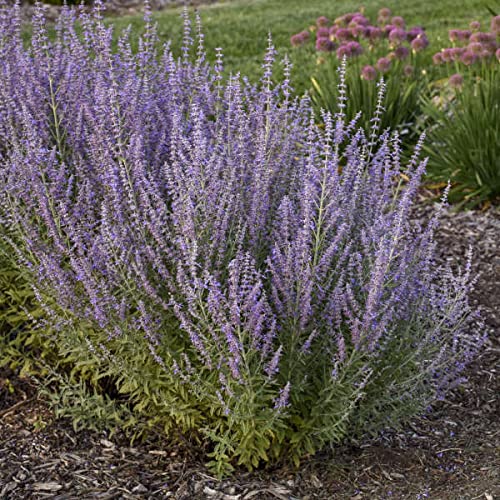
A zone 4-9, drought-tolerant Russian sage for baked, wind-scoured sites.
Proven Winners’ ‘Sage Advice’ is the toughest plant on this list for exposed sites, and the specs back that up. It is rated hardy in zones 4-9 — the same range as Little Lace and the widest here — and it carries drought tolerance as a listed special feature. Drought tolerance means the plant is expected to keep going through a dry spell without constant watering, which matters on a baked south-facing wall, a driveway edge, or a sandy bed that drains in an hour.
The size numbers need reading in the right order, because this is where listings confuse people. At maturity it reaches 30-32 inches tall and 24-28 inches wide. At shipment, the grower states 0.65 gallon perennials arrive 6-14 inches tall and roughly a year old, in a pot 6.5 inches in diameter and 6.25 inches tall. So a listing height of 6 inches is not the garden height — it is the starting line. Set that expectation and the box will not disappoint you.
Resilience is clearly the theme of the review pages. Owners mention a plant that survived heavy winds, rain and heat a month after planting, and branches that bent slightly under the shipping netting but straightened out quickly with water and light. One notes it is not cheap for the size, but attributes that to the careful individual handling. Compare it with the two 4-inch-pot Clovers Garden plants, which start at 4 to 8 inches tall — a different scale of ambition, and a fair reason this one sits higher up the list.
Where it shines
- Zones 4-9 handles serious cold
- Drought tolerant, listed as such
- Summer blooming, partial to full sun
- 0.65 gallon pot — a real root ball, not a plug
Know before you order
- Arrives 6-14 inches tall, not full size
- Moderate watering needs until it settles
- Wants 4+ hours of sun — shade stalls it
Best suited to: gardens that get beaten by wind and sun, where a zone 4-hardy, drought-tolerant plant earns its place.
The honest limit: a year-old start, so plan on a season before it fills its 24-28 inch footprint.
4. Perovskia Little Lace
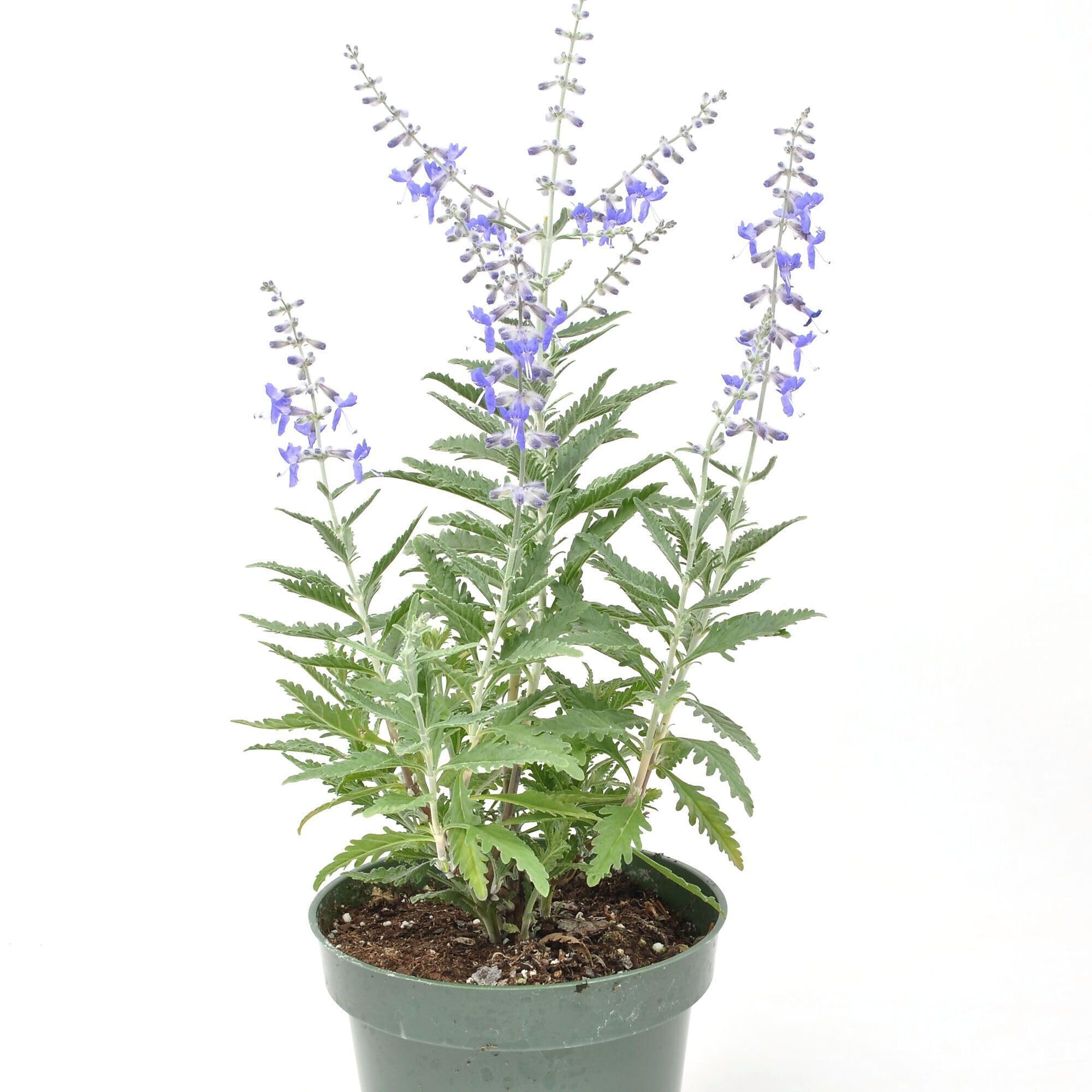
A 24-inch compact Russian sage with lavender flowers for a narrow front-of-border strip.
The whole reason Little Lace exists is right in the listing: it is a compact variety, described as naturally compact rather than “as large and unwieldy as other Russian Sage varieties.” At 24 inches expected height it sits below both Little Spire and ‘Sage Advice’ at maturity, so it works in a front-of-border spot, along a sidewalk, or in a container where a 4-foot species would look ridiculous. Lavender-toned flowers ride strong silver-gray stems, and the fall-to-summer bloom window runs summer through fall.
For a 4.5-inch start it carries features that matter beyond size. The grower describes it as salt tolerant — strong enough to border a sidewalk or driveway where winter salt gets thrown around — and pollinator friendly, with the note that butterflies and bees will make use of it. It is listed for zones 4-9, indoors or outdoors, and the care instructions are unusually specific: exceptionally well-draining soil, monthly fertilizing, and full sun to encourage flowering and strengthen stems. That is the whole Russian sage formula in one sentence.
Just calibrate expectations on the box. Little Lace ships small — the review pages say so plainly, with plants arriving in good condition but very small — which is the trade-off of buying a compact cultivar in a 4.5-inch pot. It is a plant that asks for a little patience and a good draining spot, and the reviews consistently describe moist soil, careful wrapping, and a healthy live plant on arrival. Nothing dramatic, just a solid small start.
Size, settled: 24 inches is genuinely the shortest mature height among the Russian sage plants here, and the listing says so in plain words.
The patience factor: a 4.5-inch container means a modest first year — you are buying the right genetics small, not a finished shrub.
Made for: the gardener with a narrow strip, a driveway edge, or a single pot who still wants silver foliage and fall lavender.
Skip if: you want instant mass — a 4.5-inch start needs a full season to read as a border plant.
5. Clovers Garden Russian Sage Plants
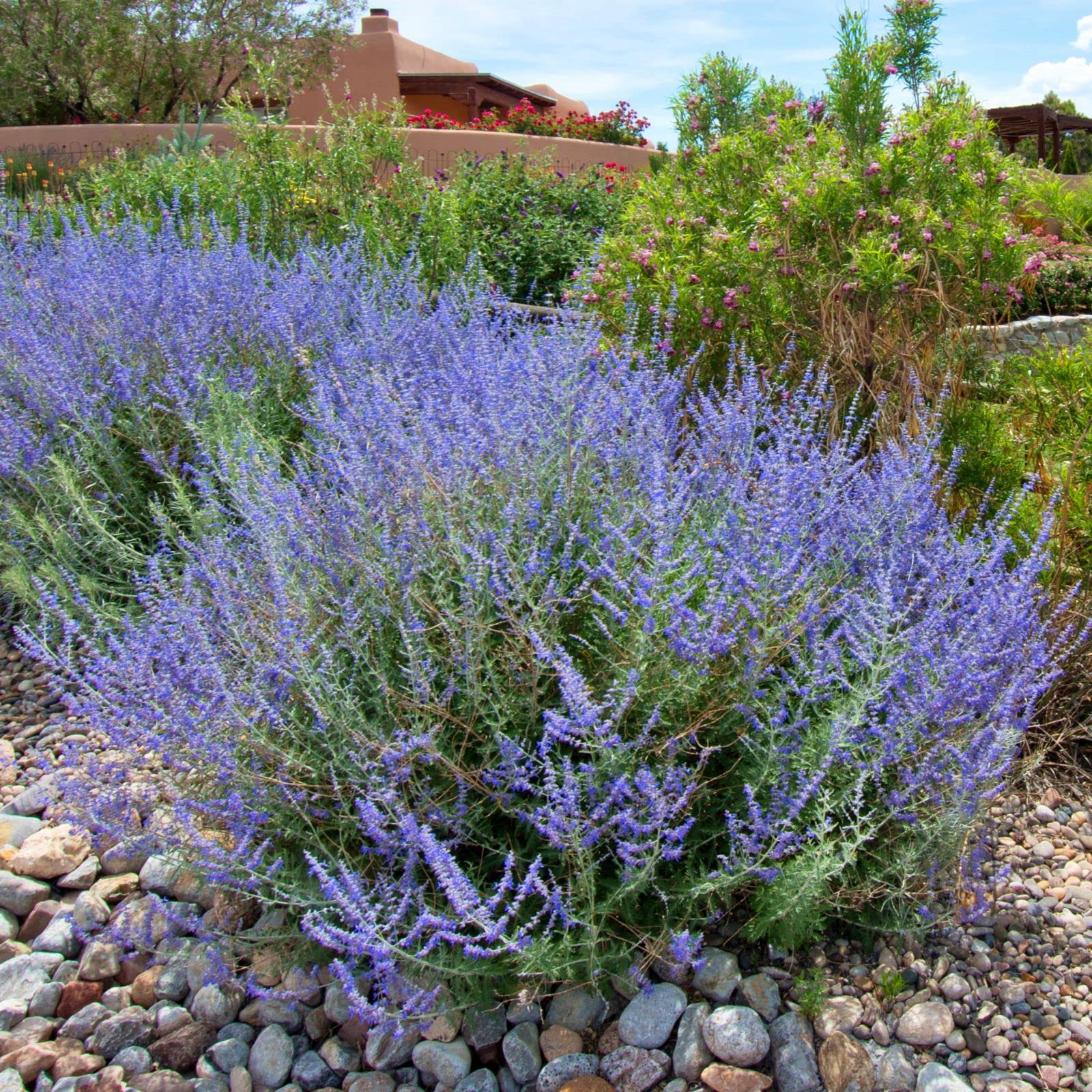
Two 4-inch pots of Russian sage, 4 to 8 inches tall, for a matched pair of planting spots.
Clovers Garden ships this as a two-count of live plants, each in its own 4-inch pot and standing 4 to 8 inches tall at arrival. The plants are marked non-GMO and grown without neonicotinoids, and the listing says the plants are grown in the Midwest with 10x root development, which speaks to how well they transplant.
One thing the label gets right about identification: Russian sage is not the culinary sage, and this listing says outright that it is not edible. What you are growing instead is a decorative perennial with silver-green foliage and blue-purple flowers that draws pollinators, and the leaves can be dried for potpourri or sachets if you want the scent indoors. Bloom runs from mid-summer to first freeze — a long season — and the plant is listed hardy in zone 4 and warmer, described as reaching up to 4 feet wide and tall and spreading.
Where the reviews split is exactly where you would expect a two-pack of young plants to split: some arrive already budding and bolt away, while others take their time and read smaller than the photos suggested. The health notes lean positive — hydrated on arrival, thriving once potted, carefully protected in shipping — and the careful packaging in a recyclable box plus a printed planting guide gives you a solid start. Just expect young plants, not mature shrubs.
What you gain
- Two plants in 4-inch pots for balanced planting
- Non-GMO, no neonicotinoids
- Blooms mid-summer to first freeze
- Ships in a recyclable box with a planting guide
What to expect
- Starts at 4 to 8 inches tall — young plants
- Mature spread can reach about 4 feet
- Not edible; a decorative perennial only
Pick this for: symmetry — two matched young plants that fill a pair of spots in one order.
Consider the alternative if: you need a single larger plant now rather than two starts to grow on.
6. Halatool 1 Inch Rockwool Cubes
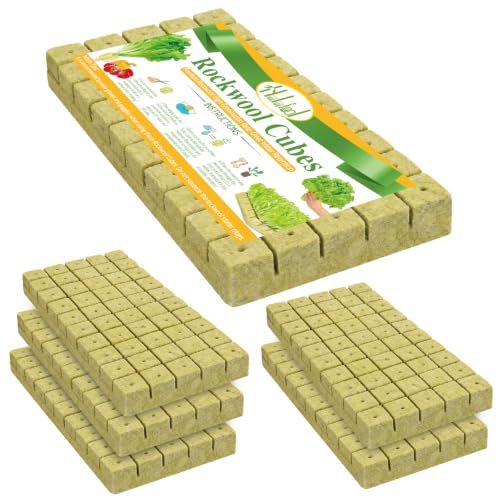
300 pre-drilled rockwool cubes for starting sage seed indoors in trays or net cups.
If you would rather raise Russian sage from seed than buy a potted plant, this is the medium that gets you there. The pack contains 6 sheets totalling 300 rockwool cubes, each one roughly 0.94 by 0.94 by 0.98 inches with a pre-drilled hole for a seed or cutting. Rockwool is spun basalt rock fibre — think of it as a sponge that holds water and air at the same time — and those pre-drilled holes mean seed starting and cloning stay fast and clean instead of fiddly.
The fit is where it earns its place for indoor growers: the cubes work in 10×20 trays, 2-inch net cups, Kratky kits, and DWC and NFT starter sites. The listed method is simple — gloves on, cut to size as needed, soak in nutrient solution to adjust pH and EC, place the seed or cutting, then transplant once roots push through the cube about 0.5 to 1 inch. For a first run at hydroponics or a small propagation round, that is about as low-friction as it gets, and suitable for herbs and vegetables as well as flowering perennials.
The honest split here is durability, and it is loud in the review pages. Some cubes hold together beautifully with uniform density and minimal dust; others crumble when you cut or handle them, with complaints that they disintegrate instead of holding. That is the line to weigh if you plan on reusing or manipulating the cubes a lot. Used gently and presoaked, the majority work exactly as intended.
The value angle: 300 pre-drilled cubes across 6 sheets covers a lot of propagation rounds before you need to reorder.
The trade-off to know: handling quality varies — cut and soak with a light hand and the cubes stay intact.
Best for: anyone starting Russian sage or herbs from seed indoors in trays, net cups, or a Kratky kit.
Think twice if: you need rigid, reusable media that survives heavy handling again and again.
7. Bath’s Pink Dianthus Gratianopolitanus
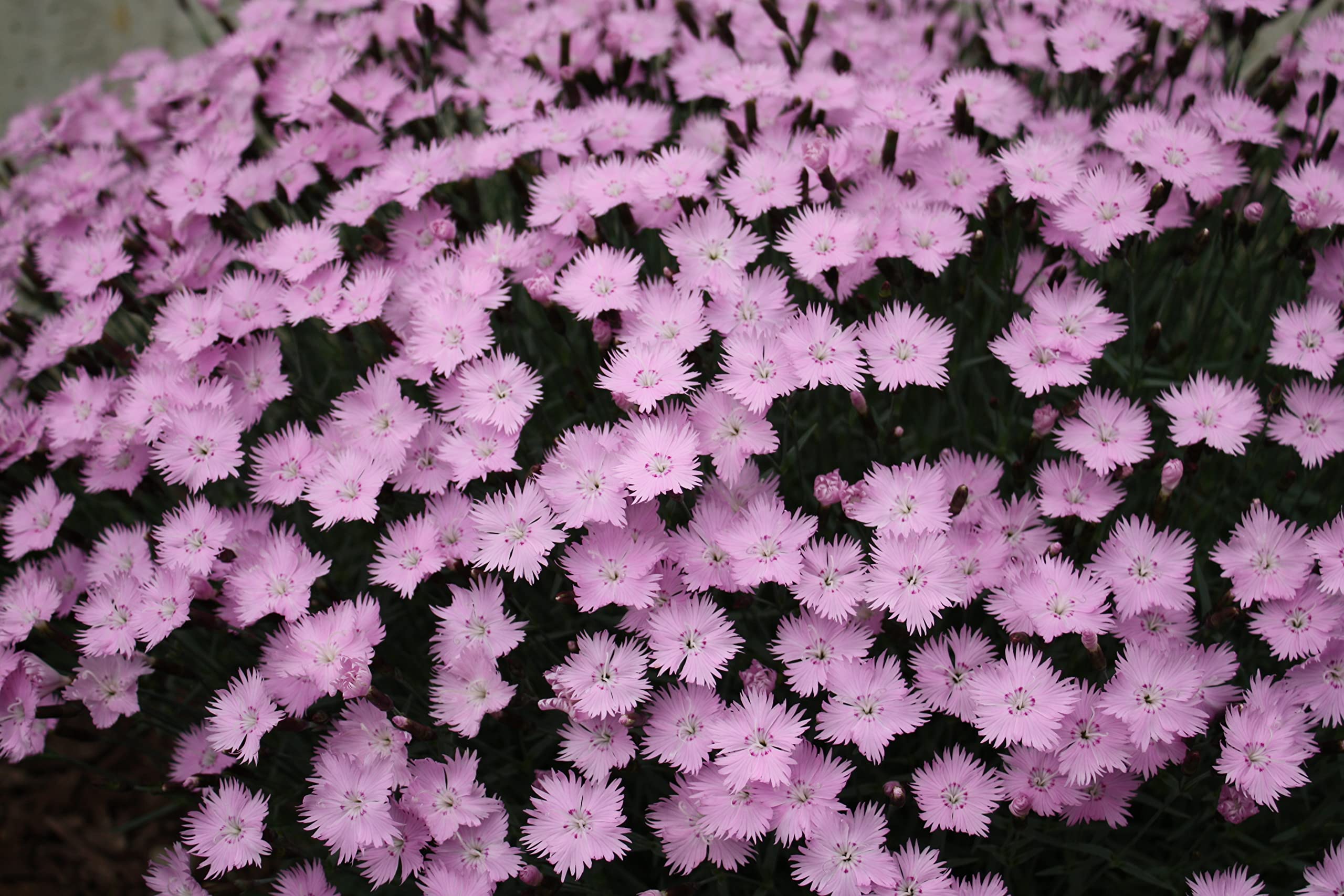
A 12-inch evergreen dianthus, not a sage, for the front edge of a Russian sage border.
Call this the honest outlier. Greenwood Nursery’s Bath’s Pink is a dianthus — cheddar pinks — and it belongs here as a companion, the plant that carpets the ground in front of your silver sage rather than replacing it. It grows under a foot tall, which the listing puts at a 12-inch expected height with a spread of roughly 10 to 12 inches, forming a mat of blue-green evergreen foliage. Fragrant pink blooms appear May to July, and deadheading keeps them coming.
What it adds to a sage planting is tolerance the taller plants lack. It is drought tolerant, handles heat and humidity better than other dianthus varieties, and doubles as a substitute for small lawn areas. Listed for zones 3-8, it wants full or partial sun and well-drained soil, and the one real warning in the listing is drainage — avoid spots where the crown stays wet. Shipping is the part that reads careful: bare-root orders get roots coated in hydrating gel and wrapped in moist paper, potted plants are trimmed and watered and sleeved in craft paper, and everything ships in fitted corrugated boxes. A 14-day guarantee covers the arrival window, though the grower notes it is not responsible for user error.
Be clear-eyed about what arrives. This is a pint-pot plant, and the reviews show the familiar split — some find it reasonably sized and in fantastic condition, while others find it very small or complain of a crushed package. The seller’s own advice is the most useful: water and plant it as soon as it lands so it recovers from transit stress.
Why it belongs: 12 inches tall, evergreen, and pink in early summer — a front row that will not crowd a young sage.
Set the bar right: one pint pot of a modest young plant, so order with the expectation of growing it on.
Go for it when: you want a low, fragrant, evergreen edge under your Russian sage and a plant rated to zone 3.
Spare yourself the order if: you are shopping for sage specifically — this is a different plant entirely, sized small.
Know the Specs
Container Size, Decoded
The #1, quart, 0.65 gallon and 4-inch labels on these listings all describe the pot the root ball is shipped in, and a bigger pot means a more established plant. A #1 container is described as fully rooted and plantable on arrival; a quart or 4-inch pot is a younger start that will need a season to size up. A 0.65 gallon pot sits in between, and the grower notes those plants are roughly a year old at shipment. None of this makes a small pot bad — it simply tells you how much growing you are doing yourself.
Expected Plant Height and Mature Spread
Two different numbers hide behind “height” on a plant listing. Expected plant height is the mature size in the ground; the arrival height is the shipping size, which is often tiny by comparison. A 6-inch listing height on a 0.65 gallon plant is the starting line, while the same plant is listed at 30-32 inches tall by 24-28 inches wide at maturity. Read both, and plan your spacing on the mature number.
USDA Hardiness Zones
The zone range printed on each listing is the coldest winter the plant is expected to survive, measured on the USDA scale. Zones 4-9 is a wide, forgiving range; 5-8 is a touch narrower. A plant outside its zone may grow in summer and never return after winter, so check the printed range against where you garden before you order.
Drainage and Sun
Russian sage is a sub-shrub that wants relentless drainage and sun. Listings here call out sandy soil, exceptionally well-draining soil, drought tolerance, and 4+ hours of sun depending on the plant. Wet, heavy ground is the weak spot — the crown can rot in winter even inside the right zone. Full sun strengthens stems and drives flowering, which is why it repeats across the care notes.
Common Questions
How tall does dwarf Russian sage actually get?
Will Russian sage come back every year?
Why did my plant arrive small, dormant, or with no leaves?
Is Russian sage the same as culinary sage, and can I eat it?
How much sun does dwarf Russian sage need?
Can I grow Russian sage from seed instead of buying a plant?
How close together should I plant dwarf Russian sage?
What if my live plant arrives damaged in shipping?
Does Russian sage attract bees and butterflies?
Can I plant Russian sage in a pot?
The Bottom Line
The best dwarf Russian sage for most gardens is the Green Promise Farms Perovskia atriplicifolia, because a fully rooted #1 container means you plant it the day it lands rather than nursing a plug through its first season. If your bed is tight and you want the silver look without the sprawl, the ‘Little Spire’ holds 30 inches with a zones 5-9 range behind it. And for an exposed, windy site that eats softer perennials, reach for the ‘Sage Advice’ 0.65 gallon and its zone 4-9, drought-tolerant listing. One quiet nudge: whichever you choose, order in the warm months so the plant arrives in growth, not dormant.
How we choose
We do not accept paid placement. Every pick is matched to a real buyer and a real use-case; we do not hands-on test units.
Sources
Specifications: manufacturer listings and product documentation. Review insights: verified customer reviews, as of October 2026. Pricing: not shown on this page (it changes often); check the current price via the retailer link.
As an Amazon Associate, Aappliancez earns from qualifying purchases. This does not affect which products we feature.