Disclosure: Some links in this post are affiliate links. As an Amazon Associate I earn from qualifying purchases, at no extra cost to you. Learn more
Specs are compiled from manufacturer listings and verified buyer reviews and can change over time — please confirm the key details on the product page before buying.
You want a shrub that turns red in cold weather and asks almost nothing of you. That is exactly what a dwarf nandina does — it is a compact evergreen that flushes brilliant red foliage in fall and winter, then settles back to green for summer. The catch is that live plants ship as small seedlings or plugs, and the size you actually open on the doorstep varies wildly between sellers. This guide sorts the current picks by what arrives, how it holds up, and how much watering it wants from you.
This guide is built by comparing the manufacturers’ published specifications and the patterns across verified customer reviews, so you get each pick’s real strengths and trade-offs instead of marketing spin.
Size is the number one surprise for live-shrub buyers, so every pick below is judged on how it ships and how it settles in. Here is an honest, side-by-side look at the best dwarf nandina plant options for your beds, borders, and patio pots this season.
Top Picks
How To Choose The Best Dwarf Nandina Plant
Start with your winter. A nandina lives or dies on cold tolerance, and every listing you look at names a USDA zone range — that is the band of winter cold a plant can survive in. Match your zone to the listing before you look at anything else, because a beautiful shrub in the wrong zone is a dead shrub by February.
Read the mature height, not the pot size
The pot size on a live-plant listing tells you what the roots ship in, not how tall the shrub will finish. Mature height is what decides placement. A compact variety that finishes around 30 inches fits a patio pot or a low border. A four-foot variety wants room to spread into a hedge or a bed anchor.
Decide if you want fruit
Not all nandina varieties produce berries. Some are grown specifically to skip fruit, which means no messy dropped berries on a walkway and no seedlings volunteering in your beds. If clean hardscape matters to you, look for a variety described as not producing fruit.
Check the watering need against your schedule
Some nandina want regular watering while they establish. Others are listed as needing little to no watering once they are in the ground. Be honest about your hose habits — a shrub that wants consistent moisture will sulk in a dry bed if you forget it for two weeks.
Side-by-Side Comparison
| Model | Best For | Mature Size | Hardiness | Watering Need | Amazon |
|---|---|---|---|---|---|
| Obsession Nandina (2.5 Quart)★ Best Overall | Deer-heavy yards | 3-4 ft H x 3-4 ft W | USDA Zone 6-10 | Little to no watering | Amazon |
| Perfect Plants Firepower Dwarf Nandina, 1 GallonBest for Fall Color | Fall color without berries | 30 in. tall and wide | USDA Zone 6-11 | Regular watering | Amazon |
| Perfect Plants Gulfstream Nandina, 1 Gallon | Year-round color shifts | 3 ft tall and wide | — | Regular watering | Amazon |
| 1 Dwarf Nandina Firepower (ornamental shrub) | Single accent plant | 2 ft | — | — | Amazon |
| Firepower Heavenly Bamboo, 3 Live Plants | Filling a border row | — | — | Well-drained soil | Amazon |
Detailed Reviews
1. Obsession Nandina (2.5 Quart) Multicolor Evergreen Shrub
Our pick — 4.0+★ from 100+ verified ratings; the strongest balance of quality and price.
A 3-4 foot nandina that resists deer and needs little to no watering once established.
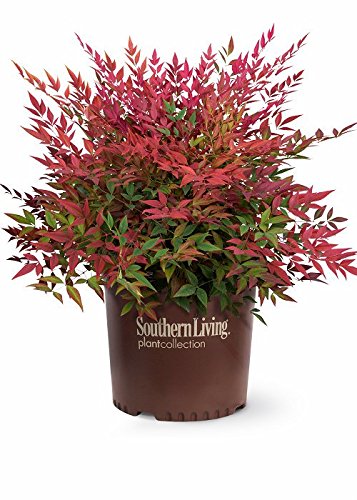
The Obsession is the tallest shrub on this list, and that changes how you plant it. At a mature 3-4 feet high and 3-4 feet wide, it works as a real bed anchor rather than a squat border filler. Compare that with the Perfect Plants Firepower at 2 feet expected height, and the Obsession is the pick when you want presence from a single plant instead of a row of small ones.
The other big number here is the watering requirement. Southern Living lists this one as needing little to no watering, which is what makes it the easiest variety for someone who travels or forgets the hose. It also ships as a 2.5 quart pot already filled with soil, so it arrives as a rooted plant rather than a bare plug you have to baby through the first month.
The label says deer resistant, and that is worth taking seriously if you live where the herd walks through nightly. Its draw is the foliage show — green, then burgundy, then vivid red — on a shrub that needs little to no watering. One honest note: listed as not producing blossoms or fruit, so anyone hoping for berries should look elsewhere. It also cannot ship to Hawaii or Alaska.
What makes it the top pick
- 3-4 ft mature height and width — enough plant to anchor a bed on its own.
- Little to no watering once it is established, so a skipped week does not cost you the shrub.
- Deer resistant on a plant that keeps red foliage through the cold months.
- Ships in a pot with soil — a rooted plant, not a bare plug.
Where it draws the line
- Listed as no blossoms, so you get foliage color but no berries.
- Cannot ship to HI and AK.
- Its 4-foot spread needs real room — a narrow strip will not hold it.
Plant it here: a sunny or part-shade bed in USDA Zone 6-10 where you want one shrub to carry the whole corner.
Room to check first: that 3-4 foot width wants a bed, not a tight foundation strip.
2. Perfect Plants Firepower Dwarf Nandina, 1 Gallon
A 30-inch, fruitless nandina that turns bright red and pink in fall and winter.
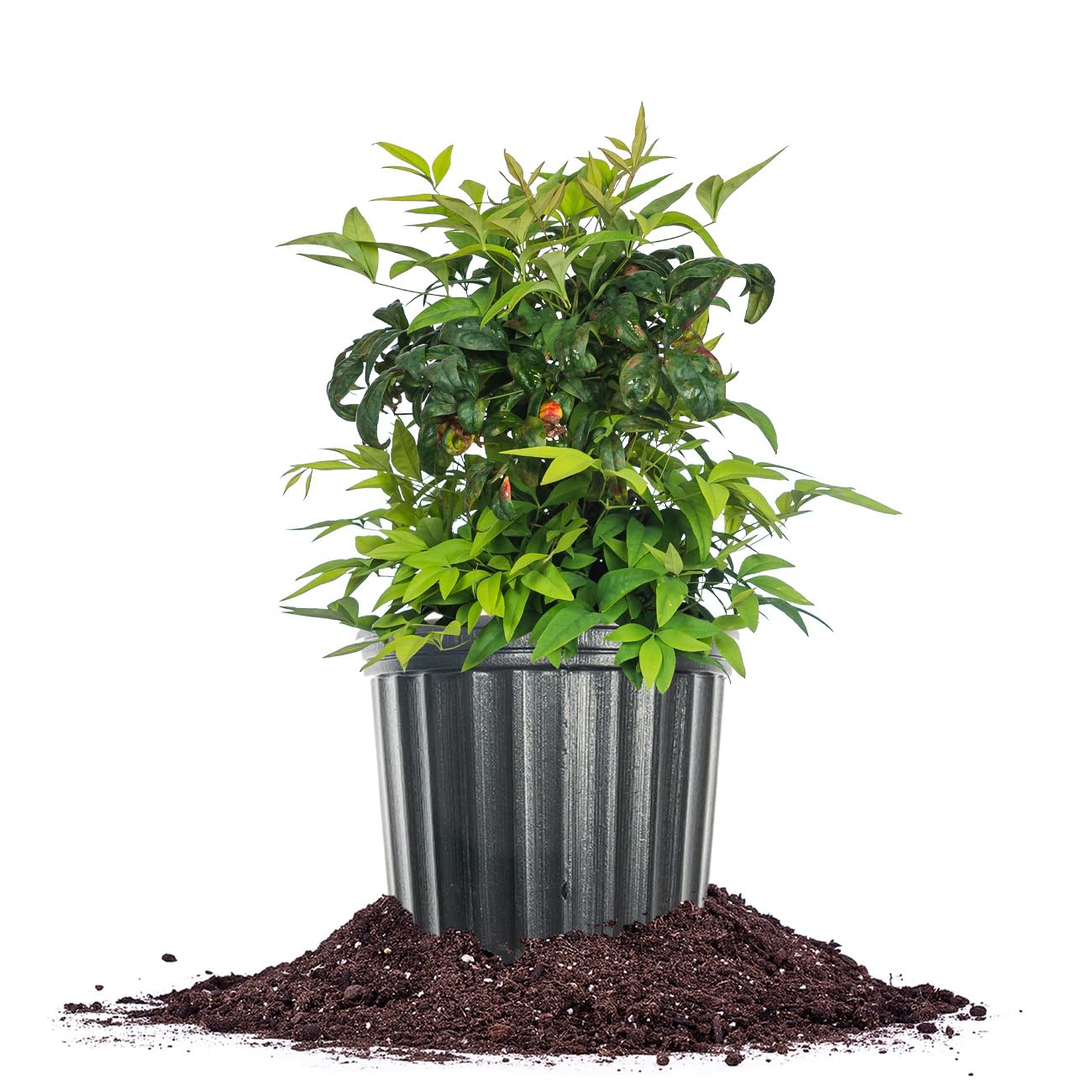
This is the variety to pick if you want the color without the cleanup. Perfect Plants describes the Firepower as not producing fruit, unlike other nandina varieties — so no dropped berries staining a walkway and no volunteer seedlings in your mulch.
The foliage does the work: green new growth through spring that turns to bright red and blush pink through fall and winter. It tops out at 30 inches tall and wide with a round, mounded habit, which makes it a natural fit for a container on a porch or a low front border. That is a foot shorter than the Perfect Plants Gulfstream at 3 feet, so pair the Firepower with pots and the Gulfstream with beds.
Hardiness is the other strong point. It is listed for USDA zones 6-11, developed originally in New Zealand, and needs little pruning once it settles in. The trade-off is water: this one wants regular watering and consistent moisture, so it is not the variety for a dry bed you ignore. Growth reports also split — some plants go strong while others struggle to flourish, so buy it knowing the first season is the test.
Why the Firepower earns a slot: a 30-inch mounded shrub with no fruit to clean up and zones 6-11 on its side is the cleanest small-space choice here.
The honest caveat: regular watering is a real commitment, and this variety has as many reports of slow starts as fast ones.
Go with this one if: you want that pink-and-red winter flush in a pot or low border and you will actually water it.
Look past it if: your planting bed is dry, forgotten, and far from a spigot.
3. Perfect Plants Gulfstream Nandina Shrub, 1 Gallon
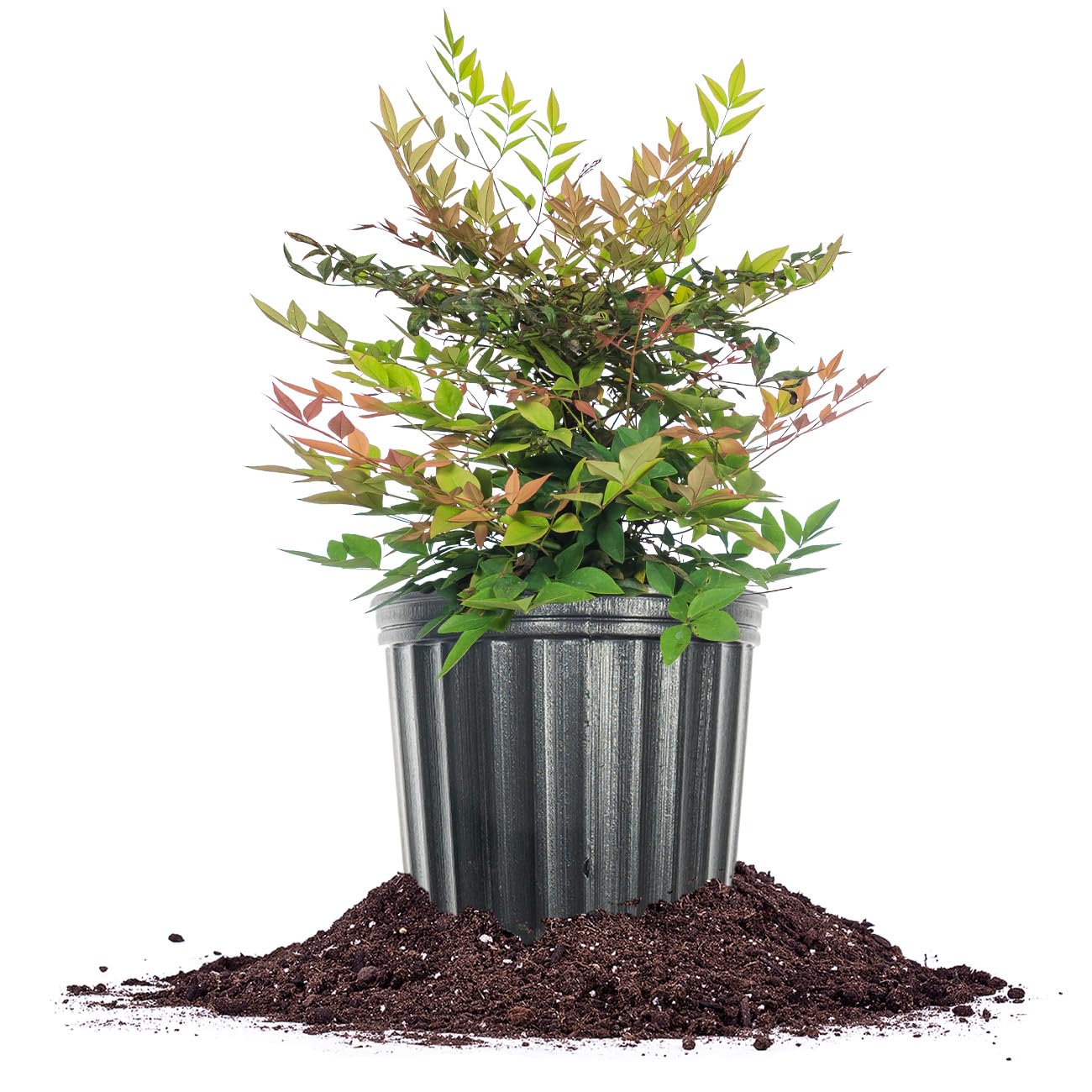
Scarlet spring growth, blue-green summer foliage, and intense autumn red on a 3-foot shrub that wants regular watering.
Most nandina give you one good show. The Gulfstream gives you a cycle. It pushes scarlet red new growth in spring, that foliage matures to a bluish green through summer, and then intense autumn red comes back as the season turns. Plant one where you walk past it daily and the shifting color is the point.
At 3 feet tall and wide with a round growth habit, it sits between the compact 30-inch Firepower and the 4-foot Obsession — a useful middle size for a low hedge line or a mixed bed. Shipping is where this pick quietly shines. Buyers report the box arrives secure with plants held firmly in place, and the review pages sum it up with lines like “Arrived in secure box. Plants were very healthy with new growth occurring from the start.”
Owners mention the box arrives secure with plants held firmly in place and healthy new growth from the start. One recurring note is size — the plants can come smaller than a first-time live-shrub buyer pictures. Treat the first season as establishment, keep the water consistent, and let it fill out. It is not a shrub that arrives looking like the mature photo.
What it does better than the others: the scarlet-to-blue-green-to-autumn-red cycle gives you three looks from one 3-foot shrub.
The catch worth knowing: it ships small, and the listing says regular watering — this is not a plant-and-forget pick.
Matches your plan if: you want a mid-size shrub with changing foliage and you will water it through the first summer.
Think twice if: you expect a gallon pot to arrive garden-center full.
4. 1 Dwarf Nandina Firepower (ornamental shrub)

A single 2-foot nandina for full sun to part shade, though customers note it arrives far smaller than the pot implies.
This is a single-plant listing with a 2-foot expected height and a green-to-red color range, and it handles both full sun and partial shade. On paper it is the simplest way to add one nandina to a mixed border. In practice, the size is the story — and not in a good way for everyone.
As reviewers point out, the plant that arrives can be far smaller than a gallon pot implies. One described it as “tiny” and closer to a quarter quart, and another said they expected a 1 gallon container and were shocked at how small it was. Another reported planting it in the ground with potting soil and seeing no growth after a month. The most telling caution comes from a yard with deer pressure: “Plant did not last 24 hrs before Deer ate!”
None of that makes it a bad plant — it makes it a plant you buy with open eyes. It ships healthy in the reviews that go well, the shipping is prompt, and the price is the mid-range point of this group. What you are accepting is a small starting plant and a first season where you watch it closely. If you have deer, this is not the pick to gamble on.
Best suited to: a gardener who wants one compact accent plant and does not mind nursing a small start.
Wait on it if: you have deer traffic — the reviews on that point are blunt.
5. Firepower Heavenly Bamboo, 3 Live Plants
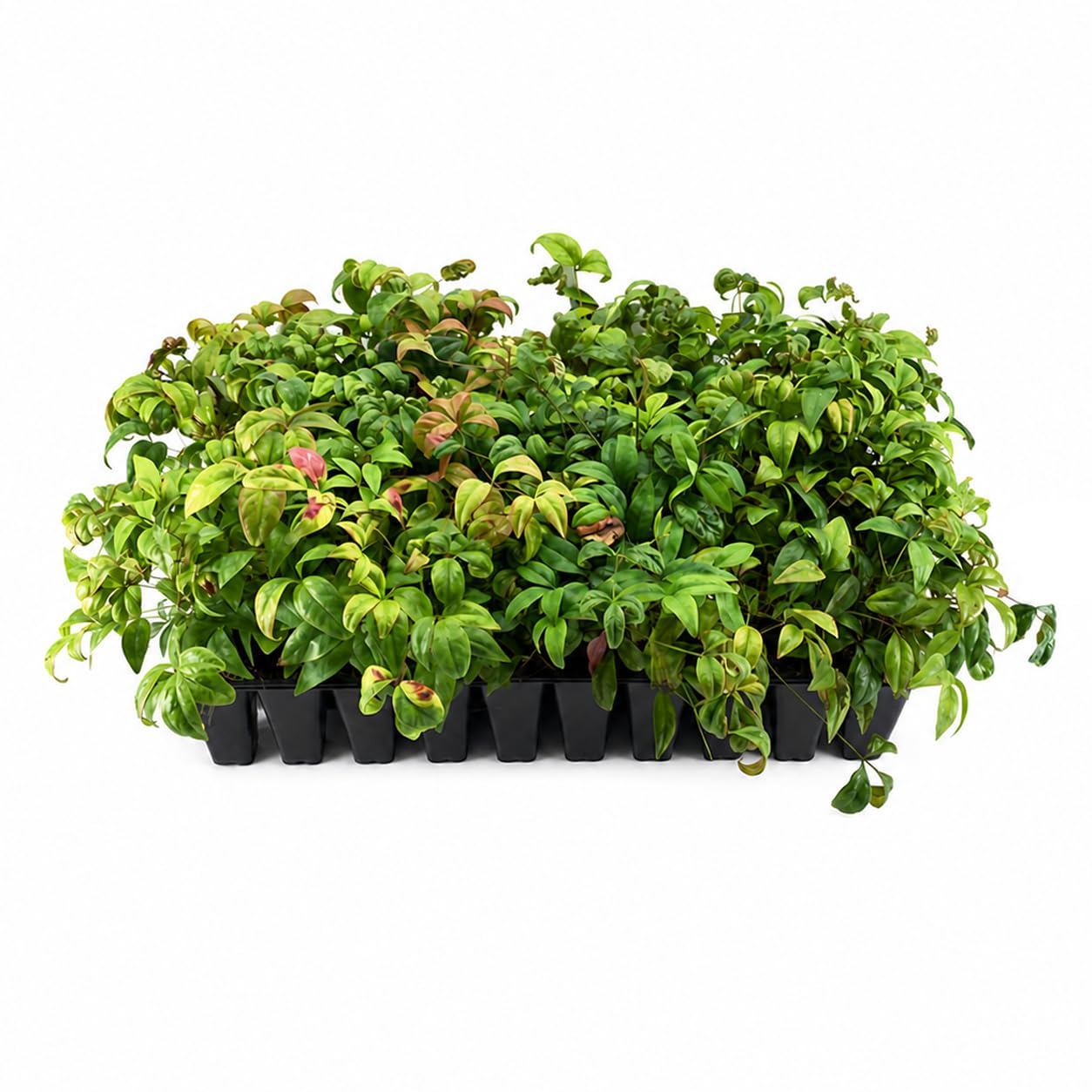
Three Firepower nandina plants for lining out a border, shipped as very small plugs.
You get three plants in one order here, where the single-plant picks ship one. That is three times the plant count of the Dwarf Nandina Firepower single, so it suits you when you are lining out a border and need several shrubs at once. Florida Foliage lists it as a compact variety (a small, tidy grower) suited to small gardens, containers, and borders.
It wants full sun and sandy, well-draining soil, so it is a fit for a bright, fast-draining bed rather than a heavy clay corner. The color story is the same evergreen red you want — bright foliage that holds through the year, with a winter blooming period noted in the specs. Planting window runs fall to spring, giving you a wide stretch to get them in the ground.
Here is the catch, and it is a real one. These arrive as very small plugs — one summary put it plainly, describing three tiny yellow-looking plugs. Some grow well and turn a beautiful red over winter, and others never take. If you are patient with seedlings and want quantity, this delivers it. If you want something that looks established on day one, spend the extra on a single larger plant instead.
Reach for this if: you need three plants for a row and you are fine coaxing small plugs along.
Spend elsewhere if: you want instant structure — a single larger shrub covers a gap faster.
Know the Specs
Mature Height and Spread
This is how big the shrub gets after a few seasons, not how big it is on arrival. A listing that says 30 inches tall and wide describes a shrub that fits a porch pot or a low front border. A listing that says 3-4 feet high and 3-4 feet wide describes a plant that wants a bed with real elbow room. Check this number before you buy — it decides spacing between plants and whether a container will hold it long term.
USDA Hardiness Zones
A zone number is a band of winter cold a plant is rated to survive, and the ranges run higher as your winters get milder. A listing rated zones 6-11 covers a wide stretch of the country. A listing rated zones 6-10 covers slightly less. If your zone sits outside the listed range, the plant may not survive a hard winter, and no amount of care in summer fixes that.
Watering Requirement
Some nandina are listed as needing little to no watering once established, which means they can handle a dry stretch. Others list regular watering and consistent moisture, which means they want attention through the first season especially. Match this to your habits — a plant that wants steady water and gets none will stall, and a nandina that stalls in its first year is slow to recover.
Fruit and Berries
Not every nandina produces berries. Some varieties are described as not producing fruit, which keeps dropped berries off your walkway and stops seedlings from volunteering in beds. Others bear fruit in season. If clean hardscape or low maintenance matters more to you than berries, choose a variety listed as fruitless.
Common Questions
Will a dwarf nandina survive winter in my zone?
Why did my nandina arrive so much smaller than the pot size suggested?
Do all nandina varieties produce berries?
How much watering does a nandina need after planting?
Is nandina deer resistant?
Can I grow dwarf nandina in a container on a patio?
What soil does dwarf nandina want?
When is the right time to plant a nandina?
Is it worth buying three small plants instead of one larger one?
What happens if my shipped plant arrives damaged?
The Bottom Line
For most yards, the dwarf nandina plant winner is the Obsession Nandina — the crowd favorite that takes little watering, stays deer resistant, and carries green, burgundy, and red foliage through the seasons. The one visible trade-off is that it carries no fruit, so you get color without berries. If a berry-free, compact shrub with a brilliant fall flush is what you are after, the Perfect Plants Firepower Dwarf Nandina is the one to reach for, rated for zones 6-11 and mounded at 30 inches. And if you are lining out a whole border on a budget, the Firepower Heavenly Bamboo 3-pack gives you three plants to start, provided you have the patience for small plugs.
How we choose
We do not accept paid placement. Every pick is matched to a real buyer and a real use-case; we do not hands-on test units.
Sources
Specifications: manufacturer listings and product documentation. Review insights: verified customer reviews, as of October 2026. Pricing: not shown on this page (it changes often); check the current price via the retailer link.
As an Amazon Associate, Aappliancez earns from qualifying purchases. This does not affect which products we feature.