Disclosure: Some links in this post are affiliate links. As an Amazon Associate I earn from qualifying purchases, at no extra cost to you. Learn more
Specs are compiled from manufacturer listings and verified buyer reviews and can change over time — please confirm the key details on the product page before buying.
The hard part of buying a dwarf juniper isn’t picking one — it’s buying a plant that arrives alive, stays alive past the first month, and is actually the juniper you thought you were getting. Most one-star juniper orders fail for the same boring reasons: a bare-root stick that dried in transit, a pot with no drainage, or a tree that was already half dead before the box was sealed. So the real question is which listings ship healthy stock and which just ship green photos.
This guide is built by comparing the manufacturers’ published specifications and the patterns across verified customer reviews, so you get each pick’s real strengths and trade-offs instead of marketing spin.
Below you get the honest split: outdoor junipers versus indoor-tolerant alternatives, nursery plastic pots versus glazed ceramic, and the truth about how small these trees really arrive. Here is the practical shortlist for the dwarf juniper tree.
Top Picks

How To Choose The Best Dwarf Juniper Tree
Start with the simplest question, because it kills most bad purchases: is your spot outdoors or indoors? A juniper wants real sun and moving air. A windowsill in a heated room is not the same thing, even when light spills through the glass.
Outdoor or indoor is not a style choice
Junipers need to live outside. Several listings here say so outright — one is described as “Strictly an Outdoor Tree,” another warns it “is not suitable for permanent indoor use.” If your only light comes from a bright window you can’t open, pick a succulent bonsai instead of a juniper. Choosing the right species for your light saves more junipers than any watering schedule.
Read the pot before the plant
A pot with drainage holes lets excess water escape. Water that can’t drain sits around the roots, and juniper roots rot in standing water. Glazed ceramic looks better on a shelf; a plastic nursery pot is more forgiving while the tree settles in. Either works, as long as the water has somewhere to go.
Mature tree or starter stock
A six-year-old tree arrives with a trunk, branch structure, and shape already in place. A starter plant is a green mound you’ll spend a year shaping. Neither is better — the mature tree buys you time, the starter buys you the shaping. Just match the age claim to the price you’re paying and accept that small plants arrive small.
Side-by-Side Comparison
| Model | Best For | Light Need | Height | Pot Material | Amazon |
|---|---|---|---|---|---|
| Live Dwarf Juniper Bonsai, 6 Years Old, Ceramic Fisherman★ Best Overall | Gift-ready display tree | Direct sun or patio | 6 in | Glazed ceramic | Amazon |
| Live Dwarf Juniper Bonsai, 3 Years Old, Plastic PotHighest Rated | Highest-rated pick | Outdoor, natural sun | 6 in | Plastic nursery | Amazon |
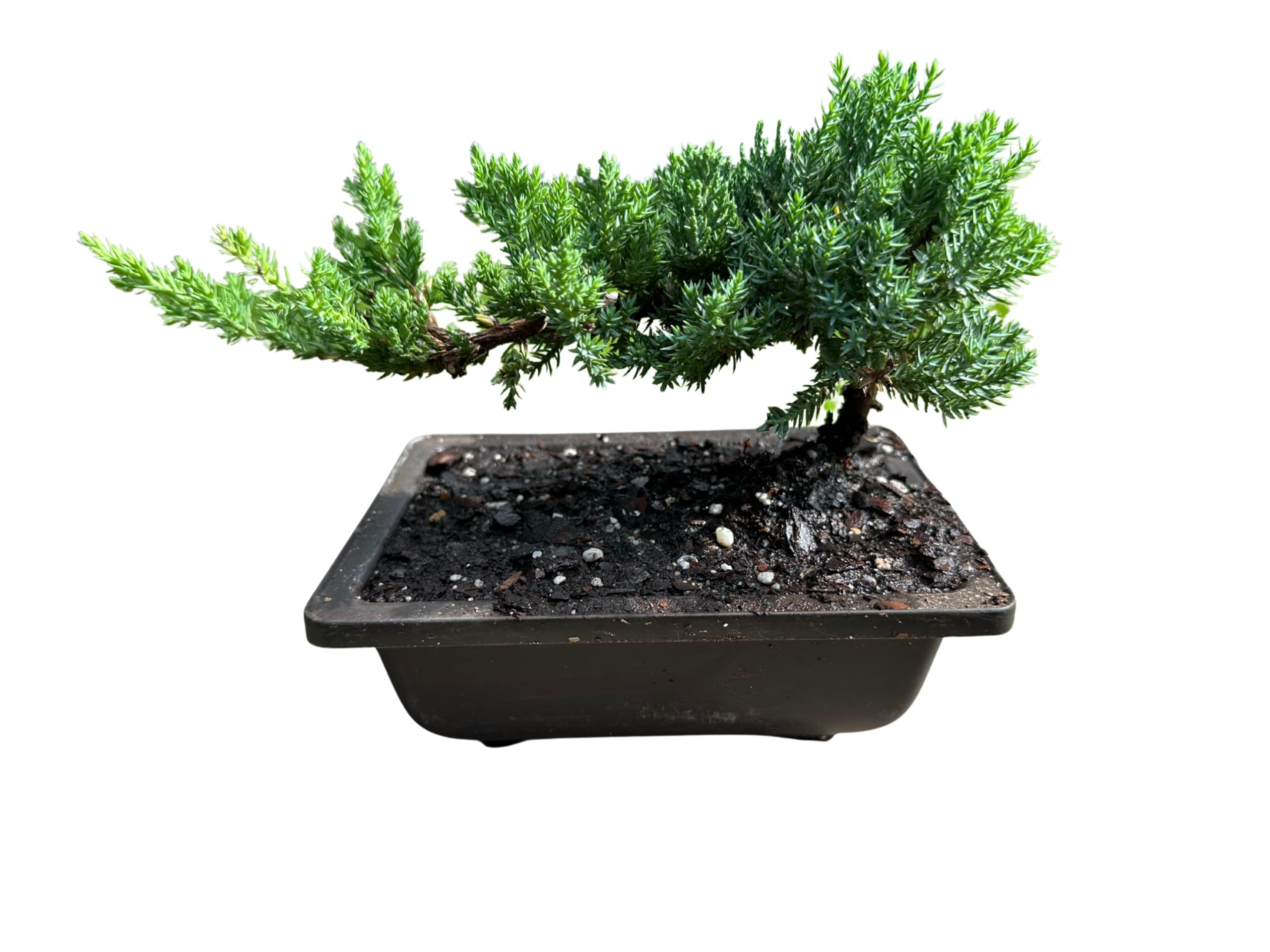
| Healthy Juniper Outdoor Bonsai (Windswept Pre-Bonsai) | Learning to wire and shape | Low morning sun, outdoor | 5 in | Nursery | Amazon |
| Brussel’s Bonsai Small Juniper, Potted Outdoor Plant | Zen patio centerpiece | Outdoor | 7 in | Ceramic zen pot | Amazon |
| Brussel’s Bonsai Small Jade, Potted Indoor Plant | Desk and shelf greenery | Bright indoor light | 6 in | Ceramic bonsai pot | Amazon |
| Dwarf Japanese Garden Juniper, Large 4 Inch Pot | Rock gardens and slopes | Full sun | 8–12 in | Nursery | Amazon |
| Juniper Procumbens Nana, 3 Live Plants | Groundcover in bulk | Full sun | 12 in | Starter pack | Amazon |
Detailed Reviews
1. Dwarf Juniper Bonsai Tree Ceramic Fisherman
Our pick — 4.0+★ from 600+ verified ratings; the strongest balance of quality and price.
A six-year juniper with a fisherman on the moss — this is the one people photograph.
What you’re buying here is time. Six years of growth means the trunk has girth, the branches already carry a shape, and the tree reads as a finished display instead of a green sprig. It sits in a glazed ceramic pot fired at high temperature, with an artificial moss layer that makes the whole thing look staged in the good sense. The pot measures 7 inches deep, 4 inches wide, and 6 inches high, so it fits a desk corner or a bathroom shelf without dominating either.
Owners most often sum it up in one word: easy. That’s a little generous — junipers want direct sun and fresh air, and the listing is blunt that you should keep the soil moist and never let it dry out. Care instructions ship with each order and buyers lean on them heavily, which is exactly why the tree tends to settle in rather than sulk. The pot colour and the tree’s shape vary from unit to unit, so treat the photo as a style guide, not a guarantee.
Buyers single out the fisherman and panda figurines as the charm of the display. The honest catch is dormancy (the tree’s winter slow-down) and shipping risk. The tree slows down in winter, and the maker says outright that a tree may die during the return trip, so don’t buy on a whim and ship it back if it isn’t love at first sight. Budget-conscious buyers also notice the tree is smaller than a six-year-old juniper sounds — one reviewer who expected more bulk chose to keep it anyway.
six years of shaping
- Six years of growth means a shaped, display-ready tree, not a seedling
- High-fired glazed ceramic pot with artificial moss — gift-ready on arrival
- Care instructions included, and the care itself is simple: sun, air, steady moisture
- A genuinely good gift for someone setting up a Japanese-inspired space
ceramic pot chips
- Pot colour and tree shape vary unit to unit — the photo is a guide only
- Smaller than the age suggests, and priced like a mature tree
- Winter dormancy is real, and the maker warns against return shipping a living tree
buy for maturity: you want a finished, gift-ready juniper with a ceramic pot and don’t mind paying for the extra years.
skip for repotting: you’d rather spend less and shape a younger tree yourself — the 3-year-old pick further down does exactly that.
2. Dwarf Juniper Bonsai Tree Plastic Pot
Three years old, hand-trimmed, and shipped in the pot that keeps it alive.
This one doesn’t pretend to be a display piece — it’s a working tree in a sturdy plastic nursery pot, sized to promote healthy root growth. At 14.4 ounces it is the lightest thing in this group to handle and re-pot, and the same 7-by-4-by-6-inch footprint as the six-year tree means it fits the same shelf. Hand-trimmed and shaped for unique beauty, per the listing, so no two arrive identical.
The shipping story is the strong one. Junipers usually arrive looking battered after days in a box, and this one lands damp and intact — buyers report the wrapping was tight, the soil still moist, and the tree green and growing weeks later. It’s also the pick for people who want to do the bonsai part themselves: repotting into ceramic is explicitly supported once it acclimates.
Where it asks something of you is water. In summer the listing says water thoroughly twice a day, morning and evening, until water runs out the bottom. Winter drops to once in the morning. Miss that rhythm in a heatwave and a juniper punishes you. Size is the other honest note — the tree is smaller than the three-year label suggests, so treat the height as the ceiling rather than a promise.
young tree to train: twice-daily watering from morning to evening with drainage until it runs clear. Get that right and everything else is easy.
needs sun daily: it needs outdoor air and natural light, full stop. The plastic pot is the practical choice for that because it survives being moved around.
start here: the highest-rated juniper here, and the one to buy if you want a healthy starter and don’t need the ceramic theatre.
avoid for shade: plan for two waterings a day in summer, or pick the drought-tolerant groundcover instead.
3. Healthy Juniper Outdoor Bonsai Tree, Windswept Pre-Bonsai

Five inches of windswept juniper built to be bent, wired, and reshaped by you.
At 1.5 pounds, this is the lightest juniper on the list — 3.3 times lighter than the three-plant Procumbens Nana pack, and a fifth of the heft of a one-plant garden juniper. That matters because it’s a pre-bonsai: a young tree whose branches respond well to wiring and reshaping. Five inches tall, one plant, in a 4-inch pot with a spread of 6-7 inches. It is a New England Bonsai Gardens exclusive, so you’re not buying the same generically sourced stock as everyone else.
What people notice first is quality, and the shape in second place. It arrives protected, healthy, and pre-shaped as advertised — customers say it matches the product photos, and one buyer moved it straight into an 8-inch pot with orchid bark, perlite, and cactus soil. It then thrived on a sunny windowsill for the first few months. The truth, though, is that junipers belong outside: the listing asks for low-intensity morning sun and warns off direct afternoon light and a permanent indoor spot.
The main variable is size. This is a small, young plant, and a few buyers expected more bulk — that’s the real trade-off for the low weight and lower entry price. It’s also an outdoor tree that isn’t sold in California, which rules it out for buyers in the state.
suits tinkerers: the buyer who wants wire, a shape in progress, and a tree that becomes their own project.
not for instant looks: anyone expecting a full, display-ready specimen on day one — that’s the six-year tree at the top.
4. Brussel’s Bonsai Small Juniper, Potted Outdoor Plant
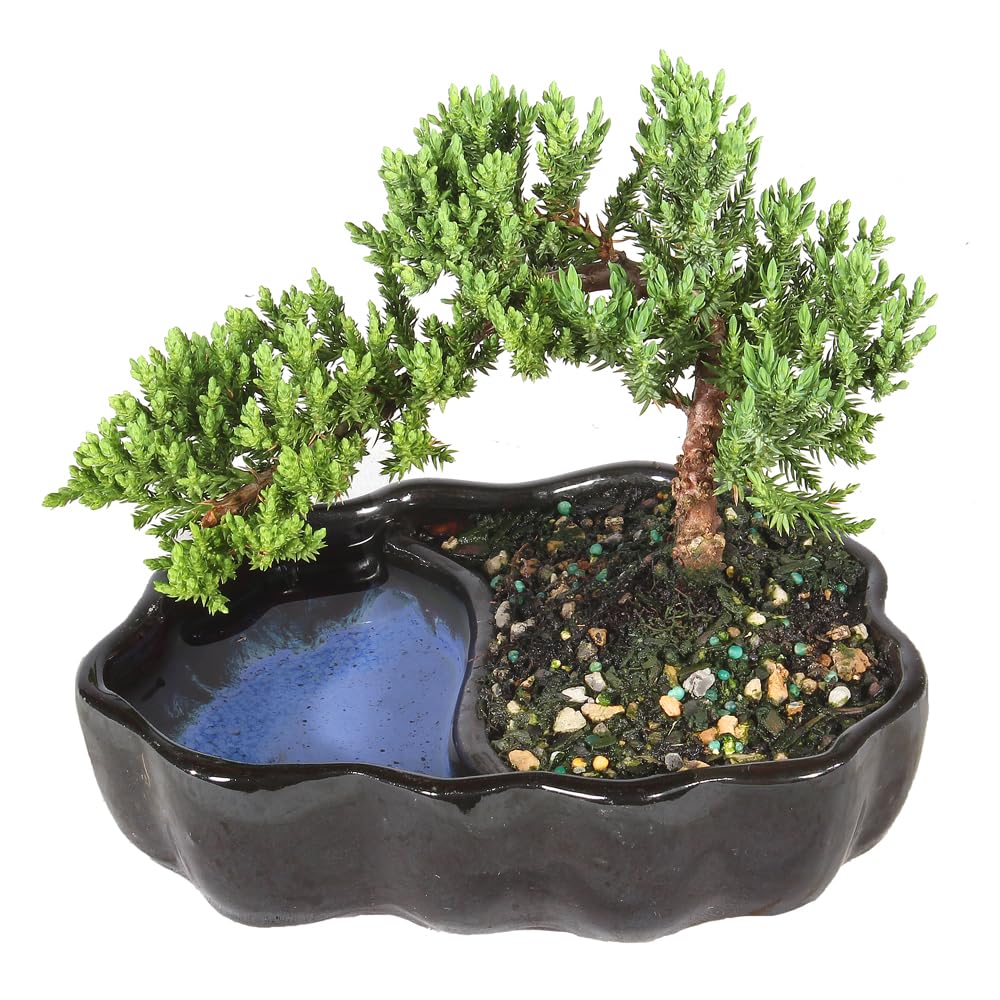
A Green Mound juniper in a Zen ceramic pot, built for the patio rather than the desk.
This is the biggest-looking juniper here — carefully grown to 3 years old, listed at 7 inches tall and described as 6-8 inches, in a zen reflections ceramic pot that gives it a modern, restful look. It’s the version you set on a porch or balcony and let visitors ask about. Brussel’s is the name on it, cultivated in Mississippi, and the pot ships the same way the tree does: container colour and shape vary from unit to unit.
Appearance is what wins people over. Repeatedly. Owners mention it looks better in person than in the photos, arrives well-packed with instructions, and one found it larger than expected. The Zen pot does a lot of the decorative lifting, and it’s a genuinely good look on a weathered outdoor table.
The real conversation is durability. Junipers die — not always because of the seller, but it’s the honest risk with every live plant, and it’s the single most-discussed concern with this one. Sometimes a tree arrives already brittle, and no amount of watering brings it back. Treat living condition as the variable you can’t fully control, buy from a vendor that ships fast, and know that Brussel’s won’t ship to Alaska or Hawaii and prefers to ship when nighttime temperatures exceed 50°F.
display-ready small juniper: that ceramic Zen pot and the 7-inch Green Mound juniper inside it. This is a centerpiece, not a work-in-progress.
thirsty in summer: junipers are outdoor plants and nothing about this one bends that. Patio, porch, or balcony with sun — not a bookshelf.
your match: you want a larger outdoor juniper in a pot worth showing off, and you’re ready to accept living-plant risk.
look elsewhere: you need a plant you can keep indoors year-round — grab the jade instead.
5. Brussel’s Bonsai Small Jade Live Bonsai Tree
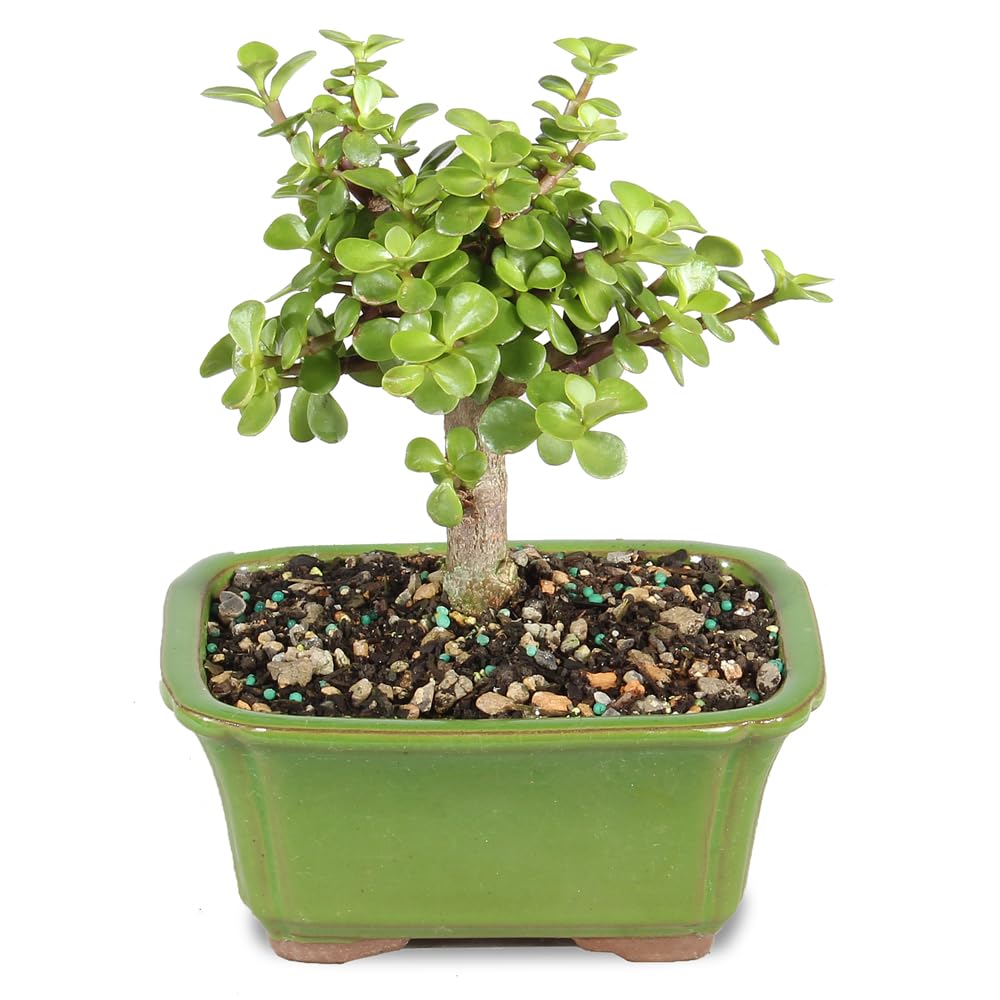
Not a juniper at all — the indoor succulent that spares you the patio argument entirely.
Worth being clear about this: the Dwarf Jade is Portulacaria afra, a succulent, not a Juniperus. That’s why it’s here. It’s the pick for the buyer who read everything above, realised they only have a windowsill, and wants a bonsai that actually tolerates indoor life. It arrives in a ceramic bonsai pot, ready to display, 6 inches tall and 3 pounds, with a thick woody trunk and small glossy green leaves. Brussel’s grows it in Mississippi.
The jade is famously forgiving — bright light, minimal watering, a succulent’s patience. What owners describe most vividly is how fast it puts on growth compared to a juniper. It fills out into a compact, bushy shape instead of sitting still, so trimming stays fun rather than a waiting game. Watching a slow plant suddenly put on growth is a genuine delight.
Two honest notes. Container colour and shape vary, so the navy blue pot some people get is not guaranteed. It’s an indoor plant, so skip it if you want the outdoor, sun-and-air experience you came in looking for. It also won’t ship to Alaska or Hawaii.
pick it: your only growing space is indoors and you want a low-maintenance succulent with a woody base.
skip for speed: nothing but a real juniper will do — this is a different species with a different look.
6. Dwarf Japanese Garden Juniper, Large 4 Inch Pot
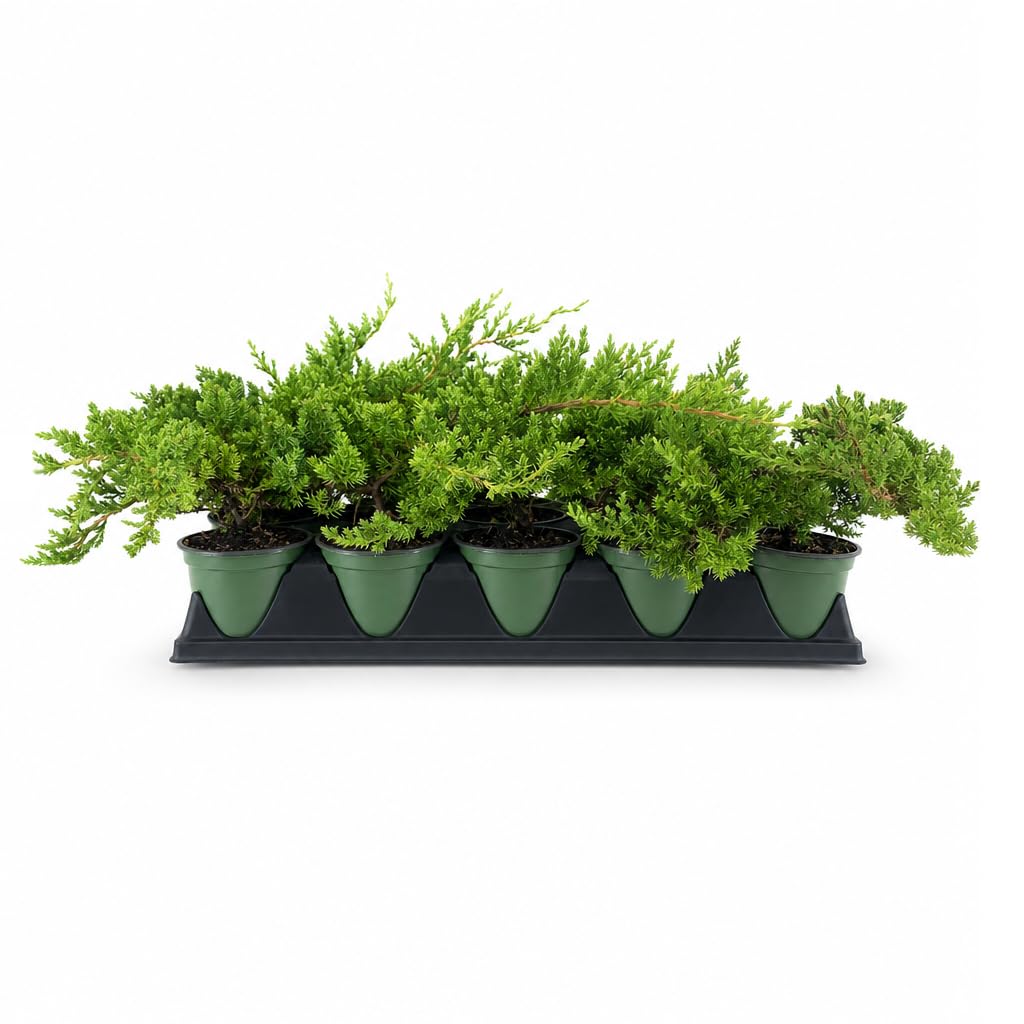
The ground-hugging juniper that turns a rocky slope into a carpet of blue-green.
Here’s what the juniper can do when you stop putting it in pots. Juniperus Procumbens Nana is a dwarf form with spiny-pointed blue-green needles, listed as typically growing 8-12 inches tall and spreading to 6 feet wide over time. New growth is bright green and turns bluish as it matures; winter pulls a purple tint into the foliage. It’s one plant, 3 pounds, in a large 4-inch pot, rated to USDA Zone 3, and it prefers dryish, sandy soil in full sun.
Buyers consistently get healthy, wrapped stock that didn’t dry out in transit. The wrapping gets as much credit as the plant — it arrives bright and green, ready to go straight into the ground. For rock gardens, foundations, slopes, and cascading over a retaining wall, this is the right shape of plant. It takes hot, dry conditions, somewhat poor soil, and many city air pollutants without complaint, which is why landscapers like it.
A few buyers did find the plants small upon arrival, and one honest account has a plant that simply didn’t make it after planting. That’s the thing to accept with a 4-inch nursery start — you’re buying young plants that need regular water in their first growing season to build a root system. The listing says exactly that: water deeply and regularly through the first season, then back off.
made for slopes: sunny, dry, well-drained ground you want covered in evergreen.
trade-off size: it’s a young pot-bound start, so budget for first-season watering. It’s not a no-touch install.
7. Juniper Procumbens Nana 3 Live Plants
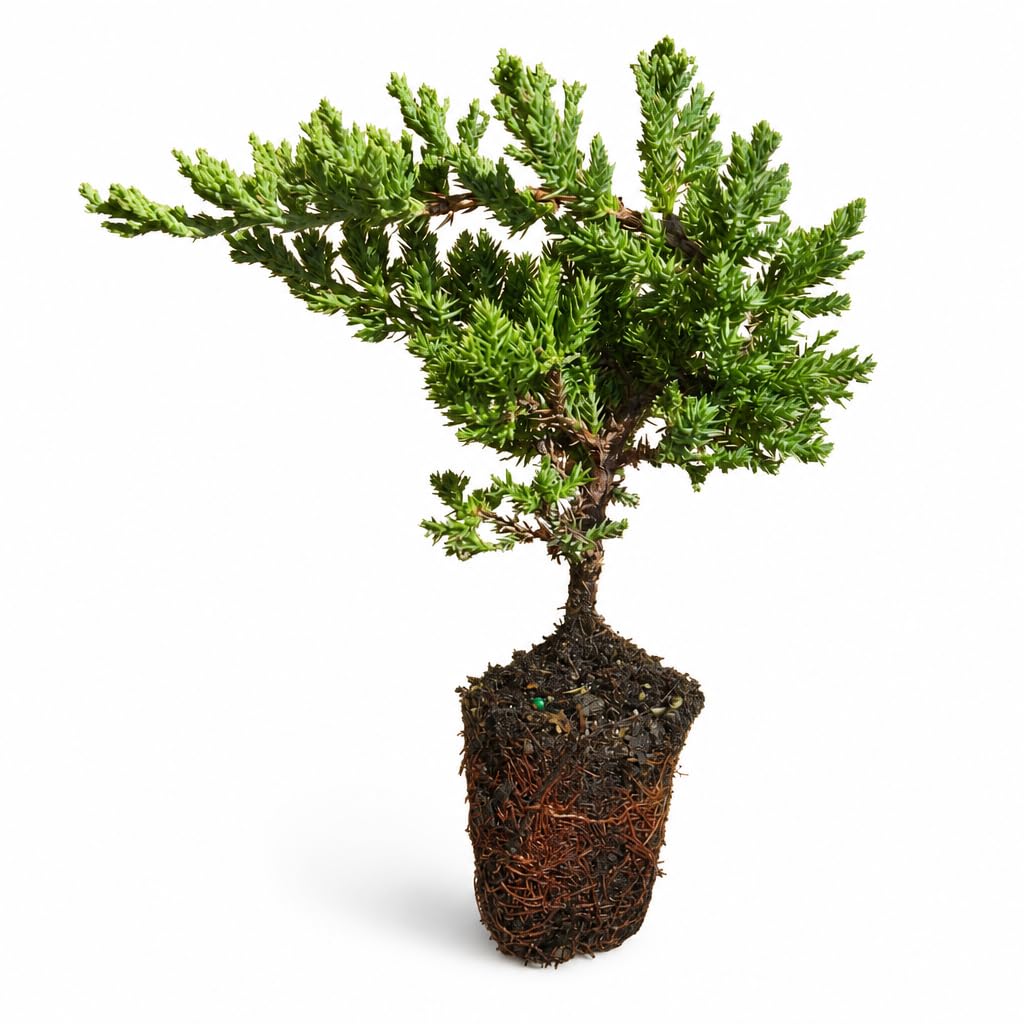
Three plants, 12 inches tall each, and enough juniper to build an actual forest.
Three plants instead of one — the same count as the garden juniper listing, but at 5 pounds and 12 inches expected height, a visibly bigger proposition. Dense, ground-hugging branches, new growth bright green turning bluish, a purple winter tint, and spiny-pointed needles to one-third of an inch. In average, well-drained, dryish soil under full sun it does exactly what you’d want a groundcover juniper to do: spread out and hold the ground.
They also pair well for bonsai forest builds. Three plants in one box gives you a starter grouping, and the shape is there before you do anything. Slow growth at first is normal — one owner’s plants took about 14 months to really take off, then doubled down once the warm weather arrived. Expecting immediate vigour will make you think they’ve stalled. They haven’t.
Value is the thing to weigh. A three-plant pack is more expensive than a single young plant, and a few buyers felt the plants arrived too small for the price. Others had mix success — root-bound starter packs need a careful hand at planting. Do that and the juniper handles the rest.
pick for value: you want instant coverage or a multi-tree bonsai group and don’t mind waiting through a slow first year.
reality check pots: expect small starts and modest early growth — this juniper rewards patience in year two.
Know the Specs
Expected plant height (and why it’s usually generous)
This number describes the plant at maturity in good conditions, not the day it arrives in the box. A listing that says 5 inches or 6 inches is telling you what to plan for in a pot; one that says 8-12 inches is describing a landscape shrub. Read height as a ceiling, then expect the shipped plant to be smaller. A plant described as a large pot can still be a young plant.
USDA Hardiness Zone
This is a climate rating that tells you how cold a plant tolerates in winter. Zone 3 is a cold-hardy rating, meaning the plant handles hard frost. One of the landscape junipers here carries Zone 3, which is why it’s the pick for colder yards. If your winters are brutal, this number matters more than anything else on the label.
Sunlight exposure and indoor vs outdoor
Junipers want direct sun and moving air. Some listings call for full sun, others for low-intensity morning sun and relief from the harsh afternoon. Either way it’s outdoors. The indoor-labeled plant in this group is a succulent jade, not a juniper — proof that the “indoor” tag belongs to the species, not the category. Match the light, not the label.
Pot material and drainage
A glazed ceramic pot makes a better gift; a plastic nursery pot survives clumsy handling and lets a young tree build roots without fuss. The one feature to confirm either way is drainage — water must exit the bottom. That single hole decides whether the roots breathe or rot.
Common Questions
Can a dwarf juniper tree survive indoors?
How often should I water a juniper bonsai in summer?
Why did my juniper arrive smaller than the listing said?
What does pre-bonsai mean?
Can I keep a juniper on a balcony or patio?
Will a juniper survive winter outdoors in cold climates?
Why does my juniper look brown or purple in winter?
Can I repot a juniper into a ceramic pot?
Do these plants ship to Alaska or Hawaii?
Is a juniper bonsai good for a beginner?
The Bottom Line
For most people, the dwarf juniper tree winner is the Live Dwarf Juniper Bonsai, six years old — it’s the one pick here that arrives as a finished display, in a glazed ceramic pot, with no shaping work left to do. If you want the healthiest, best-rated starter at a lower entry point, grab the 3-year-old juniper in the plastic nursery pot; it’s the highest-rated tree in this guide, and the plastic pot is genuinely easier to live with. And if your spot is a sunny slope or a rock garden rather than a shelf, the Dwarf Japanese Garden Juniper is the one to reach for, because it’s built to spread, not to sit in a pot.
How we choose
We do not accept paid placement. Every pick is matched to a real buyer and a real use-case; we do not hands-on test units.
Sources
Specifications: manufacturer listings and product documentation. Review insights: verified customer reviews, as of October 2026. Pricing: not shown on this page (it changes often); check the current price via the retailer link.
As an Amazon Associate, Aappliancez earns from qualifying purchases. This does not affect which products we feature.