Disclosure: Some links in this post are affiliate links. As an Amazon Associate I earn from qualifying purchases, at no extra cost to you. Learn more
Specs are compiled from manufacturer listings and verified buyer reviews and can change over time — please confirm the key details on the product page before buying.
You want a low grass that arches into soft, foxtail plumes without taking over the bed. Buy the one that arrives rooted in its pot and ready to plant. Dwarf fountain grass is a clumping plant (it swells outward from one crown instead of sending runners across your mulch). The five grasses below are sold as live plants. They differ less in looks than in one thing that matters to you: whether they show up green and hydrated, and whether their roots take hold in your zone. Plume colour, height, and shade tolerance you can match to your own garden.
This guide is built by comparing the manufacturers’ published specifications and the patterns across verified customer reviews, so you get each pick’s real strengths and trade-offs instead of marketing spin.
Some of these are true dwarf fountain grass. Some are sedge or lilyturf (grass-like plants) that fill the same spot in a border with a very different root system. That distinction drives nearly every recommendation here. Every plant here is a live perennial shipped in a nursery pot, so arrival condition matters as much as the label. The closest thing to a sure start is a rooted, well-packed plug and the right hardiness zone.
Match the plant’s hardiness zone and light needs before you buy any dwarf fountain grass.
Top Picks


How To Choose The Best Dwarf Fountain Grass
The mistake most first-time buyers make is shopping by the photo. A nursery listing photo shows a mature clump in full plume, and almost no shipped starter plant arrives looking like that. What you should actually compare is harder to photograph: the hardiness zone, the light the plant wants, and how the roots were packed for the trip. Get the zone, the light, and the packing right and the plant handles the rest.
Start with your hardiness zone, not the picture
Your USDA hardiness zone is a number for the coldest winter your area can expect. A plant hardy to your zone can survive that cold outdoors; one that is not may simply not come back in spring. Dwarf fountain grass and the ornamental grasses that stand in for it range widely here, so check the zone rating on each listing against your own before you commit a border to it.
Clumping versus running — the difference you will live with for years
Fountain grass and most of the grasses here form a clump, so the plant widens from one centre and stays where you put it. Running grasses spread by underground stems and can colonise a bed. If you are edging a walkway or filling a container, a tidy clump is what you want.
Light and moisture decide whether the plumes show up
Most fountain-type grasses want full sun to bloom well, while sedge and lilyturf will take shade that would leave other grasses thin. Watering needs range from moderate to little to no watering once established, so read that line on each listing too. A grass in the wrong light grows foliage but skips the plumes entirely.
Buy a rooted plug, not a bare promise
A plant described as fully rooted in its pot can go straight into the ground on arrival, weather permitting. That is a real advantage over bareroot starts. Ship timing matters too: extreme heat or cold in transit is the single most common reason a live grass arrives stressed.
Side-by-Side Comparison
Three comparable specs across all five picks, so you can scan the trade-offs side by side.
| Model | Best For | Plant Type | Light | Mature Size | Amazon |
|---|---|---|---|---|---|
| Carex oshimensis ‘Evergold’★ Best Overall | Shady borders | Japanese sedge | Partial shade | 12–18 in tall, 12–15 in spread | Amazon |
| 3 Hamlen Grass in 4 Inch ContainersBest Value | Shrub contrast | Dwarf fountain grass | Full sun, partial shade | — | Amazon |
| Perennial Farm Liriope ‘Variegata’ | Edging walkways | Variegated lilyturf | Part to full shade | 12 in | Amazon |
| American Plant Exchange Pink Muhly | Plume drama | Muhly grass | — | — | Amazon |
| Red Fountain Grass, 3 Live Plants | Dry slopes | Pennisetum setaceum rubrum | Full sun | 2–4 ft tall | Amazon |
Detailed Reviews
1. Carex oshimensis ‘Evergold’ (Japanese Sedge) Grass
Our pick — 4.0+★ from 30+ verified ratings; the strongest balance of quality and price.
The shade-lover that keeps its gold stripes where other grasses give up.
Here is the problem this one solves. You have a border under a tree, an afternoon of dappled light, and a bare patch the sun grasses refuse to fill. Japanese sedge is the rare ornamental in this group that does well in shade. It also grows well in partial shade, so you can plant it where a fountain grass would sulk. That alone makes it the pick for a shaded bed, and it takes a container on a shaded patio just as readily.
Sizing is what most people misjudge. The plant reaches a mature height of 12–18 inches with a spread of 12–15 inches, which is genuinely compact for a grass with this much colour. Expect it to fill out rather than shoot up. The listing rates it for USDA Zones 5–8, so check that number against your winter before ordering. It arrives fully rooted in the soil ready for immediate planting when weather allows, and the plants are shipped as a single plant or multi-pack.
Ordering a multi-pack skips the nursery run and brings the per-plant price down to big-box levels. It is not available at big box stores, and it is a good value overall.
Growth is what wins people over, and the quality of the foliage shows it. It is also worth knowing winter is normal here: the plant goes dormant with no leaves from late fall through winter, then leafs out again in spring. Do not mistake a bare pot for a dead plant. The seller also backs the plants with a guarantee. The occasional plant arrives smaller than the listing photo suggests, though buyers consistently report it is still a healthy, full, good-sized plant.
What actually lands in your garden
- Fully rooted on arrival and plantable straight away
- Yellow and green striped foliage that lifts a shady border
- Compact 12–18 inch height and 12–15 inch spread
- Rated for USDA Zones 5–8
Plan around this
- Ships as one plant, so a big bed needs more than one order
- Goes bare in winter dormancy, which surprises first-timers
- Not a full-sun grass; deep dry sun is the wrong spot
Buy this one for: a shaded or partly shaded border that needs colour and stays tidy at a compact 12–18 inches.
Look elsewhere for: a big instant mass planting — this listing is one plant, so a long edge means ordering several.
2. 3 Hamlen Grass in 4 Inch Containers (Dwarf Fountain Grass)
Three pots of true dwarf fountain grass, shipped from the grower’s own farm.
If you have priced fountain grass at a nursery, three pots in one order is the practical play. These ship from Rock Island, Tennessee, grown on the seller’s own farm, and arrive as three 4-inch containers instead of one lonely plug. You get fluffy, buff-coloured plumes arching above the foliage, which reads as strong contrast set among shrubs or as a backdrop in a perennial bed.
Fall is when this one earns its spot. The foliage turns golden-russet and the plumes arrive in the same season. It takes full sun to partial shade, tolerates sandy soil, and wants moderate watering. The listing rates one USDA Hardiness Zone, 4, which tells you it can handle a cold winter if your zone matches. The five-day guarantee covers plants planted within your recommended zone, and the seller asks you to use judgment on shipping during extreme weather below 32 F or above 95 F.
The reviews sort cleanly by what you do after the box opens. Growth is what gets praised most, with plant quality right behind it, and the descriptions match: sturdy starts, well wrapped, rising fast once they are in the ground. Size draws mixed feedback. The starter pots can run about an inch smaller than advertised, and about a third of those plants arrived less full than the listing picture, though the same plants were expected to fill out over the season.
One real caution on timing. A fall planting right before a hard winter is a gamble, because a young crown needs time to root before cold sets in. Spring is the safer window for these starts.
The honest math: three 4-inch plants in one order beats chasing single pots at a garden centre, and the combination of golden-russet fall colour plus buff plumes is the classic fountain-grass look.
The catch: shipped starts are small and bare of plumes in year one, so judge them on root health and new growth rather than the picture.
Worth it when: you want three matched clumps for a shrub border and you plan to plant them in spring rather than late fall.
Think twice if: you expect full-size clumps in the box — these are 4-inch containers and they grow into the look.
3. Perennial Farm Liriope M. ‘Variegata’ (Variegated Lilyturf)
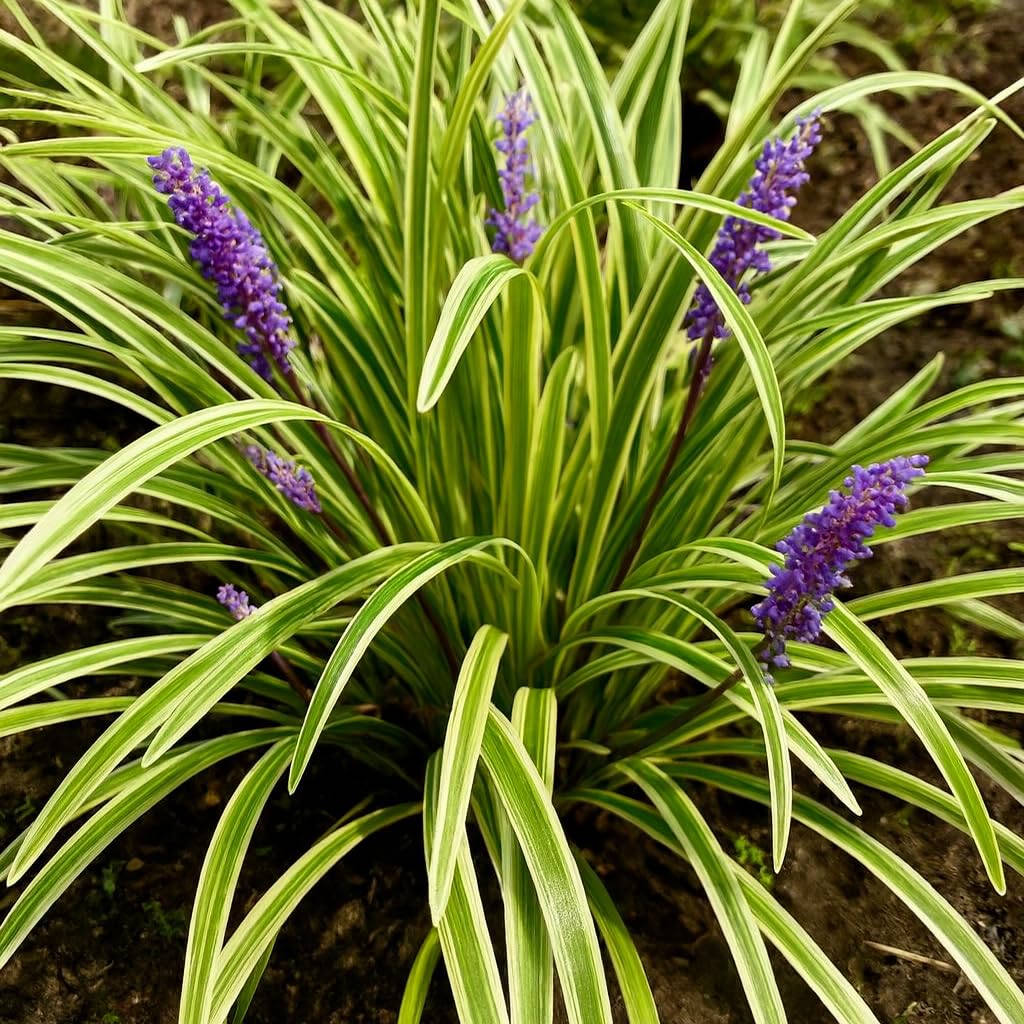
Striped green-and-cream foliage that outlines a walkway without ever flagging.
Not every grass-shaped plant in this list has plumes, and this one is honest about it. Variegated lilyturf is a clumping groundcover with striped green and cream leaves that hold their pattern through the year, topped by lilac-purple flower spikes that rise above the foliage in late summer. It reaches about 12 inches, which is why it works so well along a walkway or the front of a border.
The shade tolerance is the deciding spec. This plant thrives in part shade to full shade, which puts it in a different class from the sun-hungry picks here. It also stands up to heat, humidity, and varying soils with minimal care, and it is hardy in USDA Zones 4–10, a very wide window. Note the shipping restriction: orders are not accepted from AK, AZ, CA, CO, ID, MT, NV, OR, UT, WA, and HI. Plant it fully rooted and ready to go straight in.
The pattern in the feedback is warm on quality, and warmth plus vigour is clearly the core strength here. Growth follows right behind quality in what draws praise, and the appearance draws a lot of it too. Bloom is the mixed variable — it grows nicely for some, while other plants simply do not produce many flowers. Size is the other mixed note, because bare-root orders can arrive smaller than the photo suggests.
One practical detail: shipped between November 1st and March 1st, the plant may be dormant and trimmed back on purpose. That is seasonal conditioning, not damage.
Why it holds a border
- Striped green and cream foliage for year-round contrast
- Lilac-purple flower spikes in late summer
- Hardy across USDA Zones 4–10
- Handles part shade to full shade with minimal care
Before you click buy
- Cannot ship to eleven restricted states
- Bloom production varies, so plumes are not guaranteed
- Arrives dormant and trimmed in the cold months
Pick it for: edging a shaded walkway or filling a container with 12-inch striped colour that survives a wide range of winters.
Skip the order if: you live in a restricted state — this listing will not ship there.
4. American Plant Exchange Pink Muhly Grass Plant, 6-Inch Pot
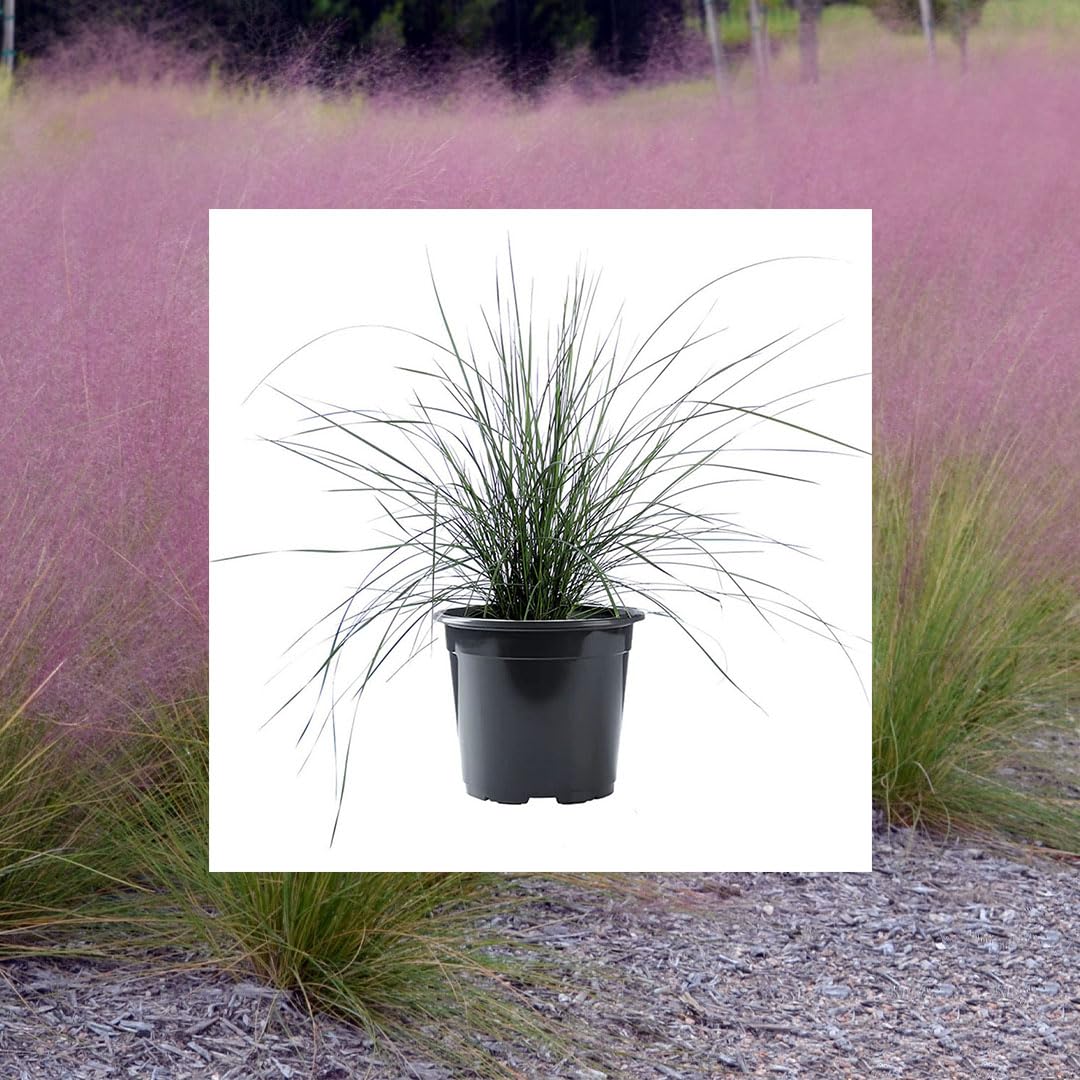
The one you buy for a cloud of pink plumes — if you can wait for them.
Pink muhly is the show-off of this group. Its feathery plumes come in shades of pink and purple and shift through the seasons. Set it in a mixed bed and it earns its place as a backdrop. It is also the least thirsty plant here, listed with a low moisture need, so it suits a dry sunny spot where you would rather not drag a hose. Butterflies are drawn to the plumes.
The pot size tells you the real story. This arrives in a 6-inch pot and weighs 4 pounds, so it is a bigger, more established start than a 4-inch plug. Expect it to establish faster. Plant it in summer, when it is listed as ready to go into the ground. It adapts to a range of soil types.
Healthiness is the strength the reviews settle on. Plants arrive green, strong, and well wrapped. Colour is where the experience splits, and the main gripe is that a plant never turns the pink you expected, or looks more green-brown than the photo. Bloom is the rough patch: a number of plants never bloom or do not return the following year. An occasional pot arrives with ants in the soil.
Buy pink muhly for its fine foliage texture and low water needs, and treat the pink plumes as a bonus that depends on your sun and season.
Favorite detail: a 6-inch pot and a low-water plant, so it holds up in a hot, dry bed without daily attention.
Worth flagging: colour and bloom are the trade-off. Buy it for the texture and the dry-soil tolerance, then let the plumes be the bonus.
Reach for this if: you have a dry, sunny bed that needs texture and you can be patient for the pink display.
Otherwise: if a guaranteed plume show this season is the goal, the red fountain grass further down is a faster bet.
5. Pennisetum Setaceum Rubrum 3 Live Plants
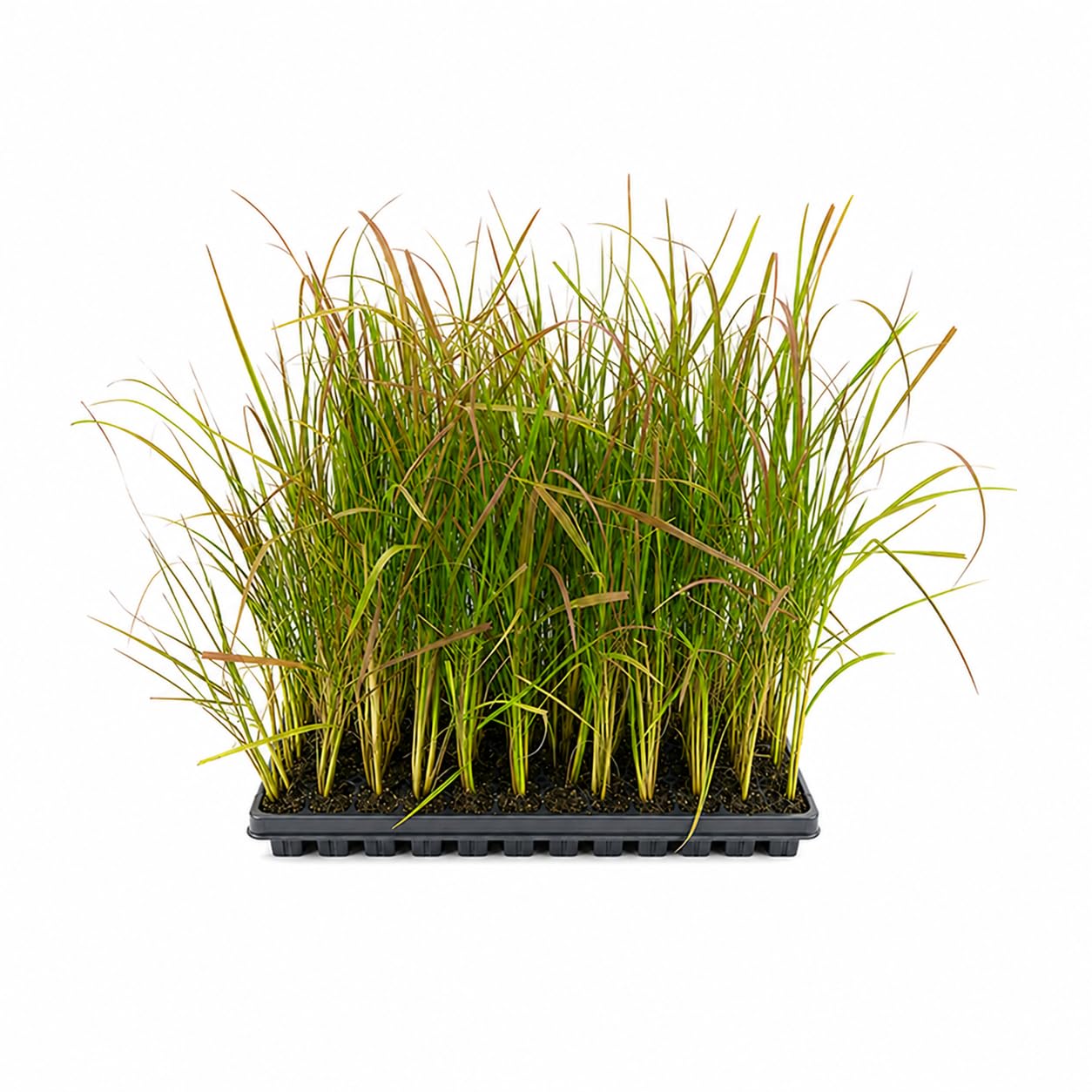
Purple-maroon blades and rose-red plumes, tall enough to anchor a dry slope.
Want the classic fountain grass look, arched purple foliage with fluffy plumes, at a size that actually registers in the landscape? This one grows up to 2–4 feet tall and forms a tidy, dense clump of purplish maroon blades topped with rose-red plumes. It wants full sun, and it is built for dry ground.
The drought tolerance is the spec that matters here. It handles most soil types and, once its root system is established, tolerates moderate drought. Use it on a dry slope, in a dry stream bed, or as a specimen planting. Unlike the wild species, this cultivar does not reseed, so it will not wander into your beds.
First-year care is where people misjudge it. Water deeply and regularly through that first growing season to build the roots, then ease off. Cut the foliage back to 4 inches above the ground just before new shoots appear in late winter to early spring. Three plants ship together.
The honest caveat is hardiness. In mild winter regions this cultivar is a perennial; in colder zones it acts as annual colour, and some buyers saw plants fail to return after their first winter. Treat that as a zone question, not a flaw. Fresh starts usually push fast and often flourish, but a slow or dead-looking start is a fair complaint.
Where it shines
- Purplish maroon blades with rose-red plumes
- Grows up to 2–4 feet tall
- Handles most soils and moderate drought once rooted
- Does not reseed like the wild species
What to accept
- Annual colour in cold zones, perennial only in mild winters
- Needs weekly watering through its first growing season
- A slow-shipped bundle can arrive looking twig-like
Choose it when: you have full sun, dry soil, and a spot that needs 2–4 feet of burgundy drama.
Know before ordering: in a cold zone you are buying a season of colour, not a permanent planting.
Know the Specs
USDA Hardiness Zone
The zone number is a rating for how cold a winter a plant can survive. A grass listed for Zones 5–8 can take the cold that zone sees; planted a few zones colder, it may simply not return in spring. Always compare the listing’s zone against your own before you plant a whole border.
Mature Height and Spread
This is what the plant looks like fully grown, not what arrives in the box. A 12-inch lilyturf suits the front of a border, while a 2–4 foot fountain grass works as a specimen or a slope planting. Buy for the mature size, then let the small start grow into it.
Clumping Versus Running
Fountain grass and the grasses here form clumps, so they widen from one crown and stay put. A running grass spreads underground and can take over. For edging and containers, a clump is the tidy choice.
Sun and Moisture Needs
Light determines whether you get plumes or just leaves. Full sun suits most fountain grasses, while shade-lovers fill the spots sun grasses cannot. Moisture needs run from ‘moderate watering’ to ‘little to no watering’ — a dry, sunny bed wants the second kind.
Common Questions
What is the difference between dwarf fountain grass and regular fountain grass?
Will dwarf fountain grass come back every year?
Can I plant dwarf fountain grass in shade?
Why is my grass plant bare with no leaves?
How big are the plants when they arrive?
Do any of these grasses ship to restricted states?
How much watering does fountain grass need in the first year?
Do these grasses spread into the lawn?
When is the best time to plant shipped grass?
Will the pink muhly grass turn pink the first season?
The Bottom Line
For most gardens, the dwarf fountain grass starting point is the Carex oshimensis ‘Evergold’, because it fills the shaded and partly shaded border that sun grasses abandon and stays compact at 12–18 inches. If you want three true dwarf fountain grass clumps for a shrub border and the golden-russet fall colour, take the 3 Hamlen Grass in 4-inch pots. And for edging a shaded walkway, the variegated lilyturf is the one to reach for.
Here is the nudge: match your zone and your light to the listing before you open your wallet, then plant in spring. Matching zone and light before you buy does more for a shipped grass than any care you give it after planting.
How we choose
We do not accept paid placement. Every pick is matched to a real buyer and a real use-case; we do not hands-on test units.
Sources
Specifications: manufacturer listings and product documentation. Review insights: verified customer reviews, as of October 2026. Pricing: not shown on this page (it changes often); check the current price via the retailer link.
As an Amazon Associate, Aappliancez earns from qualifying purchases. This does not affect which products we feature.