Disclosure: Some links in this post are affiliate links. As an Amazon Associate I earn from qualifying purchases, at no extra cost to you. Learn more
Specs are compiled from manufacturer listings and verified buyer reviews and can change over time — please confirm the key details on the product page before buying.
Only three picks here ship a factory-rated release hook — the DCX, the SwellPro and the Bingchat — and the Potensic Atom 2 is the strongest all-rounder for everyone else.
This guide is built by comparing the manufacturers’ published specifications and the patterns across verified customer reviews, so you get each pick’s real strengths and trade-offs instead of marketing spin.
We’ll walk through the hardware that actually releases a load in flight, the flight time you lose once something is hanging underneath, and how to match a mount to your mission. Here are the drones with customizable payload mounts worth your attention.
Top Picks
How To Choose The Best Drones With Customizable Payload Mounts
A payload drone is a camera drone with a frame strong enough — and a hook secure enough — to carry something besides its camera. Most people who buy one are dropping bait offshore, releasing a line over a tree, or hauling a small sensor. Buy the mount and the rated lift limit first; the camera is the last thing to compare. The mount and the lift limit decide whether the drone can do the job at all.
Start With The Mount, Not The Megapixels
A payload release is a small servo-driven hook that opens on command from your controller. The quality of that hook decides whether your load drops exactly where you want it or swings loose mid-flight. Look for a release that reports a stated weight limit in the specs. If the spec sheet lists no payload figure, assume the frame has no rated hook and plan a third-party mount.
Understand What Payload Does To Flight Time
Every gram you hang under the frame costs battery. A drone that flies 30 minutes empty will fly noticeably less with a heavy load bolted underneath. The listings below quote flight time on the airframe’s own battery, so treat those figures as the best case. A heavy payload shortens the number, and a strong headwind shortens it further.
Check The Weight Against Registration Rules
A drone under 249g can often fly recreationally with fewer registration hurdles. Add a payload release and a heavy load and you can push past that line. Several of these listings name their registration status directly — read that line before you assume you can fly it from the start.
Side-by-Side Comparison
| Model | Best For | Payload / Release | Stated Flight Time | Stated Range | Amazon |
|---|---|---|---|---|---|
| Potensic Atom 2 Fly More Combo★ Best Overall | All-round aerial camera work | — | 96 mins (3 batteries) | 10 km | Amazon |
| Bingchat Drones with Camera for AdultsPayload Drop | Release hook on a budget | Payload release, ~16 oz | — | 5 miles | Amazon |
| Bwine F7MINIBest Value | Sub-249g travel flying | — | 96 mins (3 batteries) | 6 km | Amazon |
| Bwine F7GB2 Pro | Windy, high-altitude flying | — | 75 mins (3 batteries) | 3 km | Amazon |
| Ruko F11PRO 2 | First-time pilots and gifts | — | 70 mins (2 batteries) | 10,000 ft | Amazon |
| Holy Stone HS790 | Long-range 6K stills | — | 60 mins (2 batteries) | 9 km / 30000 ft | Amazon |
| DCX Volo X EZ AI | Payload drop with obstacle sensing | Built-in release, up to 1.2 lb | 45 mins | 4 miles | Amazon |
| DJI Mini 5 Pro Fly More Combo | Pro-grade sub-250g camera | — | 36 mins (per battery) | — | Amazon |
| Antigravity A1 Infinity Bundle | 360° FPV flying | — | 39 mins (high-capacity battery) | 10 km | Amazon |
| DJI Mavic 4 Pro | Flagship pro cinematography | — | 51 mins | 30 km | Amazon |
| SwellPro Fisherman MAX FD2 | Heavy bait delivery offshore | Dual bait release, up to 7 lb | — | 0.9 mile (1.5 km) | Amazon |
Detailed Reviews
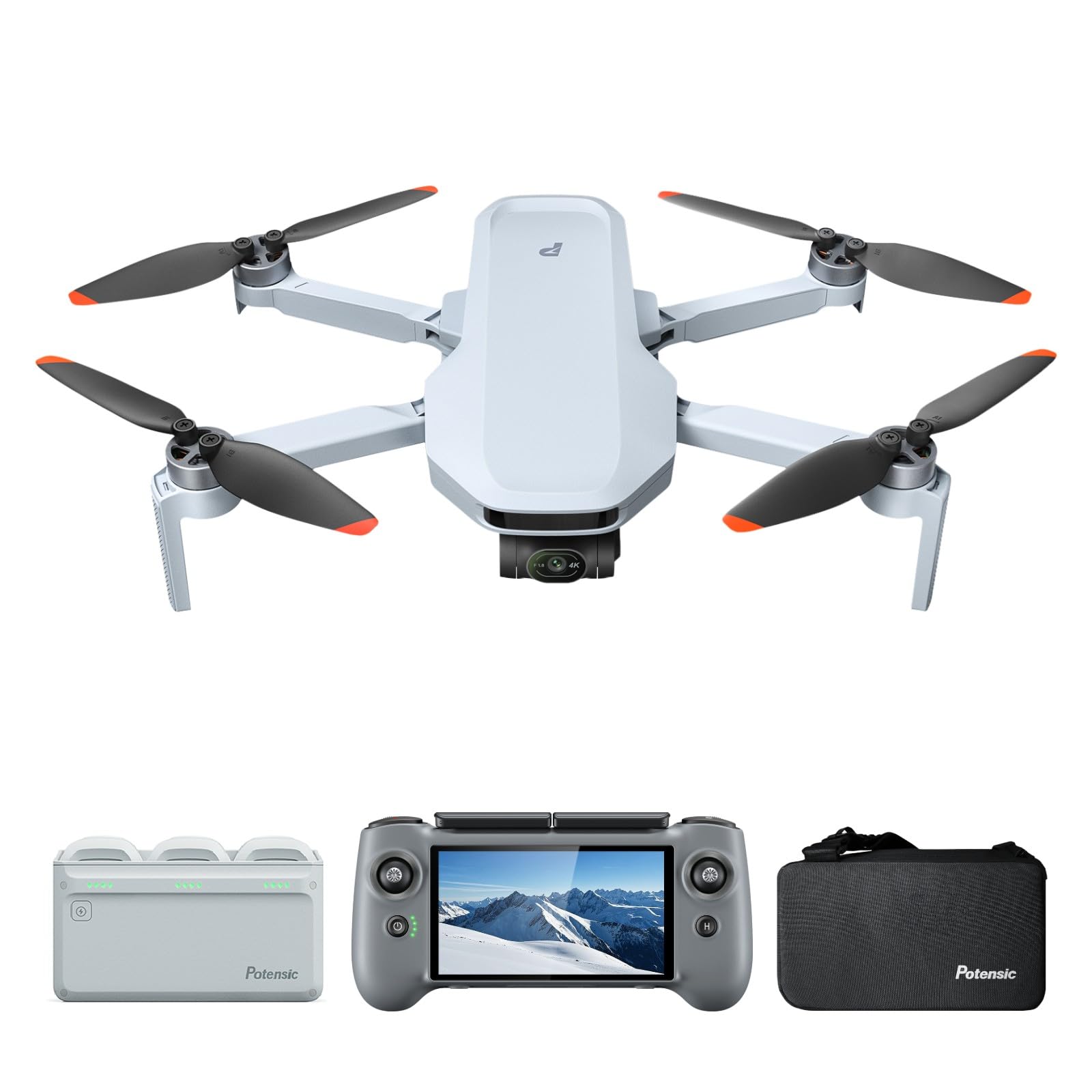
1. Potensic Atom 2 Fly More Combo with RC PTD 1
Our pick — 4.5+★ from 1,500+ verified ratings; the strongest balance of quality and price.
The pocket drone that flies under the 249g line and still gives you a whole cinema suite.
The number that decides this pick for most buyers is 245 g. At that weight it slots under the 249g threshold the listing describes as needing no FAA and Remote ID Registration. For a first serious drone, that single figure saves you paperwork before your first flight. It also fits a shoulder bag the way a phone fits a pocket.
Then there is the sensor. A 1/2-inch Sony CMOS captures 48MP photos and 4K/30fps HDR video on a 3-axis gimbal. In plain terms, that stabilizer keeps the camera level even when the drone tilts, so a windy day still gives you watchable footage. The F1.8 aperture lets more light in for night shooting, and the AI Stunning Night Shot cleans up the shadows. A 2.7K vertical mode handles phone-first social clips without extra editing.
Camera work aside, the reason it earns the top slot here is the control package. The PTD 1 controller carries a 5.5-inch 1920×1080 touchscreen at 700 nits — bright enough that you skip mounting a phone entirely. PixSync 4.0 pushes 1080p/30fps live video up to 10km, which is the number that keeps the feed sharp when the drone is a speck. Buyers report flying it 5 miles over a bay at 300 ft with no signal or video loss, and the return-to-home landed within inches.
What earns it the crown
- 245 g body sits under the 249g registration line
- 5.5-inch 700-nit screen controller needs no phone
- 96 minutes total from the 3-battery kit and hub
- PixSync 4.0 holds 1080p video at up to 10km
What to know going in
- Bottom-only proximity sensors, so no real obstacle avoidance
- No micro SD card in the box despite the Fly More bundle
- App is less polished than the big-name competition
Grab this if: you want a travel-ready camera platform that skips registration and gives you a dedicated screen.
Then add a mount: this one is built for filming — for a real payload hook, look at the DCX or SwellPro below.
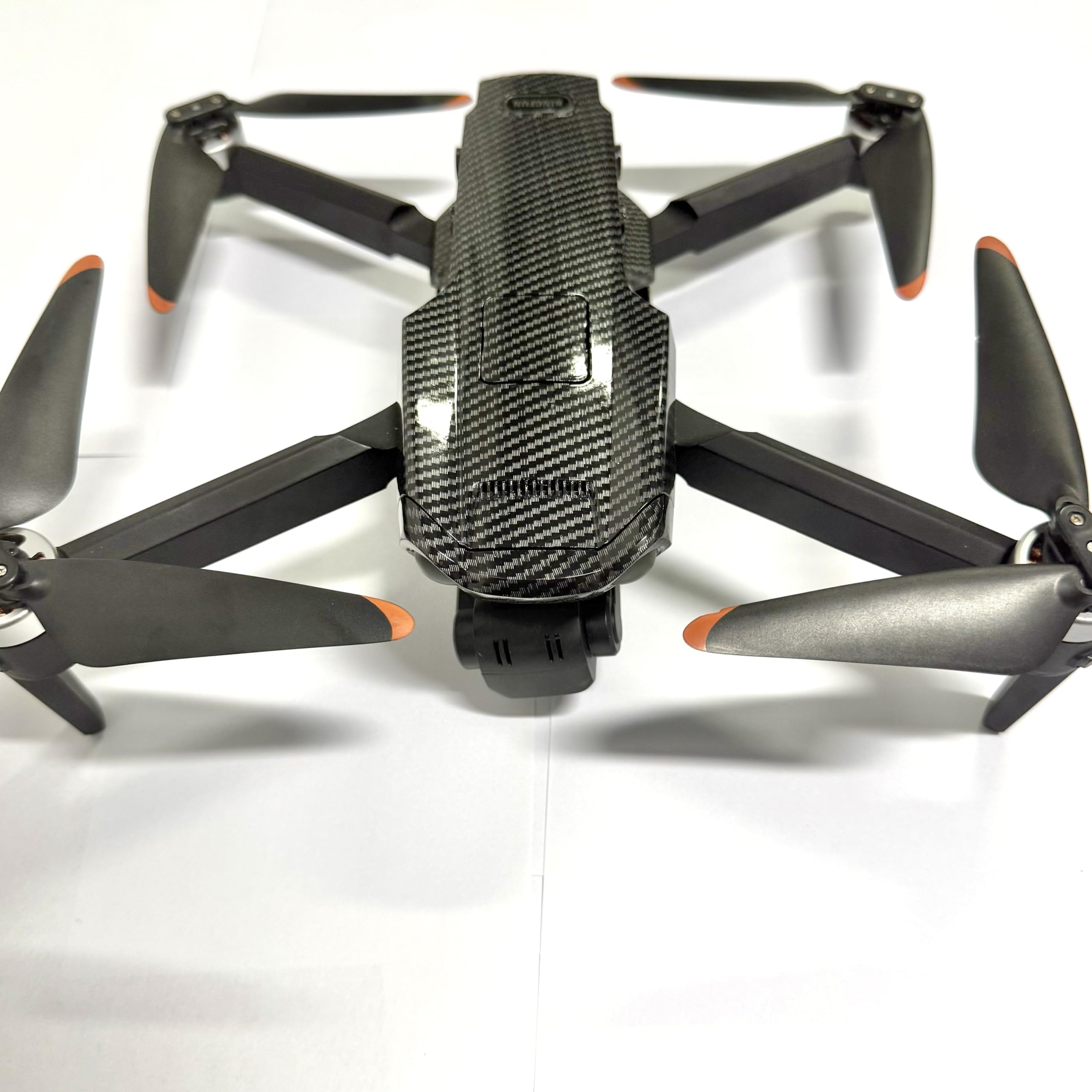
2. Bingchat Drones with Camera for Adults
The budget rig that actually includes a release hook — with a body to match its ambition.
This is one of the few drones on the list that ships with a working payload release from the start, and it rates the hook at roughly 16 oz. For dropping a light bait rig or a small marker, that is enough. The 48MP stills and a 5-mile maximum range back it up on paper, and the body measures 8″L x 6″W x 5″H — noticeably chunkier than the Potensic Atom 2 at 5.6″L x 3.5″W x 2.28″H. That extra 43% of length buys room for a bigger frame and more hardware.
You get a mixed bag: picture and video quality draw steady praise, and the build holds up in gusty wind for some flyers. But flight performance and stability are hit or miss. One buyer describes a harsh experience: “It worked for 16 minutes only and came back like a rocket 🚀 to the ground to be 100 pcs It stopped working completely in the air Thank God I was flying it in my backyard” — so treat this as a fair-weather, line-of-sight rig, not a long-range workhorse. The included 32GB SD card (a memory card for storing photos and video) and removable obstacle-avoidance module (a sensor unit that helps the drone dodge objects) are real bonuses at this tier.
Honest read: the release hook is the reason to look at this model, not the camera specs. If you need a cheap carrier for a light drop and you fly close, it does the job. If you need the drone to be reliable every single trip, this one is a gamble.
Reach for it if: a budget hook for light drops is your whole goal and you keep flights short and nearby.
Look elsewhere if: you need repeatable long-range runs — the stability reports here don’t support that.
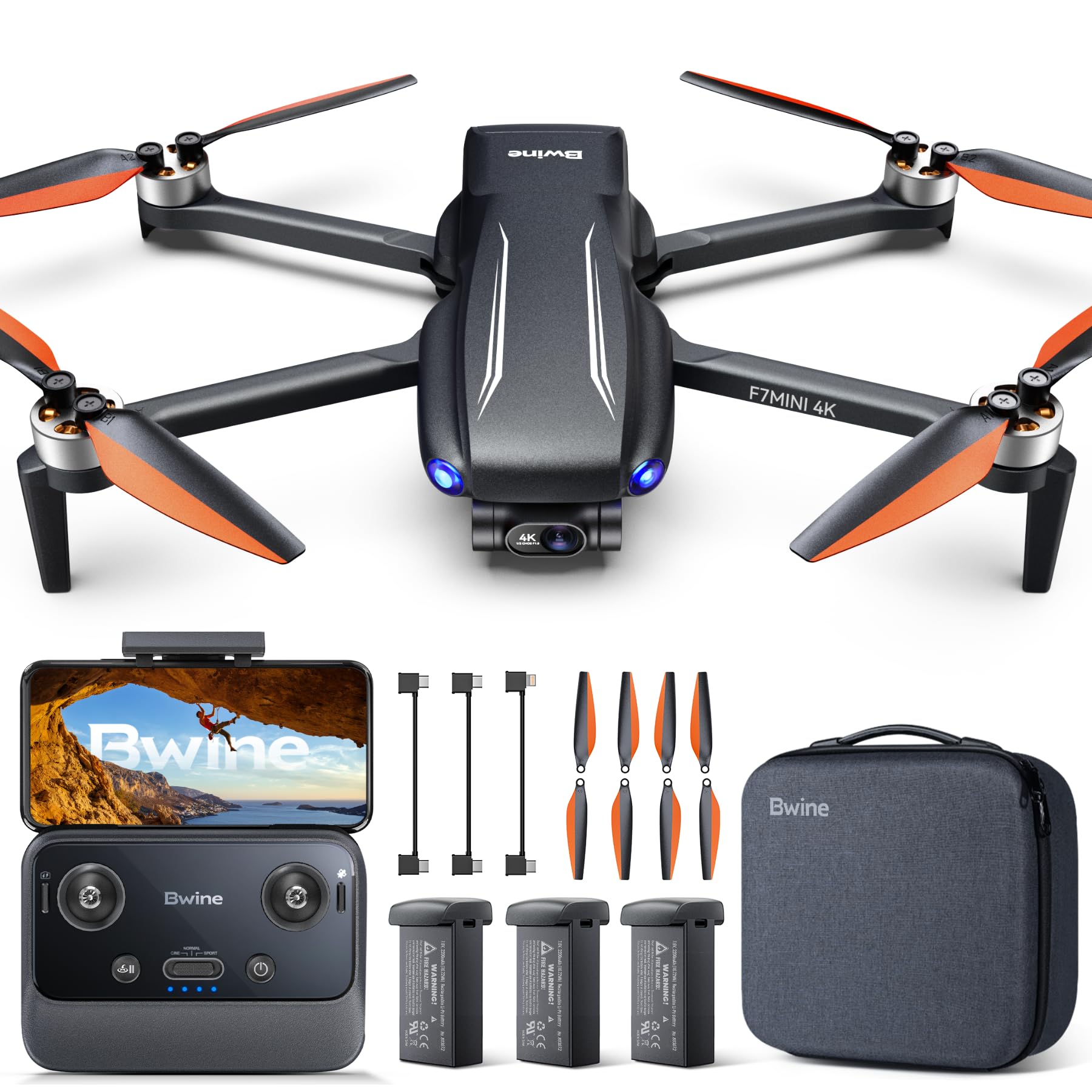
3. Bwine F7MINI 4K Video 8K Photo
A 249g frame that packs 96 minutes of flight and a real 3-axis gimbal into a travel case.
At 249 g on the nose, this one sits right at the edge of the line the listing calls FAA-exempt (meaning you may not need to register it with the FAA before flying). That matters because it decides if you need to register before you fly. The 48MP 1/2-inch CMOS sensor (a light-capturing chip that turns light into a photo) with an F1.8 aperture (a wide opening that lets in more light) handles the photo side, and three batteries back it up. Each one lands 32 minutes, so the box totals 96 minutes when you charge all three on the included hub.
Where this pick pulls ahead of cheaper camera drones is the composition tools. GPS gives you auto cruise, 0.5m-accurate follow, orbit and waypoint modes, plus optical flow positioning when you fly indoors without satellites. A 120dB locator buzzer is the honest standout — if the drone drops out of sight, that alarm is what helps you find it. The transmission runs out to 20,000ft, and a smart return-to-home with a dynamic home point brings it back if signal drops.
The honest gap is battery reality. The listing advertises 32 minutes per battery, but buyers routinely see far less in the air, sometimes as low as 12–15 minutes. That is the most-discussed trade-off on this model and worth planning around. Plan each sortie around 12–15 minutes per battery, not the advertised 32.
Your best pick if: you want the full 3-battery kit, a travel case and a buzzer-beacon for less than most rivals charge.
The catch: real-world flight time runs well under the advertised 32 minutes, so keep your sorties short.
4. Bwine F7GB2 Pro

The high-altitude option for pilots who need to fly in real wind, not just calm afternoons.
This is the bigger, heavier sibling to the F7MINI, and it shows. At 550 g it clears the sub-249g line, so it comes with FAA Remote ID built in and a compliance declaration in the box. The payoff is a drone that flies at 2000m altitude and holds steady against a 6-level wind test — enough to hover over a farm or a peak on a breezy day. The 1806 brushless motors and full sensor suite (compass, gyroscope, barometer) drive that stability.
The camera is a detachable 4K unit (4K means about 4,000 pixels across, so footage stays sharp on a big screen) on a 3-axis gimbal (a stabilizer that keeps the camera level) with a 120° field of view and 5x digital zoom. Owners mention shooting 5700×3200 photos and 3840×2160 at 30fps (frames per second, the smoothness of video) with good quality. Three 2600mAh batteries (a measure of battery capacity) add up to 75 minutes total, and the charging is UL 2054-certified (a safety standard for battery packs) for confidence. Auto return on low battery, signal loss and one-key press all work as advertised, and the GPS homing lands within a couple of feet.
Two practical notes. First, the charger isn’t included, so budget for a Bwine 65W unit if you want the stated 1.5-hour full charge. Second, the controller screen washes out in bright sun and the gimbal can act up on occasion. Neither kills the drone, but both are worth knowing before you take it out on a sunny field day.
Why it earns a slot
- Flies at 2000m with a 6-level wind resistance rating
- Remote ID certified, so no external module needed
- 75 minutes total across three 2600mAh batteries
- Detachable 4K gimbal camera with 5x digital zoom
Worth knowing before you buy
- Charger is not in the box
- Controller screen is hard to read in sunlight
- Batteries want 50–60% storage charge to avoid swelling
This one suits: pilots flying open land, farms or peaks where wind is a constant and Remote ID compliance matters.
skip it if: you want a sub-249g drone you can fly without registering — this isn’t that.
5. Ruko F11PRO 2

Built for the person who has never flown a drone and wants zero learning curve.
One-Key Takeoff/Landing and a dedicated Beginner Mode carry this pick. Add GPS auto return-to-home on low battery or signal loss, and the F11PRO 2 does most of the piloting so you can focus on framing. The 3-axis mechanical gimbal keeps 4K/30fps video and 6K photos smooth, and two 3200mAh batteries give 70 minutes of total flight. The 10,000ft transmission range reaches well over a large estate.
The reviews paint a drone that’s fun and stable, with sharp photos and reliable return-to-home. A handful of quirks show up in the pattern. The supplied USB-C cable is a weak point — a sturdier one fixed connection and video-lag complaints for one owner. And there’s a learning step during setup: GPS pairing can be fussy at first until you get the hang of the calibration dance.
The bigger note is that this is a beginner-friendly camera drone, not a frame built for a hanging load. Its listing doesn’t specify a payload release or a rated carry weight. If you need to release a bait rig or a drop line, look at the DCX or the SwellPro below. For learning to fly with a great camera, this is a fine place to start.
Best use case: a first drone you can hand to a teenager or a retiree without a long tutorial session.
The honest limit: no payload hardware in the listing — the gimbal and camera are the whole story here.
Pick this to learn: flying made simple, with 70 minutes of airtime from two batteries.
Not for you if: a release hook or a rated payload is on your must-have list.
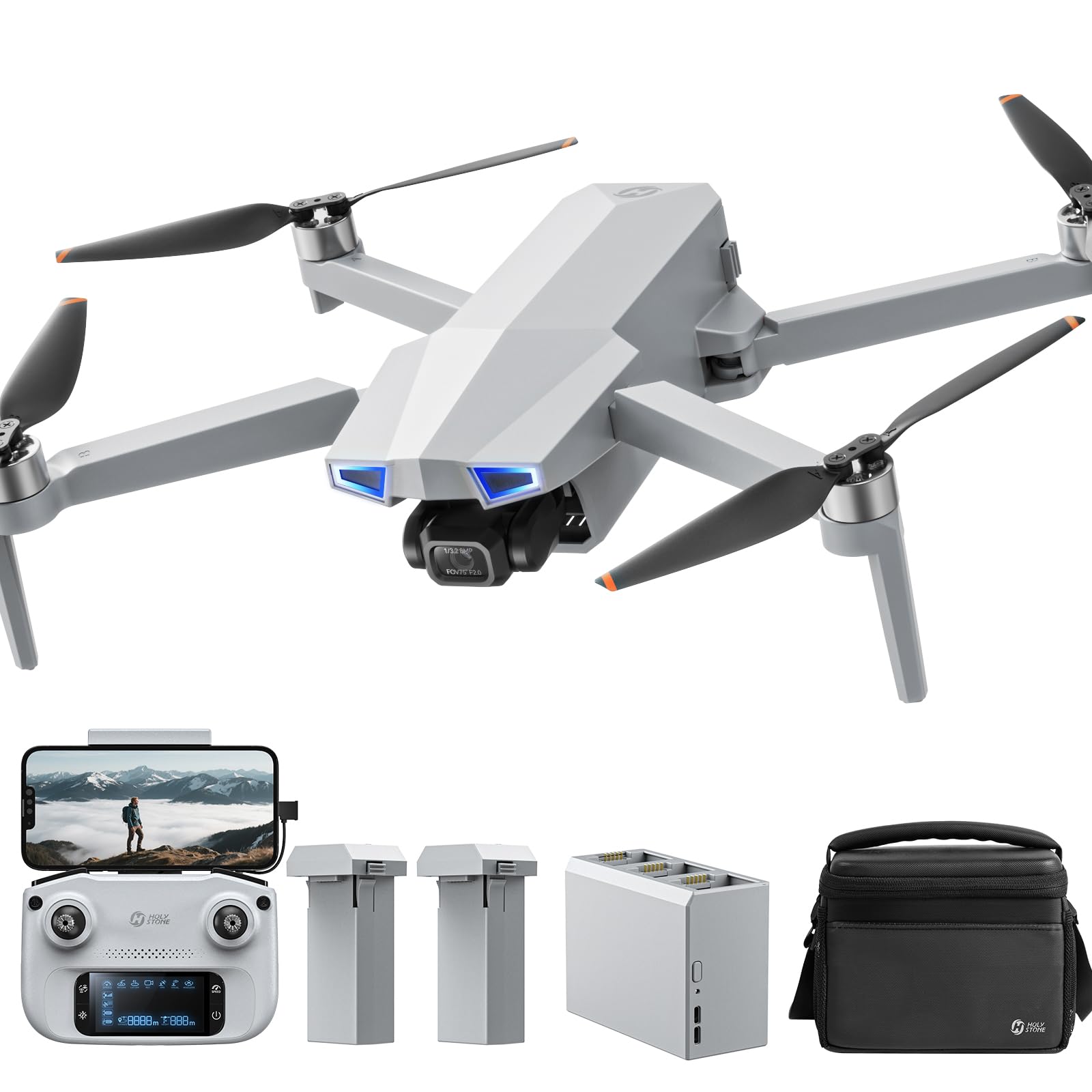
6. Holy Stone HS790
A 30000ft reach and a real 6K still mode make this the range pick of the group.
If you want to fly far without losing the picture, the number to look at is 9km — or 30000ft, as the listing writes it. Holy Stone’s WiFi Repeater tech pushes real-time video out to that distance with low enough lag that the feed stays usable. Combined with 1506 brushless motors that resist wind, it holds steady at distances that would have most budget drones looping home. A 3-axis mechanical gimbal records smooth 4K/30fps video and 6K photos from the 1/2-inch-scale camera.
The full package is well thought out. Two modular batteries add up to 60 minutes total, and the included Smart PD Charging Hub doubles as a power bank for your phone. Beginner modes — Altitude Hold, Headless Mode, Speed Adjustment, One-Key Control — help you get in the air in minutes. A dedicated Night Mode and 360-degree navigation system make dusk flights practical. The foldable body fits a premium carrying case for travel.
The trade-off worth flagging is the charging pace. One owner’s early flights started after a 5-hour initial charge. The included two-battery setup is fine for a day trip, but plan your first charge overnight and you won’t be caught waiting. The night mode and remote ID compliance make this a solid workhorse for travel and content shoots.
Take it traveling: a foldable 6K-capable drone with 30000ft reach fits a carry-on and goes the distance.
Plan ahead for: a long first charge before your first flight — start it the night before.
7. DCX Volo X EZ AI Drone
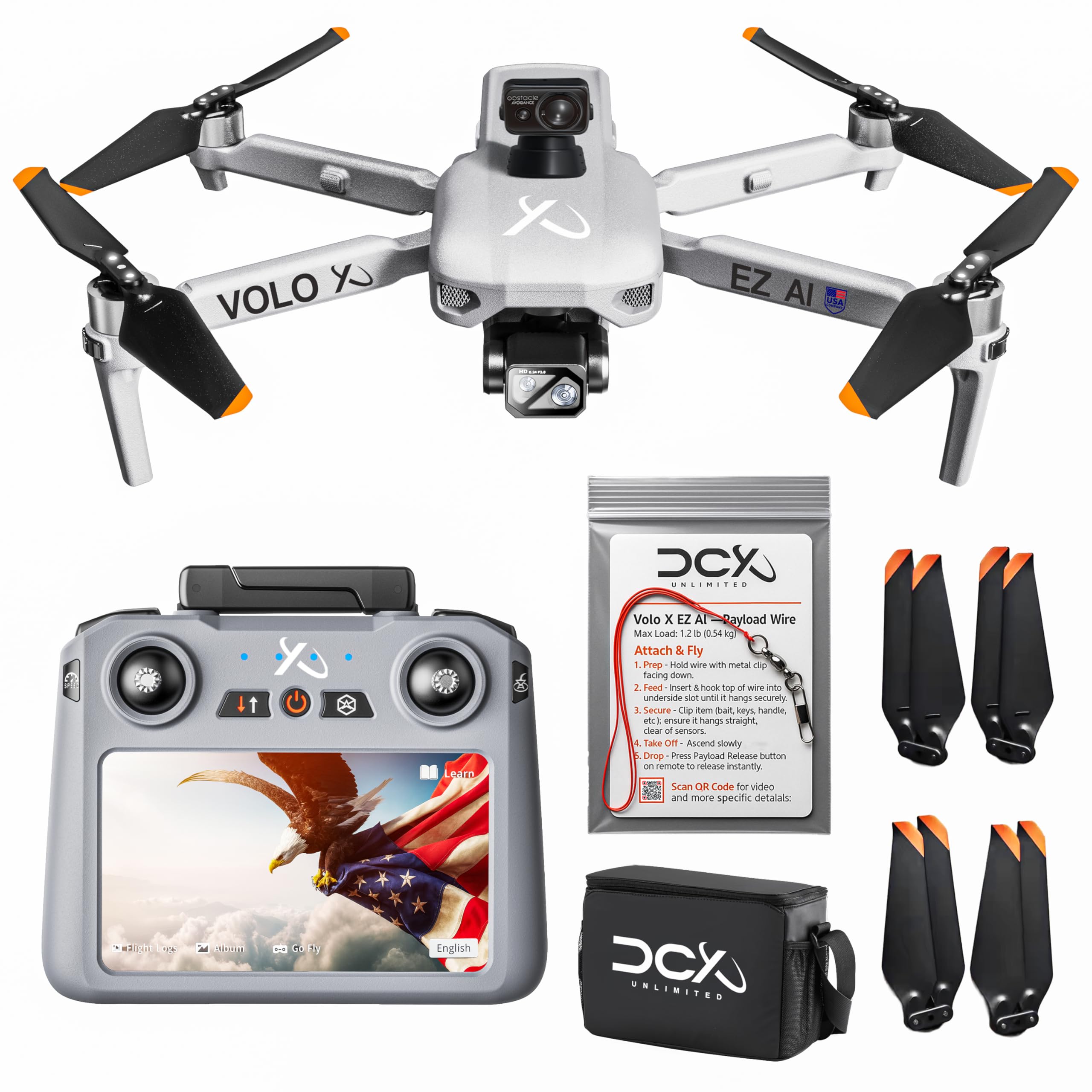
The one pick in the group that ships a real release mechanism plus LiDAR obstacle sensing.
Here’s the reason to care about this drone: a built-in payload release air-dropping mechanism rated to carry and release up to 1.2LB on your command. That puts it in a small class of drones actually designed to drop something mid-flight. On top of that, 360° obstacle detection powered by LiDAR sensors (a light-based radar that sees objects in all directions) helps the AI-assisted flight avoid collisions. It’s FAA Remote ID compliant, and the listing notes no geofencing or height limits from a US-based company.
Flight specs give you a 4K camera on a 3-axis gimbal with Electronic Image Stabilization, up to 45 minutes of airtime and a 4-mile range. The 5000mAh battery is the largest in this group’s camera-drone tier, and a Smart Night Mode plus LED spotlight keep dusk operations lit. The controller has a built-in screen, so no phone mount needed, and the foldable frame fits a carry case.
The reliability picture is mixed. Some flights are reported stable in 25MPH winds with the AI holding altitude, but owners also flag a complex power-on sequence and occasional controller sync loss. Support quality is the other recurring note. The drone itself draws praise for camera and value when it flies — just budget for patience during setup.
Where it delivers
- Built-in release rated to drop up to 1.2LB
- 360° LiDAR obstacle sensing in every direction
- 45-minute flight time with a 5000mAh battery
- Screen on the controller, no phone required
Where to set expectations
- Power-on sequence needs a short then long press, plus wait
- A handful of reports of controller sync loss
- Support speed varied across the review pool
The right choice for: dropping a light payload while keeping LiDAR between you and the trees.
Skip if: you want a press-one-button-and-go experience — this one wants a careful pre-flight routine.
8. DJI Mini 5 Pro Fly More Combo With DJI RC 2
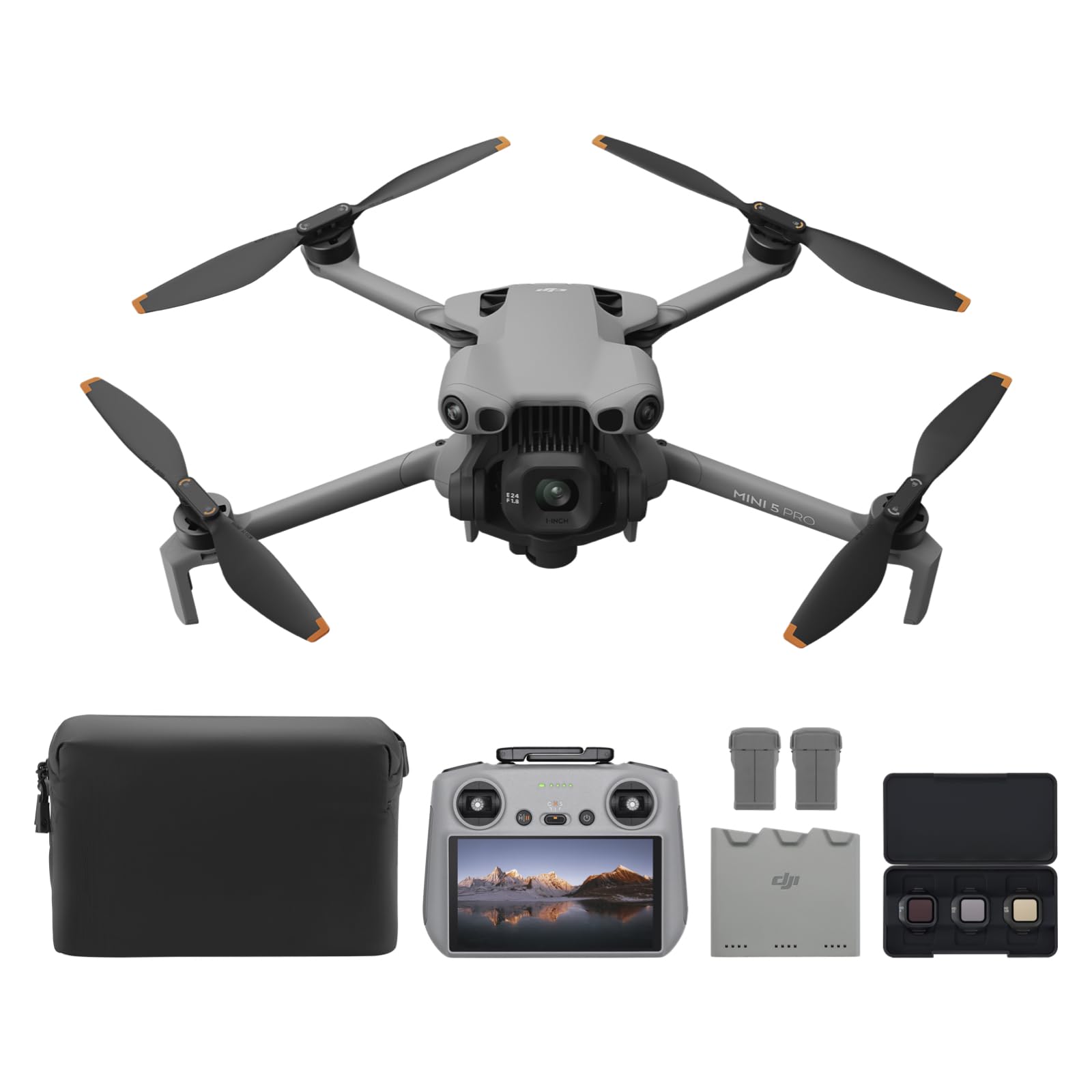
A 1-inch sensor in a 249g body — the camera-first choice for serious aerial photographers.
If image quality tops your list, the 1-inch CMOS sensor is the headline. It records 4K/60fps HDR video with sharper detail and truer colors than the smaller sensors on most of this list. The 225° flexible gimbal roll rotation supports true vertical filming, so you can shoot phone-first social content without cropping. The DJI RC 2 controller has a bright built-in screen, saving you a phone mount.
The flight hardware is equally deliberate. Nightscape omnidirectional obstacle sensing using forward-facing LiDAR plus vision sensors detects obstacles in all directions, so night flights and return-to-home get a safety net. ActiveTrack 360° with customizable tracking modes keeps a cyclist or runner framed. Each of the three Intelligent Flight Batteries gives up to 36 minutes, and the charging hub powers all three in about 115 minutes. Internal storage is 42GB, so you can shoot without a card.
At 249g it stays in the sub-250g class the listing names. The trade-off is that a payload mount is not part of this package — this is a camera drone, not a carrier. Budget-minded buyers should also look at the Potensic above, which trades the 1-inch sensor for 96 minutes of flight; the DJI wins on sensor size and the flight-time figure of 36 minutes is per battery, not per charge.
For the shooter, not the dropper: if your mission is image quality, the 1-inch CMOS does the heavy lifting.
Not the one if: a payload release is part of your plan — this package doesn’t include or claim one.
9. Antigravity A1 Infinity Bundle
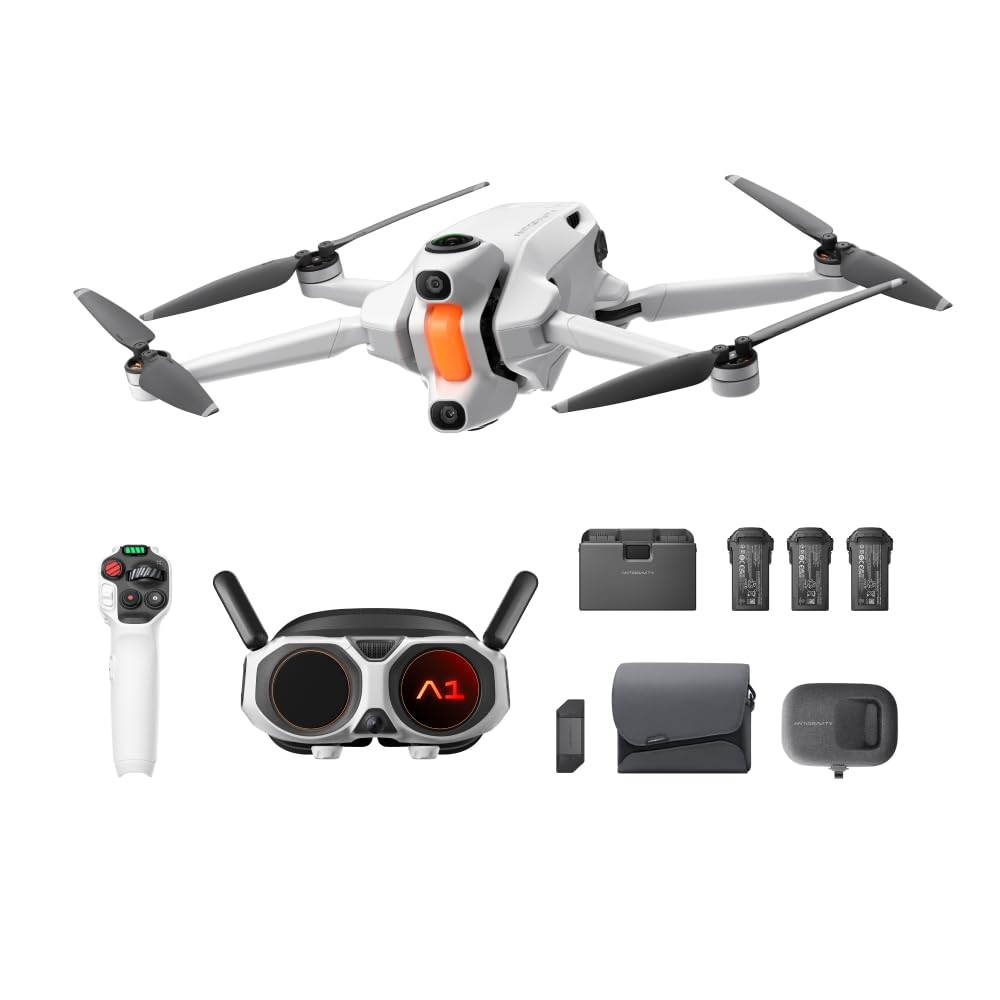
A goggles-based 360° drone that captures every angle and lets you reframe later.
This bundle is for a different kind of flyer. The Vision Goggles use a 90° FOV (66% wider than standard goggles) with dual 1-inch Micro-OLEDs and diopter adjustment, so you see the world from the drone’s point of view. The 8K 360 camera captures every direction at once with invisible stitching, so when a shot goes wrong mid-flight, you can rewind and reframe in post. Three high-capacity 4345mAh batteries back up the package, and the 249g Standard Battery option keeps you under the threshold for lighter regulation.
In practice, the experience is divisive. The goggle view (a headset that shows the drone’s camera feed) is genuinely rich for many pilots, and auto-editing turns raw 360 spheres (spherical photos that capture the whole scene) into shareable clips quickly. The point-to-fly controls and FPV mode (first-person view, flying as if you are in the cockpit) give you two flight languages. Live feedback is mixed though — the flight performance gets the widest split of opinion in its review pool, with the narrow-FOV view (a limited field of view) disappointing some and the computer app being harder to work with than the phone app.
The other honest note is support. Software updates and account connection glitches have left at least one owner stuck. For buyers who value the goggles and post-production flexibility, it is a creative tool unlike anything else here. For buyers who want a straightforward point-and-shoot, other picks serve better.
Standout spec: an 8K 360° capture system and 4345mAh battery pack make this the only true reframe-in-post option on the list.
The caveat you’ll hit: support wasn’t kind to one pilot’s broken connection — buying through a seller with a clear return path is worth checking.
Reach for it if: 360° footage and goggles are the point, and you’ll invest time in editing.
Go a different way if: you want a traditional camera drone with predictable point-and-shoot behavior.
10. DJI Mavic 4 Pro

The flagship tri-camera — a 100MP Hasselblad sensor with a 51-minute ceiling.
A 100MP Hasselblad camera shooting 6K/60fps HDR is the number. That is pro-tier imaging in a body that still folds into a case. The tri-camera design adds two tele lenses for crisp zooms, so you can frame tightly without flying close. The 360° Infinity Gimbal supports dynamic camera moves, and 0.1-Lux Nightscape omnidirectional obstacle sensing keeps the drone safe in low light. 51 minutes of flight per battery means long scenes don’t need a mid-shoot swap.
For professional work, this is the highest-content-output drone in the group. The O4+ transmission reaches 30km (18.6mi) with 10-bit HDR, and the 7″ rotatable RC Pro 2 controller collapses for travel. Customers note image quality that holds up on large prints and a flight feel that’s easy to control even in wind. The build is solid enough that first-time pilots still call it easy.
Two watch-outs deserve attention. First, the drone is over the sub-249g line at 2372g, so registration and Remote ID rules apply. Second, several owners flagged the gimbal’s fragility — treat a bump as a serious risk. Get a gimbal protector and prop guards, and use a riser at takeoff and landing to keep it out of the dirt. The image upside is real; the care requirements are real too.
Why pros reach for it
- 100MP Hasselblad sensor with 6K/60fps HDR video
- Dual tele lenses and a 360° Infinity Gimbal
- 51 minutes of flight per battery
- 0.1-Lux Nightscape omnidirectional obstacle sensing
What the pros will tell you
- Beyond the sub-249g class, so registration applies
- Gimbal is a fragile point — add guards and a riser
- FAA authorization rules still apply to flight zones
For the working shooter: this is the pick when the deliverable is print-ready and the shoot can’t be redone.
The honest limit: treat the gimbal like fine glass — no mount hardware here and a soft case for transport.
11. SwellPro Fisherman MAX FD2 Advanced
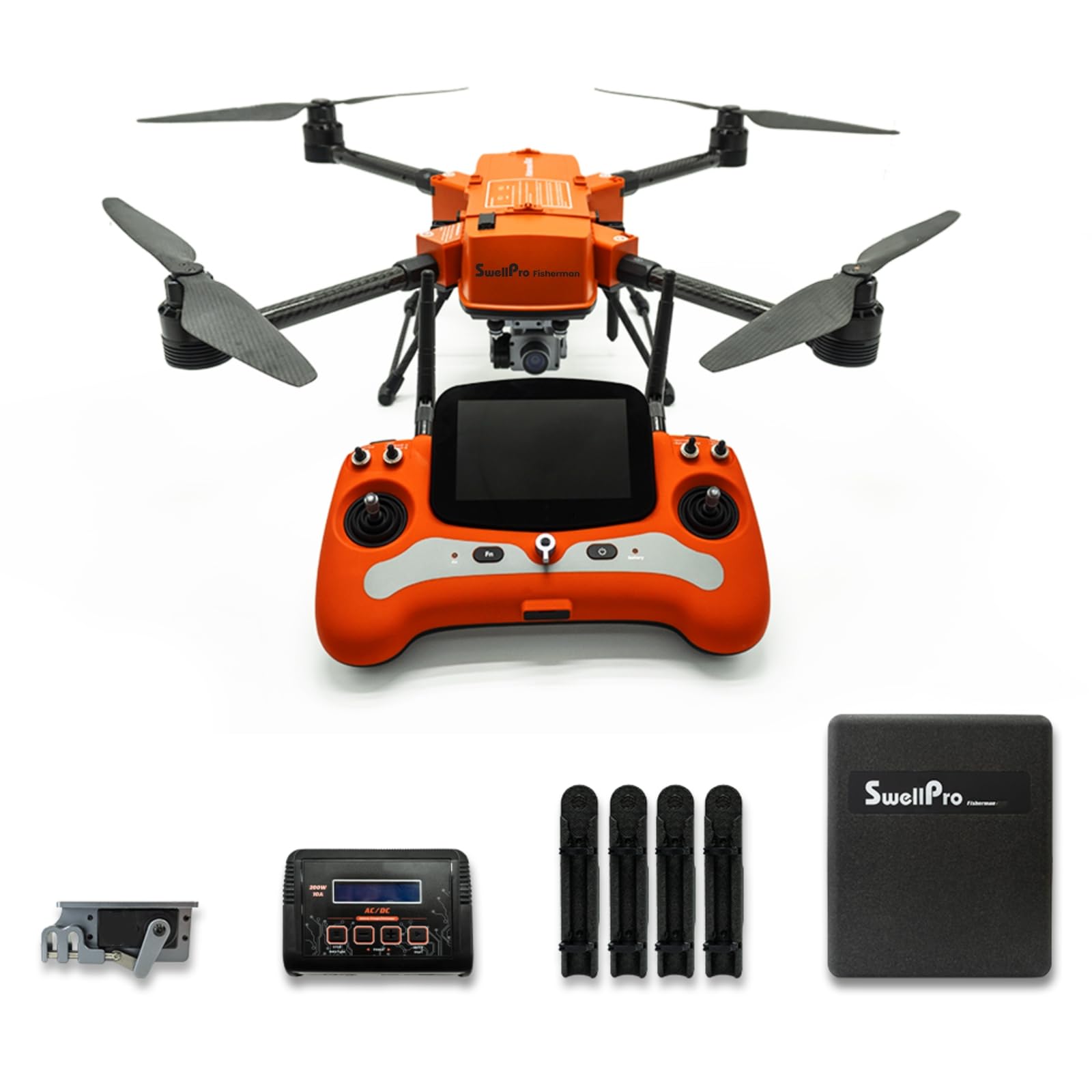
The only pick that carries a full 7 lb bait rig out over the surf — and comes back.
The 7 lb (3.2 kg) capacity is the whole reason this drone exists. It hauls a bait rig out to 0.9 mile (1.5 km), then drops it on command using the included dual bait release. That puts it in a class none of the camera drones can touch. The airframe is IP67 rated with a corrosion-resistant body, and the Advanced remote is IP55 rated. A 4K camera plus color-screen controller lets you pick your drop spot without mounting a phone, and the foldable arms fit the carry case between trips.
Saltwater is the design target. A recommended 30 mph wind limit, GPS-assisted hover and low-battery/signal-loss return functions all point at long days on open water. The bundle includes the remote ID module, floats, flight battery, charger and everything else you’d need to fish. Buyers call it rock-steady in the air with good 4K video saved to the onboard flash.
The honest limits come with the territory. Accessories are hard to find outside SwellPro’s own store, and shipping times run long. The power-on routine takes getting used to — long-press, quick-release, long-press again — and the main battery charges through the red/black wires with no return feed. Budget a practice session on dry land before you head to the coast.
The reason it’s on the list: nothing else here carries 7 lb of bait to 0.9 mile and comes home through salt spray.
Plan for: slow accessory shipping and a careful charging routine — this is a tool, not a toy.
Own it for: surf, shark and offshore runs where the payload is the point, and 7 lb of bait is the whole game.
Don’t buy it for: casual filming — the camera is fine but the drone’s strengths live in the bait drop.
Know the Specs
Payload Release And Rated Weight
A payload release is a servo-driven hook that opens on command from your controller. The rated weight is the safe limit — the DCX is rated to 1.2LB, the SwellPro to 7 lb (3.2 kg). Carrying more than rated can overwhelm the motors or drop the load early. Always check the rated figure, not just the hook’s physical strength.
Stated Flight Time
Every flight-time figure here is quoted empty, on the drone’s own battery, with nothing hanging underneath. A drone that flies 32 minutes empty can drop well under 15 with a heavy load underneath. Plan each drop around that shrink — a 32-minute drone with a heavy load can fall under 15.
Sub-249g And Registration
Many listings name the 249g threshold as the point below which some registration hurdles fall away. Add a payload release and a heavy load and you can cross that line, which triggers FAA registration and Remote ID compliance. Check both the drone’s own weight and whether the listing says Remote ID is built in or comes as a separate module.
Transmission Range And Signal
Listed range is best-case signal over open land with a clear line of sight. Trees, buildings and hills cut into that number. A drone that promises 30000ft might lose signal over a few hundred feet of crowded skyline. Treat the stated range as a ceiling over open land and set return-to-home before you fly past half of it.
Common Questions
Which drone here can actually carry a payload?
Does a payload mount fit on any drone?
How much flight time do I lose with a payload attached?
Do I need FAA registration for a payload drone?
Is a bait-release drone legal for offshore fishing?
What’s the difference between LiDAR and standard obstacle avoidance?
Can I swap the camera for a payload on the F7GB2 Pro?
How far can a payload drone actually fly with a bait rig?
What should I practice before my first bait-drop flight?
Which is better for dropping over water: LiDAR sensing or longer battery life?
The Bottom Line
For most people shopping for drones with customizable payload mounts, the answer splits by mission. If you want a camera drone that skips registration and gives you a dedicated screen for under 249g, the Potensic Atom 2 Fly More Combo is the strongest all-rounder — 245 g on the scale, 96 minutes of flight and a 5.5-inch controller screen. If your actual goal is dropping something mid-flight, the DCX Volo X EZ AI is the one pick that pairs a rated release with 360° LiDAR sensing (laser-based distance detection that works in all directions), and the SwellPro Fisherman MAX FD2 is the only drone here built to haul 7 lb of bait through saltwater.
One last honest nudge: the payload class is small. Three drones in this group carry factory-rated release hardware, so the choice narrows fast once you know your weight ceiling. Keep your load under the rated figure — 1.2 lb on the DCX, 7 lb on the SwellPro — or fit a third-party hook and stay well below it.
How we choose
We do not accept paid placement. Every pick is matched to a real buyer and a real use-case; we do not hands-on test units.
Sources
Specifications: manufacturer listings and product documentation. Review insights: verified customer reviews, as of October 2026. Pricing: not shown on this page (it changes often); check the current price via the retailer link.
As an Amazon Associate, Aappliancez earns from qualifying purchases. This does not affect which products we feature.