Disclosure: Some links in this post are affiliate links. As an Amazon Associate I earn from qualifying purchases, at no extra cost to you. Learn more
Specs are compiled from manufacturer listings and verified buyer reviews and can change over time — please confirm the key details on the product page before buying.
A burn dressing has to hold a moist, protected layer over the damaged skin and still lift off later without tearing the new tissue underneath. That second job is where ordinary gauze and tape fail. This shortlist covers four formats — a bordered island dressing, a silver gel, a non-adherent mesh, and a silver alginate pad — so you can match the pad to the burn.
This guide is built by comparing the manufacturers’ published specifications and the patterns across verified customer reviews, so you get each pick’s real strengths and trade-offs instead of marketing spin.
What matters with a burn pad is how it behaves on day three, when the skin is raw and the tape has to let go. Below you will find the full breakdown of the dressings for burns worth keeping in your cabinet.
Top Picks

How To Choose The Best Dressings for Burns
Start with how wet the wound is, not with the box. A heavily oozing burn needs an absorbent alginate pad, while a shallow, dry one needs a light non-adherent mesh.
Non-stick beats everything else at change time
A non-adherent dressing is one where the contact layer does not bond to the wound bed. That matters on a burn because the surface is raw and healing tissue tears easily. A coated mesh or a pad that is sticky only around its border lets you lift the dressing off without pulling.
How much a wound weeps decides the pad
Exudate is the fluid a wound gives off. A highly absorbent pad holds more of it and can stretch the time between changes. A light pad suits a minor burn that is barely damp. Matching absorbency to how much the burn weeps is the single biggest factor in comfort.
Adhesive borders and skin sensitivity
A bordered dressing is one that sticks around the outside only, leaving the centre pad free to sit on the burn. It is quick to apply and stays put. If the skin around the wound is sensitive or already irritated, a plain non-adherent pad held with gauze is the gentler route.
Side-by-Side Comparison
| Model | Best For | Format | Size | Count | Amazon |
|---|---|---|---|---|---|
| Ceeport Island Dressing with Adhesive Border★ Best Overall | Covering a large burn or incision in one piece | Bordered island pad | 4″ x 10″ | 25 individual packs | Amazon |
| Silver Biotics 24 PPM Silver Wound Healing Gel | Keeping a shallow burn damp and comfortable | Water-based gel | 1.5 oz | 1 tube | Amazon |
| ADAPTIC Non-Adhering Dressing | Fragile, healing skin that must not be pulled | Coated mesh pad | 3″ x 3″ | 50 per box | Amazon |
| Ag Silver Calcium Alginate Wound Dressing | Weeping, heavier-drainage wounds | Silver alginate pad | 4″ x 4″ | 15 packs | Amazon |
Detailed Reviews
1. Ceeport Island Dressing 4″x10″ 25 Pack
Our pick — 4.5+★ from 750+ verified ratings; the strongest balance of quality and price.
One big pad that covers a whole forearm burn and still peels away clean.
The format here is the whole argument. Each dressing is a 4″ x 10″ island pad — soft non-woven fabric around the outside, a non-stick absorbent centre that sits on the burn, and acrylic adhesive only on the border. Because the sticky part stops at the edge, the pad never bonds to the damaged middle. That is exactly what you want when the dressing has to come off a burn rather than a clean cut.
What wins people over is the coverage. A 4″ x 10″ pad covers a long, awkward area in one piece, and the 25 individually wrapped packs mean you are not rationing them. The adhesive border holds through daily life too — buyers report it “Stays in place even after shower,” which is the realistic test for anything sitting on a limb. It is a 9.91-ounce box, heavier than the Silver Biotics gel tube at 1.76 ounces, but that weight is bulk pads rather than a drawback.
The honest catch is the adhesive itself. Amazon’s own summary of the reviews flags stickiness as a split issue — plenty of buyers find it holds for hours, while others find it lets go. Sensitive skin is the other thing to watch: the acrylic adhesive is described as hypoallergenic, yet the same border that grips well can still irritate delicate skin around a burn. If your skin reacts to tape, the ADAPTIC pad below is the safer shape.
Where it earns its keep
- 4″ x 10″ pad covers a long burn or incision in a single piece
- Adhesive sits on the border only, so the centre never sticks to the wound
- Breathable gauze centre absorbs leakage while letting air and moisture vapour through
- 25 individually wrapped packs keep each dressing sterile until you open it
What to weigh first
- The border adhesive divides opinion — some find it holds, some find it lifts
- Sensitive skin can react to the acrylic border
- At 4″ x 10″ it is a large pad, so it is overkill on a small burn
Reach for this if: you are covering a broad, awkward area — a forearm, a thigh, a surgical line — and want one pad instead of a patchwork.
Look elsewhere if: the skin around the burn is easily irritated by tape, in which case a borderless pad is kinder.
2. Silver Biotics 24 PPM Silver Wound Healing Gel 1.5 oz
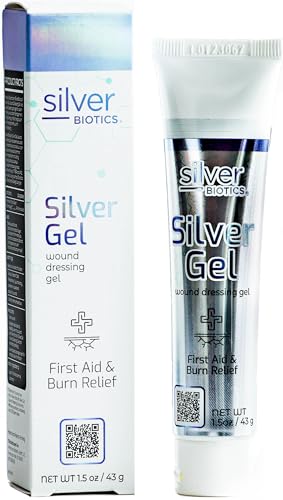
Not a pad at all — a clear gel that keeps a burn damp without any tape.
Sometimes the burn is in a spot where nothing sticks: a patch on the wrist, a crease behind the knee, an area that shifts every time you move. This 1.5 oz water-based gel goes on as a layer instead of a covering, and the maker states it provides protection for up to 3 days. It is the lightest thing on this list by a wide margin — 1.76 ounces against the Ceeport box at 9.91 ounces.
The gentleness is the point. The gel is described as not stinging, not sticking, and not burning on application, which is the difference between a dressing you dread and one you will actually reapply. As owners mention: “Effective and gentle on damaged skin.” The silver concentration is stated at 24 PPM (parts per million), and the same buyer notes it is “only 1/2 the strength” of a 50 ppm alternative they had been using — yet still pleased with the results. What sells it is the short ingredient list, with no filler extras to sit on raw skin.
Know what you are buying. This is a gel, not a sterile barrier, so it will not soak up drainage the way the alginate pad below does. It also comes in a single 1.5 oz tube, which goes quickly if you are treating a large area several times a day. For a small, shallow burn that needs moisture and nothing else, that trade is easy to accept.
The moisture argument: a healing burn does better in a damp environment than a dry one, and this gel is built entirely around holding that moisture to the skin. No pad, no tape, no border to irritate.
What it will not do: it cannot absorb fluid or shield a wound from rubbing, so it works alongside a cover rather than replacing one on a weeping burn.
The right call when: the burn is small, shallow, and in a spot where adhesive will not stay put.
Keep shopping if: you need something to contain drainage or you are dressing an area larger than the tube can reasonably cover.
3. ADAPTIC Non-Adhering Dressing – Sterile 3″ x 3″ – 50/Bx

Fifty little coated pads that lift off a healing burn without taking skin with them.
The non-stick claim is the entire reason to buy this box, and it is the one thing the reviews keep returning to. Each 3″ x 3″ pad is made from cellulose acetate and coated with a petrolatum emulsion, so the mesh sits on the wound rather than fusing to it. You apply the dressing first, then put ointment or cream over the top, then secure it with gauze — the pad itself is purely a non-sticky covering.
That structure suits fragile, thin skin that tears at the slightest pull, which makes it a sensible choice for an older person’s burn or a superficial scald where the surface is delicate. You get 50 sterile pads per box, so you can cut them to size for small burns without wasting a whole dressing. It is worth knowing how the pad behaves over time: the recurring guidance is to change it twice a day, because leaving one on for longer than a day lets it dry out and turn painful to remove.
Set against the Ag alginate pads, this is a smaller dressing sold in a much bigger box — 50 pads versus 15 — and the 3″ x 3″ size is a full inch shorter per side than the alginate’s 4″ x 4″. It does not absorb heavy drainage, so it is a poor fit for a very wet wound. For a shallow burn that just needs a clean, non-stick layer under a bandage, the size and count work in your favour.
Why it wins on fragile skin: the petrolatum-coated mesh does not bond to a healing surface, so changing it does not reopen the burn. Buyers treating skin tears on elderly patients describe it working well for exactly that reason.
Suits you if: the skin is thin, fragile, or already damaged and you cannot risk a dressing that pulls on removal.
Think twice if: the burn is weeping heavily — this pad is a non-stick layer, not a fluid sponge.
4. Ag Silver Calcium Alginate Wound Dressing 4″ x 4″ 15 Packs
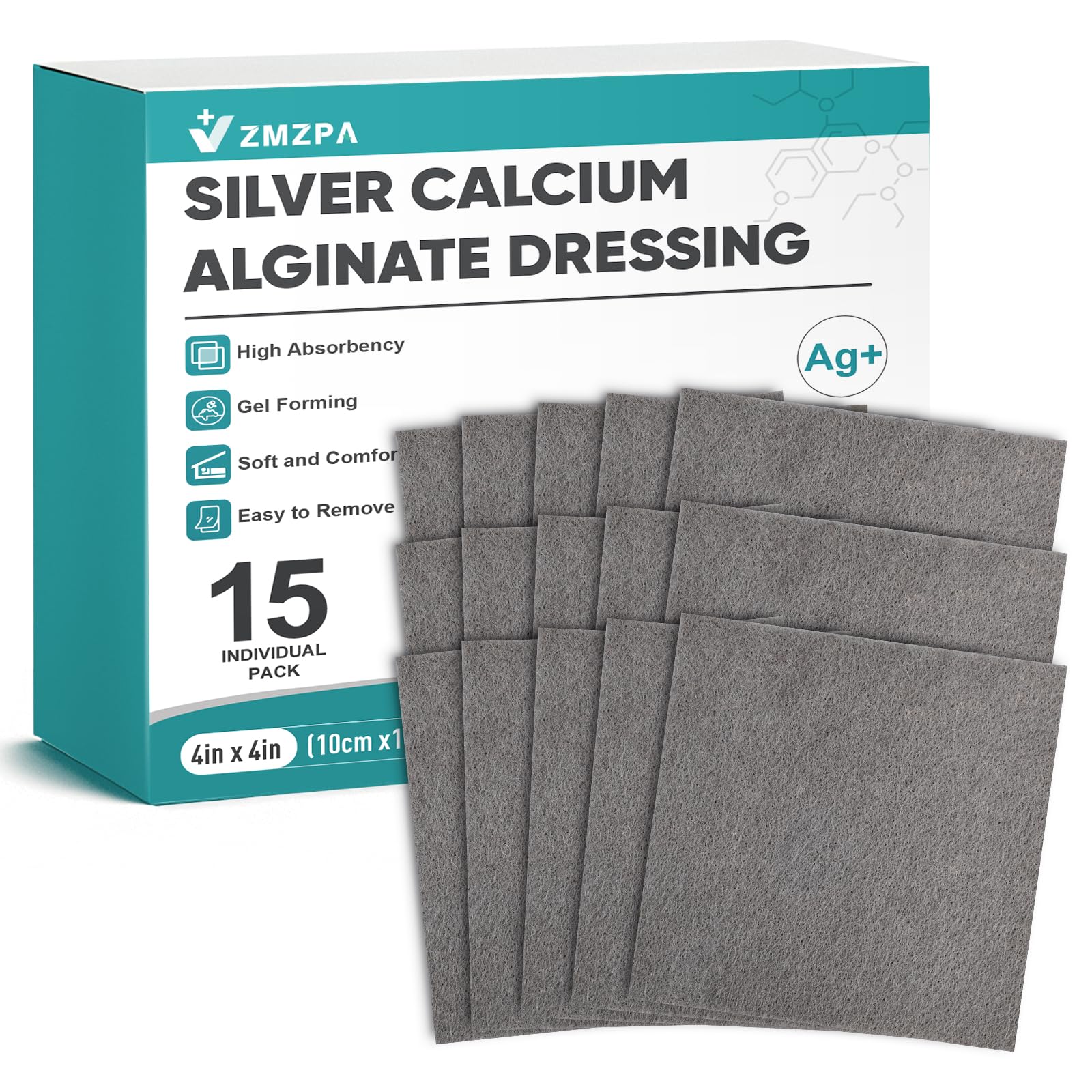
A silver-infused seaweed pad that turns to gel and soaks up the messy burns.
Alginate is the material to know here. These 4″ x 4″ pads are made of calcium alginate with silver particles, and when the fibre meets wound fluid it forms a soft adhesive gel over the surface. That gel layer is what keeps a heavier-draining burn from drying out, and the silver is stated to release as the pad absorbs. Each of the 15 pads is individually wrapped and produced under sterile conditions.
The scope listed by the maker is wide — partial to full thickness wounds with moderate to severe exudation, explicitly including I-II degree burns alongside postoperative and trauma wounds. In practice, this is the pad you want when a burn is weeping rather than merely damp. It can be cut to fit, and the removal is described as painless because the pad has already softened into gel rather than crusting onto the skin. It is the largest pad on this list at 4″ x 4″, an inch longer per side than the ADAPTIC pads.
Two things temper the recommendation. Amazon’s summary of the reviews marks both adhesiveness and absorbency as mixed — some buyers find it grips and drinks up fluid, others find it does neither. Durability is the recurring weak point, and it is worth treating this as a dressing you change often rather than leave on. The 4.5+ star rating is the lowest of this group, but the format still fills a gap none of the others do.
The case for the alginate
- Calcium alginate turns to a soft gel so removal does not tear the surface
- Silver particles form a barrier against external contamination
- Made for moderate to severe exudation, including I-II degree burns
- Can be custom-cut to fit the burn, with 15 individually wrapped pads
Straight talk
- Reviews split on how well it sticks and how much it actually absorbs
- Durability is the softest point — plan on frequent changes
- The 4.5+ rating trails the other three picks here
Built for: a burn that is oozing and needs a pad designed to absorb and release as gel rather than stick and dry.
Pass it by if: you are dressing a shallow, nearly-dry burn — that job belongs to a simpler non-adherent pad.
Know the Specs
Non-adherent versus adhesive border
A non-adherent dressing has a surface that does not bond to the wound — think coated mesh or a petrolatum-emulsion layer. An adhesive-border island dressing works differently: the stickiness is only on the frame, leaving the centre pad free. Both solve the same problem, which is lifting the dressing off a burn without pulling, but the bordered version stays on by itself.
Absorbency and exudate
Exudate is the fluid a wound produces. A pad rated for high absorption holds more of it, which stretches the gap between changes. A non-stick mesh keeps the wound bed protected but does not soak up much on its own. Match the pad to how wet the burn actually is, and you will change dressings less and hurt less when you do.
Gel versus pad
A water-based gel like the Silver Biotics product adds moisture directly to the skin and needs no tape at all. A pad covers and protects physically. They are not competitors; a gel keeps a shallow burn damp, while an alginate or mesh pad covers and contains. A silver dressing combines both functions by absorbing fluid and releasing silver as it works.
Sterility and packaging
Every dressing here is individually wrapped, which keeps each one clean until you open it. That matters on a burn, where broken skin leaves the area more open to contamination. Buy the format you will actually use up, because a sterile pad is only sterile until the seal is broken.
Common Questions
How often should you change a dressing on a burn?
Is a non-adherent dressing better than gauze for a burn?
Can you cut an alginate dressing to fit a small burn?
What does PPM mean on a silver wound gel?
Will an adhesive border stick to a sweaty arm?
Should a burn be kept moist or left to dry out?
How many dressings do you get in each box?
Can you use silver dressings on any burn?
Does a coated mesh dressing need tape over it?
The Bottom Line
The pick that covers the most ground is the Ceeport Island Dressing, because a 4″ x 10″ bordered pad handles a long burn in one piece and keeps its adhesive off the wound itself. If the burn sits somewhere tape will not hold, the Silver Biotics gel keeps it damp with no dressing to peel at all. For thin, fragile skin that cannot take a pull, reach for the ADAPTIC non-adherent pads. And when a burn is genuinely weeping, the Ag silver alginate pads are the ones built to absorb it. Match the format to how wet the burn is and the dressing stops being the hard part.
How we choose
We do not accept paid placement. Every pick is matched to a real buyer and a real use-case; we do not hands-on test units.
Sources
Specifications: manufacturer listings and product documentation. Review insights: verified customer reviews, as of October 2026. Pricing: not shown on this page (it changes often); check the current price via the retailer link.
As an Amazon Associate, Aappliancez earns from qualifying purchases. This does not affect which products we feature.