Disclosure: Some links in this post are affiliate links. As an Amazon Associate I earn from qualifying purchases, at no extra cost to you. Learn more
Specs are compiled from manufacturer listings and verified buyer reviews and can change over time — please confirm the key details on the product page before buying.
If your feet roll inward with every step, the shoe that saves you at the gym is not always the shoe that gets you through a wedding or a client meeting. The picks below are the shoes that do both — leather uppers and support that stays in place under a rolling arch. Start with the Mizuno Wave Inspire 21 if you want support without bulk; it holds the top spot here.
This guide is built by comparing the manufacturers’ published specifications and the patterns across verified customer reviews, so you get each pick’s real strengths and trade-offs instead of marketing spin.
Overpronation means your arch collapses inward when you land, so the best dress shoes for overpronation need a firm midsole and a heel counter that stops the tilt before your knees feel it.
Top Picks

How To Choose The Best Dress Shoes for Overpronation
You need to know which parts of a shoe actually stop your arch from collapsing, and which parts just feel soft in the first two minutes of trying them on. Here is what to check before you spend.
Look for medial support and a firm heel counter first
Medial support means extra firmness on the inner side of the shoe — the side your foot rolls toward. Without it, the midsole compresses unevenly and your ankle tips inward. A firm heel counter (the stiff cup at the back of the shoe) holds your heel upright when you land, so the roll never gets started. A Mizuno or ASICS stability model usually names this built-in support in its description. A pure dress shoe almost never does, which is why so many people end up shopping in the stability running aisle instead.
Decide if you need a removable insole
If your podiatrist made you a custom orthotic, you need a shoe that comes with a removable factory insole and some spare depth above it. Orthofeet designs several of its styles around that idea, including fitting spacers and its Arch Booster. A shoe with a fixed, heavily glued-in insole will squeeze your orthotic and undo the support you paid for.
Judge the upper by your actual day
Leather uppers and nylon mesh linings keep feet presentable and dry through a long workday, which is why they show up in business styles. If your day is mostly standing on hard floors, a shock-absorbing sole matters more than the shine. If your day is mostly sitting in meetings, a roomier toe box keeps the shoe wearable.
Side-by-Side Comparison
| Model | Best For | Department / Build | Support Type | Footbed | Amazon |
|---|---|---|---|---|---|
| Mizuno Wave Inspire 21★ Best Overall | Daily support with a clean look | Men’s | Medial support + ENERZY NXT heel | Fixed | Amazon |
| Brooks Glycerin GTS 23Best for Women | Arch support for women | Women’s | GTS stability | Fixed | Amazon |
| Orthofeet Juno Mary JaneBest Slip-On | Slip-on comfort with dresses | Women’s | Ortho-Cushion system | Removable | Amazon |
| OrthoComfoot Wide Leather Oxford | Business dress with arch support | Men’s | Orthopedic footbed | Removable | Amazon |
| ASICS GT-2000 14 | Overpronation support for women | Women’s | LITETRUSS-style guidance | Fixed | Amazon |
| Orthofeet Avery Island | Men’s dress loafer with orthotic room | Men’s | Ortho-Cushion system | Removable | Amazon |
| Florsheim Crossover MaxTrax | Slip-resistant work dress shoe | Men’s | Comfortech footbed with Rebound Foam | Removable | Amazon |
| ASICS GT-4000 4 | Maximum stability for men | Men’s | LITETRUSS + PureGEL | Fixed | Amazon |
| Brooks Beast GTS 26 | Heavy overpronators who log big days | Men’s | GTS stability | Fixed | Amazon |
Detailed Reviews
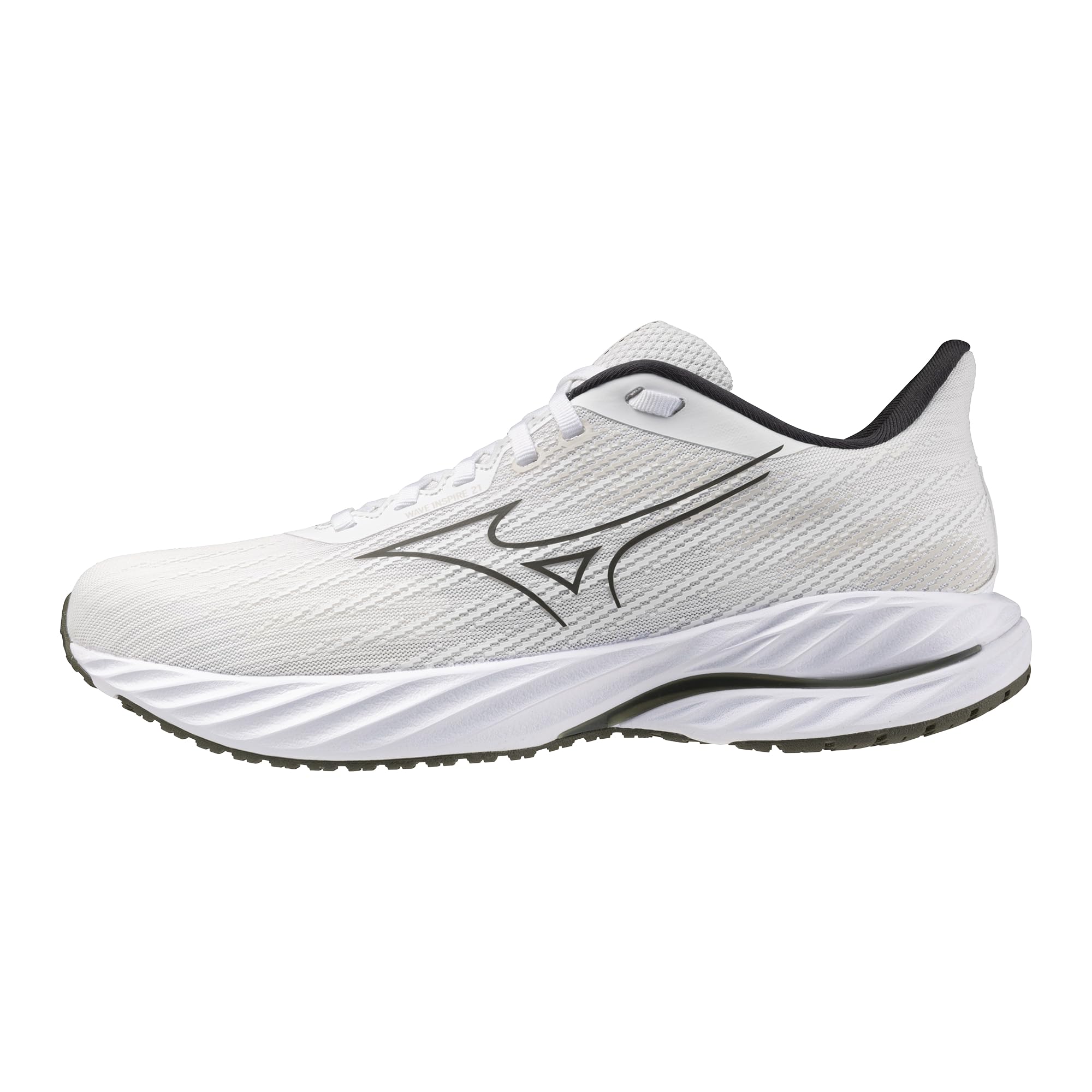
1. Mizuno Men’s Wave Inspire 21 Running Shoe
Our pick — 4.5+★ from 150+ verified ratings; the strongest balance of quality and price.
Support that lands soft and stays upright — the stability shoe that slips under trousers without a second look.
The Wave Inspire 21 earns the top spot because it solves the exact problem overpronators face in a dress shoe: your arch rolls inward and nothing holds it. Mizuno builds in secure medial support — that is extra firmness on the inside edge of the shoe, the side your foot collapses toward — so the midsole does not crush flat on every step. The MIZUNO ENERZY NXT foam softens the heel landing on concrete sidewalks. A connected forefoot outsole design (one continuous piece of rubber under the front of the foot) gives a smoother roll from midfoot to toe, so your stride does not stall halfway through.
For a shoe with real support inside, the look is restrained enough for business casual. What wins people over most is the build quality — the material and construction hold up rather than feeling like a budget weekend pickup. Durability comes up next most often, and stability right behind it, which tells you owners are judging this shoe on exactly the traits overpronators should care about. Owners also describe it as versatile enough for half marathon runs and a wide range of workouts, with cushioning, fit and appearance all drawing the same warm response.
The honest trade-off is that this is a running shoe with a running shoe’s upper, not a stitched leather oxford. If your workplace requires a formal cap-toe shoe, no stability mash-up will pass. And while the fit draws praise, it stays a structured stability fit, so give yourself time to break it in. Rated 4.5+ stars by a small but devoted group of owners, it is the most balanced starting point in this lineup — support you can feel, in a silhouette that does not scream orthotic.
Where it earns the crown
- Secure medial support keeps the arch from rolling inward
- ENERZY NXT foam softens heel landings on hard pavement
- Connected forefoot outsole smooths the midfoot-to-toe roll
- Restrained upper that works with office trousers
What to know before you click
- It is a running upper, not a formal leather oxford
- Structured fit needs a break-in period
Made for: the overpronator who needs real medial support and wants a shoe that still passes at the office.
Reconsider if: your dress code requires a stitched leather cap toe — you need the OrthoComfoot instead.
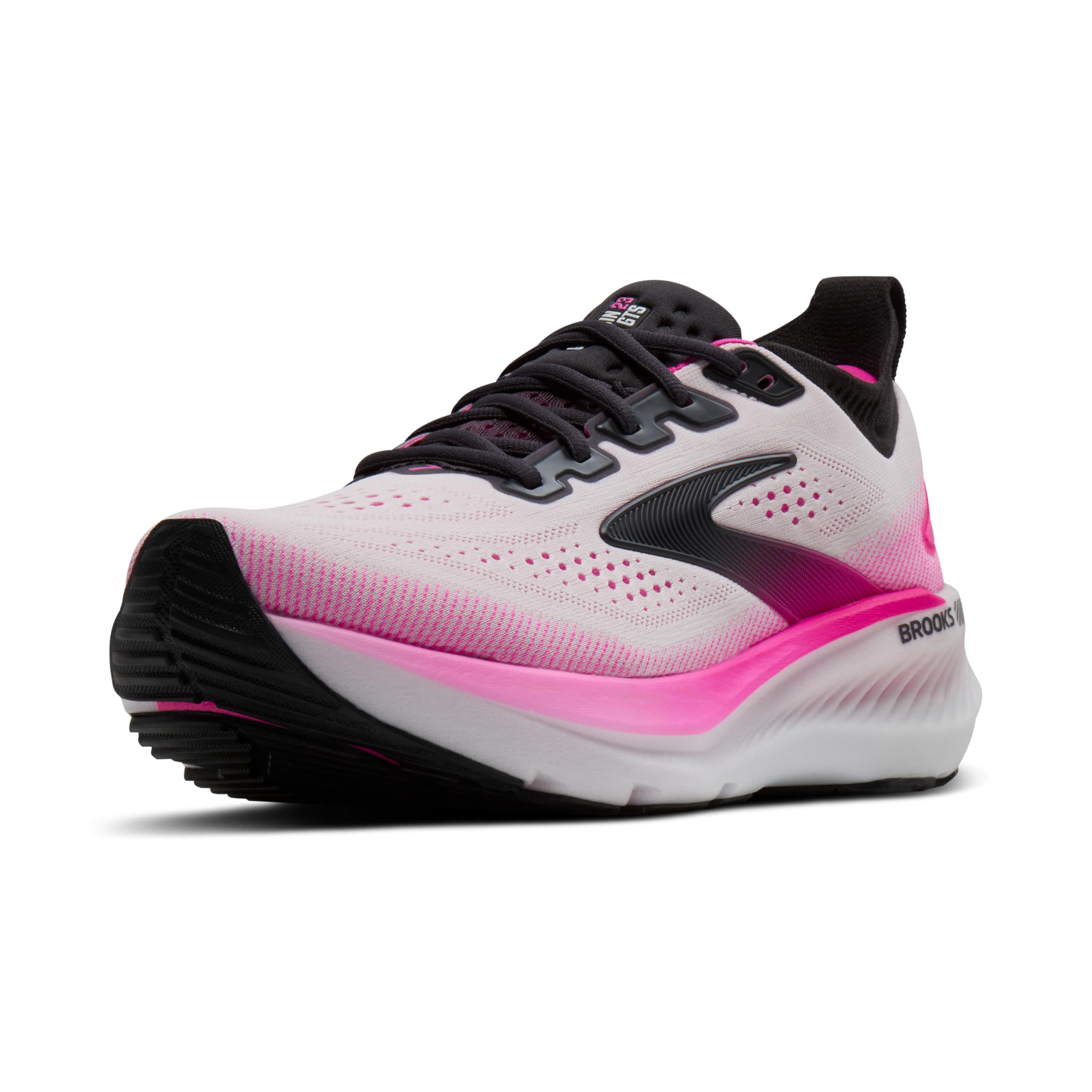
2. Brooks Women’s Glycerin GTS 23 Running Shoe
A women’s fit with a cradle of arch support that lets you jog without the inner ankle diving.
Brooks puts its GTS stability package inside the Glycerin here, and the point is to slow the inward roll without turning the shoe into a brick. The great arch support is the thing buyers point to first, and cushioning is close behind. Plenty of wearers describe jumping around and jogging without discomfort, which is the whole goal for a roll-prone foot. It fits true to size with appropriate toe space — a real benefit when your foot spreads under load and needs somewhere to go.
The comparison buyers care about is against the ASICS GT-2000 14 below. Both are women’s stability shoes, but the Glycerin GTS 23 leans softer and more cushioned underfoot while the GT-2000 carries the APMA Accepted nod. If plush is what your knees want, this is the friendlier ride. If you want the lighter feel, check the GT-2000.
The catch is durability. A fair number of buyers report the shoes coming apart after 14 wears. Most runners never hit that issue, but it is the trade-off you accept for the softer foam. Good arch support, generous toe space, and a plush ride — just budget your expectations around long-term wear rather than decades of service.
The fit that matters: true to size with real toe space, per the buyer consensus.
The honest limit: durability is a real conversation here — some pairs split after 14 wears.
Pick this if: you overpronate, want a plush women’s ride, and know you will replace shoes on a schedule.
Look elsewhere if: you need a shoe built to survive years of hard use — go firmer and simpler.
3. Orthofeet Juno Orthopedic Women’s Mary Jane
A Mary Jane that pairs with skirts and still cradles the arch — comfort that dresses up.
The Juno is the answer for women who need support but cannot wear a sneaker to work. Orthofeet’s whole approach is the Ortho-Cushion system: a built-in orthotic insole, a shock-absorbing sole, and a pressure-free fit. The insole pulls out, so your own custom orthotic drops straight in, and the extra depth and fitting spacers let you dial in the volume. A firm heel counter and wide base help steady the step, which matters when a rolling arch is what your day is about.
Owners talk about comfort more than anything else, and appearance is right behind — the shoe genuinely looks cute with skirts and dresses. Plenty of wearers call it easy on and off, versatile for all-day standing, and fine for city walking. The easy-on part is a real advantage for anyone whose feet swell through the day.
Where it wobbles is sizing. A good chunk of owners mention the fit running off, and value-for-money is more split than you would expect. Read the size chart carefully and, if you are between sizes, size to the larger one. It is a 4.0+ star shoe with a loyal following, not a universal fit — treat the sizing note as the deciding detail.
What it gets right: removable insole, extra depth and spacers mean your custom orthotic fits.
One caution to carry: sizing runs mixed — check the chart before you commit.
Best match for: women who need a dressy slip-on with real arch support and a removable insole.
Worth a second look if: you have an unusual size — verify the fitment before ordering.
4. OrthoComfoot Men’s Orthopedic Wide Leather Oxford

An actual leather business shoe with a wide toe box and an orthopedic footbed — dress code and arch support in one.
Most support shoes ask you to give up the leather oxford look. This one does not. The OrthoComfoot is built as a wide-toe-box business dress shoe in leather, with an orthopedic footbed built for people dealing with plantar fasciitis and heel pain. Owners describe wearing them for hours without foot pain, and many mention how the shoe looks.
Here is what it will not do. The toe box width is genuinely mixed — some men find the room they need, others say it is not wide enough for a truly broad forefoot. Durability registers as mixed, and a handful note a sound (the shoe can be noisy on hard floors). If you have a very wide foot, measure before you order rather than assuming the word “wide” guarantees the volume.
For a leather business shoe that is genuinely comfortable on long days, this is the budget-friendly answer in the men’s lineup. It does not have the polished stability engineering of the ASICS GT-4000 or the Mizuno, but it reads formal in a way those never will. That trade is the whole point.
Why men pick it
- Genuine leather oxford that passes a business dress code
- Orthopedic footbed aimed at plantar fasciitis and heel pain
- Wide toe box for a forefoot that needs space
Where it needs care
- Toe box width is mixed — not every wide foot is satisfied
- Durability is mixed, and some pairs sound loud on hard floors
The right call for: the man who needs a real leather work shoe with room for an aching arch.
Be wary if: you have an extra-wide forefoot — the toe box divides buyers.
5. ASICS Women’s GT-2000 14 Running Shoes
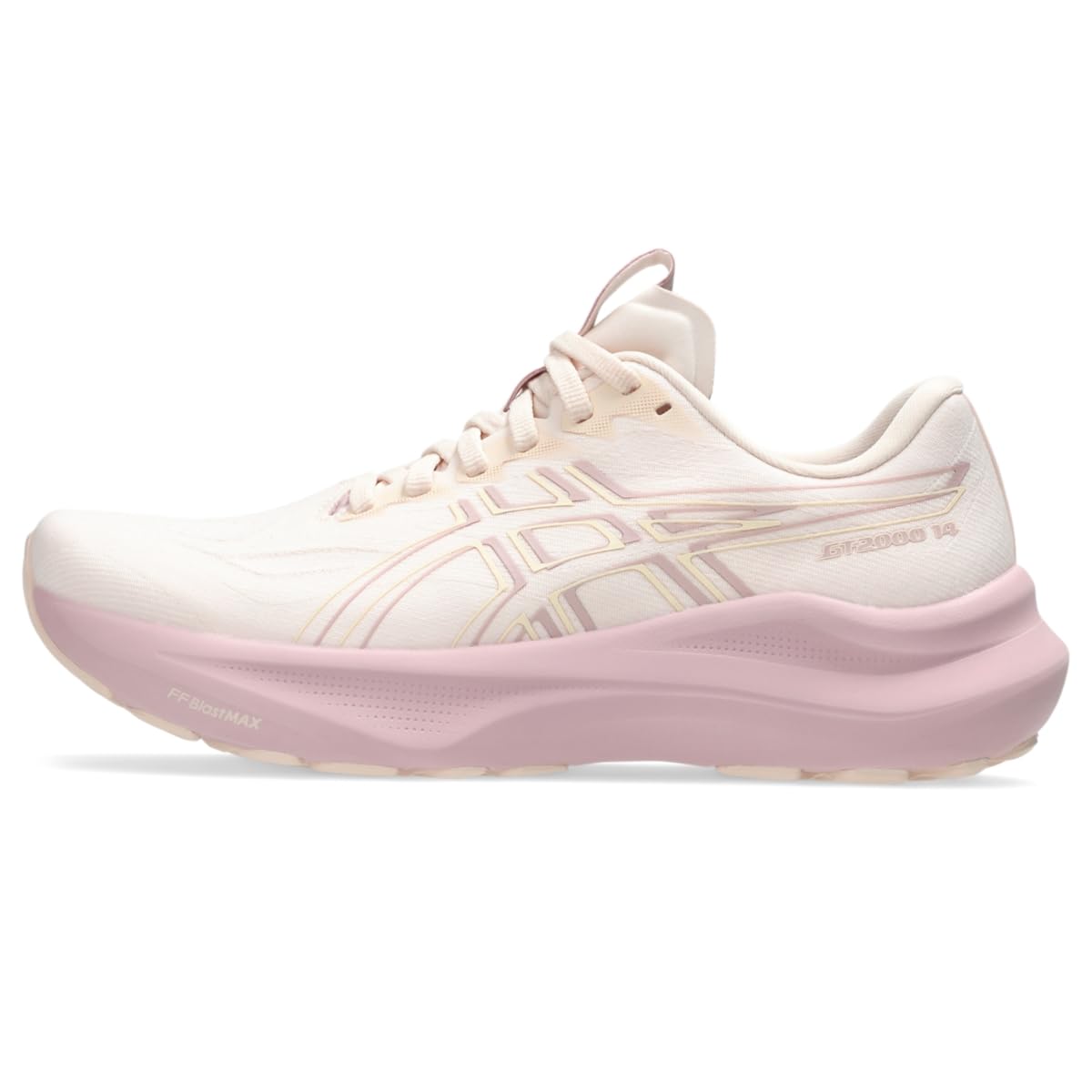
Built specifically for feet that roll inward, with the APMA Accepted nod and a lighter daily-training feel.
ASICS made no secret of who this shoe is for. The description says plainly: this shoe provides extra support for runners who overpronate, and it supports feet that roll inward excessively. That is the exact problem this list is about, stated on the box. The shoe carries the APMA Accepted designation from the American Podiatric Medical Association.
Owners wear it for speed walking and jogging alike, and quality and comfort are the two things they praise most. It is a lighter feel than the Brooks Glycerin GTS 23 above, which suits a brisk walker more than someone who wants a soft, plush landing.
The fit is where you have to pay attention. Some women find it true to size with good arch support; others report the medium width being too snug and the foot tilting outward while walking. That last detail is worth reading twice if your pronation is pronounced. Try the shoe on and walk in it before committing to long days. Comfortable, versatile, and genuinely built for the problem — but the width is a decision, not a default.
Why it is on the list: it is the most explicit overpronation-focused women’s shoe here, with APMA Accepted recognition.
The fit question: medium width divides buyers — some feel snug, some feel the foot tilt outward.
Go for it if: you want a lighter women’s shoe explicitly designed for inward-rolling feet.
Think twice if: you have a genuinely wide foot — go up in width or look at the Brooks.
6. Orthofeet Avery Island Orthopedic Men’s Dress Shoes

A loafer-style dress shoe built around an orthopedic footbed and room for your own prescription orthotic.
What puts the Avery Island at this spot is customization. The insole is adjustable and removable, so prescription orthotics slide right in, and owners say it works well with them. The roomy toe box and good arch support hold up through long days, and the shock-absorbing sole keeps standing comfortable. Quality and comfort are the loudest themes in the reviews by a wide margin.
The comparison to make is against the OrthoComfoot above. Both are men’s leather-look orthopedic shoes, but the Avery Island leans into the loafer look and the ease of a slip-on, while the OrthoComfoot leans into a wide business oxford. If you want something easy to get on and off, this is the friendlier shape.
The one area that does not get universal love is appearance — it reads more comfort shoe than sharp dress shoe. Durability is also described as mixed. Neither sinks the shoe for the buyer it is made for, but if your priority is a sleek silhouette, this is not it. It is a 4.5+ star shoe for the man who has decided that his feet come first.
What keeps it here: removable, adjustable insole that works with prescription orthotics.
What to accept: appearance is divisive and durability is mixed.
Fit for: men who need a slip-on dress shoe with space for a custom orthotic.
Not for: anyone who wants a razor-sharp silhouette over comfort.
7. Florsheim Men’s Crossover Work MaxTrax Dress Steel Toe SRO

Polished leather outside, steel toe and a slip-resistant sole underneath — a work shoe that still dresses up.
This one is for the man whose day involves hard floors, spills and a dress code. The upper is leather, the lining is nylon mesh that pulls moisture away to keep feet dry, and the footbed is a removable Comfortech pair with Rebound Foam. The oil-resistant rubber wedge outsole carries the patented SR Max MaxTRAX slip-resistant tread pattern. It is a steel toe, and it meets the ASTM F2413-24 I/C EH SRO standard — the workplace safety spec for protective footwear, electrical hazard protection, and slip resistance.
What makes it work for a pronating foot is the removable footbed. Pull the factory insole and drop in your own orthotic, and you keep the safety features without losing your arch support. Owners describe wearing them all day without discomfort and call them very light and well-fitting, which is unusual for a steel-toe shoe.
The catch: this is a safety shoe first. The tread and the steel toe add shape to the silhouette that a plain leather dress shoe does not have, so it is best matched to a work-day wardrobe rather than a black-tie event. It is a 4.5+ star shoe with a reputation that holds up. For jobs that require safety compliance, that trade is well worth making.
What the job needs
- ASTM F2413-24 I/C EH SRO compliant steel toe
- SR Max MaxTRAX slip-resistant tread for wet floors
- Removable Comfortech footbed — swap in your own orthotic
- Nylon mesh lining pulls moisture away
The shape you accept
- Steel toe and tread give it a work-shoe profile, not a sleek oxford line
- Best paired with work-day clothing rather than formalwear
Made for: the overpronator whose workplace demands a steel toe and slip resistance without giving up polish.
skip it if: there is no safety requirement in your day — a plainer dress shoe will look cleaner.
8. ASICS Men’s GT-4000 4 Running Shoes
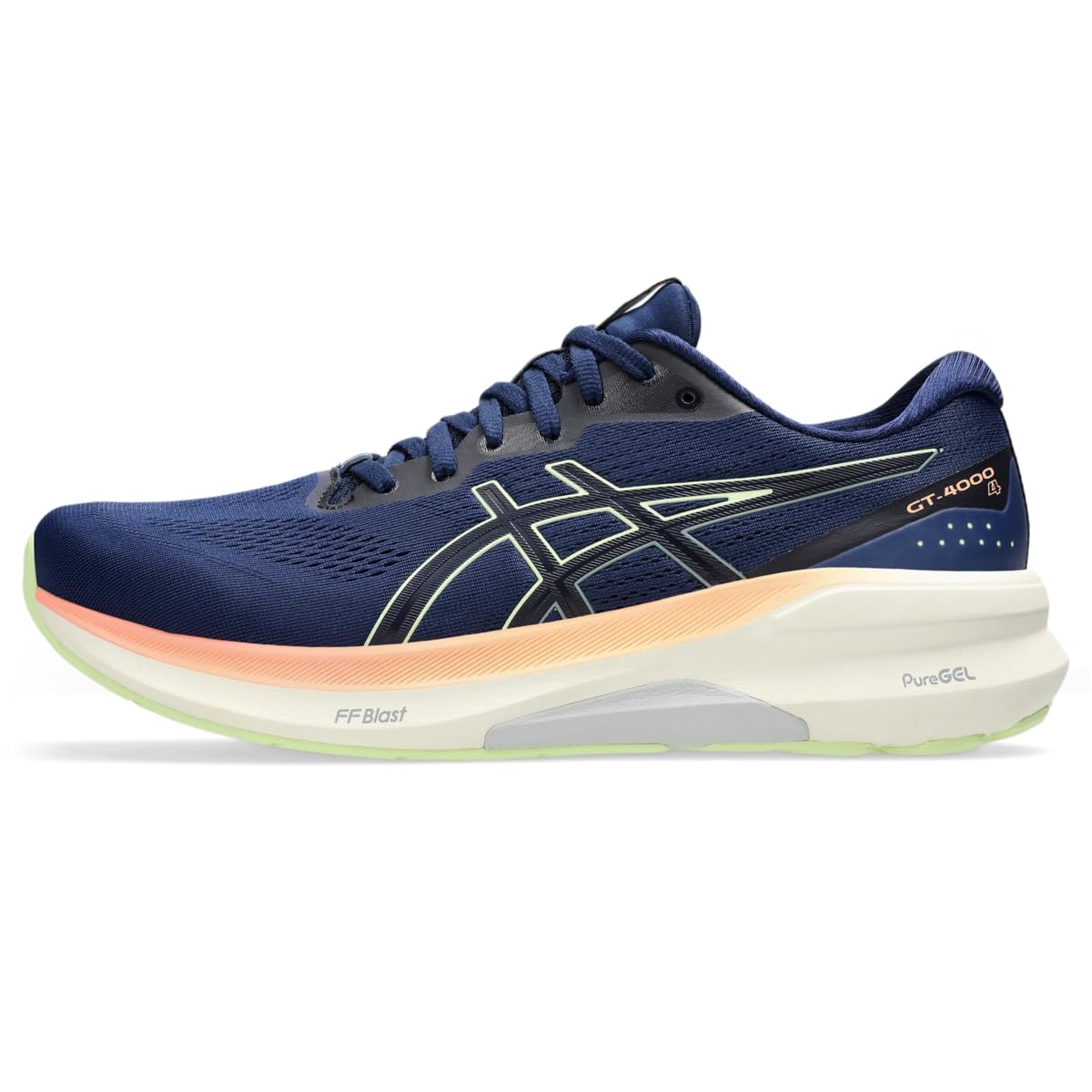
ASICS calls this among the most stable shoes in its running line, built for overpronators (runners whose feet roll inward) who want cushioning without the wobble.
ASICS describes the GT-4000 4 as among the most stable shoes in its running collection, and the parts list backs that up. The midsole packs an FF BLAST cushioning unit and PureGEL technology (a soft gel that absorbs impact), so each toe-off feels more energized and the landing stays soft. The stability piece is LITETRUSS midsole technology, which the brand says improves stability and creates a more balanced stride. Medial support with midfoot integrity holds your arch and the middle of your foot so it does not collapse sideways. The polyester upper improves breathability and wraps the foot with a soft feel.
Comfort is the biggest theme for buyers, with stability close behind. Owners wear it for everyday use and describe good support that holds up through the day. For a men’s shoe meant for a rolling foot, that is exactly the review you want to see.
Watch the sizing. Several customers note the GT-4000 4 runs too small, so consider sizing up if you are between sizes. It is a 4.5+ star shoe with a smaller crowd behind it than the Beast GTS 26 below, but the comfort and stability are real. If you want the most stable ride here and do not need a dress silhouette, this is the one.
The stability story: LITETRUSS plus medial support and midfoot integrity for a balanced stride.
Order carefully: reviewers point out it running too small — size up when in doubt.
Good fit for: overpronating men who want a stable everyday shoe with a soft heel and breathable upper.
Pass on it if: your foot demands a roomy, true-to-size fit — the runs-small feedback matters here.
9. Brooks Men’s Beast GTS 26 Running Shoe

The big-hitter for serious overpronators — arch support and cushioning for feet, calves, knees and hips that feel the roll.
When your overpronation is severe, you need a shoe that refuses to let the foot roll. The Beast GTS 26 delivers exactly that: high-cushion arch support and Brooks’ GTS stability package in a design that cradles the foot. Buyers with hyperpronation specifically call out how well it handles their feet, and the contour of the interior sole gets consistent praise. Owners describe their feet, calves, knees and hips feeling great while wearing them.
Quality is the clear top theme and comfort follows close behind. It is a heavier-feeling shoe than the GT-4000 4 above, which is the trade-off you make for a more aggressive stability setup. At 1.5 pounds, it weighs about the same as the ASICS GT-4000 4’s 1.44 pounds.
The honest caveats are fit and price. Fit is mixed, so treat the sizing carefully, and value-for-money is more divided than you would expect for a top-tier stability shoe. This is the piece of the lineup for the buyer whose pronation is the defining constraint, not a mild concern. If that is you, the Beast is not overkill; it is the point.
For the severe case: GTS stability plus high-cushion arch support for feet that roll hard.
Where it can hurt: fit is mixed and value-for-money paints a divided room.
Buy it when: your overpronation is the main problem and you want the strongest support here.
Hold off when: you have a milder roll or a tight budget — the GT-4000 4 covers that.
Know the Specs
Medial support and why it matters
Medial support is extra firmness on the inner edge of the shoe — the side your foot rolls toward when you overpronate. It prevents the midsole from flattening on every step. A shoe with it (like the Mizuno Wave Inspire 21) keeps your ankle upright through the gait cycle. A shoe without it lets the arch collapse and the roll continue.
Removable insole explained
A removable insole pulls out of the shoe so you can drop in a custom orthotic. The Orthofeet and OrthoComfoot styles here offer it, and the Florsheim work shoe does too. If you have a prescription orthotic, this is the feature that lets a dress shoe support your foot the way your podiatrist intended.
Heel counter: the quiet workhorse
The heel counter is the stiff cup at the back of the shoe that holds your heel in place. A firm one keeps the heel from tilting inward and starting the roll. Several shoes here mention a firm heel counter as part of their stability build. Without it, even good cushioning will not stop the roll.
Toe box width and fit
The toe box is the space in front of the shoe where your toes sit. A wide toe box gives your forefoot room to spread, which can ease pressure on a wide foot. But “wide” is not a guarantee of volume — the OrthoComfoot’s width is mixed for exactly this reason. Measure if you have a broad foot.
Common Questions
What makes a dress shoe good for overpronation?
Can I wear a dress shoe with my custom orthotic?
Are stability running shoes okay to wear with business attire?
Should overpronators choose a firmer or softer shoe?
Do I need a steel toe shoe if I overpronate?
How long should a support shoe last?
Is a wide toe box better for overpronation?
Can I put my own insole in any of these shoes?
What does APMA Accepted mean on the ASICS GT-2000 14?
Do overpronation shoes run true to size?
The Bottom Line
For most buyers, the dress shoes for overpronation winner is the Mizuno Wave Inspire 21, because it pairs secure medial support and a smoothed forefoot transition with an upper that still reads professional. If you want a wider toe box and a leather dress shoe for the office, grab the OrthoComfoot Wide Leather Oxford. And for the days that call for serious stability, the ASICS GT-4000 4 is the one to reach for — its LITETRUSS support is the strongest stability build in this lineup.
How we choose
We do not accept paid placement. Every pick is matched to a real buyer and a real use-case; we do not hands-on test units.
Sources
Specifications: manufacturer listings and product documentation. Review insights: verified customer reviews, as of October 2026. Pricing: not shown on this page (it changes often); check the current price via the retailer link.
As an Amazon Associate, Aappliancez earns from qualifying purchases. This does not affect which products we feature.