Disclosure: Some links in this post are affiliate links. As an Amazon Associate I earn from qualifying purchases, at no extra cost to you. Learn more
Specs are compiled from manufacturer listings and verified buyer reviews and can change over time — please confirm the key details on the product page before buying.
If your knees ache, the wrong dress shoe makes every step louder. A hard leather sole sends the impact of every heel strike straight up your leg. The fix is a dress shoe with a shock-absorbing sole, a deep cushioned footbed, and a wide toe box that lets your toes spread instead of cramping. This guide ranks nine orthopedic dress shoes on exactly those traits, so you can walk into a meeting or a wedding without paying for it later.
This guide is built by comparing the manufacturers’ published specifications and the patterns across verified customer reviews, so you get each pick’s real strengths and trade-offs instead of marketing spin.
You will see where each pair puts its cushioning, which ones run wide or narrow, and which hold up after months of daily wear. The right pair of dress shoes for bad knees should feel cushioned underfoot from the first wear, not after a painful break-in.
Top Picks


How To Choose The Best Dress Shoes for Bad Knees
Your knee absorbs the shock of every step, so the layer between your foot and the floor is doing more work than it looks. A dress shoe built for a bad knee puts cushioning and a shock-absorbing sole under the heel and ball of your foot. It also gives your toes room, because a cramped toe box changes how you roll through each step. Here is what to check before you buy.
The sole is the shock absorber
A cushioned, shock-absorbing sole softens the jolt that travels up from the pavement into your knee. Stiff leather soles feel smart but pass almost all of that impact upward. Look for a shoe that describes a cushioned or ergonomic sole, and treat a hard, flat sole as the wrong tool for aching knees.
A removable insole is your adjustability
Many orthopedic dress shoes ship with a removable insole and some extra depth inside. That means you can pull the factory insole out and drop in your own orthotic or a softer insert. If you already wear prescription orthotics, this is the feature that decides whether the shoe works for you at all.
Width and toe box come before style
A wide toe box lets your toes spread naturally instead of pressing together, which eases pressure on bunions and swollen feet. Swollen feet and arthritic toes need that space. Several picks here come in wide and extra-wide sizes, so measure your foot and read the sizing notes before you order.
Weigh the break-in and the look
Some orthopedic dress shoes feel soft from the first wear and need no break-in at all. Others look sharp but feel firm at first. Decide which matters more to you, then read the trade-offs in each review below.
Side-by-Side Comparison
| Model | Best For | Style | Width Options | Insole | Amazon |
|---|---|---|---|---|---|
| Orthofeet Avery Island★ Best Overall | All-day comfort with adjustable fit | Casual loafer | Multiple widths | Two graduated inserts plus support insert | Amazon |
| OrthoComfoot Leather Walking ShoeBest for Sensitive Feet | Wide feet and sensitive soles | Walking shoe | Wide toe box | Orthotic insole | Amazon |
| OrthoComfoot Leather OxfordBest Slip-On | Slip-on business wear | Oxford / slip-on | Runs large | Orthotic insole | Amazon |
| Orthopedic Wingtip Oxford | Formal events with foot pain | Wingtip Oxford | Big and wide sizes | Extra cushion insole | Amazon |
| Orthofeet Lincoln Center | Stability and easy on-off | Oxford | Wide sizes | Removable orthotic insole | Amazon |
| Orthofeet Wander Women’s | Hands-free slip-on support | Sneaker | Wide width | Adjustable orthotic insole | Amazon |
| Orthofeet Emma Boot | Dressy ankle boot support | Ankle boot | Wide sizes | Arch-support insole plus insert | Amazon |
| Dr. Comfort Classic | Extra depth for wide feet | Lace-up dress | Extra wide sizes | Removable insole | Amazon |
| Dr. Comfort Frank | Swollen feet that change size | Dress shoe | Wide sizes | Inserts included | Amazon |
Detailed Reviews
1. Orthofeet Avery Island Orthopedic Men’s Dress Shoes
Our pick — 4.5+★ from 500+ verified ratings; the strongest balance of quality and price.
The loafer that shows up soft on day one and stays that way.
The feature that wins the Avery Island its place is the fit kit inside the box: two graduated inserts plus a standard support insert. That lets you trim heel slip and width yourself instead of shipping shoes back. The shoes come in multiple widths, so you can match the box to the shape of your foot. For anyone whose knees complain after a day of hard floors, that adjustable cushioning does the real work.
What buyers talk about most is the build — quality tops the list, with comfort close behind, and the pattern holds that these feel comfortable from the first wear with no break-in period. The roomy toe box earns its share of kind words too, and one testimonial describes a husband with plantar fasciitis, ruptured discs, and toenail issues who found them comfortable immediately. A flexible sole also makes these a work shoe for people who stand all day, and they work with prescription orthotics when you swap the factory insert.
The catch is the styling. Appearance is the one aspect buyers split on, so treat this as a casual loafer first and a dress shoe second. It reads clean with chinos or a sport coat but is not a patent-leather formal option. Sizing is another spot to slow down: order carefully and use the included inserts to fine-tune the fit.
Why the Avery Island leads
- Two graduated inserts plus a support insert let you tune heel slip and width yourself.
- A flexible, cushioned sole takes the sting out of long days on hard floors.
- A roomy toe box gives arthritic or sensitive toes space to move.
- Works with prescription orthotics when you pull out the factory insole.
Where it gives ground
- The look is casual, and appearance is the aspect buyers are most divided on.
- Not a formal dress shoe for black-tie or a tuxedo.
Reach for this if: you want a soft, adjustable everyday shoe that works with your own orthotics and still looks tidy with business-casual clothes.
Look elsewhere if: the occasion calls for a sharp formal Oxford, where a wingtip or patent style fits better.
2. OrthoComfoot Men’s Orthopedic Leather Dress Walking Shoes
Built around a wide toe box that lets sore toes spread out naturally.
This one is shaped for feet that need room. The OrthoComfoot shoe uses a wide toe box so your toes stretch out the way they would barefoot, and it pairs that with arch support meant to spread your weight across the metatarsal bones instead of loading one spot. The maker lists it for flat feet, plantar fasciitis, heel pain, arthritis, bunions, neuropathy, and overpronation. If knee pain comes with any of those foot issues, the cushioning underfoot is where this shoe earns its keep.
Owners describe it as walking around all day on a cloud, and comfort is the thing buyers mention most by a wide margin — 23 mentions against 12 for quality. One buyer with neuropathy who is on their feet all day specifically points to the cushioning. The second-pair crowd is real too, with people coming back for a repeat purchase after a few months of daily use kept the shoes looking sharp. Compared with the Avery Island above, this pair leans harder into arch support for sensitive soles and less into the adjustable insert kit.
The honest note is fit. Sizing splits buyers — some find it spot-on, others find it runs large — so check the size chart and read the width guidance before you commit. A small number also hear a creaking sound on hard floors. Overall this is a strong pick if your feet are wide and your knees want cushion, with the caveat that the fit needs a little care.
The roomy-foot advantage: A wide toe box plus an arch-supporting orthotic insole makes this a natural fit for wide, sensitive feet that hate being pinched.
Order with a tape measure: Sizing is the weak spot, so measure first — buying your usual size may leave you with a loose shoe.
Pick this one if: you have wide feet, neuropathy, or bunions and want a leather shoe with real arch support and a roomy front.
Keep looking if: you need a true-to-size fit without checking the chart, or you cannot stand a creaking sole.
3. OrthoComfoot Men’s Orthopedic Leather Dress Oxford Slip-On
A leather slip-on for anyone who is done bending down to tie laces.
Bending over to tie laces is its own kind of pain when your knees are unhappy. This OrthoComfoot pair is a genuine leather slip-on dress shoe, so you step in and go. It carries an orthotic insole with arch support for flat feet, and buyers report it works as a cheaper stand-in for far pricier comfort brands. Daily wear does not wreck the look either — the leather keeps its finish after months of steady use.
Comfort is the headline here, with quality right behind it, and the shoe is the polished one in the family for people who need something dressier for work. A husband with flat feet, back issues, and extra weight found it very comfortable with strong support, and the slip-on design was the part he liked most. It is currently rated 4.0+ stars across 150+ ratings, and the second-pair comments suggest repeat buyers are not rare.
Watch the sizing. Buyers disagree on fit, and the recurring story is that it runs large, so many drop half a size from their normal width. Arch support also divides opinion — a couple of buyers found it lighter than promised. And there is a squeak on hard floors that some notice and others never mention. None of that changes the core appeal: an easy-on leather shoe with cushioning for tender feet.
What makes it easy to live with
- Genuine leather slip-on saves you from bending to tie laces.
- Orthotic insole brings arch support for flat feet.
- Leather keeps its appearance after months of daily wear.
- Priced clearly below the premium comfort brands it imitates.
What to expect going in
- Runs large, so half a size down suits many buyers.
- Some hear a squeak when walking on hard floors.
Best suited to: the man who wants a dressy leather shoe that pulls on without laces and cushions a sensitive foot.
Think twice if: you need heavy arch support, since a few wearers found it milder than expected.
4. Orthopedic Business Leather Wingtip Oxford

Sharp enough for a tuxedo, cushioned enough that you forget the knee.
Formal occasions are where a bad knee usually forces a compromise. This leather wingtip Oxford is the pick that refuses to make you choose. It has a high-gloss leather finish, a pointed toe, and a square heel for a dressed-up silhouette. Underneath, it carries extra cushioning and a breathable lining, plus a flat-feet-friendly build. It comes in big and wide sizes too, so larger feet are not shut out of the formal look.
Buyers call out the comfort first and the quality second, and the shape holds: people with plantar fasciitis, hammer toes, and bunions describe sneaker-level comfort after an easy break-in. A buyer with flat feet and tarsal coalition in one ankle noticed less pressure on that ankle and knee. The dressy test passes as well — a husband who lives in work boots wore these through an entire wedding, dancing included, without pain. That is the kind of night a knee usually ruins.
Durability is the honest split here. Some wearers are still going strong after seven months of near-daily use, while a smaller group reports the sole separating inside a year of light office wear. The construction feels substantial, so the smart play is to treat the sole as the part to watch. Style is confident; long-term wear is the open question.
Where it earns the dress-up duty: High-gloss leather, a pointed toe, and a square heel give you a genuine formal shoe — not a sneaker dressed up to pretend.
The long view: Comfort is praised most across the reviews, but sole durability is the one thing that divides buyers, so keep an eye on the sole after a season of heavy use.
Made for: weddings, black-tie dinners, and office days where you still need your knees to cooperate by evening.
Not the safest bet if: you want years of hard wear from one pair — the sole is the part that has not always held.
5. Orthofeet Lincoln Center Orthopedic Mens Oxford Shoe

A firm base and a stable heel for anyone whose knee wobbles on stairs.
Stability is the Lincoln Center’s selling point. The maker’s Ortho-Cushion system pairs a built-in orthotic insole with a shock-absorbing sole and a pressure-free fit. Many styles also bring a wide base, a firm heel counter to lock the heel in place, and a slip-resistant sole. For knees that feel unsteady, that firm heel and wide base are the features that matter most on stairs and uneven pavement.
Comfort is the thing buyers talk about most, and there is a clear pattern of people finding these easy to get on and off. One buyer who needed them five and a half weeks after foot surgery called them comfortable and good for recovery. Another bought them as a gift for a priest with knee and foot issues, and the Velcro adjustment was the part he loved, since laces are tricky to tie. Value shows up as the second most-praised trait, so people feel the comfort is worth what they pay.
The trade-off is style and fit. Some describe the look as bulky, and fit is mixed — a few find the left shoe loose, and sizing has gaps, with one buyer wishing a 12.5 existed and having to pad out a 13. If you want a sleek Oxford, look at the wingtip pick above; if you want stability first, this is the one.
Choose it for: a firm, stable step on stairs and slick floors, with easy on-off for anyone who struggles with laces.
Pass if: a sleek silhouette is non-negotiable or your exact half size is not offered.
6. Orthofeet Wander Orthopedic Women’s Sneakers
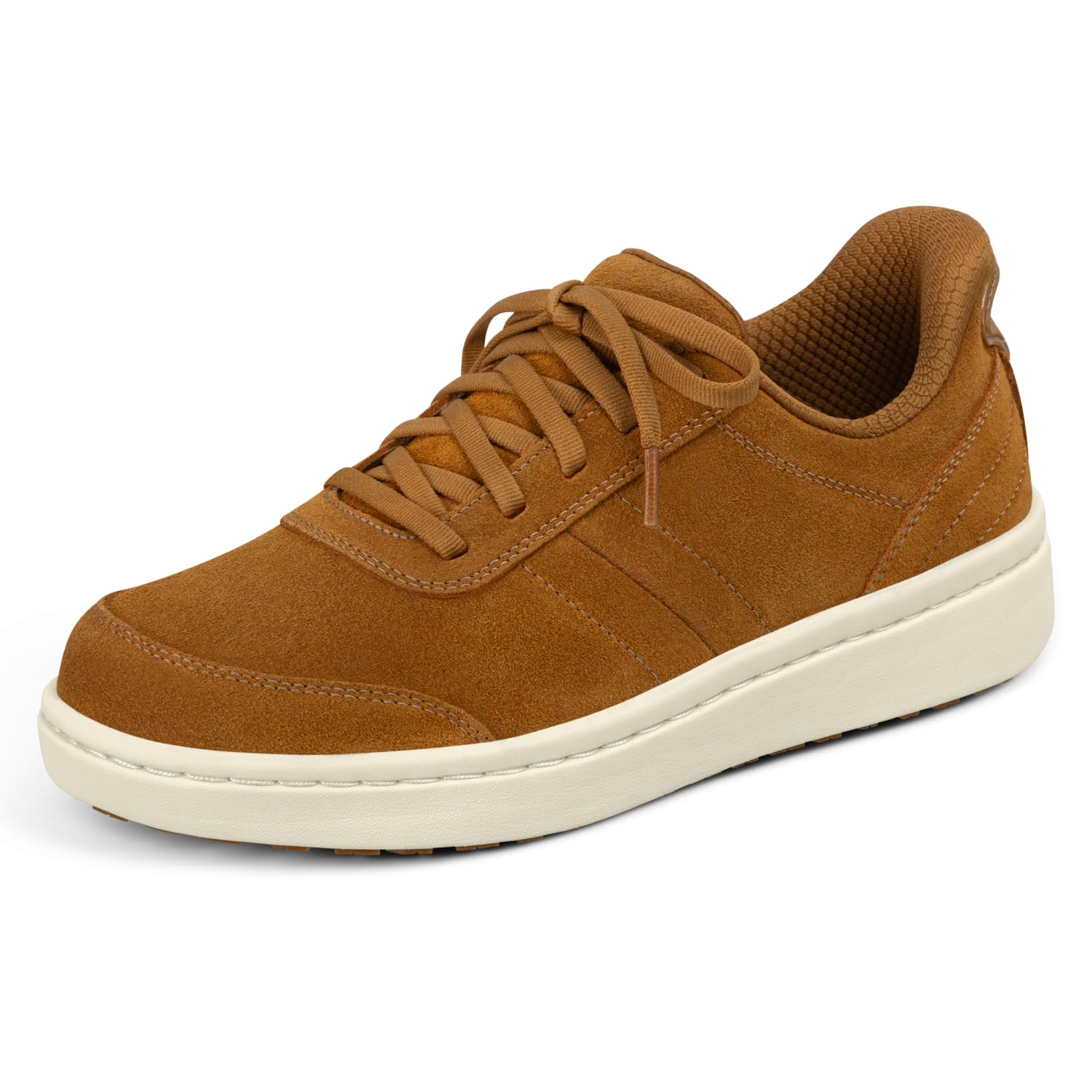
Step in without hands, and give your knees a break from the bend.
For a woman whose knees protest every time she bends to tie a shoe, the Wander answers the problem directly. It is a hands-free slip-on sneaker with no-hands laces that you tie once and forget, and an orthotic insole you can adjust and customize. The cushioned footbed molds to the foot without squeezing it, and the nonskid tread grips hard floors. On top of that it is lightweight and breathable, which helps in hot weather.
One woman with degenerative spinal issues relies on this brand for stability and support and rates this style thumbs-up for looks as well. A 54-year-old with arthritis called it comfortable, stable, and cute, and perfect for a big trip abroad.
Two things to know. The heel is the weak point for some: a shallow heel combined with a thick insole lifts the foot too high and lets the heel slip out, and sizing runs big enough that ordering your true size beats sizing up. Durability is a mixed note, with some pairs holding up and some not. If your heel is narrow, look at a lace-up or a firmer counter instead.
The hands-free win: No-hands laces plus a cushioned, adjustable orthotic insole means you get supported and out the door without bending.
The heel caveat: The thick insole and shallow heel can let the heel slide out, so a narrow-heeled foot may need to size down or pass.
Right for: women who want hands-free support for arthritis or spinal issues and a lightweight, breathable sneaker for travel and work.
Look elsewhere if: you have a narrow heel that slips out of slip-on styles.
7. Orthofeet Emma Orthopedic Womens Ankle Boot
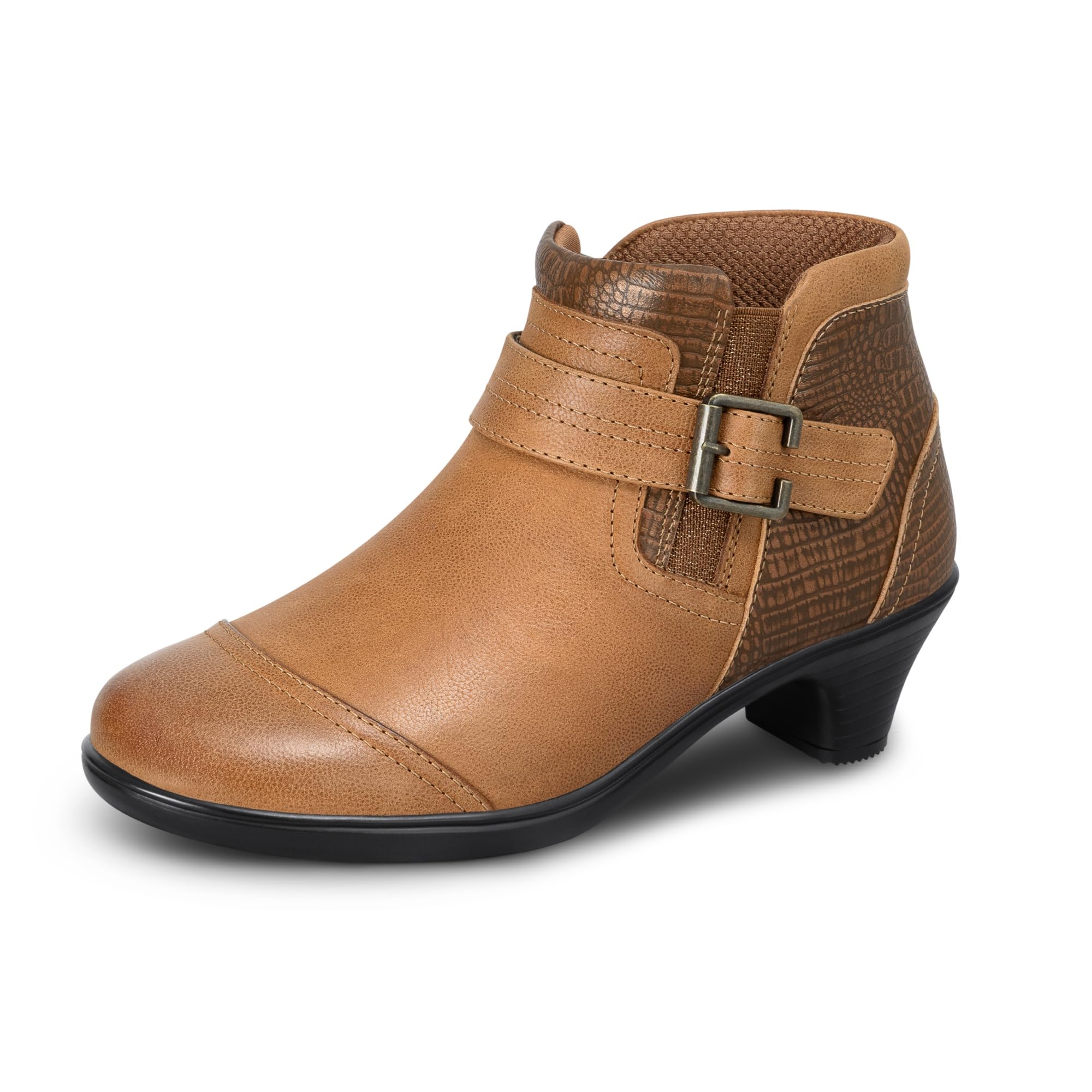
A two-inch ankle boot that hides its orthopedic work under real style.
Ankle boots usually fight a bad knee hard. The Emma is the exception: a low dress boot with genuine leather, a versatile low heel, and an arch-support insole plus an extra insert in the box. It is built for standing and walking over long stretches, and the cushioned support runs through the arch and heel. The style does not announce itself as medical, which is the point for a lot of buyers.
Comfort leads the praise, with quality close behind and appearance not far off. One wearer with severe foot problems stood and walked for hours in them all day shopping and came back for a second color. A woman who had recent foot surgery called them high quality and like walking on a cloud. Another with wide feet singled out the wide toe box as the thing that made the difference.
The fit is where you need to pay attention. Sizing splits buyers — some need a half size up, and the toe box runs tight for others who need the wide. The insert that ships inside is on the thin side, so many add their own orthotic for more cushioning. There is also a noise factor: the heel clacks on hard floors. Great support and a dressy look, then, with a small amount of tuning needed for the perfect fit.
Why it holds up on dressy days
- Two-inch low heel and real leather keep the look professional.
- Arch-support insole plus an extra insert cushions the heel.
- Wide toe box options give swollen or wide feet room.
- Built for hours of standing and walking without a style penalty.
Small things to plan for
- Runs small for some, so a half size up is often the answer.
- Heel can sound loud on hard floors.
- The included insole is thin, so a thicker orthotic helps.
Fits best: women who want a professional ankle boot that supports the arch and can be worn standing all day.
Skip if: you need a quiet sole on hard floors or a plush insole straight from the start.
8. Dr. Comfort Classic Men’s Therapeutic Diabetic Extra Depth Dress Shoe

Extra room inside for wide feet, orthotics, and a long day on your feet.
Extra depth is the headline on the Dr. Comfort Classic. The shoe is built with a roomy toe box, cushioned support, and enough interior space to take your own custom orthotics or diabetic inserts. The insole is removable, so swapping in a prescribed insert is straightforward. For wide, sensitive feet that need to get through a full workday, this is the pair that makes room first and worries about style second.
Fit is the aspect buyers rate most, and the pattern is clear: buy the wide or extra-wide and you get a comfortable shoe for wide feet without the clown-shoe bulk. A man with diabetic neuropathy praised an 8.5 extra wide for fitting wider than standard dress shoes and still looking presentable. Another liked the heel, which felt tall at first but added a half inch of height with a secure fit. The construction feels solid, with smooth interiors and good support.
Two honest points. The cushioning is on the firm side — some buyers want a plush feel and find it flat and hard even with an insert. And durability is the one consistent knock, with reports of the shoe wearing sooner than expected. Sizing can also run short and narrow in the standard width, so measure carefully. For extra depth and wide fit, it still earns the slot; expect to pair it with your own orthotic.
Built for room: Extra depth and a removable insole make it one of the easiest picks to fit with a custom orthotic or a diabetic insert.
The firm truth: Cushioning is moderate at best and durability the recurring concern, so go in expecting a support shoe, not a pillow.
For the buyer who: has wide, sensitive feet and needs extra depth to fit a prescribed orthotic without pinching.
Better to avoid if: you want a soft, plush footbed or long-term durability above style.
9. Dr. Comfort Frank Diabetic Shoes for Men
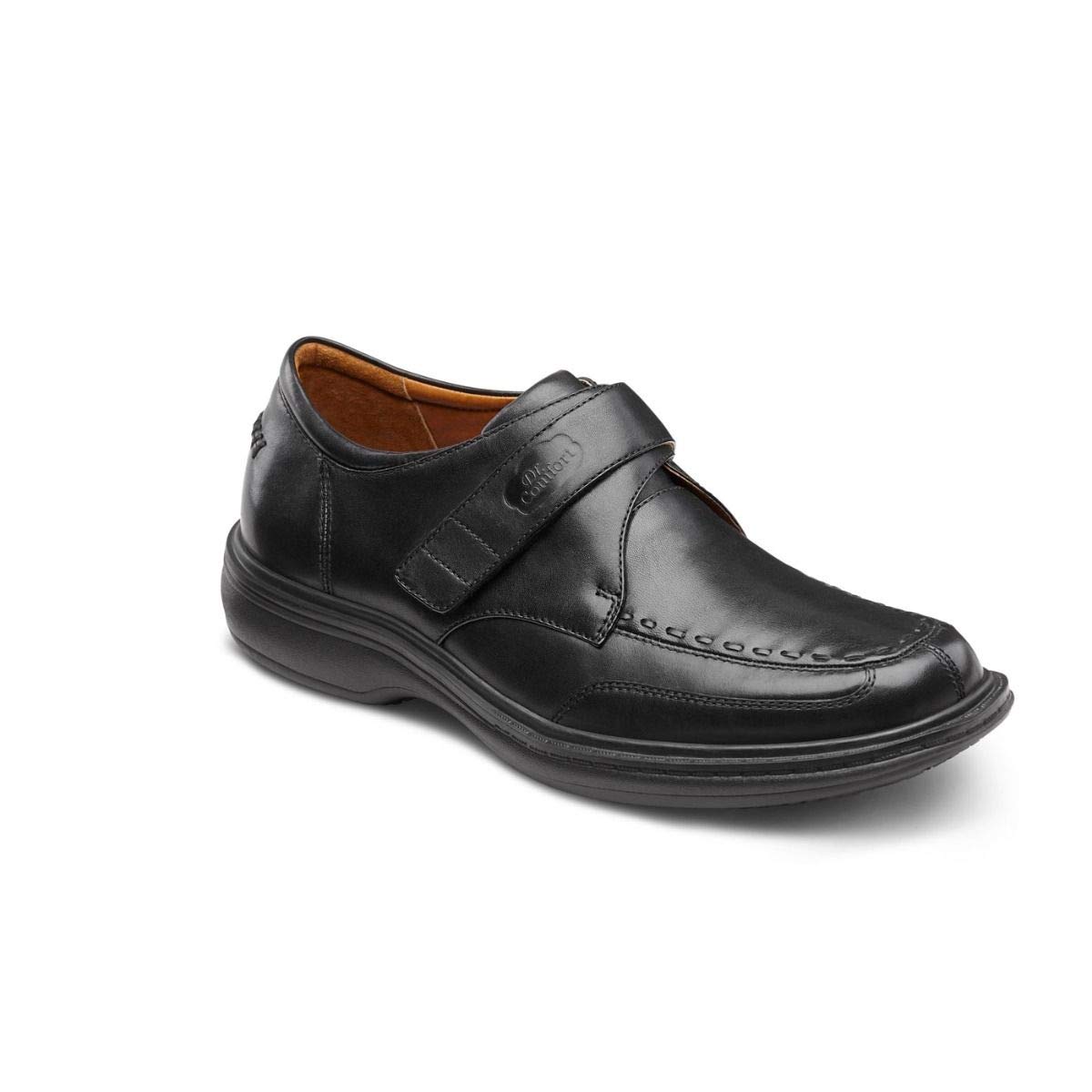
A dress shoe that adjusts around feet that swell and shrink day to day.
The Frank solves a problem most dress shoes ignore. Its contact closure — a touch-strap fit — lets you tighten or loosen the shoe as your feet change through the day, so swelling does not mean a return trip. The roomy toe box keeps pressure off irritated toes, and a padded collar and heel hold the foot securely. It is a high-polished leather dress shoe with fine stitching, so it still dresses up for a suit or business casual.
Quality is what buyers praise most, with appearance close behind, and the look earns real credit: people describe it as a dress shoe that does not read like a nursing-home shoe. One family bought it for a father whose feet swell, and the included inserts gave him comfort whether his feet were up or down. Another husband wore a pair comfortably through two weddings. The shoe also comes with fitting guidance — order a width narrower or a half size shorter for the snug heel — which is worth following.
The catch is the feel. Some find the firm, heavy build stiff at first, and one buyer compared it to wooden shoes. The leather can also feel rigid at the heel until it softens. Handle those expectations and the adjustable fit, roomy toe box, and dressy look make it a capable choice for feet that will not stay one size.
Made to order when: your feet swell from day to day and you need a dress shoe that can be dialed in with a touch strap.
Think again if: you want a soft, broken-in feel on the very first wear — this one starts firm.
Know the Specs
Shock-Absorbing Sole
A shock-absorbing sole is the midsole layer under your foot that soaks up the jolt of each step instead of passing it up to your knee. When your knee hurts, that jolt is the enemy, so a cushioned or ergonomic sole matters more than a polished leather bottom. Look for sole descriptions that mention shock absorption or cushioning.
Removable Insole and Extra Depth
A removable insole lets you pull out the factory footbed and drop in your own orthotic or a softer insert. Extra depth — the space inside the shoe above the insole — is what makes room for a thicker insert. Many orthopedic dress shoes list both, which is the sign you can tune the shoe to your foot rather than fight it.
Wide Toe Box and Width Options
A wide toe box gives your toes room to spread instead of pressing together, which eases pressure on bunions and swollen feet. A shoe’s width option (standard, wide, extra wide) sets how much room you get across the ball of the foot. If you have bunions, hammer toes, or swelling, pick a style that offers wide sizing and read the fit notes on that exact model.
Arch Support and Heel Counter
Arch support is shaped cushioning under the middle of your foot that keeps your weight spread evenly. A firm heel counter is the stiff panel at the back that holds your heel in place. Together they steady your stride, which helps if your knee feels wobbly. A stable heel also reduces the side-to-side roll that a bad knee hates.
Common Questions
Will orthopedic dress shoes actually help my sore knees?
Can I wear my own orthotics inside these dress shoes?
What is the difference between a wide toe box and a wide width?
Do these dress shoes need a break-in period?
Is a slip-on or a lace-up better for knee pain?
Will a wide toe box stop my toes from hurting by the end of the day?
How long should a pair of orthopedic dress shoes last?
Do these dress shoes run true to size?
Can I wear dress shoes for bad knees to a wedding or formal event?
Is a low heel or a flat sole gentler on a bad knee?
The Bottom Line
If you want the pair most likely to feel right from the first step, the Orthofeet Avery Island is the safe pick — it ships with adjustable inserts and a flexible, cushioned sole, and it is the highest-rated pick on this list at 4.5+ stars across 500+ ratings. For a wide foot with sensitive soles, the OrthoComfoot walking shoe gives you a wide toe box and real arch support. And when a formal event calls, the Orthopedic Wingtip Oxford adds a dressy finish without giving up the cushioning your knees need.
The recurring caveat across every pick is that sizing and durability vary by model, so read the fit notes on the exact pair you buy and expect to fine-tune with the included inserts. Measure your foot against the sizing notes on the exact pair before you order, since a half size off is the most common reason these shoes get returned.
How we choose
We do not accept paid placement. Every pick is matched to a real buyer and a real use-case; we do not hands-on test units.
Sources
Specifications: manufacturer listings and product documentation. Review insights: verified customer reviews, as of October 2026. Pricing: not shown on this page (it changes often); check the current price via the retailer link.
As an Amazon Associate, Aappliancez earns from qualifying purchases. This does not affect which products we feature.