Disclosure: Some links in this post are affiliate links. As an Amazon Associate I earn from qualifying purchases, at no extra cost to you. Learn more
Specs are compiled from manufacturer listings and verified buyer reviews and can change over time — please confirm the key details on the product page before buying.
Plastic is the surface that makes ordinary double sided tape look bad. Smooth acrylic, matte ABS, painted trim and polycarbonate all shrug off adhesive that grabs wood or drywall in seconds — so the roll that worked fine on your wall calendar peels off your dash trim by morning. The fix is a foam-core tape with the right thickness and the right prep, and that is exactly what this shortlist covers.
This guide is built by comparing the manufacturers’ published specifications and the patterns across verified customer reviews, so you get each pick’s real strengths and trade-offs instead of marketing spin.
Below you’ll find five rolls sorted by what they actually bond and the load they carry, with the real numbers on width, length and thickness spelled out so you can match a tape to your plastic project instead of guessing. Every pick here has a documented track record on trim, panels or LED channel, and reading these five before you buy is the fastest route to the right double sided tape for plastic.
Top Picks

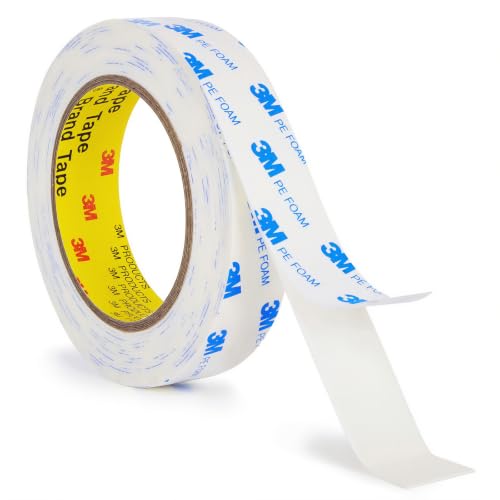
How To Choose The Best Double Sided Tape for Plastic
The mistake most people make is buying tape by how sticky it feels on a finger. Plastic does not care about finger tack. It cares about surface energy — how readily a material accepts an adhesive — and smooth plastics like ABS, acrylic and polycarbonate sit at the low end of that scale, which is why a tape that grips metal can slide right off a dashboard panel.
Match the tape core to the plastic you are bonding
A solid acrylic foam core (a dense foam that stays slightly springy after it cures) is what lets a tape hold on plastic through heat and vibration. The foam absorbs movement instead of letting it shear the adhesive line. Thin film tapes with no foam have nowhere to put that stress, so trim and LED channel work loose at the ends first.
Thickness matters more than most buyers expect. A tape around 1.1 millimeters gives the foam enough body to press into a slightly textured plastic surface. Anything much thinner conforms less and leaves gaps where water and heat can start the peel.
Prep is half the bond
Wipe the plastic with isopropyl alcohol and let it dry completely before you peel the liner. Skin oils and mold release agents left from manufacturing are the single most common reason tape fails on plastic. Once the surface is clean and dry, press firmly and then leave it alone — most acrylic foams keep gaining grip for up to 72 hours before they reach full strength.
Read the load rating per inch, not per roll
A tape rated to hold a few pounds per two inches of length is telling you something useful: the bond scales with contact area. Short strips on a small emblem are fine. Hanging a heavier panel means more tape, not more pressure.
Side-by-Side Comparison
| Model | Best For | Width | Length | Thickness | Amazon |
|---|---|---|---|---|---|
| Couzeely Heavy Duty Waterproof Foam Tape★ Best Overall | All-round plastic and trim mounting | 0.4 in | 36.5 ft | 1.1 mm | Amazon |
| Pishue Mounting Tape Heavy Duty No ResidueClean Removal Pick | Removable mounting on walls and frames | 1 in | 16.5 ft | 1.1 mm | Amazon |
| Tapsi Automotive Double Sided Tape | Car trim, emblems and LED strips | 0.4 in | 36 ft | 0.03 in | Amazon |
| Gorilla Heavy Duty Double Sided Mounting Tape | Rough surfaces and odd jobs | 1 in | 60 in (2-pack) | 43 mils | Amazon |
| HitLights 3M VHB Double Sided Mounting Tape | Wide-strip panel and bracket mounting | 0.94 in | 16.4 ft | 0.03 in | Amazon |
Detailed Reviews
1. Couzeely Double Sided Tape
Our pick — 4.5+★ from 650+ verified ratings; the strongest balance of quality and price.
A 36.5-foot roll of acrylic foam that holds trim on a car and a spice rack on tile alike.
Thirty-six and a half feet of tape is a lot of second chances. Cut a strip the wrong length on your first try and you have not lost anything, which matters when you are fitting LED channel along the underside of a plastic cabinet lip. The 0.4-inch width tucks into narrow trim gaps, and at 1.1 millimeters the foam core has enough body to press into slightly textured ABS instead of sitting on top of the ridges.
The load figure is the one to write down: it holds up to 3 lbs per 2 inches of tape. On a flat plastic surface that scales cleanly — a small emblem takes a few inches, a heavier panel takes a full run. Let the bond sit and it keeps firming up, reaching maximum grip after 72 hours, so judge it after a weekend rather than after ten minutes.
What wins people over is raw grip: this is the tape that gets used for weatherstripping and rubber molding on vehicles and then gets reordered for the kitchen and bathroom. Buyers report swapping out factory tape on a car’s water and soundproofing seals and getting an exact width match. That said, the honest note is width and roll length — this is a 0.4-inch tape, so if you pictured a wide strip you will need to run several parallel passes. There is also a small, real annoyance: the red liner can fight you, especially in cold weather. Tweezers or a fingernail and a quick warm-up with a hair dryer solves it.
What the roll delivers
- 36.5 ft of length means multiple projects per roll before you reorder
- Acrylic foam core bonds glass, metal, plastic, ABS and PVC
- Waterproof and heat resistant once fully cured
- Repositionable while uncompressed, so you can straighten trim before it locks
Where it asks for patience
- 0.4-inch width needs several passes for a wide mounting face
- Red liner can be stubborn to peel, particularly in cold conditions
- Full strength takes 72 hours, so do not load it on day one
Worth it for: anyone mounting plastic trim, LED channel or small panels who wants one long roll to cover several jobs.
Hold off if: you need a broad single strip — the narrow width is the trade-off here.
2. Pishue Double Sided Tape
The full inch of width is what makes the difference when you are hanging something flat.
Compare the mounting face here to the Couzeely above and the gap is wide: 1 inch versus 0.4 inch. For a power strip bracket, a picture frame backer or a plastic wall plate, that extra contact area does more for holding power than any amount of pressing harder. The roll runs 16.5 feet, so it is a shorter run than the 36.5-foot Couzeely, but it is a broader strip.
This one is built to come off again. The PE foam (a lighter, more elastic foam than dense acrylic) is listed with a clean removal time of 15 seconds, and the maker’s own method is to warm it with a hair dryer and peel gently. That makes it the pick for rented walls, temporary displays and anything you expect to move. The maker also spells out a cure schedule worth following: press for 30 seconds, wait 24 hours for 90 percent bond strength, then 72 hours for full adhesion.
The recurring gripe is stickiness on harder surfaces — for some buyers it simply does not grab the way acrylic foam does, and heavier items can slip. Treat it as a tape for moderate loads on clean, smooth plastic and it behaves. As buyers put it, A waterproof shower tablet stayed put through hot, steamy showers for two years.. Worth preparing the surface properly rather than blaming the tape.
Where it earns its place: a full inch of width, a hair-dryer removal path, and 1.1 millimeters of PE foam that shrugs off summer heat in an outdoor mailbox or a wall sconce bracket that has not moved in over a month.
The honest limit: it is a moderate-load tape. Heavy or large items on slick plastic want the acrylic options on this list instead.
Reach for this if: the thing you are mounting needs to come down later without tearing paint or leaving gummy residue.
Look elsewhere if: you are bonding a genuinely heavy panel — the PE foam tops out sooner than acrylic.
3. Tapsi Automotive Double Sided Tape, 0.4″ x 36 ft
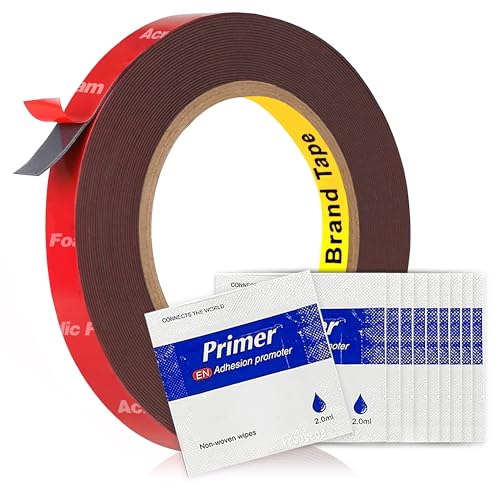
Ten little primer packets turn a slippery dashboard panel into a surface tape can hold.
Most tapes on this list assume you have clean plastic. This one ships ten adhesion promoters — small wipe-on packets that raise the grip on low-energy and textured materials like ABS, rubber and matte plastics. If your project is car trim, interior panels or an LED channel on a dash, that primer is the whole point. It is the only pick here built around the plastic problem rather than around raw stickiness.
The dimensions suit tight automotive work: 0.4 inch wide by 36 feet long at 0.03 inch thick, so trim sits flush instead of standing proud of the panel. The viscoelastic acrylic foam (a foam that flexes under vibration rather than cracking) is the reason the maker can claim resistance to car washes, sun and winter cold. One buyer used it to remount a Subaru bumper step pad cover after the collision shop returned the car.
The catch is the primer itself. More than one buyer has opened the box to find the cleaner packets dried out, which means falling back on isopropyl alcohol you supply yourself. And pay attention to the 0.4-inch width — a few buyers were caught out expecting something wider. Buyers also mention the flash of product photography: check the number before you order.
Why it suits plastic trim
- 10 adhesion promoters included for ABS, rubber and matte plastic
- Slim 0.03-inch profile keeps moldings flush
- 36 ft roll gives plenty of length for trim runs
- Removes with heat when you need it off
The rough edges
- Primer packets can arrive dried out — have isopropyl alcohol ready
- 0.4-inch width is narrower than some buyers expect
- Less forgiving on heavy static loads than wider acrylic tapes
Suits you if: you are reattaching emblems, trim or LED strips to a car’s plastic or painted panels.
Skip the primer packets if: they have dried — clean the surface with alcohol and the tape still does its job.
4. GORILLA Double Sided Mounting Tape

Built for the lumpy, dusty, painted-over surfaces the other rolls quietly give up on.
The headline figure is a 30-pound hold, and the 43-mil thickness is what makes it credible — this is a genuinely thick tape that conforms over cracks and corners instead of bridging them. It grips brick, wood, painted drywall, metal, glass, ceramic and stone, and the listing explicitly includes plastic with an asterisk, which is fair warning that smooth plastic wants a proper alcohol wipe first.
Where it outruns the slimmer tapes is durability in bad conditions. A garage door keypad held on rough concrete for months after another brand’s tape failed within days. A dash cam and GPS dongle held through Texas heat near and above 100 degrees Fahrenheit. In a hot, dusty car interior it lasted over a year. Black is also the smarter color for hiding behind a molding or a mounted bracket.
The honest limit: this tape is close to permanent once it is down on the right surface, and the wrong surface is porous brick. A solar light under half a pound dropped off porous brick within hours at 86 degrees. On smooth plastic with prep, it is excellent. Plan the placement before you press, because straightening it afterward is not an option.
What it does best: thick, conformable and weather resistant, with two rolls in the pack — a sensible choice for odd jobs around a garage or classroom where surfaces are not pristine.
Where it stops: porous brick and high-load brackets are not its friends, and removing it later takes patience.
Best for: mixed-material jobs and rough surfaces where you want the tape to stay put for good.
Think twice if: you need to reposition after pressing — this one bites fast and holds.
5. HitLights 3M VHB Double Sided Tape

Nearly an inch of acrylic foam for brackets, panels and anything that hums or rattles.
At 0.94 inch wide and 0.03 inch thick, this is the broad, thin option — close to a full inch of contact face without the bulk of the Gorilla roll. It holds up to 3 lbs per 2 inches of tape, the same per-inch rating as the Couzeely above, but spread across a much wider strip. For a surge protector under a desk or a power strip on tile, that width is what carries the weight.
The acrylic foam core does a second job beyond sticking: it damps noise and vibration. That is why it turns up on car spoilers, door edges, body side moldings and LED panels. A power strip under a desk stayed put for six months, and a doorbell camera on outdoor brick came through heavy rain and temperature swings. Budget for a 24-hour wait — that is when the maker says it reaches full strength — and prep with rubbing alcohol.
Two things deserve a flag. The foam is thinner than some buyers expect from a VHB roll, and it will not come off drywall cleanly — it takes the paper with it, so keep it on plastic, metal, glass or tile. Removal on a hard surface needs heat, floss or an adhesive remover. Buyers also report it holds small 4×6 frames fine but lets go of anything heavier, which lines up with the 3-pounds-per-2-inches rating.
Pick this when: you need a wide strip for a flat bracket, panel or LED run and want vibration damping built in.
Keep it off: painted drywall — the bond is strong enough to pull the paper face off with it.
Know the Specs
Thickness and foam density
Thickness in millimeters or mils tells you how much the tape can conform to a surface. A thicker foam — think 1.1 millimeters or 43 mils — presses into texture and absorbs vibration. A thin 0.03-inch tape sits flatter for a flush trim fit but has less give on rough plastic. Pick thicker for bumpy or vibrating surfaces, thinner for a clean, level finish.
Load rating per 2 inches
Load is quoted per length of tape, not per roll, because the bond scales with contact area. A 3-pound-per-2-inch tape holding a 6-pound item needs at least four inches of contact. Double the area and you roughly double the capacity. Always calculate the area your project actually offers before trusting the number on the package.
Adhesion promoters and surface energy
Smooth plastics like ABS, acrylic and polycarbonate resist adhesive because they have low surface energy. An adhesion promoter — a wipe-on primer — raises that energy so the tape can grip. If your tape keeps failing on plastic and works fine on metal, the surface is the problem, not the tape. Clean with isopropyl alcohol and consider a primer.
Cure time and heat resistance
Acrylic foam tapes keep gaining strength after application. A 72-hour cure window is common before full adhesion, and pressing for 30 seconds only starts the process. Heat resistance matters on dashboards and in direct sun. Let the bond cure fully before you load it or expose it to moisture, or you will judge the tape too early.
Common Questions
Will double sided tape actually stick to smooth plastic?
How much weight can these tapes hold on a plastic panel?
Why does my tape peel off plastic after a few days?
Can I remove the tape later without damaging the plastic?
How long should I wait before hanging something on the tape?
Will these tapes hold up in a hot car or direct sun?
Should I use an adhesion promoter on plastic trim?
What is the difference between these tapes and a standard VHB-style tape?
Will these tapes work on painted plastic surfaces?
Which tape should I choose for LED strips on plastic?
The Bottom Line
For most plastic projects, the double sided tape for plastic winner is the Couzeely Heavy Duty Waterproof Foam Tape because 36.5 feet of 1.1-millimeter acrylic foam gives you both the length and the body to handle trim, LED channel and small panels, and it holds up to 3 lbs per 2 inches. If your project is car trim or textured ABS, grab the Tapsi Automotive Tape for its 10 adhesion promoters. And when you need to take something down without tearing the wall, the Pishue roll is the one to reach for with its hair-dryer removal method.
The five rolls here all solve the same problem differently — one wins on length, one on width, one on removal, one on rough surfaces. Read the specs against your own project and pick the shape that matches. The Couzeely’s grip has earned it a crowd of buyers, and with that long roll you get plenty of passes to learn on.
How we choose
We do not accept paid placement. Every pick is matched to a real buyer and a real use-case; we do not hands-on test units.
Sources
Specifications: manufacturer listings and product documentation. Review insights: verified customer reviews, as of October 2026. Pricing: not shown on this page (it changes often); check the current price via the retailer link.
As an Amazon Associate, Aappliancez earns from qualifying purchases. This does not affect which products we feature.