Disclosure: Some links in this post are affiliate links. As an Amazon Associate I earn from qualifying purchases, at no extra cost to you. Learn more
Specs are compiled from manufacturer listings and verified buyer reviews and can change over time — please confirm the key details on the product page before buying.
You need a lock that quietly stops your loved one from getting out the front door at night, and the one that works best for most families is a top-of-door slide lock mounted well above shoulder height. That single change — keeping the release mechanism out of reach — is the whole game with dementia door locks. The picks below do that without keys, without codes your parent has to remember, and without trapping you on the wrong side of the door.
This guide is built by comparing the manufacturers’ published specifications and the patterns across verified customer reviews, so you get each pick’s real strengths and trade-offs instead of marketing spin.
You can split these locks into two jobs: some need a screwdriver and one small screw into the doorframe, while others slip under the handle and come out the same second. By the end you’ll know which style fits your door, your budget tier, and how your parent moves through the house. That fit is what separates a useful door locks for dementia patients pick from a gadget that fails the first night it matters.
Top Picks

How To Choose The Best Door Locks for Dementia Patients
The first question is not “which lock is strongest” — it’s “where does the release sit relative to your parent’s reach.” A lock at chest height gets defeated by curiosity. A lock sitting on top of the door frame, out of the line of sight and above arm’s length, generally doesn’t.
Put reach before strength
A person with dementia often keeps the muscle memory for a doorknob turn long after they lose the judgment about where that knob leads. That’s why a lock they can see and grab at normal height is a risk. Look for a mechanism that mounts at the top of the door — a slide latch, a saddle-style lock, or a knob cover — so it stays out of easy reach. Consider, too, whether they might push a chair over. A top lock that a determined person could reach with furniture is still doing less than one flush at the very top edge.
Decide if you need a caregiver release from both sides
In a caregiving home, you may need to open the door from the hallway side while your parent is inside the room, or the other way around. A dual-side design — one that locks and open up from either face of the door — prevents the worst outcome, which is you stuck on the wrong side while your parent is alone. Several top locks here do exactly that with a single slide.
Check your door before you buy anything
Three measurements decide most of this. First, the swing: nearly every top lock here fits inward-swinging hinged doors only. Second, the gap between the top of the door and the frame — some locks need a small air gap to sit in, and a tight frame will rub or stick. Third, the thickness of the door itself, since adjustable models list a range and sliding, bifold, pocket, or storm doors are usually off the list. If your parent’s bedroom has a sliding closet door, a top lock won’t help there.
Think about the exit you actually need to keep
Safety cuts both ways. You want to stop wandering, but you also need a fast path out for yourself and for emergency responders. Locks that release from both sides with a simple slide keep that path open. Keyless keypad models add an auto-lock feature, which means the door re-secures itself without anyone remembering to do it — helpful if your parent leaves the door standing open.
Side-by-Side Comparison
| Model | Best For | Mount Position | How It Releases | Drilling Needed | Amazon |
|---|---|---|---|---|---|
| GreaTalent Home Security Door Reinforcement Lock★ Best Overall | High out-of-reach barrier on inward doors | Top of door, above reach | Pinch-and-pull from inside | Yes, into frame | Amazon |
| Child Safety Door Top Lock (2 Pack, Black)Best Value | Wandering prevention on a budget | Top of door | Slide, both sides in under 1 second | Yes, one screw | Amazon |
| AST Adjustable Door Knob Cover | Covering a round knob to stop exit | Over the doorknob | 3 brass keys or combo padlock | No | Amazon |
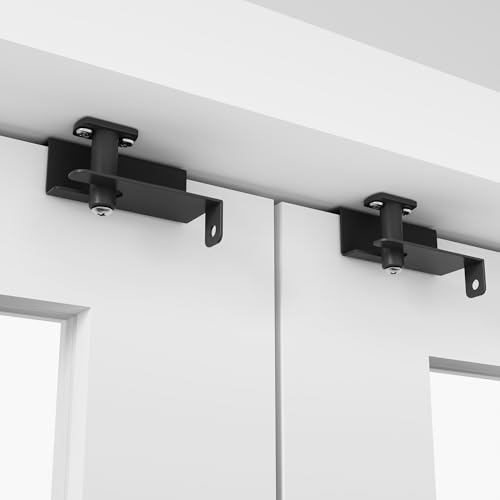
| Adjustable Child Safety Door Top Lock (2 Pcs, Black) | French and exterior doors with a top gap | Top of door, saddle style | Slide from either side | Yes, screws | Amazon |
| Rerishom 2 Pack Door Security Bar | Travel and rental doors with no install | Under the handle to the floor | Lift the bar out | No | Amazon |
| GlideLok Child Safety Door Top Lock | Nightly room containment with dual-side access | Top of door, saddle style | Slide, locks and open up both sides | Yes, one screw into frame | Amazon |
| Richelock IU52 Double-Sided Keypad Door Lock | Self-relocking keyless entry on exterior doors | Replaces the doorknob | Keypad code or key on both sides | Yes, standard knob install | Amazon |
Detailed Reviews
1. GreaTalent Door Reinforcement Lock
Our pick — 4.5+★ from 4,000+ verified ratings; the strongest balance of quality and price.
An aluminum block you mount high and open with a pinch-and-pull that confused hands simply can’t copy.
This one wins for wandering parents because of the release action itself. It’s a spring-loaded latch that asks for a two-finger pinch and a horizontal pull at the same time — easy for you, hard to stumble into. Mounted at the top of the door, above eye line, it stays out of the daily loop entirely. The body is cut from a solid aviation-grade aluminum ingot on a CNC machine (a computer-guided cutter that carves one piece of metal rather than casting it). The sandblasted, anodized finish is designed to shrug off rust, scratches, and fading.
Strength is where this pick separates itself from the lighter top locks here. It’s rated to withstand up to 800 lbs of kicking force — the maker calls that twelve times a conventional deadbolt. Put plainly, that’s a barrier built for the door-shaking nights, not just the curious push. What wins people over most is how little it asks of them — the fitting is described as a straightforward job on a wooden door, and it locks tight once fully pushed back. As buyers put it: “These have been a lifesaver for our toddler who can open the doors.”
The honest catch is installation and door type. This is permanent hardware — a power drill goes into your door frame, and it is not a peel-and-stick or damage-free fix, so renters should look at the Rerishom bar instead. It also only fits inward-swinging doors and needs a minimum 0.2 inch (5 mm) clearance between door and frame. Verify both before you drill, because outward-swinging, double, sliding, and French doors are all off the list. The crowd signal backs the fit, with a strong score across thousands of owners.
Where it earns its keep
- 800 lb kick rating makes it a real barrier, not a nudge-blocker
- Pinch-and-pull release stops wandering hands cold
- Solid CNC aluminum body resists rust and scratching
- Grip-and-pull exit stays fast for adults in an emergency
Before you drill
- Inward-swinging doors only, with 0.2 inch frame clearance
- Permanent drill install, so not a renter-friendly pick
- One-piece 800 lb bar means you commit to the spot
Reach for this if: you own the home, your parent’s door swings inward, and you want the strongest out-of-reach barrier on this list.
Look elsewhere if: the door swings out, has a tight frame with no 0.2 inch gap, or you can’t drill.
2. Child Safety Door Top Lock 2 Pack
A budget slide lock that sits on top of the door, fits a wide thickness range, and works from both sides.
The spec that matters here for a wandering adult is the fit range: it adjusts across door thicknesses from 0.6 to 2 inches, which covers most standard interior and exterior hinged doors in a home. That means you can protect the bedroom, the front door, and the pantry with the same model. It’s made of heavy-duty steel with a corrosion-resistant coating, and the lock post carries three reinforced screw holes so you can run one long screw for basic security or three for maximum stability.
The release is a slide — you push the catch across to lock or open up. It works from both faces of the door in about a second, so you’re not stuck on the wrong side during a night check. Stays out of reach because it sits up top on the door, not at the knob. The maker positions it for toddlers, pets, and elderly family members who wander, and it mounts up top as a plain barrier that confused hands can’t fiddle with at the handle.
Two things trip people up. It’s not compatible with sliding, bifold, or pocket doors, metal door frames, or double doors that swing both ways — check your frame before you count on it. And the included screws are on the short side for some installs, so have longer ones on hand if the mount sits proud of the jamb. Get the fit right and it’s a clean, low-cost way to put the exit out of reach.
Best-fit door type: standard hinged and French doors from 0.6 to 2 inches thick, with a knob or lever and room to mount up top.
The mechanical edge: dual-side slide means a caregiver standing in the hallway can release it without walking around.
Suits you when: you want a low-cost top lock that protects several doors and opens from both sides.
Skip the fit if: your doors are sliding, bifold, or have metal frames.
3. AST Adjustable Door Knob Cover
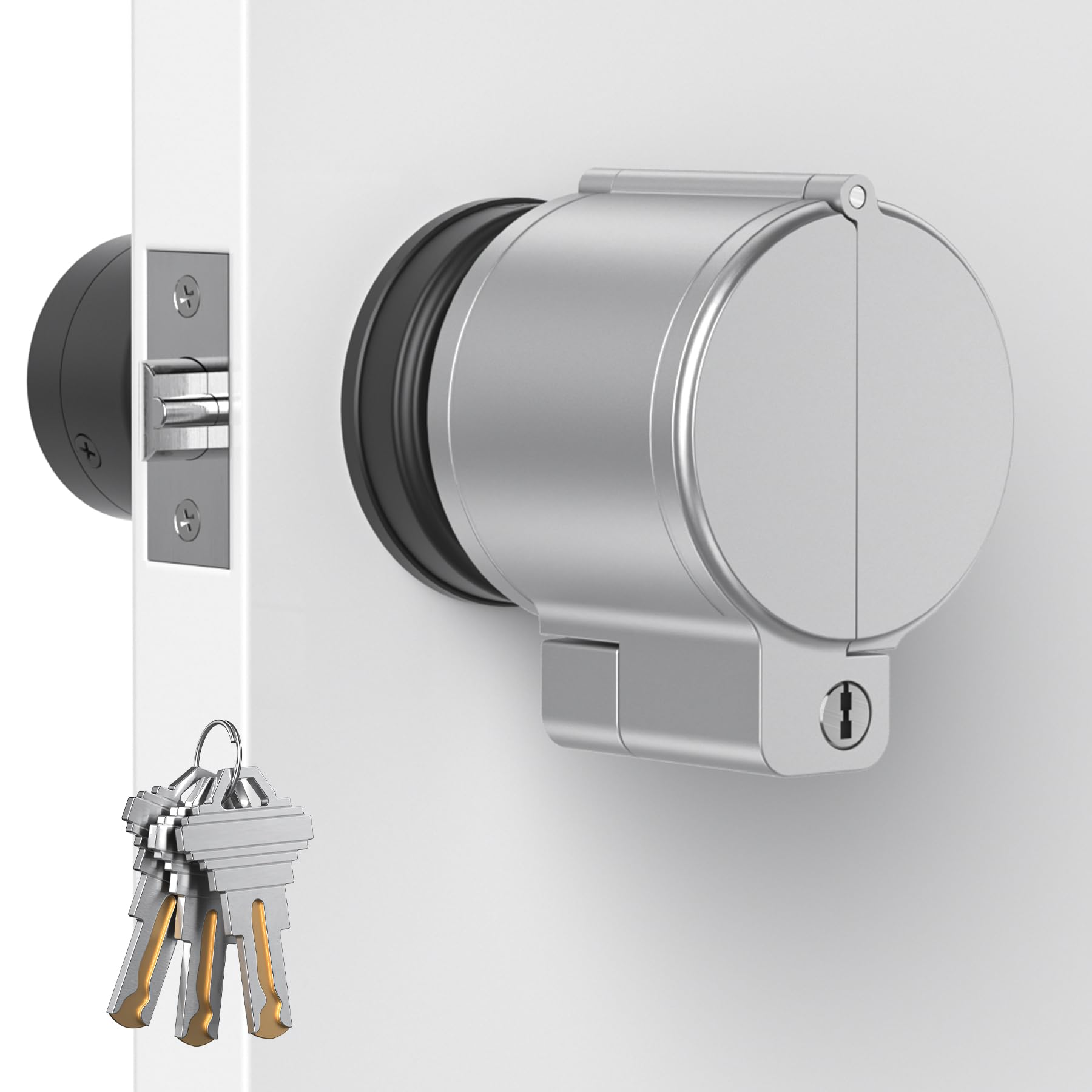
Caps the round doorknob itself so the only way out is a key or a code your parent can’t guess.
For anyone who can’t put a screw into a doorframe, this is the practical answer. It fits over a round doorknob like most smart knobs, and the diecast metal case — a molded aluminum alloy and brass build — gives it more heft than a cheap plastic cover. The gap to rotate the locked knob runs about 10 mm less than rival covers, so there’s very little wiggle room for a wandering hand to work it loose. Three brass keys come in the box.
The second release option is the part that earns it a spot on this list. It ships with a 4-digit combination padlock that you can reset quickly, and the maker calls it out directly as a dementia door lock setup. Set a code, give it to the regular caregiver, and the door stays secure without handing out a key your parent might find. It sits as a removable lock from the outside and a safety cover from the inside, and the padlock is waterproof, so it doubles as an outdoor faucet or spigot lockout if you need one.
Cut the security claim down to size: this is a deterrent, not a vault. The maker and long-term users are both candid that it keeps a confused parent or a child off the lock, but it won’t stop a determined adult from breaking through. One cosmetic wrinkle shows up too — at the tightest setting it can sit slightly off-level and expose the knob screws, which a quick knob reversal fixes. Quality is the thing that stands out most here, and the crowd is comfortable with it.
The real job it does: covers the knob so the exit needs a key or the resettable 4-digit code, keeping confused hands off the turn.
Where it falls short: it deters access but isn’t real break-in security, and it can sit off-level and expose the screws.
The pick for: renters and caregivers who can’t drill and want a knob cover that doubles as a keyed or coded lockout.
Not the one for: lever-style handles — this only fits round doorknobs.
4. 2 Pcs Adjustable Child Safety Door Top Lock, Metal, Black
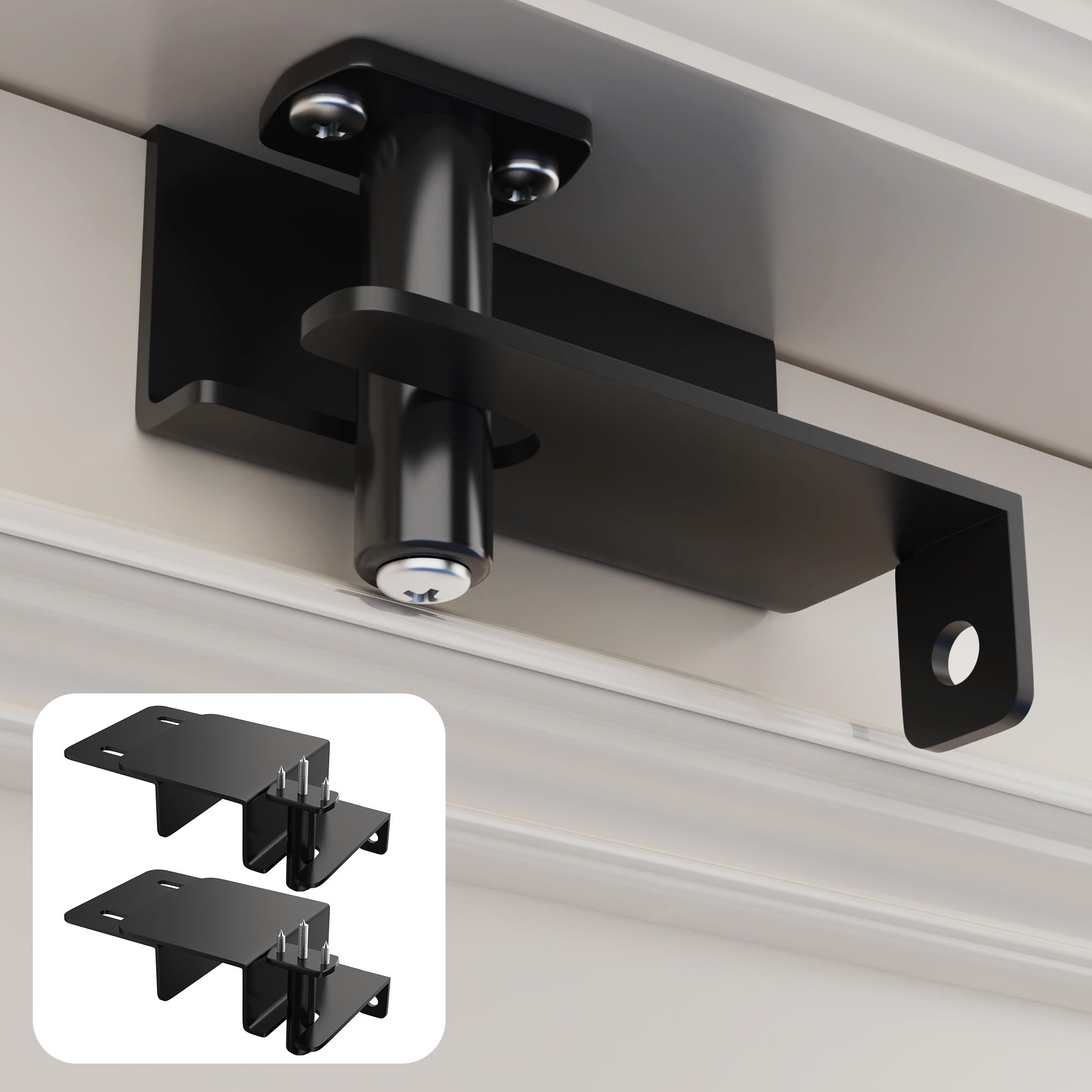
A steel saddle lock that fits doors 1 to 2 inches thick and slides from either side — no drilling into the door itself.
If your parent’s bedroom has a standard hinged door and you want a barrier that covers a wide range of thicknesses, this is a strong middle choice. The mount adjusts from 1 inch to 2 inches, so it fits interior and exterior doors plus French doors without swapping parts. It’s made of solid steel rather than plastic, and the lock post carries three reinforced screw holes to keep it from breaking loose under shaking. The two-pack means you can protect two rooms right away.
The most proven part is simply that it does its job: keeping a person who can open up standard doors from getting out. One thing buyers report is that it’s great for pool and exit doors, which is exactly the wandering scenario. It slides to lock and open up from either side, and mounting on top keeps it out of reach of small or confused hands at handle height.
The catch is the gap and the slide feel. It only works on doors with an air gap at the top of more than 2 mm between door and frame, so a tight-fitting door won’t take it. Some owners find the slide stiff — the doors don’t move freely when it’s clamped on — and the fix is adjusting the back of the lock to the tension you want. One more detail: there are no left- or right-handed versions, so on a left-hinged door you may have to mount it center for visibility. Measure your door before ordering and this is a solid, sturdy performer.
Where it wins: a steel saddle that fits 1 to 2 inch doors and stays put under shaking.
Where you’ll fiddle: the slide can feel stiff — loosen the back adjustment to match your door.
Best for: standard hinged and French doors with more than 2 mm of top gap, protected in pairs.
Think twice if: your door fits snug against the frame with no top air gap.
5. Rerishom 2 Pack Door Security Bar

Slides under the handle and braces against the floor with no tools — the pick for rentals and travel nights.
Pick this one when you can’t drill — an apartment, a hotel, or a relative’s home. The stainless steel bar adjusts from 17.5 to 46 inches (43 inches for a sliding door), so it fits a wide range of door heights. Its 1.57-inch stainless tube is rated to withstand up to 400 lbs of pressure, so a hard shove won’t budge it. It needs no installation at all: you unpack it, wedge the rubber base against the floor, and set the horseshoe end under the handle.
What it’s really good at is the overnight reinforcement that keeps a confused parent from opening the door while you sleep. Owners mention it works on front and back doors, fits snug against both door and floor, and doesn’t budge when tested — yet pulls out in a second when you need to leave. The 2-pack means one for the bedroom door and one for the front. The material upgrade and stainless build add to the sturdiness people notice.
Know the limits. It stops the door from swinging in or out at the handle, but it doesn’t lock the door itself — your parent can still turn the knob; the bar just blocks the swing. It also needs a flat, flush floor and the correct height to grip well, so a thick rug or an uneven threshold can weaken the hold. And because it only braces against the door on one side, it’s not a substitute for a permanent mount if your concern is a determined adult. For travel and rentals, though, it’s the easiest repeatable option here.
Why it travels well
- 400 lb pressure resistance from a 1.57-inch stainless tube
- Fits 17.5 to 46 inches, so most doors work
- Zero install — set it and pull it
- 2-pack covers two doors
What it won’t do
- Doesn’t lock the knob itself
- Needs a flat, flush floor to grip
- Not a permanent barrier against a determined adult
Reach for this if: you’re renting, traveling, or need an overnight block you can set up and remove without a drill.
Look elsewhere if: you need the lock itself on the knob, or your floor won’t let the base sit flush.
6. GlideLok Child Safety Door Top Lock (2 Pack)

A painted-metal saddle that overhangs both sides of the door, so a caregiver can release it from the hallway.
For the nightly routine where your parent is in a bedroom and you’re in the hall, this dual-side design prevents the worst case. It rests on top of the door and overhangs both sides, and you can lock or open up it from either face. So you’re never stuck outside the room while your parent is alone inside, and they can’t reach it even from a chair, according to caregivers who’ve used it for exactly that. It fits most hinged doors up to 1-3/8 inches thick, or up to 1-13/16 inches with the spacer bar removed.
The build is painted metal, not plastic, and the maker states it’s made to hold up rather than flex or crack. It’s deliberately subtle-looking so it blends with the door instead of announcing itself. Long-term owners praise its durability — it’s still doing its job after years on bedrooms, laundry rooms, and pantries, and the two-pack covers two doors. Installation is one screw (included) into the doorframe with a Phillips screwdriver, and you can operate it from both sides regardless of which side the screw goes in.
The trade-offs are worth knowing before you buy. It doesn’t fit sliding, pocket, bifold, or storm doors, metal frames, or double doors that swing both ways — and you must check door thickness first. A few owners note the slide can rattle slightly and may indent the door top, so a felt strip helps. It’s also a single-screw mount, which means it’s most secure on a solid frame. Get the thickness and gap right and this is one of the calmest, most reachable-by-you options here.
The reason it’s on the shortlist: dual-side release plus an out-of-reach top mount — the combination that keeps a caregiver from being locked out of the room.
What to prep for: verify door thickness up to 1-3/8 inches (or 1-13/16 inches with the spacer out), and add a felt strip if the slide rattles.
Picks you when: you need nightly room containment you can release from either side of the door.
Pass if: the door is a slider, bifold, storm door, or metal-frame door.
7. Richelock IU52 Keypad Door Lock
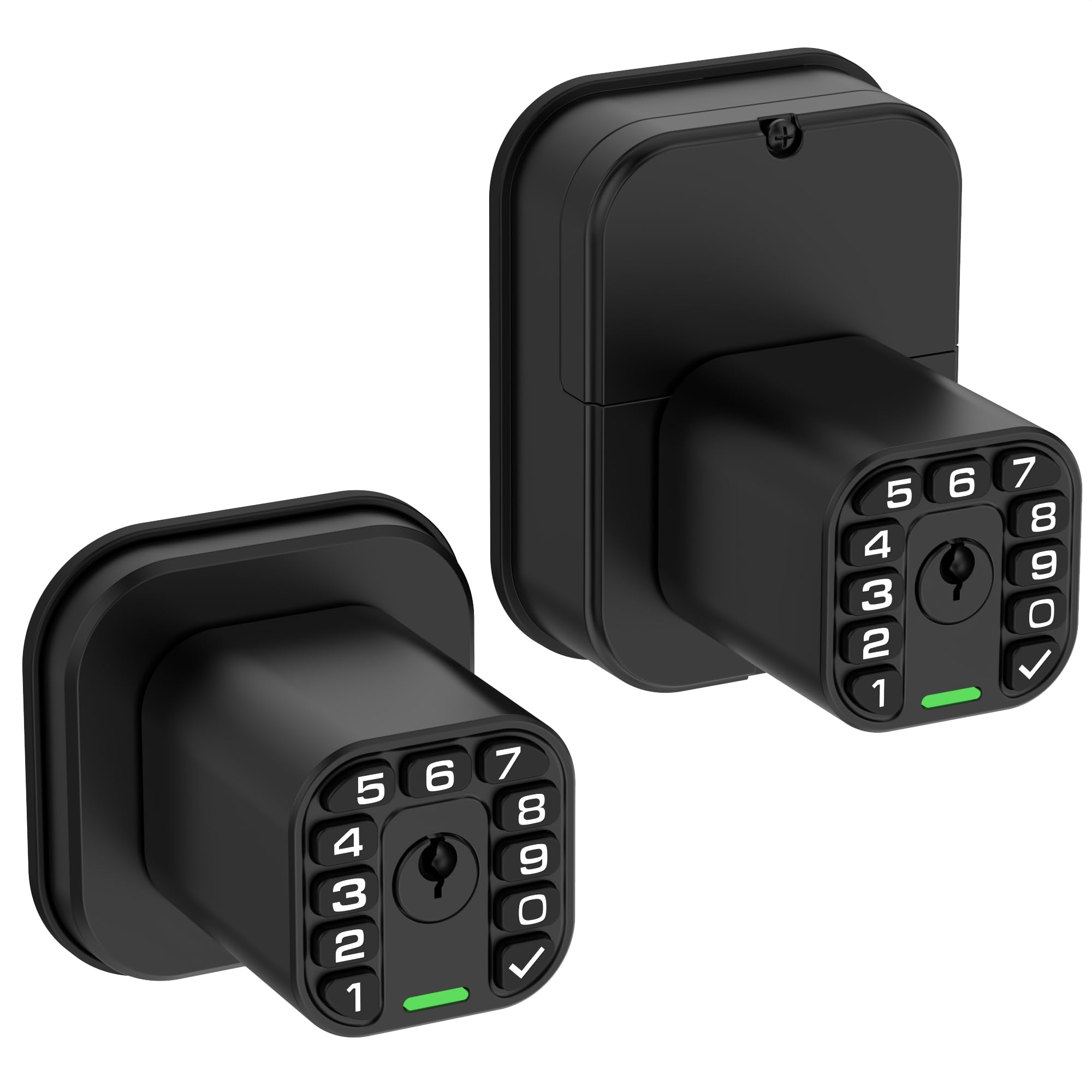
A keypad knob with the same code on both sides and auto-lock that re-secures the door for you.
This is the pick for the family that wants the door to lock itself. The smart auto-lock defaults to 5 seconds and adjusts from 2 seconds to 12 hours, so the door re-secures without anyone remembering to do it. That’s the feature that matters most when a parent leaves a door standing open — it closes the gap automatically. The dual-sided design puts identical backlit keypads and keys on each knob, so entry works from either side without a key hidden under a plant.
For memory-friendly access, it stores up to 50 unique 1-15 digit codes per side with peep-proof entry, and a code-sync feature mirrors codes from one keypad to the other. The zinc body has an electroplated finish and a full waterproof design rated for temperatures from -22°F to 176°F, so it handles an outdoor gate or fence as well as an interior door. It runs 2+ years on 2 AA batteries (not included), with low-battery alerts and emergency Type-C ports under each handle for a dead-battery day.
Be realistic about what you’re buying. The programming is straightforward but some owners find the security and value mixed — a quiet rhythm of jams and code hiccups shows up, and one door that jammed needed a real removal. It’s also a keypad, not an out-of-reach barrier: a confused parent who knows the code, or who presses buttons until it opens, can still get out. Treat it as a self-locking entry upgrade for the primary door, paired with a top lock on the exit you most want controlled, rather than the only line of defense.
What makes it smart
- Auto-lock from 2 seconds to 12 hours re-secures the door
- 50 unique 1-15 digit codes per side with peep-proof entry
- Full waterproof rated for -22°F to 176°F
- Emergency Type-C ports cover a dead battery
The honest friction
- Some units jam or drop a code, needing a reset or key entry
- It’s a keypad, not an out-of-reach barrier
- Mixed reception on value for the premium tier
The pick for: an exterior door you want self-locking with a coded keypad you control on both sides.
Pair it with: a top lock if your concern is a parent who presses buttons until the door opens.
Know the Specs
Door thickness and top gap
Thickness tells you whether a saddle-style top lock will clamp onto your door — many list a range like 1 to 2 inches, or up to 1-3/8 inches. The top gap is the space between the door and the frame; some locks need more than 2 mm of air up there to seat without rubbing. Measure both before ordering, or the lock may stick or not fit at all.
Mount height and reach
A top lock is only as useful as its height relative to your parent’s reach. Mounted flush at the top edge and above eye line, it stays out of the daily loop. If a determined person could drag a chair over, the lock is doing less — so consider whether the mechanism sits high enough that furniture won’t bridge the gap.
Release method
The release is what you’ll touch most. A slide that works from both sides keeps a caregiver from being stranded on the wrong door face. A pinch-and-pull demands a two-finger motion confused hands can’t repeat. A keypad or knob cover keeps the exit behind a code or key. Choose the one that fits how your parent moves and how you check on them.
Drilling and install
Permanent locks screw into the frame with a power drill and stay put — strong, but not renter-friendly. No-drill options like an under-handle bar or a knob cover come off in seconds and travel well, but they tend to block the swing rather than secure the lock itself. Match the install to whether you own the door.
Common Questions
Will a top-of-door lock actually stop a parent with dementia from wandering out?
Can I use these locks if I rent and can’t drill into the door?
What door thickness does a top lock fit?
Do any of these fit a French door or a sliding door?
How do I open the lock from the hallway side if my parent is inside?
Is a keyed lock better than a keyless one for someone with dementia?
Will the lock damage the door if I remove it later?
What happens if the keypad battery dies on the Richelock?
Could a determined parent defeat a top lock with a chair or stool?
Do I need a different lock for an exterior door versus a bedroom door?
The Bottom Line
For most families, the strongest starting point among these door locks for dementia patients is the GreaTalent reinforcement lock, because its 800 lb rating and pinch-and-pull release put a real barrier above reach on an inward door. If you need nightly containment you can release from either side, the GlideLok is the calmest choice. And if you’re renting or traveling, grab the Rerishom bar — it sets up and comes out with no tools. Whichever you choose, mount it high, test it yourself, and keep a fast exit open for you and for first responders.
How we choose
We do not accept paid placement. Every pick is matched to a real buyer and a real use-case; we do not hands-on test units.
Sources
Specifications: manufacturer listings and product documentation. Review insights: verified customer reviews, as of October 2026. Pricing: not shown on this page (it changes often); check the current price via the retailer link.
As an Amazon Associate, Aappliancez earns from qualifying purchases. This does not affect which products we feature.