Disclosure: Some links in this post are affiliate links. As an Amazon Associate I earn from qualifying purchases, at no extra cost to you. Learn more
Specs are compiled from manufacturer listings and verified buyer reviews and can change over time — please confirm the key details on the product page before buying.
You want the brown crust off your dog’s back teeth before the vet brings out the scaler. The honest answer: no toothpaste scrapes off hard tartar on its own. What a good one does is slow the plaque that turns into tartar and make daily brushing a fight you can actually win. Below are five picks — some flavored, some natural, some sold as full kits — and the differences that matter are flavor, texture, and whether the brush in the box fits your dog’s mouth.
This guide is built by comparing the manufacturers’ published specifications and the patterns across verified customer reviews, so you get each pick’s real strengths and trade-offs instead of marketing spin.
Start with the malt-flavored enzymatic pick if you want the formula most vets reach for. The rest of this page covers how each one behaves in a real mouth, plus a plain-English read on enzymes, flavor, and brush fit — everything you need to sort the best dog toothpaste for tartar from the tube that ends up in a drawer.
Top Picks
How To Choose The Best Dog Toothpaste for Tartar
Tartar is plaque that has hardened onto the tooth. Paste cannot dissolve it — a dental cleaning does that. What paste can do is break up the soft plaque before it hardens, and it only works if your dog lets you brush often. So the first thing to judge is not the ingredient list. It is whether your dog will accept the tube in their mouth twice a day.
Enzymes First, Scrubbing Second
An enzyme system is a set of proteins that break plaque down chemically, so the paste keeps working in the spots the brush misses. Several picks here lean on that, and it matters more than how hard you scrub. A non-foaming formula is the other half of the equation, because it can be swallowed without rinsing — which is the only realistic way brushing ends with a dog.
Flavor Decides Whether You Keep Brushing
Poultry and malt are the two flavors that show up again and again in owner feedback, and the split is real. Some dogs treat the paste like a snack and line up for it. Others refuse a flavor outright, and no amount of technique fixes that. If your dog is fussy, the safest move is to start with a small tube in one flavor rather than a large kit.
Check the Brush, Not Just the Tube
Several of these come as kits, and the brush is where the complaints land. A triple-sided or dual-ended head is fast on a big dog and clumsy on a small one. A finger brush is gentle but awkward if your hands are stiff. Read the size guidance before you buy, and plan on a soft child’s toothbrush as a cheap backup for a toy breed.
Side-by-Side Comparison
| Model | Best For | Formula Type | Flavor | Size | Amazon |
|---|---|---|---|---|---|
| C.E.T. Enzymatic Toothpaste★ Best Overall | Most dogs, everyday brushing | Enzymatic, non-foaming | Malt | 2.5 oz | Amazon |
| LILADENT Dental-Care MineralNatural Formula | Natural-ingredient households | Mineral clay plus plant enzymes | Neutral | 75 ml | Amazon |
| Petrodex Dental Care Kit | First-time brushers | Patented enzyme, no rinsing | Poultry | 73.98 ml | Amazon |
| Vet’s Best Dental Care Kit | Big dogs and stubborn breath | Enzyme plus baking soda, aloe, neem | Natural mint | 3.5 oz | Amazon |
| Vetoquinol Enzadent Kit | Multi-pet homes with cats | Triple enzyme, non-foaming | Poultry | 3.2 oz | Amazon |
Detailed Reviews
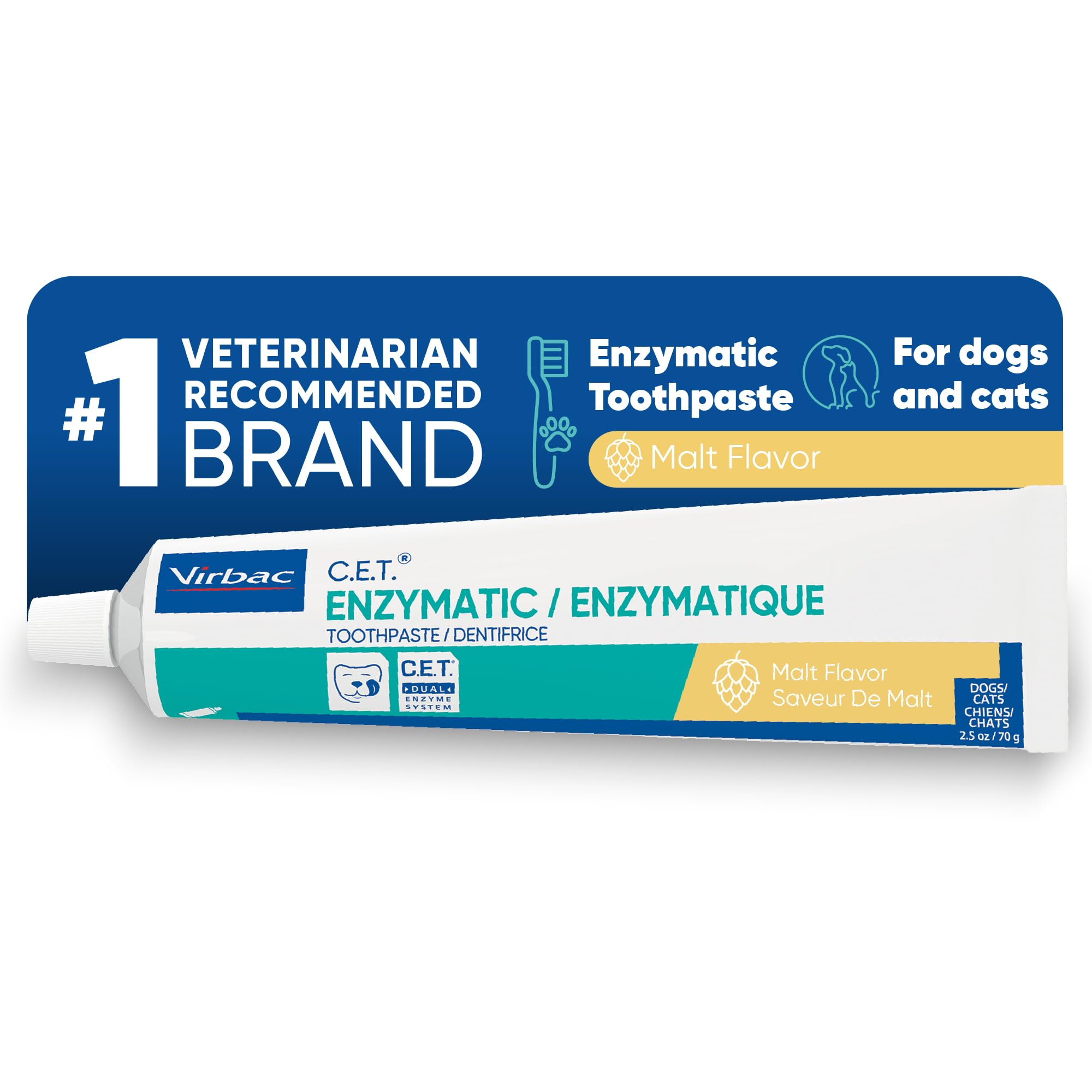
1. C.E.T. Enzymatic Toothpaste for Dogs and Cats, Malt, 2.5oz
Our pick — 4.5+★ from 300+ verified ratings; the strongest balance of quality and price.
The malt tube that dogs treat as a snack and vets keep recommending by name.
This is the one to buy if you want to stop guessing. C.E.T. is made by Virbac and sold as an enzyme system — proteins that break plaque down chemically — rather than as a scrub. It also contains no foaming agents, so a dog can swallow what the brush leaves behind without rinsing, and the flavor is malt instead of poultry. That combination is why it keeps coming up in vet offices. It is the crowd favorite here, rated 4.5+ stars by 300+ owners.
What wins people over is the taste. Dogs that normally fight a toothbrush will lick this off a finger and come back for more, which is the whole battle with a daily dental habit. Owners also report visible whitening and healthier-looking teeth with regular use, and the 2.5-ounce tube fits in a bathroom drawer. The catch is the smell. The paste has an odor that people describe as unpleasant, and it is noticeable the moment you open the cap — the dog does not care, but you will.
Set it against the LILADENT and the logic is clear: roughly 2.47 ounces versus 3.53 ounces, so the C.E.T. tube is the smaller one, but it carries the stronger reputation for accepted flavor. If your dog’s breath is the daily problem and tartar is the long game, this is the tube to start with.
What Makes It the Default Pick
- Enzyme system does the plaque work between brush strokes
- Non-foaming formula can be swallowed, so no rinsing needed
- Malt flavor gets fussy dogs to accept brushing
- Made by a dental-focused brand vets name directly
Where It Falls Short
- The paste itself has an off-putting smell to humans
- Smaller tube than the LILADENT, so it runs out sooner with two dogs
- The mint-free malt taste still gets refused by a stubborn minority
Reach for this if: you want the formula with the strongest vet reputation and a flavor most dogs accept.
Think twice if: strong smells bother you at the sink — the malt odor is the honest trade-off here.
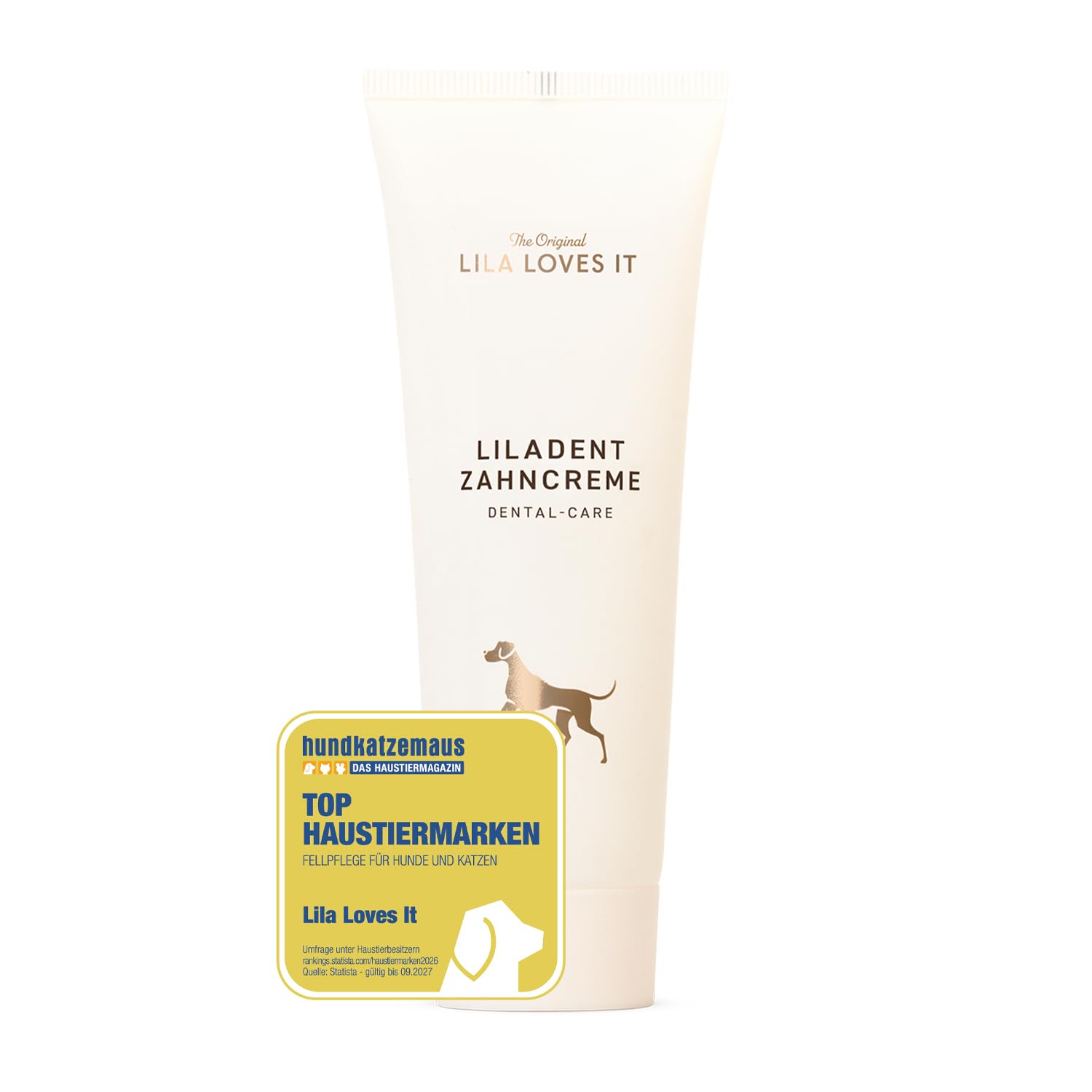
2. Toothpaste for Dogs 75 ml
A mineral clay paste for the household that reads every ingredient label first.
LILADENT leans on silicic acid and white clay as the cleaning agents, with papain from papaya, turmeric, and coconut oil rounding out the formula. The clay is the interesting part — it lifts plaque while staying soft on enamel and gums, so you are not trading cleaning power for gentleness. It is also ethanol-free and free of the harsh essential oils some dogs react to. The tub is bigger than the C.E.T. too: 3.53 ounces to the C.E.T.’s 2.47 ounces.
The texture is where it splits from the pack. It is thicker and yellower than a Virbac-type paste, and it is unscented, which matters if your dog sneezes or backs away from a minty tube. The taste is neutral rather than a treat, so dogs accept brushing without licking the brush dry. Sensitive stomachs seem to handle daily use without trouble. Owners brushing nightly with this clay paste report that light discoloration and surface plaque faded over roughly two weeks.
Be clear on the ceiling, though. This is a prevention paste, not a tartar remover — existing hard tartar needs a professional cleaning, and the same review pages say as much. It is also the pricey end of natural, so buying it repeatedly stings. The right buyer is someone already committed to brushing every evening and who wants a gentler formula while they do it.
The standout: clay-based cleaning with no mint scent and no ethanol — a real option for dogs that sneeze at strong pastes.
The honest limit: it softens and prevents, but it will not chip away tartar that is already set.
Best for: ingredient-conscious owners brushing nightly who want a soft, unscented formula.
Skip if: your dog already has heavy tartar — book the cleaning first, then use this to hold the line.
3. Petrodex Dog Dental Care Kit Poultry

One box with paste and brush, built for the first week of a new routine.
If you have never brushed a dog’s teeth, this removes the two decisions that stall people: which paste and which brush. Petrodex pairs a patented enzyme formula, no rinsing required, with poultry flavor and a brush in the same box. The tube is 73.98 ml of paste, so it lasts a good while on one dog. It is aimed at puppies, kittens, and first-time brushers, and that framing is accurate.
What dogs respond to here is the poultry taste — it is the aspect owners bring up most, with flavor close behind. The paste works without rinsing, and results show up quickly enough that people keep going past week one. Where the kit stumbles is the hardware. The brush has a habit of breaking during first use and shedding bristles, and the head is stiff enough to be awkward on a small mouth. Treat the included brush as a starter and plan to swap in a soft-bristled one.
Compared with the Vet’s Best kit further down, the paste is the safer half of the buy and the brush is the weaker half. That is not a reason to pass — the paste is the part that touches the teeth every night. Just expect to replace the brush.
The real draw: a complete first kit at a mid-range tier, with poultry paste dogs take to readily and no rinsing step.
The weak link: the included brush — bristles shed and the head runs stiff, so budget for a softer replacement.
Good fit for: a first-time brusher who wants paste and brush in one go and will upgrade the brush later.
Not the one if: you already own a brush you trust — buy the paste logic elsewhere and skip the hardware.
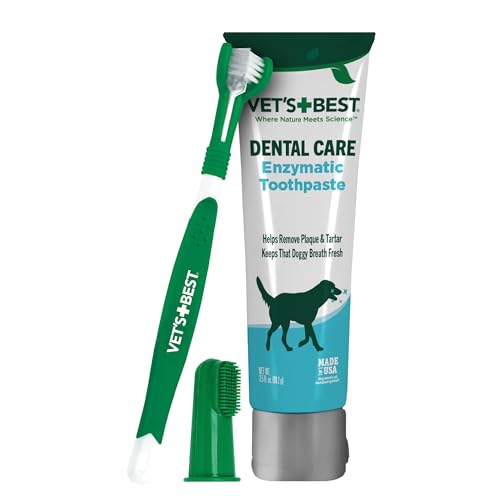
4. Vet’s Best Dog Toothpaste & Toothbrush Dental Care Kit 3.5 oz
The kit with a triple-sided brush and a 3.5-ounce tube that outlasts most rivals.
Vet’s Best is the volume leader of this group, and the reason is straightforward: the paste works and the tube is generous. The formula blends aloe, neem oil, grapefruit seed extract, baking soda, and enzymes, with a natural mint flavor dogs tend to accept. The kit throws in a triple-sided brush that cleans three sides of a tooth at once, plus a finger brush. For a big dog with a wide mouth, that triple head saves real time on the back molars.
Effectiveness is the thing people talk about most, and breath is the visible win — stinky breath turns into something much closer to puppy breath after one brushing with the mint paste. The mint taste gets accepted, not fought. The honest friction is the hardware again. The triple head is bulky, and owners of small dogs and Dobermans alike find it hard to steer; the finger brush is fiddly for stiff hands. Some dogs also refuse the mint outright and will not open up for it.
Against the Vetoquinol kit, the Vet’s Best gives you a larger 3.5-ounce tube and a faster brush, while the Vetoquinol gives you a smaller dual head that fits a cat. If your household is dogs only and you want one kit to cover a big mouth, this is the more practical buy.
Why It Leads the Group
- Generous 3.5 oz tube that lasts through weeks of nightly brushing
- Enzymes plus baking soda for plaque and tartar upkeep
- Triple-sided brush speeds up coverage on large dogs
- Owners notice fresher breath after a single brushing
The Friction Points
- Triple head is bulky and hard to steer in a small mouth
- Finger brush is awkward if your hands are arthritic
- A minority of dogs refuse the mint flavor
Most at home with: medium and large dogs where a fast triple-sided brush earns its keep.
Look elsewhere if: you have a toy breed — the brush head is the wrong size for a tiny mouth.
5. Vetoquinol Enzadent Toothpaste Kit with Brushes 3.2 oz

A dual-ended brush and a triple enzyme paste that cats will actually tolerate.
This kit solves the multi-pet problem. The brush has a large head and a small head on one handle, so the same tool works on a Lab and a cat, and the paste is a triple enzyme formula that is non-foaming and safe to swallow without rinsing. The flavor is poultry extract, which is why cats in particular take to it. The active list is long and includes glucose oxidase, lactoperoxidase, lactoferrin, and lysozyme — the enzyme side of the formula that does the plaque work.
Flavor and effectiveness are what owners praise, and there is a strong cat following here that most dog pastes never earn. Cats that usually refuse a brush settle down for this poultry paste, and long-term buyers report their vet is impressed at checkups. One owner has brushed an almost 6-year-old dog with this poultry paste nightly and avoided a professional cleaning so far. The small head of the dual brush is the right size for getting into tight spots. The bigger end is too big for many mouths.
The trade-offs are real but narrow. The bristles run firm, which a puppy or a cat with tender gums may not love. The paste itself is brown, which surprises people expecting white. And the included finger brush is too hard to be useful, so a soft silicone fingertip is a sensible add-on. None of that touches the paste, which is the part that matters.
What it fixes: one kit for dogs and cats, with poultry flavor that gets feline cooperation and a small brush head that reaches back teeth.
What to know: firm bristles and a brown paste — expect to add a soft silicone finger brush of your own.
Worth it for: homes with both a dog and a cat that want one paste both will accept.
Pass on it if: your pet has tender gums — the firm bristles on the included brush are a poor match.
Know the Specs
Enzymatic vs. Mineral Formulas
An enzymatic paste uses proteins — enzymes — to break plaque down chemically, so it keeps working after the brush leaves. A mineral paste like the LILADENT uses silicic acid and white clay to lift plaque physically while staying soft on enamel. Neither scrapes off hardened tartar; both slow the plaque that becomes tartar. The practical difference is texture and smell.
Non-Foaming and Swallow-Safe
Dogs and cats do not spit. A paste with foaming agents has to be rinsed, which almost never happens cleanly. A non-foaming formula can be swallowed, which is why the C.E.T., Petrodex, and Enzadent pastes all lean on it. Check for it before you buy anything that needs to stay in the mouth.
Flavor and Acceptance
Malt and poultry are the two tastes dogs accept most readily, and mint works for some. Flavor is not cosmetic — it decides whether brushing happens at all. A refused flavor means a tube that sits unused, no matter how good the formula is.
Brush Head Size and Texture
A triple-sided head covers more tooth per stroke on a big dog but steers poorly in a small mouth. A dual-ended brush gives you a small head for cats and tight spots. Finger brushes are gentle but awkward with stiff hands. Match the head to your dog’s mouth size, and keep a soft child’s brush as a backup.
Common Questions
Will dog toothpaste actually remove tartar that is already hard?
Is enzymatic toothpaste better than baking soda for tartar?
Can I use human toothpaste on my dog instead?
How often should I brush to keep tartar down?
My dog hates mint — which flavor should I try?
Is the toothpaste safe if my dog swallows it?
Will these pastes work for cats as well as dogs?
How long does a tube last with one dog?
Do I need the toothbrush that comes in the kit?
Is it normal for the paste to smell or look odd?
The Bottom Line
The strongest all-round pick for the dog toothpaste for tartar job is the C.E.T. Enzymatic Toothpaste, because an enzyme system plus a malt flavor dogs accept is the combination that keeps a daily brushing habit alive. If natural ingredients matter more to you, the LILADENT mineral paste gives you clay-based cleaning with no mint scent, on a bigger 3.53-ounce tube. For a big dog with a wide mouth, the Vet’s Best kit brings a triple-sided brush and a 3.5-ounce tube. And if a cat shares the house, the Vetoquinol Enzadent kit is the one paste both species tend to take. Whichever you pick, the tube only pays off if you brush — start tonight, and let the vet handle the tartar that is already set.
How we choose
We do not accept paid placement. Every pick is matched to a real buyer and a real use-case; we do not hands-on test units.
Sources
Specifications: manufacturer listings and product documentation. Review insights: verified customer reviews, as of October 2026. Pricing: not shown on this page (it changes often); check the current price via the retailer link.
As an Amazon Associate, Aappliancez earns from qualifying purchases. This does not affect which products we feature.