Disclosure: Some links in this post are affiliate links. As an Amazon Associate I earn from qualifying purchases, at no extra cost to you. Learn more
Specs are compiled from manufacturer listings and verified buyer reviews and can change over time — please confirm the key details on the product page before buying.
Your vet says “liver issues” and suddenly every bowl in the house looks suspect. The food that helps most does two jobs: it keeps copper low, since copper piles up in damaged liver cells and does extra harm, and it supplies protein the liver can process without strain. Below you’ll find prescription-style kibbles plus the capsules and powders that sit on top of them, so you can match a pick to your dog’s exact problem. The lineup starts with a crowd favorite holding 4.5+ stars across 500+ ratings, and every pick after it is ranked for a different job.
This guide is built by comparing the manufacturers’ published specifications and the patterns across verified customer reviews, so you get each pick’s real strengths and trade-offs instead of marketing spin.
Below you’ll find the honest read on each option, from bag size and kibble shape to whether a powder actually mixes into dinner. If your dog’s bloodwork came back flagged and you’re choosing what goes in the bowl next, this breakdown of the best dog food for liver issues covers every realistic option.
Top Picks
How To Choose The Best Dog Food for Liver Issues
The first thing to understand is that “liver issues” is not one condition. A dog with a portosystemic shunt, a dog with copper storage disease, and a dog with a fatty liver from an old diet all need different things from the bowl. That is why no single bag wins for every dog, and why the vet’s note on your dog’s chart decides more than any review score.
Start with the copper number
Copper is a mineral that a damaged liver struggles to clear, so it builds up in the liver cells and causes more harm. A liver-support diet deliberately keeps copper low for exactly that reason. If your dog has copper storage disease, the low-copper bag is the single most important purchase on this page. If your dog’s issue is something else, low copper is still a sensible safety margin rather than the whole story.
Highly digestible protein beats low protein
Don’t hunt for the lowest protein number on the shelf — that’s a common beginner mistake. Vets usually want protein your dog can break down easily, not the least protein possible. The wording to look for is “controlled levels of highly digestible protein.” That balance lets the liver do its job without a heavy workload, and it protects muscle at the same time. A bag can be moderate in protein and still be exactly right for a liver dog.
Know when a supplement is enough
Capsules and powders with milk thistle, SAMe, or probiotics sit beside a normal bowl rather than replacing it. They suit a dog with mildly raised liver values who is otherwise eating well, or a senior dog whose owner wants daily support. A full veterinary diet suits a dog with a diagnosed condition and a vet’s instruction. Getting this order right saves you from buying a supplement when you needed a prescription bag — or the reverse.
Check bag size and kibble shape before anything else
Large bags save money per pound but go stale before a small dog finishes them, and big kibble is a real obstacle for a toy breed or a senior with bad teeth. Match the bag to your dog’s monthly intake, and match the kibble size to the mouth doing the chewing. This is the detail most buyers only notice after the first bag.
Side-by-Side Comparison
| Model | Best For | Form | Bag / Unit Size | Key Liver Spec | Amazon |
|---|---|---|---|---|---|
| Royal Canin Veterinary Diet Canine Hepatic★ Best Overall | Copper-sensitive dogs on a vet diet | Dry kibble | 26.4 lb bag | Low copper, highly digestible vegetable proteins | Amazon |
| Rx Vitamins Hepato Support (90ct)Daily Support | Daily support beside a normal bowl | Capsule | 90 count | Milk thistle plus vitamin B2 | Amazon |
| SquarePet VFS Low Phosphorus | Special-needs dogs needing controlled phosphorus | Dry food | 4.4 lb bag | Targeted protein, phosphorus and sodium | Amazon |
| Fera Pets Dog Kidney Support | Topper for filtration and detox support | Powder | 60 scoops | 5 billion CFU probiotic blend | Amazon |
| Same 100 Liver Support Chews | Senior dogs needing SAMe in a chew | Soft chew | 60 count | S-Adenosylmethionine (SAMe) | Amazon |
| Rx Vitamins Hepato Support (180ct) | Long-term daily dosing | Capsule | 180 count | Organic milk thistle plus B complex | Amazon |
| Hill’s Prescription Diet l/d Liver Care | Shunt and copper-toxicosis dogs | Dry food | 17.6 lb bag | Low copper, controlled digestible protein | Amazon |
Detailed Reviews
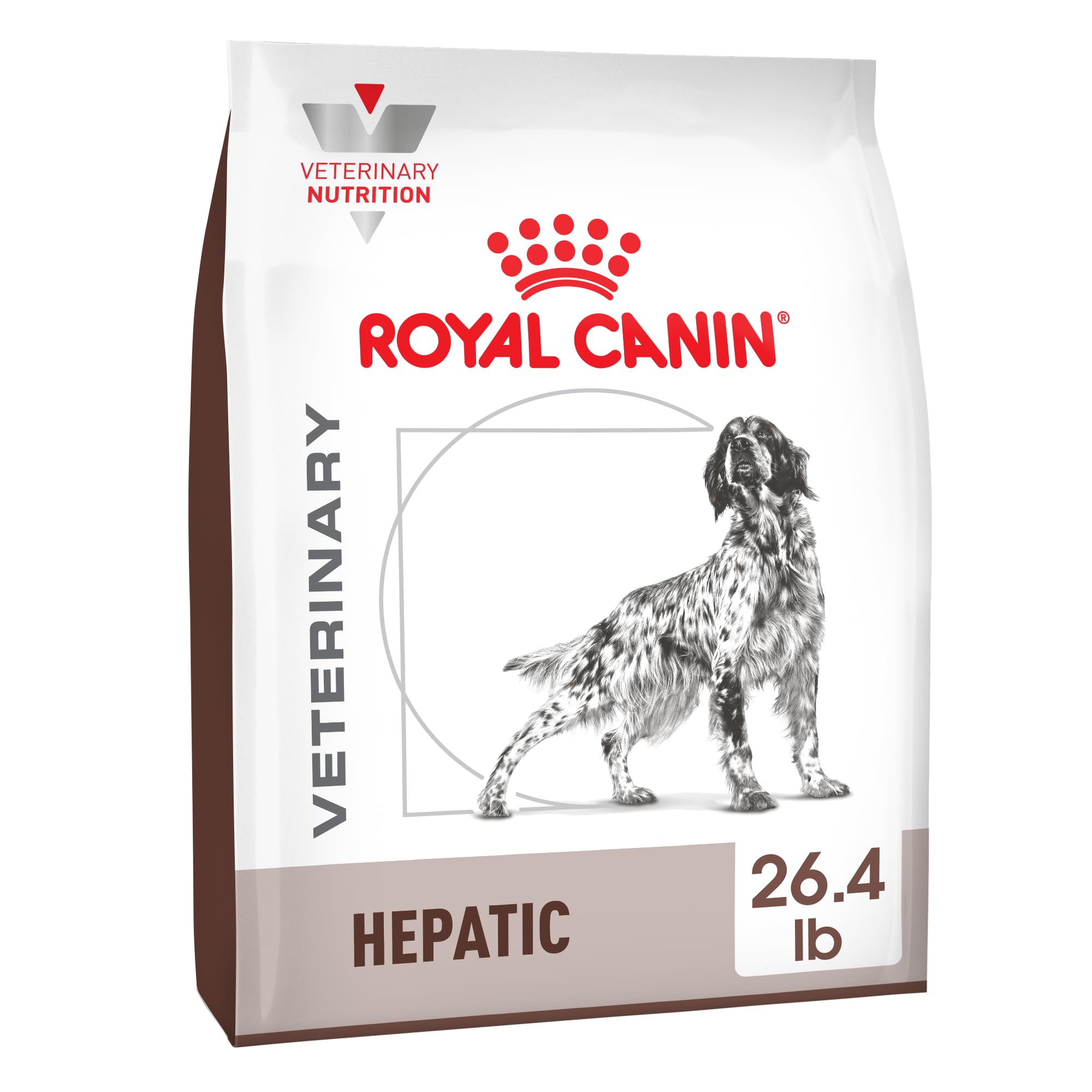
1. ROYAL CANIN Canine Hepatic Dry Dog Food, 26.4 lb
Our pick — 4.5+★ from 500+ verified ratings; the strongest balance of quality and price.
The low-copper kibble that veterinarians hand out for liver dogs, in a bag big enough to actually feed one.
Here is the number that decides it for a copper-sensitive dog: this formula is built to be low in copper, the mineral that collects in damaged liver cells. It pairs that with an adapted level of highly digestible vegetable proteins, meaning protein the liver can process with less strain. The formula also carries adapted energy content, which keeps the meal volume smaller and eases the load on the gut — useful when a liver dog eats slowly or leaves food in the bowl.
Size is the other half of the story. At 26.4 pounds, this bag holds 131 cups of food — a genuinely long runway for a medium dog, and the reason the price per bowl works out well. That same bulk brings a caveat: the kibble runs large, and a toy or senior dog with small teeth can struggle with it. One practical detail: this is a copper-conscious pick in a direct sense, since it is low in copper where the Hill’s prescription l/d sits higher on that mineral, per buyers who have run both for the same dog.
What wins people over is taste: plenty of owners describe a dog that fights every bowl suddenly treating this kibble like a reward. The recurring gripe is kibble size, and a few mention the formula and bite size shifting between shipments, which matters more on a prescription diet than on an ordinary bag. It is worth ordering the size your dog will finish while the formula you both settled on stays in stock.
What carries it
- Low copper level aimed straight at copper buildup in liver cells.
- 131 cups per 26.4 lb bag — a long feeding runway per bag.
- Adapted energy content keeps meal volume down and eases intestinal load.
- Prebiotics included to support the gut microbiome alongside the liver.
- Dogs take to the taste readily, which matters when appetite is fragile.
Where it asks patience
- Kibble runs large for small breeds and senior dogs with weak teeth.
- Bite size and formula can shift between shipments without notice.
- A 26.4 lb bag can outlast a small dog’s freshness window.
Best fit: a medium or large dog whose vet has named copper as the concern and who will get through a 26.4 lb bag.
Think twice: a toy breed or a dog with dental trouble — the oversized kibble is the complaint that keeps coming back.
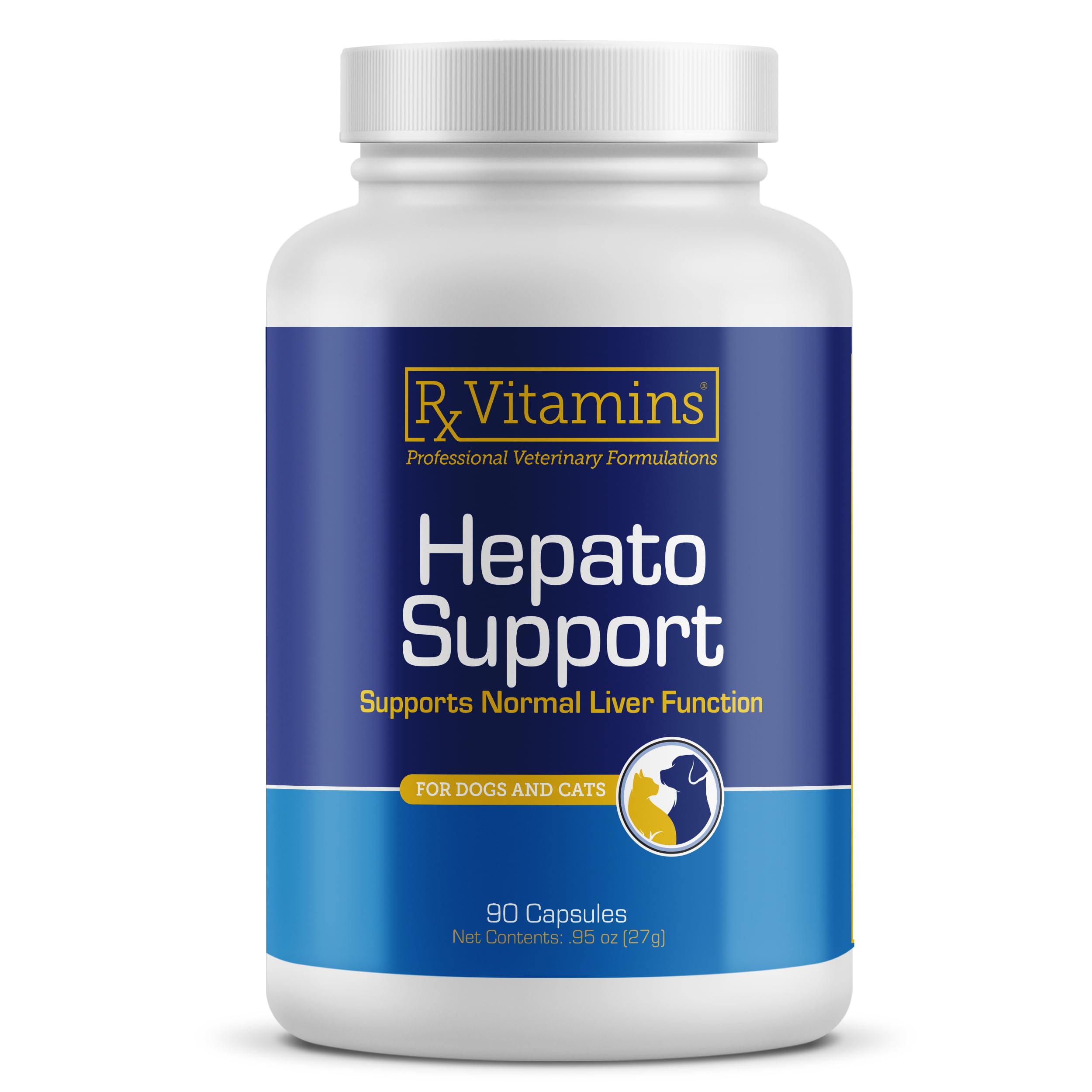
2. Rx Vitamins Hepato Support for Dogs & Cats, 90ct
A milk thistle capsule that slots into dinner, for the dog whose liver numbers are up but whose bowl is otherwise fine.
This suits the in-between dog: flagged on bloodwork, still eating normally, with no full prescription diet ordered. Each capsule carries milk thistle extract plus vitamin B2, and the formula is rounded out with a B-complex to support everyday liver care. It is unflavored and comes as a capsule, so you can hide it in food or open it and sprinkle the contents over a bowl.
The 90-count bottle is the real decision point here. Dosed daily, that is a solid stretch of coverage before you reorder, and the capsule format means no measuring and no powder cloud. Owners describe cutting the capsule and sprinkling it over food, and the flavor is apparently mild enough that most dogs eat straight through it. It suits cats as well as dogs, which matters in a multi-pet house where one bottle has to cover both.
The catch is patience: this is daily support, not a quick fix, and the honest reports describe months of use before a recheck shows movement. If you are expecting a fast turnaround on a liver panel, that is simply not how a supplement works. Pair it with your vet’s monitoring schedule and treat the bottle as a routine, not an event.
Why it earns a slot: A single capsule covers milk thistle and B vitamins, works for cats and dogs, and fits into food without a fuss — a low-effort way to keep daily liver support going.
The honest trade-off: It walks beside a diet rather than replacing one, and results show up on a recheck timeline rather than in a week.
Pick this if: your dog’s values are mildly raised and your vet wants daily support layered onto an existing bowl.
Look elsewhere if: you need a full veterinary diet — a capsule cannot do that job.
3. SquarePet VFS Low Phosphorus Formula Dry Dog Food, 4.4lb

The bag that keeps phosphorus and sodium in check — and the one dogs actually clear from the bowl.
If your dog’s liver trouble runs alongside kidney concerns, phosphorus and sodium are the numbers to watch, and this formula targets both with cage-free turkey and whole eggs as the protein base. It adds taurine for heart support and L-Carnitine to help with fatty-acid energy, plus a salmon-oil dose of omega-3s named as DHA and EPA. The recipe is built without corn, nuts, peas, soy or wheat, which narrows the ingredient list for a sensitive dog.
Size separates it in a big way: at 4.4 pounds, this bag is a fraction of the Royal Canin hepatic bag’s 26.4 pounds, so it suits a dog that needs a fresh bag rather than a bulk stock. That small size is also the value question, since you replace it more often. Owners describe feeding a measured cup against a higher recommended amount and keeping weight steady. That’s a reminder this is a calorie-dense formula, so follow the label feeding guide closely rather than free-pouring.
What buyers talk about most is taste. Dogs that had turned their noses up at other special-needs food finish this one, which for a sick dog is often the whole battle. The mixed note across the reviews is cost for the bag size, and some flag the sticker discrepancy rather than the food itself. If a 4.4 lb bag matches your dog’s monthly pace, that is a fair trade for a fresh, targeted formula.
The defining spec: Targeted amounts of protein, phosphorus and sodium — the three numbers a kidney-and-liver dog’s diet is judged on.
One thing to skip past: The 4.4 lb bag means frequent reorders, so confirm your dog will commit to the flavor before you build a routine around it.
Right call for: a dog with special-needs kidney and liver pressure who needs phosphorus and sodium held in check, in a small fresh bag.
Not the one for: a large dog eating through a bag a month — you’ll be reordering constantly at this size.
4. Fera Pets Dog Kidney Support Powder, 60 Scoops
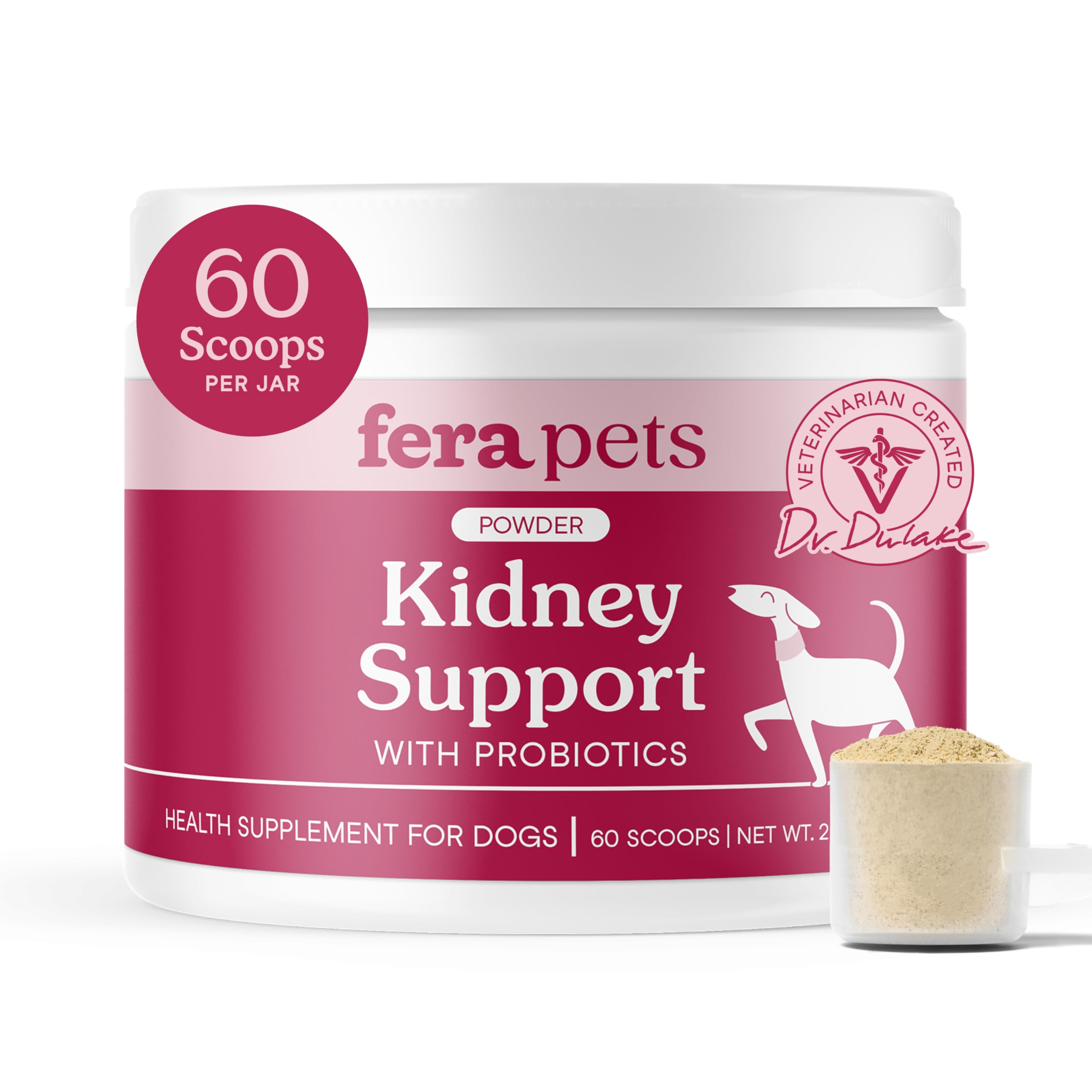
A scoopable probiotic and antioxidant blend for the dog whose kidneys and liver are both on the watch list.
This is a powder, not a food, and it works as a topper on whatever bowl you already trust. The formula leans on cordyceps mushroom, astragalus root and a probiotic blend carrying 5 billion CFU, aimed at kidney filtration and regular detoxification. It comes with a scoop and 60 servings per container, and the guidance points to a four-week window before you judge it.
Lighting the daily routine is where it proves itself. The powder mixes into food without turning dinner into a negotiation, and owners describe calmer nights and steadier digestion rather than a dramatic turnaround. It is made in the USA and carries NASC certification and GMP compliance, two labels that matter to owners who read the back of the container. The chicken flavor helps the topper go down where a plain powder might get refused.
The honest limit: this is a topper, so it rides on the diet you feed, and a few dogs react to it. Some report loose stools or vomiting on a sensitive stomach, so start slowly and watch the first few days. If your dog is mid-crisis, that is a conversation for your vet rather than a scoop decision.
Reasons it suits a picky senior
- 5 billion CFU probiotic blend aimed at kidney and urinary support.
- 60 scoops per container with a scoop included — no guesswork.
- Cordyceps and astragalus round out an antioxidant, detox-minded formula.
- Powder mixes into food easily and carries a chicken flavor dogs accept.
- NASC Certified and GMP-Compliant, made in the USA.
The catches to weigh
- It is a topper, so it supplements rather than replaces the main diet.
- Some dogs get loose stools or vomit in the first days, so ramp up slowly.
- Results take weeks — the four-week mark is when it is meant to show.
Worth grabbing if: your dog needs gentle filtration support and you want something that spoon-mixes into the bowl you already use.
Give it a miss if: your dog has a notoriously sensitive gut — the loose-stool reports are real, so taper the first scoop.
5. Same 100 Liver Support for Dogs Soft Chews
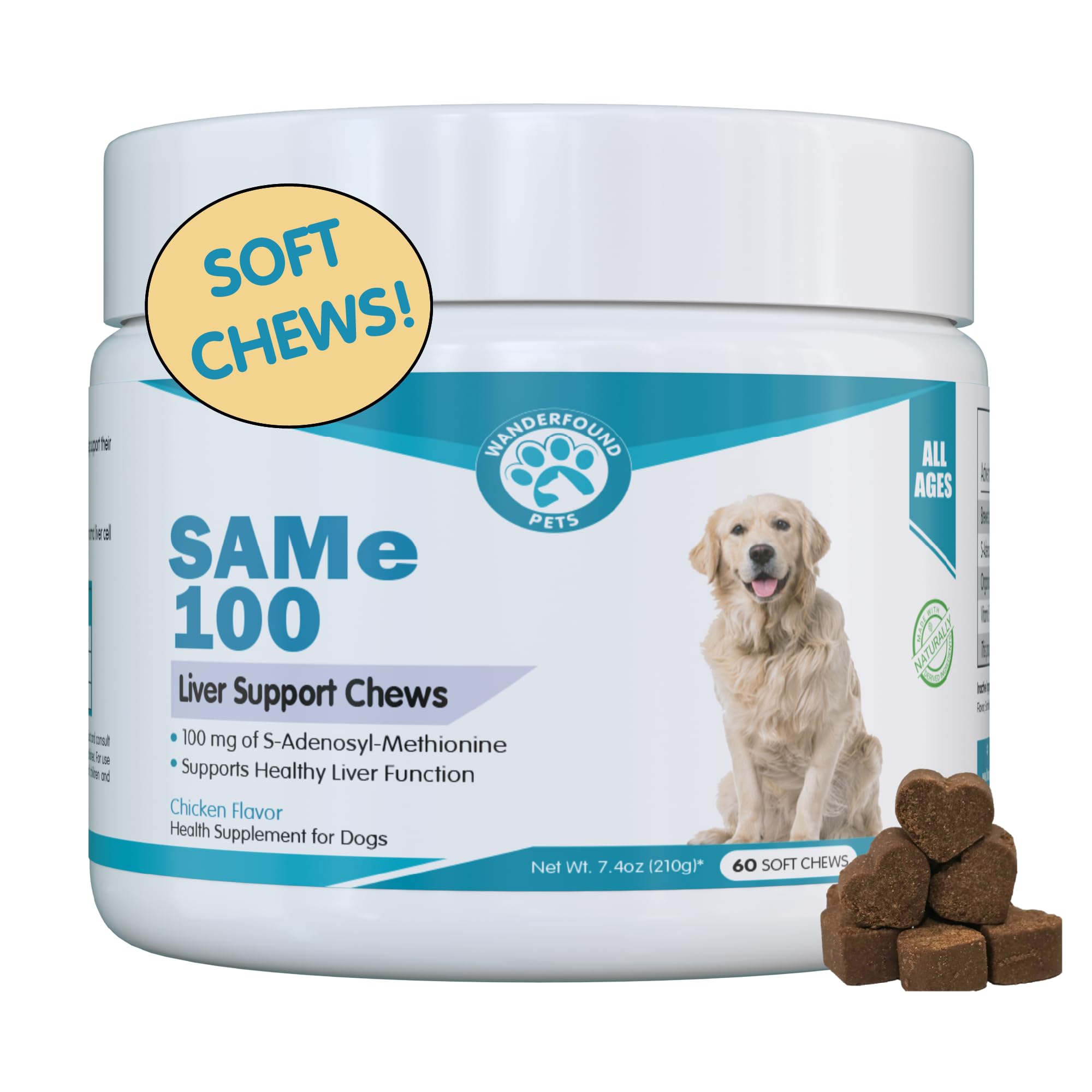
A SAMe soft chew aimed at older dogs whose liver and memory both need a hand.
The active here is S-Adenosylmethionine — SAMe — a compound tied to liver function and to the neurotransmitters behind memory and cognition. The chews are built for senior pets dealing with cognitive change or needing extra liver and joint support, and the formula is byproduct-free and processed in the USA. The 60-count bottle runs in bacon flavor, so the idea is a treat rather than a fight.
Where it falls down is the taste experience, and that is a real obstacle rather than a nitpick. The chews are hit or miss with dogs — some owners describe a dog that needs coaxing even when the chew is wrapped in cheese, and one mentions the chews arriving firm and smelling off. When a supplement has to be swallowed daily, a rejected chew can stall the whole routine.
So the honest read is mixed. Owners whose dogs accept the chew report behavioral change in an older dog after a few weeks, and the SAMe cognitive angle gives it a purpose beyond liver numbers alone. If your dog takes chews readily, this is an easy add. If your dog is the type to spit out anything unchewed, a capsule you can hide in food is the safer bet.
The real draw: SAMe in a soft chew — a form that supports both liver function and the neurotransmitters behind memory, aimed squarely at senior dogs.
The main snag: Taste acceptance is inconsistent, and a dog that refuses the chew carries the whole routine down with it.
Made for: a senior dog with cognitive change and liver concerns whose owner wants a SAMe chew rather than another pill to hide.
Skip if your dog is fussy: the flavor reports are too uneven to gamble on if your dog already refuses supplements.
6. Rx Vitamins Hepato Support for Dogs & Cats, 180ct

The double-size bottle of the same milk thistle capsule, built for the dog on a long daily run.
Same supplement, twice the runway. This is the 180-count version of the Hepato Support capsule, carrying organic milk thistle extract alongside vitamin B6, B2 and B1 — a B-complex aimed at energy metabolism, coat and overall vitality. It is veterinarian-formulated and works for cats as well as dogs, so one bottle can serve a multi-pet household.
Compared to the 90-count bottle, the larger size is the whole pitch: fewer reorders for a dog on a long-term daily dose. The capsule is easy to administer, and the established way to give it is to open it and sprinkle the contents over food or slip it into a meal. For a dog who has to take this every day for the foreseeable future, halving the reorder cycle is a genuine convenience.
The fair caveat is that a bigger bottle commits you to the formula for longer. If you are still trialing supplements, start small; if you have already settled on milk thistle for your dog’s liver, this is the sensible replenishment size. It remains daily support beside a diet rather than a replacement for a prescription food.
Value that adds up: 180 capsules of organic milk thistle and a B-complex, cutting your reorder frequency in half versus the smaller bottle.
What it won’t do: It still has to be taken daily for weeks before a recheck tells you anything, so buy the big bottle only once you know the routine works.
Best for: the owner who has already decided milk thistle is part of the plan and wants a longer stretch between orders.
Hold off if: you are still testing supplements — a smaller bottle is a smarter first commitment.
7. Hill’s Prescription Diet l/d Liver Care Dry Dog Food

The chicken-flavored liver diet that names low copper and controlled protein on the bag, for the shunt or toxicosis dog.
Buyers report it working in tough cases — dogs with liver shunts and dogs positive for the copper toxicosis gene both appear in the accounts, with weight gained and liver values improving over time. The kibble shape is a 5-7mm piece, which suits a medium dog with a normal bite. Where it splits from the Royal Canin is copper: owners running both for the same copper-storage dog note that Hill’s sits higher on copper, which is exactly why the vet’s guidance matters here.
The recurring gripe is kibble size and bag size for small dogs — the piece is too big for a toy breed or a senior with bad teeth, and the smallest bag is 17.6 pounds. That is a lot of food to get through before it goes stale, and a small dog may never finish it. For a medium dog on a long prescription run, though, it is a dependable, vet-guided staple.
The defining spec: Controlled highly digestible protein plus low copper — the two pillars of a prescription liver diet.
Check first: If your dog has copper storage disease, ask your vet to compare this against a lower-copper formula before you commit to a 17.6 lb bag.
This one’s for: a medium dog with a diagnosed liver condition whose vet has steered the plan toward a prescription diet.
The mismatch: a toy breed or a senior with weak teeth — the 5-7mm kibble and 17.6 lb bag both fight a tiny dog.
Know the Specs
Low Copper
Copper is a mineral that a healthy liver clears easily but a damaged liver lets build up in its cells, so a liver-support food keeps it deliberately low. Look for the phrase “low copper” on the bag — it is the spec a copper storage dog’s whole diet hangs on. If your dog’s condition is not copper-related, low copper still acts as a sensible safety margin rather than the only thing that matters.
Highly Digestible Protein
The goal is not the smallest protein number but protein the liver can break down without strain — often written as “controlled levels of highly digestible protein.” That lets the organ work at a manageable load while still protecting muscle. When you compare bags, check whether the protein is described as digestible, not just low. The two are different things, and the digestible version is what a liver dog needs.
Adapted Energy Content
A formula can be built so each meal delivers the nutrition in less volume, which reduces the amount your dog has to eat at once and eases the intestinal load. For a liver dog with a small appetite or a slow gut, that matters more than the calorie count on its own. The Royal Canin hepatic formula leans on this idea directly, so a smaller-looking portion can still carry full nutrition.
Milk Thistle & SAMe
These two names show up on nearly every liver supplement, and they do different jobs. Milk thistle is the classic herbal support ingredient, often paired with a B-complex for everyday liver care. SAMe, or S-Adenosylmethionine, is a compound tied to liver function and to the neurotransmitters behind memory, which is why it often appears in senior-dog formulas. Both work beside a diet over weeks, not overnight.
Common Questions
What does low copper mean in dog food for liver issues?
Can I feed a liver diet and a liver supplement at the same time?
How long does a 26.4 lb bag of Royal Canin Hepatic last?
Is Hill’s l/d or Royal Canin Hepatic better for a copper-storage dog?
Will a small dog eat prescription liver kibble if the pieces are big?
Do liver supplements for dogs actually change bloodwork?
Can a dog with kidney and liver issues eat the same food?
Is a milk thistle capsule enough on its own for a dog with liver problems?
Why do some dogs refuse liver chews and what can I do?
Should I switch to a prescription diet without asking my vet?
The Bottom Line
For most dogs with a vet-flagged copper concern, the Royal Canin Veterinary Diet Canine Hepatic is the pick — low copper, highly digestible proteins and a 26.4 lb bag that carries 131 cups. If your dog’s liver numbers are mildly up but the bowl is otherwise fine, start with the Rx Vitamins Hepato Support 90ct for daily milk thistle support, and size up to the 180-count once the routine sticks. And if copper storage disease or a shunt is the diagnosis, the Hill’s Prescription Diet l/d belongs in the conversation with your vet. Whichever route you take, the crowd-favorite hepatic bag is the safe anchor — 4.5+ stars across 500+ ratings — and matching it to your dog’s diagnosis is what turns a good bag into the right one.
How we choose
We do not accept paid placement. Every pick is matched to a real buyer and a real use-case; we do not hands-on test units.
Sources
Specifications: manufacturer listings and product documentation. Review insights: verified customer reviews, as of October 2026. Pricing: not shown on this page (it changes often); check the current price via the retailer link.
As an Amazon Associate, Aappliancez earns from qualifying purchases. This does not affect which products we feature.