Disclosure: Some links in this post are affiliate links. As an Amazon Associate I earn from qualifying purchases, at no extra cost to you. Learn more
Specs are compiled from manufacturer listings and verified buyer reviews and can change over time — please confirm the key details on the product page before buying.
If your dog has been diagnosed with kidney disease, the food decision lands on you fast — and the wrong pick shows up as a dog who walks away from the bowl. What you want is a diet with restricted phosphorus and controlled protein that your dog will actually finish. The five picks below cover both prescription and over-the-counter routes, and every one of them is chosen around that one question: will it get eaten?
This guide is built by comparing the manufacturers’ published specifications and the patterns across verified customer reviews, so you get each pick’s real strengths and trade-offs instead of marketing spin.
Kidney diets live or die on palatability, so appetite sits at the center of every pick here. Below you’ll find the phosphorus and protein approach explained in plain words, plus which formula suits a picky eater, a small dog, or a dog who has already refused the vet’s first recommendation — everything you need to sort through the dog food for dogs with kidney disease.
Top Picks

How To Choose The Best Dog Food for Dogs With Kidney Disease
A kidney diet is not a normal dog food with a new label on it. The whole point is to lighten the workload on kidneys that are no longer filtering well — and that means three numbers matter more than anything else on the bag: phosphorus, protein, and sodium. Get those three numbers right first, then worry about flavor.
Phosphorus Is The Number To Read First
Phosphorus is a mineral your dog’s kidneys normally clear out. When they can’t, it builds up in the blood — so a kidney formula deliberately keeps it low. Every pick here is built around restricted phosphorus, and it is the single spec worth checking on the label before anything else.
Protein: Restricted, Not Eliminated
Old advice said cut protein to the bone. Modern renal diets restrict it instead — enough high-quality protein to hold muscle, not so much that the kidneys strain. You’ll see this described as “targeted” or “restricted” protein levels, and the source of that protein matters: real chicken, cage-free turkey, or whole eggs are easier to build a formula around than by-product meals.
Prescription Or Over-The-Counter
Some renal diets need a vet’s approval before the bag ships, and some are sold openly as special-needs formulas. Prescription diets tend to carry the tighter therapeutic formulation; over-the-counter low-phosphorus options skip the approval step. Your vet’s staging of the disease should decide which lane you’re in.
Palatability Decides Whether Any Of It Works
A renal diet only helps if the bowl gets emptied. Dogs with kidney disease often have a reduced appetite to begin with, which is why so many formulas lean on aroma, kibble shape, or wet-food texture to coax eating. If your dog has already turned down one renal diet, treat it as a signal about that formula, not a verdict on all of them.
Side-by-Side Comparison
| Model | Best For | Form | Primary Protein | Bag Weight | Amazon |
|---|---|---|---|---|---|
| Royal Canin Veterinary Diet Renal Support S★ Best Overall | Picky dogs who need coaxing | Dry | Chicken | 6 pounds | Amazon |
| Blue Buffalo Natural Veterinary Diet KSCleanest Label | Owners avoiding corn, wheat and soy | Dry | Chicken | 6 pounds | Amazon |
| SquarePet VFS Low Phosphorus | No-prescription low phosphorus | Dry | Turkey and whole eggs | 4.4 pounds | Amazon |
| Purina Pro Plan Veterinary Diets NF | Dogs who need extra calories | Kibble | Vegetable | 6 pounds | Amazon |
| Hill’s Prescription Diet k/d Stew | Dogs who refuse dry food | Wet | Beef | 9.4 pounds | Amazon |
Detailed Reviews
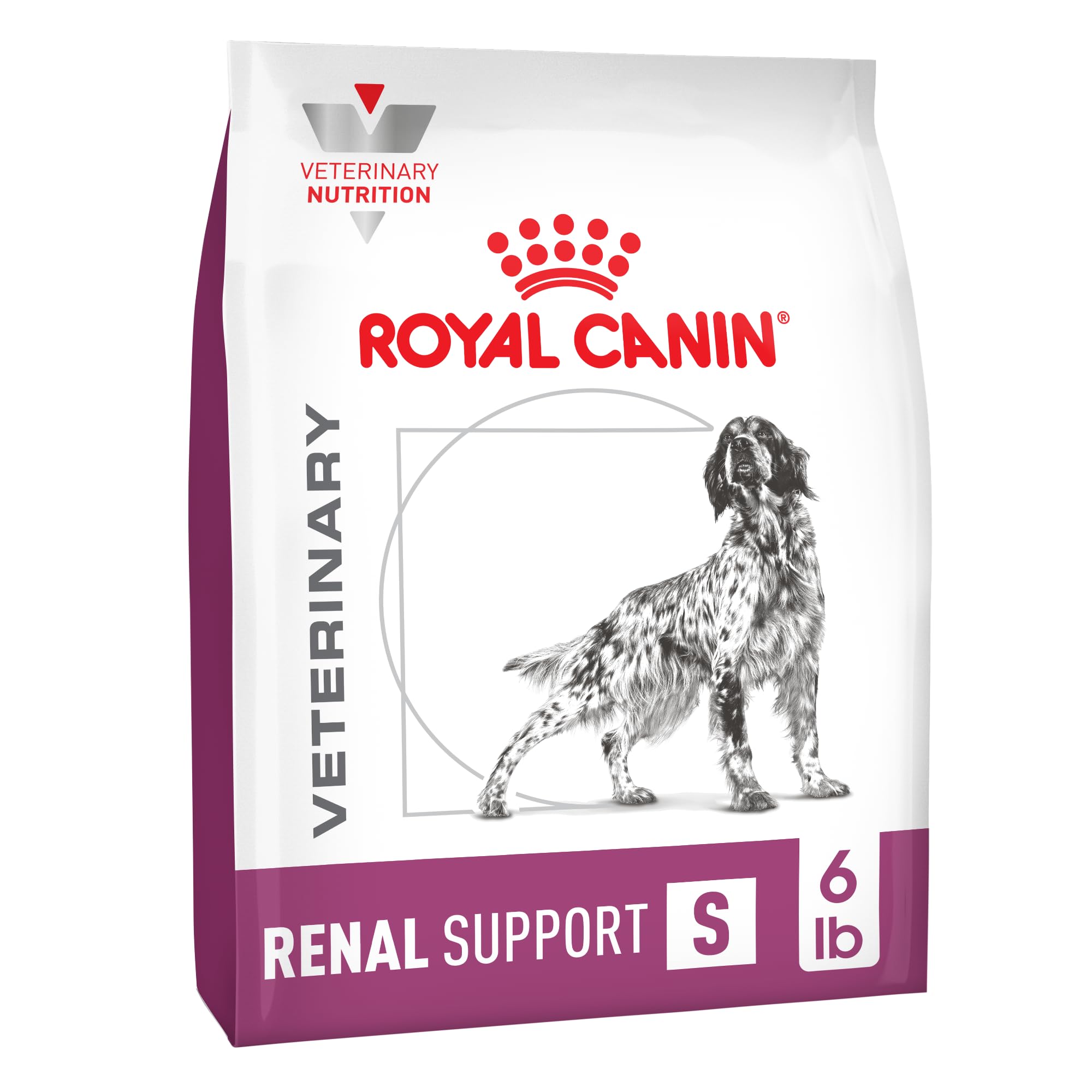
1. Royal Canin Canine Renal Support S Dry Dog Food, 6 lb
Our pick — 4.5+★ from 400+ verified ratings; the strongest balance of quality and price.
The renal diet built around a dog who has stopped caring about dinner.
The “S” in Renal Support S stands for savory, and that is the whole design brief here. Royal Canin shapes the kibble into a crescent — owners end up calling them little kidney beans — and builds the formula to be energy-dense so a smaller meal volume carries the same nutrition. For a dog whose appetite has shrunk, that combination means fewer bites to get the job done.
On the medical side, it pairs a low phosphorus level with targeted protein and a precise antioxidant complex, plus fatty acids from fish oil. Those are the levers a renal formula pulls, and Royal Canin is explicit that this is a veterinary-exclusive diet, so the bag requires a prescription. One bag holds 27 cups of food, which is the practical number for planning how often you reorder.
What wins dogs over is the shape and the smell — a dog who turns her nose up at a standard renal kibble will often take these crescents. The honest catch is the appetite math: a genuinely sick dog may still need encouragement, and plenty of homes mix in a little water or broth to make the kibble more of a treat. It also runs toward the pricier end of the prescription shelf, and this bag sits at 6 pounds, versus 4.4 pounds for the SquarePet formula below — more food per bag, but a bigger outlay each time.
What earns it the top spot
- Savory crescent kibble designed to pull in dogs with a dulled appetite
- Energy-dense formula keeps meal volume smaller for a dog who eats little
- Low phosphorus with targeted protein and an antioxidant complex for kidney care
- Fish oil fatty acids included in a veterinary-exclusive recipe
Where it asks more of you
- Prescription required before the bag ships
- Some dogs still need water or broth mixed in to finish a bowl
- A bigger bag means a bigger single purchase each reorder
Reach for this if: your dog has gone off food and you need a renal diet with built-in coaxing — the crescent shape does real work.
Look elsewhere if: your vet has specifically steered you toward a wet-only or over-the-counter low-phosphorus route.
2. Blue Buffalo Kidney Support Chicken Dog Food, 6 lb
For the dog with kidney disease and a sensitive coat that needs both handled at once.
Start with the ingredient panel, because that’s where this formula separates itself. Real chicken is the first ingredient, and there are no chicken or poultry by-product meals, no corn, no wheat, no soy — a genuinely useful list if your dog also deals with itchy skin or a finicky stomach alongside the renal diagnosis.
The kidney side is handled the way it should be: optimal protein levels paired with controlled phosphorus and controlled sodium, which is the standard three-lever approach to supporting kidney function through diet. This one is a veterinary-prescribed formula, so your vet has to sign off before it ships — the approval process itself is quick and mostly a phone call.
The kibble is the sticking point. The pieces run large, which is fine for a medium dog and clumsy for a small one; they can be broken up, but that’s a nightly chore you should know about going in. A dog who previously refused another prescription renal food will often take this one, and the 6-pound bag matches the Royal Canin for size while sitting at a lower rating — 4.2 on this bag versus 4.5+ for the top pick. Delivery speed is the other thing to plan around: order a few days before you run out rather than the day the bag empties.
What the ingredient list buys you: real chicken first with a corn-free, wheat-free, soy-free build — a real difference for a dog with skin allergies stacked on top of kidney disease.
Plan around this: large kibble pieces and a delivery window that rewards ordering early rather than late.
The right bag if: your vet has approved this route and your dog needs a cleaner ingredient list than the typical renal kibble.
Think twice if: you have a toy breed that struggles with big kibble, or you tend to buy food at the last minute.
3. SquarePet VFS Low Phosphorus Formula Dry Dog Food, 4.4 lb

The low-phosphorus formula you can buy without a prescription landing in your inbox first.
This is the bag owners reach for when a vet calls low phosphorus “optional” for a mild case, or when the prescription route is a hassle they’d rather skip. SquarePet targets protein, phosphorus, and sodium at special-needs levels, and it builds the formula on cage-free turkey and whole eggs raised in the USA rather than by-product meal. The bag is the smallest in this group at 4.4 pounds, against 6 pounds for the Royal Canin and Blue Buffalo bags.
Beyond the base formula there’s taurine and L-carnitine — taurine matters for heart health and L-carnitine helps the body turn fatty acids into energy. Salmon oil brings the omega-3s DHA and EPA, and vitamins E and C round out the antioxidant package. None of that is decoration on a renal diet; it’s the muscle and immune support that a restricted-protein formula has to work harder to deliver.
Taste is what carries this formula. Dogs that turned down a prescription renal diet have eaten this willingly, which is the highest compliment a kidney formula can get — and the recurring note is that the price per pound stings once you start feeding it daily. If your dog has early or mild renal issues and your vet is comfortable with an over-the-counter route, this is the low-phosphorus pick that gets eaten.
Dogs with more advanced kidney disease should run this past their vet before switching, since a therapeutic prescription formula may still be the better fit.
Palatability that carries the formula: turkey, whole eggs, and salmon oil make a low-phosphorus diet a dog will actually finish, no prescription gate in the way.
The sting: the per-pound cost is the one thing that nags at repeat buyers, so budget for it as a standing expense.
Pick this one when: your vet has cleared an over-the-counter low-phosphorus diet and you want the shortest possible path from order to bowl.
Hold off if: the disease is advanced enough that your vet wants the tighter control of a prescription formula.
4. Purina Pro Plan NF Kidney Function Dry Dog Food, 6 lb

Built for the thin senior dog who needs calories more than volume.
Weight loss is one of the quiet problems that comes with kidney disease, so a formula’s calorie density matters as much as its mineral levels. Every serving of this Purina kibble is energy-dense, meaning a small portion still delivers the calories a fading dog needs. It pairs that with a restricted amount of high-quality protein plus restricted phosphorus and reduced sodium — the same three levers the other renal diets pull.
It’s rated for all life stages and all breed sizes, which makes it flexible if you’re feeding more than one dog. The flavor is vegetable, and that’s where the honest split shows up: some dogs take to it immediately and some want nothing to do with it, so it’s a formula that rewards a slow transition rather than a cold switch.
For a dog who has lost most of his teeth, softening the kibble in water for a while before the meal turns it into something he can manage — and a dog who refuses canned renal food will often still eat this once it’s soaked. It’s the pick for a household that wants a dry option with real calorie backing and a vet-approved formula, not for a dog who has already shown he’ll only eat wet food.
Why it earns a place on the shelf
- Energy-dense servings deliver needed calories in a smaller meal
- Restricted protein, phosphorus and sodium in one vet-directed formula
- Rated for all life stages and all breed sizes
- Antioxidants included in the recipe
The honest friction points
- The vegetable flavor divides dogs — some refuse it outright
- Large kibble needs soaking for a senior with weak teeth
- Formula changes over time have bothered some long-time feeders
Best matched to: a senior dog dropping weight who needs a calorie-dense prescription kibble.
Not the one for: a dog who only eats wet food, or one who has already rejected vegetable-based formulas.
5. Hill’s Prescription Diet k/d Kidney Care Wet Dog Food

The canned stew that gets a kidney-diet dog eating when kibble won’t.
When a dog flatly refuses dry food, wet food becomes the whole strategy, and this is the heaviest can in this lineup at 9.4 pounds. It’s beef and vegetable stew — bite-sized chunks in gravy, made with beef and vegetables — and the gravy texture is the point. A dog who won’t touch a dry renal kibble will often lick this clean, and one can stretches to three or four meals when you mix it with dry food.
On nutrition, the formula delivers reduced phosphorus and sodium alongside a proprietary blend of prebiotics that Hill’s markets as ActivBiome+ Kidney Defense. The recipe also exceeds AAFCO minimums for essential amino acids, which helps a dog hold lean muscle on a restricted-protein diet. This is a prescription diet, so your vet has to approve it before it ships.
The one real grievance is money — this is the most expensive route here, and repeat buyers feel it every time they restock. Some dogs also need a little topper to start eating straight from the can. Keep the flavor rotation in mind too, since the chicken and vegetable versions give you somewhere to go when your dog tires of beef.
Where it wins: the wet stew texture and the added amino acids make it the go-to for a dog who has stopped eating dry food entirely.
What it costs you: the biggest single purchase in this lineup, and it comes with a prescription requirement on top.
Worth grabbing if: kibble has already failed and you need a wet renal diet with a texture that gets eaten.
skip it if: your budget is tight or your dog has shown he’ll happily eat a dry renal formula.
Know the Specs
Phosphorus Level
Phosphorus is the mineral kidneys normally filter out, and when they can’t, it backs up in the blood — which is why every renal diet keeps it low. Read this number first on any bag; it is the single most important spec for a dog with kidney disease.
Protein Amount and Source
These formulas restrict protein rather than eliminate it, keeping enough high-quality protein to hold muscle without overloading the kidneys. Where that protein comes from matters — real chicken, cage-free turkey, or whole eggs are cleaner building blocks than by-product meals.
Sodium
Reduced sodium is the third lever alongside phosphorus and protein. It lightens the load the kidneys carry, and it is standard on every prescription renal formula and the over-the-counter low-phosphorus option here.
Calorie Density
A kidney dog often eats less, so a formula that packs more calories into a smaller meal helps hold weight. This is why so many renal diets are described as energy-dense — you get the nutrition in fewer bites.
Wet Versus Dry
Wet food adds water to the meal and offers a texture many dogs prefer, while dry kibble is easier to portion and store. If your dog won’t eat dry, a canned stew is a legitimate renal diet, not a compromise.
Prescription Status
Some renal diets require a vet’s approval before shipping, and some are sold openly as special-needs formulas. The prescription route tends to carry the tighter therapeutic formulation; the over-the-counter route skips the approval step.
Common Questions
Does a kidney diet for dogs need a prescription?
Why does phosphorus matter more than protein on a kidney food label?
My dog refuses prescription kidney food. What now?
Can I switch my dog straight onto a kidney diet?
Is wet kidney food better than dry for a dog with kidney disease?
How much kidney food should I feed my dog each day?
What kibble size should I expect from a renal diet?
Can a low-phosphorus food be used for early-stage kidney disease?
Do dogs with kidney disease usually need to gain weight?
How long does an opened or delivered bag of kidney food stay fresh?
The Bottom Line
Start with what your vet says about the stage of the disease, then match it to a formula your dog will actually eat. The Royal Canin Renal Support S is the pick built for coaxing a reluctant appetite — a savory crescent kibble, energy-dense meals, and a 6-pound bag worth 27 cups of food, with the strongest reputation of the group at the top of the ratings. If your dog eats wet food more readily, the Hill’s k/d Stew gives you a kidney diet in a texture that gets eaten. And if you want to skip the prescription step entirely, the SquarePet VFS is the low-phosphorus route dogs happily finish. Get the flavor and form right first — a renal diet left in the bowl does no work.
How we choose
We do not accept paid placement. Every pick is matched to a real buyer and a real use-case; we do not hands-on test units.
Sources
Specifications: manufacturer listings and product documentation. Review insights: verified customer reviews, as of October 2026. Pricing: not shown on this page (it changes often); check the current price via the retailer link.
As an Amazon Associate, Aappliancez earns from qualifying purchases. This does not affect which products we feature.