Disclosure: Some links in this post are affiliate links. As an Amazon Associate I earn from qualifying purchases, at no extra cost to you. Learn more
Specs are compiled from manufacturer listings and verified buyer reviews and can change over time — please confirm the key details on the product page before buying.
If you want the short answer: buy a sponge that rinses clean instead of one that soaks up grease and holds onto it. A dish sponge that traps food particles is the reason your sink starts to smell by midweek. The five sponges below all clean well, but they part ways on one thing that decides how long they last — how easily they let go of what you scrub off. You get a dual-sided scrub-and-wipe pad, a mesh-style scrubber that dries fast, thin nylon pads sold in a big stack, and two plant-based cellulose options.
This guide is built by comparing the manufacturers’ published specifications and the patterns across verified customer reviews, so you get each pick’s real strengths and trade-offs instead of marketing spin.
Every pick here was judged on the same everyday test: does it clean a greasy pan without scratching, and does it stop smelling after a rinse. The crowd favorite earns its spot with staying power and a rinse-clean surface that keeps odors down, and it is the sponge most kitchens land on when shopping for the best dish sponge.
Top Picks


How To Choose The Best Dish Sponge
Most people buy a sponge on feel and color, then wonder why it smells within days. Three specs settle it: material, scrub-side gentleness, and pack size. Three things decide whether a sponge stays pleasant and useful: what it is made of, whether the scrubbing side will scratch your pans, and how big a supply you want sitting under the sink.
Material decides how fast it dries
Cellulose sponges are made from plant fiber. They hold water and soap well, so they lather nicely, but they also stay damp longer if you leave them in the sink. Nylon scrub pads are a plastic mesh wrapped over a soft center. They shed water quickly, which is why they tend to smell less between washes. If your sink sits damp all day, a faster-drying pad is the smarter buy.
The scrubbing side is the scratch risk
A sponge that says non-scratch is telling you the abrasive side is gentle enough for coated cookware. That word matters most if you own non-stick frying pans, glass bakeware, or porcelain. A rough scouring pad can dull a non-stick coating over time. If you only wash stainless steel and cast iron, a firmer scrubber is fine and will last longer.
Pack size and thickness change your routine
A 3-pack means you swap a sponge when it wears out. An 8-pack or a 12-pack means you can toss a tired one without a second thought. Thickness is the quiet spec people notice later: thin pads slip into tight spots like fork tines, while a thicker sponge holds more soap and feels better in the hand. If you scrub fork tines and lid grooves, favor thin; if you want more soap in the hand, favor thick.
Side-by-Side Comparison
| Model | Best For | Material | Pack Count | Size | Amazon |
|---|---|---|---|---|---|
| Scotch-Brite Clean & Rinse★ Best Overall | Everyday dishes and counters | Cloth + scrub pad | 8 sponges | ~4.5 x 2.7 in | Amazon |
| Casabella Sponge ScrubbyBest for Pots | Scrubbing pots without scratching | Cellulose | 3 sponges | 4.5″L x 2.75″W x 1″Th | Amazon |
| PANYEE Nylon Scrub Pad | Reaching fork tines and lid grooves | Nylon | 12 pads | 4.33″L x 2.8″W x 0.78″Th | Amazon |
| G.E.T. BIOSPG24 | Stocking a big kitchen | Cellulose | 24 sponges | Expands to 4.25″ x 3.25″ | Amazon |
| bioGo Natural Sponges | Low-waste households | Cellulose + coconut husk | 12 sponges | — | Amazon |
Detailed Reviews
1. Scotch-Brite Clean & Rinse Non-Scratch Scrub Sponges
Our pick — 4.5+★ from 850+ verified ratings; the strongest balance of quality and price.
The sponge that rinses clean instead of holding onto last night’s grease
This is the one to buy if you want a single sponge to do two jobs. One side is a tough non-scratch scrub pad, and the other is a soft, absorbent cloth. You scour a greasy pan, flip it, and wipe the counter — no second tool needed. It weighs just 0.08 kg and measures roughly 4.5 x 2.7 inches, which sits comfortably in your hand for dishes, sinks, and stovetops.
The non-scratch surface is the part that wins people over. It handles melted cheese and egg wash without gouging a non-stick coating, and the scrub side lets go of food under running water instead of trapping it. That is why it stays fresher than a plain sponge — you rinse it and it is ready again. It is rated safe for glass, plastic, porcelain, stone, and wood, so you can take it from the sink to the granite countertop without a second thought.
You get 8 sponges in the box, split as 4 packs of 2, so a worn one gets tossed with no drama. As buyers report, the dual-sided build gives you a cloth side and soft rubbery nibs for scrubbing, and nothing sticks to it — even gooey cheese. The catch is the cloth side: a sharp knife edge can nick a hole in it, so keep blades off the cloth face. It also is not the cheapest way to buy a scrub pad, but the rinse-clean surface is why it holds the top spot.
What earns it the top spot
- Two tools in one — scrub side on the front, soft cloth on the back
- Non-scratch pad cleans non-stick, glass, porcelain, stone, and wood safely
- Food rinses off instead of getting trapped, so it stays fresher
- 8-pack means a fresh sponge is always within reach
Where it gives ground
- A sharp knife can cut a hole in the cloth side
- Costs more per sponge than a plain stacked pad
Reach for this if: you want one sponge that scrubs a pan and wipes a counter without scratching either.
Look elsewhere if: your sink is packed with bare knives you scrub blade-first — the cloth side will take the damage.
2. Casabella Sponge Scrubby, 3 Count
A mesh-shell scrubber that scours stuck-on food and dries faster than a plain sponge
Picture a pan with dried-on rice welded to the bottom. This sponge is built for that. Each one has a soft cellulose center wrapped in a rough nylon outer shell, so the scrub face bites into stuck-on food without scratching the pan. The size is 4.5″L x 2.75″W x 1″Th — big enough to grip, small enough to work a skillet edge. You get 3 sponges in blue, yellow, and coral, and all three are top-rack dishwasher safe.
Where a soft sponge smears a mess around, this one scrapes it off. That rough mesh is why it dries quickly between uses — it does not sit there soaked. The cellulose center is the part that holds dish soap, so you get a good lather without pumping the bottle again and again. It is gentle enough for non-stick cookware, glassware, and the microwave interior, which makes it a sensible pick if you own one pan you actually care about.
The trade-off a buyer should know: that rougher texture is not for every surface. It is the sponge you reach for on plates and pots, and the softer padded type is still the better call for delicate items. As owners mention, this cleaner is great at scraping food off plates and pots. If you want a scrubber that punches above a soft sponge on baked-on messes, this is the one — and for stubborn food, spray it off rather than bearing down.
Why it earns a spot: a rough nylon shell over a soap-holding cellulose core is the right build for scrubbing pots without dulling the coating, and the fast-drying mesh keeps it from sitting wet.
The honest trade: the rougher face is not the gentlest option for delicate items, so keep a softer sponge on hand for the fussy stuff.
The right call for: cooks who own non-stick pans they want to keep looking new and hate scrubbing the same pot twice.
Fair warning: that firm mesh is more scrub than a delicate glass needs, so set it aside for the fragile pieces.
3. PANYEE Nylon Cleaning Scrub Pad 12 Pack

The thin nylon pad that slides into fork tines without snagging on the way in
Most sponges are too chunky to reach the places that actually get dirty: between fork tines, inside lid grooves, along the rim of a water bottle. This nylon pad is 0.78 inches thick, which is where its real talent lives. The heat-sealed ends are not sewn, so the edge slips between fork tines and into container lid grooves without snagging. It measures 4.33″L x 2.8″W, so it still covers a dinner plate in a few passes.
Nylon is the reason it dries quickly and does not hold water like a sponge. The dual-sided build gives you a non-scratch face that the maker says is safe for non-stick cookware, glass, and china — and it is rated for stone, wood, and plastic too. That makes it a kitchen-to-bathroom pad: countertops, tile, shower doors, even spot-cleaning carpet all fall within what it is made to handle.
Here is the thing worth knowing before you order. This pad is on the thin side, and customers note exactly that — “4 stars only because there on the thin side.” Thickness is also the most-noticed gripe. If you want a thick, soap-holding sponge in your hand, this is not it. Thin is the whole point, though: it slips into tight gaps a thicker sponge cannot enter, and you get 12 of them, so there is no need to baby any single one.
What it does better than the others: a 0.78-inch profile that reaches fork tines and lid grooves is something the chunkier sponges in this list simply cannot do.
The honest trade: thin means less soap held in the hand and a wear pattern some find too quick — treat each one as a tool, not a long-term sponge.
Buy it if: your dishes fail the wash in the tight spots — tines, grooves, bottle rims — and you want a 12-pad stash to burn through.
Skip the thin life: if you want a plush sponge that stays thick for months, this pad will feel flimsy in your hand.
4. G.E.T. BIOSPG24 Non-Abrasive Compressed Cellulose Sponges
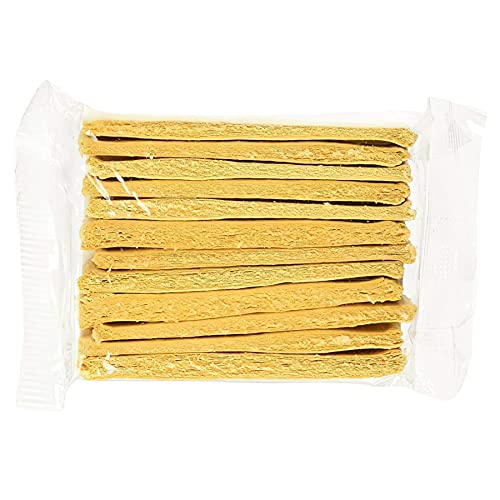
Twenty-four sponges that ship flat as coins and puff up when they hit water
The 24 count is the headline, but the flat-pack trick is what people actually notice. These sponges arrive compressed and expand to 4.25″ x 3.25″ once they are wet, so a whole drawer of them takes up almost no space. You pull one out, run it under the tap, and it becomes a full-size sponge that sits nicely in your hand. Unlike a box of pre-expanded sponges, the whole 24-pack stores in a fraction of a drawer.
They are made from 100% plant-based cellulose, and the maker describes them as biodegradable and suited to composting. The surface is non-abrasive by design — gentle agitation that is strong enough for cookware but will not scratch fine china. They also soak up spills well, so they double as a counter wipe between dish loads. For a household that goes through sponges fast, 24 at a time means you rarely think about running out.
One habit keeps these good: rinse them out thoroughly, especially after greasy work. Skip that and a sponge can hold onto an odor. As reviewers point out, “It’s softer, thicker, and holds more soap” than the sponges they had been buying. The catch is the compressed format: each sponge needs a soak before use, so it is not the one to grab bone-dry for a quick wipe. For dishwashing and sink duty, though, it does the job well.
Why it stands out
- 24 sponges ship compressed, so they store in very little space
- Expand to 4.25″ x 3.25″ when wet — a full, hand-fitting size
- 100% plant-based cellulose, described as biodegradable and compostable
- Non-abrasive surface is gentle enough for fine china
What to keep in mind
- Needs a soak before first use — no dry grab-and-wipe
- Greasy jobs demand a thorough rinse to keep odors away
Best matched to: a busy kitchen that wants a long supply on hand and does not mind a quick soak to bring each sponge to life.
Not the fit for: anyone who wants a sponge ready to wipe a dry counter the instant they pull it from the drawer.
5. bioGo 12 Pack Natural Biodegradable Kitchen Sponges

A plant-fiber sponge you can toss in the dishwasher, then compost when it wears out
Made from wood cellulose and coconut husk, this sponge is for the household that wants to cut plastic waste without giving up scrubbing power. You get 12 in the pack, and the maker describes each one as compostable and fully biodegradable. So the sponge you retire does not sit in a landfill — it breaks down. The scrubbing side is built to be gentle and non-scratching on your dishes while still handling tough jobs.
The material is breathable and porous, which is the reason it resists odor far better than a dense plastic sponge. When one gets grimy, you can run it through the dishwasher or the washing machine and put it back to work. That cleaning routine extends how long each sponge stays in rotation, which matters when you are paying for a plant-based pack rather than a budget stack. It also soaks up water and soap well, so it lathers like a normal sponge.
Set expectations on one point: these are natural sponges, so stiffness and absorbency vary from piece to piece, and some find them a touch firmer than a standard sponge. That variation comes with coconut-husk fiber, not a defect in the sponge. Owners who stick with them tend to come back for more, and the pack of 12 gives you plenty of runway to judge for yourself. If cutting plastic waste matters more to you than a uniform feel, the 12-pack is the better buy.
The standout: wood cellulose and coconut husk in a compostable sponge is a real materials choice, not a green label — you get 12 of them and can machine-wash each one back to service.
The honest trade: a natural fiber sponge feels firmer and less uniform than a plastic one, so do not expect identical pieces in the box.
Made for: the kitchen trying to cut plastic waste without dropping scrubbing power — 12 compostable sponges that survive a dishwasher cycle.
Think twice if: you want a soft, squishy sponge with identical feel every time; plant fiber has its own character.
Know the Specs
Non-Scratch vs Abrasive
A non-scratch sponge uses a gentler scrubbing surface so it will not dull a non-stick coating or mark glass and porcelain. An abrasive pad bites harder and clears burnt-on food faster, but it can wear a delicate coating over time. If you cook on non-stick, favor non-scratch. If you only wash stainless and cast iron, a firmer scrubber is fine.
Cellulose vs Nylon
Cellulose is plant fiber. It holds water and soap well and lathers easily, but it stays damp longer if left in the sink. Nylon is a plastic mesh over a soft center; it sheds water fast and tends to smell less between washes. Pick cellulose for a soft, soapy feel and nylon for quick drying and tight-spot reach.
Common Questions
Will a non-scratch sponge really protect my non-stick pans?
How do I stop my dish sponge from smelling?
Can I put a dish sponge in the dishwasher?
Is a cellulose sponge better than a nylon scrub pad?
How often should I replace a dish sponge?
Are these sponges safe on glass and porcelain?
What does compressed sponge mean on the G.E.T. pack?
Are biodegradable sponges as good at scrubbing as plastic ones?
Which sponge is best for reaching tight spots like fork tines?
The Bottom Line
For most kitchens, the sponge worth buying is the Scotch-Brite Clean & Rinse because it scrubs a pan and wipes a counter without scratching either, and the rinse-clean surface keeps it fresher far longer than a plain sponge. If you want a firmer scrubber for pots that takes abuse without dulling a non-stick coating, reach for the Casabella Sponge Scrubby. And for dishes that fail in the tight spots — fork tines and lid grooves — the thin PANYEE nylon pad is the one that gets in there. If you want one sponge for both scrubbing and wiping, start with the Scotch-Brite.
How we choose
We do not accept paid placement. Every pick is matched to a real buyer and a real use-case; we do not hands-on test units.
Sources
Specifications: manufacturer listings and product documentation. Review insights: verified customer reviews, as of October 2026. Pricing: not shown on this page (it changes often); check the current price via the retailer link.
As an Amazon Associate, Aappliancez earns from qualifying purchases. This does not affect which products we feature.