Disclosure: Some links in this post are affiliate links. As an Amazon Associate I earn from qualifying purchases, at no extra cost to you. Learn more
Specs are compiled from manufacturer listings and verified buyer reviews and can change over time — please confirm the key details on the product page before buying.
A bare dip in the lawn is not just ugly; it is where water pools and grass refuses to come back. The fix is rarely “any dirt” — it is a fill with the right balance of drainage and moisture so grass roots can take hold in that sunken spot. Below are five bagged options that fill a hole properly and leave you with something that grows.
This guide is built by comparing the manufacturers’ published specifications and the patterns across verified customer reviews, so you get each pick’s real strengths and trade-offs instead of marketing spin.
Each pick here differs in how much ground it covers and what it does once it is in the ground. The short version: match the bag to the size of the hole, and check what is already blended in before you buy your dirt to fill holes in yard.
Top Picks


How To Choose The Best Dirt to Fill Holes in Yard
The mistake most people make is buying the heaviest bag of plain topsoil they can find and dumping it straight into the dip. That soil settles, packs down, and turns into a brick. Water then runs off the surface instead of soaking in, and the patch stays bare. What you want is a material with some structure to it — something that holds a little moisture but still lets air reach the roots.
Match the product to what the hole actually needs
A shallow dip in a lawn and a knee-deep hole left by a removed shrub are two different jobs. For a shallow dip, a soil that already holds moisture and stays fluffy is what you are after, so new seed can root. For a deeper hole, you want something that will not sink away over the first few rains, which usually means a mix with real body to it rather than pure peat or pure coir.
Ask yourself one question before buying: is this material ready to plant into, or is it an ingredient? Several of the picks below are building blocks for a custom mix. If you are not planning to blend, buy a bag that is already finished soil.
Read the volume, not just the weight
Bag sizes here are listed in dry quarts, gallons, and pounds, and those are not interchangeable. A 10-pound coco coir brick sounds small next to a 50-pound bag of potting soil, yet it hydrates into a far larger volume of fluffy material. Weigh the listed volume against the size of the area you are filling, not against the number on the front of the bag.
Check what is already blended in
Some blends arrive with perlite already mixed through for drainage, and some carry starter fertilizer so new plants have food from day one. Others are bare material that you blend yourself. Neither approach is wrong, but a pre-blended bag saves you a step, and a raw material lets you control the recipe for a specific patch.
Side-by-Side Comparison
| Model | Best For | Listed Volume | Format | Pack Count | Amazon |
|---|---|---|---|---|---|
| FoxFarm Ocean Forest Potting Soil★ Best Overall | Filling holes and getting plants growing right away | 12 dry quarts per bag | Ready-to-use bagged soil | 4 bags | Amazon |
| Hoffman Canadian Sphagnum Peat MossBest for Moisture | Blending into a sunken patch to hold moisture | 18 quarts | Loose peat moss | 1 bag | Amazon |
| UBICON Organic Coco Coir Bricks | Light, easy-to-carry material for small patches | 22.75 liters | Compressed brick, hydrate to use | 4 bricks | Amazon |
| MODELLOR Washed Coco Coir Brick | Big volume from one compact block | 18 gallons (72 to 80 quarts) | Single 10 lb compressed brick | 1 brick | Amazon |
| Michigan Peat Premium Potting Soil | Covering large areas in one go | 50 lb bag | Ready-to-use soil with perlite | 1 bag | Amazon |
Detailed Reviews
1. FoxFarm Ocean Forest Potting Soil 12 Dry Quarts
Our pick — 4.5+★ from 1,000+ verified ratings; the strongest balance of quality and price.
The filled hole that greens up instead of sitting bare all season.
What makes this the pick to beat is that it is finished soil, not an ingredient you still have to blend. Four bags of 12 dry quarts each gives you 1536 ounces of growing medium, which is roughly four times the material in the UBICON brick set at 112 ounces. That gap matters when you are filling a real dip and still want enough left over to dress the edges.
The blend is the reason it works in a hole: aged forest products, sandy loam, and sphagnum peat moss together give you drainage with something for roots to grip. Fish meal, crab meal, and earthworm castings are mixed in, so the spot you fill is not dead space while it settles. Owners put it plainly: “This is a real good product everything grows in it. It has worm castings inside of it, which causes the dirt to work better.”
What wins people over is the overall soil quality, which dominates the conversation by a wide margin, with nutrition and versatility trailing well behind. The honest catch is two-fold. First, there is a mixed read on value, so this is not the cheap route. Second, several buyers report fungus gnats showing up, which is a known reality with rich organic blends — let a filled patch dry slightly between waterings and that settles down.
What Earns Its Keep
- Ready to plant straight from the bag — no blending step before you fill the hole
- Peat moss and sandy loam give the kind of drainage a sunken patch needs
- Earthworm castings and fish meal mean the soil is already alive with nutrients
- Four bags per order means you can cover a real area, not just a single divot
What to Plan Around
- Rich organic blends draw fungus gnats — keep the surface from staying soggy
- The value read is split, so budget shoppers may hesitate
- A blend this rich is more than a plain bare patch strictly requires
Reach for this if: you want the hole filled and something growing in it without a trip back to the store for amendments.
Look elsewhere if: you only need to blend into existing soil — a raw peat or coir product does that job with less fuss.
2. Hoffman Canadian Sphagnum Peat Moss – 18 Quart,Brown/A,37029
The moisture-holding ingredient for a dip that dries out too fast.
At 18 quarts, this bag holds 50% more volume than a single FoxFarm bag at 12 quarts, and it weighs just 4 pounds, so carrying it out to the back corner is easy. It comes from a coarse New Brunswick grade of Canadian sphagnum peat moss, which is the fluffy, spongy material that soaks up water and holds it where roots can find it.
This is a material, not a finished soil. You blend it with perlite and vermiculite to build a soilless potting mix, which is exactly how you would use it to break up and lighten the soil in a filled hole. Quality leads the feedback comfortably, with moisture retention a clear second — that pairing is the whole point of peat in a low, damp spot.
Two things to know before you order. It is genuinely dusty, so wet it thoroughly before you work with it, and add perlite so it does not mat down. Bags can occasionally arrive torn — owners mention “one of the bags was already torn halfway open and there was a hole in the bottom,” so check the bag when it lands. Also worth flagging: some owners note sticks in the mix, which is a normal part of a natural peat product.
The best use here: sprinkle a layer over fresh grass seed to start a new lawn, or fork it into a sunken patch so the soil stops shedding water. Mixed into a sunken patch, it holds water at the root zone so new seed and grass roots stay supplied between rains.
The trade-off to accept: you are buying an ingredient, so factor in a bag of perlite and a mixing session before the hole is finished.
Suits the gardener who: already mixes their own soil and wants a reliable moisture-holding base for a dry, sunken patch.
Not the shortcut: if you want to open a bag and dump it in, this requires a blend partner to perform.
3. UBICON Organic Coco Coir 650 Gram Bricks 4 Pack
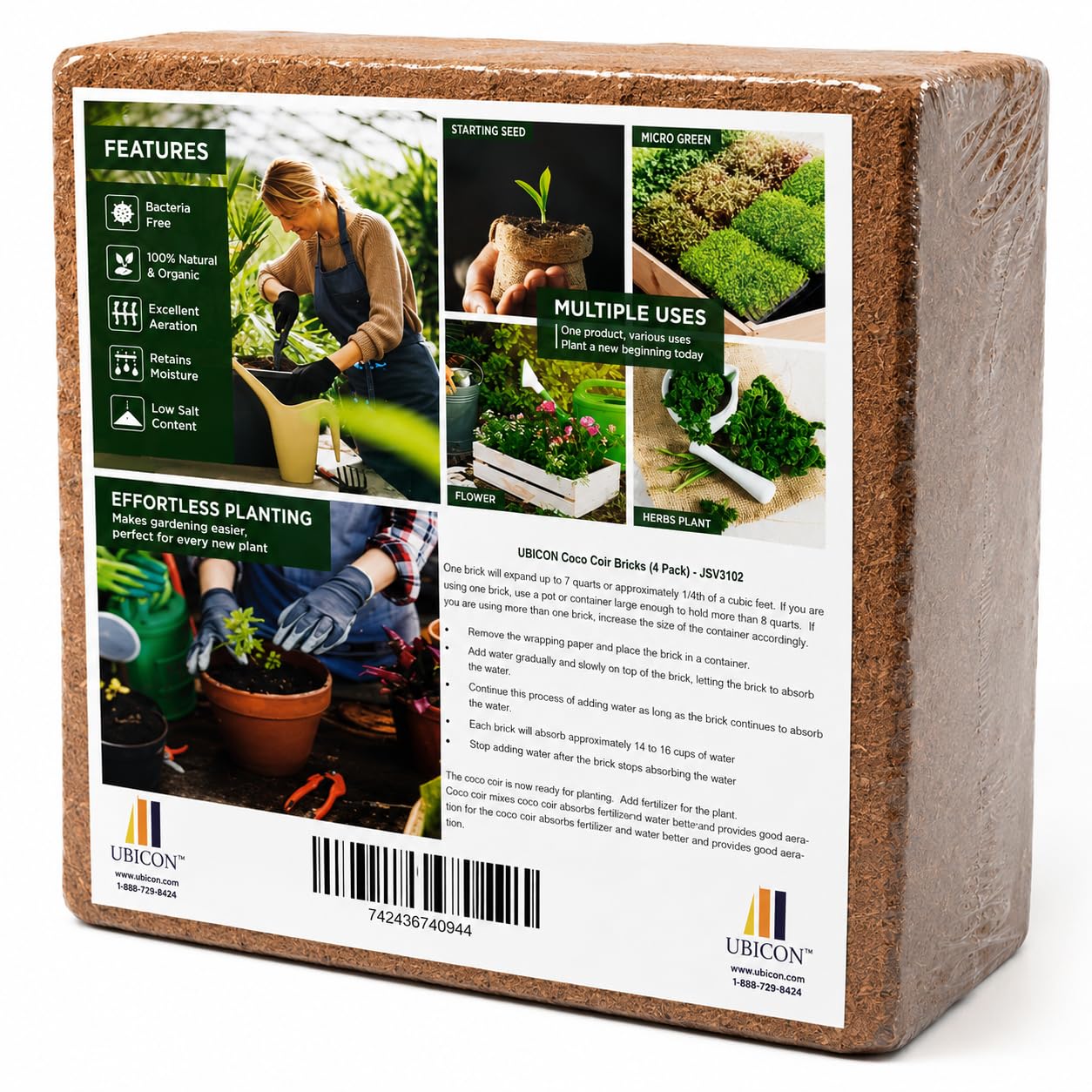
Four bricks that live in a cupboard and turn into a bucket of soil.
Each brick weighs 650 grams and hydrates up to 10 gallons of growing medium, and the four-pack totals 112 ounces — a fraction of the FoxFarm order’s 1536 ounces, which tells you to save these for smaller patches and seed work rather than a big lawn repair. The appeal is storage: they sit flat on a shelf and only become soil when you add water.
The material is coco coir, a biodegradable fiber made from coconut husks that holds air and water at the same time. It is free of chemicals, weeds, synthetic materials, fungal spores and pests, and it is pH balanced and low in natural salts, so filling a bare patch adds no weed seed. For a filled hole, that means you are adding structure and moisture without dragging in weed seed. It also suits erosion control and soil conditioning, which is close to the job you need done.
The practical note: one brick goes a long way once it drinks. Customers note “Put one in a 5 gallon bucket with water & it almost fills up the bucket. Add water as needed,” so start with one and hydrate in stages rather than soaking all four. Feedback on capacity splits — great yield for some, bricks too small for others — so measure your patch before you assume the pack covers it.
Where it shines: starting new seed. It keeps a seeded patch moist through heat while the grass establishes, and a hydrated brick is light enough to carry and fork in without strain.
The honest limit: coir is less dense than regular soil, which some owners love and others find light for a deep fill, so pair it with existing soil for a big hole.
Pick these if: you want soil that stores in a closet and shows up exactly when you need it, a brick at a time.
Pass if: you are filling a large, deep dip in one afternoon and need bulk on day one.
4. MODELLOR Super Washed Coco Coir Brick 10 lb
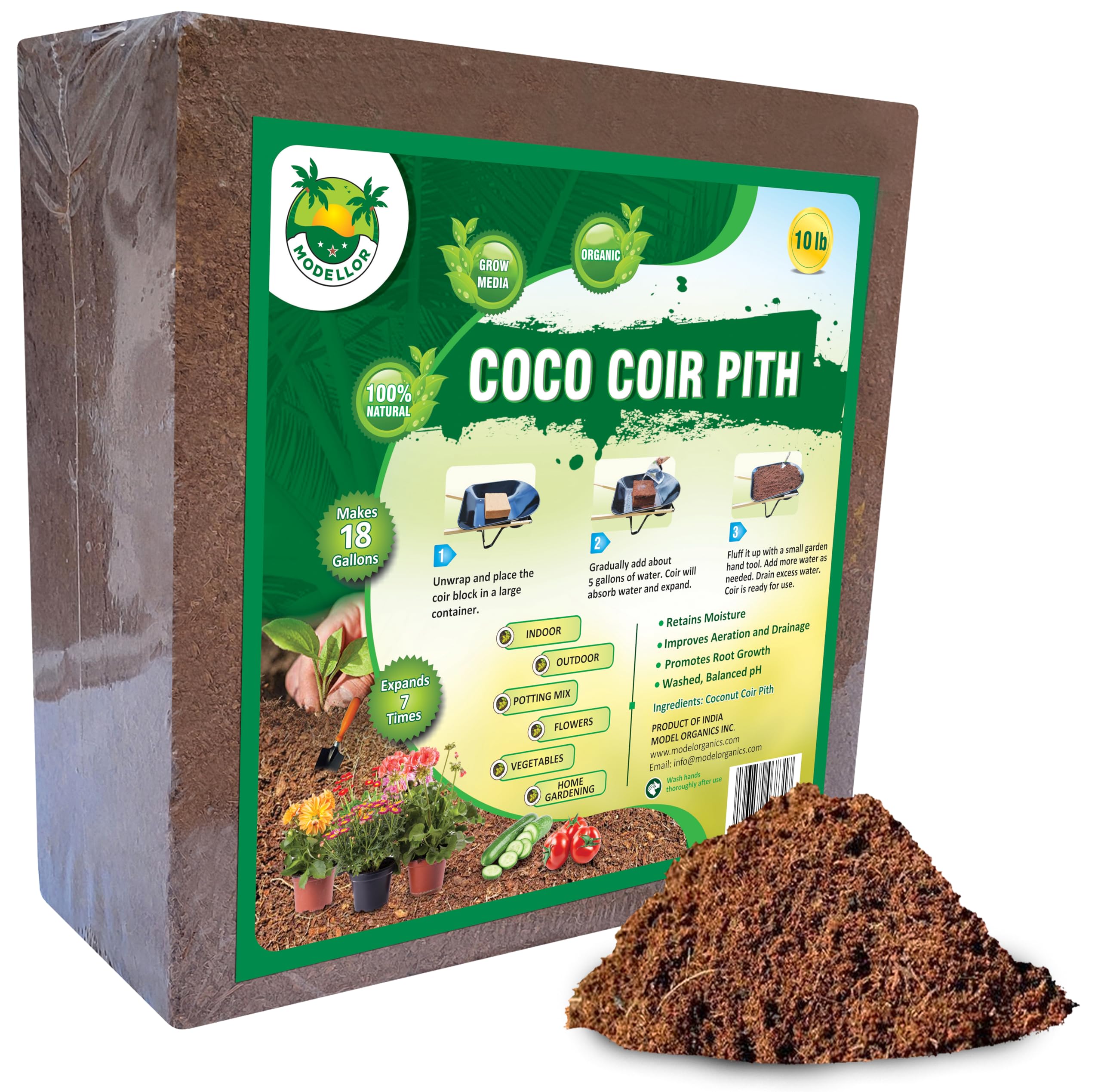
One heavy block that turns into a wheelbarrow of fluffy soil.
Here is the number that sells this one: a single 10-pound brick hydrates into 18 to 20 gallons, or 72 to 80 quarts. Set that against the UBICON four-pack at 112 ounces total and you can see the difference in scale — this is the option for a big, deep hole rather than a small divot or a seed tray.
It is triple-washed, low-salt, and pH balanced, which means it is clean and nutrient-friendly without a rinsing step first. Unlike denser soil alternatives, its fluffy structure balances air and water so grass seed sprouts and roots push deeper into a filled dip. The quality score here is the standout, with value for money sitting right behind it as the second most-praised trait — owners feel they get a lot of material for the outlay.
The one real annoyance is the format. It arrives as a single compressed block, and if you only need a small amount, breaking it apart is awkward — a buyer described trying to cut and even saw it because “It’s so compact and complicated.” Plan to hydrate the whole brick at once, or have somewhere to store the leftover fluff.
The Case for the Big Brick
- 18 to 20 gallons from one block covers a sizeable filled area
- Triple-washed and low-salt, so no rinse cycle before use
- Fluffy, airy structure that roots move through easily
- Works across vegetables, houseplants, raised beds, and mulch
The Reasons to Pause
- One solid block is hard to break down if you need just a little
- You must hydrate the whole thing at once, so plan for storage
- Listed size feedback is mixed — actual expansion varies by soak
Best matched to: the gardener filling a large depression who wants volume from a single compact purchase.
Think twice if: you only need to top off a small spot — go with the smaller bricks instead.
5. Michigan Peat General Purpose Premium Potting Soil

A 50-pound bag built for filling wide, shallow dips across the lawn.
This is the bulk answer: 50 pounds of pre-blended soil that goes straight from the bag, no mixing. Rich dark reed sedge peat, perlite, and sand are already combined, and starter plus slow-release fertilizers are included so whatever you plant has food as it settles. For a long, low run in the yard, that saves a full afternoon of blending.
The perlite is the part that matters for a filled hole — those little white granules open up the mix so water moves through instead of sitting. In pots, planters, containers, and raised beds it is pitched as an all-purpose blend, and it grows vegetables, flowers, and bulbs. Quality is what people talk about most, with plant growth a solid second.
Be realistic about the texture. The moisture and drainage read is genuinely split — some find it keeps plants moist and drains well, while others find it clumpy. It also compacts after potting and watering, which makes the finger-check for dryness tricky, and 50 pounds is a bag you will want to open near where you are working rather than haul far.
Where it fits best: large areas where you want ready soil in quantity. It holds moisture without staying overly wet, which is what a filled lawn dip needs so seed does not rot or dry out.
What to watch: that heavy, compactive feel means you should loosen it with perlite or a lighter amendment before planting something finicky.
Choose this when: the job is big-area coverage and you want one bag that is already blended and fertilized.
Keep looking if: you need a light, airy mix for delicate seedlings or a small precise patch.
Know the Specs
Dry Quarts, Gallons, and Pounds
Bag volume is listed three different ways across these products, and they are not interchangeable. A 10-pound compressed brick can hydrate into 18 to 20 gallons, while a 50-pound bag of finished potting soil is already at its working volume. Compare the listed volume — quarts, gallons, or liters — to the area you are filling, not the weight on the bag. A lightweight brick may cover far more ground than a heavy sack.
Amendments: Peat, Coir, and Perlite
Peat moss and coco coir are both moisture-holding materials that lighten heavy soil and keep roots supplied with water. Perlite is the small white granules that open up a mix so water drains instead of pooling. A finished soil already has these blended in, while a raw peat or coir product needs you to add them. In a sunken patch, a blend with perlite resists compaction better than pure material.
Common Questions
Can I just dump potting soil into a hole in the lawn and leave it?
How much dirt do I need to fill a hole in my yard?
Will peat moss alone fill a hole and grow grass?
Is coco coir better than peat moss for filling low spots?
Why did my filled hole sink after the first rain?
Do I need to add fertilizer to dirt that is filling a hole?
Can potting soil for a hole draw bugs into the yard?
How do I stop a filled patch from washing away on a slope?
Is a 50-pound bag of potting soil enough for a large dip?
Can I mix the coco coir bricks with the soil already in the hole?
The Bottom Line
For most people filling a hole in the yard, the winner is the FoxFarm Ocean Forest Potting Soil because it arrives finished — drainage, nutrients, and moisture-holding structure already in the bag, so the patch you fill can actually grow. If your dip dries out too fast and you already mix your own soil, the Hoffman Canadian Sphagnum Peat Moss is the moisture-holding ingredient to blend in. And if the hole is wide and you want bulk with fertilizer already mixed, the Michigan Peat Premium Potting Soil is the one to reach for. Match the volume to the size of the repair and the blend to what is already in the ground.
How we choose
We do not accept paid placement. Every pick is matched to a real buyer and a real use-case; we do not hands-on test units.
Sources
Specifications: manufacturer listings and product documentation. Review insights: verified customer reviews, as of October 2026. Pricing: not shown on this page (it changes often); check the current price via the retailer link.
As an Amazon Associate, Aappliancez earns from qualifying purchases. This does not affect which products we feature.