Disclosure: Some links in this post are affiliate links. As an Amazon Associate I earn from qualifying purchases, at no extra cost to you. Learn more
Specs are compiled from manufacturer listings and verified buyer reviews and can change over time — please confirm the key details on the product page before buying.
If your old TV still has a great picture but suddenly can’t pull in the local news, the fix is usually a small box that sits between your antenna and your set. A digital TV converter box takes the free over-the-air signal your antenna captures and turns it into something an older television can actually display — no cable bill, no subscription, just the channels broadcasting in your area. The catch is that these boxes vary wildly in how many channels they lock onto and how well they hold a weak signal on a rainy night, so picking the right one matters more than picking the cheapest one.
This guide is built by comparing the manufacturers’ published specifications and the patterns across verified customer reviews, so you get each pick’s real strengths and trade-offs instead of marketing spin.
You’ll see which boxes are built for a simple plug-in-and-scan setup, and which ones add recording, high-definition output, or the newest broadcast standard. By the end, you’ll know exactly which digital tv converter box fits your TV and your antenna.
Top Picks


How To Choose The Best Digital TV Converter Box
Three things decide whether a converter box makes you happy: the tuner inside it, the way it connects to your TV, and whether it keeps the old analog channels alive. Get those right and setup takes ten minutes. Get them wrong and you’ll be swapping cables for a week.
Tuner type and the channels it can pull
Most boxes here use an ATSC tuner, which is the standard for digital over-the-air broadcasting in the United States. A newer ATSC 3.0 tuner (also called NextGen TV) can also decode the next generation of broadcasts, but only where those stations exist in your area. A better tuner often picks up more channels than the tuner already built into a newer television, which is why people keep buying these boxes long after the digital switch.
How the box connects to your television
Coax output is the simplest route — you run the supplied cable to your TV’s antenna input, flip the set to channel 3 or 4, and tune from there. Composite video (the yellow, white, and red plugs) gives a cleaner picture on sets that have those inputs. HDMI is the modern option and carries both picture and sound on one cable, but it only works on televisions that actually have an HDMI port.
Analog pass-through for low-power stations
Some local low-power stations still broadcast in analog. A box with analog pass-through lets those channels keep working without you unplugging anything — the signal flows straight through the box when it’s off. If you watch a small community or religious broadcaster, check for this feature before you buy.
Side-by-Side Comparison
| Model | Best For | Tuner Type | Connection | Analog Pass-Through | Amazon |
|---|---|---|---|---|---|
| Magnavox DTV Digital to Analog Converter★ Best Overall | Older TVs with coax only | ATSC | RF / Coaxial | — | Amazon |
| 1080D NTIA-Approved Digital to Analog TV Converter BoxBudget Starter | Budget first-time setup | ATSC (1080-D) | Composite Video or 75 RF | — | Amazon |
| RCA DTA-800B1 Converter Box | VCR and DVD stacks | ATSC | Coax output | Yes | Amazon |
| Zenith DTT901 Digital TV Tuner Converter Box | Weak-signal areas | Analog, Digital | Coaxial / F-type | Yes | Amazon |
| GTMEDIA 4K Next-Gen ATSC3.0 TV Converter X1 | Early ATSC 3.0 adopters | ATSC 3.0 / 1.0 QAM-B | HDMI, RCA | — | Amazon |
| ADTH NextGen TV Box Gen 2 | Recording and 4K viewing | ATSC 3.0 + ATSC 1.0 | HDMI, Coaxial | — | Amazon |
| ADTH NextGen TV Box Gen 2 (B0FH54L8YH) | DVR users with USB drives | ATSC 3.0 + ATSC 1.0 | HDMI, Coaxial | — | Amazon |
Detailed Reviews
1. Magnavox DTV Digital to Analog Converter
Our pick — 4.0+★ from 450+ verified ratings; the strongest balance of quality and price.
The box that finds stations the tuner inside your TV gave up on.
The Magnavox TB110MW9 is the converter box that most cord-cutters end up recommending to their neighbors, and the reason is simple: it locks onto channels other tuners miss. Owners with rotary antennas especially like this one because the on-screen program guide shows upcoming programs and a signal-strength readout, so you can point the antenna without guessing. The on-screen display also runs in three languages, which is more useful than it sounds if someone else in the house watches in Spanish or French.
Setup is genuinely a ten-minute job. You run the coaxial cable from the box to the TV’s antenna input, set the TV to channel 3, and let the box scan. It needs two AA batteries for the remote (not included), and one reviewer noted pulling in 25 channels — a real-world number that shows this box earns its keep on a modest antenna. As owners put it, they get “good reception and price.”
What people rave about most is how consistently the thing just works — the functionality side of this box is far and away the most-discussed strength in the review history, far ahead of value and setup. Thirty-six reviewers rate reliability as mixed, and a few note these boxes tend to last around two years before failing, so treat it as a solid several-year appliance rather than a permanent install.
What earns the repeat buys
- Picks up more channels than the tuner already built into many newer televisions
- On-screen program guide with signal-strength readout is a real time-saver for roof or rotary antennas
- Trilingual on-screen display and universal remote that works with most TVs
- 1.3 pounds and small enough to tuck behind the set on a shelf
The trade-offs to weigh
- No power or channel buttons on the unit itself — lose the remote and you’re stuck
- Remote can’t control your TV’s volume, so you’ll juggle two remotes
- A couple of buyers report these tend to run about two years before replacement
- Requires two AA batteries for the remote that aren’t in the box
Grab this one if: your TV only has a coax input and you want the best odds of pulling in every local channel.
Consider something else if: you need on-unit buttons as a backup or want one remote to rule the whole setup.
2. 1080D NTIA-Approved Digital to Analog TV Converter Box
The lightest box here, and the one to grab for a first-time antenna setup.
At 1.1 pounds, the Access HD 1080-D is the featherweight of this lineup — a real 18% lighter than the 1.3-pound Magnavox above, which matters if you’re mounting the box on a wall or tucking it into a tight RV cabinet. It’s NTIA-approved (meaning it met the government program’s standard for the digital transition), and it ships with a dedicated remote and the batteries, so you’re not hunting for AAs on setup day. Output is Dolby Digital down-mixed to stereo through either composite video cables or a 75-ohm RF coax run, so both older and slightly newer analog TVs are covered.
The picture quality is the part that wins people over — that’s the top positive theme across the review record, and owners describe reception on a new outdoor antenna pulling in dozens of channels. A ham radio enthusiast who bought four of them, for example, scanned 54 channels in Houston once all four were set up with a new outdoor antenna. The box also runs hot in use, which is normal for this class of tuner but worth knowing if it lives in a closed cabinet.
Honest caveats: functionality here is a genuinely mixed bag. While most units work fine from the start, some owners mention units that never powered on, and a handful mention durability and heat as ongoing gripes. That said, the picture-quality score is solid and the price is the friendliest on this list, which makes it a reasonable first dip if you’ve never used a converter box before.
Real-world picture: Clean, clear reception with the right antenna — the picture quality is the single most-praised trait, and the box will match or beat the tuner in plenty of older televisions.
When it might disappoint: A small share of units arrive dead or run hot. If you buy this one, do a full channel scan the day it lands so any issue shows up inside the return window.
Best for a spare TV or RV: light, cheap, and does what it says.
skip it if you need guaranteed reliability: the small percentage of dead-on-arrival reports make the Magnavox a safer bet at similar money.
3. RCA DTA-800B1 Converter Box

Built for the household with a VCR, a DVD player, and a coax cable already in the wall.
The RCA DTA-800B1 is the pick for anyone who wants the box to disappear into an existing stack of gear. It offers analog pass-through, so low-power local stations keep working even when the box is powered down, and it plays nicely with VCRs, DVD players, and Blu-ray recorders wired in the same chain. The dual-position design lets you stand it vertically or lay it flat, so it can slide into a crowded entertainment center. The included big-button remote can control most TV brands too, which trims the remote pile on the coffee table.
The one spec to keep in mind is the plastic build and the modest 18.14-gram item weight — this is a light, all-plastic box, not a metal tank. Owners pair it with a 1997 Panasonic TV and an indoor antenna, pulling in 26 channels in a small mountainous city and 20 more on a newer HD TV in the same room. That’s the balance: this box’s value is making an old TV useful again, not competing with a modern set’s tuner.
Setup is genuinely plug-in simple — run the coax, flip the TV to channel 3 or 4, and scan. A recurring difference between this and the Magnavox above: RCA’s on-screen interface gets described as a bit dated and confusing, so first-timers may need to read the manual once. It’s also worth knowing the 4-channel listing on the spec sheet means you use the CH3/CH4 switch, not that the box only finds four channels.
The strongest argument: functionality and ease of use top the charts, and the analog pass-through is a genuinely useful feature for anyone watching a low-power station.
The honest trade-off: the plastic body feels light and a few owners find the on-screen menus clunky — this is a tool, not a showpiece.
Reach for this if: you have a stacked A/V cabinet and want a box that coexists with your VCR and recorders.
Look elsewhere if: you want a slick modern menu — the tuning interface here is functional but old-school.
4. Zenith DTT901 Converter Box

If your house is far from the towers, this is the box that keeps holding the picture.
The Zenith DTT901 — made by LG — is the pick for one specific problem: weak signal. The tuner here is unusually sensitive, and the standout trait is that it doesn’t lose signal on weak channels the way cheaper boxes do. Owners with rabbit ears or a basic indoor antenna report this one pulling in ten or more solid channels where the box wasn’t the bottleneck; one Southern California owner with an amplified Amazon Basics leaf antenna reported around 175 channels. That sensitivity is why long-time owners say it beats current-generation converters on both reliability and image quality.
Build-wise it’s heavier than the Magnavox and 1080D above at 1.7 pounds, but that extra weight is largely because it’s a real component, not a plastic shell. It has analog pass-through for low-power stations, advanced closed captioning, and parental controls for blocking programs. It connects via coax or the F-type connector with the supplied RF cable, and the included remote also runs basic TV functions like zoom and aspect ratio, so you’re not juggling handsets to switch between channels.
The honest downside: no HDMI or USB ports. If you want to record programs or feed a modern TV through a single HDMI cable, this isn’t the box for you — it’s strictly an over-the-air tuner with coax and composite video out. The remote’s labeling is also small and low-contrast, so a dim room can make it tricky to read. Neither is a dealbreaker for the audience this box serves, but they’re worth knowing before you buy.
What makes it sing: reliability and sensitivity are the box’s standout qualities, and owners say it detects more signals than cheaper USB dongles and tuner boxes in the same room.
Where it stops: no HDMI, no USB, no DVR — this is a straight tuner box for coax-era televisions.
Pick this up if: you’re in a fringe reception area or you want the most sensitive tuner on this list.
Pass on it if: you want HDMI output or built-in recording — those features simply aren’t here.
5. GTMEDIA 4K Next-Gen ATSC3.0 TV Converter X1
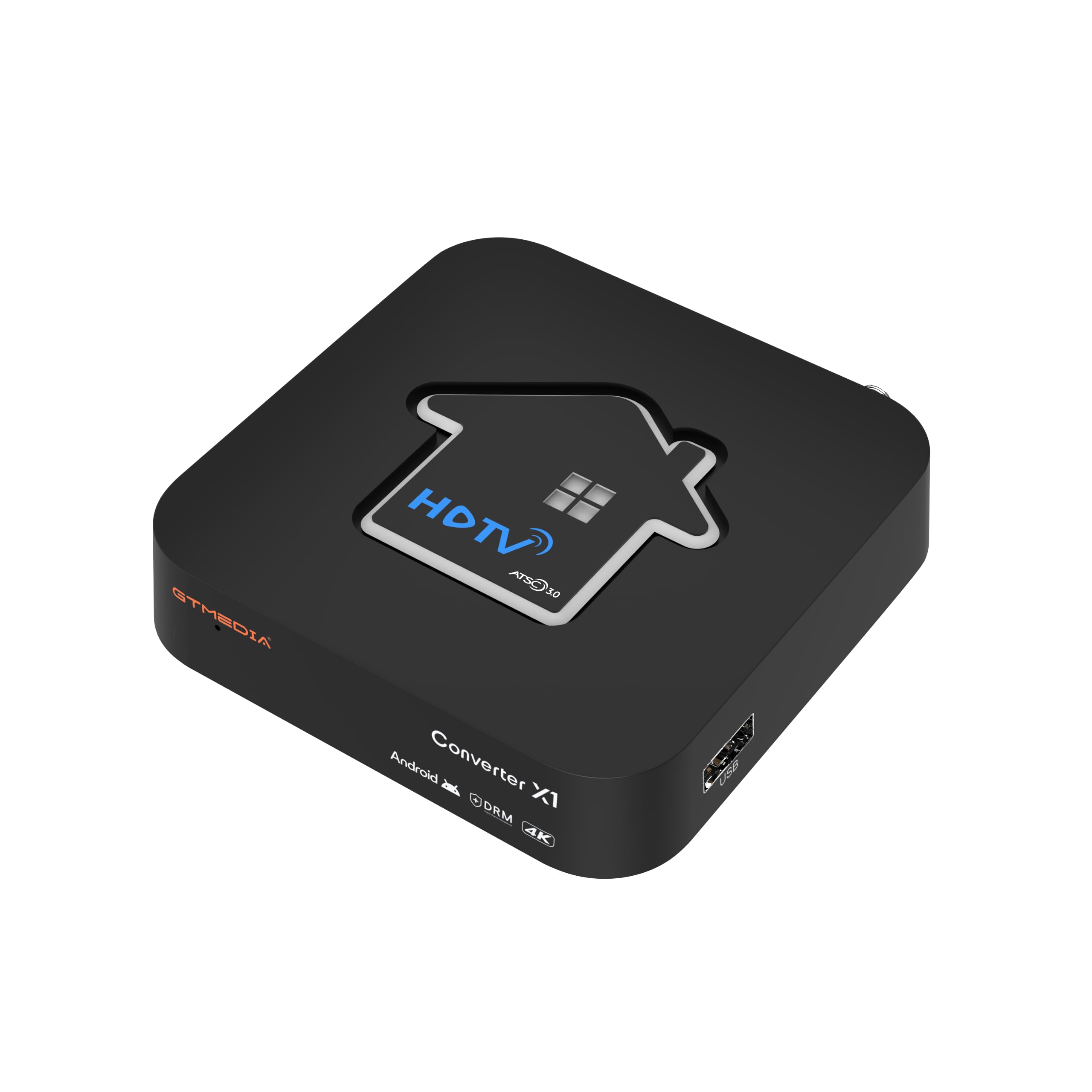
The box that future-proofs your setup with ATSC 3.0, if the signal cooperates.
The GTMEDIA X1 is the hardware spec sheet a cord-cutter dreams about: it supports both ATSC 3.0 (the NextGen TV standard) and legacy ATSC 1.0, plus QAM-B (Clear QAM) cable signals, and it can decode ATSC 3.0 DRM-encrypted channels. It also includes built-in DVR recording and Bluetooth 5.0 with dual WiFi for connecting wireless accessories. In plain terms: you can feed it an amplified antenna, run HDMI or RCA to your TV, and — if NextGen signals reach your area — you’re getting the newest broadcast format available in a converter box.
The catches come fast once you dig into the reviews. Reliability is the biggest concern — multiple customers note units that never powered up or only worked when directly connected to a TV. Quality is also mixed, with reviewers using fairly blunt language about the build. If you buy this one, you’re taking a bet on an early-generation ATSC 3.0 box, and you’ll want to test thoroughly inside the return window because the reviews suggest the failure rate is meaningful, not rare.
That said, for the specific buyer whose local towers transmit ATSC 3.0 and who’s technically comfortable troubleshooting, the feature set — HDMI, RCA, DRM, DVR, Bluetooth 5.0, dual WiFi — is the most forward-looking on this list. Just go in with clear eyes: this is not the safe pick, it’s the early-adopter pick.
The spec-sheet wins: ATSC 3.0 and ATSC 1.0 in one box, plus DRM channel support and built-in DVR recording — genuinely modern features.
The reliability reality: a notable share of reviewers point out units that failed to power on or only worked when tethered to a TV, and support is thin — inspect early and return fast if anything feels off.
For early adopters: if ATSC 3.0 towers reach you and you like living on the bleeding edge, this has the most future-proof tuner here.
For everyone else: the reliability record makes this a risky first purchase — start with the Magnavox or Zenith instead.
6. ADTH NextGen TV Box Gen 2 — 64GB Built-In Storage
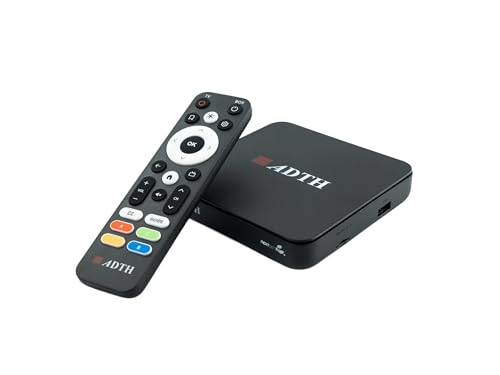
Two tuners in one box, with 64GB of storage ready to record without extra accessories.
The ADTH NextGen TV Box Gen 2 is built for the viewer who wants to record live over-the-air TV without stringing a separate DVR into the setup. It carries both an ATSC 3.0 (NextGen TV) tuner and a legacy ATSC 1.0 tuner, so older and newer broadcasts both play through the same HDMI output. The 64GB of onboard storage comes ready to use — no flash drive required on day one — and you can expand recording capacity later with a USB flash drive or microSD card (sold separately). It supports up to 4K resolution with HDR for compatible broadcasts and TVs, and it works with Dolby Digital Plus and AC-4 audio formats.
Setup is a guided process: plug in HDMI to the TV, coax from the antenna, and let the box scan. Shoppers say it finding NextGen ATSC 3.0 DRM stations and delivering a sharp picture on a UHD monitor, and a DXer (a hobbyist who chases distant signals) reports full scans pulling in stations that were previously unreachable in poor conditions. Wired or wireless internet is optional — needed only for program guides and software updates — and the built-in signal-strength meter helps you fine-tune the antenna.
The catch is that this box is still maturing. Functionality and signal quality are mixed across buyers: some report it working like a charm, while others report it not working at all in their signal conditions, and a handful report channel-change delays of 10 to 30 seconds. It’s the strongest modern feature set in this lineup — but it’s not the plug-and-forget experience of the older coax boxes above, so treat the return window as part of your setup process.
What stands out: dual-tuner design with 64GB of built-in DVR storage plus 4K HDR and Dolby Digital Plus/AC-4 audio support — a full-featured OTA box in one unit.
The fine print: some owners see slow channel changes and “no signal” hiccups, and firmware improvements are still rolling out — deploy it near your router so Wi-Fi updates can run.
Built for: cord-cutters who want local channels plus recording without buying a separate DVR.
Better skipped if: you want zero fuss and your antenna signal is already weak — an older coax tuner is the safer move.
7. ADTH NextGen TV Box Gen 2 (Model B0FH54L8YH)
Same Gen 2 internals, tuned for viewers who want time-shifted TV over the air.
This listing is the same ADTH NextGen TV Box Gen 2 hardware as the previous pick — ATSC 3.0 plus ATSC 1.0 tuners, 64GB of onboard DVR storage, 4K HDR output, HDMI and coaxial connections, and built-in Wi-Fi and Bluetooth for firmware updates. The differences come down to the listing itself and the mix of buyers who landed here, so the honest read is: if you want the ADTH Gen 2, either listing gets you the same box. Consider this one if it’s the one that ships sooner or the one with the specific promo Amazon has running at the moment.
The recording side is the top reason buyers pick this box — DVR playback with pause, rewind, and replay on live over-the-air TV, right from the start. Expand further with a USB flash drive or microSD card if you record a lot. On the antenna front, owners with a small roof antenna report pulling in stations from around 60 miles away, which speaks well to the sensitivity of the ATSC 3.0 tuner when the antenna is doing its part.
Be aware the same caveats from the other Gen 2 listing apply here: some owners see channel-change delays of 10 to 30 seconds and occasional freeze-and-recover cycles during pause, and a small set of units that displayed clear problems and were returned. The features are genuinely modern; the software polish is still catching up as firmware rolls out. Buy from a seller with a clean return policy and verify everything within the first week.
Where it earns its keep: the 64GB of built-in storage and time-shifted viewing make this the pick for anyone who wants to record shows from a rooftop antenna without adding a DVR.
The reality check: software quirks — delays, freezes on pause — are still being reported, so this is a “check firmware, keep the receipt” kind of purchase.
The right buyer: an antenna user who wants recording and can tolerate a little polish-updating.
Not your pick if: your patience runs short and your signal isn’t strong — the Zenith or Magnavox will feel far less fussy day to day.
Know the Specs
ATSC vs ATSC 3.0 tuners
ATSC is the digital over-the-air broadcast standard most US stations use, and an ATSC tuner is what lets a box decode those channels into a picture. ATSC 3.0 — also called NextGen TV — is the newer version that can carry higher resolutions including 4K, plus richer audio formats. A box that supports both (like the ADTH Gen 2 and the GTMEDIA X1) plays legacy channels and next-generation channels side by side. A pure ATSC box like the Magnavox or RCA plays the standard digital broadcasts that the vast majority of stations still transmit.
Analog pass-through and low-power stations
Analog pass-through keeps low-power local stations — often community, religious, or municipal broadcasters — watchable after the digital transition. With pass-through enabled, the signal flows through the box even when it’s off, so your TV’s own analog tuner still receives those channels. Without it, those stations disappear the moment the converter is in the chain. The RCA DTA-800B1 and Zenith DTT901 both include this feature, which matters if any of your regular viewing is on a small local station.
Common Questions
Will a digital TV converter box work with an old CRT television?
Do I still need an antenna if I have a converter box?
What’s the difference between ATSC and ATSC 3.0?
Will a converter box let me record live TV?
Can I use a converter box with a smart TV that already has a tuner?
How long do these converter boxes typically last?
Does the channel count in the specs mean the number of channels I’ll receive?
Will a converter box work with a satellite or cable feed?
What do I need in the box to get started on day one?
Why do some converter boxes run hot to the touch?
The Bottom Line
For most people upgrading an older television, the digital tv converter box winner is the Magnavox DTV Digital to Analog Converter — it leads this lineup on overall owner satisfaction, its tuner pulls in more channels than many TVs’ built-in tuners, and the trilingual on-screen display with signal-strength readout makes antenna aiming easier. If weak or fringe signal is your problem, reach for the Zenith DTT901, whose sensitivity is the strongest on this list. And if you want the newest broadcast standard with built-in recording, the ADTH NextGen TV Box Gen 2 packs both ATSC 3.0 and 1.0 tuners plus 64GB of storage into one HDMI box — just go in knowing early-adopter firmware still needs patience.
How we choose
We do not accept paid placement. Every pick is matched to a real buyer and a real use-case; we do not hands-on test units.
Sources
Specifications: manufacturer listings and product documentation. Review insights: verified customer reviews, as of October 2026. Pricing: not shown on this page (it changes often); check the current price via the retailer link.
As an Amazon Associate, Aappliancez earns from qualifying purchases. This does not affect which products we feature.