Disclosure: Some links in this post are affiliate links. As an Amazon Associate I earn from qualifying purchases, at no extra cost to you. Learn more
Specs are compiled from manufacturer listings and verified buyer reviews and can change over time — please confirm the key details on the product page before buying.
If your ground turns to brick every summer, you already know a shovel just skates off the top. A digging bar changes that: it is a heavy steel pole with a point on one end and a chisel on the other, and you drop it, lever it, and let the weight split the crust open. The right bar saves your back; the wrong one bends on the first stump. This guide covers eleven bars, what each one is genuinely best at, and the honest limits you should know before you carry one home.
This guide is built by comparing the manufacturers’ published specifications and the patterns across verified customer reviews, so you get each pick’s real strengths and trade-offs instead of marketing spin.
The trick is matching bar length and head style to your soil and your knees. Below you get an honest, plain-English breakdown of every digging bar worth your money.
Top Picks


How To Choose The Best Digging Bar
Start with the ground, not the tool. Soft loam and garden beds want a mattock you can swing. Sun-baked clay, caliche, and rock want a heavy straight bar you drop straight down and lever sideways. Getting this backwards is the most common mistake — people buy a light bar for hard ground and fight it all afternoon.
Length decides your posture
A long bar lets you work standing up, which is easier on the back and lets you get two hands on the steel for leverage. A short bar is for tight spots, kneeling work, and reaching down into a narrow post hole. The Fiskars runs 60.25 inches, while the Sluice Fox crevice bar is 19 inches from tip to tip — pick the length that matches how you will actually stand over the hole.
Point, chisel, or both
A pointed end pierces compacted ground; a flat chisel end shears roots and wedges rock. Many bars give you one of each, which is the most useful combination for a first purchase. The Truper 49-inch bar pairs a sharp point with a 60mm (2.3-inch) chisel for exactly that reason.
Head weight versus swing effort
Heavier steel does more of the breaking for you, but it also tires your shoulders faster. A 5-pound mattock head is light enough to swing repeatedly; a 17-pound San Angelo bar is built to be dropped, not thrown. Match the weight to how much you plan to swing versus drop.
Handle material and shock
Your handle choice decides how much sting reaches your hands after each strike. An all-steel handle stays rigid and shrugs off weather, but it passes more shock into your palms. A fiberglass handle resists rot and dampens some of that vibration. Neither is wrong — pick maximum rigidity, or pick a gentler feel on repeated strikes.
Side-by-Side Comparison
| Model | Best For | Overall Length | Weight | Tip Style | Amazon |
|---|---|---|---|---|---|
| Truper 5 lb Pick Mattock★ Best Overall | Breaking ground and roots | 36 inches | 5 pounds | Pick and mattock | Amazon |
| Fiskars 60″ Steel Posthole DiggerBest for Post Holes | Deep fence post holes | 60.25 inches | 10.5 pounds | Twin scoops | Amazon |
| Sluice Fox Crevice BarCrevice Specialist | Gold panning crevices | 19 inches | — | Point and 7/8″ chisel | Amazon |
| Truper 49-Inch Digging Bar | Kneeling post holes | 49 inches | — | Point and 60mm chisel | Amazon |
| True Temper Post Hole/Tamper Bar | Dig and tamp in one | 71 inches | 14.3 pounds measured | Chisel and tamper | Amazon |
| Truper 60″ Pointed Bar | Demolition and roots | 60 inches | 13 pounds | Point and 72mm chisel | Amazon |
| Truper San Angelo Bar | Rock prying | 60 inches | 14 pounds | Point and spade | Amazon |
| True Temper Diamond Point San Angelo | Heavy rock and concrete | 72 inches | 17 pounds | Point and chisel | Amazon |
| Truper Post Hole Digger & Tamping Bar | Fence posts with tamping | 69 inches | 16 pounds | Chisel and flat tamp | Amazon |
| Truper 48″ Long Dig Bar | Light everyday digging | 48 inches | 11.5 pounds | Wedge point | Amazon |
| B’ROOT BAR Root Cutting Tool | Cutting large tree roots | 60 inches | — | Vertical axe blade | Amazon |
Detailed Reviews
1. Truper 5 lb Pick Mattock, 36-Inch Fiberglass Handle
Our pick — 4.5+★ from 200+ verified ratings; the strongest balance of quality and price.
Only five pounds in the head, but it breaks unbroken ground where a straight bar just bounces.
This is a mattock, not a straight pry bar, and that is exactly why it takes the top spot. A 5-pound forged steel head sits on a 36-inch fiberglass handle, and you swing it rather than drop it. One end is a precision-ground pick for cracking hard clay and shale; the other is a wide mattock blade for cutting roots and clearing trenches. If your problem is a lawn that refuses to give up its topsoil, this is the tool that turns it over.
The handle is where it earns its keep on long days. Fiberglass will not rot, warp, or splinter like a wooden handle, and the non-slip grip damps the sting of each strike. The head-to-handle fit is reinforced so it stays tight under heavy leverage. That combination is what wins people over — it is a genuinely sturdy, well-balanced swing tool, not a cheap handle with a heavy lump welded on. The 5-pound head does the breaking, so you are not muscling through every swing.
Here is the trade-off: at 5 pounds it is a swing tool, not a two-handed lever. You will not pry a buried boulder out with it the way a longer bar can — for that you want a straight steel bar like the True Temper Diamond Point below. But for breaking ground, cutting roots, and trenching, this mattock does more per swing than anything else here, and it is the crowd favorite on top of that with 4.5+ stars across 200+ owners.
What Swings In Its Favor
- Pick end cracks unbroken ground; mattock end expands and clears the hole.
- Fiberglass handle resists rot, warp, and splintering in wet weather.
- Non-slip grip dampens strike shock to spare your joints.
- 5-pound head gives real breaking power without exhausting your shoulders.
Where It Stops Short
- A swing mattock, not a straight pry bar — no long lever for lifting boulders.
- Clay-heavy ground may still want a heavy drop bar for the deepest holes.
Reach for this if: your ground is hard, rooty, or rocky and you want one tool to break it, cut roots, and clear a trench.
Look elsewhere if: you mainly need to pry stumps or slabs where a long straight lever matters more than a swing.
2. Fiskars 60″ Long-Handled Steel Posthole Digger
The fence builder’s specialist: an all-steel digger that hauls packed dirt out instead of just loosening it.
This is a twin-scoop posthole digger, not a single-shaft bar, and if you are setting fence posts or railings it is the tool built for the job. The 60.25-inch length lets you work standing and dig far deeper than a conventional digger — Fiskars specs the offset handles as digging up to 12 inches deeper than traditional posthole diggers. The welded 14-gauge hardened steel blade and 16-gauge steel handle carry a full lifetime warranty.
The design detail that matters most is the offset handle geometry. The handles are set so they do not meet at the top, which means your knuckles never get pinched when the blades close — a repetitive ouch on older diggers. And it survives real work: it holds up through dozens of four-foot-deep holes in rocky ground, and the rigid scoops keep their bite where fiberglass flexes.
Weighing it honestly, it is a specialist rather than an all-rounder. At 10.5 pounds it is heavier than a 5-pound mattock, and it is aimed at holes and posts, not trenching. The straight blades also lose dry, loose soil compared with dirt that has some body to it. But as a dedicated post-hole tool for tough, rocky soil, it is at the top of its class.
Built for the job: Two offset scoops, a welded pivot, and a 60-inch reach make a full four-foot post hole the job this tool was designed for — the handles stay apart so knuckles come out unhurt.
Where it asks for patience: It handles tough clay once you wet it down, but it will not cut thick roots or big rocks. That is what a bar or mattock is for.
Best fit: fences, railings, and any project where you are sinking a straight deep post hole in stubborn soil.
Not the one: if you need to break rock, shear roots, or pry slabs — scoop diggers do not do that work.
3. Sluice Fox Prospecting Crevice Breaking Bar, 19-Inch
A pocket-sized bar for prospectors who need to split bedrock crevices, not dig fence holes.
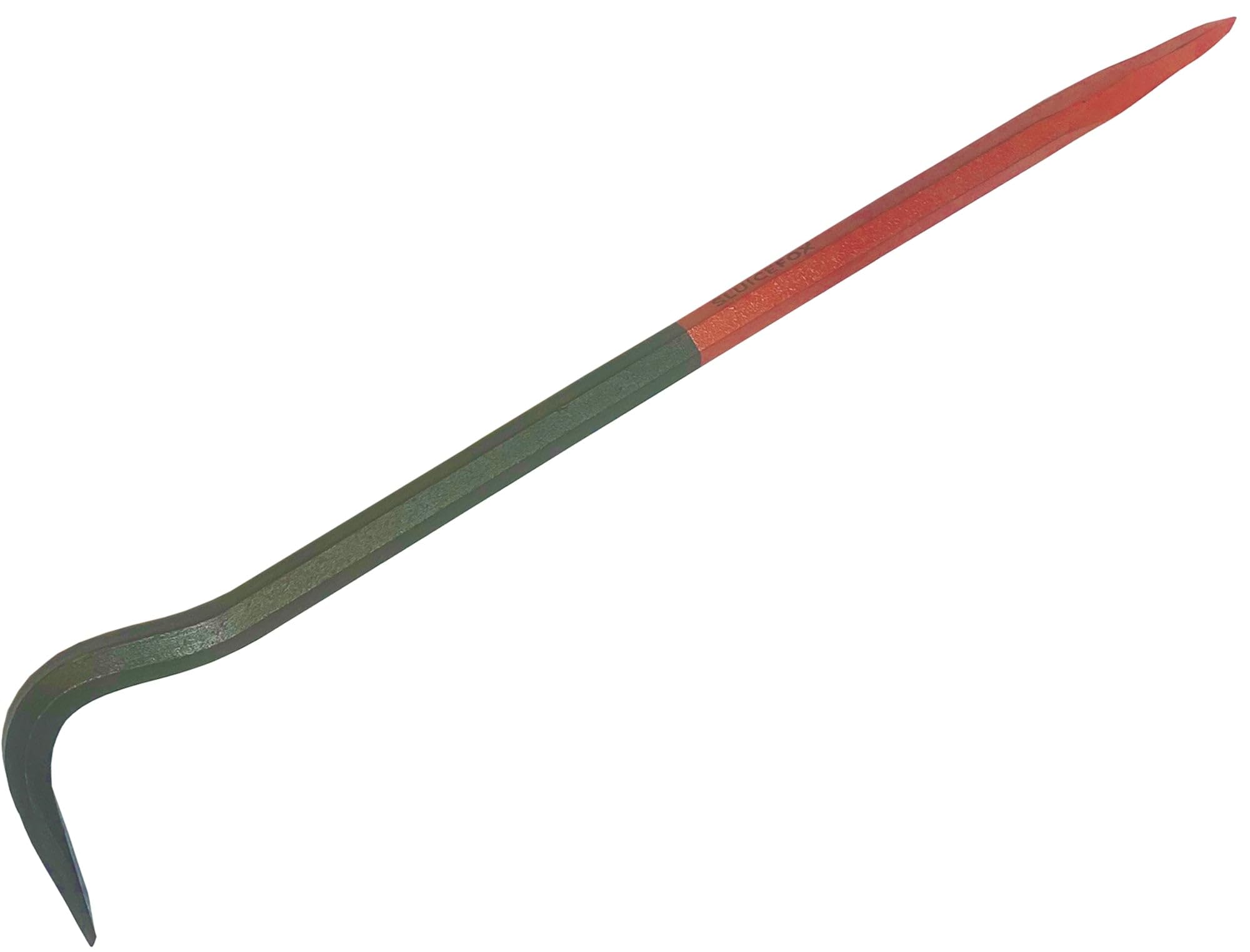
This bar earns its spot by splitting tight bedrock so you can see the placer gold in the gaps, and it does that at just 19 inches tip to tip — the shortest bar on the list. It is a six-sided hardened steel pry bar, not a full-size digger. One end comes to a rugged point; the bent end depends on a chiseled 7/8-inch wide flat tip. Miners designed it near Keyesville, California, which tells you who it is for.
What it does well is reach into tight spaces where a 60-inch bar cannot go. This is a tool you carry in a pack and tap into cracks, not one you heft over your shoulder for post holes. For that job, it is a compact, well-built piece of steel, and the six-sided body gives you a shape that will not roll away on a rock ledge.
The honest caveat: it is small, and it is not a heavy pry lever. One reviewer who gave it three stars said it “isn’t a very large bar” and is “not really good at prying,” though “the pointie end does dig.” For full-size demolition, this is the wrong tool. For chasing gold in bedrock, it may be exactly right.
What it is for: Crevice work, prospecting, and tight spaces where only a 19-inch shaft will fit.
Where it will frustrate: It is a light bar, so heavy prying and demolition are out of its league.
Carry this if: you prospect for gold and need a packable bar to split bedrock crevices.
Keep looking if: you are breaking clay, prying stumps, or sinking post holes at full arm’s length.
4. Truper 49-Inch Digging Bar with 60mm Chisel

Shorter on purpose: a bar sized for tight spaces and kneeling work without giving up chisel power.
Where a 60-inch bar forces you to stand tall, this 49-inch Truper is built for the spots that are cramped — small post holes, raised beds, patios. One end is a sharp point for piercing; the other is a 60mm (2.3-inch) chisel for prying and shaving through roots. The steel gets a double heat treatment, which the maker says boosts strength and how long the tips keep their edge.
Owners who work on their knees tend to single this length out. As one put it, “39” or 100cm is a perfect size for working while kneeling.” That is the real use case here: tight-space digging where a long bar is clumsy. It is also a favorite for caliche and rock-strewn ground — drive it in, lever it, and clear the stones that defeat a shovel. And what wins people over is the quality of the forging, which comes smooth-finished and well-painted.
The catch is that it is a compromise on reach. If you want maximum leverage from a standing position, a shorter bar is not your tool. There is also an occasional unit that turns up marked as used or refurbished, so inspect the one that arrives. But for a compact, well-forged bar, this earns its place.
Why it works in tight digs: The 49-inch length keeps you close to the hole and the 60mm chisel shears roots that a shovel cannot touch.
The honest limit: Shorter reach means less lever arm from a standing position than a 60-inch or 72-inch bar delivers.
A smart match for: tight-space post holes, raised beds, patios, and anyone who likes to dig on their knees.
Pass on it if: you want to work standing tall with maximum leverage over a big hole.
5. True Temper 1160000 Post Hole Digging/Tamper Bar

One long carbon steel bar for two jobs: break the ground and pack the dirt back in.
The appeal of this True Temper is doing the whole fence post in one tool. You break and loosen the soil with the chisel end, then flip it and tamp the backfill tight with the flat end. At 71 inches long and 3-1/4 inches wide, it gives you serious reach. The forged tip is shaped from the pole body itself, so there is no separate chisel to work loose.
The heft is real. The listing does not advertise a weight, but owners who put it on a scale came in around 14.3 pounds — plenty to drive down through a post hole with authority. One buyer even praised the tip being “formed from pole body, make it ultra strong.” When your goal is a firm set on a fence post, that weight is exactly what packs material tight.
The trade-off is that a straight bar is not a prying machine. Some owners found that trying to lever a stubborn stump out bent the bar, so keep it to ground breaking and tamping rather than heavy prying. Used for what it is designed for, it is a solid, long-lived tool.
The one-tool appeal: A 71-inch reach in sturdy carbon steel, with a chisel end for digging and a flat end for tamping.
Keep it to its lane: It is a digging and tamping bar — heavy prying on stumps can bend a straight shaft.
Suits you if: you are setting posts and want to dig and tamp without swapping tools.
Think again if: you need to pry buried boulders or stumps out of the ground.
6. Truper 60″ Pointed Digging Bar, 13 lb Hexagonal
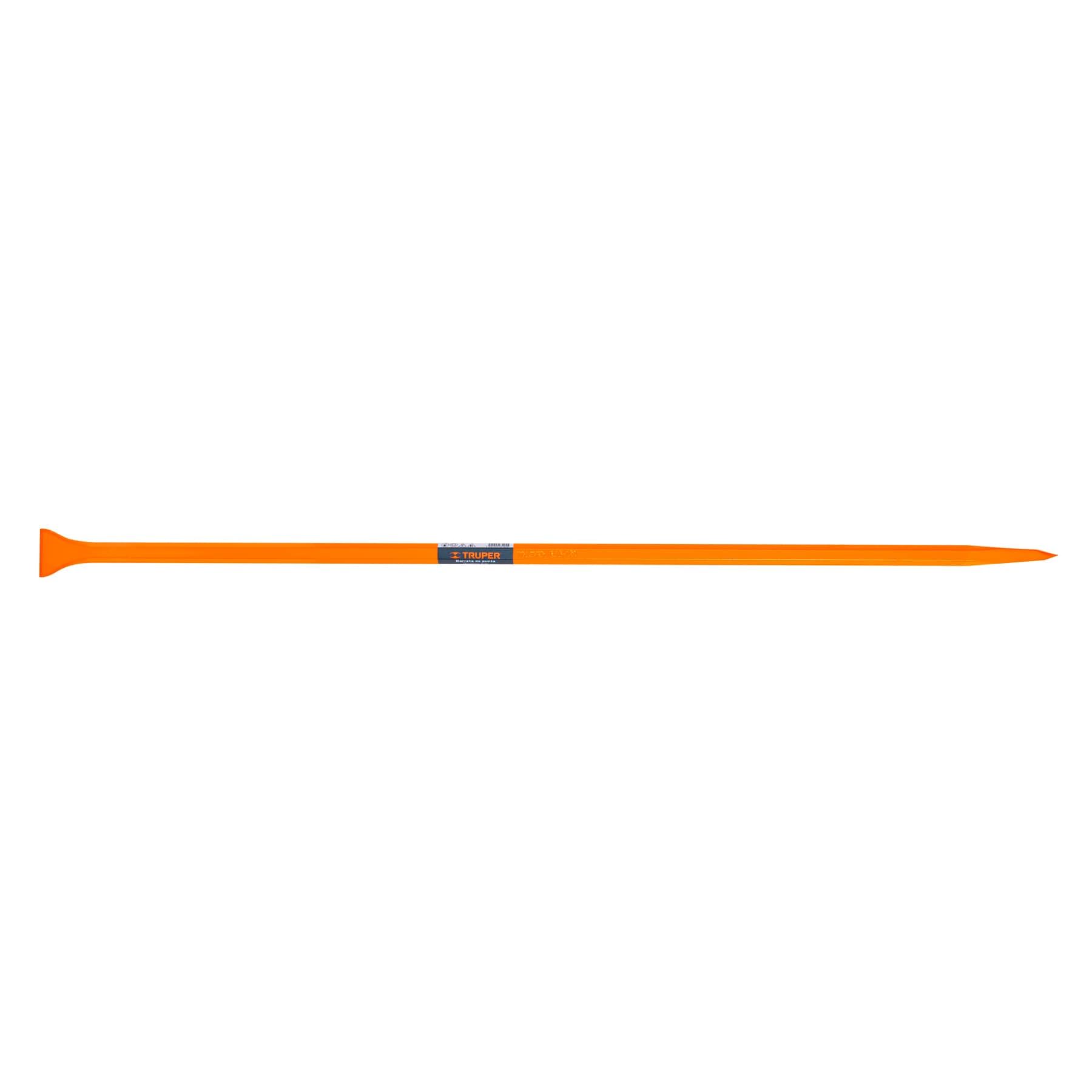
A 13-pound demolition bar with a 72mm chisel built to wedge apart rock and concrete.
This is the heavyweight bruiser of the Truper line. It runs 60 inches long with a 1-inch bar diameter, and the steel is double heat-treated to stay hard under heavy leverage. The pointed end drives through compacted earth and rock; the 72mm wide flat chisel is for wedge demolition, fracturing concrete, and slicing thick underground roots. It is the bar you reach for when the job is breaking, not just digging.
The hexagonal body profile is a practical touch. It gives you a flat-sided shaft that will not slip in your grip when you are swinging or levering, which matters more than you might think on a long job. It is contractor-pitched, aimed at utility crews, landscapers, and demolition work, so it is built for repeated heavy use.
Fair warning: this bar has no customer reviews to draw on yet in the data, so you are buying on spec and reputation rather than a proven track record. And a bar this heavy is a standing-leverage tool — it will wear you down if you have to swing it all day. For wedging solid rock or fracturing concrete, though, its 72mm chisel does work a lighter bar simply cannot.
The demolition argument: A 1-inch hexagonal shaft, a 72mm chisel, and 13 pounds of double heat-treated steel make it a true breaking tool.
Know before you buy: It is a heavy standing-lever bar with no review history in this listing, so it best fits jobs that reward brute force over finesse.
Grab this for: breaking concrete, fracturing rock, and shearing thick roots where power beats precision.
Skip it for: delicate garden work or long all-day swinging where a lighter handle would save your shoulders.
7. Truper 30103 60-Inch San Angelo Bar, Hexagonal

Fourteen pounds of drop-forged steel with a point that probes and a wedge that moves rock.
San Angelo bars are the classic straight pry bar, and this 60-inch, 14-pound Truper is a solid example. It is built for prying, lifting, and digging, with a pointed end for probing and a wedge end for nudging rock and loosening hard soil. Drop-forged and heat-treated, it wears a rust-resistant black finish for wet outdoor jobsites.
The weight and length land well for an average-sized user — long enough for a two-handed lever, heavy enough for the point to bite. The body has a flat-sided shape that grips easily in the hand, and the point is receptive to soil when you need to loosen ground for shrubs.
One honest watch-out: some versions come with a sharp spike on the non-point end rather than a tamper, and that spike can be hazardous on the rebound. There are also mixed views on the spade end — a few feel it could be a touch wider. Treat it as a prying and probing bar and it delivers; the overall shape and weight are exactly what many buyers want in a general-purpose bar.
What buyers like: The perfect weight and a point that probes the ground as it should — one owner liked it enough to say they would buy another.
Mind the ends: The point can be sharp and some find the spade side narrower than ideal, so keep your feet clear on the rebound.
A fit for: general rock prying, probing, and loosening ground for shrubs and small plantings.
Not ideal if: you need a broad tamper end or a tool with no sharp point on either side.
8. True Temper 1175200 Diamond Point San Angelo Bar, 72-Inch
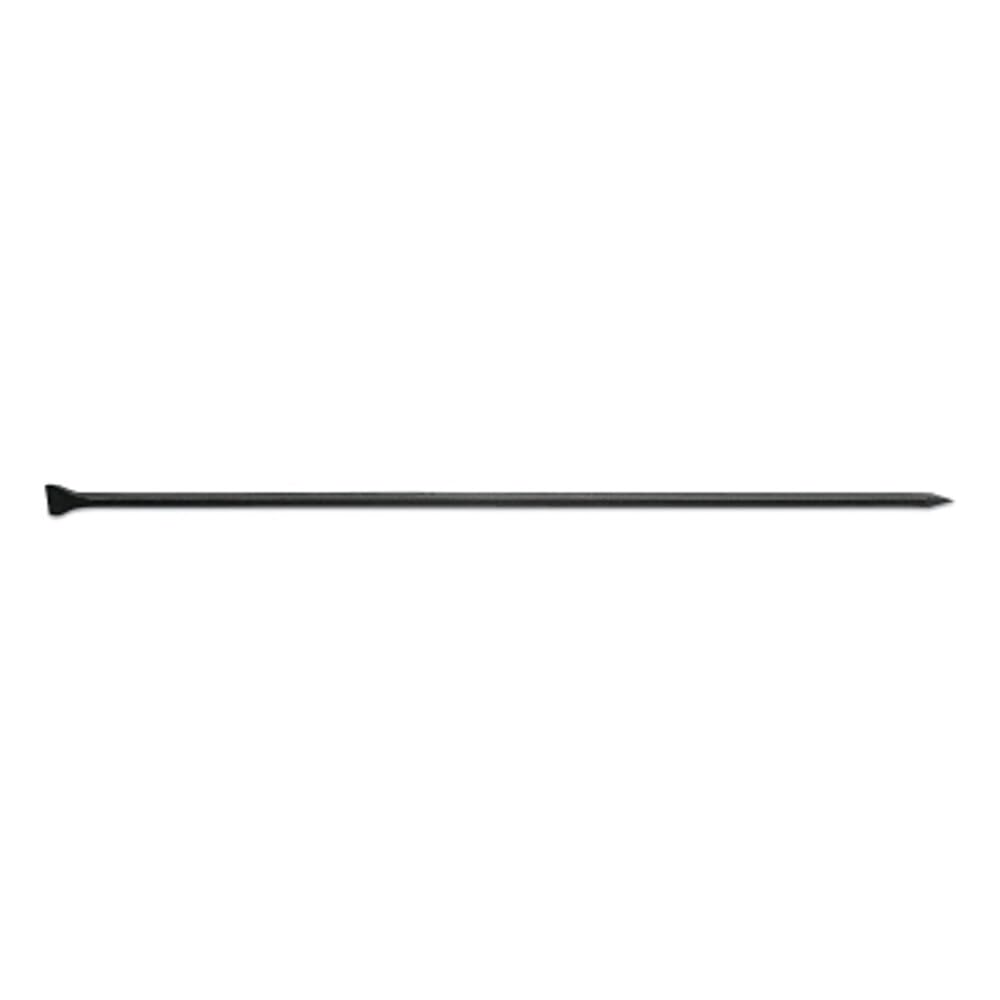
Seventeen pounds and 72 inches of carbon steel: the bar for concrete and buried rock.
This is the biggest bar on the list, and it is unapologetic about it. A 17-pound head on a 1-inch hex shaft that runs 72 inches long means you get a long lever and a lot of mass behind every drop. It is made from medium carbon steel, and it carries one point and one chisel end so you can pierce and pry in the same tool.
This is the bar people reach for when a machine gives up. It breaks through buried concrete waste and clears rocky, baked ground when a post hole digger stalls out. A five-footer like this also saves you from kneeling — the length turns a hard job into a standing lever. That is why it shows up in fencing, stump removal, and rock clearing.
The catch is twofold. First, 72 inches is a lot of bar to handle in tight quarters, so it wants open ground. Second, a few arrive with small burrs on the metal from manufacturing — worth a quick file-down before you grip it. Those aside, this is a stout, long-lived lever.
Where it wins: A 17-pound mass and a 72-inch lever turn buried rock and concrete into a manageable pry.
The two catches: It is a big bar for wide-open work, and some units ship with small burrs worth smoothing off.
Best fit: breaking concrete, clearing boulders, and stump removal where a long, heavy lever pays off.
Not the one: tight-space digging or a smaller user who wants a shorter, lighter bar.
9. Truper 30162 Post Hole Digger
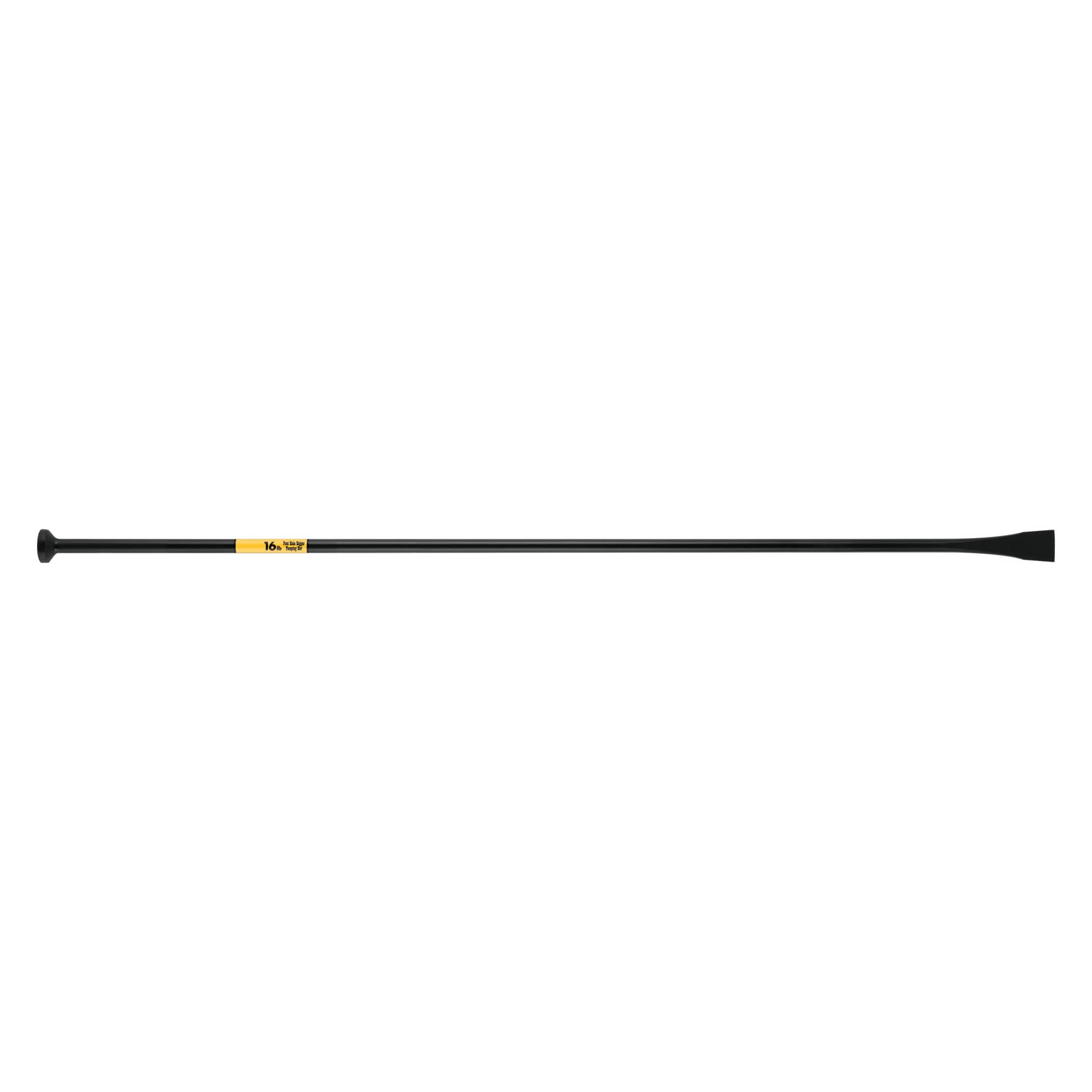
The do-everything post bar: break, dig, and tamp a fence post with 16 pounds of drop-forged authority.
If you want one bar that handles the entire fence post, this 69-inch, 16-pound Truper is hard to argue with. One end is a chisel/point for cutting and prying into compacted soil; the other is a flat tamping head for packing the backfill tight. The steel is drop-forged and heat-treated, and it wears a rust-resistant black finish for outdoor work.
What makes it a favorite is that the 16-pound mass does the work, not your swing. The mass lets you move heavy rocks and break tough ground without a giant swing, and smaller and older users appreciate that the bar does the lifting. The round tamping head also packs dirt very tight and gives a safer, more secure grip that reduces slip. It holds up in volcanic rock and stays straight under normal use.
One fair caveat: it is built for punching and tamping, not deep prying. A couple of buyers found it bent a little when they tried to lever a stump up, so keep it to its intended work. For post holes specifically, this tool does the whole sequence with one shaft.
The all-rounder advantage: Chisel for digging, flat head for tamping, and 16 pounds of drop-forged steel in one 69-inch bar.
Where it draws the line: Prying stumps can bend the shaft, so use a dedicated pry bar for that.
Made for: fence posts, tamping and backfill, and hard clay or volcanic soil where one strong bar does it all.
Look past it if: your main job is prying out stumps and buried boulders.
10. Truper 48″ Long Dig Bar, 3/4″ Diameter

A lighter 48-inch bar with a wedge point that cracks rocks and loosens clay without a workout.
Not every job needs a 17-pound monster. This 48-inch, 3/4-inch diameter bar weighs in around 11.5 pounds and is built for everyday digging — loosening hard clay, cracking packed dirt, and prying rocks that stop a shovel. The wedge-shaped point is the key detail: it cuts into rock and splits it rather than glancing off.
What owners like about this one is that it stays manageable. The length is described as good for the majority of needs, and the weight is light enough to swing comfortably without the arm fatigue of a heavy bar. The wedge point handles rocky ground well and breaks up packed dirt so a shovel can follow in behind it.
There is a quirk worth mentioning: some units do not arrive branded the way the listing suggests, with the maker stamping shifting between manufacturers. It still works fine, but do not expect the exact badge on the box. And at 48 inches, it is a shorter reach than a 60-inch or 72-inch bar. As a light everyday dig bar, though, it is a great size for most needs.
Why people keep it handy: A wedge point that splits rock and an 11.5-pound weight light enough to swing all afternoon.
Small caveats: A shorter 48-inch reach, and units sometimes ship under a different maker brand than the listing implies.
Handy for: loosening clay, cracking packed dirt, and removing rocks for everyday garden and home projects.
Not the one if: you want maximum-length standing leverage for deep post holes.
11. B’ROOT BAR Root Cutting Tool, 60-Inch Vertical Axe
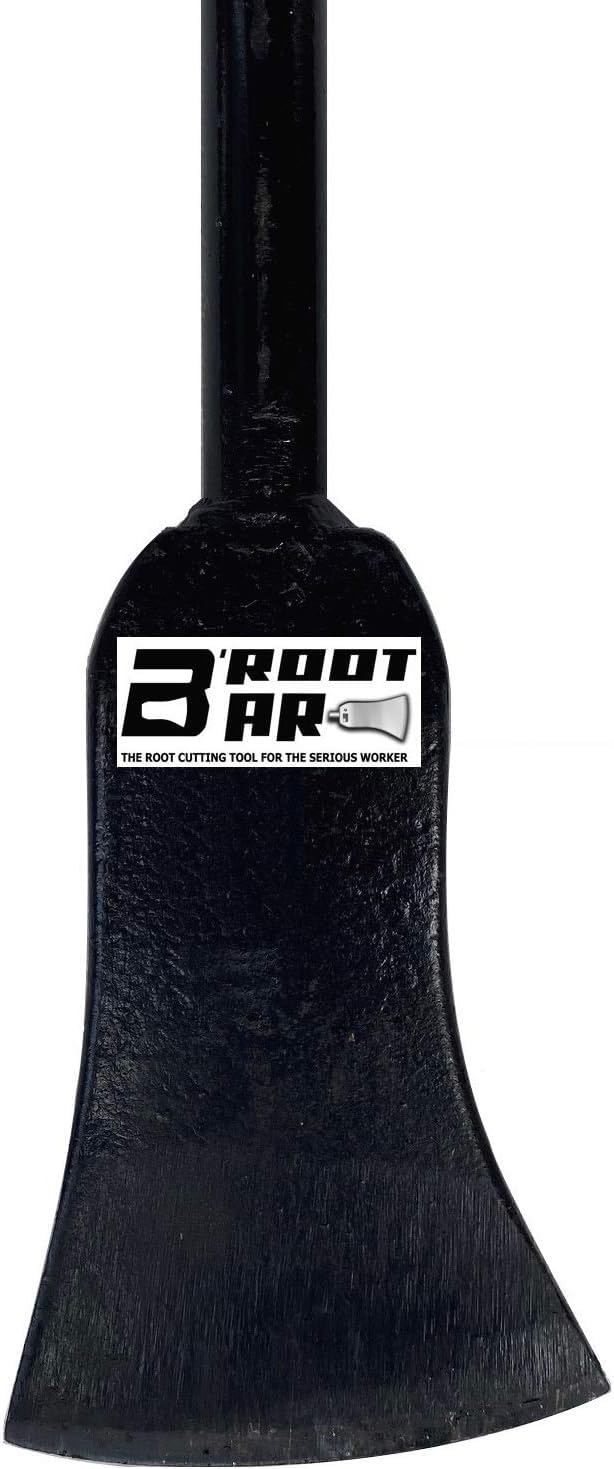
Not a digger — a vertical axe on a 60-inch shaft built to chop through buried roots.
This is the specialist of the group. The B’ROOT BAR is engineered strictly to cut large tree roots and dense vegetation, not to dig post holes. It puts an axe head on a 60-inch shaft so you can chop down at tree roots while standing, then pry them out. It even lets you shape a root ball to the size you want near the tree base.
The 60-inch length is what makes it work — you stand over the work area and swing straight down rather than crouching. Buyers report it cuts roots up to 8 inches in diameter and clears surface roots with a chop-and-pry rhythm. The blade is high-quality steel, and while it may need re-sharpening over a big job, it stays sharp through real use.
Two honest things to weigh. It is heavy, and lifting and slamming it repeatedly is physically demanding — the tool asks for your strength and stamina. And the blade should be honed when it dulls. What wins people over is pure effectiveness: it carves out roots that would otherwise mean paying a company to do it.
Made For Roots
- Vertical axe head chops through large tree roots while you stand.
- 60-inch shaft gives reach and leverage over the work area.
- Cuts roots up to 8 inches in diameter and shapes the root ball.
- High-quality steel blade carves out roots fast.
Heavy Asking Price
- Heavy to lift and slam repeatedly — real physical work.
- Blade may need re-sharpening during a long job.
A fit for: removing large tree roots, shaping root balls, and clearing dense vegetation around trees.
Wrong tool if: you mostly need to dig, tamp, or break rock rather than chop roots.
Know the Specs
Bar length and work posture
Length decides how you stand over the job. A 48- to 72-inch bar lets you work standing with a two-handed lever, easier on the back. A 19- to 49-inch bar is for tight spaces, kneeling work, and narrow post holes. Pick the length that matches how you will actually stand, not the biggest number you can find.
Head weight and effort
Weight does the breaking for you, but it also tires you out. A 5-pound mattock head is light enough to swing repeatedly; a 16- or 17-pound bar is built to be dropped and levered, not thrown. Match the weight to whether you plan to swing or drop.
Tip style: point, chisel, or scoop
A point pierces compacted ground and rock. A flat chisel end shears roots and wedges slabs. A twin-scoop digger hauls dirt out of a hole. Many bars give you one point and one chisel, which is the most useful combination for a single first purchase.
Handle and body material
Fiberglass handles resist rot, warp, and splintering and take some sting out of strikes. All-steel handles are rigid and weatherproof but transfer more vibration. Hexagonal or flat-sided steel bodies keep the shaft from slipping in your grip during a hard lever.
Common Questions
What is the difference between a digging bar and a mattock?
How heavy should a digging bar be for hard clay?
What is a San Angelo bar used for?
Will a digging bar bend if I pry a stump out?
What length bar do I need for post holes?
Is a hex bar better than a round bar?
Can a digging bar break through concrete?
What is a crevice bar used for?
Should I sharpen a digging bar?
Do I need a tamping bar for fence posts?
Fiberglass or steel handle for a mattock?
The Bottom Line
For most buyers the winner is the Truper 5 lb Pick Mattock, because one swing tool breaks hard ground, cuts roots, and clears a trench — and it holds 4.5+ stars from 200+ owners for exactly that mix of breaking, root cutting, and trenching. Setting fence posts? The Fiskars 60″ Posthole Digger sinks a clean deep hole. Facing the heaviest rock and concrete? The True Temper Diamond Point San Angelo Bar gives you the longest, heaviest lever on the list. Match bar length and tip style to your soil, and one right bar beats an afternoon of fighting a shovel.
How we choose
We do not accept paid placement. Every pick is matched to a real buyer and a real use-case; we do not hands-on test units.
Sources
Specifications: manufacturer listings and product documentation. Review insights: verified customer reviews, as of October 2026. Pricing: not shown on this page (it changes often); check the current price via the retailer link.
As an Amazon Associate, Aappliancez earns from qualifying purchases. This does not affect which products we feature.