Disclosure: Some links in this post are affiliate links. As an Amazon Associate I earn from qualifying purchases, at no extra cost to you. Learn more
Specs are compiled from manufacturer listings and verified buyer reviews and can change over time — please confirm the key details on the product page before buying.
If your lawn feels spongy underfoot and water pools instead of soaking in, a thatch rake (a manual rake with curved steel tines that pull up the dead grass matted at soil level) is the simplest fix. The right one clears a season’s thatch without wrecking your back. The wrong one folds its tines on the first rock or loosens at the joints mid-row. Below are seven that hold up, sorted so you can pick by lawn size, your height, and how much elbow grease you want to spend.
This guide is built by comparing the manufacturers’ published specifications and the patterns across verified customer reviews, so you get each pick’s real strengths and trade-offs instead of marketing spin.
Everything here is chosen around tine strength, head width, and handle reach. Here is the honest shortlist of the best dethatching rake options worth your weekend.
Top Picks
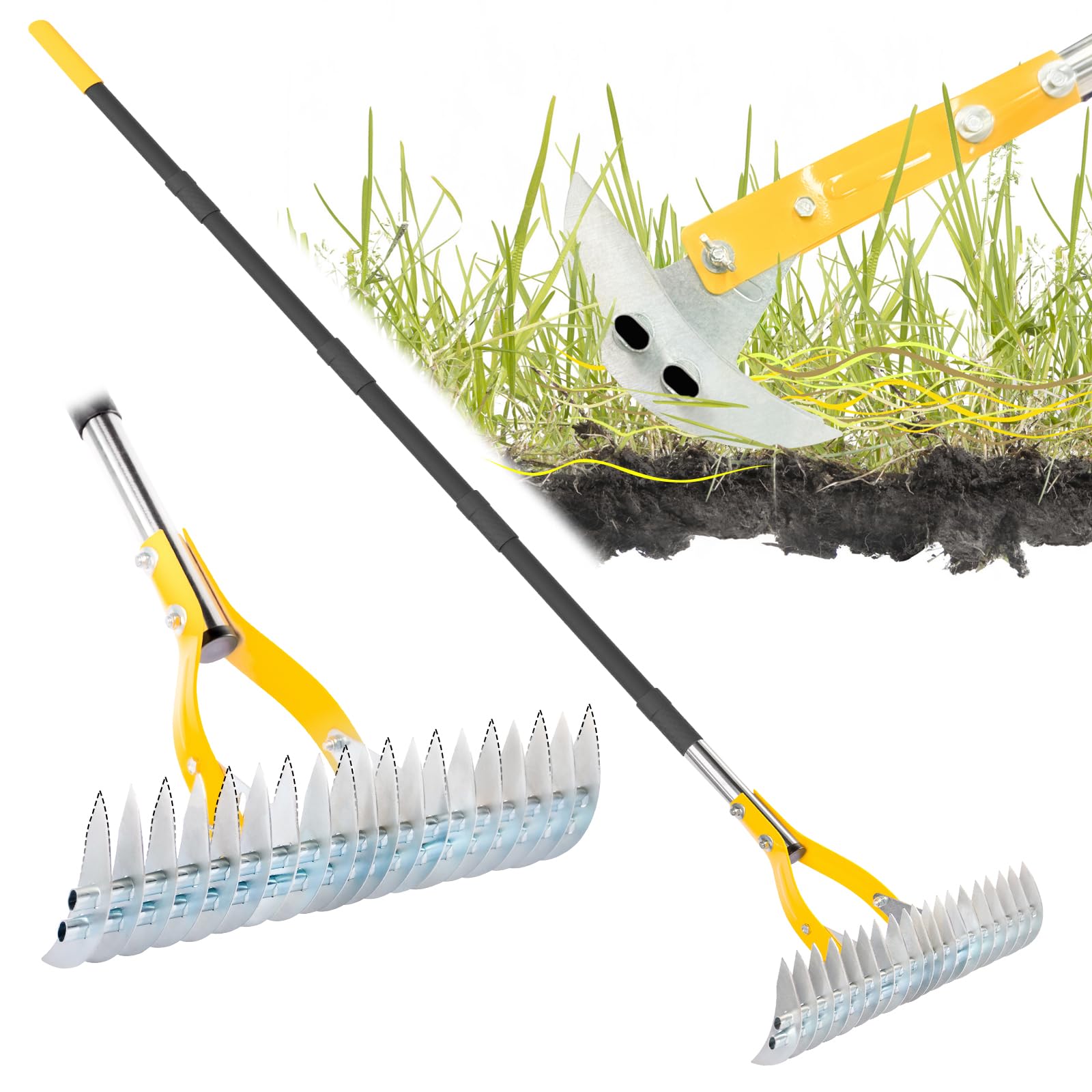
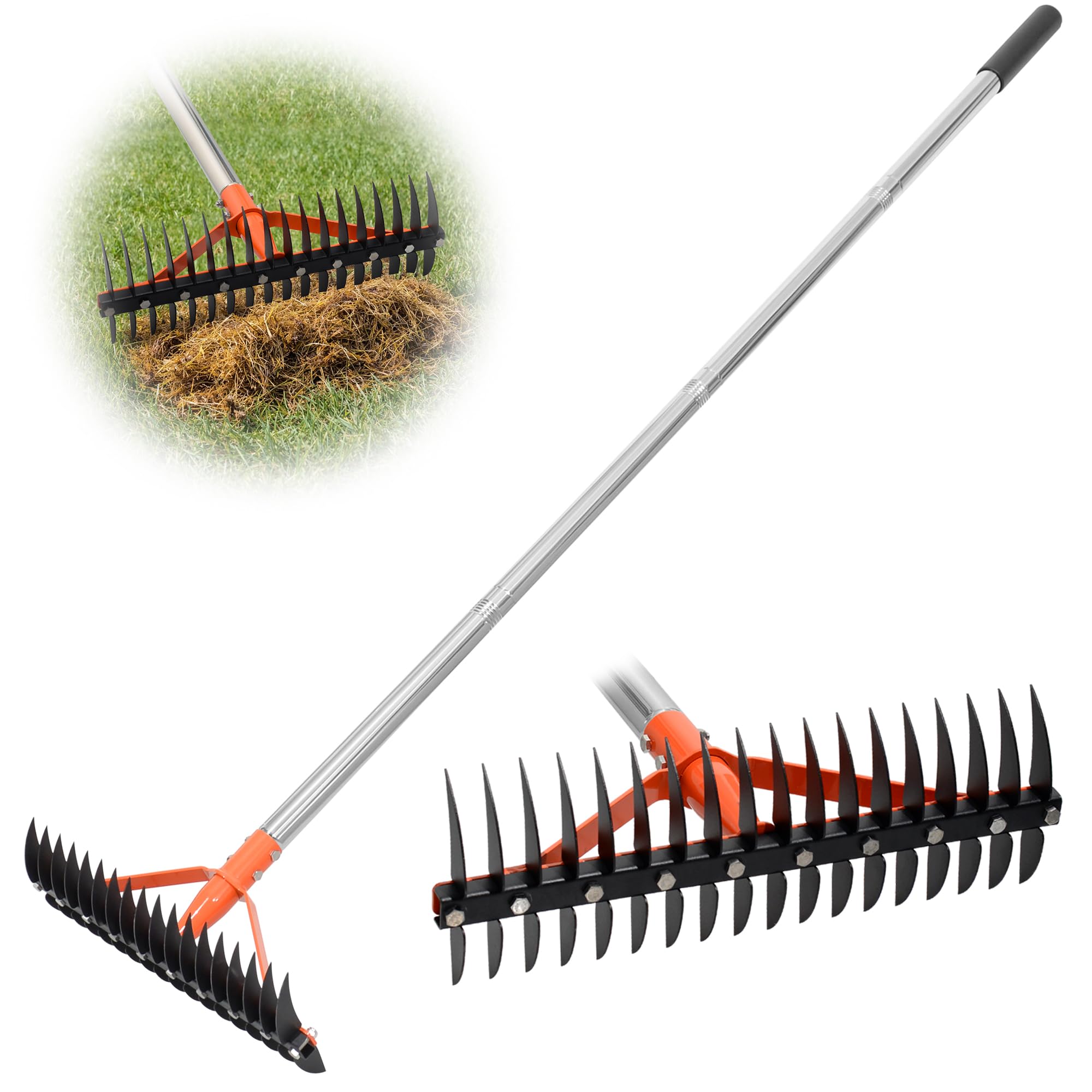
How To Choose The Best Dethatching Rake
Dethatching is brute-force yard work. You are dragging a row of steel tines through a lawn that fights back, so the tool has to survive rocks, roots, and heavy mat without folding. The three things that decide whether a rake lasts a season or a single afternoon are tine material, head width, and handle construction.
Tine material and heat treatment
Tines are the prongs that dig into the grass. Look for tempered or heat-treated steel — heat treatment is a hardening process that makes the metal spring back instead of bending. Untreated steel tines tend to fold on the first stubborn clump. Manganese steel and carbon steel are the two durable options you will see in this category.
Head width versus lawn size
A 15-inch head (the width of the rake’s working span) covers more ground per pass than a narrower one, so a bigger lawn gets done faster. The trade-off is that wider heads drag harder when the thatch is thick. For a small yard, a narrower head is easier to steer around shrubs.
Handle length and section count
A sectional handle is a pole built from two or three screw-together pieces. Sections let you store the rake flat and adjust reach — but more joints means more places to loosen. A telescoping handle slides to different lengths, while a fixed one is the most solid. Anyone taller than about six feet should reach for a handle that extends past 60 inches.
Side-by-Side Comparison
| Model | Best For | Head Width | Max Handle Length | Tine Material | Amazon |
|---|---|---|---|---|---|
| BlumeTrec 74-Inch Thatch Rake★ Best Overall | Big lawns, tall users | 15 inches | 74 inches | Manganese steel | Amazon |
| CKLT 62.5-Inch Thatch RakeDeep-Thatch Pick | Deep thatch, overseeding prep | 15 inches | 62.5 inches | Tempered spring steel | Amazon |
| BARAYSTUS Dual-Side Thatch Rake | All-round lawn cleanup | 15 inches | 58.5 inches | Heat-treated carbon steel | Amazon |
| Walensee 15-Inch Thatch Rake | Small to medium yards | 15 inches | 70 inches | Manganese steel | Amazon |
| TCBWFY Dethatcher Rake | General cleanup, medium yards | 15 inches | — | Metal | Amazon |
| Manual Thatch Rake Dual-Sided | Spot cleanup, budget work | 15 inches | 55 inches | High-carbon steel | Amazon |
| WORKPRO Telescoping Thatch Rake | Small yards, light needs | 15 inches | 70 inches | High-strength metal | Amazon |
Detailed Reviews
1. BlumeTrec 74-Inch Thatch Rake
Our pick — 4.0+★ from 350+ verified ratings; the strongest balance of quality and price.
The tall-handle workhorse that keeps your back out of the grass.
The 74-inch handle is the defining number here. That length keeps you standing nearly upright through a full pass, so a big lawn does not turn into an hour of stooping. The head is 15 inches wide and carries 19 curved manganese-steel tines — manganese steel is a hardened alloy built to resist wear — and the whole head is quenched, a heat-treatment step that toughens the metal. A powder-coated finish helps it shrug off rust between seasons.
What wins people over is how much thatch it yanks per stroke. On a roughly 2,000 sq ft lawn, buyers report it pulled up far more dead grass in half the time of a metal spring rake, with the whole job landing around 2.5 hours including cleanup. The sections twist together and the head bolts on with the included tools, so setup runs about ten minutes. Because the handle is stainless steel in three threaded pieces, it also breaks down flat for shed storage — and it comes in at 2.1 kg, against 1.86 kg for the Manual Thatch Rake further down the list.
The honest catch: threaded joints loosen after long sessions, so plan to re-tighten the sections as you work. The tines snag small rocks now and then too. Neither stops the rake from finishing a lawn, and the head hosed off looking like new afterward. Treat it as a tool that wants a quick once-over mid-job rather than a complaint.
What lands the top spot
- 74-inch reach handles big yards without constant bending
- 19 manganese-steel tines lift heavy mat in fewer passes
- Breaks into threaded sections for compact storage
- Head survived rocks and hosing off still looking new
Where it asks a little of you
- Handle joints need re-tightening during long jobs
- Tines can catch on small rocks in rough ground
Reach for this if: you have a decent-sized lawn and want to stay standing while you clear it.
Look elsewhere if: you want zero maintenance mid-job — the screw joints want watching.
2. CKLT 62.5-Inch Thatch Rake
Tempered spring-steel tines that claw deep — and sweat for it.
The 18 tines are tempered spring steel with a sandblasted anti-rust coating, which means they flex and spring back instead of folding. That springiness is the whole point when you are dragging through a matted lawn. The dual-sided head is 15 inches wide: the short side skims surface debris and loosens soil, the long side digs into deep thatch without grass roots jamming it.
What owners praise most is how well it digs. It reaches down to pull out thatch that had been blocking water, which is exactly what you want before overseeding — seed has to reach soil to germinate. The handle adjusts to three lengths: 34.5, 48.5, or 62.5 inches, held together with 304 stainless steel screws and a reinforced frame. At 62.5 inches it is shorter than the 74-inch BlumeTrec above, so very tall users will notice the difference.
The trade-off is effort. This rake wants you pulling hard toward yourself, and that is genuinely tough work on a heavy lawn. The handle durability is the other thing to know — the joint area takes the load, so seat the screws firmly before you start and check them as you go.
Dig depth where it counts: the long side clears thick thatch for overseeding without tearing healthy turf.
Reality check: expect a real workout — this is a pull-hard tool, not a lazy skim.
Pick it for: a heavily thatched lawn you plan to reseed, where getting down to soil matters most.
Pass if: you want light, easy passes over thin surface debris.
3. BARAYSTUS Dual-Side Thatch Rake

The angle-adjustable all-rounder that works as hard loosening soil as it does lifting thatch.
This is the most-discussed rake on the list, and the draw is versatility. The dual-side head carries 19 curved heat-treated carbon-steel tines on one side for thatch and debris, and a soil-loosening, leveling side on the other. The head angle adjusts on both sides to match how you want to stand, which eases wrist strain over a long afternoon. The handle is stainless steel in three screw-together sections reaching 58.5 inches, with a soft rubber grip.
Owners mention it is sturdy and quick to assemble with the included wrenches, and the screw-together handle lets you shorten it for storage. It handles Bermuda grass and once-a-year clearing well, and it weighs 3.3 pounds — noticeably lighter than the heavy rattle of the Walensee below. The pair of wrenches means no extra tools needed to build it.
The recurring gripe is durability at the joints and handle. The bar joints loosen during use, so a dab of superglue before you start is the fix owners pass along. Tines also want a manual clear-out when you hit thick, wet debris. None of that stops the rake earning its keep — it just asks a little prep.
Why it earns a slot
- Two working sides: thatch lifting and soil leveling in one tool
- Adjustable head angle eases wrist strain on long jobs
- Light at 3.3 pounds, so less fatigue carrying it around
- Assembles fast with included wrenches
Prep before you start
- Screw-together joints loosen — glue them first
- Tines need clearing out in thick, wet debris
The right call for: a do-it-all yard rake that handles dethatching and soil prep across a full season.
Think twice if: you want a set-and-go tool — plan a few minutes gluing the joints first.
4. Walensee 15-Inch Thatch Rake

A 70-inch reach in three lengths that punches well above its price tier.
Three handle settings do the work here: roughly 40, 55, or 70 inches, so a short user and a tall one can share the same rake. The 15-inch dual-sided head carries 19 curved manganese-steel tines, quenched and powder-coated to resist rust. Flip the head to loosen topsoil; leave it flat to lift dead grass and leaves.
Quality is the thing that carries this one — it is the most-repeated praise in the reviews. Owners describe a sturdy tool that survived four hours of hard dethatching and pulled debris without tearing up the grass. Owners filled a 96-gallon can with pulled thatch in a single session on a typical yard. The 70-inch handle keeps you off your knees and the adjustable angle lets you attack from a comfortable stance.
Assembly is where opinions split. Sections sometimes arrive with a missing part, so lay out the hardware before you start. The handle also draws a durability note — aluminum threads that feel lighter than the sturdy rake head below them. Seat every joint firmly and it holds; treat the handle gently and it will outlast the season.
What carries it: a genuinely sturdy manganese-steel head and tines that pull stubborn thatch without shredding the turf.
Honest fit note: aluminum handle threads feel softer than the head — snug every joint and store it carefully.
Pick it for: small to medium yards where you want a versatile dual-sided head and a reach that fits any user.
Skip if: you want a heavy fixed-pole build and refuse to check the parts on arrival.
5. TCBWFY Dethatcher Rake
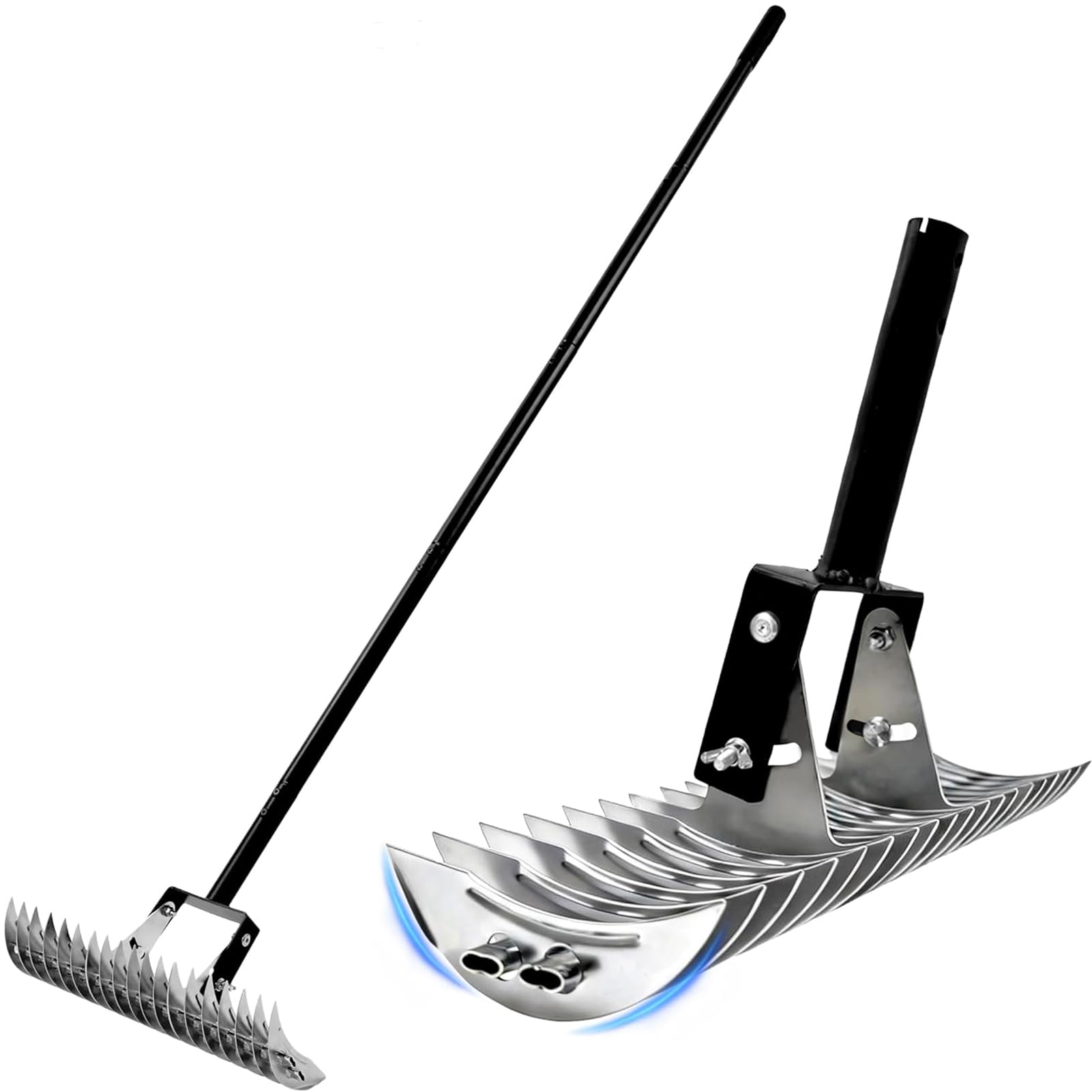
A wide-headed cleanup rake built around a long handle and a customizable angle.
The 15-inch wide head is the headline — it covers more ground each pass, so medium and large yards go faster. The head is rust-resistant steel with a set of sturdy tines meant to bite through compacted layers. You can adjust the head angle to your working posture, and the long handle eases back strain through long sessions.
Where this rake wins is in soft, workable soil. It loosens ground, lifts debris, and handles general yard cleanup alongside thatch removal. The adjustable-angle head lets you switch between a flat skim and a deeper dig without changing tools. The long-handled design keeps you upright for most of the job.
Build quality is where opinions split. Some find it well-made and dependable; others describe a lighter build that demands care. Tuck the fasteners down snugly and re-check them before each big job — a loose piece is the one thing that will end a session early. Otherwise it earns its place as a solid general-cleanup option.
The draw: a 15-inch steel head with an adjustable angle that covers ground fast on a mid-sized lawn.
Where to be careful: the build feels lighter in the hand — snug the fasteners and re-check them before you start.
Best for: a straightforward yard cleanup tool where soft soil and general debris are the main targets.
Look elsewhere if: you expect a tank-solid build and will not tighten hardware.
6. Manual Thatch Rake, 15″ Dual-Sided Head with 19 Sharp Tines
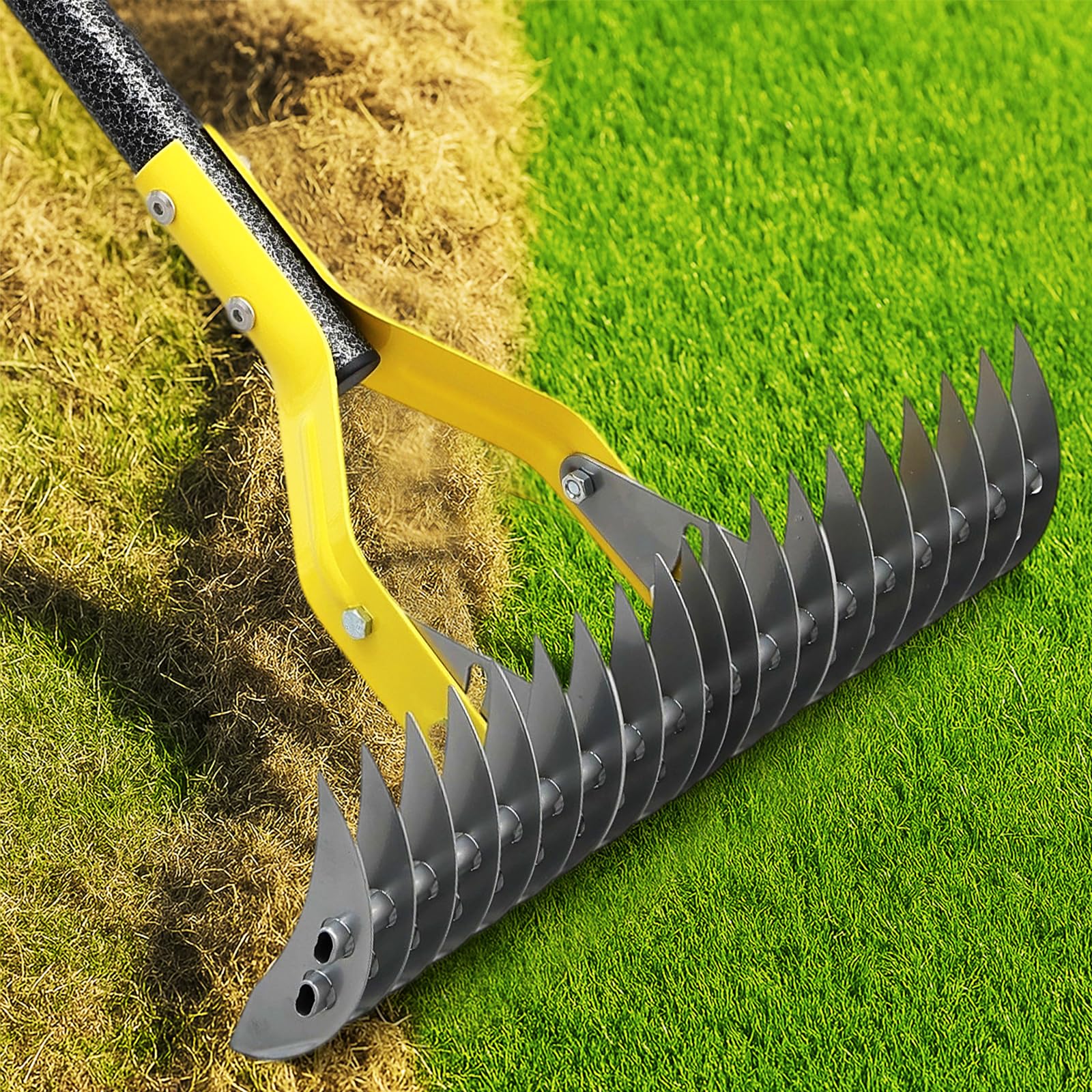
A flip-for-two-jobs rake for spot cleanup and patches before reseeding.
The 15-inch head carries 19 sharp high-carbon steel tines that pull up matted thatch — high-carbon steel holds an edge and resists bending. The winged side cuts through thick thatch and lifts moss and weeds; flip to the curved side to gather leaves, pine needles, and clippings or loosen surface soil. A 1.1-inch heavy duty steel handle and two supporting crossbars give it a solid spine, with a rust-resistant coating over the head.
Owners find it effective on small lawns, spot cleanup, and dead patches before reseeding. The sectional handle fits short and tall users, and on a 4,000 sq ft heavily thatched lawn it got the job done while avoiding the cost of a power-tool rental. At 1.86 kg it is the lightest rake here — noticeably lighter than the 2.1 kg BlumeTrec at the top. It hangs by its built-in hole for shed storage.
The build around the head is where opinions divide. The sectional handle can work loose, so check and re-tighten it as you go. The instructions for angle setting are thin, and some expect a stiffer feel from the start. Assemble carefully, keep the screws accounted for, and it serves well for a seasonal clean.
Where it delivers
- Two-sided head handles thatch, moss, and leaf gathering
- Light 1.86 kg build — easiest to haul around the yard
- Sharp high-carbon steel tines designed to stay put
- Hangs by its own hole for easy storage
What to watch
- Sectional handle loosens and needs re-tightening
- Instructions for angle setting are thin
Fits best when: you are patching dead spots or cleaning a small lawn by hand and want to spend the least.
Not for you if: you want a heavy-duty frame that survives being dragged through rocks.
7. WORKPRO Thatch Rake with Telescoping 5FT Handle

The telescoping handle that slides from 40 to 70 inches and collapses in a shed.
The telescoping handle is the whole idea here — it extends from 40 to 70 inches in one slide, so you can find your reach without screwing sections together. The head is 15 inches wide with an adjustable angle, and the handle wears an ergonomic rubberized grip to ease hand fatigue. A detachable design makes it simple to store and carry.
On a 10×10 ft test patch, customers note it picked up substantial thatch with minimal raking effort — the adjustable angle does much of the pulling. Several owners prefer it to a power thatcher they had rented, and at 4.14 pounds it stays easy to swing. It handles thatch, soil loosening, and clearing clippings in one tool, and the metal build is meant to resist bending through a season.
The honest limit is head strength under hard use. The rake part can bend if you lean into it on rough or rocky ground, and it is not built for the same heavy matted work as the CKLT above. Use the angle to let the tines do the work and it holds up well. Push it past its lane and it will complain.
Smart-handling choice: the sliding telescoping handle gets you the right reach fast and packs down small.
The catch: the rake head is the light-duty end of this list — ease off on rocky ground.
Made for: a small yard and light seasonal dethatching where quick setup and easy storage come first.
skip it if: you have heavy matted thatch and want a head that shrugs off hard pulling.
Know the Specs
Head width (inches)
The width of the working span of tines. A wider head covers more ground per pass but drags harder through thick thatch; a narrower one steers easier around shrubs. All the rakes here run a 15-inch head, so width is not the deciding factor — reach and tine strength are.
Max handle length
How tall the rake stands when fully extended. A longer handle (62 to 74 inches) keeps you upright and saves your lower back on a big lawn; a shorter one (around 55 inches) is more compact to store and easier for shorter users to control.
Tine material
The metal of the prongs that dig up thatch. Manganese steel and heat-treated carbon or spring steel spring back from rocks; untreated steel can fold. Tempered spring steel is the most flex-friendly, which matters when you are pulling through matted roots.
Handle construction
Whether the pole is one piece, screw-together sections, or telescoping. Sections make the rake compact to store but add joints that loosen; telescoping slides fast but can feel less rigid under heavy pulling than a fixed pole.
Common Questions
What is the difference between a thatch rake and a regular leaf rake?
How wide should the rake head be for a large lawn?
Do I need a long handle and how tall should it be?
Will a manual dethatching rake damage my lawn?
When is the best season to dethatch a lawn?
How do I stop the sectional handle from loosening during use?
Can a thatch rake also loosen soil and spread seed?
Is a manual rake better than a power thatcher rental?
How much effort does dethatching with a manual rake take?
How do I store a dethatching rake between seasons?
The Bottom Line
For most people wrestling a spongy lawn, the dethatching rake winner is the BlumeTrec 74-Inch Thatch Rake because its long reach and 19 manganese-steel tines clear heavy mat while keeping you upright. If you are reseeding a tired lawn, the CKLT digs deepest with its tempered spring-steel tines. And for a versatile all-rounder that loosens soil as well as it lifts thatch, the BARAYSTUS is the one to reach for. Grass grows back; a weekend lost to a bent tine does not — so pick on tine strength and handle length first.
How we choose
We do not accept paid placement. Every pick is matched to a real buyer and a real use-case; we do not hands-on test units.
Sources
Specifications: manufacturer listings and product documentation. Review insights: verified customer reviews, as of October 2026. Pricing: not shown on this page (it changes often); check the current price via the retailer link.
As an Amazon Associate, Aappliancez earns from qualifying purchases. This does not affect which products we feature.