Disclosure: Some links in this post are affiliate links. As an Amazon Associate I earn from qualifying purchases, at no extra cost to you. Learn more
Specs are compiled from manufacturer listings and verified buyer reviews and can change over time — please confirm the key details on the product page before buying.
Wool shrinks, felts, and stiffens when it meets the wrong detergent — that is the short version of why this list exists. The fix is simpler than most people think: you want a wash built for protein fibers, meaning no harsh enzymes to chew at the wool and no long rinse cycle to rough up the surface. The five picks below cover hand-washing a single cashmere sweater, running a delicate machine load, and reviving a matted sheepskin rug.
This guide is built by comparing the manufacturers’ published specifications and the patterns across verified customer reviews, so you get each pick’s real strengths and trade-offs instead of marketing spin.
A wool wash lives or dies on two things: whether it needs rinsing and whether it leaves the fiber soft. The best detergent for wool clothing is the one you will actually reach for on a Sunday afternoon — a no-rinse formula you can soak, lift, and lay flat.
Top Picks

How To Choose The Best Detergent For Wool Clothing
Wool is hair. Treat it like hair and most of the confusion disappears: you want something mild, you want to avoid roughing up the surface, and you want to keep the natural oils that make it feel soft rather than scratchy. A detergent that is tough on cotton stains is often the wrong tool here.
Look for a wool-specific wash, not a general detergent
A wash made for wool and other protein fibers is usually pH-balanced and free of the aggressive enzymes that break down soil on cotton but can damage animal fibers. Several formulas on this list are also free of sodium lauryl sulfate, a common lather-booster that can strip a fiber over repeated washes.
No-rinse formulas save your arms and the fiber
The rinse step is where hand-washing goes wrong — all that squeezing and lifting under running water is what stretches a knit out of shape. A no-rinse wash lets you soak, lift, and lay flat. That is fewer chances to distort a shoulder seam or a ribbed cuff.
Lanolin is the conditioning ingredient to look for
Lanolin is the natural wax wool carries on the sheep, and it is what gives a good sweater its soft hand. Some washes here contain lanolin specifically to put that back into the fiber while it cleans. If your wool feels stiff after washing, a lanolin formula is the usual answer.
Scent is a real decision, not a detail
Side-by-Side Comparison
| Model | Best For | Rinse Required | Lanolin | Volume | Amazon |
|---|---|---|---|---|---|
| Eucalan No Rinse Delicate Wash — Lavender★ Best Overall | All-round wool and delicates | No | Yes | 16.9 oz | Amazon |
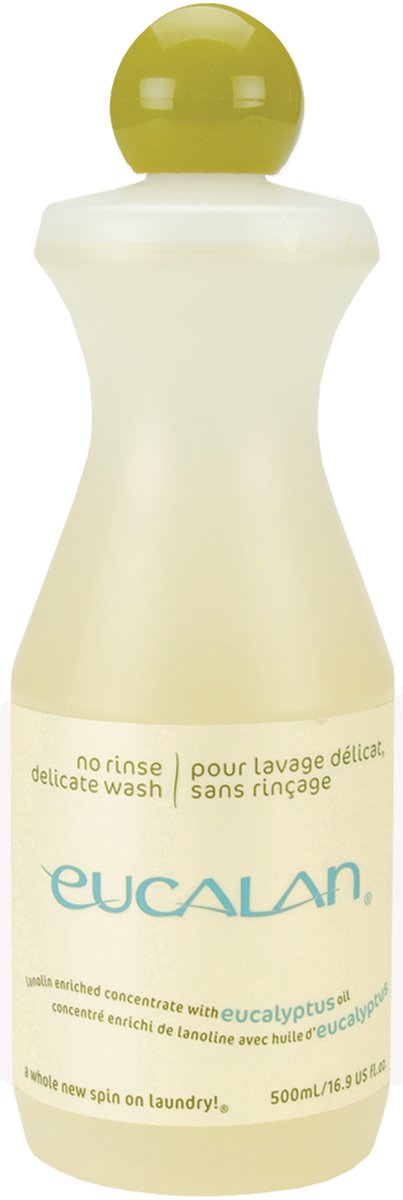
| Eucalan Fine Fabric Wash — EucalyptusBest Scented Pick | Scented hand knits | No | Yes | 16.9 oz (500 ml) | Amazon |
| Eucalan Fine Fabric Wash — Unscented | Sensitive skin and baby knits | No | Yes | 16.9 oz | Amazon |
| Kookaburra Wash 16-Ounce | Rugs, down, and heavy soiling | No | Yes | 16 oz | Amazon |
| ECOS Hypoallergenic Laundry Detergent, Free & Clear | Whole-household laundry loads | Yes (standard cycle) | No | 100 oz | Amazon |
Detailed Reviews
1. Eucalan No Rinse Delicate Wash – Lavender 16.9 OZ
Our pick — 4.5+★ from 2,000+ verified ratings; the strongest balance of quality and price.
A wool wash you soak into, lift out, and never rinse — the whole job in one step.
The thing that wins people over here is the no-rinse routine: you soak, lift, and lay flat, with no running water or wringing. You fill a basin, add the wash, lay the garment in, let it sit, then lift it out and roll it in a towel. No running water, no wringing, no repeated lifting of a wet sweater that is heavy enough to stretch under its own weight. For a hand-knit or a cashmere cardigan, that single change removes most of the ways a wash day goes wrong.
Lanolin is the second reason it earns the top spot — that is the natural wax in wool that gives a good fiber its soft hand, and this formula puts it back while it cleans. Owners describe cashmere and hand knits coming out soft rather than dry or stiff, which is the exact failure mode a harsh detergent produces. The lavender version carries a light scent rather than a perfume cloud, and it fades as the garment dries.
It is a compact bottle — 9.69 inches tall, 3.31 wide, 2.91 deep — so it tucks onto a shelf or into a travel bag without a fight. On the concentration question: this is a formula where a small pour does the work, so a bottle stretches across many wash days. The trade-off is real but narrow — if you want a completely unscented formula for a newborn’s knits, the lavender bottle is not the one, and the unscented pick further down covers that.
What earns it first place
- No rinsing at all — you soak, lift, and lay flat, which is the gentlest possible handling for a knit
- Lanolin in the formula conditions wool and cashmere back to soft instead of leaving them stiff
- Biodegradable and moth-protecting, so it does double duty for stored woolens
- Works for hand washing or a machine delicate cycle, so one bottle covers both habits
Where it asks something of you
- The lavender scent is pleasant but present — a fully unscented household should look at the unscented Eucalan instead
- You still have to lay wool flat to dry; the no-rinse step saves handling, not drying space
Reach for this if: you hand-wash knits, cashmere, or lingerie and want the fewest possible steps between dirty and dry.
Look elsewhere if: the garment belongs to a newborn or a scent-averse household — go unscented.
2. Fine Fabric Wash (16.9 Ounce): Eucalyptus
The eucalyptus version of a wool-wash staple — same no-rinse gentleness, with a scent that doubles as moth defense.
Start with the shape, because it tells you what this bottle is for. At 2.3 inches wide and 8.5 inches tall, it is a tall narrow bottle that stands in a cupboard corner or slides into a toiletry bag — a different footprint entirely from a wide jug. That footprint matters if you wash wool in a hotel sink while travelling, which is exactly the scenario this bottle is built around.
Inside is the same lanolin-enriched, sodium-lauryl-sulfate-free base as its unscented sibling, here carrying eucalyptus. The practical payoff is twofold: the eucalyptus scent is light enough not to bother scent-sensitive owners, and it is the note wool-wearers associate with keeping moths away from stored knits. It is concentrated, so a small pour handles a full basin, and it works for both hand washing and a machine delicate cycle.
Compared with the ECOS jug in this list — 6.25 pounds against this bottle’s 479 grams — this is the grab-and-go bottle, not the family laundry workhorse. The honest limit: colour can bleed in the basin, so wash similar shades together and keep a strong red away from a cream knit. Hand knitters and vintage resellers are the loudest fans of this one, and the enthusiasm is about the results on real wool, not the label.
The scent decision: eucalyptus is the reason to choose this bottle over the unscented one — it reads clean and faintly herbal rather than perfumed, and it fades as the wool dries.
One caution worth repeating: keep like colours together in the basin; wool dye can lift into the water on a first wash.
The pick for: knitters, vintage sellers, and anyone who wants a bottle small enough to travel and scented enough to feel like a treat.
The swap to make: if a household member reacts to scent, take the unscented Eucalan below instead — same base formula.
3. Fine Fabric Wash 16.9 Oz: Unscented

No fragrance, no rinse, no residue — the quiet option for a wool-wearer with reactive skin.
A genuinely unscented wool wash is harder to find than it sounds, because most formulas hide a masking fragrance in the base. This one does not, and that is the whole reason it sits here. It carries the same concentrated, lanolin-enriched, biodegradable base as the eucalyptus bottle, made in Canada, with no sodium lauryl sulfate in the formula — just without anything added to smell like anything.
The routine is the same one-soak-and-lift: a short soak, no rinse, then lay flat. Buyers report merino coming out very soft, with no fabric softener needed, and one satisfying use case is a delicate load of wool plus other fine items run together in a front-loader. There is a story owners tell of a decades-old hand-knit Aran sweater brought back with a stain-lifting routine and a teaspoon-per-gallon soak — which is the kind of thing a mild, no-rinse wash makes possible in the first place.
Where this one differs from the lavender bottle above is purely the scent decision — same maker, same lanolin approach, same no-rinse handling. It is a tall narrow 2.3-by-2.3-by-8.5-inch bottle at 1 pound, so it stores easily. The caveat that comes with any wool wash applies here too: colours can bleed, so separate your shades and do not trust a first wash of a deep-dyed knit in with pale wool.
Why it earns a place
- Truly fragrance-free, with no masking scent to irritate a sensitive wearer
- Lanolin conditions the fiber so wool and cashmere dry soft, not stiff
- Concentrated enough that a small pour handles a full basin
- Sodium lauryl sulfate free and biodegradable, made in Canada
The catch to plan around
- No scent means no moth-repellent note — store woolens with protection if moths are a problem
- Colour can lift into the basin, so wash similar shades together
The right call for: baby knits, reactive skin, and anyone who wants wool that smells like nothing at all.
Worth knowing: you give up the moth-fighting scent note the eucalyptus version carries — a fair trade for a fragrance-free wash.
4. Kookaburra Wash (16-Ounce)
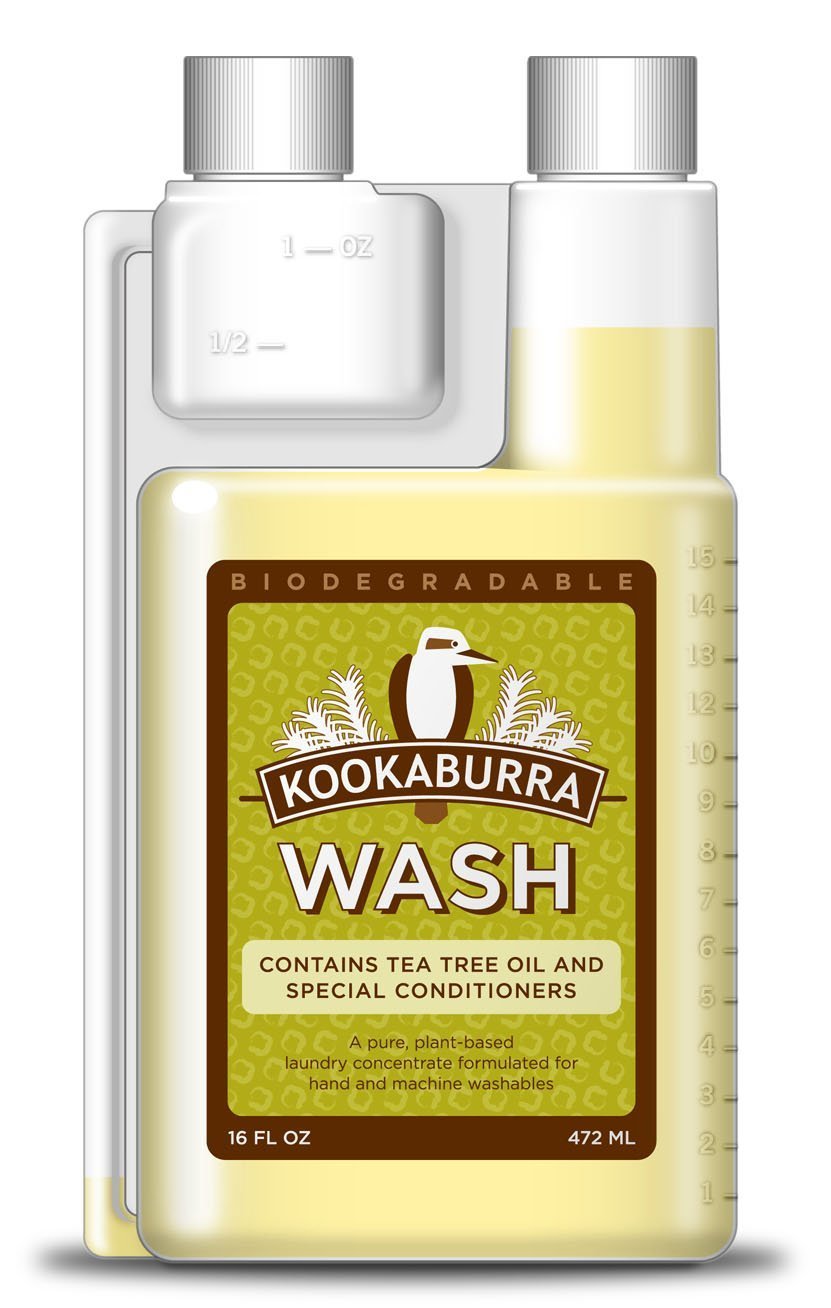
Built for the jobs a delicate wash usually cannot touch — sheepskin, down, and a sweater that has seen real wear.
What people rave about here is the scent, and it is specific: tea tree, faintly medicinal, clean rather than floral, and it fades as the item dries. That note is not decoration — tea tree oil is in the formula alongside lanolin, and this is the pick owners reach for when the item is a sheepskin rug, a down pillow, or a sleeping bag rather than a carefully folded cardigan.
The restoration stories are what make this bottle distinctive. Owners describe flattened, grey, matted sheepskins coming back creamy and fluffy after a warm delicate cycle with this wash, plus a few minutes of brushing. Down and fine wool respond too — cashmere and merino reported softer and better-looking than with regular detergent, washed cold and kept out of the dryer. It is concentrated, so a small measured pour handles a whole rug.
Two honest notes. First, the measuring chamber takes a moment to learn — squeeze the middle of the bottle and watch the level rather than trying to pour by eye. Second, a full sheepskin can come out stiff and misshapen if you under-dose or let it air-dry flat without working the skin; the fix is following the label amount and tugging the leather gently as it dries. It is hypoallergenic, so it suits households with detergent sensitivity washing a sheepskin or down item.
The standout: tea tree oil plus lanolin, in a concentrated 16-ounce bottle, for sheepskin, down, and fine wool — a wider remit than the Eucalan bottles above.
The follow-up question: will it handle a humble sweater? Yes — merino and cashmere are reported softer after a cold wash, no dryer involved.
Best suited to: households with a sheepskin, a down comforter, or wool that gets genuinely dirty and needs reviving.
Go gentle if: you dislike a tea tree scent or want the simplest possible measuring routine — the squeeze-and-check chamber takes practice.
5. ECOS Hypoallergenic Laundry Detergent Free & Clear 100oz

The big jug for everything that is not wool — and the everyday detergent your woolens should sit out.
This is a different tool entirely, and it earns a spot because most wool-wearers also do regular laundry. A 100-ounce bottle rated for 100 loads is a whole-household supply, 2X ultra-concentrated, color safe, and formulated to work at all temperatures in both standard and HE washers. It is also free of dyes, optical brighteners, parabens, and phosphates, and it carries U.S. EPA Safer Choice certification — the label to look for if the eco side matters to you.
On the wool question, be clear-eyed: this is a plant-derived general detergent, not a wool-specific wash, and it has no lanolin. It is not the bottle to soak a cashmere sweater in — that job belongs to the Eucalan picks above. It is the bottle for jeans, towels, sheets, and the household cotton load. Buyers like that clothes come out clean without a perfume trail, describing a faint scent that leaves garments fresh rather than perfumed.
At 6.25 pounds and 10.38 inches wide, this jug is the heaviest thing in the group — the Fine Fabric Wash bottle weighs 1 pound, so expect a two-handed lift off the shelf. It is also hypoallergenic, pH-balanced, and dermatologist-tested, so it suits households with sensitive skin doing everyday cotton loads. The one practical gripe: the seal tape can arrive loose, so check the cap before you store it on its side.
Where the big jug wins
- 100 loads from one 100-ounce bottle — a supply that lasts through months of ordinary laundry
- Free of dyes, optical brighteners, parabens, and phosphates, with U.S. EPA Safer Choice certification
- Works in standard and HE washers, at any temperature, and with septic and greywater systems
- Fragrance-free formula leaves clothes clean without a perfume trail
What it will not do
- No lanolin and no wool-specific formula — keep it away from cashmere and hand knits
- The 6.25-pound jug takes two hands and real shelf space
Reach for this if: you want one bottle for the household wash and will keep a separate wool wash for the sweaters.
Not for: wool, cashmere, or any hand knit — that is the Eucalan job, and this jug should stay on the laundry shelf.
Know the Specs
No-Rinse Formula
A no-rinse wash is designed so you soak the garment, lift it out, and dry it without running water over it again. For wool this matters because wet wool is heavy and fragile — every lift and squeeze is a chance to stretch a shoulder seam or felt the surface. Skipping the rinse also saves water, which is why full-time RV owners and travel washers tend to favour these formulas.
Lanolin
Lanolin is the natural wax wool carries on the sheep, and it is what gives a good fiber its soft hand. A wool wash that contains lanolin puts that back while it cleans, so cashmere and merino dry soft instead of dry and stiff. A general detergent without lanolin will clean the garment but can leave the fiber feeling rougher over time.
Sodium Lauryl Sulfate Free
Sodium lauryl sulfate is a common lather-booster in detergents. It is not the enemy for cotton, but repeated washing of a fine animal fiber with a strong surfactant can strip the surface. A wool wash that leaves it out is the gentler choice for anything you plan to keep for years — hand knits, heirloom sweaters, and vintage finds especially.
Concentration
A concentrated wash means a small pour handles a full basin, so a 16-ounce bottle covers many wash days. That is why wool-wash bottles are small and tall rather than big and wide — you are buying a formula, not a volume of water. Pair it with the label dose rather than a generous glug, and the bottle lasts.
Common Questions
Can I use regular laundry detergent on a wool sweater?
Do I really not need to rinse a no-rinse wool wash?
How much wool wash should I use per basin?
Will a wool wash make my sweater softer or just clean it?
Can I machine wash wool with these detergents?
Why does my red wool bleed into the wash water?
Is a scented wool wash safe for sensitive skin?
Which is better for a hand-knit sweater — Eucalan or Kookaburra?
Can I use a wool wash on down pillows and sleeping bags?
How should I store wool between seasons?
The Bottom Line
For most people washing wool, the winner is the Eucalan No Rinse Delicate Wash in Lavender — the no-rinse routine removes the risky handling that ruins a knit, and the lanolin leaves cashmere and merino soft. It is the formula that does the job in one step. If you want a scent that doubles as moth defense and a bottle that travels, the Eucalan Fine Fabric Wash in Eucalyptus is the one. For reactive skin and baby knits, the unscented Fine Fabric Wash is the quiet, safe choice, and the Kookaburra Wash handles the heavier jobs — sheepskin, down, and a sweater that needs reviving.
And the everyday stand-in is the ECOS Free & Clear jug for the household cotton load, kept well away from the sweaters. The honest nudge: a concentrated wool wash is a small bottle that lasts many wash days, so start with the one-step Eucalan you will actually use rather than the biggest jug on offer.
How we choose
We do not accept paid placement. Every pick is matched to a real buyer and a real use-case; we do not hands-on test units.
Sources
Specifications: manufacturer listings and product documentation. Review insights: verified customer reviews, as of October 2026. Pricing: not shown on this page (it changes often); check the current price via the retailer link.
As an Amazon Associate, Aappliancez earns from qualifying purchases. This does not affect which products we feature.