Disclosure: Some links in this post are affiliate links. As an Amazon Associate I earn from qualifying purchases, at no extra cost to you. Learn more
Specs are compiled from manufacturer listings and verified buyer reviews and can change over time — please confirm the key details on the product page before buying.
Washing wool and cashmere at home feels risky because the wrong soap can shrink a sweater or stiffen a scarf in a single wash. The fix: use a wool-safe wash, keep the water cool, and skip the rinse step entirely. That is exactly what the five picks below are built to do, and the top choice is the lavender Eucalan no-rinse wash — the crowd favorite at 4.5+ stars across 2,200+ ratings.
This guide is built by comparing the manufacturers’ published specifications and the patterns across verified customer reviews, so you get each pick’s real strengths and trade-offs instead of marketing spin.
Whether you are rescuing a matted sheepskin or hand-washing a cashmere cardigan, this breakdown of the detergent for wool and cashmere covers what actually works.
Top Picks


How To Choose The Best Detergent for Wool and Cashmere
Wool and cashmere are protein fibers, which means they behave nothing like cotton or polyester in the wash. Hot water and agitation make the scales on each fiber lock together — that is felting, and it is permanent. The right wash keeps the water cool, minimizes movement, and leaves a thin conditioning layer on the fiber instead of stripping it bare.
Why No-Rinse Formulas Matter for Delicates
A no-rinse wash means you soak the garment, gently squeeze out the water, and lay it flat to dry — no running water through the sink, no wringing, no twisting. Rinsing is where most hand-wash damage happens, because people get impatient and start squeezing. Skipping that step removes the risk entirely. It also saves water, which is why these formulas show up in RV and tiny-home laundry setups as well as fiber studios.
Lanolin and Fiber Conditioning
Lanolin is the natural wax sheep produce in their fleece, and a wool wash that contains it replaces some of what processing strips away. That is why lanolin-enriched washes leave sweaters feeling soft instead of scratchy after drying. If you have sensitive skin or react to fragrance, look for an unscented version, since the conditioning ingredients work the same either way.
Concentration and Cost Per Wash
A concentrated formula costs more per bottle but delivers far more washes because you only need a teaspoon or so per gallon of water. Diluted grocery-store detergent forces you to pour more, which means more residue left in the fiber. For anyone washing hand knits, merino, or cashmere regularly, a concentrated bottle outlasts a bargain jug several times over.
Side-by-Side Comparison
| Model | Best For | Format | Contains Lanolin | Scent | Amazon |
|---|---|---|---|---|---|
| Eucalan No Rinse Delicate Wash – Lavender 16.9 OZ★ Best Overall | Best overall for hand knits and delicates | 16.9 oz no-rinse liquid | Yes | Lavender | Amazon |
| Gentle Care for Handwash Delicates, 500mlBest for Sensitive Skin | Sensitive skin and mixed machine loads | 500ml handwash liquid | — | Light floral | Amazon |
| Fine Fabric Wash 16.9 Oz: Unscented | Fragrance-free washing for heirloom pieces | 16.9 oz no-rinse liquid | Yes | Unscented | Amazon |
| Fine Fabric Wash 16.9 Oz: Grapefruit | Fresh scent with the same no-rinse cleaning | 16.9 oz no-rinse liquid | Yes | Grapefruit | Amazon |
| Kookaburra Wash (16-Ounce) | Restoring sheepskin, down, and matted wool | 16 oz wash with tea tree oil | Yes | Tea tree and floral | Amazon |
Detailed Reviews
1. Eucalan No Rinse Delicate Wash – Lavender 16.9 OZ
Our pick — 4.5+★ from 2,000+ verified ratings; the strongest balance of quality and price.
The no-rinse formula that turns an hour of sink-wringing into a five-minute soak.
If you own hand-knit sweaters, lanolin-rich wool fleece, or anything a yarn shop told you never to machine wash, this is the bottle most fiber people reach for first. The 16.9 oz bottle delivers a concentrated liquid that lifts dirt while leaving a conditioning layer behind, so garments come out soft rather than stiff. The no-rinse step is the real selling point: you soak, you squeeze gently, you lay flat to dry, and you never run a rinse cycle that could felt the fibers.
The lavender scent is the version that runs richer in the bottle but softer on the garment than you might expect, and the 1.06-pound bottle has a footprint of 9.69 x 3.31 x 2.91 inches — noticeably longer and flatter than the Fine Fabric Wash Unscented bottle at 2.3 x 2.3 x 8.5 inches, which is a 4.2x difference in overall shape. In practical terms, the Eucalan bottle sits lower on a shelf and is less likely to tip when you reach past it. It is also the heavier of the two at 1.06 pounds against 1 pound, though the difference is minor in the hand.
What wins people over is the versatility beyond sweater care — bras, microfiber cloths, sheepskin rugs, and even knee pads all show up in the feedback. The one caution worth flagging: colors can bleed when you wash mixed shades together, so sort similar tones into the same soak. That is a normal trait of any concentrated wash, not a defect, but it is worth knowing before you drop a red cashmere scarf in with a cream one. Buyers report a simple method that works: “Soak in 5-gallon bucket, knead 1-2 min, roll in towels (never twist/wring), lay flat to dry.”
What makes it the top pick
- No-rinse format skips the step where wool felts most often
- Lanolin-enriched so fibers stay supple after drying
- Works on wool, cashmere, sheepskin, bras, and microfiber cloths
- Biodegradable and concentrated, so a little goes a long way
Where it asks for care
- Colors can bleed if you soak mixed shades in the same bath
- Lavender scent is noticeable while soaking, though it fades after drying
Built for: Anyone hand-washing sweaters, bras, or delicate knits who wants to skip the rinse entirely. The no-rinse step alone removes most of the risk of accidental felting.
Heads up: Sort by color before soaking — darker dyes can transfer when concentrated wash meets mixed loads.
2. Gentle Care for Handwash Delicates, 500ml
A rich silky liquid that keeps cashmere looking new without asking you to change your whole routine.
For anyone whose skin reacts to regular detergent residue, this 500ml bottle is the pick that keeps wool care simple. It is formulated for cashmere, wool, and silk, and the description is blunt about what it does: cleans, refreshes, and protects fibers while leaving fabric soft and fresh. The liquid has a rich, silky feel that spreads through cool water easily, so you are not chasing clumps of powder around the basin.
The 1.21-pound bottle is the heavier of the two compact options here — the Eucalan unscented 16.9 oz bottle comes in at 1 pound, which is 21% less on the scale. That extra weight comes from the denser liquid inside, and it translates to a smaller pour per wash since the formula is concentrated. It sits at roughly 3.94 x 3.94 x 1.97 inches, so it stores flat in a cabinet with the rest of your laundry supplies rather than towering on the shelf.
One buyer with sensitive skin reports using it for most of their clothes in the washing machine at 30/40°C with no issues, which is worth knowing if you want one bottle to handle both hand wash and a gentle machine cycle. The formula is non-biological, meaning it works without enzymes that can break down protein fibers over time. If you are washing vintage cashmere or merino from a consignment shop, that is the trait you want.
The main gripe is availability — it is not always easy to find in local stores, which is why it shows up on Amazon regularly.
Pick this if: Your skin reacts to standard detergent and you want one bottle that handles wool, silk, and cashmere in both the sink and a gentle machine cycle.
Think twice if: You need a completely fragrance-free formula for stored woolens — the light floral note stays detectable longer than an unscented wash would.
3. Fine Fabric Wash 16.9 Oz: Unscented

The no-fragrance workhorse for heirloom knits and anything you plan to store for the season.
A fragrance-free wash is not just a preference — it is a practical choice for anyone storing wool for months, because residual scent can attract moths and lingering perfume can be hard to remove once it settles into fiber. This 16.9 oz bottle is the same concentrated, no-rinse Eucalan formula with the scent stripped out, and it leads with two traits that matter for long-term garment care: it is biodegradable and it contains lanolin.
The concentrated formula means a tiny drizzle per gallon. The most striking story in the feedback involves a 42-year-old hand-knit Aran sweater: “Removed large orange/brown stain from 42yo handknit Aran sweater. Pre-treated with 1:3 vinegar/water blotting, then full-strength Eucalan, overnight wait, handwash (1 tsp:1 gal), air dry. Stain gone.” That is the concentrated ratio doing the work — one teaspoon per gallon for a normal hand wash, straight from the bottle for a pre-treat.
The unscented version is the one to choose if you wash consignment finds or secondhand cashmere from online sellers. One buyer describes running consignment cashmere and merino through a short soak with no rinse needed, and confirms the unscented version is truly unscented — no phantom fragrance hiding in the mix. The same caution applies as with the lavender version: colors may bleed, so keep similar shades in one soak and separate the pale from the dark.
The one trait that takes adjusting to is the price-per-bottle for a formula that can feel thin in the water. It is concentrated, so a bottle lasts a long stretch, but the upfront cost sits at the premium end of the Eucalan lineup. For anyone washing two sweaters a season, the convenience may not justify the formula; for regular hand-washers, it pays out over the bottle.
Why it earns a spot: Truly unscented with lanolin included, which is exactly what you want for garments headed into storage — no fragrance residue to trap odors or draw moths.
The honest trade-off: The upfront bottle cost sits higher than basic detergent, so it makes most sense for regular hand-washers rather than the occasional sweater refresh.
Reach for this if: You wash secondhand cashmere, consignment merino, or anything you plan to store for months without a fragrance trail.
Look elsewhere if: You only hand-wash one or two items per season and want the lowest entry cost — a concentrated bottle is hard to justify at that pace.
4. Fine Fabric Wash 16.9 Oz: Grapefruit

Same Eucalan formula, dialed in with a bright grapefruit note that fades after the soak.
If you want a scent that lifts a stale sweater without hanging around the closet afterward, the grapefruit version is the middle ground between the lavender Eucalan and the unscented one. It carries the same concentrated, lanolin-spiked formula with a no-rinse step, so the mechanics of washing do not change — only the smell does. The scent is described as faint by the time garments dry, which means you get the fresh note during the soak without a perfume trail on the finished piece.
Beyond wool, this is the version that handles silk well. It cleans silk quickly, rinses well, and leaves items soft and supple, while also dissolving body oils that build up on pillowcases and intimates. The no-rinse character matters here too — silk that gets wrung or twisted can lose its sheen, and skipping the rinse step eliminates that risk. One reviewer sums up the result after a longer soak simply: one to two hours in and “the water turns clear.”
The one real-world issue to expect is packaging. There are reports of the bottle leaking in transit even inside a padded envelope and an inner plastic bag, costing a small amount of product and a quick cleanup. It is not a formula problem and it does not affect the washing performance, but if your order arrives visibly damp, that is why. Store it upright after the first use and you are set.
What stands out: The grapefruit note is fresh during the soak and essentially gone after drying, so you get the sensory lift without fragrance lingering on clothes in storage.
The catch to expect: Shipping occasionally arrives with a small leak at the cap despite the padded packaging — a minor inconvenience, not a problem with the wash itself.
Worth it for: Anyone who wants the Eucalan no-rinse performance but prefers a bright scent during the wash rather than a lavender or unscented version.
Skip if: You need a completely fragrance-free soak for stored wool — the grapefruit note does fade, but not to zero.
5. Kookaburra Wash (16-Ounce)
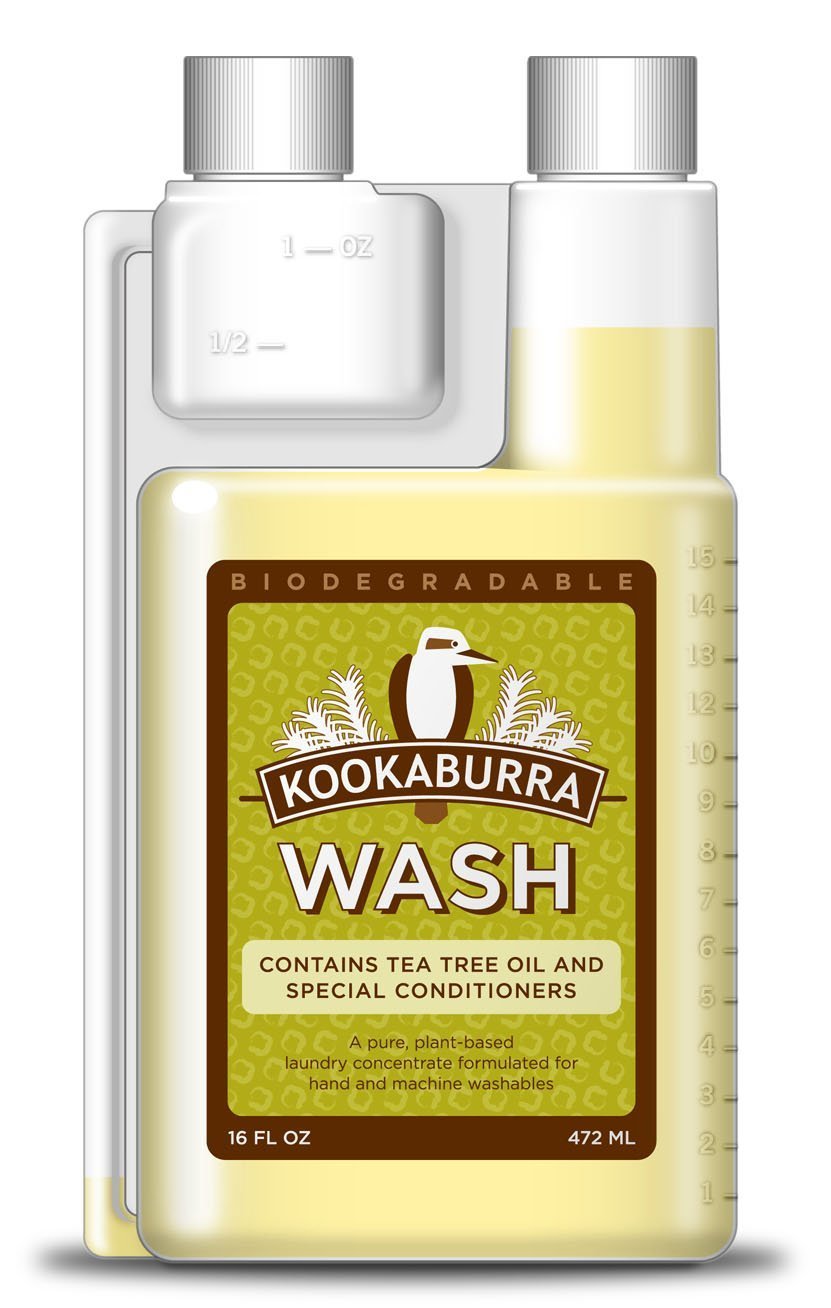
The heavy-lifter that rescues matted sheepskin and down, not just sweaters and scarves.
Kookaburra is the pick for anyone whose wool-care needs go past hand knits — sheepskin rugs, down pillows, sleeping bags, and comforters are all fair game. The formula combines tea tree oil with lanolin, so it freshens while it conditions, and it is listed as hypoallergenic for people with detergent sensitivity. The 16 oz bottle is concentrated like the Eucalan options, and no rinsing is required, which keeps agitation to a minimum on fabrics that are already fragile.
The tea tree side of the formula is what makes this one different. What the review pages sum up as the most-discussed quality is the fragrance — described as a slight floral tea tree note that dissipates after drying but leaves the fiber smelling genuinely clean rather than perfumed. The gentleness comes in a close second in the feedback, which tracks with a wash designed to sit on the fiber rather than strip it. It is the pick for sheepskin rugs and down bedding that lighter washes cannot revive.
The most dramatic use case concerns a matted sheepskin rug: “Restored flat, grey, matted sheepskin rug using 1.5 oz in agitator washer (warm wash/rinse, low agitation, high spin, delicate).” It came out creamy white and fluffy after a few minutes with a brush. Cashmere and merino get the same treatment and come back softer, per owners who wash both. On the practical side, the measuring chamber on the bottle has been called hard to figure out, and there are notes that too small a dose on a heavy sheepskin leaves it wet and stiff after air drying — a sign to dose generously for thick fluffy items.
The wins owners keep confirming
- Restores matted sheepskin and revives down bedding and comforters
- Tea tree oil freshens while lanolin conditions the fiber
- Hypoallergenic and formulated for detergent-sensitive users
- No rinsing needed, so fragile fibers get minimal agitation
Where it asks for attention
- The measuring chamber on the bottle takes some getting used to
- Under-dosing thick sheepskin can leave it stiff after air drying
Best fit: Sheepskin rugs, down pillows, sleeping bags, and heavily-soiled wool that lighter washes struggle to refresh.
Watch out for: The bottle’s measuring chamber — dose generously for thick items like sheepskin, or they may air-dry stiff.
Know the Specs
No-Rinse Formulas Explained
A no-rinse wash is a soap designed to be left in the fiber after soaking rather than rinsed away. That matters because rinsing is where most hand-wash damage happens — you either run water over the garment, which adds agitation, or you wring it out to speed the process, which stretches and felts the fiber. A no-rinse formula skips that step entirely: you soak, gently press the water out, and lay the piece flat to dry. The Eucalan and Kookaburra bottles here all work this way.
Lanolin and Fiber Conditioning
Lanolin is the waxy substance sheep naturally produce in their fleece. When a wash contains lanolin, it replenishes some of what commercial processing removes. Wool and cashmere that has been stripped of lanolin feels dry and scratchy, and it loses some of its spring. A lanolin-enriched wash leaves a thin conditioning layer on the fiber so it stays soft after drying. You do not need much — the concentration means a small pour per gallon of cool water is enough.
Common Questions
How much detergent should I use for a single cashmere sweater?
Can I use these washes in a washing machine?
Will washing cashmere at home make it pill or felt?
Is a scented wash safe for someone with sensitive skin?
Do I need to rinse after using a no-rinse wool wash?
Can I use these on sheepskin rugs and down pillows?
Will a concentrated wash really last longer than grocery-store detergent?
Is it okay to mix colors in the same wool soak?
What is the difference between biological and non-biological detergent for wool?
Should I dry clean cashmere or hand wash it at home?
The Bottom Line
For most people washing wool and cashmere at home, the detergent for wool and cashmere winner is the Eucalan No Rinse Delicate Wash in Lavender because its no-rinse format removes the agitation step where felting happens, and it works across sweaters, bras, and sheepskin. If fragrance bothers you or you store wool long-term, grab the Fine Fabric Wash Unscented — the same no-rinse formula with the scent stripped out. And if you need to restore a matted sheepskin rug or down comforter, the Kookaburra Wash is the one to reach for. Every pick here is concentrated enough that a single bottle earns its shelf space, so start with the format that matches how you actually wash, not the biggest jug on the list.
How we choose
We do not accept paid placement. Every pick is matched to a real buyer and a real use-case; we do not hands-on test units.
Sources
Specifications: manufacturer listings and product documentation. Review insights: verified customer reviews, as of October 2026. Pricing: not shown on this page (it changes often); check the current price via the retailer link.
As an Amazon Associate, Aappliancez earns from qualifying purchases. This does not affect which products we feature.