Disclosure: Some links in this post are affiliate links. As an Amazon Associate I earn from qualifying purchases, at no extra cost to you. Learn more
Specs are compiled from manufacturer listings and verified buyer reviews and can change over time — please confirm the key details on the product page before buying.
You want that deep, glossy, beefy sauce that restaurant kitchens ladle over a steak — without roasting bones and simmering stock all afternoon. The fastest honest route is a concentrated base or a powdered mix, and the difference between a good one and a forgettable one is how much real beef depth you get per spoonful. Below, the paste bases and sauce mixes that actually deliver that flavor, ranked by what they do best in a home kitchen.
This guide is built by comparing the manufacturers’ published specifications and the patterns across verified customer reviews, so you get each pick’s real strengths and trade-offs instead of marketing spin.
Concentrated bases stretch further than a jar of ready sauce, but only if you know how much to reconstitute and when salt becomes the limiting factor. That is the whole trick, and it is why the picks below are ranked by how they cook.
Top Picks
How To Choose The Best Demi Glace
The label in this category tells you almost everything once you know where to look. Three numbers and words decide whether a product suits you: how much sauce it yields, how much salt comes with that yield, and whether it is a paste base or a powdered mix. Get those three right and the first spoonful will taste the way you expected.
Paste base versus powdered mix
A paste base is a thick, concentrated beef product you spoon out and dissolve — it behaves like a stock concentrate that thickens as it reduces. A powdered sauce mix is a blend you whisk into water or pan drippings, and it sets up into a glossy gravy through starch rather than reduction. Paste bases taste more like meat; powdered mixes taste more like a finished sauce and thicken faster. Neither is better — they solve different problems.
Yield is the number that actually matters
A 16 ounce paste and a 28 ounce canister can cost similar money but produce wildly different amounts of finished sauce. Powdered mixes are far more economical per serving because you use a teaspoon at a time. Read how much sauce the whole container makes before you decide which one is the better buy for your kitchen.
Salt, gluten, and what is in the tin
Many bases are salty by design — they are seasoning, not a neutral stock. If you watch sodium, look for a base you reconstitute with water rather than one you add straight from the spoon. Some mixes in this group are gluten- and dairy-free, which matters if you cook for someone with a restriction. Check the ingredient list for MSG and preservatives if you avoid them.
Which style of sauce do you actually cook
A French-style beef glaze is built for steaks, roasts, and pan sauces. A Japanese-style demi-glace is a different animal — sweeter, built for hayashi rice, omurice, and beef stew. Buy to your cooking, not to the word on the jar — a French glaze and a Japanese sauce do not swap cleanly.
Side-by-Side Comparison
| Model | Best For | Format | Size | Style | Amazon |
|---|---|---|---|---|---|
| Minor’s Original Formula Beef Base★ Best Overall | Everyday gravy, broth, and au jus | Paste base | 16 Ounce | Beef base | Amazon |
| Mishima Japanese Style Demi-Glace SauceBest for Yoshoku | Hayashi rice and omurice | Ready sauce | 8 oz (pack of 2) | Japanese-style | Amazon |
| Savory Choice Beef Demi Glace | Braising short ribs and pot roast | Pouch | 2.6 Ounce (pack of 6) | Beef demi-glace | Amazon |
| Knorr Demi-Glace Sauce Mix | Weeknight pan gravy and glazes | Powdered mix | 28 Ounce | Classic demi-glace | Amazon |
| Knorr Professional Ultimate Demi-Glace Sauce Mix | Big-batch cooking and entertaining | Powdered mix | 26 Oz (pack of 4) | Classic demi-glace | Amazon |
Detailed Reviews
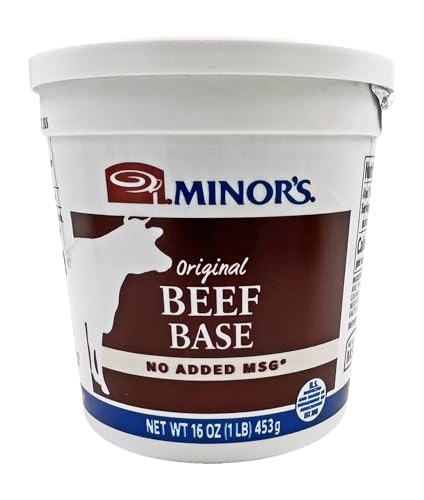
1. Minor’s Original Formula Beef Base, 16 ounce
Our pick — 4.5+★ from 750+ verified ratings; the strongest balance of quality and price.
The 16-ounce paste tub that culinary-school grads keep on the shelf for gravy, soup, and au jus.
Minor’s is the pick that behaves like a real beef reduction rather than a seasoning shortcut. It’s a paste base sold in a 16 ounce tub, and it holds zero grams of trans fat and saturated fat per serving with no preservatives and no artificial flavors. Every batch is sensory tested before it ships, which is the kind of thing that matters when you are building a sauce you will taste straight.
What wins people over is the sheer depth of flavor per spoonful. Quality runs away with the attention here, and the flavor itself is the second-most talked-about trait, which tells you this is a product cooks reach for because it genuinely tastes like beef, not because it is convenient. Buyers report using it as the backbone of French onion soup, au jus, meatloaf, and even a dry rub on a prime rib — one 16 ounce tub carried a home cook through an entire winter of soup-making, sometimes stretched with chicken broth for posole. It is not overly salty when you reconstitute it according to the label, which is the point where most competing bases fall apart.
The honest catch is value. That is a fair trade if you cook beef often, because a little goes a long way and the tub keeps. It is the crowd favorite in this group at 4.5+ stars from 700+ ratings, and if you only buy one beef base for gravy, soup, and au jus, buy this one.
What earns the top spot
- Zero grams trans fat and saturated fat per serving, with no preservatives or artificial flavors
- Real beef depth that holds up in broth, gravy, and dry-rub applications
- Lenient on salt when reconstituted to the label ratio
- Every batch sensory tested before shipment
Where it costs you
- Higher sticker than standard bouillon, which some shoppers resent
- Not always easy to find in local stores, so stock up when it is in stock
- It is a base, not a finished sauce — you still have to build the pan sauce yourself
Reach for it when: you cook beef regularly and want one tub that works for soup, gravy, and au jus without measuring much.
Think twice if: you want a sauce that thickens itself straight from the jar — this one needs you to reduce it.
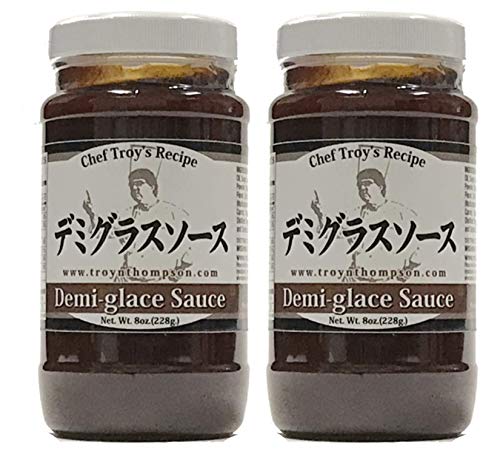
2. Mishima Japanese Style Demi-Glace Sauce, 8 oz, Pack of 2
A sweet, tomato-forward Japanese-style sauce built for hayashi rice and omurice, not steak.
This is not a French demi-glace, and the label says so. Mishima is built to make yoshoku — western-style Japanese home cooking like Hayashi Rice, Beef Stew, and Omurice — where the sauce is meant to be sweeter and fruitier than a French beef glaze. You get two 8 ounce pouches, and the pair runs 8 ounces each, versus the 2.6 ounce pouches Savory Choice sells, so you are getting more volume per package here. If your dish is omurice with a glossy brown sauce poured over the top, this is the shelf you should be shopping.
Where it loses footing is with anyone expecting the French original. The word “demi-glace” on the label sets an expectation this product does not meet, and several owners mention the taste is closer to a sweet tomato sauce than a beef reduction. One disappointed cook put it bluntly: “This is not demi-glace. I regret to have bought this-I had to throw it away. It tastes like a bad tomato sauce.” That is not a defect so much as a mismatch — bring it to a hayashi rice recipe and it works, bring it to a steak and you will notice the sugar.
For the Japanese-style niche, it is a practical buy: no simmering, no building a roux, just open and pour. Cooks in a hurry say it does “do in the rush” even when the flavor is not exactly what they hoped for. Treat the label as “Japanese demi-glace,” not “French demi-glace,” and the value holds up.
Honest read: Buy this for the soy-sauce-and-mirin side of the cooking spectrum, and it earns its shelf space. The pack of 2 at 8 ounces each is a reasonable amount for a few batches of hayashi rice or omurice.
Wrong shelf for steaks: If your definition of demi-glace is a French beef glaze reduced over hours, this product will disappoint — the sweetness is built into the style.
Best for the yoshoku cookbook: anyone making hayashi rice, beef stew, or omurice and looking for the ready-made Japanese sauce.
Look elsewhere if: you wanted a French-style beef reduction to pour over a steak or roast.
3. Savory Choice Beef Demi Glace 2.6 Ounce Pack of 6

Six 2.6-ounce pouches that each make 1/4 cup of sauce for a pot roast or short ribs.
Savory Choice sells its demi-glace in pouches instead of pastes or powders, and each 2.6 ounce pouch makes 1/4 cup of sauce — the equivalent of four 1 ounce servings. You get six pouches, 16 ounces total, and they are free of MSG, preservatives, gluten, and trans fat. The pouch format is what makes this pick worth it for braisers: tear one open, drop it in with your short ribs, and the work is done. That is a cleaner process than spooning paste out of a tub and guessing the amount.
Flavor is the thing buyers rave about, and versatility is right behind it. One recurring theme is how far a pouch stretches — pots of beef stew, a braised pork roast, a red wine and truffle steak sauce built from a single pouch, even mashed potatoes that get amped up with a spoonful. There are also regulars who buy it in bulk because their local store stopped stocking it, which is the clearest compliment a pantry product can get.
One real limitation to know: this is not a thick, glossy reduction straight out of the pouch. You will still want to simmer it down with wine or stock if you want a sauce that clings. But for adding beefy depth to a braise, a soup, or a pan sauce, it is the format that makes the process simple.
The braise hack: Toss one pouch in with a pot roast or short ribs and let it do the heavy lifting. The 1/4 cup yield per pouch makes portioning easy — the same amount every time.
Trade-off: Pouch pricing is less economical per serving than a canister of powder, so this is the pick for cooks who braise often and want convenience over cost per ounce.
Choose it if: you cook pot roast, short ribs, and stews and want a pre-measured way to add beefy depth without opening a big tub.
skip it if: you want the most sauce per dollar or need a mix that thickens to a glossy glaze on its own.
4. Knorr Demi-Glace Sauce Mix, 28 Ounce Canister

A teaspoon of powder that thickens and flavors a glossy pan gravy without a roux.
Knorr’s canister is a powdered sauce mix, not a paste, and that changes the math. The 28 ounce size runs 1.75 pounds, versus the 1 pound Minor’s tub, and every teaspoon you use is a teaspoon of flavor plus starch — so it thickens as it dissolves. That is why it earns its place in the weeknight rotation: it does not just flavor a sauce, it sets it into a glossy gravy without a roux. If you want a demi-glace that helps mouthfeel and thickness, a mix is the tool.
Flavor leads what people love about it, with ease of use right behind. The most useful thing to know is that home cooks use it as a background builder rather than a stand-alone sauce — a half teaspoon in a cider-and-vinegar glaze for pork chops, or a half teaspoon in a slow-cooker roast with broth, and the whole dish deepens. Straight from the pot, it dissolves without lumps and creates a nice thick, glossy sauce.
The size is the honest catch. A 28 ounce canister is a big commitment — one reviewer found the container closer to 26 ounces in practice, with a handy chart on the back for 1 cup of water to 23 grams of mix, scaling up to 2 gallons. For a single family it lasts a long while, which is great if everyone loves beef gravy and less ideal if you only make it a few times a year.
Why it earns a slot
- Thickens and flavors at once, so you skip the roux
- 28 ounce canister is far bigger than the 16 ounce paste tubs
- Dissolves lump-free and sets a glossy gravy
- Works as a flavor booster in glazes and slow-cooker dishes
Where it pushes back
- Salty when mixed to the full package ratio
- Big canister is slow to use up for a small household
- It is a mix, not a meat reduction — the beef depth is lighter than the paste bases
Made for: the cook who wants a pan sauce thickened and glossy in minutes without building a roux.
Know before you buy: this is a flavor-and-thickener combo, so use half the labelled amount when you already have salty drippings.
5. Knorr Professional Ultimate Demi-Glace Sauce Mix 26 Oz 4 Pack

Each 26-ounce tub yields 2 gallons of finished sauce — food-service volume for batch cooking.
The number that defines this pick is on the label: each container yields 2 gallons of finished demi-glace sauce. That is not a home-kitchen amount, which is exactly why it earns the bulk-buy slot. You get a 4 pack of 26 ounce tubs, and the sauce itself is built from beef, mirepoix, and tomato for the classic flavor profile. It is gluten- and dairy-free, with no artificial flavors, no preservatives, and no MSG added — the same restrictions-friendly specs as the consumer Knorr canister.
The flavor is what people come back for. Owners describe it as restaurant quality, and one home cook says their son made it with wine and it came out “absolutely amazing” — the wine reduction is a nice move with this one because the mix has the starch to thicken even after you add liquid. Others describe it as a “great cooking hack” that tastes good enough for most applications, which tells you it is a volume tool rather than a special-occasion sauce. If you cook for a crowd, run a small kitchen, or freeze pan sauce in batches, this is the economical format.
The honest catch is scale. Four tubs at 26 ounces each means 104 ounces total, which is a lot of dried mix to store and use before it gets old. If you cook for two and only want demi-glace once a month, the smaller Knorr canister is a better fit. But if volume cooking is the reality, this is the format that gets you there without running out mid-service.
Food-service logic: The 2-gallon yield per tub is the entire reason to buy this. Portion the powder by weight, cook in batches, and freeze the finished sauce.
What to accept: It is a powdered mix, so treat it as a dependable base rather than a from-scratch reduction — lighter on sheer beef intensity than a paste base like Minor’s.
Great for: home cooks who entertain, small food businesses, and anyone who wants a freezer stocked with pan sauce ready to thaw.
Not for: a two-person household that makes demi-glace a few times a year — the volume will outlast your patience.
Know the Specs
Yield vs. net weight
A tub’s listed ounces measure what is in the container, not how much sauce you get. A paste base at 16 ounces is concentrated and you spoon a little at a time, while a powdered mix at 28 ounces produces far more finished gravy because you use a teaspoon per cup of water. This is why a bigger canister can cost more than a smaller tub and still be the more economical per-plate choice.
Paste, powder, and pouch
Each format does one job best. Paste bases (like Minor’s) give the deepest beef flavor and need reducing. Powdered mixes (like the Knorr options) thicken as they dissolve and are the fastest route to a glossy pan sauce. Pouches (like Savory Choice) pre-measure the serving so you avoid measuring, but they cost more per serving. Match the format to how you actually cook on a Tuesday night.
Sodium and how to control it
Most bases are salty by design; they are seasoning, not neutral stock. The fix is dilution. Reconstitute a base with water rather than adding it straight from the spoon, and halve the powder when your drippings are already salted. Watch for salty results when a mix is used at the full package ratio with a broth that is already seasoned.
Gluten, dairy, and MSG
Not every demi-glace works for every diner. The Savory Choice pouches and both Knorr products are made without gluten, and the Knorr Professional tubs are dairy-free and free of added MSG. The paste base category is generally less restricted, so if you are cooking for someone with a genuine restriction, read the specific product’s ingredient list, not just the label promise.
Common Questions
Is a beef base the same thing as a demi-glace?
How much sauce does one pouch of Savory Choice make?
Can I use a Knorr demi-glace mix as a gravy for a roast?
Why does my demi-glace taste too salty?
Is Mishima the same as French demi-glace?
How should I store an opened canister of demi-glace mix?
How do I make a glossy demi-glace from a powder without lumps?
Can I freeze sauce made from a demi-glace mix?
Which pick is best if I only ever make steak sauce?
Are these products gluten-free or dairy-free?
The Bottom Line
For most cooks, the demi glace winner is the Minor’s Original Formula Beef Base because it gives the deepest beef flavor per spoonful and works for soup, gravy, au jus, and rubs alike. If you cook a lot of pot roast and short ribs, grab the Savory Choice Beef Demi Glace pouches — pre-measured, gluten-free, and a natural fit for the braiser. And for anyone who wants a glossy pan sauce in minutes without a roux, the Knorr Demi-Glace Sauce Mix is the one to reach for. You cannot go wrong buying the Minor’s tub first and adding the Knorr canister for weeknight speed.
How we choose
We do not accept paid placement. Every pick is matched to a real buyer and a real use-case; we do not hands-on test units.
Sources
Specifications: manufacturer listings and product documentation. Review insights: verified customer reviews, as of October 2026. Pricing: not shown on this page (it changes often); check the current price via the retailer link.
As an Amazon Associate, Aappliancez earns from qualifying purchases. This does not affect which products we feature.