Disclosure: Some links in this post are affiliate links. As an Amazon Associate I earn from qualifying purchases, at no extra cost to you. Learn more
Specs are compiled from manufacturer listings and verified buyer reviews and can change over time — please confirm the key details on the product page before buying.
Deer corn is one of those buys where the wrong bag quietly ruins your whole plan. You pour it out, the deer sniff once and walk off, or you open the sack and find dust, husks, and a smell you do not want in your truck. The right bag does the opposite: it pulls animals in, pours clean to the last scoop, and does not leave you scraping a moldy lump out of a feeder in March. This guide sorts the real differences between whole-ear corn, loose whole-kernel corn, and mixed wildlife blends, so you can pick the bag that actually gets eaten.
This guide is built by comparing the manufacturers’ published specifications and the patterns across verified customer reviews, so you get each pick’s real strengths and trade-offs instead of marketing spin.
You will see which bags are grown and packed close to home, which ones are cleaned of dust and debris, and which are blends built to draw more than one kind of animal. Every pick below is a real, currently sold bag, and each one fits a different backyard. These are the strongest options for deer corn.
Top Picks

How To Choose The Best Deer Corn
Start with one question: what are you actually trying to feed? A bag of whole kernels on the ground pulls deer, squirrels, and ground-feeding birds. A dried ear on a cob feeder pulls squirrels and raccoons and keeps them busy for a long stretch. A mixed blend with peanuts and sunflower seed pulls a wider crowd but loses the single-minded focus of pure corn. Get that answer right — kernels, cobs, or blend — and the rest of the decision gets much shorter.
Whole kernels versus ears on the cob
Loose whole corn is the workhorse. You scatter it, it spreads across a wide area, and deer can browse it slowly. Ears on the cob are the project feed — an animal has to sit and work the kernels off, which keeps it in one place and away from your bird feeders. If your goal is to move squirrels off the seed feeder, a cob station does that job better than a scatter of loose kernels.
Cleaning and drying tell you a lot
Corn that was cleaned of dust and debris pours cleanly and leaves less waste in the bag. Corn that was dried properly resists mold, which matters most if you buy a large sack and feed it over weeks. Look for listings that talk about how the corn is cleaned, dried, or stored, and treat a bag with no such detail as a question mark rather than a deal on its face.
How much corn you actually need
A big sack is only a good deal if you will feed it before it goes stale. A 50 pound bag makes sense for a dedicated feeding station that gets hit daily. A 10 pound bag makes more sense for a small backyard or for testing whether the local deer will even come to your spot. Match the bag size to your feeding rhythm, not to the per-pound math.
What a blend buys and what it costs
Mixed wildlife food trades purity for variety. You get peanuts, sunflower seed, milo, oats, or peas in with the corn, so more species show up. The trade-off is real: when the mix contains several ingredients, animals pick their favorites and leave the rest. If you want every kernel eaten, plain corn wins. If you want a busy, varied feeding area, a blend is the better tool.
Side-by-Side Comparison
| Model | Best For | Form | Bag Size | Target Animals | Amazon |
|---|---|---|---|---|---|
| JCs Wildlife Dried Corn on the Cob★ Best Overall | Keeping squirrels busy and off the seed feeder | Whole ear on the cob | 14 lb (2-pack) | Squirrels, deer, raccoons, rabbits, birds | Amazon |
| Ernst Grain & Livestock Whole CornCleanest Kernels | Clean loose kernels for a scatter feeding spot | Loose whole kernel | 10 lb | Deer, squirrels, chickens, ducks, rabbits, geese | Amazon |
| Lyric Wildlife Critter Food | A varied feeding area with multiple species | Mixed seed and corn blend | 10 lb | Deer, squirrels, rabbits, turkeys, songbirds | Amazon |
| Manna Pro Top Score Deer Corn | A straight deer attractant in a big bag | Whole-shelled corn | 40 lb | Deer and turkeys | Amazon |
| CountryMax 50LB Whole Corn | Year-round feeding at a large station | Whole kernel | 50 lb | Chickens, deer, squirrels, ground-feeding birds | Amazon |
Detailed Reviews
1. JCs Wildlife Dried Corn on the Cob 2-Pack
Our pick — 4.5+★ from 900+ verified ratings; the strongest balance of quality and price.
Two bags of whole Indiana-grown ears that give squirrels their own station.
This is the pick that solves the actual problem most people have: squirrels camping on the bird feeder. You get 2 bags of 14 pounds each, and every cob is a whole ear with kernels still on it rather than a bare core. That difference matters, because a squirrel has to work a full ear rather than inhale loose kernels. Deer, raccoons, rabbits, ducks, geese, turkeys, and chipmunks all show up to it too, which makes it the rare bag that serves a whole backyard rather than one animal.
The engineering story here is the drying and the packaging. Each bag is inspected before it ships with the stated goal of full kernel coverage on every cob, and the corn is dried to prevent mold. The bag itself is breathable on purpose, so moisture escapes instead of condensing inside. That is why a sack of these cobs can sit in a cool dry spot through the full feeding season without you opening it to a ruined mess. The corn is grown and packed in Evansville, Indiana, inspected cob by cob, with no chemicals and no additives — corn and nothing else.
What wins people over is the corn quality itself, and the pull it has on squirrels runs a close second. Ears arrive full of kernels, intact, and of a good size, with no bugs or mildew in the bag. The honest catch is that not every squirrel population takes to it — appetites vary by yard, and a few buyers watch their squirrels ignore it entirely. If your local squirrels are already fat on sunflower seed, expect a standoff before they switch.
What works in your favor
- Whole ears with full kernel coverage give animals real work to do, which slows them down and keeps them off your seed feeder.
- Breathable bag lets moisture escape so the cobs resist mold across a whole feeding season.
- Grown and packed in Evansville, Indiana, inspected cob by cob, with no chemicals or additives added.
Where it can go sideways
- Some squirrel populations simply will not take to it, and appetite is yard-by-yard rather than something you can control.
- Ears are bulkier to store than a sack of loose kernels and take up real shelf space.
Reach for this if: your squirrels are raiding the bird feeder and you want a dedicated corn station that feeds the whole backyard cast.
Think twice if: you need to spread corn over a wide area fast — loose kernels cover ground that two bags of ears cannot.
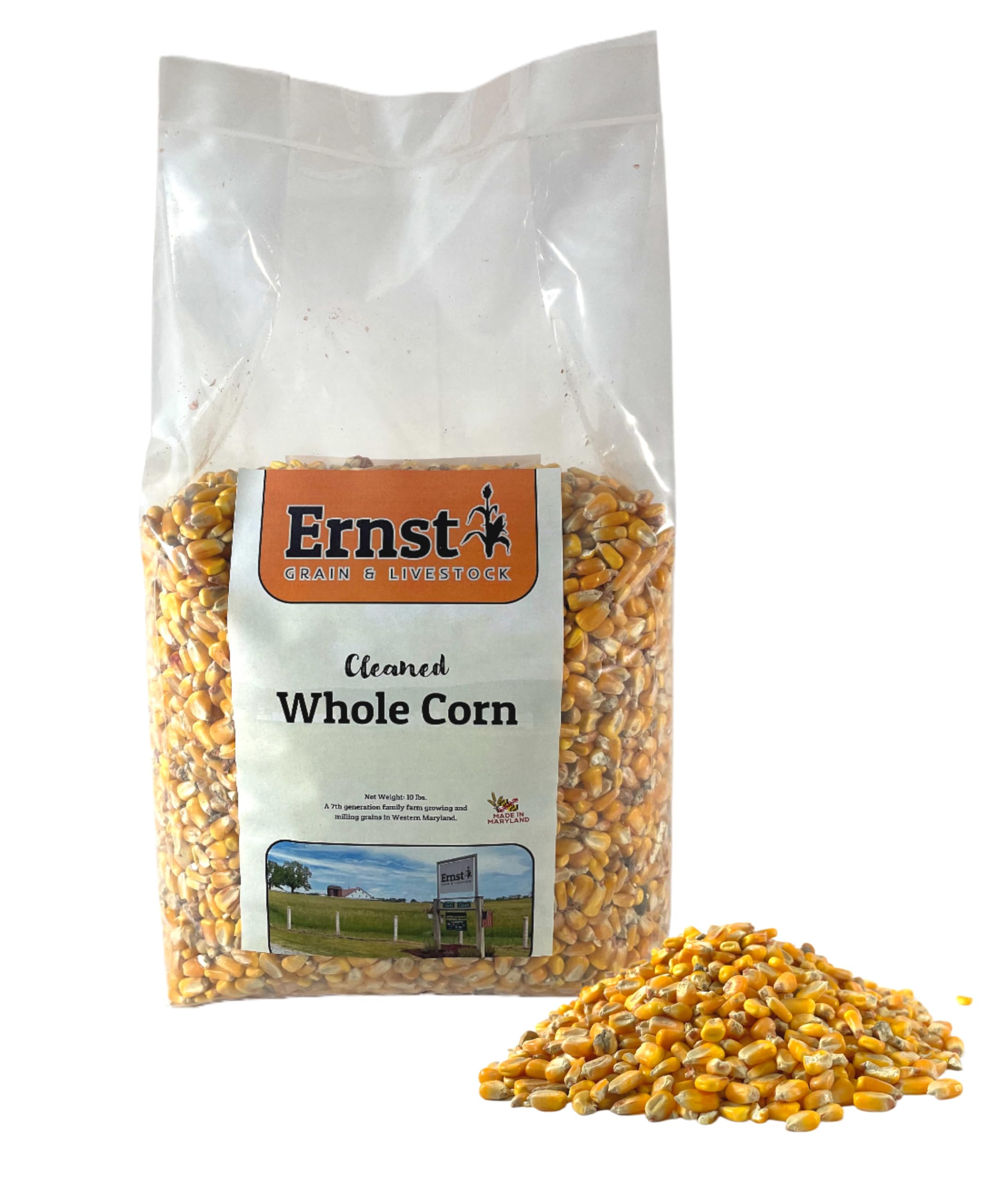
2. Ernst Grain & Livestock Whole Corn 10lbs
Farm-cleaned whole corn with no dust, no filler, and no surprises in the scoop.
If you scatter corn on the ground rather than hang it, this is the bag to start with. It is loose whole corn, cleaned to remove dust and debris, then stored in bulk bins so it stays available year-round. The number that tells you most about it is 7% protein — modest, and honest, because whole corn is an energy feed rather than a complete diet. It comes in 10 pound, 25 pound, and 50 pound bags, so you can start small and scale up once you know the deer are coming.
Where this one earns its place is the family behind it. Ernst Grain & Livestock is the 7th generation to farm in Clear Spring, Maryland, and the corn is cleaned, milled, mixed, and bagged on the farm. It is stated as non-GMO, grown with green cropping practices including cover cropping and no-till planting. Compare that to the JCs cobs, which come as 2 packed items — this Ernst bag is a single 10 pound sack of loose kernels, so it spreads across a much wider area but gives animals nothing to work on.
What people notice first is the taste, with digestibility right behind it. Buyers describe it as actual corn rather than dust and fragments, and the bag holds up in storage. The trade-off is value: the per-pound ask is the sore spot here, and it is the most-flagged complaint in the listing. The bag itself also draws split views — some find it strong, while others report the plastic sheds pieces easily, so store it somewhere you will not be dragging it across a rough floor.
My read on it: a genuinely clean, family-farmed loose corn that pours without a cloud of dust, at a price that asks you to commit. Buy the 10 pound bag to test your spot, then move up once the deer show.
The part to plan around: expect to pay more per pound than a plain bulk sack, and give that plastic bag a gentle home so it does not shed on you.
Suits you if: you want a single clean sack to scatter across a wide spot and know exactly what is in it.
Wrong pick if: you are feeding a station that needs cobs to occupy animals for hours.
3. Lyric Wildlife Critter Food, 10 lb. Bag
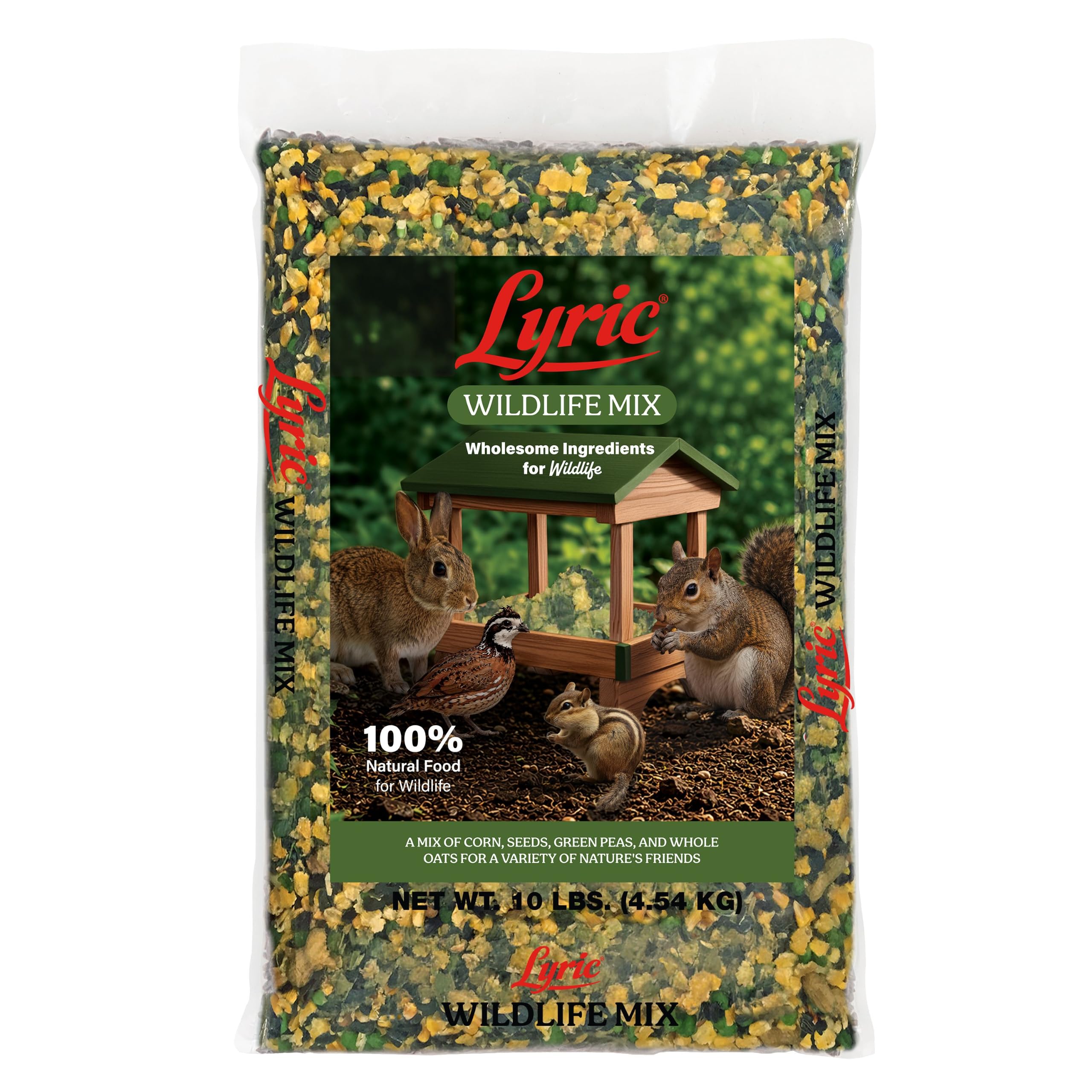
Not pure corn — a hand-mixed blend that brings a crowd instead of one animal.
Here is the pick for a backyard you want busy, not single-minded. This bag mixes corn with black oil sunflower seeds, red milo, whole oats, peanuts, and green peas. That combination pulls wild birds, rabbits, squirrels, turkeys, jays, cardinals, and chickadees to the same spot, plus deer on the edges. It is built as a supplemental feed rather than a complete diet, which is the honest framing for any wildlife mix.
Read the ingredient list before you commit, because it decides everything. Peanuts are called out in the allergen information, so if you or someone nearby reacts to peanuts, handle the bag accordingly. The value side is where this one punches above its weight — the blend is well priced for what you get, and it is the most-praised quality in the listing. What people like most is the mix itself, because a variety bag keeps a feeding area interesting across species.
Now the reality check, and it is an unusual one. As buyers put it: “This brand definitely had the best variety than others I’ve purchased; however, none of the wildlife ate the corn.” That is the pattern with blends — animals cherry-pick. The peanuts and peas vanish fast while the corn sits. Taste draws genuinely mixed reactions, and the bag lasts anywhere from a long stretch to about two weeks depending on traffic. Buy this for variety, not for guaranteed corn consumption.
Straight from the buyer pool: a well-priced, genuinely varied mix that gets eaten selectively — favorites go first, corn tends to linger.
One thing to expect: if your only goal is corn going in a deer’s mouth, a blend will leave you picking kernels off the grass.
Pick this one when: you want birds, squirrels, and rabbits sharing one feeding area and you enjoy the traffic.
Look past it when: deer corn is the entire mission and you need every kernel eaten.
4. Manna Pro Top Score Deer Corn, 40lb

Forty pounds of whole-shelled corn built to do one job: pull deer in.
Manna Pro keeps this one simple. It is whole-shelled corn, described as a premium deer and turkey feed and just as usable as an attractant. No blend, no filler ingredients, no attempt to feed six species at once. If your goal is a deer station and a turkey showing up now and then, this is the straightest line to it, and the 40 pound bag means fewer trips to restock your feeding spot.
What matters most here is whether deer actually eat it, and that is the whole story. Deer consumption is the quality praised most in this listing, with effectiveness right behind it. Owners feeding in a greenbelt report regular deer visits and a clear verdict of approval. The convenience angle is real too — the bag arrives quickly and in a box that is easier to move than a loose sack, which matters when you are hauling 40 pounds out to a stand.
The part to weigh honestly is condition and price. Value draws split opinions, and a recurring gripe is weevils turning up in the bag. That is not unusual for bulk grain, but it is worth inspecting your sack on arrival and storing it sealed and dry. Some buyers also note the bag is not much use afterward. None of this changes the fact that deer come to it — it just means you should treat arrival day as a check-your-bag day.
Why deer keep showing up
- Whole-shelled corn with no filler, aimed squarely at deer and turkeys.
- 40 pound bag cuts down how often you restock a dedicated feeding spot.
- Ships in a box that is easier to handle than a loose 40 pound sack.
What you should watch for
- Weevils show up in some bags, so inspect on arrival and store it sealed and dry.
- Value splits opinion — the per-pound ask is not the friendliest on this list.
- The bag is not designed for reuse, so plan your own storage container.
Built for: a straightforward deer and turkey attractant in a quantity that lasts a while.
Not built for: someone who wants a resealable bag to keep using season after season.
5. CountryMax Whole Corn 50LB
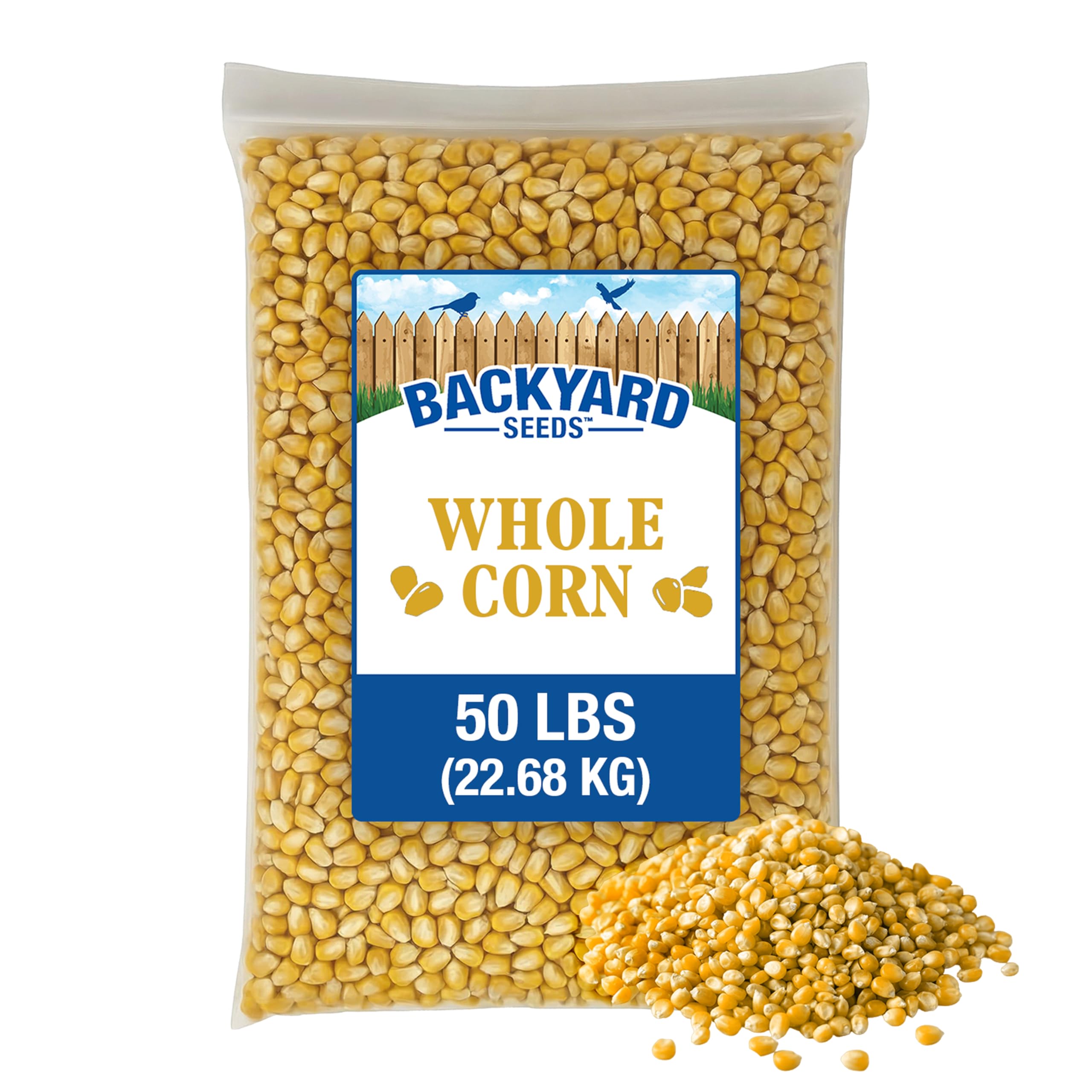
The biggest bag here, and the one that handles winter when natural food runs thin.
Fifty pounds of whole corn kernels, stated as 100% edible with no debris, produced on a small family farm in New York State. You can scatter it on the ground or fill a feeder, and it works across all seasons including winter months when natural food sources are scarce. It is the bag to buy when your feeding station runs constantly and you are tired of running out mid-season.
The listed animal range is the widest of any plain corn here: chickens, turkeys, doves, cardinals, jays, quail, deer, squirrels, rabbits, and other backyard wildlife. That versatility is the point. Corn this whole and this clean pours without leaving a pile of chaff behind, and what people notice is how clean the bag runs — a small flake of husk and nothing more. Buyers also describe it holding its own against pricier feed, which is the real value argument for a 50 pound sack.
There is a practical trade-off nobody should skip. A bag this size needs somewhere dry and animal-proof to live, because it is a lot of corn to lose if it gets damp. It pours best into a sealed bin rather than being dragged around the yard. And if your spot only sees occasional traffic, the corn will outlast its freshness window before you finish the bag — that is the honest limit on buying bulk.
The case for the big sack: clean, whole kernels, a New York family farm source, and enough volume to keep a station fed through the lean months.
Know before you buy: unless you have dry, protected storage and steady animal traffic, a 50 pound bag is more corn than you can feed fresh.
Your bag if: you run a busy year-round station and want one purchase to cover the season.
Skip the size if: you are feeding a handful of animals in a small yard — a smaller sack will stay fresher.
Know the Specs
Whole kernel versus whole shelled
These describe how the corn comes off the cob. Whole-kernel corn is the loose grain you scatter on the ground or pour into a feeder, and it spreads wide so several animals can browse at once. Whole-shelled corn is the same idea — the kernel separated from the cob — and it is the format most deer attractants use. Neither holds an animal in place for long, which is why feeders and cobs exist. If you want animals to linger, you need a cob, not a kernel.
Bag size and freshness
Corn is a dried grain, but it does not stay good forever once air and moisture get to it. A large sack is only a value if you feed it steadily, because a bag sitting half-used in a damp shed will draw pests and spoil. Match the bag to your traffic: small sacks for a backyard you are still testing, large sacks for a station that gets hit daily. Store any size in a cool, dry spot, and check a fresh bag on arrival for insects before it goes into storage.
Corn on the cob and mold
An ear of corn holds moisture inside the cob, so drying it properly is the whole game. Corn dried well resists mold and stays usable across a full feeding season. Corn that was not dried well can spoil in the bag, which is why breathable packaging matters — it lets moisture escape instead of trapping it. When you buy cobs, look for a listing that tells you how the corn was dried and how it is packed, and give the bag airflow rather than sealing it airtight.
Blends versus pure corn
A wildlife blend adds sunflower seed, peanuts, milo, oats, or peas to the corn, and it draws more species because there is something for everyone. The catch is selective eating. Animals take their favorites first and leave the rest, so a blend can look picked-over in days while the corn sits. Pure corn has no such problem — every kernel is the same feed. Choose a blend for variety and a busy feeding area, and pure corn when you want the whole bag eaten.
Common Questions
Is whole corn on the cob better than loose kernels for deer?
How do I stop squirrels from emptying my bird feeder?
Will deer eat corn that has been sitting in the bag for months?
What does 7% protein mean on a bag of deer corn?
Why do animals leave the corn in a mixed wildlife blend?
How should I store a large bag of whole corn?
Can I feed this corn to chickens as well as deer?
What is the difference between whole-shelled corn and cracked corn?
Does deer corn go bad in the bag?
Will corn on the cob attract raccoons and other animals?
The Bottom Line
The winner for most backyards is the JCs Wildlife Dried Corn on the Cob, because whole, Indiana-grown ears with kernels still on the cob give squirrels and deer something to actually work on, and the breathable bag lets moisture escape so the cobs stay mold-free across a season. If you would rather scatter loose kernels across a wide spot, the Ernst Grain & Livestock Whole Corn pours clean with no dust and no filler. And for a busy year-round station that needs volume, the CountryMax 50LB Whole Corn delivers the biggest bag of the group from a New York family farm. Pick the format that matches how you feed — cobs to occupy animals, loose kernels to cover ground, a blend for variety — and the corn will do the rest.
How we choose
We do not accept paid placement. Every pick is matched to a real buyer and a real use-case; we do not hands-on test units.
Sources
Specifications: manufacturer listings and product documentation. Review insights: verified customer reviews, as of October 2026. Pricing: not shown on this page (it changes often); check the current price via the retailer link.
As an Amazon Associate, Aappliancez earns from qualifying purchases. This does not affect which products we feature.