Disclosure: Some links in this post are affiliate links. As an Amazon Associate I earn from qualifying purchases, at no extra cost to you. Learn more
Specs are compiled from manufacturer listings and verified buyer reviews and can change over time — please confirm the key details on the product page before buying.
A deck primer is not the same job as a deck stain, and mixing them up costs you a season of protection. A primer goes on bare or weathered wood first to bond with the surface so a solid topcoat has something to grip. Skip it under a solid stain and the finish can peel or flake within a year. The picks below cover the real spread of what a primer does: some are true adhesion primers for failing wood, and some are all-in-one stain-and-sealer formulas that waterproof in a single pass. Decide whether your wood needs a bonding primer or a one-coat stain-and-sealer, then buy accordingly.
This guide is built by comparing the manufacturers’ published specifications and the patterns across verified customer reviews, so you get each pick’s real strengths and trade-offs instead of marketing spin.
The table below lists each product’s coverage per gallon and dry time side by side. The quick table and per-product breakdowns below make it easy to match a can to your wood before you buy the right deck primer.
Top Picks

How To Choose The Best Deck Primer
Before you pick a brand, determine what your wood needs. It is what your wood actually needs. A weathered deck with old, failing coatings needs an adhesion primer that grips. A stripped or new deck needs a waterproofing coat that also carries color. Mismatching the product to the wood is the most common reason a deck finish fails.
Primer versus stain-and-sealer — know which one you need
An adhesion primer bonds to the surface and gives a solid topcoat a foundation. Rust-Oleum RockSolid Deck Start is built exactly for this: it goes under a solid exterior stain or paint. A stain-and-sealer like Olympic WaterGuard or Thompson’s WaterSeal does both color and waterproofing in one coat, but it is a finish, not a foundation layer for another solid coating. Read the label’s stated use before you commit.
Match coverage per gallon to your square footage
Coverage per gallon drives how many cans you buy and what the job costs. A gallon that covers 450 square feet in one coat goes almost twice as far as one rated at 250 square feet. Measure your deck length times width, then divide by the coverage number. If your deck has rough, porous boards, expect to use more — a second coat often drinks the product unevenly.
Dry time decides your whole weekend
Dry-to-touch means the surface feels set, not that it is ready for a topcoat. A one-hour dry-to-touch means you can recoat the same day. A 24-hour cure time pushes your second coat to the next day, and sometimes the one after. Check the stated recoat window before you start, because a coat applied too early traps moisture and lifts.
Side-by-Side Comparison
| Model | Best For | Coverage | Dry Time | Finish / Color | Amazon |
|---|---|---|---|---|---|
| Olympic WaterGuard Woodland Cedar★ Best Overall | All-in-one stain and waterproofing | 250–350 sq. ft./gal on decks | About 24 hours | Semi-transparent, Woodland Cedar | Amazon |
| Rust-Oleum RockSolid Deck StartBest Adhesion Primer | Gripping primer under a solid topcoat | Up to 450 sq. ft. in one coat | 1 hour dry-to-touch | Matte, dries clear | Amazon |
| Thompson’s WaterSeal Semi-Transparent | Budget waterproofing on fences and decks | 150–400 sq. ft./gal | Fast-drying (per reviews) | Semi-transparent, Chestnut Brown | Amazon |
| KILZ Waterproofing Wood Stain | Acrylic protection on prepared wood | 250–300 sq. ft. first coat | 1–2 hours before recoat | Satin, Cedar Naturaltone | Amazon |
| Ready Seal Stain & Sealer | No-priming one-coat color on virgin lumber | 125–150 sq. ft./gal | — | Oil, Redwood | Amazon |
| DEFY Extreme Composite Deck Sealer | Clear protection on composite decks | 100–150 sq. ft. for 2 coats | 2–4 hours above 45°F | Clear | Amazon |
| Abatron LiquidWood Kit | Restoring rotted, soft wood first | — | Hardens a few hours after application | Clear epoxy | Amazon |
Detailed Reviews
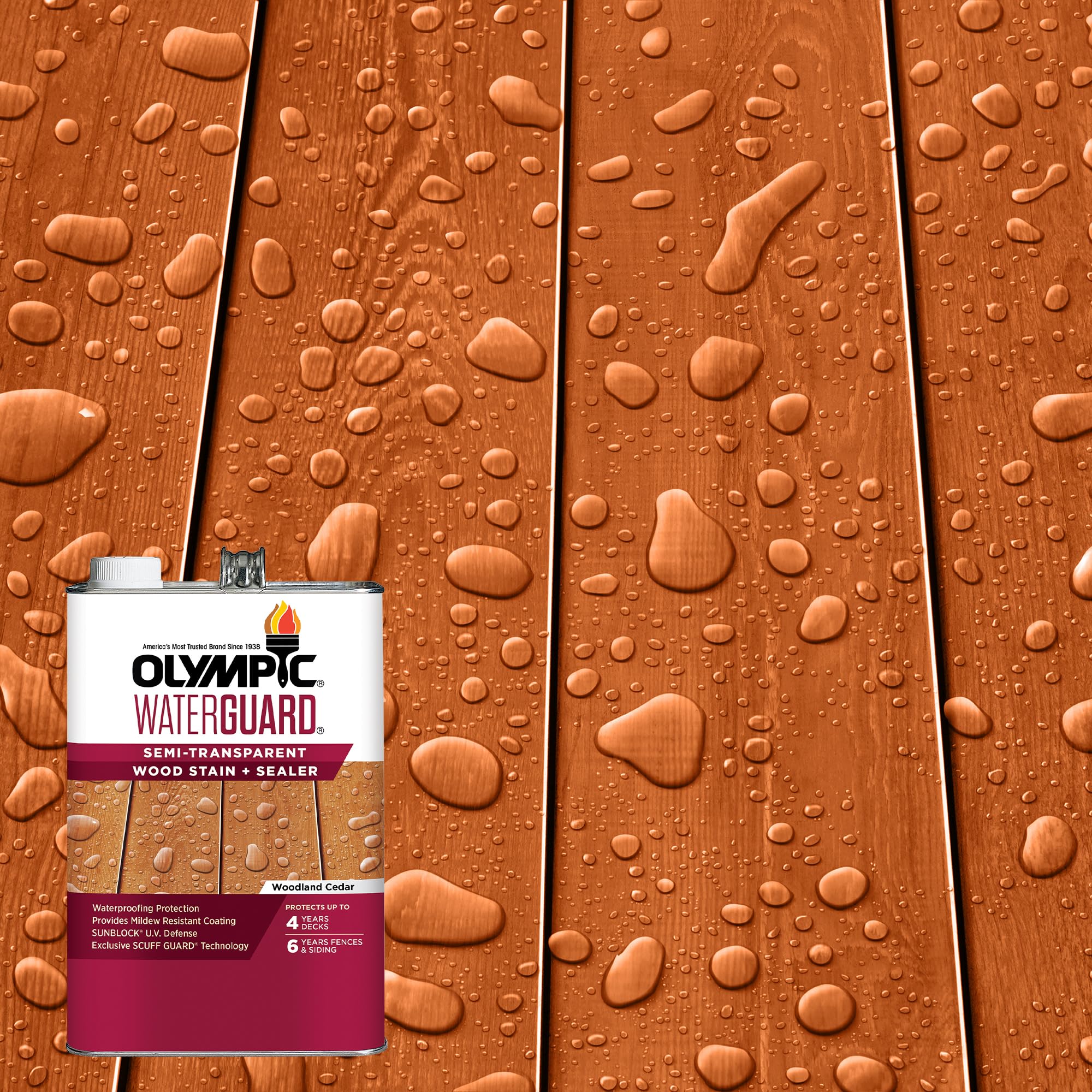
1. Olympic WaterGuard 1 gal Woodland Cedar Wood Stain & Sealer
Our pick — 4.5+★ from 600+ verified ratings; the strongest balance of quality and price.
The stain-and-sealer that does color and waterproofing in one water-based coat.
You get a finish and a barrier at once. Olympic WaterGuard combines a semi-transparent Woodland Cedar color with a water-repellent coating in one ready-to-use water-based product. It covers 250–350 sq. ft. per gallon on decks, fences, railings and furniture, so a typical deck takes one can rather than two. Cleanup is soap and water — no solvents to buy or dispose of.
What wins people over is the quality of the finish: buyers describe it as genuinely effective and easy to apply. It sheds water well after a few coats. The scuff-resistant coating is rated to hold up to 3 years on decks and 4 years on fences and siding, and the UV defense keeps the color from graying out. One buyer tested it hard: “Applied ~4 coats with drying between layers on outdoor wooden decoration. Tested same day via overnight rain; decoration remained fully intact and undamaged.”
The catch is dry time. A full 24 hours between coats is the longest wait on this list — versus the 1-hour dry-to-touch on the Rust-Oleum RockSolid primer. Plan a multi-day job, not a single Saturday. A few buyers of the spray version found a broken nozzle in the box, so check your dispenser before you start. Note also that the watery consistency suited vertical surfaces best; brushing beats spraying for deep penetration.
Where It Earns Its Place
- Covers 250–350 sq. ft. per gallon on decks, so most single decks need just one can.
- Semi-transparent Woodland Cedar adds warm color without hiding the grain texture.
- Scuff Guard protection rated up to 3 years on decks and 4 years on fences.
- Cleans up with soap and water — nothing harsh to handle.
Plan Around This
- About 24 hours of dry time between coats stretches the job over multiple days.
- Some spray units shipped with a broken nozzle, so inspect before use.
- Requires several coats for full waterproofing, not one.
Best fit: A deck or fence you want colored and waterproofed in one product, with the time to let each coat cure fully.
Look elsewhere if: You need a same-day turnaround or a clear primer to put under a separate solid topcoat.
2. Rust-Oleum RockSolid Deck Start Wood Primer
The true primer here — it bonds to failing wood so a solid topcoat stays put.
Here is the one that does the actual primer job. Rust-Oleum RockSolid Deck Start is designed to go under a solid exterior stain, paint or other solid topcoat, on weathered, worn or previously coated wood. Its adhesion chemistry grips the old surface so the new topcoat has something to hold. You skip the sanding and stripping entirely, and it can even go on damp wood — a genuine time-saver if rain is in the forecast.
Dry time separates it from the Olympic WaterGuard above in a big way. RockSolid dries to touch in 1 hour versus the 24-hour cure on the WaterGuard — a 24x difference that lets you recoat the same day. Coverage reaches up to 450 sq. ft. in just one coat. The low-VOC water-based formula goes on milky white and dries clear with a matte finish, and the quality is what earns it top marks. Buyers describe it as easy to apply and impressive at hiding old cracks and filling weathered grain.
The trade-off is that it is not a finish on its own — you still need a topcoat over it. One buyer found the dried remainder in the can turns hard between uses, so pour out only what you need and reseal tightly. Most applications dried clear as promised; a thicker coat can take longer than the stated hour. If your plan is a solid solid-color stain over a failing deck, this is the right first move.
what separates it: You skip the sanding and stripping and still get a coat that sticks, even on damp wood. It dries in 1 hour and covers up to 450 sq. ft. per coat (about the size of a two-car garage floor), so you save a whole prep day.
Fit note: It needs a solid topcoat over it, and any leftover in the can hardens once opened, so buy the size you will actually use.
Reach for this if: You have a weathered or previously coated deck and want a solid stain to hold without hours of sanding.
Pair it with: A solid exterior topcoat — this is the prep step, not the final look.
3. Thompson’s WaterSeal Wood Stain and Sealer

A fence and deck workhorse with a Chestnut Brown tint and flexible application.
Thompson’s WaterSeal earns its reputation on fences. The semi-transparent finish tints the wood lightly but still lets the texture show, and it can go on damp or dry wood. Coverage runs 150–400 sq. ft. per gallon, wide because it depends on how porous your boards are. The advanced polymers resist fading and UV damage, and it exceeds Industry Standard ASTM D-4446 for waterproofing wood — a real benchmark, not a marketing phrase.
The quality of the coating is where it stands out among owners. “Thompson’s stain/sealer applies easily via roller, pump sprayer, paint sprayer, or brush; soap-and-water cleanup; sticks well, resists fading and water; thin coating; decks lasted 20 years; requires reapplication every few years; well price” runs one detailed buyer report. That flexibility of application is huge — spray a fence, roll a deck, and know you can clean up with soap and water afterward.
Two honest notes. First, the color draws mixed feelings — the Chestnut Brown can look red or chalky when wet and dries darker; the finish is attractive but not identical to everyone’s expectation. Second, drying is the other split opinion; most find it fast in dry climates but a cool or humid day stretches it. Use two coats on a hot, sun-exposed deck; a single coat can be thin. Those who expect a thick, film-building coat should look at the acrylic KILZ below instead.
The real draw: Application flexibility across roller, pump sprayer, paint sprayer or brush, plus damp-or-dry wood acceptance and ASTM D-4446 waterproofing — you can tackle a long fence without special gear.
Budget the extra can: The thin consistency means sun-exposed decks want two coats, so buy for double coverage rather than the label maximum.
Suits you when: You want an affordable, easy-to-apply tint-and-seal for a fence or deck you plan to redo every few years.
Think twice if: You need a thick, film-forming coat on a blazing hot deck in one pass.
4. KILZ Waterproofing Wood Stain, Cedar Naturaltone, 1-Gallon

A 100% acrylic coat that guards against rain, snow and sun with a satin finish.
The drumbeat for KILZ is consistency. This semi-transparent coat is 100% acrylic, protecting against rain, snow and sun damage, and it is warrantied up to 3 years on decks and up to 5 years on fences and siding. The Cedar Naturaltone finish in satin shields wood with UV protection while keeping the grain visible. The 1-gallon can covers roughly 250–300 sq. ft. on the first coat and 500–600 sq. ft. on the second, so two careful coats stretch far.
What owners respond to is how effective the acrylic layer proves over time. People note the finish shows no signs of wearing off or thinning, and one report put it to work reviving a decade-old fence to like-new. The soap-and-water clean-up is a genuine convenience. It also carries fade-resistant, mildew-resistant and rainproof qualities that make it a sensible fit for varied climates.
Coverage opinions split the most — some decks drink more product than the label suggests, often an application issue rather than the formula. Wait the stated 1–2 hours before recoating and leave the finish 72 hours to cure before washing it. One warning from the review pages: buy the can locally if you can, because shipping complaints cropped up — two of four ordered cans went missing in one report. Otherwise this is a solid mid-tier acrylic choice.
What Holds Up
- 100% acrylic formula warranted up to 3 years on decks and 5 years on fences and siding.
- Satin Cedar Naturaltone finish resists fading, mildew and rain.
- Second coat pushes coverage to 500–600 sq. ft.
- Clean-up is soap and water.
The Fine Print
- Coverage can run short on dry, thirsty boards.
- Needs 72 hours to fully cure before you can wash it.
- Shipping delivery has occasionally gone missing.
Good match for: A prepared deck or fence where you want a hard-working acrylic shield in a natural cedar tint.
Give it time: Build in the recoat window and the 72-hour cure before you expect a fully set finish.
5. Ready Seal Stain & Sealer for Wood, Redwood, 1 Gallon

The oil-based one-step for virgin lumber that blends itself streak-free.
Ready Seal is built to remove steps. There is no priming, no diluting, and no back-brushing — you apply it and the self-blending formula smooths away lap marks. Its oil base carries UV and weather resistance to guard against fading and water damage, and the finish is meant for decks, fences, siding and outdoor furniture. The Redwood color adds a warm tone while its opacity keeps the grain readable.
The thing that wins people over is how forgiving it is for first-timers. “This product is so beautiful and so easy to apply – I’m a newbie and it came out absolutely perfect,” the review pages sum up. A 4-inch roller is what owners reach for on large flat surfaces, and on fresh lumber that drinks the product, it lays down an even coat with no variations. No streak marks on a self-blending oil is a real relief if you have struggled with lap lines before.
Budget for coverage carefully. At 125–150 sq. ft. per gallon this is the thirstiest can on the list, so a big deck will need multiple gallons — plan the quantity before you start. A few find the consistency too thin to build the thick coat they expected. It performs best on bare or virgin wood; skip it on a surface that needs an adhesion primer underneath.
Why it lands with newbies: One-step, no-priming, no-back-brushing application with a self-blending finish that kills lap marks — a 4-inch roller and a free afternoon get it done.
The catch: At 125–150 sq. ft. per gallon it covers the least per can here, so measure your deck twice and buy generously.
Pick it when: You have bare or new lumber and want one forgiving oil-based coat with no prep work.
Not the one for: A failing, previously coated deck that needs a bonding primer first — that is the RockSolid’s job.
6. DEFY Extreme Composite Deck Sealer, Clear, 1 Gallon

A clear coat aimed at faded composite decks and the black stains they collect.
Composite decks age differently from wood, and DEFY Extreme targets that. This clear sealer helps prevent the return of black stains on composite decks while protecting both composite and natural wood from water and UV damage. Zinc nano-particles help hold off fading, graying and color loss. It dries in 2–4 hours above 45°F, and one gallon covers 100–150 sq. ft. for two coats. Apply with a sprayer, brush or pad and clean up with soap and water.
What people rave about is how it revives tired composite. A report on an 8-year-old faded Trex deck: the clear coat “restored it to new looking condition.” Owners cover large areas with a pad applicator, note no overlap marks, and watch water bead up within two coats. Consistency is the most-praised trait — the clear finish goes on even and transparent rather than milky.
The honest caveat is durability and environment. A clear finish cannot perform below 45°F, so cold-weather projects wait. Some report a slight tackiness in direct sun and a temporary milky residue where water sits before drying. Others question long-term lifespan. Treat this as a clear maintenance sealer for composite that may need recoating when graying returns, not a permanent one-and-done.
Where it shines: Clear, transparent protection on composite — restores color and shine, beads water after two coats, and applies by sprayer, brush or pad with soap-and-water cleanup.
Respect the temperature: It will not behave below 45°F, and the clear film can feel tacky in direct sun, so time your application for a mild day.
Made for you if: You own a grayed or faded composite deck and want to bring the color back without adding a tint.
Look past it if: You are sealing natural wood and expect a built-in color coat.
7. Abatron LiquidWood Kit – 2 Quarts Structural Wood Epoxy
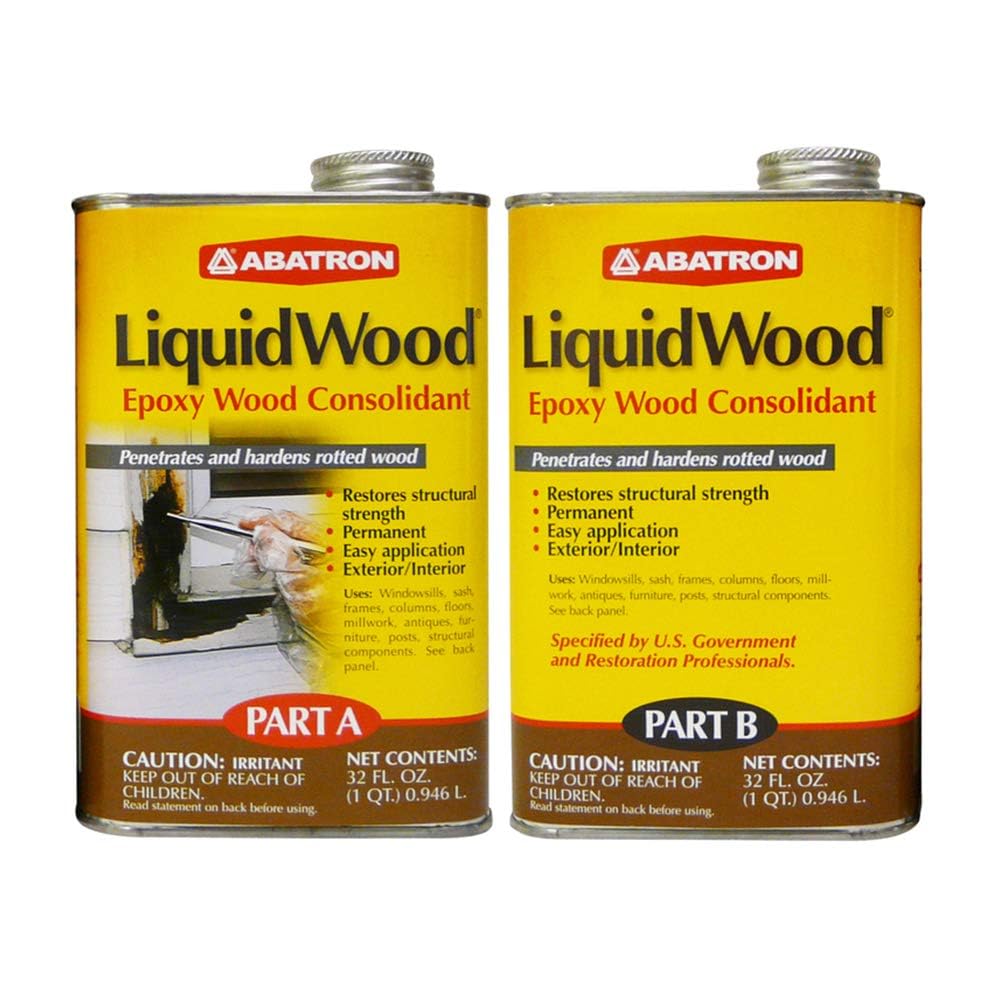
Not a finish at all — this hardens rotted wood so a real primer has something to grip.
This is a different tool in the box. Abatron LiquidWood is a two-part structural epoxy resin that penetrates worn, rotted wood and restores its strength before you ever think about finish. It works on window sills, posts, columns and trim where weather has crumbled the grain. Use it with the company’s WoodEpox filler and you get permanent, shrink-free structural repairs. The GREENGUARD certification means it contains almost no VOCs and no water or solvents.
Owners put it to heavy use. One success story: catastrophic rot on window sills and porch posts was repaired so solid the fix held nails supporting a heavy planted windowbox. Another restored 40 wood windows with repairs that held for six years. The material soaks deeply, hardens a few hours after application, and takes paint well. You get a working time of 30–45 minutes, so mix small batches.
The practical limits are real. Rotted wood may need several coats to fully saturate, and the epoxy can take a long time to harden depending on conditions. Follow the safety advice and use proper chemical gloves — the included ones run large. It is one of the pricier cans here, but on a deck that would otherwise need whole-board replacement, treating the soft spots first is the smarter path to a finish-ready surface.
Why It’s Worth Keeping on Hand
- Structural two-part epoxy restores strength to rotted wood instead of replacing boards.
- GREENGUARD certified with almost no VOCs and no solvents or water.
- Soaks deep and takes paint for a smooth repair.
- 30–45 minute pot life gives a workable window per batch.
Before You Mix
- Very soft or deteriorated wood may need several coats to saturate.
- Can take a long time to fully harden.
- Wear proper chemical gloves — the included ones run large.
Reach for this if: Your deck or trim has soft, rotted spots that need consolidating before any sealing coat goes on.
Do not confuse it with: A surface primer — it repairs wood structure, then you finish over it.
Know the Specs
Coverage Per Gallon
Coverage means how many square feet one gallon protects. A can rated at 450 sq. ft. in a single coat goes almost twice as far as one rated at 250 sq. ft. — so coverage changes how many cans you buy. Measure your deck length times width, then divide. Rough or porous boards drink more product, so plan a second coat and extra quantity.
Dry Time and Recoat Window
Dry-to-touch is when the surface feels set. It is not the same as ready-for-topcoat. A one-hour dry-to-touch lets you recoat the same day; a 24-hour cure pushes your next coat to tomorrow. Apply too early and you trap moisture under the film, which can lift. Always match your schedule to the stated recoat window, not to how it feels.
Primer vs. Stain-and-Sealer
A primer bonds to the surface and gives a solid topcoat a foundation. A stain-and-sealer adds color and waterproofing in one coat as a finish. They are not interchangeable. Weathered, previously coated wood often needs an adhesion primer first; bare wood can take a stain-and-sealer directly. Match the product to the job or the topcoat may peel.
Water Repellency and UV Defense
Water repellency is the coating’s ability to shed moisture rather than absorb it — you can tell it is working when water beads on the surface. UV defense keeps the sun from graying and fading the wood. Both matter more than color on a deck that faces full weather. A finish that beads water and resists UV lasts visibly longer between recoats.
Common Questions
Do I really need a deck primer before a solid stain?
Can a deck primer go on damp wood?
How long should I wait before the second coat?
How many gallons will my deck need?
Is a clear sealer safe to use on a composite deck?
Can I seal over existing stain without stripping?
What is the difference between a wood hardener and a deck primer?
How do I keep water beading on my deck longer?
Does a deck primer need a topcoat over it?
What temperature can I apply a deck sealer in?
The Bottom Line
The strongest all-rounder for the money is the Olympic WaterGuard Woodland Cedar — one water-based coat delivers color and waterproofing across 250–350 sq. ft. per gallon, with up to 3 years of protection on decks. If your deck is weathered or already coated and you need a true bonding layer, the Rust-Oleum RockSolid Deck Start is the primer to reach for: 1-hour dry-to-touch, up to 450 sq. ft. per coat, no sanding or stripping. And on a composite deck that has grayed out, the DEFY Extreme clear sealer brings the color back without adding tint.
How we choose
We do not accept paid placement. Every pick is matched to a real buyer and a real use-case; we do not hands-on test units.
Sources
Specifications: manufacturer listings and product documentation. Review insights: verified customer reviews, as of October 2026. Pricing: not shown on this page (it changes often); check the current price via the retailer link.
As an Amazon Associate, Aappliancez earns from qualifying purchases. This does not affect which products we feature.