Disclosure: Some links in this post are affiliate links. As an Amazon Associate I earn from qualifying purchases, at no extra cost to you. Learn more
Specs are compiled from manufacturer listings and verified buyer reviews and can change over time — please confirm the key details on the product page before buying.
Getting a decal off is rarely the hard part — getting the sticky ghost it leaves behind off is. That leftover glue grabs dust, turns brown, and laughs at soap and water. Match the remover to the surface: a liquid solvent for painted metal and glass, a citrus gel for floors and fabrics, or a rubber eraser wheel spun in a drill for big vinyl sheets on car panels. Choose wrong and you either spend an hour scraping or you lift the paint along with the sticker.
This guide is built by comparing the manufacturers’ published specifications and the patterns across verified customer reviews, so you get each pick’s real strengths and trade-offs instead of marketing spin.
Some removers work in seconds on glass and cured paint, while others need ten to fifteen minutes of soak time before anything budges. This breakdown of the best decal remover covers bottle size, surface safety, and how each one actually behaves.
Top Picks

How To Choose The Best Decal Remover
The first thing to settle is what sits under the decal. A painted car door, a hardwood floor, a nylon bag, and a laminated poster all demand different chemistry. Mismatch the remover to the surface and you risk dulling a finish or leaving a stain that outlasts the sticker.
Liquid solvent versus citrus gel versus rubber wheel
A solvent blend is the heavy hitter for cured paint, glass, and vinyl trim — it dissolves the glue rather than lifting it. A citrus-based gel is gentler and clings to vertical or porous surfaces like carpet and fabric. A rubber eraser wheel is the only one of the three that works by friction: you spin it in a power drill and it grinds the adhesive off, which makes it the fast option for large vinyl sheets on vehicle panels.
Read the surface warning before the label claims
Every remover has an Achilles heel. Soft rubber wheels are safe on paint but not on plastic or painted aluminum. Mild non-acetone gels are less harsh, which also means they are slower. Solvent blends can be aggressive around uncured finishes.
Bottle size is a real cost decision
A 32 fluid ounce bottle handles commercial framing and repeat jobs; a 2 ounce brush-cap bottle is built for precision dabs on craft projects. If you remove decals regularly, the 32 ounce bottle spreads the cost across far more jobs and includes a scraper tool built into the cap.
Side-by-Side Comparison
| Model | Best For | Format | Volume / Size | Key Surface Note | Amazon |
|---|---|---|---|---|---|
| Un-du 32 Ounce Commercial Framing Adhesive Remover★ Best Overall | Framing, papercraft, and poster restoration | Liquid with attached scraper | 32 fluid ounces | Non-toxic and acid-free for archival paper | Amazon |
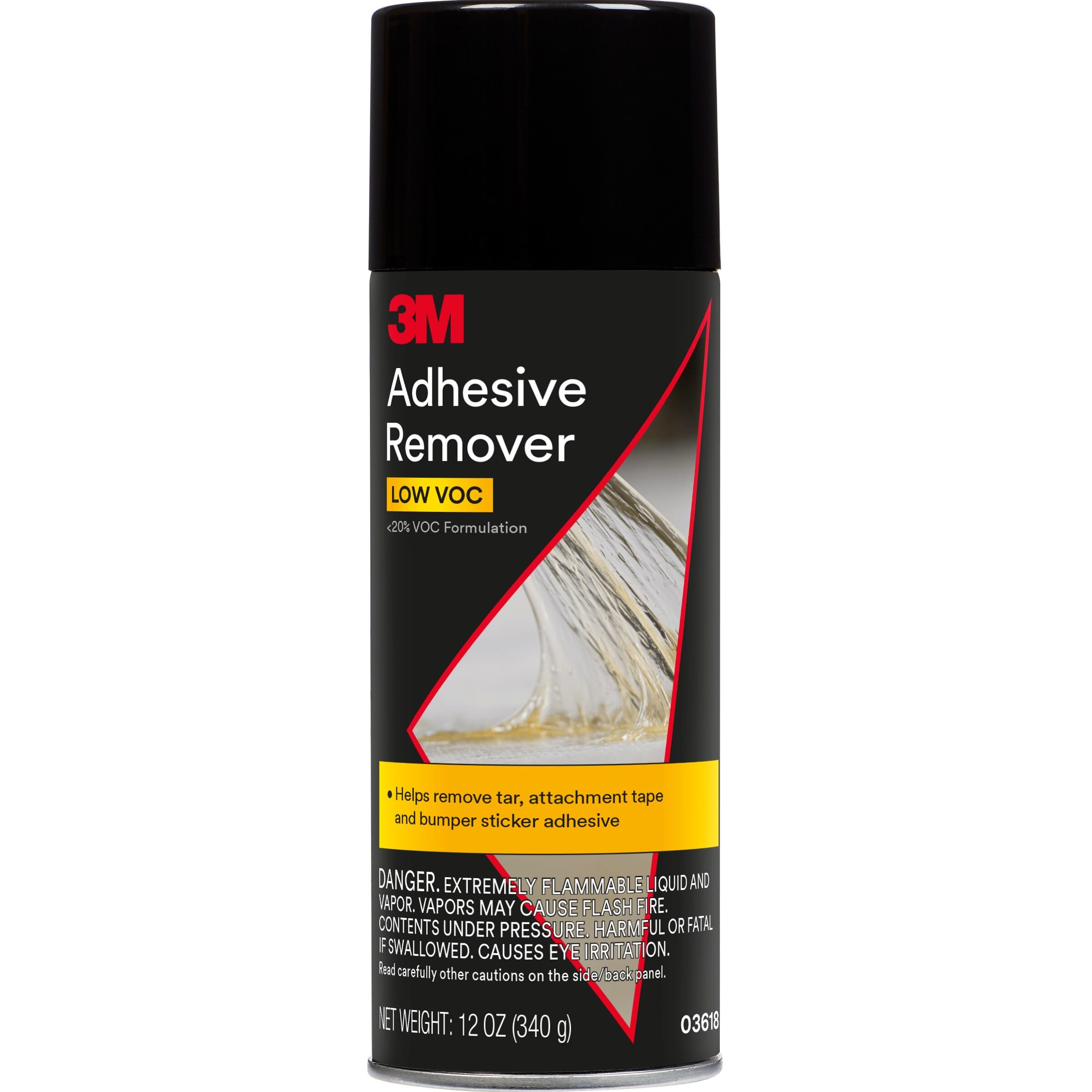
| 3M Adhesive Remover 03618VOC20Top Performer | Automotive trim and cured paint | Aerosol solvent blend | 12 ounces | Safe on nearly all cured automotive paints | Amazon |
| Goo Gone Gunk and Adhesive Remover | Floors, fabric, and household sticky messes | Citrus gel liquid | 7.83 ounces | Safe on carpets, fabrics, and dinnerware | Amazon |
| Starbond 2 oz. Super Glue Remover | Craft, model, and tight-spot glue mistakes | Non-acetone gel with brush cap | 2 ounces | Mild formula — spot-test before use | Amazon |
| MIVIDE 4PCS Decal Remover Eraser Wheel Tool Kit | Large vinyl and pinstripe removal on vehicles | 4 inch rubber wheel, drill attachment | Two thicknesses, 25 mm and 20 mm | Not for plastic or painted aluminum | Amazon |
Detailed Reviews
1. Un-du 32 Ounce Commercial Framing Adhesive Remover Bottle
Our pick — 4.5+★ from 600+ verified ratings; the strongest balance of quality and price.
Thirty-two ounces of contact-acting solvent built for framers, archivists, and anyone peeling tape off old paper.
For a framer or a papercrafter, the nightmare is a sticker that takes the print with it. Un-du’s patented formula attacks the adhesive on contact rather than soaking through the paper, and it is non-toxic and acid-free, which is what makes it acceptable on archival papers and card stock. The built-in scraper tool in the cap is a genuinely practical touch — you lift a corner, apply, and peel without hunting for a blade. The maker lists the uses as art, fabric, poster, craft, wall art, leatherworking, wall repair, glass, and table top coating, with surface recommendations for glass, leather, and plastic.
The 4.5+ star standing across 600+ ratings tells you the trade is sound, and the bottle size is the headline. A 32 fluid ounce bottle at commercial framing scale is the reason it takes this spot: what wins people over most is straightforward adhesive removal at scale, and the volume is why repeat users stay. The concentrated format works out economically against buying the small 4 ounce bottles again and again, and the small bottles are worth keeping for their easier-to-manage scraper tips. The scent is the one thing that splits opinion — a strong alcohol-or-lighter-fluid smell that fades but is noticeable in a closed room.
Where this bottle earns its place
- 32 fluid ounces covers commercial framing volumes and heavy repeat jobs
- Acid-free and non-toxic, so it suits archival paper and card stock
- Built-in scraper lifts edges without a separate tool
- Works across art, fabric, poster, craft, leatherworking, glass, and table top coating
What to expect going in
- Strong solvent scent lingers in an enclosed room
- No precision dispenser tip, so dabbing a tiny corner is trickier than with a small bottle
- Liquid can run on vertical surfaces since it is not a gel
Built for volume: framers, crafters, and anyone removing tape and sticker residue from paper, glass, leather, or plastic in bulk.
Reach past it if: you need pin-point placement on a single tiny craft spot — the attached scraper is convenient but the pour is not precise.
2. 3M Adhesive Remover, 12 oz.
The aerosol can that takes baked-on trim tape and old duct tape residue off cured car paint without lifting the finish.
If your decal was stuck to a car door, this is the format built for it. The blend of non-abrasive solvents is designed to dissolve adhesive residue without harming cured paint, and 3M lists it as safe for use on nearly all cured automotive paints. It is also intended for use during and after collision repair to remove masking residue, and it handles tar and wax on top of plain adhesive. The low VOC rating — under 20 percent volatile organic compounds, meaning fewer of the fumes that evaporate off — is a real consideration for a garage job.
The honest read on this one is that it works, but it is not a magic wand. The removal process is work: on baked-on adhesive from vinyl door frames, buyers report spending roughly an hour on two doors even with a plastic scraper working alongside it. On lighter jobs it goes fast — old duct tape residue coated in dirt and bugs can be sprayed and wiped away. Heavier adhesive such as auto trim takes a little more effort and multiple applications. What owners consistently note is that despite the effort, it gets there without paint damage, and it leaves no oily residue behind.
Compare it with the citrus option on this list and the difference is orientation: 3M is engineered around automotive finishes, while the Goo Gone bottle is built for floors and fabrics. At 12 ounces against the Goo Gone’s 7.83 ounces, you are getting a heavier bottle — 12 ounces versus 7.83 ounces — and that extra volume suits a multi-panel job. The low-odor, non-oily finish is the part that surprises people after years of messy solvent removers.
The scraping is the job: no amount of wiping alone clears vinyl decal residue — you will want a plastic scraper to do the actual lifting. Plan the effort, and the result is clean trim and intact paint.
Fit for automotive trim: this belongs in a collision-repair or car-detailing rotation, not on a kitchen counter or a poster.
Grab this if: the decal lived on a car, and the surface under it is a cured painted panel or glass.
Look elsewhere if: you want a wipe-and-done experience with zero scraping — the adhesive here needs mechanical help to release.
3. Goo Gone Gunk and Adhesive Remover
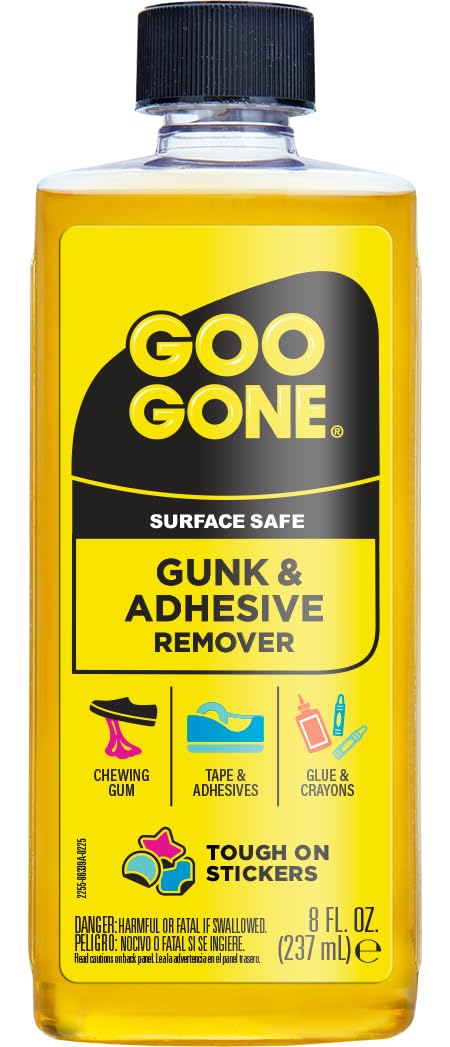
The citrus gel that rescues hardwood floors, nylon bags, and anything else a sticker ruined at home.
Rug pad glue welded to hardwood is the kind of mess that makes people try everything in the cupboard before giving up. Goo Gone’s specially formulated citrus cleaning agents are designed to dissolve sticky residue quickly while staying gentle on the surface, and the safe-surface list is unusually wide: carpets, fabrics, hard surfaces, dinnerware, tables, cars, wine glasses, drinking glasses, and clothing. The method is simple — apply to the affected area, let it sit a few minutes, wipe away with a cloth or paper towel.
What wins people over here is plain effectiveness on jobs that resisted everything else. Floor glue that had defeated multiple attempts came off in under five minutes without ruining the hardwood. A large sticky streak on a wooden floor surrendered as soon as the product touched it. Iron-on adhesive remnants on a nylon bag — a job with no obvious solution — lifted immediately. Store sticker glue residue comes off in seconds, which is exactly why it earns a permanent spot in a household cleaning cabinet. The pleasant citrus scent makes the whole process a lot less unpleasant than a solvent bath.
Two honest notes. This is a 7.83 ounce bottle, the smallest liquid option here, so heavy repeat use will run it down faster than the 32 ounce Un-du bottle. And value perception is genuinely mixed in owner feedback — the effectiveness is not in question, but whether the bottle size justifies the outlay depends on how much sticky mess you actually face.
The floor-saver case
- Citrus formula with a pleasant scent rather than harsh solvent fumes
- Safe on carpets, fabrics, hard surfaces, dinnerware, tables, cars, and glassware
- Dissolves glue fast — under five minutes on stubborn floor adhesive
- Simple apply-and-wipe method with no scraping required
The honest limits
- 7.83 ounces is the smallest liquid bottle in this lineup
- Cost-to-volume ratio divides owners — effective, but not the cheapest way to buy volume
The household default: floors, fabrics, glassware, and one-off sticky disasters where a gentle citrus gel beats a strong solvent.
Price check first if: you are buying for a large commercial job — the small bottle will not stretch.
4. Starbond 2 oz. Super Glue Remover

A 2 ounce brush-on gel that undoes super glue mistakes without running onto the parts you want untouched.
Super glue is the decal-maker’s other enemy — squeeze-out, spills, and fingers welded to a model. Starbond’s answer is a gel, and the gel is the point: it stays where you brush it instead of running or dripping, so you can work on vertical surfaces and counters calmly. The built-in brush cap reaches into corners, edges, and gaps with just the right amount of product, avoiding over-pouring and soaking delicate surfaces. It is a mild, non-acetone formula, which is why it is less harsh and damaging — and also why it does not deliver instant results. Application is unchanged across jobs: apply, walk away for 10-15 minutes, then wipe off the softened glue. The full cure time listed is 15 minutes. It is compatible with ceramic, metal, plastic, and wood, and it is intended for repair and woodworking.
Where it shines is precision work on finished surfaces. Super glue haze lifted from a faux wood laminate desk with a single drop, leaving the finish untouched and the desk looking new. On hard non-porous surfaces like metal it fully clears super glue — a Zippo lighter came back clean. On eyeglass lenses, a glue smear came off after the recommended soak time. The brush cap makes targeted application straightforward enough that first-timers get the technique right away. Effectiveness is what the reviews celebrate most, and it is earned.
Know what it can’t do: porous surfaces are the weak point — synthetic leather can absorb the gel and end up looking worse rather than better, which is why the maker’s advice to spot-test before use matters. For clothing and furniture, look to a different remover entirely.
The patience trade: ten to fifteen minutes of waiting per application is the price of a mild formula. Speed comes from being gentle, not from being strong.
Perfect for the workbench: crafters, model builders, and anyone fighting super glue on metal, tile, faux wood laminate, or hard plastic.
Pass it over for: porous upholstery, leather, or fabric where the gel can soak into the material.
5. MIVIDE 4PCS Decal Remover Eraser Wheel Tool Kit

A four-piece rubber wheel kit that spins in your own drill and grinds vinyl off vehicle panels at speed.
For whole-car wraps, pinstripes, and sun-baked vinyl on an RV or boat, chemistry alone is the wrong tool — you want friction. The eraser wheel is made from soft rubber so it is safe on paint, and it fits any home power or pneumatic drill via the included adapter arbor. The kit gives you two thicknesses, 25 mm (0.98 inch) and 20 mm (0.78 inch), and the wheels can withstand up to 4000 RPM, with the most effective range falling between 1500 and 3000 RPM. Applications span auto body vinyl decals, pinstripes, bumper stickers, and other adhesives on cars, boats, RVs, trucks, trailers, buses, bikes, and motorcycles.
Speed is the appeal. A single wheel cleared an entire hood on a Ram 2500, taking the wrap and glue with it. Adhesive foam tape comes off with minimal damage to painted surfaces. When it is working, it is the fastest way to strip a large decal short of a heat gun and a lot of patience.
Here is the honest part, and it matters with this tool more than any other on the list. These wheels wear out. Durability is the weakest point in owner experience, and the soft rubber that protects paint is also what breaks down during heavy use. It produces dust as it grinds. A boat decal job with a powerful drill can generate plenty of shavings without the decal actually releasing. Quality and paint-damage outcomes are genuinely split. Two hard rules come out of the feedback: the arbor can unscrew itself when a drill brake kicks in, so a thread-locking compound is worth adding, and this must not be used on a previously painted vehicle with a poor-quality paint job, because it will take the paint with it. Test on a hidden area first.
Where it belongs: factory-painted metal body panels with large vinyl to strip. That is the job it was built for, and one wheel covers serious ground.
The learning curve is real: getting the feel of the angle and pressure takes a little practice before results come easily.
Reach for this when: you have a whole panel or several feet of vinyl to strip from a factory-painted car, truck, boat, or RV.
Do not start here if: the surface is plastic, painted aluminum, or a low-quality respray — soft rubber and thin finishes are a bad pairing.
Know the Specs
Format: liquid, gel, or eraser wheel
Liquid remover pours and spreads, so it covers ground area fast but runs on vertical panels. Gel clings — a brush-on or citrus gel stays exactly where you put it, which is why it suits corners, counts, and upright surfaces. An eraser wheel is neither: it is a soft rubber disc spun in a drill that grinds adhesive away by friction. Match the format to the surface angle: gel for upright panels, liquid for flat ones.
Volume and job scale
Liquid removers are sold by fluid ounce, and the number tells you what the bottle is for. A 32 fluid ounce bottle is scaled for commercial framing and heavy repeat jobs. A 12 ounce or 7.83 ounce bottle handles a car trim job or a household cleanup. A 2 ounce brush-cap bottle is deliberately small because it is used in drops.
Common Questions
Will a liquid adhesive remover damage my car’s paint?
Can I use an eraser wheel on plastic bumpers or painted aluminum?
How long should I leave a gel remover before wiping?
What is the difference between a solvent blend and a citrus-based remover?
Is an eraser wheel faster than liquid remover for a large decal?
Will these removers work on tape residue on hardwood floors?
What speed should I run an eraser wheel at?
Is a super glue remover the same as a decal remover?
Do these products damage eyeglass lenses or faux wood finishes?
How much adhesive remover do I need for a full vehicle wrap removal?
The Bottom Line
For most people, the decal remover that does the most across the most surfaces is the Un-du 32 Ounce Commercial Framing Adhesive Remover — a 32 fluid ounce bottle of acid-free formula with a scraper built into the cap, and the highest rating in this lineup at 4.5+ stars across 600+ ratings. If your decal sat on a car door, grab the 3M Adhesive Remover, the solvent blend engineered to dissolve adhesive without harming cured paint. And for whole-panel vinyl on a truck, boat, or RV, the MIVIDE 4PCS Decal Remover Eraser Wheel Tool Kit spins in your own drill and does in one pass what chemistry cannot.
How we choose
We do not accept paid placement. Every pick is matched to a real buyer and a real use-case; we do not hands-on test units.
Sources
Specifications: manufacturer listings and product documentation. Review insights: verified customer reviews, as of October 2026. Pricing: not shown on this page (it changes often); check the current price via the retailer link.
As an Amazon Associate, Aappliancez earns from qualifying purchases. This does not affect which products we feature.