Disclosure: Some links in this post are affiliate links. As an Amazon Associate I earn from qualifying purchases, at no extra cost to you. Learn more
Specs are compiled from manufacturer listings and verified buyer reviews and can change over time — please confirm the key details on the product page before buying.
If your grip gives out before your back does, a thinner, sharper-knurled deadlift bar is what fixes it. A dedicated deadlift bar is longer, thinner and springier than a general-purpose Olympic bar, and that difference is exactly what lets you break the floor with speed and hold on past your usual sticking point. This guide sorts nine real options by what actually matters at lockout: shaft diameter, whip, knurling bite and how much weight the steel will genuinely survive.
This guide is built by comparing the manufacturers’ published specifications and the patterns across verified customer reviews, so you get each pick’s real strengths and trade-offs instead of marketing spin.
Below you will find how to pick the right shaft for your pulls, a side-by-side table of the key numbers, and full reviews of every bar worth your attention in this category. Read on to find the deadlift bar that matches your grip, your stance and your budget without wasting money on steel you will never outgrow.
Top Picks

How To Choose The Best Deadlift Bar
Buying a deadlift bar is not the same as buying any barbell. Three numbers decide whether it feels right in your hands and survives years of drops, and getting them wrong means a bar that either fights you off the floor or bends under loads it should handle.
Shaft Diameter Sets Your Whip
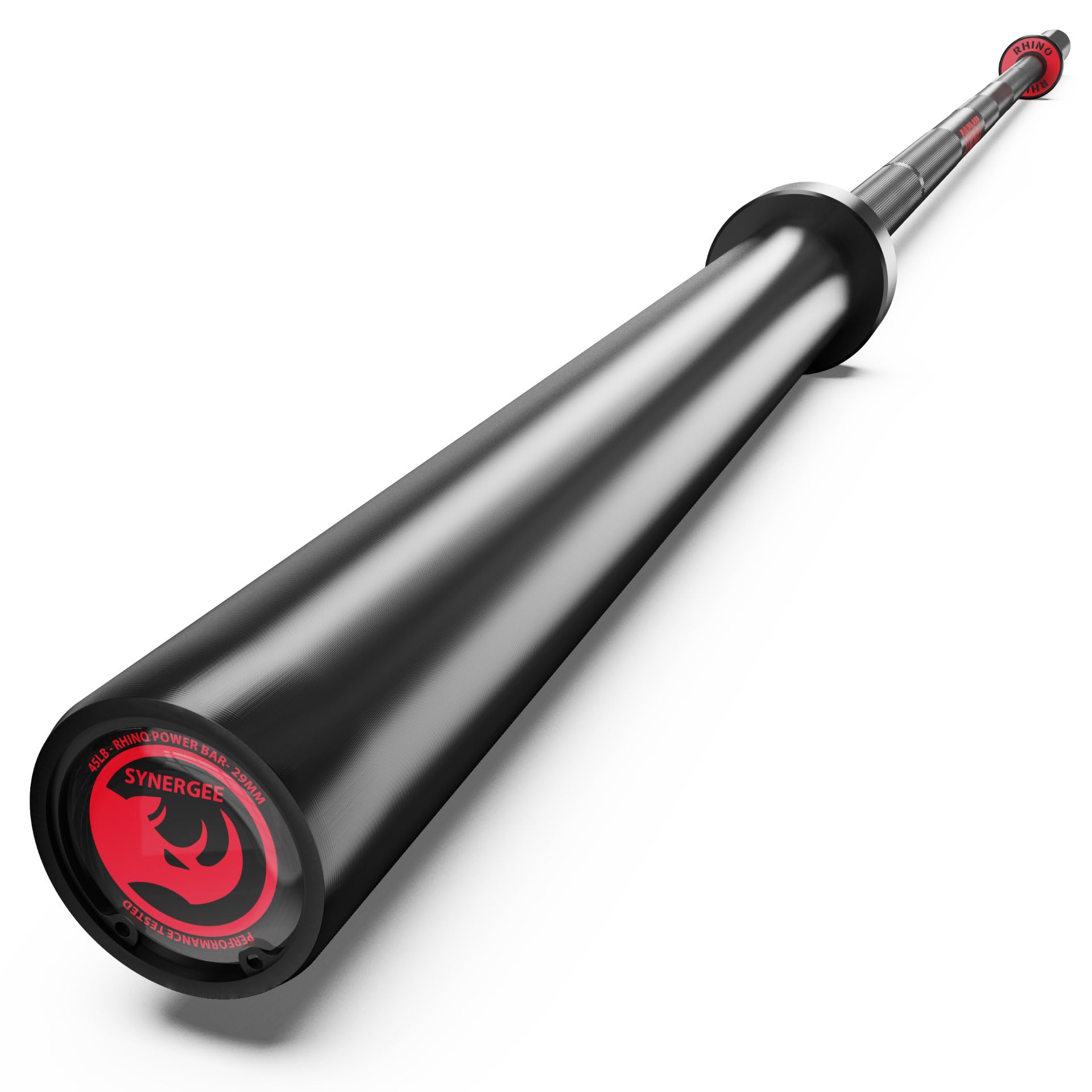
A thinner shaft bends more under heavy weight, and that stored energy is what springs the bar off the floor. Deadlift-specific bars typically run a 27 mm shaft, which flexes noticeably more than the 29 mm shaft found on stiffer power bars like the Synergee Rhino. If you pull sumo or conventional and want that launching feel, 27 mm is your starting point. If you squat heavy and want a rock-solid bar on your back, 29 mm is the safer call.
Tensile Strength and Capacity Ratings
Tensile strength is a steel rating measured in PSI that tells you how much tension the bar can take before permanently deforming. A 190,000 PSI rating is a common benchmark on quality bars in this class. The weight capacity number, usually listed as a maximum load, tells you how much plate weight the bar is rated to carry. Match that capacity to your realistic training max plus some headroom, not to a number you hope to hit someday.
Knurling and Finish Matter for Grip
Knurling is the crosshatched pattern cut into the shaft that gives your hands something to bite into. Deeper, sharper knurl holds chalk and skin better on max-effort pulls, but aggressive patterns can tear up your hands if you are not used to them. The finish matters too: bare steel and Cerakote coatings tend to preserve the sharpness of the knurl longer, while chrome and zinc are smoother but can wear faster in high-contact zones. Center knurling is an extra patch in the middle of the bar that grips your back during squats.
Side-by-Side Comparison
| Model | Best For | Shaft Diameter | Tensile Strength | Weight Capacity | Amazon |
|---|---|---|---|---|---|
| Synergee 45 lb Rhino Power Bar★ Best Overall | Stiff power bar for squats and presses | 29 mm | 190,000 PSI | 1500 lb | Amazon |
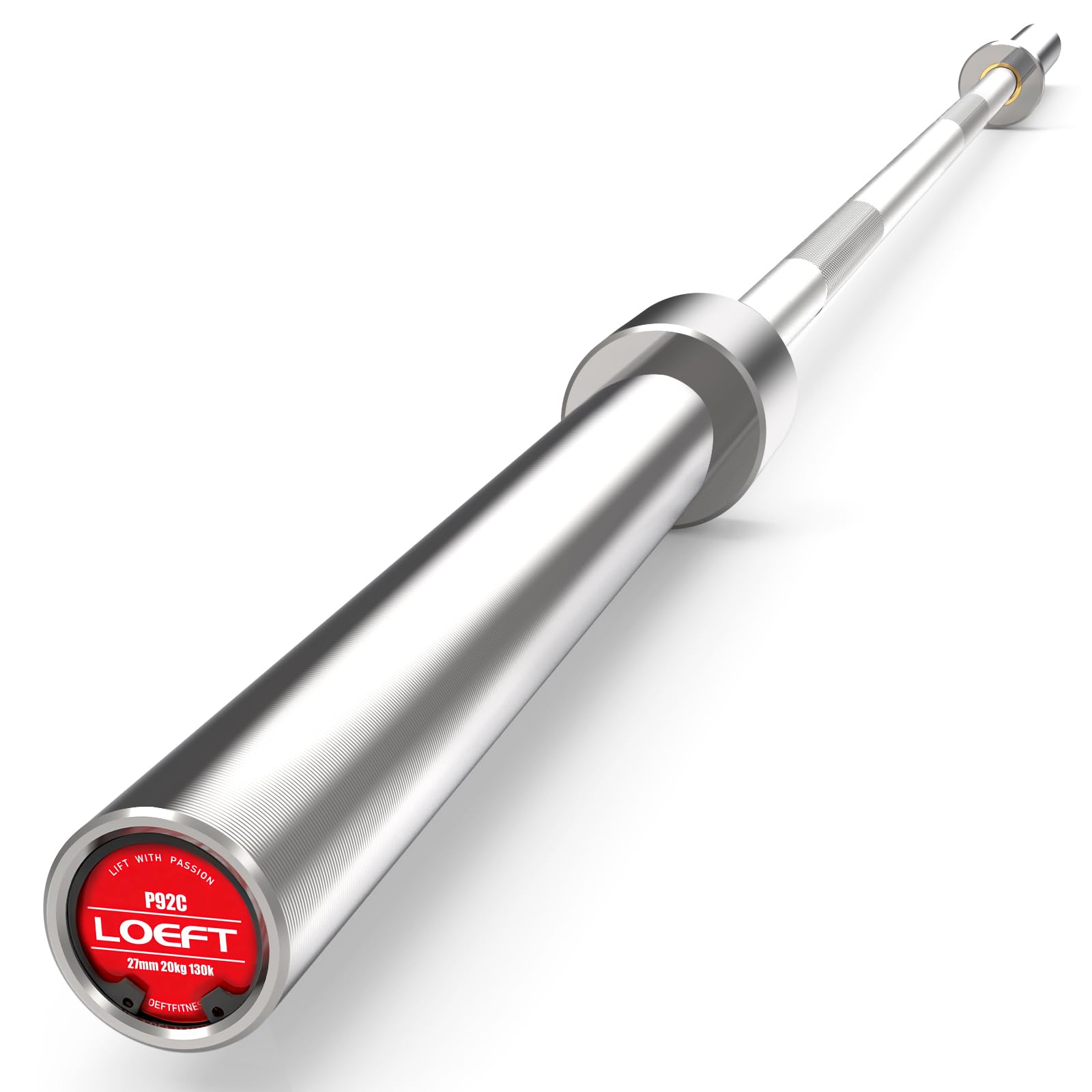
| LOEFT 92in 27MM Deadlift BarbellBest for Sumo | Sumo pullers wanting controlled whip | 27 mm | 130,000 PSI | 1000 lb | Amazon |
| Bells of Steel Open Hex Trap BarBest Hex Option | Versatile hex-bar training at home | — | — | 700 lb | Amazon |
| Valor Fitness Olympic Deadlift Barbell | Dedicated deadlift bar on a budget | 27 mm | 165,000 PSI | 1200 lb | Amazon |
| Bells of Steel Barenaked Powerlifting Bar | IPF-spec bare steel and deep knurl | 29 mm | 210,000 PSI | 1500 lb | Amazon |
| CAP The Rebel 7FT Olympic Barbell | Heavy everyday garage-gym lifting | 28.5 mm | 190,000 PSI | 2000 lb | Amazon |
| PONE FIRST Trap Bar Deadlift 51″ Hex Bar | Hex-bar work on a tighter budget | 1.1 inches | — | 800 lb | Amazon |
| CAP Barbell Olympic Weight Set | First home gym needing bar and plates | 30 mm | 54,000 PSI | 500 lb | Amazon |
| Valor Fitness 80in Women’s Olympic Barbell | Olympic lifting with a thinner 25 mm shaft | 25 mm | 190,000 PSI | — | Amazon |
Detailed Reviews
1. Synergee 45 lb Rhino Power Bar
Our pick — 4.5+★ from 300+ verified ratings; the strongest balance of quality and price.
A stiff, Cerakote-armoured power bar that feels heavier than its price tag
If you squat and press as often as you pull, you want a bar that stays rigid instead of whipping around. The Rhino gives you that: a 29 mm shaft (the thickness of the steel through your hands) with very little flex, so the bar stays steady on your back and over your chest. It also carries a 190,000 PSI tensile strength rating (how much tension the steel takes before it bends) and a 1500 lb weight capacity. It is built the opposite way to a deadlift bar, and that is deliberate.
Where it earns its place is grip and durability. The volcanic knurling bites hard, the Cerakote-coated shaft is a ceramic-based finish that shrugs off chips and corrosion, and the sleeves carry black phosphate rather than chrome. In practice that means your hands stay locked in on heavy pulls and the bar still looks new after a year of dropping. Owners also rate the size and feel very highly, with the weight distribution and 16.4 inch loadable sleeves making plate loading quick. A common story is a lifter comparing it against much pricier name-brand bars and finding it feels better, then stopping the search.
The honest catch is the knurling. Some people love how aggressive it is and others find it too rough on high-rep sets or bare-handed pulls in a tank top. If you train without a shirt or do a lot of volume work, expect to build up hand tolerance. Another note: it ships without much protective wrapping compared to some competitors, and a rare unit has arrived with cosmetic scuffs. Neither affects how it lifts, but worth knowing if you are particular about a pristine finish from the start.
Why It Earns The Top Spot
- 29 mm shaft with minimal whip — stays rock-solid on heavy squats and presses
- 190,000 PSI tensile strength and a 1500 lb capacity rating for serious volume
- Cerakote-coated shaft resists chipping and corrosion better than chrome
- Aggressive volcanic knurl and center knurl hold a heavy pull reliably
Where It Asks Something Of You
- Aggressive knurling can feel harsh on high-rep sets or bare-handed pulling
- Some units have shipped with light cosmetic scuffs due to minimal outer padding
- Not a whip-forward deadlift bar — if you want flex off the floor, this is the wrong tool
Go for it if: you train squats, bench and deadlifts in equal measure and want one stiff bar that can take everything you throw at it.
Think twice if: your priority is maximum whip for deadlift speed — a 27 mm shaft is the better fit for that job.
2. LOEFT Professional Deadlift Bar, 92in 27MM, 1000 lb Capacity
Purpose-built for sumo pullers who need knurl marks in the right place
Sumo pullers get a raw deal from generic bars, and this LOEFT bar fixes that with precision-spaced knurl marks tuned for a wide stance. At 92 inches long and 45 pounds, it is a full-length deadlift bar. The shaft is chrome-finished stainless steel with medium-deep knurling and a sharp center knurl that grabs your shorts on setup. A 130,000 PSI tensile strength rating and a 1000 lb weight capacity put it in the working-strong category without the flagship price tag.
If you want speed off the floor, the 27 mm shaft (the steel thickness in your hands) is the headline feature — it flexes and stores energy during the initial pull, then releases it as the bar breaks the ground. Bronze bushings (metal sleeves that let the bar spin) give smooth, controlled spin, so the plates rotate without rattling and you do not fight torque at lockout. The 2 inch sleeves take any standard Olympic plate. Its 15.75 inch loadable sleeves are about twice as long as the 8 inch sleeves on the PONE FIRST hex bar, so if you run heavy pulls with thick bumper plates, you have more room before you run out of sleeve.
What you give up is the polished ownership experience you get from the biggest-name brands — there is no long track record behind this bar yet. Still, for a lifter who knows their stance, the sumo-specific spacing alone justifies the pick. Just be honest about your realistic max: 1000 lb is a hard ceiling, and it will not feel as reassuring under a 700 lb squat as the stiffer 29 mm options on this list.
Who it suits: Sumo pullers who want knurl marks in the right spots and a whip that helps rather than fights them.
What to weigh: Shorter sleeve length than some competitors limits plate stacking when you run tall bumper plates on heavy sets.
Worth owning if: you pull sumo and want the spacing, whip and center knurl dialled in from the first rep.
Less ideal if: you need a bar that doubles as a squat or bench workhorse — the flex makes it a poor choice for rack work.
3. Bells of Steel Open Hex Deadlift Trap Bar
An open-frame trap bar that loads plates without lifting a finger
If your lower back speaks to you the morning after deadlift day, a trap bar moves the load around your center of gravity instead of loading your spine. This one weighs 47 pounds, takes 2 inch Olympic plates, and is rated to 700 lb. The open frame lets you step in from the front instead of over the bar, which matters most when you are loading heavy plates on tired legs. It ships fully assembled — the design is ready to use the moment it arrives.
The standout feature is the built-in jack system. Instead of hauling a separate bar jack across the gym, you lift the frame, slide your plates on, and set it back down. Owners consistently say the loading and unloading is what makes this bar worth the money, and it is easy to see why: you can change plates between sets without bending over a 100 lb bar. With light knurling on the handles and a black oxide shaft paired with white zinc sleeves, it is a kinder grip than a deadlift bar but still secure. It handles deadlifts, split squats, lunges, farmer’s walks and hex squats with the same bar.
The trade-offs are specific. Balance is the most-discussed front, with some lifters finding the shift from a traditional closed trap bar takes a session or two to trust. And at 47 pounds, it is heavier than the 30 pound PONE FIRST hex bar, so if you are new to trap bar work, expect a little more to handle. Neither is a defect — just be honest about what you are buying.
Reasons It Sells Itself
- Built-in jacks let you load plates standing up — no separate jack needed
- Open frame opens the door to split squats, lunges and step work
- Ships fully assembled and ready to load
- 700 lb rated capacity in a 47 pound frame
The Honest Caveats
- Balance can take getting used to if you are switching from a closed trap bar
- Heavier starting weight than the lighter hex bars in this class
- Not a whip bar — this is a control bar, not a speed bar
Reach for this if: you want one bar that handles deadlift variations, lunges and carries without a separate jack or a second purchase.
Look elsewhere if: your training is built around a straight bar and you want whip and flex rather than a controlled hex frame.
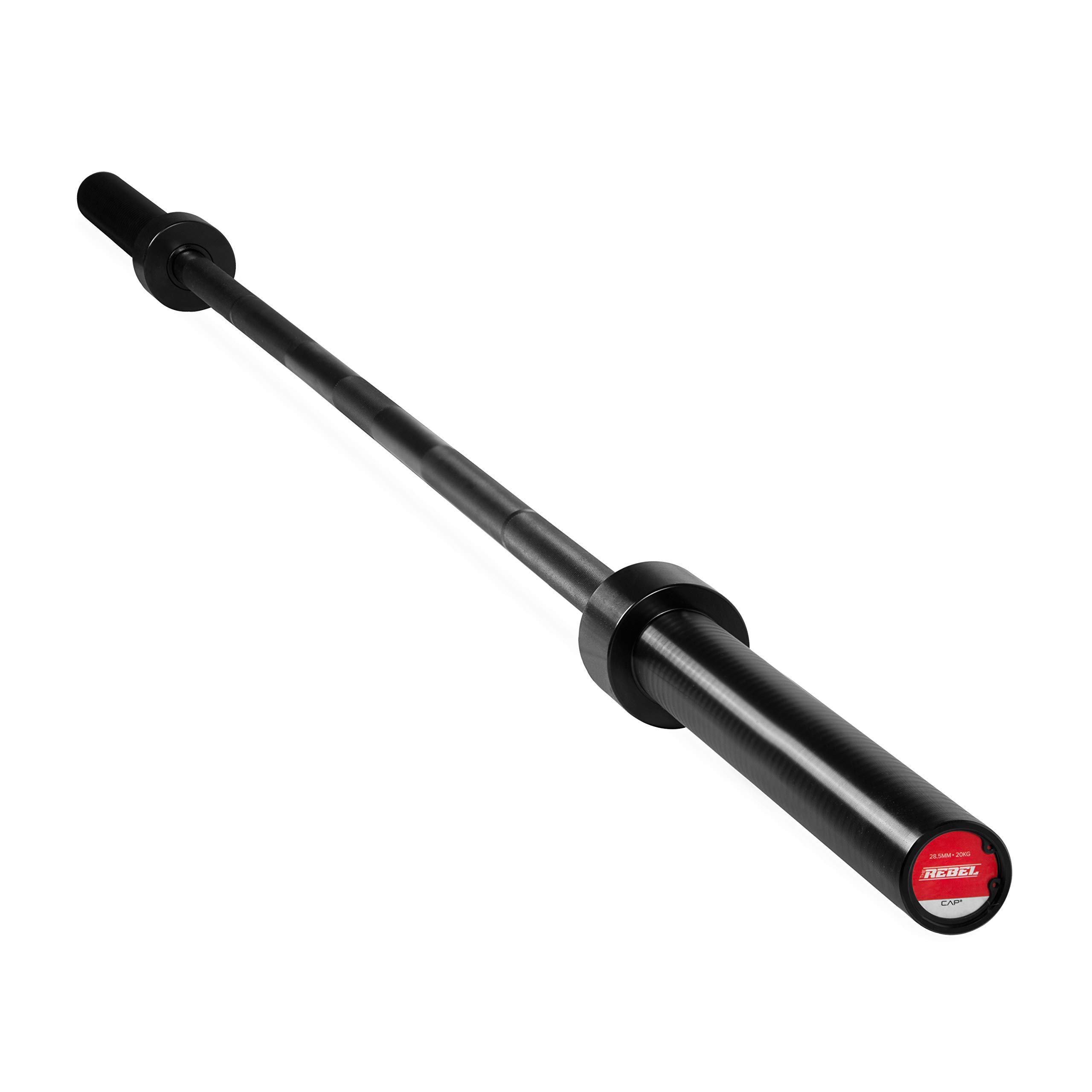
4. CAP Barbell “The Rebel” 7FT Olympic Bar, 2000 lb Capacity
The garage-gym generalist that says it will hold anything you can load
This bar claims a 2000 lb maximum load rating, which is far more than most home lifters will ever test. At 20 kg (roughly 44 pounds), with a 28.5 mm shaft (the steel thickness in your hands) and a 190,000 PSI tensile strength rating, it sits between the flexier 27 mm deadlift bars and the stiffer 29 mm power bars. That middle ground means it works for squats, presses and pulling without being a specialist at any one of them.
The mountain-style knurling and center knurl are its feel-defining features. The shaft has a phosphate finish (a corrosion-resistant coating that keeps the knurling sharp) and bronze bushing sleeves that rotate smoothly. For a home lifter building a first full setup, the aggressive center knurl helps hold the bar safely on back squats. That is often the first place budget bars fall short, and CAP did not skimp on it here.
Where it loses points is longevity. Some long-term buyers report the bar developing a bend over time under very heavy use, so if you are regularly putting 500 lb+ on the bar for squats, plan to check straightness. The 28.5 mm shaft is also a compromise: it is not as whippy as a dedicated 27 mm deadlift bar. For a home gym that wants one bar for everything, that is the right call. If you chase a deadlift PR specifically, the Valor Fitness Olympic Deadlift Barbell is a better-targeted pick.
Why it works: Unusually high 2000 lb load rating, center knurl and a 28.5 mm shaft that balances whip against stiffness.
The trade-off: Mixed durability reports over years of heavy use, and the middle-ground shaft means it is not optimised for any one lift.
Buy it if: you are outfitting a home gym and want one bar that handles squats, presses and pulls without a specialist price.
skip it if: you train deadlift-heavy and want a bar purpose-built for pulling speed — there are better shapes for that job on this list.
5. Bells of Steel Barenaked Powerlifting Bar, 29 mm, 1500 lb

Bare steel, cheese-grater knurl and the highest tensile rating in this lineup
This bar has the highest tensile strength rating in this lineup at 210,000 PSI. That number matters because tensile strength measures how much tension the steel resists before deforming — a higher figure is a more stubborn bar. Pair that with a 29 mm shaft and a 1500 lb capacity and you get zero perceivable whip. The bar is built to IPF specs, meaning the dimensions match what you would find on a competition platform, so training on it feels like the real thing.
The knurling is the reason people buy it. It has an aggressive bare steel finish — no coating, so nothing sits between your hands and the steel — which owners describe as cheese-grater sharp. That is exactly what you want when your grip is the weak link on a heavy pull. Weighing 44 lb with 51.5 inch shaft length, it also sets up correctly for squat and bench work.
The trade-off is maintenance. Bare steel rusts. Owners who use this daily wipe it down and brush it regularly, and long-term ownership means accepting that the finish will patina. That patina is normal on bare steel, not damage, but if you want a bar that needs no attention between sessions, pick a coated one instead. It is also a stiffer bar than the whip-forward deadlift options — great for squatting, less ideal for a speed-focused pull.
Why it stands out: 210,000 PSI tensile strength, IPF-spec dimensions and a bare steel finish that keeps the knurl razor sharp.
What comes with it: Bare steel demands routine oiling and brushing — and it will not offer the whip some pullers want.
Choose this if: you compete or train to platform specs and want maximum grip with no coating between your hands and the steel.
Reconsider if: you want a low-maintenance finish, or you need deadlift-specific whip — this bar trades flex for stiffness.
6. PONE FIRST Trap Bar Deadlift 51″ Hex Bar, 800 lb Capacity

A compact hex bar that is easy to assemble and easy on a fussy back
For a hex bar that weighs only 30 pounds, this PONE FIRST model punches above its class. It handles deadlifts, squats, shrugs, farmer’s walks and bent-over rows from the same frame, with two grip positions and a knurled 1.1 inch grip diameter. The maximum total weight is 800 lb, and it comes with Olympic spring clips to keep plates secure — a small thing that saves you buying them separately.
Assembly is the standout strength. Owners describe the process as easy and quick, and the raised handles are the reason people with sensitive lower backs buy a hexagonal bar in the first place. One 6-foot-2 owner said the handles were high enough that he needed a platform to pull from a lower position, so height will be a real factor depending on your build.
The friction point is plate compatibility. Reviewers have reported that the bar does not fit some 2 inch bumper plates, and at 8 inches the loadable sleeves are short, so thick plates fill them up faster than you would like. If you are running heavy bumper plates, measure before you buy. And while the bar’s raised handles save your back, the shorter sleeves mean plate capacity runs out sooner than on a full-size deadlift bar.
The genuine upside: Fast, tool-free assembly, dual grip positions and an 800 lb rated frame in a compact 30 pound package.
The friction point: Short 8 inch sleeves and some reported fit issues with certain 2 inch bumper plates, so check your plates before buying.
Great pick for: anyone wanting a lighter, easier-loading hex bar for home or rehab-style training.
Not for you if: you run heavy bumper plates or need maximum sleeve length for stacked plates.
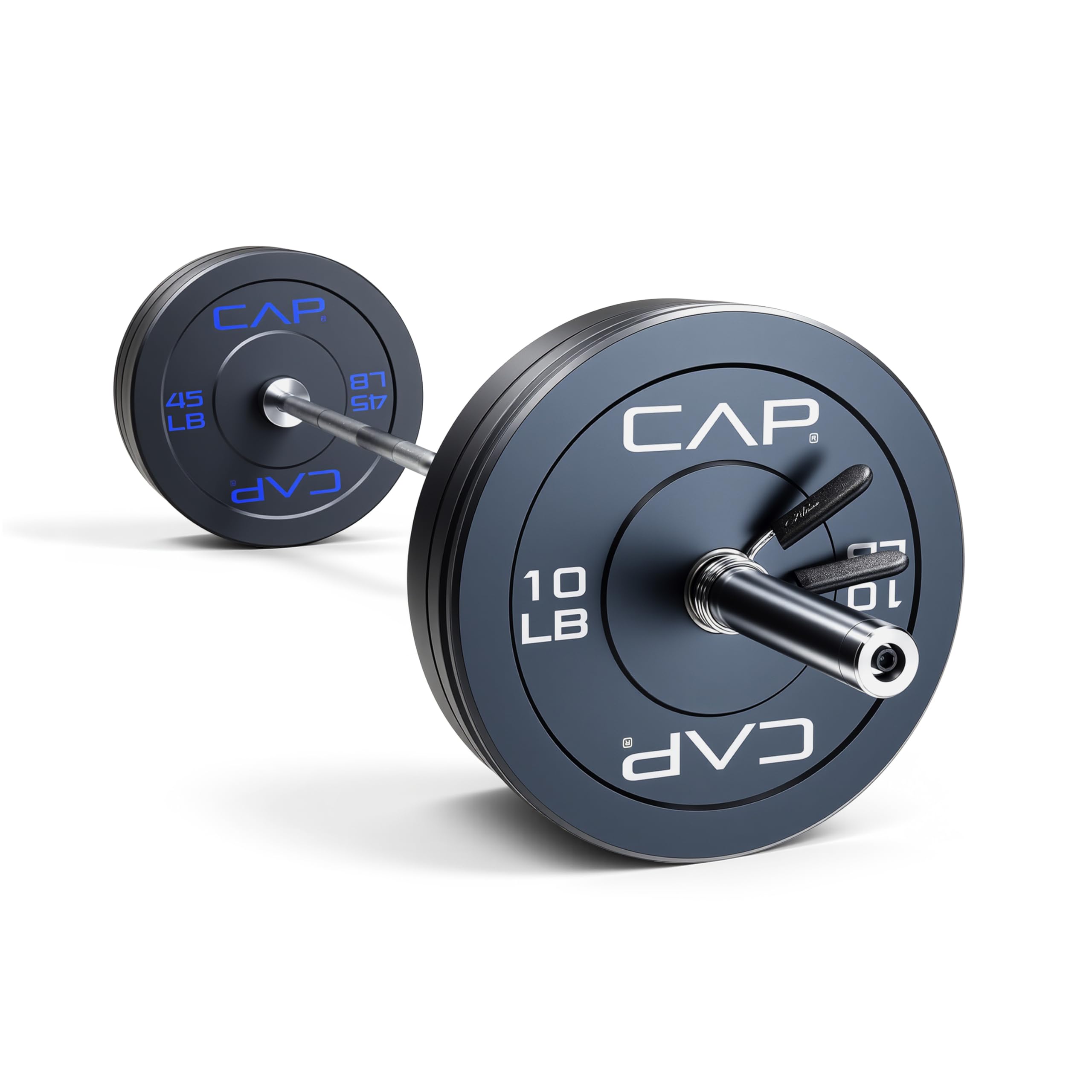
7. CAP Barbell Olympic Weight Set
Bar and plates in one box for anyone starting from nothing
Buying your first home setup means picking a bar and matching plates — or you can get both in one. This CAP bundle includes a 7 foot Olympic barbell (20 kg, roughly 45 pounds) plus matched pairs of 10, 25 and 45 pound rubber-coated bumper plates, with two spring clip collars to hold them. The bar weighs 45 LB and has a 30 mm grip diameter with a chrome finish. A 54,000 PSI tensile strength rating and a 500 lbs maximum load tell you this is a home-use bar, not a platform weapon. The 30 mm shaft means it is a smoother, thicker grip than the 27 mm and 29 mm options here.
What is nice here is the bumper plates: cast iron cores with steel inserts and a rubber coating to protect your floor and your bar. The sleeves rotate, which cuts down strain on your forearms during squats and presses. The whole set fits any 2 inch Olympic bar, so you can add plates later without swapping anything out. Owners rate it as good value and report that the bar and plates weigh out exactly as advertised — no surprise light plates.
Two real considerations. The knurling is minimal, so if you grip-slip on heavy pulls you will want chalk. And the bumper plates have a strong factory rubber smell straight from the start, which fades with ventilation but lingers for a while. If your training is already at the load limit of this set, you already know it is time to upgrade the bar rather than the plates.
What you get: A matched bar-and-plate set that walks a first-time home lifter straight into a working setup with no guesswork on compatibility.
What to budget for: Low 54,000 PSI steel and minimal knurl mean this bar has a ceiling, and the rubber plates arrive with a strong factory odour.
Perfect for: a first home gym that needs plates and a bar in one purchase without shopping the compatibility maze.
Look elsewhere if: you already pull heavy or want strong knurling — the steel here is built for beginners, not for a 500 lb deadlift habit.
8. Valor Fitness Olympic Deadlift Barbell

A long, whippy 27 mm bar that starts flexing right where heavy pulls happen
At 90.5 inches long with a 27 mm shaft, this Valor bar gives you the extra length that lets a deadlift bar flex before the plates leave the floor. That whip starts kicking in around 450 pounds — exactly the zone where a stiff bar starts feeling dead in your hands. It is rated at 165,000 PSI tensile strength (a mid-tier figure that holds up well under real training loads) with a 1200 lb capacity and a 56 inch shaft length. For a dedicated puller who wants to feel the bar load, that combination is the point.
Knurling here (the rough crosshatch cut into the steel) is aggressive enough to matter, so your hands stay locked in on a heavy pull. Owners note that the 27 mm shaft sits right in the grip-size balance, big enough to fill your hand but thin enough to get your fingers wrapped around it. The whip and the bar width together are the two traits people write in about most. It arrives well-packaged, and reviewers comparing it to name-brand deadlift bars say it holds its own for less outlay.
The honest trade to know about is the coating. This bar has a powder coated finish, and a small number of long-term owners have reported the zinc coating wearing thin in spots, with the collars showing peeling after extended use and a slight bend developing after about 18 months of heavy pulling. For most home lifters training in the 400-to-700 lb range that window is long enough to be happy for years, but if you are at the top of the range or pulling competition weight, it is a factor to weigh. The bar’s shorter sleeve length also limits how much plate weight stacks cleanly onto each end compared to longer-sleeved options on this list.
What wins people over: Real whip that starts around 450 pounds, a 27 mm shaft with a comfortable grip diameter, and a build that handles 700 lb work.
The honest limit: Powder coated finish with some reports of wear and a slight bend after long-term 700 lb+ use, plus shorter sleeves than the flagship options.
Buy this if: you want a genuine whip-equipped deadlift bar with a comfortable 27 mm shaft and a proven track record at working weights.
Look at the 29 mm options if: you prefer a stiff squat and press bar, or you want maximum durability over years of competition-level loading.
9. Valor Fitness 80in Women’s Olympic Barbell
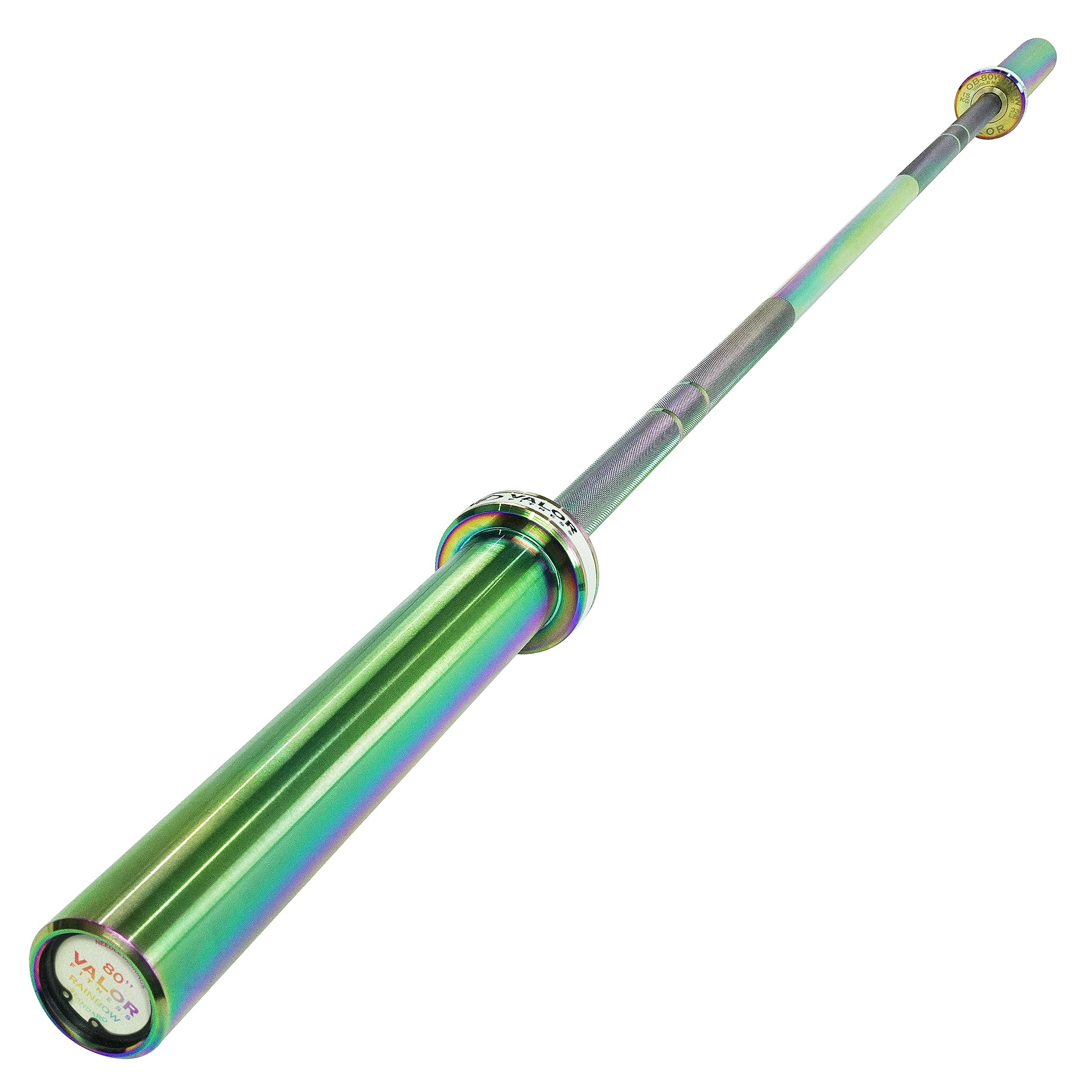
A 25 mm shaft with needle bearings built for fast Olympic lifts
For lifters with smaller hands or anyone who wants a fast-spinning bar for cleans and snatches, the thinner 25 mm shaft here does something the 27 mm and 29 mm bars cannot. It also has a fully rackable design with 13 inch loadable sleeves and a rainbow prismatic titanium coating that resists corrosion while looking distinctly different on the rack.
The needle bearing system is the feature that matters most for Olympic work. Dual needle bearings and bushings per sleeve give smooth, fast rotation through explosive movements and quicker bar turnover on cleans. It is built from 190,000 PSI high tensile steel — tying the Synergee Rhino for tensile rating — and it is designed with enhanced whip and dual guide marks to help with hand placement. That combination makes it walk toward Olympic weightlifting rather than pure powerlifting.
You should know upfront that the track record on this bar is very short: it has a single rating, so there is no broad pattern of long-term ownership experience to lean on the way there is with the Synergee. Weighing 44 lb with an 80.5 inch length, it also requires a rack sized for an 80 inch bar. It has been reported to arrive damaged in at least one instance, so inspect on delivery. If you are after a long-term workhorse with a proven history, look to the more established options on this list — but if you want a fast-spinning 25 mm bar now, this is a legitimate entry point.
Why some lifters want it: A 25 mm shaft with dual needle bearings and a 190,000 PSI steel rating, built for the explosive side of the sport.
Weigh before you buy: Very little ownership history to draw on, and damage in transit has been reported, so unbox carefully and inspect on delivery.
Worth a look if: your training is Olympic-lift heavy and you want a fast 25 mm bar with needle-bearing spin.
Not your bar if: you want a long-proven power bar for squats and bench — this one is aimed at a different set of lifts.
Know the Specs
Shaft Diameter and Whip
The shaft diameter is simply how thick the steel is where your hands grip it. Thinner shafts bend more under load, and that stored flex becomes whip — the spring that helps you break the bar off the floor. Bars in the 27 mm range are typical for deadlift-specific use; 29 mm is common on stiffer power bars for squats and presses. A 25 mm shaft, like on the Valor Fitness women’s bar, is thinner still and often chosen by smaller lifters or for Olympic lifts where faster rotation matters more than rigidity.
Tensile Strength and Weight Capacity
Tensile strength, measured in PSI, tells you how much pulling tension the steel can take before it starts to deform permanently. Higher is generally more durable, and ratings of 190,000 PSI and up appear on several bars in this lineup. Weight capacity is a separate number: it is the maximum load the manufacturer rates the bar to carry, covering the plates and sometimes your own bodyweight depending on the movement. Match that capacity to your realistic working weight with headroom to spare — a rating set right at your training max leaves no margin.
Knurling Depth and Pattern
Knurling is the textured crosshatch cut into the shaft, and it is what lets your hands hold a heavy pull. Deeper, sharper patterns grip harder — some buyers describe top-tier knurl as cheese-grater sharp — while lighter patterns are easier on your hands. A center knurl is a separate patch near the middle of the bar that helps keep it planted on your back during squats. If you train without a shirt or do very high volume, aggressive knurl needs some getting used to.
Sleeves, Collars and Finish
The sleeves are the thicker rotating ends where your plates slide on, and their length decides how many plates you can load. Longer sleeves, like the 16.4 inch ends on the Synergee or 15.75 inch ends on the LOEFT, give heavy lifters more room than the shorter 8 inch ends on some hex bars. The finish type also matters: bare steel and Cerakote coatings tend to preserve knurl sharpness; chrome and zinc are smoother but wear faster in high-contact zones. Bronze bushings and needle bearings both give rotation, but needle bearings spin faster for Olympic lifts.
Common Questions
Is a 27 mm deadlift bar better than a 29 mm bar for pulling?
Will a deadlift bar fit my existing Olympic plates?
How much does a good deadlift bar weigh?
What does tensile strength mean on a barbell?
Should I choose a hex bar or a straight deadlift bar?
Do bare steel bars rust easily?
Can I use a deadlift bar for squats and bench press?
How long does a deadlift bar last?
What is the difference between a bushing bar and a needle bearing bar?
Do I need a separate jack to load a trap bar with plates?
The Bottom Line
For most lifters, the winner is the Synergee 45 lb Rhino Power Bar — it carries the highest rating in this group, backed by hundreds of owners, and its 29 mm shaft, 190,000 PSI steel and Cerakote finish (a tough ceramic-based coating) make it the bar you can grow into for years without feeling like you need to upgrade.
If your heart is set on pure deadlift whip, reach for the Valor Fitness Olympic Deadlift Barbell — a 27 mm, 1200 lb-rated specialist that starts flexing right where heavy pulls live. And if you want one bar that handles split squats, lunges and carries without a separate jack, the Bells of Steel Open Hex Trap Bar is the versatile third option. Match the shaft diameter to your lift, set your capacity ceiling honestly, and any of these will outlast your patience for shopping.
How we choose
We do not accept paid placement. Every pick is matched to a real buyer and a real use-case; we do not hands-on test units.
Sources
Specifications: manufacturer listings and product documentation. Review insights: verified customer reviews, as of October 2026. Pricing: not shown on this page (it changes often); check the current price via the retailer link.
As an Amazon Associate, Aappliancez earns from qualifying purchases. This does not affect which products we feature.