Disclosure: Some links in this post are affiliate links. As an Amazon Associate I earn from qualifying purchases, at no extra cost to you. Learn more
Specs are compiled from manufacturer listings and verified buyer reviews and can change over time — please confirm the key details on the product page before buying.
If your miso soup tastes thin no matter how much paste you stir in, the missing piece is usually dashi — a savory Japanese stock — and the fastest fix is a packet of dashi powder you drop straight into hot water. This guide covers five dashi-building options, from ready-made teabag-style packets to straight kombu kelp you steep yourself, so you can pick the one that fits how you actually cook.
This guide is built by comparing the manufacturers’ published specifications and the patterns across verified customer reviews, so you get each pick’s real strengths and trade-offs instead of marketing spin.
What separates a good dashi from a forgettable one is almost always the ingredient blend and the salt level, not the brand name on the pouch. Packets that lean on bonito, mackerel, sardines, kombu kelp and shiitake give you layered savory depth in minutes, and knowing which blend suits your pot is the whole buying decision behind best dashi powder.
Top Picks

How To Choose The Best Dashi Powder
Dashi is the savory backbone of Japanese home cooking, and the powder or packet you choose decides whether your miso soup, udon broth and simmered dishes taste deep or flat. The good news is that the decision depends on three things you can read straight off the label: what fish and kelp went in, whether salt or MSG (a flavor enhancer) was added, and how much water one packet is meant for.
Read the ingredient blend before the brand
Dashi gets its savory punch — the taste the Japanese call umami — from a combination of dried fish and kelp. A blend built on dried bonito, dried mackerel, dried sardines, kombu kelp and shiitake mushrooms layers several kinds of savory depth into one pot. A single-ingredient kombu product gives you a cleaner, more delicate base that many cooks prefer for sushi rice and light broths.
Check whether salt and MSG were added
This is the trap most first-time buyers fall into. A dashi labeled “no MSG, no added salt and sugar” lets you season the whole dish yourself, which matters when your recipe already calls for soy sauce or miso. Packets that arrive pre-seasoned are convenient but leave you less room to adjust. Either way, read the label rather than assuming — even a natural dried-fish product can carry salt from the drying process.
Match the format to how you cook
Teabag-style packets mean no measuring, no straining and no mess — you drop one in boiling water and pull it out. Loose kombu kelp flakes or sheets need a short steep but give you more control and often stretch much further per pouch. If you cook miso soup several times a week, convenience wins; if you build stocks from scratch, loose kelp earns its place in the pantry.
Side-by-Side Comparison
| Model | Best For | Format | Ingredients | Added Salt or MSG | Amazon |
|---|---|---|---|---|---|
| Orgnisulmte Dashi Stock★ Best Overall | Everyday miso soup and simmered dishes | 8g x 18 packets | Bonito, mackerel, sardines, kombu, shiitake | None added | Amazon |
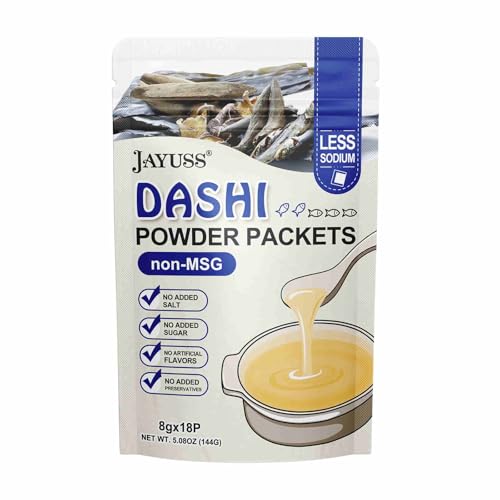
| JAYUSS Japanese Dashi PacketTop Performer | Ramen, udon and hot pot bases | 8g x 18 packets | Flying fish, bonito, sardines, kelp, shiitake | None added | Amazon |
| Ajinomoto HONDASHI Bonito Soup Stock | Stir-fries and quick seasoning | 4.23 oz powder, pack of 2 | Real bonito fish | — | Amazon |
| Organic Kombu Flakes | Sprinkling umami into everyday cooking | Freeze-dried flakes, 1 oz | USDA certified organic Atlantic kombu | None added | Amazon |
| Eden Kombu | Traditional dashi steeping and sushi rice | Whole sheets, 2.1 oz | Wild Japanese hand-harvested kombu | None added | Amazon |
Detailed Reviews
1. Orgnisulmte Dashi Stock (Dashi Packet, Dashi Broth)
Our pick — 4.5+★ from 250+ verified ratings; the strongest balance of quality and price.
Five dried ingredients steep into one packet, so a weeknight miso soup tastes like it took all afternoon.
This is the pick that flattens the learning curve entirely. You get 18 teabag-style packets of 8g each, and each one is blended from dried bonito, dried mackerel, dried sardines, kombu kelp and shiitake mushrooms. That five-part blend is why the broth lands complex rather than one-dimensional — you are tasting several kinds of savory at once instead of a single fish note. Drop one packet in hot water and you are done; there is no measuring, no straining and no grit left in the pot.
The ingredient list is also the selling point that matters most once you actually cook with it. No preservatives, no additives, and no seasoning like salt, sugar or chemical flavorings added, which means the packet builds the base and you decide the final salt level with your own soy sauce or miso. That is the difference between a dashi that fights your recipe and one that supports it. Buyers who came to this brand after thin, overly fishy powdered alternatives tend to describe the same relief — the broth reads as rich and full-bodied rather than sharp, and it holds up in simmered dishes and noodle soups, not just soup.
The convenience factor is real: the packets work in miso soup, simmered dishes, zosui, udon or soba broth, and the broth is deep enough to sip on its own. What wins people over most is the flavor itself — by a wide margin the most-praised quality here — followed closely by the overall quality of the ingredients. If you keep a bag in the pantry, miso soup stops being a project. At 5.08 ounces for the whole pouch of 18 packets, one bag covers a long run of weeknight dinners.
What earns its place in the pantry
- Five dried ingredients in one packet for layered, restaurant-style depth
- No MSG, no added salt or sugar, so you control the final seasoning
- Teabag format means no measuring, straining or cleanup
- 18 packets at 8g each covers weeks of regular soup making
Worth knowing before you buy
- It is not salt-free — dried bonito is salted during the drying process
- If you want total control over the blend, loose kombu gives you more of it
Reach for this if: you want miso soup, udon broth and simmered dishes handled with one drop-in packet and no guesswork.
Look elsewhere if: you need a completely salt-free base, because the bonito brings some salt of its own.
2. JAYUSS Japanese Dashi Packet
The ramen-bowl specialist — one packet, 400ml of boiling water, three minutes, done.
Where the top pick leans on classic bonito, mackerel and sardine, this one adds Kyushu-roasted flying fish to the blend alongside bonito, dried sardines, kelp and shiitake. The result is a deeper, slightly rounder savory note that suits beef bowls, hot pot and noodle soup particularly well. Preparation is about as simple as it gets: 400ml of boiling water, 2 to 3 minutes, and the packet does the rest. There is no MSG, and no added salt or sugar, so the final seasoning is yours.
Here is the honest catch, and it is the one thing to weigh: the aroma. This is a real dried-fish blend, so the scent coming off the boiling water is strong and noticeably fishy to some noses — mixed feedback on that point, even while the broth itself usually lands well. If you are scent-sensitive, that is the trade-off to know about before you commit a whole pot. Everyone else gets restaurant-style miso soup and a beef bowl that tastes like takeout.
The scent question: a strong dried-fish aroma rises while the packet steeps, which bothers some noses far more than the finished broth ever does.
Where it beats the rest: the flying-fish addition gives extra depth for ramen, udon and hot pot, and the no-added-salt, no-MSG build leaves your soy sauce and miso free to do the seasoning.
Settle on this one when: you cook ramen, udon, pho or hot pot regularly and want a gluten-free base that carries deep savory flavor without added MSG or salt.
Hesitate if: a strong fishy aroma while boiling would put you off, even when the finished bowl tastes balanced.
3. Ajinomoto HONDASHI Bonito Soup Stock 4.23oz, Pack of 2
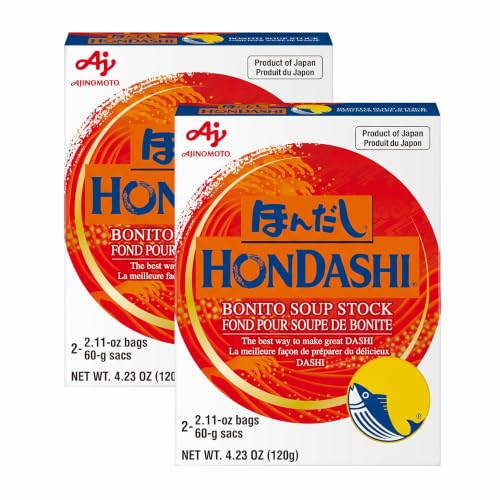
Two tubs of straight bonito stock powder — the no-fuss seasoning drawer staple, not the delicate-soup specialist.
Everything about this one is about volume and simplicity. It is a powder rather than a teabag, it is made from real bonito fish, and it is a product of Japan. You get a pack of 2 at 4.23 ounces each, which adds up to 8.46 ounces total — and that is the standout number here. Compare it with the 0.28-ounce packet brand in this list and the scale difference is enormous: you are stocking the pantry, not buying one week of soup. Two tubs also sit comfortably in a cupboard with their 5.12-inch by 1.1-inch footprint.
Because the base is bonito and nothing delicate is trying to hide behind it, this earns its keep as a seasoning rather than a sipping broth. Stir it into stir-fries, stews, rice dishes and sauces for a quick savory lift. That is a different job from the teabag picks higher up this list, which are built to be the star of a bowl of miso soup. Both belong in a functioning Japanese pantry — they just do not do the same work.
The catch on this pick is straightforward: it is a bulk format with a narrow ingredient focus, so it will not give you the layered bonito-mackerel-sardine-kombu-shiitake depth that the packet blends deliver. And with a small early pool of ratings behind it, this is a pick you choose on format and pantry math, not on a deep track record. If you want one tub that seasons everything without fuss, that trade is worth making.
The pantry math: two 4.23-ounce tubs — 8.46 ounces total — turn this into a bulk seasoning buy rather than a single-week soup purchase.
Built for: the cook who seasons stir-fries, stews and rice dishes constantly and wants a real bonito stock powder on the shelf in bulk.
Skip if: you want a layered, multi-ingredient sipping broth or a deep history of buyer feedback to lean on.
4. Organic Kombu Flakes — 1oz, USDA Certified, Freeze-Dried
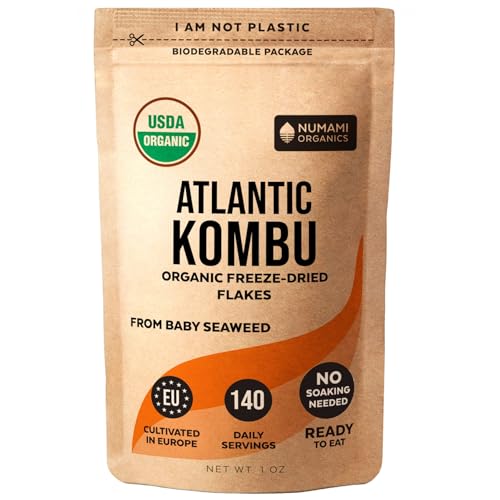
No cutting, no soaking, no boiling — freeze-dried kelp flakes you shake straight onto the pan.
Picture the opposite approach to a soup packet. These are kombu kelp flakes that are freeze-dried and small, cultivated in the clean waters off the Norwegian coast rather than gathered from a beach or imported from Asia, and harvested young as four-month-old baby seaweed. The freeze-drying is what keeps the flakes light while packing roughly 700 grams of fresh seaweed into the pouch. Two certifications back the sourcing — USDA Organic and certified organic in the EU. And unlike sheet kelp, there is nothing to cut, wash, soak or boil.
That no-prep format is where these flakes shine, and the use cases go well beyond dashi. They work in traditional Asian dishes like dashi and miso soup, but they also bring richness to beans, grains, salads, ramen and rice — plus they are a natural way to cut back on salt, since the brand swaps half the salt for kombu in its own kitchen. The pantry value angle is genuinely different here too: at 1 ounce for 140 servings, this pouch stretches about as far as anything on this list. Owners who stuck with the brand often moved up to a larger bag, and the taste is described as clean and not fishy the way other kelp can be. Some sprinkle it on savory dishes simply to know they are getting minerals; others lean on the iodine it delivers, and the flavor tends to taste like whatever food it lands on.
Two honest caveats. First, the price-to-quantity ratio draws mixed feelings — some find the value excellent, others find it dear for a one-ounce pouch, so weigh how far 140 servings actually stretches in your kitchen. Second, flakes are delicate: they arrive as 8.66 by 5 by 0.75 inches of packaging holding a very light product, so treat the pouch with some care. Neither is a dealbreaker. They just tell you who this is for — someone who wants umami stirred into everyday cooking without any prep.
Why it earns the label: no cutting, washing, soaking or boiling — a pinch straight from the pouch seasons soups, stews, beans, grains and rice, and one ounce covers 140 servings.
The trade to accept: the pouch weighs almost nothing, so what you pay buys a lot of uses rather than a lot of bulk — a fair swap for convenience, an odd one if you shop by weight.
Right for you if: you want organic, USDA and EU certified kelp you can sprinkle into any savory dish without a single prep step.
Think twice if: you want a heavy bag you can feel — this is a purpose-built one-ounce pouch of freeze-dried flakes.
5. Eden Kombu

Whole sheets of wild hand-harvested Japanese kelp — the old-school route to a clean dashi base.
This is the one for cooks who want to build dashi the traditional way. It is 2.1 ounces of wild Japanese hand-harvested kombu in whole sheets, not flakes and not powder, which means you control exactly how much goes into the pot. For dashi it is a foundational ingredient, and it pulls equal weight in other soup stocks, noodle broths and sushi rice. A small piece goes a long way — what wins people over most is the taste, and it only takes a modest strip to noticeably deepen a whole dish.
The format is the whole point. Whole sheets mean you can pull them out when the broth has the depth you want, rather than hoping a pre-portioned packet lands right. Buyers who use it for sushi rice pair it with sake; owners of Instant Pot beans report it tenderizing and adding flavor, with a mild scent and a soft texture once rehydrated. It is also a genuinely durable pantry item — dried sheets keep far longer than any pre-blended powder. On freshness and versatility it holds its own against the flake format above, and the two work well as a pair: flakes for sprinkling, sheets for steeping.
The thing to know before buying is the price conversation. Value-for-money feedback lands in mixed territory here, and that makes sense — you are paying for wild, hand-harvested Japanese kombu in whole-sheet form, not for the cheapest kelp on the shelf. Cooking with sheets also takes a little more attention than dropping in a packet; you steep, then remove. If you want the traditional method and the control that comes with it, this delivers. If you want speed, the teabag picks are the faster road.
Where the traditional format pays off
- Whole wild sheets let you dial in exactly how much kelp goes into the pot
- Earns its keep across dashi, soup stocks, noodle broth and sushi rice
- Dried sheets keep far longer on the shelf than pre-blended powders
- Only a small piece is needed to noticeably deepen a dish
The parts that take adjusting to
- Value-for-money gets mixed feedback, so it is the pricier route to the same umami
- Steeping and straining takes more effort than a drop-in packet
For the cook who: builds dashi the traditional way and wants whole, wild, hand-harvested Japanese kombu to steer by taste.
Not your pick if: you want a soup base that is ready the moment water boils, with no steep-and-remove step.
Know the Specs
Packet format versus powder
A teabag-style dashi packet holds its dried ingredients inside a mesh bag you drop into hot water and pull out, so there is no measuring and no straining — that is the format behind the two packet picks here. A loose powder dissolves straight into the pot, which is faster still but leaves you eyeballing the amount. Loose kombu flakes or sheets sit at the other end: nothing is pre-portioned, but you get the most control over how strong the broth turns out.
Added salt, sugar and MSG
A “no MSG, no added salt and sugar” label means the packet contributes only the savory base, and you season the finished dish yourself with soy sauce, miso or salt. That matters when your recipe already carries salt from other ingredients. Even natural dried fish can bring some salt along from the drying process, so the label tells you what was added — not whether the ingredient itself is naturally salty.
Water volume and steeping time
The packet instructions are your strength dial. On the JAYUSS packets, one packet goes into 400ml of boiling water for 2 to 3 minutes, which gives you a repeatable baseline every time. Use more water or a shorter steep for a lighter broth, or less water for a stronger one. With loose kombu sheets you set the strength by how much you drop in and when you pull it out — there is no fixed number to follow.
Yield per pouch
Yield is the quiet spec that decides the real cost of any of these. A pouch of 18 packets at 8g each covers 18 batches of soup, while a 1-ounce pouch of freeze-dried kombu flakes claiming 140 servings spreads across dozens of meals in pinches rather than full batches. A 4.23-ounce tub of powder is a bulk seasoning buy. Think in batches and pinches, not in ounces, and the value math gets simple.
Common Questions
Is dashi powder the same thing as instant dashi granules?
How much water does one dashi packet make?
Will dashi powder work if I do not have miso paste?
Do I need to strain dashi made from kombu flakes?
Is dashi powder suitable for a gluten-free diet?
How long does a pouch of dashi last in the pantry?
Is dashi powder very fishy tasting?
Can I use dashi powder for dishes other than miso soup?
Does dashi powder contain MSG or added salt?
Which is better, dashi powder or kombu kelp?
The Bottom Line
For most kitchens, the best dashi powder is the Orgnisulmte Dashi Stock because its five-ingredient blend — bonito (dried skipjack tuna), mackerel, sardines, kombu (kelp) and shiitake (mushroom) — does the most work per packet, with no MSG and no added salt to argue with your recipe. If ramen, udon or hot pot is your regular pot, the JAYUSS Japanese Dashi Packet adds Kyushu-roasted flying fish to the blend and rations itself neatly at one packet per 400ml. And for cooks who want umami (savory flavor) stirred into everything with zero prep, the Organic Kombu Flakes are USDA certified, need no soaking, and stretch across 140 servings. Whichever you choose, the one nudge worth acting on: grab the packet format first if you are new to dashi — the Orgnisulmte pick is the most hands-off of the group, and you can always add loose kelp later.
How we choose
We do not accept paid placement. Every pick is matched to a real buyer and a real use-case; we do not hands-on test units.
Sources
Specifications: manufacturer listings and product documentation. Review insights: verified customer reviews, as of October 2026. Pricing: not shown on this page (it changes often); check the current price via the retailer link.
As an Amazon Associate, Aappliancez earns from qualifying purchases. This does not affect which products we feature.