Disclosure: Some links in this post are affiliate links. As an Amazon Associate I earn from qualifying purchases, at no extra cost to you. Learn more
Specs are compiled from manufacturer listings and verified buyer reviews and can change over time — please confirm the key details on the product page before buying.
The material of your cutting board decides three things you feel every single day: whether your knives stay sharp, whether raw chicken juice stays put, and whether the board warps the first time it meets hot water. Get the material right and your knives stay sharp and raw meat stays contained. Get it wrong and you are buying a replacement within the year.
This guide is built by comparing the manufacturers’ published specifications and the patterns across verified customer reviews, so you get each pick’s real strengths and trade-offs instead of marketing spin.
Every board here is a different material — restaurant-grade plastic, pressed wood fiber, wheat straw, bamboo, and disposable sheets — because your two or three boards should not all be the same thing. Ready to match the right material to your kitchen? Here is how to sort through cutting board materials without guessing.
Top Picks

How To Choose The Best Cutting Board Materials
You are not really shopping for a board. You are shopping for how you want to prep food for the next few years — and the material settles that question.
Thickness and warping
Thickness is your warping insurance. A 0.75-inch board holds its shape through dishwasher heat far better than a 0.25-inch sheet, which is why restaurant kitchens buy the thick ones. Thin boards are easier to lift and tuck into a drawer, so the trade is real and depends on whether the board stays on the counter or spends its life in storage.
What the material does to your knives
Softer materials give a little under the blade, so your edge lasts longer. Harder materials resist scratching but punish a thin knife edge over time. You are choosing which one you would rather replace — the board or the knife.
Cleaning rules you cannot bend
Plastic and composite boards go in the dishwasher. Bamboo does not — hand wash only, then towel dry right away, because soaking is what splits the wood. If you know you will never oil a board, buy one that does not need oiling.
Raw meat and cross-contamination
The safest setups keep raw meat and produce physically separated. That can mean two boards, two sides of a reversible board, or a disposable sheet you throw away after the chicken.
Side-by-Side Comparison
| Model | Best For | Material | Thickness | Care | Amazon |
|---|---|---|---|---|---|
| Thick White 18×12 Plastic Restaurant Cutting Board★ Best Overall | Heavy daily meat prep | HDPP | 0.75″Th | Dishwasher safe | Amazon |
| Belwares Composite Wood Cutting BoardBest Value | Dishwasher users who hate oiling | Wood Fiber Composite | 0.25″Th | Dishwasher safe | Amazon |
| AXIOM CREATIONS 2-Piece Reversible Cutting Board Set | Plant-based two-board setups | Wheat Straw Fiber (PP) | 0.6″Th | Dishwasher safe | Amazon |
| Farberware Extra-Large Wood Cutting Board | Big-format chopping and serving | Bamboo (Wood) | 0.75″Th | Hand wash only | Amazon |
| Crown Display 50 Count Disposable Cutting Boards | Raw meat and party prep | Recyclable Plastic | 0.79″Th | Hand wash only | Amazon |
Detailed Reviews
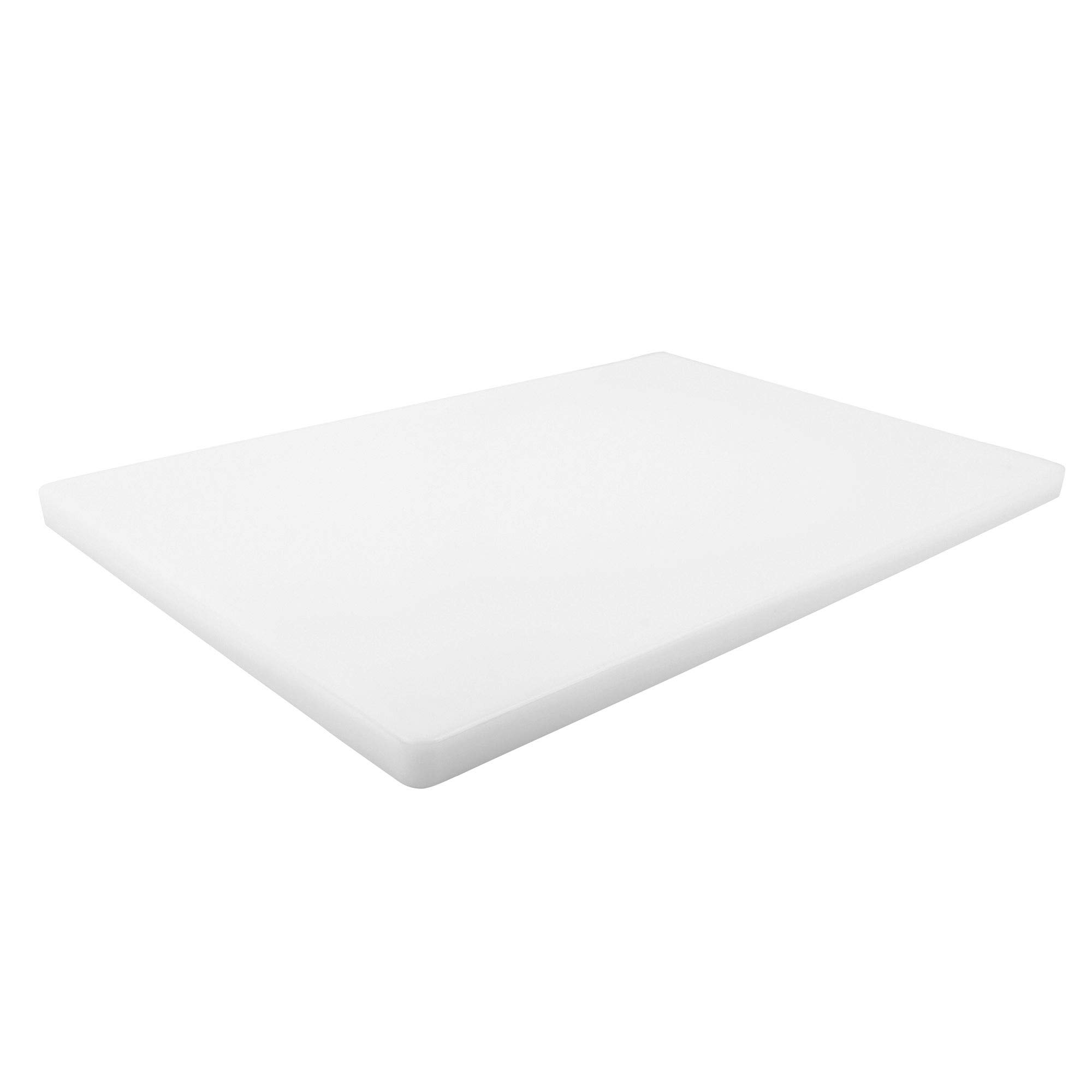
1. Thick White 18×12 Plastic Cutting Board
Our pick — 4.5+★ from 800+ verified ratings; the strongest balance of quality and price.
A 0.75-inch NSF-certified HDPP board built to survive commercial dishwasher cycles.
Measure out your prep space and this board gives you 18 inches by 12 inches of it — wide enough to break down a whole brisket or shoulder of pork without chasing meat around the counter. The three-quarter-inch slab is what people notice first, and it is the reason this thing stays flat. Buyers rate its solid build first and its 18 x 12-inch surface second.
The material is high density polypropylene, or HDPP — a denser, tougher plastic than the consumer-grade polyethylene (PE) most cheap white boards are cut from. It is BPA free and NSF certified, meaning it has been through food-service testing rather than just household marketing. It also shrugs off commercial dishwashers up to 200°F, which is why restaurant kitchens keep these around.
Two honest limits. The weight comes in at 1.81 kg, and opinions split on whether that is reassuringly solid or just heavy for someone with grip issues. And the surface polishes smooth over the years — serrated knives and cleavers will scar and cut any plastic board, including this one. Keep a separate surface for those. It holds 4.5+ stars across 800+ owner reviews.
What earns it the top spot
- 0.75-inch HDPP holds its shape far better than thin boards — the extra thickness is the anti-warp insurance
- NSF certified for food service and rated for commercial dishwashers up to 200°F
- 18 x 12 inches of prep surface in a single solid white slab
- BPA free, so raw meat and fish prep stays straightforward
Limits worth knowing before you buy
- At 1.81 kg it is a two-hand board — not ideal if you have wrist or grip problems
- Serrated knives and cleavers will scar the surface over time
- Plastic, not wood — it will never look like a serving piece
- Hot pans will melt it, so it is not a trivet
Best for: anyone who preps big cuts of meat regularly and wants a board that can go straight into the dishwasher.
skip it if: you want something light enough to hang on a hook or you do your slicing with a serrated knife.
2. Belwares Composite Wood Cutting Board
Wood that goes in the dishwasher is the whole story here.
This is the board for anyone who has ever ruined a nice wooden board by leaving it in the sink. The surface is a wood fiber composite pressed under high heat — dense, non porous, and thin at 0.25 inches, which is a quarter the thickness of the Thirteen Chefs board above. That thinness is not a defect; it is why this one weighs just 16 ounces and hangs from the built-in hole without dragging your cabinet door down.
Because there is no oiling or seasoning involved, the maintenance routine disappears. It wipes clean after raw meat, chicken, and fish, and it takes vegetables, bread, and cheese without complaint. It also handles heat up to 350°F, so you can pull a pan off the stove and set it down here instead of hunting for a trivet.
The trade for that convenience is a non-porous surface that is genuinely knife friendly — it works with chef knives and paring knives without dulling them the way glass or stone will. Durability is the other thing that keeps coming up, since it survives dishwasher cycles without warping. Buyers rate its build quality first and its dishwasher durability second. Buyers report it dries quickly after a wash, which is what keeps a thin board from sitting wet in the rack.
The flat truth: at 0.25 inches this board will flex slightly under heavy cleaver work, and it does not have the heft to feel planted on the counter the way the 0.75-inch picks do.
Where it wins: a large cutting surface that lifts with one hand, stores flat in any drawer, and skips the oil-and-wax ceremony entirely.
Reach for this if… you want wood-adjacent feel with zero maintenance and a dishwasher to do the work.
Look elsewhere if… you chop with a heavy cleaver and want a board that feels bolted to the counter.
3. AXIOM CREATIONS 2-Piece Cutting Board Set

Two boards, one box, and a plant-based material instead of virgin plastic.
You get a large board at 9.5 by 15.8 inches and a smaller one at 7.8 by 12.5 inches — enough to dedicate one to produce and one to proteins so nothing shares a surface. The material is a blend of wheat straw fiber and food-grade polypropylene, which is BPA free and gluten free. It is a real alternative to the all-plastic boards, and that is exactly what owners mention they were shopping for.
Wheat straw fiber sits softer than standard plastic, and that is the point. It gives slightly under the blade, so it will not quickly dull or damage your knives. The flip side is that softness comes with a cost: this board scratches more easily than a hard plastic board. If you like a pristine surface, expect marks.
The daily-use details are handled properly. Anti-slip pads on the base keep it from skating across the counter while you slice, and juice grooves catch liquid before it runs onto the floor — real help with a roast chicken. It goes in the dishwasher, which is the cleaning method people reach for here, and it is light enough to move with one hand.
Where it earns its place: at 2 pounds for the set, this is the lightest permanent board option here — the Farberware bamboo board weighs 4.8 pounds, more than double.
The honest catch: that gentler material is more prone to scratches, and the set gives you one committed size pairing rather than the flexibility of choosing your own two boards.
The right call for: kitchens trying to cut plastic use without giving up dishwasher convenience.
Pass on it if: a scratch-free surface matters more to you than a knife-friendly one.
4. Farberware Extra-Large Wood Cutting Board
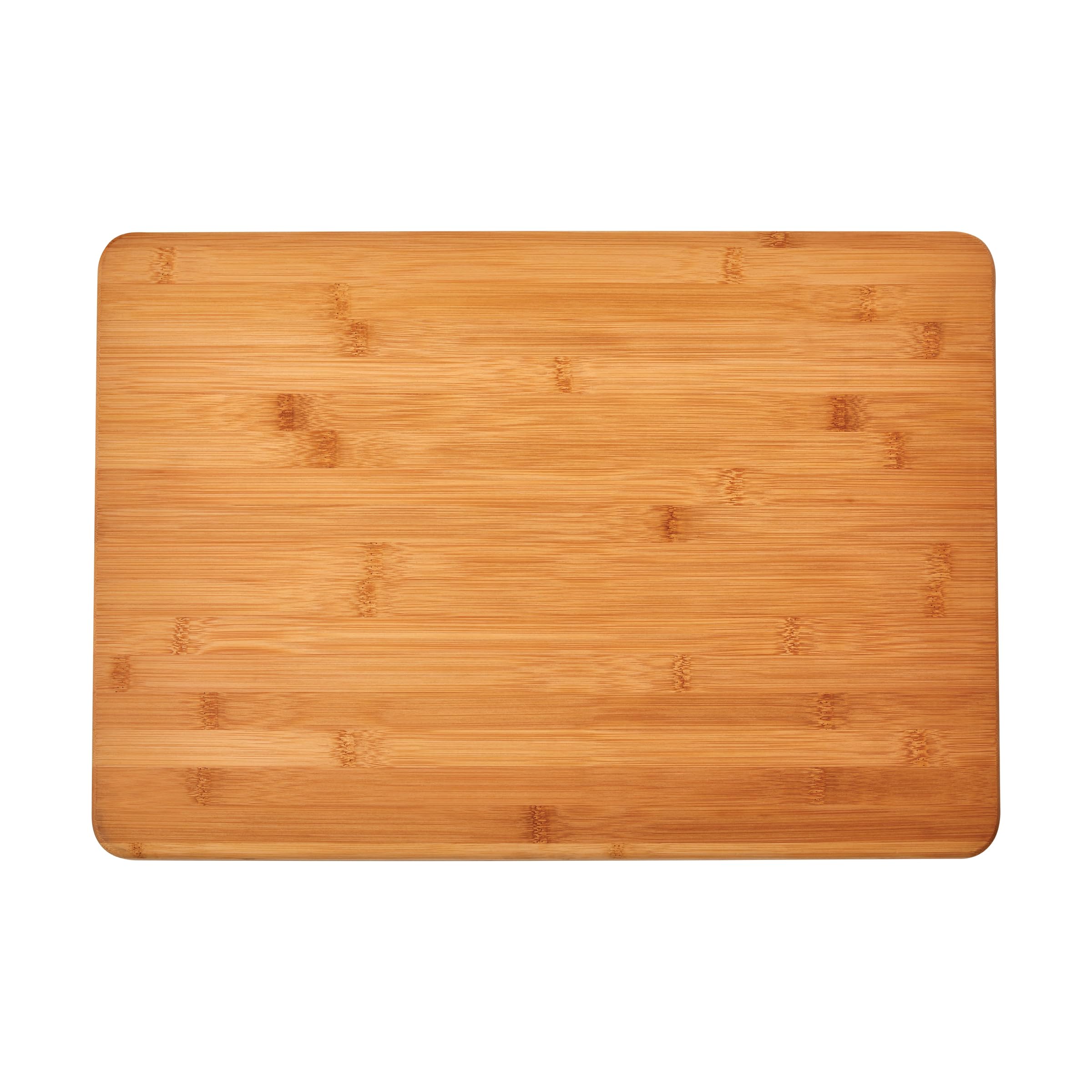
The board that doubles as the cheese spread and stays put while you dice.
You get the biggest work surface in this group: 20 inches long. That is enough room to stretch pizza dough, carve a roast, or lay out a full charcuterie spread. One reviewer noted it is as big as possible while still fitting a standard sink. If your counter space is already tight, measure first.
This board is made of bamboo, which behaves differently from the polypropylene above. Bamboo is naturally harder than the plastic boards and easy on knife blades, and it is among the most renewable materials you can buy. The 0.75-inch thickness matches the restaurant board, but at 4.8 pounds it carries far more weight than the 2-pound wheat straw set — heavy enough to stay planted, light enough to move when you need to.
Everyday durability holds up, and customers note it does not warp or crack with normal hand washing. Speaking of which: hand wash only, with warm water and mild detergent, then towel dry immediately. Do not soak it and do not put it in the dishwasher. A coat of food-grade mineral oil every couple of weeks keeps the surface from drying out, and a buyer who has used theirs daily for two months recommends committing to one side so you oil less often.
The upkeep reality: this board arrives on the dry side and drinks oil when it first arrives, and the reversible surface will stain with heavy use — it washes out, but it will not stay showroom-pale.
Strictly one surface only: no built-in juice groove and no handle hole, so carving juice has nowhere to collect and there is no hook to hang it from.
This one belongs in a kitchen that wants a beautiful board for both prep and presentation — the kind that leaves the counter out because it looks like furniture. Hand wash and oil it every couple of weeks, and the bamboo will outlast the plastic boards.
5. Crown Display 50 Count Cutting Boards

Fifty flexible sheets that end the raw-chicken-to-salad problem permanently.
Each sheet measures 10 by 13.5 inches and is flexible, so you can chop on it and then fold it to funnel food straight into the pan. Cutting raw meat on one means nothing else touches that surface afterward — you bin it and move on. The whole stack of 50 fits in a kitchen drawer, so there is no permanent board eating your counter space.
The sheets are built to take repeated knife work rather than shredding after one pass. Buyers put them through repeated use and report they hold up, and several stretch a single sheet across a whole season of pepper chopping before retiring it. Many wash and reuse them for vegetables, then toss after anything raw. For anyone who cooks barbecue or competes at SCA events, this is the travel-friendly option that needs no cleaning station at all.
Two things to plan for. First, these are slippery — a wet cloth or a grippy liner underneath fixes it, and the folded edge still lets you transfer food without sticking. Second, the thickness falls short of what the listing suggests, and a daily-use buyer found a first sheet eventually cut through after months of work, with the count lasting an extremely long time at that rate. Buyers reuse each sheet for produce and report it holds up through repeated knife work.
The trade you accept: you are buying convenience rather than permanence, and that thin, slick plastic will not give you the planted feel of a 0.75-inch board.
Where it genuinely shines: zero cross-contamination risk, zero scrubbing, and no counter space lost after dinner.
The decisive pick for: anyone handling raw chicken, fish, or peppers who wants the surface gone the moment the job is done.
One thing to know: the green credentials run only as far as the label says — the plastic is described as recyclable, though practical recycling options for thin flexible plastic vary by area.
Know the Specs
HDPP vs HDPE vs standard PE
These are three grades of the same plastic family, and the letters matter. HDPP stands for high density polypropylene; HDPE is high density polyethylene; PE is plain polyethylene, the softest and cheapest of the three. A board labeled HDPP is the denser, stiffer grade, which is why it is the one food-service kitchens tend to certify. Softer PE boards scratch and gouge sooner, so they tend to be the ones you replace first.
What NSF certification covers
NSF certification means a board has been evaluated against food-equipment standards rather than just consumer-product claims. On a cutting board, that shows up as things like withstanding commercial dishwasher temperatures and being made from food-safe material. It is the difference between a board that meets a written food-service standard and one that simply says it is “for kitchens.”
Thickness and heat resistance
Thickness is about two things at once: warp resistance and how much heat a board can absorb. A 0.75-inch board resists twisting through a hot dishwasher far better than a 0.25-inch one, which is why thin boards are billed as drawer-friendly rather than war-proof. Composite wood boards publish a heat rating — up to 350°F — while plastic boards warn that hot pans will melt them.
Knife-friendly vs scratch-resistant
These two qualities pull in opposite directions. A softer material gives under the blade, which keeps your knife edge sharp but marks the surface. A harder material holds its finish but works the edge harder. Neither is better in the abstract — you are choosing which thing you would rather replace over time.
Common Questions
Is HDPP better than HDPE for a cutting board?
Can I put a bamboo cutting board in the dishwasher?
How often do I need to oil a wooden cutting board?
Which cutting board material is easiest on my knife blades?
Are disposable cutting boards actually reusable?
How do I stop a cutting board from sliding on the counter?
What thickness cutting board should I buy?
Can a cutting board double as a trivet for hot pans?
Is a bigger cutting board always better?
Do I need separate boards for meat and vegetables?
The Bottom Line
For most kitchens, the cutting board materials winner is the Thirteen Chefs restaurant board. Its 0.75-inch HDPP (high-density polypropylene, a tough food-safe plastic) resists warping, is NSF certified (meets public health standards for food equipment), and is dishwasher safe up to 200°F — so it survives hot wash cycles without bending. That makes it the board you can run through the dishwasher and forget about.
If you want the wood feel without the oil-and-wax routine, the Belwares composite board goes straight in the dishwasher and doubles as a trivet up to 350°F.
How we choose
We do not accept paid placement. Every pick is matched to a real buyer and a real use-case; we do not hands-on test units.
Sources
Specifications: manufacturer listings and product documentation. Review insights: verified customer reviews, as of October 2026. Pricing: not shown on this page (it changes often); check the current price via the retailer link.
As an Amazon Associate, Aappliancez earns from qualifying purchases. This does not affect which products we feature.