Disclosure: Some links in this post are affiliate links. As an Amazon Associate I earn from qualifying purchases, at no extra cost to you. Learn more
Specs are compiled from manufacturer listings and verified buyer reviews and can change over time — please confirm the key details on the product page before buying.
Most earbuds fail you at the ear, not at the driver. The tips slip, the seal breaks, and suddenly your bass is gone and the noise cancelling does nothing. Custom Bluetooth earbuds solve that by shaping the fit to your own ears — either by molding on the spot or by trimming the sound to your hearing profile. Below are nine pairs that genuinely do one or both, sorted so you can see which approach fits your day.
This guide is built by comparing the manufacturers’ published specifications and the patterns across verified customer reviews, so you get each pick’s real strengths and trade-offs instead of marketing spin.
You get a gaming pair that molds to your ears in 60 seconds, all the way up to premium in-ears with app-level personalization. Each entry explains the fit method in plain words, so you know exactly what you are buying before you commit.
Top Picks

How To Choose The Best Custom Bluetooth Earbuds
Two very different products hide behind the word “custom.” One literally reshapes a tip to the inside of your ear. The other leaves the tip alone and rebuilds the sound around a hearing test in an app. Figure out which one you actually want first, because everything else follows from that choice.
Molded fit versus app-personalized sound
Molded tips give you passive isolation — the physical blocking of outside noise by a sealed ear canal. That means quieter surroundings without burning battery on active noise cancelling (ANC, the electronic version that cancels sound with opposing waves). App personalization changes what you hear, not what leaks in. If your main gripe is a bud that keeps sliding out, you want molding. If your gripe is that everything sounds flat, you want EQ.
The codec question: LDAC, aptX, and when they stutter
Codecs are the compression rules your phone and earbuds agree on. Higher-bitrate codecs like LDAC carry more musical detail but demand a cleaner wireless link. In busy wireless environments they can stutter, so a stable lower setting often beats a fragile high one. Check that your phone supports the codec before you count on it.
Battery claims versus real runtime
Advertised playtime is measured with the quietest features off. Turn ANC on, raise the volume, and real hours drop. Look for the gap between the earbud-only figure and the case-included figure — that tells you how much of the headline number lives in the case, not in your ears.
Side-by-Side Comparison
| Model | Best For | Fit Method | Battery | Bluetooth | Amazon |
|---|---|---|---|---|---|
| Logitech G FITS★ Best Overall | Gaming across PC and console | LIGHTFORM heat-molded tips | 7 hrs + 8 hrs case | 5.2 | Amazon |
| Skullcandy Push ANC ActiveBest for Sweat | Sweaty workouts and long days | Standard tips + app EQ | Up to 58 hrs total | 5.3 | Amazon |
| Moondrop Golden Ages 2Best for Tuning | Tuning sound in the app | Tips + Moondrop app DSP | — | 6 | Amazon |
| ISOtunes Sport Advance | Shooting range and loud jobs | Foam tips, 26 dB NRR | Up to 10 hrs | 5.0 | Amazon |
| Beats Powerbeats Fit | Gym sessions that shake buds loose | Secure-fit wingtips | Up to 30 hrs total | — | Amazon |
| Bowers & Wilkins Pi7 S2 | Hi-res listening on the move | Tips + B&W Music App | 16 hrs | 5.0 | Amazon |
| Noble Audio FoKus Rex5 | Personalized hearing profile | App sound personalization | 500 mAh case | 5.4 | Amazon |
| B&W Pi8 McLaren Edition | Highest-detail wireless audio | Tips + app EQ | Up to 8 hrs | 5.2 | Amazon |
| B&O Beoplay Eleven | Build quality and open sound | Tips + circular EQ in app | 6 hrs ANC + 20 hrs case | 5.2 | Amazon |
Detailed Reviews
1. Logitech G FITS True Wireless Gaming Earbuds
The pair that reshapes itself to your ear canal in about a minute.
If you have ever jammed a gaming headset over your ears for a six-hour session and felt the headband digging in, this is the alternative. Logitech’s LIGHTFORM system heats the tips and molds them to your ear canal in 60 seconds, so the seal is shaped to you rather than to an average. That custom seal is also what delivers the passive isolation — physical blocking, no electronics involved — and it keeps the 10 mm dynamic drivers seated where they need to be.
On the connection side you get LIGHTSPEED (Logitech’s own low-latency wireless link for gaming) through a dongle, plus Bluetooth 5.2 at a 10-meter range for everything else. That puts it ahead of the Beats pair below, which lists no Bluetooth version at all. Claimed runtime is 7 hours on LIGHTSPEED with 8 more in the case, and the hard plastic case is genuinely protective rather than a pouch.
Here is the honest part: this is a mixed bag in the review pages. Setup trips people up, and the fix is to connect through a computer with Logitech G Hub first, then update the dongle firmware. Buyers report the Bolt receiver fighting with the LIGHTSPEED receiver, and that Bluetooth pairing once took 1.5 hours. Best treat it as a single-device game setup, not a device-hopping daily driver.
What earns its place
- Tips mold to your ears in 60 seconds for a seal no stock tip can match.
- LIGHTSPEED latency suits fast shooters; Bluetooth 5.2 covers phone and tablet.
- Dual beamforming mics in each ear keep voice chat audible.
- 10 mm dynamic drivers put out fuller bass than most gaming buds.
Where it makes you work
- Setup is the real hurdle; the G Hub and dongle-firmware route is the reliable one.
- No ANC — the isolation is passive only, so loud rooms still leak in.
- Switching between devices is not smooth; the Bolt receiver clash is a known headache.
- The case has to hold charge or the buds will not power on.
Buy it for: the mold-it-yourself fit — this is the only pick here that physically reshapes the tip to your ear.
Know first: it wants one device and a patient first setup, so it is a poor fit for someone who hops between a phone, a tablet, and a console all day.
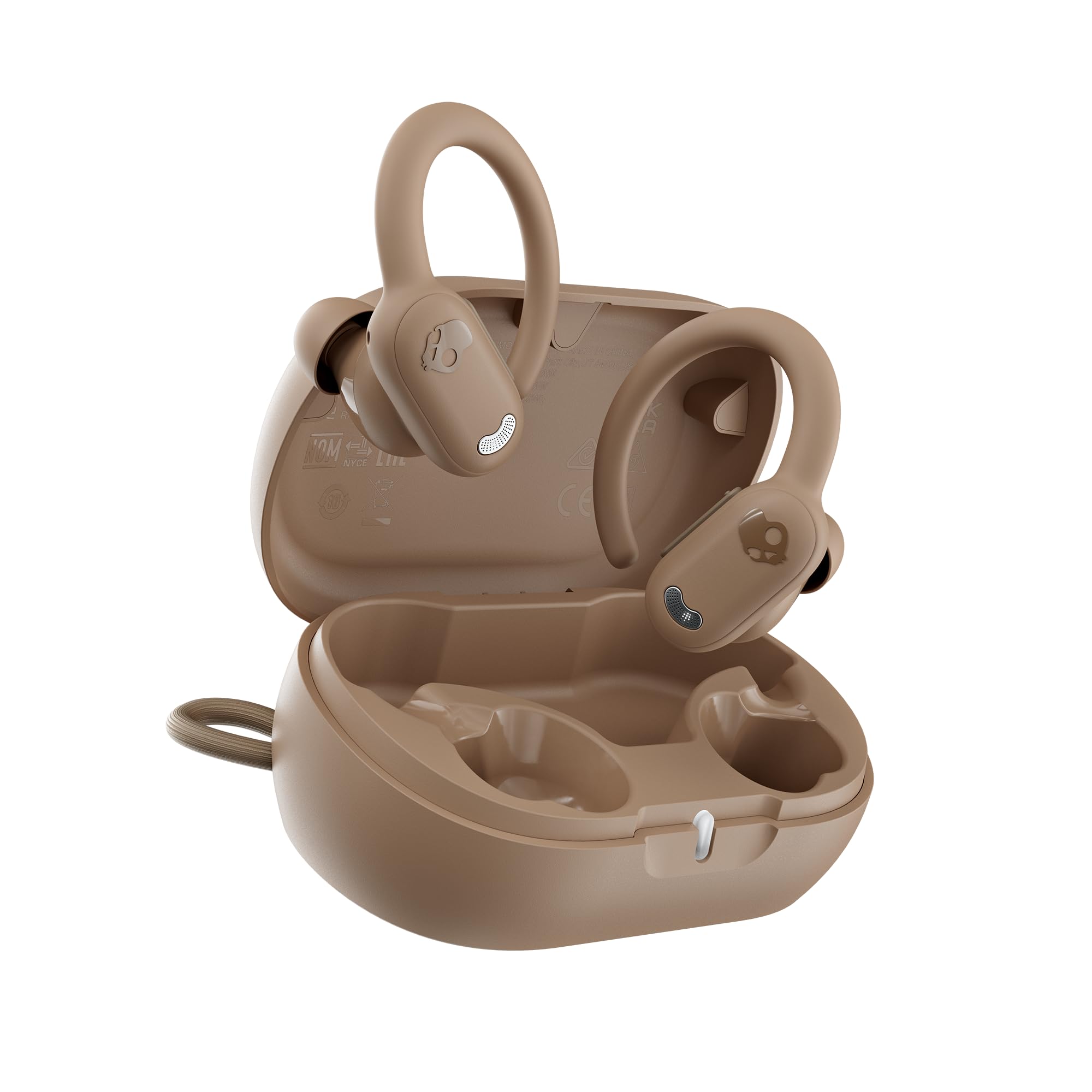
2. Skullcandy Push ANC Active Noise Cancelling Wireless Earbuds
Rain, sweat, and dust are the whole point — the 58-hour claim just follows along.
An IP67 rating means dust cannot get in and the buds survive being dunked in water, so a downpour or a soaked gym shirt is not a problem. Skullcandy pairs that with a claimed 58 hours of total playtime — 12 in the buds plus 46 in the case — and Rapid Charge that gives 2 hours of listening from 10 minutes on the cable. Adjustable 4-mic noise cancelling and a Stay-Aware mode (which lets outside sound back in on your terms) round out the everyday package.
Here the personalization is about sound, not shape. The Skullcandy App runs Personal Sound by Mimi (a hearing-profile tool that tunes audio to your ears) and lets you fine-tune the EQ (the bass and treble balance), which is how most owners get the bass they want. Bluetooth 5.3 (the wireless standard) is newer than the Logitech above at 5.2, so the link is a generation further along. But a real-world runtime of 2 to 4 hours has been reported, against the 12-hour earbud figure with ANC (active noise cancellation, which blocks outside sound) off. Treat the headline number as the best case.
Two quirks are worth knowing. They run large and take some work to seat in smaller ears, and they dislike heat — leaving them in direct sun reportedly makes them misbehave and connect on their own. Otherwise the sound and the daily durability hold up well, including through months of construction-site use.
Where it wins: the IP67 shell and the app EQ make this a genuinely rugged, adjustable pair for people who destroy earbuds with sweat.
The catch: fit runs large and the advertised runtime is the ceiling, not the floor — assume shorter if you run ANC high.
Reach for this if: you train outdoors, work a physical job, or have killed earbuds with moisture before.
Look elsewhere if: you have narrow ear canals or want a compact, low-profile bud.
3. Moondrop Golden Ages 2 TWS Earphone
A pair you tune yourself in the app — it is not plug-and-play from the start.
Moondrop built this one around customization. The MOONDROP Link app lets you remap the touch controls, set the ANC and transparency switches, and shape the sound with a second-generation interactive DSP (digital signal processing — the app-side EQ engine). Bluetooth 6.0 is the newest version on this list, and LDAC is supported for higher-bitrate playback. There is even a dynamic spatial audio mode driven by built-in gyroscopes, with static, small-angle, and omni-directional settings.
That said, the honest framing is that stock tuning is cramped and congested until you work the app. Owners consistently say the sound jumps to near-wired quality once LDAC or LHDC is on and the EQ is set — and that the Windows side is weak because it lacks the codecs and the app. LDAC at the 900kbps highest setting has been reported stuttering in busy wireless; 600kbps runs stable.
The ergonomics split opinion. The square case is thicker than a Nothing Ear (a), the plastics feel thin with visible seams, and the ear tips are the usual silicone — but the raised touch pad makes controls easy to find without looking. With medium-to-large ears, hours of listening pass without fatigue. Just expect to spend your first evening in the app, not in the music.
What earns its place
- Custom touch mapping and app-level DSP tuning — rare at this price.
- Bluetooth 6.0 and LDAC support for detail beyond standard codecs.
- Adjustable ANC, transparency, and gain all inside the app.
- Comfortable through long sessions for medium-to-large ears.
What you trade away
- Stock sound is not impressive; the app tune is mandatory, not optional.
- ANC is light muffling rather than deep cancellation.
- Windows support is weak — no codecs, no app.
- LDAC stutters at 900kbps in crowded wireless; 600kbps is the safe setting.
For the tinkerer: this is the pick for anyone who enjoys a hearing-test-style EQ session and wants LDAC detail without spending flagship money.
Not for the plug-and-play buyer: if you will not open an app, the default sound will disappoint.
4. ISOtunes Sport Advance Bluetooth Shooting Ear Protection

Hearing protection first, earbuds second — the noise figures are the point here.
A 26 dB noise reduction rating (NRR — a standard lab measure of how much sound a hearing protector blocks) is the number that defines this pair. ISOtunes adds Tactical Sound Control, which passes conversation and range commands through while cutting the percussive crack of gunfire, and a 7-ounce package that stays put. The Bluetooth 5.0 link lets you run music or calls, and the noise-suppressing mic with echo cancellation is there to keep your voice audible over the din. IP67 protection means sweat, water, and dust are handled.
The cutoff speed is what impresses owners most in practice. Gunshots get shut down essentially instantaneously, and this beats the older Walker Razor X on battery — a full four-hour session runs clean while the Walker reportedly died at 90 minutes. The mic is also a big step up for conversation, with a wind-noise penalty. Seven external sound levels let you keep directional awareness at the range or in the field, and the full rechargeable battery gives up to 10 hours for a long shift.
The one place it falls short: the audio control is coarse — there is a big jump between off and the lowest level, and even that can be too loud. Wind and sharp sounds get clipped, and the outgoing call voice sounds muffled.
Fit is a process: the foam tips are scratchy and uncomfortable if not seated correctly, but once they are, the seal and protection are excellent. Most of the gripes people post come down to tip seating.
Built for: shooters, hunters, and anyone working around loud equipment — especially those who want passive foam-plug protection with a Bluetooth soundtrack.
Not the pick if: you want a fine-grained volume control or a slick music-first earbud.
5. Beats Powerbeats Fit Wireless Earbuds
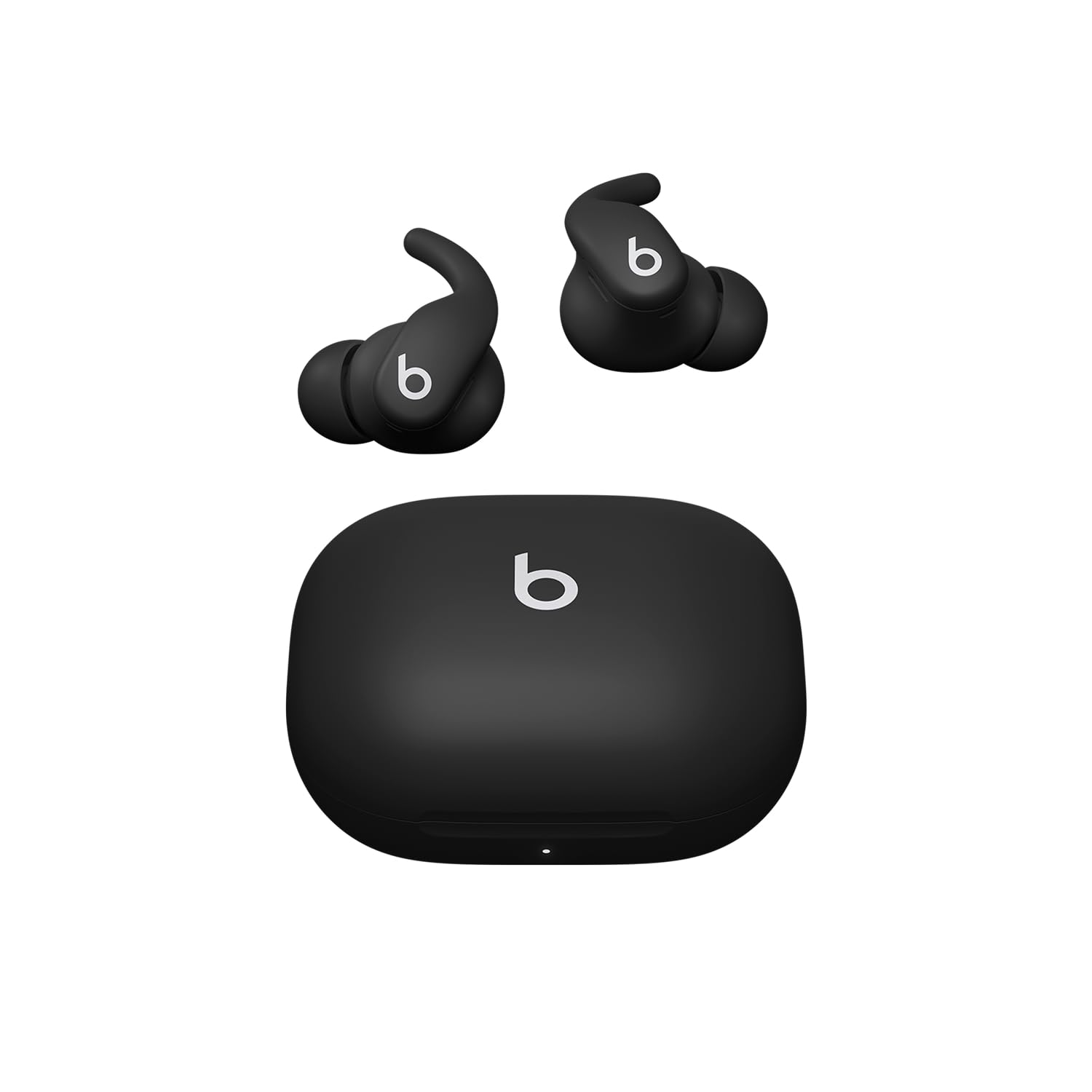
The wingtips are the whole case — they keep buds seated through a set of squats.
Powerbeats Fit uses a soft wingtip that tucks into the ear and locks the bud in place without a headband or a hook. The claimed rating is IPX4 (splash-resistant — fine for sweat and rain, not for submersion), and there is up to 30 hours total battery with 7 hours per bud on a single charge. The charging case is described as 17% smaller than its predecessor and carries its own IPX4 rating.
Then there is the Apple H1 chip, which adds Automatic Switching, Audio Sharing, hands-free Hey Siri, and Find My — proper iOS integration. Android gets the Beats app for one-touch pairing and battery status. Active Noise Cancelling and Transparency mode are both here, and the dual beam-forming mics with an internal processor take your call quality seriously. Custom EQ is not offered on Android; the auto-EQ does that job.
The fit is what sells it. Owners who have tried AirPods and Pixel Buds say these simply do not slip, even during weightlifting and head movement. The H1 chip (Apple’s audio chip) gives smooth device switching, a specific improvement over the SoundCore X20. Volume is good but not extreme — you may want a step higher than with other brands. A rare quality-control story of a right bud failing to connect does appear in the reviews; it is a one-off, not a pattern.
Why it holds its place
- Secure-fit wingtips stay put during weightlifting and running.
- H1 chip delivers iOS switching and Find My — rare on non-AirPods.
- IPX4 on both buds and case; sweat and rain covered.
- 30 hours total with Fast Fuel backup.
What to know
- Volume is adequate but not top-tier.
- No custom EQ on Android.
- Occasional QC report of a right bud failing to connect.
- Fit is wingtip-based, not molded.
Best for: the gym goer whose ears are shaped wrong for standard buds and who uses an iPhone — the H1 chip earns its keep.
Skip if: you need app-level EQ (Android) or want the strongest ANC on the shelf.
6. Bowers & Wilkins Pi7 S2 True Wireless Earbuds

Two drivers, individual amplifiers, and a case that plugs into airplane seats.
Each earbud holds a 9.2 mm dual hybrid drive unit — a mix of driver types — with its own amplifier and DSP. That is the audio engineering that gives the Pi7 S2 its clean mids and detailed treble. The 24-bit connection runs on Qualcomm aptX Adaptive with a revised antenna design for stability up to 25 m, and 20 ms latency keeps video lip-sync in check. The B&W Music App also streams directly from TIDAL, Qobuz, Deezer, SoundCloud, and TuneIn. There is no EQ inside that app, so anyone chasing bass shape will need a third-party equalizer.
The case carries the hidden trick: a 3.5 mm to USB-C cable turns it into a Bluetooth transmitter, so any wired source — in-flight entertainment, a turntable — goes wireless into the buds. There are 16 hours of total battery, three call-clarity mics, and adaptive noise cancelling you can dial in a button press. The trade-off is real, though — this is a listening session earbud, not a shift-long companion.
On the downsides, owners regularly push back on the price-to-usability ratio. Bluetooth drops appear and the app is fiddly — pairing fails, and the buds do not always charge to 100%. The big nozzle means third-party tips struggle to fit. ANC is serviceable but not top-tier, and the transparency mode (which pipes outside sound in) sounds a bit like you are inside a fishbowl. None of this makes it a bad earphone — it makes it a purist’s earphone.
What sells it: the dual hybrid 9.2 mm drivers and the wired-retransmission case — a genuinely useful pair for travel.
The trade-off: usability and battery sit behind the sound quality, and apple-to-apple it is aimed at people who put music above every other feature.
Suits: the audio-first listener who flies, streams hi-res, and is willing to use a third-party EQ.
Think twice if: you want the ANC to be the star of the show, or the app to be polished.
7. Noble Audio FoKus Rex5 True Wireless Earbuds
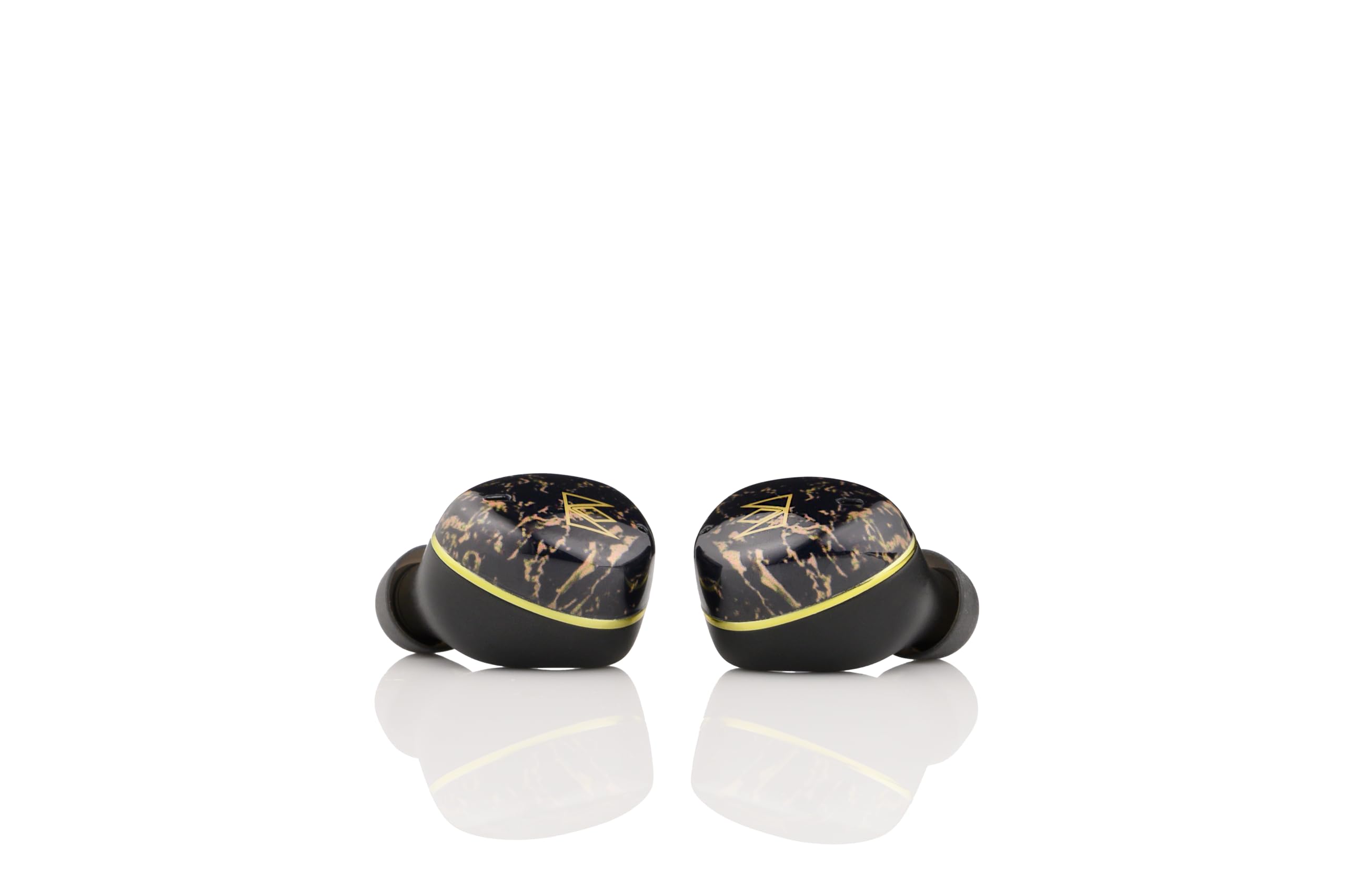
A hearing test inside the app builds the EQ curve for you.
Sound personalization here is the real deal — the FoKus Rex5 uses a hearing-test-style profile in the app to shape the output to your ears. Balanced armature drivers (a driver type known for detail rather than thump) handle the high end, and the Bluetooth 5.4 link is the newest among the premium picks. The 500 mAh charging case gives you a sizeable top-up reservoir, and the wireless charging case is plain but functional. Connection runs on Bluetooth 5.4, which is ahead of the B&W Pi8 below at 5.2.
Detail is the word that keeps coming up in the app-tuned reviews. The 5-driver setup lets you hear layering and texture well beyond standard buds, and the app EQ is described as near-professional — meaning a dramatic improvement once you dial it in. The metal case feels premium, and a 14-hour shift with intermittent use fits inside one charge. The form factor is compact and the touch controls are easy to learn.
The honest catch is Bluetooth stability. The connection takes a few attempts, and it drops when you move around. ANC is mediocre and ambient mode is basic. The sound quality is the reason to buy this — it is not the reason to buy it for calls or for running. Since the sound is so dependent on the app tune, an unopened box and an unopened app both undersell the product.
What the money buys: balanced armature detail plus a hearing-profile EQ that turns the tuning over to your ears — the most literal “custom” pick on this list.
The cost: Bluetooth is finicky and the app tune is mandatory to get to the sound the drivers can produce.
Best for: the detail-chaser who has tried flagship buds and wants a genuinely personalized response curve.
Look past it if: you need rock-solid Bluetooth or strong ANC — this pair prioritizes sound.
8. Bowers & Wilkins Pi8 McLaren Edition Wireless Earbuds
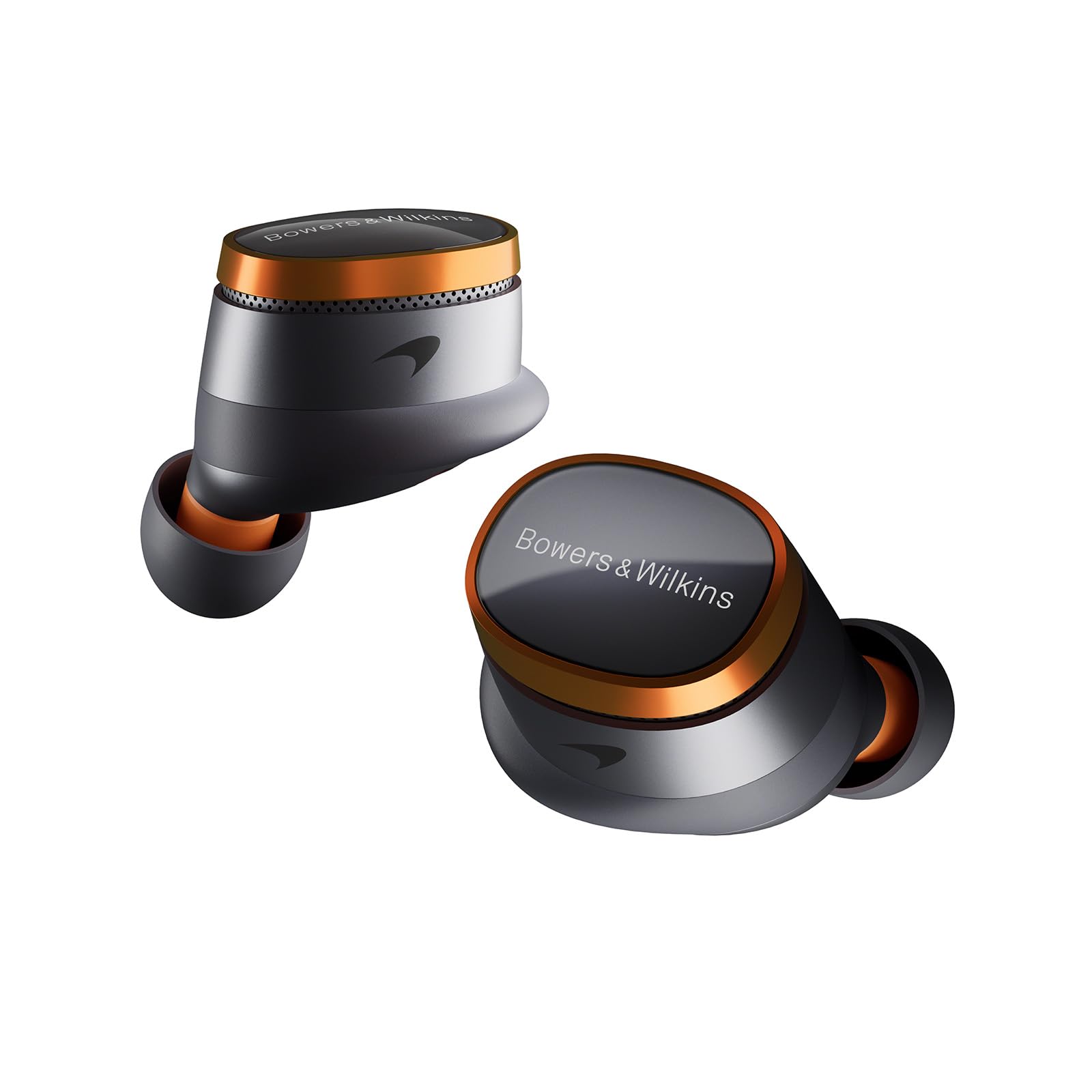
The 12 mm carbon cone drivers were lifted from a flagship pair of over-ears.
B&W adapted the 12 mm carbon cone drive unit from the Px8 headphones to cut distortion and lift high-frequency detail, so the sound is meant to sit closer to the original recording. The 24-bit connection runs on a Qualcomm chipset with aptX Lossless for full CD-quality stream from the case — and the retransmission trick works on laptops, in-flight systems, and TVs. Three mics per bud handle calls and adaptive ANC, and the single-button control covers the essentials.
The value case rests on that charging case. Owners say the retransmission (the case sending audio to the buds) is the feature they use most on a long flight, and the sound — full bass, balanced mids, crisp highs — is called top-tier. The 8 hours of playtime and 15-minute quick charge for 2 hours of use give you a realistic day, and the ergonomic form factor sits comfortably enough for hours.
Bluetooth is where the Pi8 gives you the most reason to pause. Multiple reports describe three to four connection drops in a 30-minute walk, occasional one-bud failures fixed only by re-seating, and a particularly bad result on iPhones. B&W’s own app is basic; there is a five-band EQ, but nothing like Noble’s personalization. ANC is adequate, but not the benchmark. If you want a rock-solid connection on a commute, this is a compromise; if you want the best-sounding wireless buds, it is a contender.
Standout strengths
- 12 mm carbon cone drivers for detail and low distortion.
- aptX Lossless with the case working as a transmitter.
- Three call mics and adaptive ANC.
- Up to 8 hrs with fast 15-min top-up for 2 hrs.
Honest weak points
- Frequent connection drops reported, especially on iPhone.
- Occasional one-bud failure requiring re-seating.
- ANC is adequate, not top-tier.
- App is barebones; no deep EQ customization.
For the sound-obsessed: the wireless earbud with a genuine claim to the best in-ear tuning on this list.
Not for the commuter: the Bluetooth stability is too unreliable for people who cannot tolerate a dropped call.
9. Bang & Olufsen Beoplay Eleven Wireless Earbuds

Aluminum, hardened glass, and 9.2 mm drivers — a pair you notice in the hand.
B&O builds the Beoplay Eleven out of aluminum, hardened glass, polymer, and silicone, which is why it looks like a piece of hardware rather than a plastic bud. Each earbud carries a 9.2 mm driver covering a frequency range of 20 to 22,000 Hz — the range tells you how low the bass and how high the treble reach. IP57 protection means it shrugs off dust and water, though not submersion, and Bluetooth 5.2 with multipoint keeps two devices connected at once.
On the interaction side, a circular EQ chart in the app lets you swing between bass and treble rather than fiddling with sliders. The touch controls handle ANC with both buds in, transparency with one bud removed. Battery runs up to 6 hours with ANC on and up to 20 hours with the charging case, which is genuinely competitive in a premium-feeling pair.
The catch — and this is a big one for a high-end earphone — is Bluetooth stability. Music cuts out, and owners have reported the connection is less stable than comparable premium buds. ANC is average compared to the very best, and the volume runs lower than you might expect. The B&O app lags and can be buggy. You buy this for build and sound, not for technical polish.
The pull: aluminum and hardened glass build, IP57 protection, and 9.2 mm drivers with a 20 to 22,000 Hz range — this is a beautifully made earbud.
Buy it for sound and finish, not for connectivity.
Meant for: the buyer who treats earbuds as a design object and a listening device in equal measure.
Not the pick for: anyone who needs bulletproof Bluetooth for calls and commutes.
Know the Specs
Molded Fit vs. Wingtips vs. Tips
Three paths to keeping a bud in your ear. Molded tips (like LIGHTFORM) physically change shape to your ear canal — the best passive isolation. Wingtips (the Powerbeats Fit approach) lock the bud into the pocket of your ear while standard silicone tips do the sealing. Standard tips plus app EQ is a fit-by-adjustment approach — the fit is worst, the tune has to compensate, and isolation suffers. Choose based on whether your problem is slipping out or sounding flat.
Bluetooth Versions and Codecs
The version number tells you the baseline wireless features; the codec tells you the audio ceiling. Bluetooth 5.2 is the common floor here, with 5.3, 5.4, and 6.0 pushing upward. LDAC and aptX Adaptive carry more data than the default SBC/AAC, but they need a stable link — LDAC at 900kbps stutters in busy environments while 600kbps stays clean. Bluetooth version does not guarantee codec support; check the product’s own spec sheet before you plan on a particular pairing.
Battery: Buds vs. Case
Total playtime is the number the box shows. The useful number is single-charge playtime, which is what you get between case visits. A 30-hour total with 7 hours per bud means four recharges before empty. A 6-hour ANC figure means you need the case on a long flight. Match the single-charge number to your longest session, not the total.
Noise Cancellation vs. Passive Isolation
ANC is active — microphones listen and cancel sound with opposing waves. Passive isolation is physical — a seal blocks sound with the tip. Molded tips beat ANC on low rumbles and wind, while ANC beats passive isolation on steady drone. The strongest setups combine both. At high altitude, look for the retransmission feature in premium cases, which turns the case into a transmitter for in-flight audio.
Common Questions
What does “custom” mean for custom Bluetooth earbuds?
Can I use molded earbuds with smaller ears?
Is Bluetooth 6.0 worth upgrading for?
Does active noise cancelling drain battery fast?
What is LDAC and should I care?
Can I use gaming earbuds on a PC and a console at the same time?
Do molded earbuds isolate as well as foam earplugs?
Are premium custom earbuds compatible with Android and iPhone?
Do I need the app to get good sound out of custom earbuds?
What does IP67 vs IPX4 mean for earbuds?
The Bottom Line
If a fit that is literally shaped to your ear canal matters most, the Logitech G FITS is the pick that does it in 60 seconds — just plan the setup on a computer first. If you want the most detail money can buy in a wireless bud, the B&W Pi8 McLaren Edition is the sound leader, though its connection is the loosest. And for a hearing-profile tune that adapts to your ears, the Noble FoKus Rex5 is the most literal “custom” answer on this list. Whichever direction you go, buy for the fit method that matches your day — not the biggest headline number.
How we choose
We do not accept paid placement. Every pick is matched to a real buyer and a real use-case; we do not hands-on test units.
Sources
Specifications: manufacturer listings and product documentation. Review insights: verified customer reviews, as of October 2026. Pricing: not shown on this page (it changes often); check the current price via the retailer link.
As an Amazon Associate, Aappliancez earns from qualifying purchases. This does not affect which products we feature.