Disclosure: Some links in this post are affiliate links. As an Amazon Associate I earn from qualifying purchases, at no extra cost to you. Learn more
Specs are compiled from manufacturer listings and verified buyer reviews and can change over time — please confirm the key details on the product page before buying.
If your CPAP mask leaves you with a red, stinging strip across your nose or cheeks by morning, the fix is simpler than you think. You need a cream that sits between your skin and the cushion, holds moisture in overnight, and does not eat away at the mask seal. The five picks below cover that job from every angle — a thick healing ointment, a dedicated CPAP lotion, a petroleum-free barrier cream, a no-mess hydrocortisone stick, and a silicone-based clinical cream.
This guide is built by comparing the manufacturers’ published specifications and the patterns across verified customer reviews, so you get each pick’s real strengths and trade-offs instead of marketing spin.
Not every cream plays nicely with a mask cushion, and the wrong texture can either break your seal or soak in too fast to help. Below you’ll find the differences that actually matter, from ingredient lists to how each one feels on a mask-contact zone. This breakdown of the best cream for cpap irritation covers texture, seal safety, and overnight staying power.
Top Picks
How To Choose The Best Cream for CPAP Irritation
Your CPAP mask can leave your skin sore for three reasons: friction from the cushion rubbing against your face, trapped moisture that softens and breaks down the skin, and dryness from the constant airflow. A good cream has to fix at least one of those problems without breaking the seal that keeps your therapy working. Here is what to weigh before you buy.
Petroleum-based vs petroleum-free formulas
A thick ointment like petrolatum creates a heavy barrier that holds moisture against your skin — great for healing, but it can gradually degrade silicone mask cushions and headgear over months of nightly contact. Petroleum-free creams using aloe, shea butter, or silicone still form a protective film but tend to be gentler on your equipment. If you replace masks often or use a cushion you love, go petroleum-free.
Texture: thick ointment vs light lotion
A thick ointment stays put all night, but it can feel greasy and may make your mask slide. A light lotion soaks in fast and needs reapplying, but it lets the cushion grip your skin properly. A middle-ground cream — thick enough to form a film, but not so heavy it repels the silicone (the soft plastic your cushion is made of) — tends to be the balance for most CPAP users. Read the reviews for words like “thin” or “greasy” to see which camp a product falls into.
Ingredients for red, chafed, or broken skin
For simple dryness, aloe and shea butter soothe and hydrate. For redness and irritation, emu oil and vitamins A and E help calm the skin. If the skin is actively itchy or inflamed from a rash, a low-strength hydrocortisone cream can reduce that reaction — but you should not use it indefinitely without checking with a doctor. Silicone-based creams are another option: they form a breathable film that locks in moisture without a heavy grease feel.
Side-by-Side Comparison
| Model | Best For | Size | Petroleum-Free | Key Ingredient | Amazon |
|---|---|---|---|---|---|
| Aquaphor Advanced Therapy Healing Ointment★ Best Overall | Severe dryness and cracking | 7 oz | No | Petrolatum-based ointment | Amazon |
| AeroMate CPAP Nasal Moisturizing Lotion with AloeBest for Daily CPAP Use | Seal-friendly daily use | 3 oz | Yes | Aloe, shea butter, argan oil | Amazon |
| CPAP Moisture Therapy – Petroleum Free 1oz | Small, precise mask-contact application | 1 oz | Yes | Aloe vera, emu oil, vitamins A & E | Amazon |
| Restorz Hydrocortisone 1% Cream Treatment Stick | On-the-go itch and rash relief | Travel stick | — | Hydrocortisone 1% | Amazon |
| Medline Remedy Clinical Silicone Cream | Sensitive or barrier-compromised skin | 4 oz | Yes | 24% silicone blend, dimethicone | Amazon |
Detailed Reviews
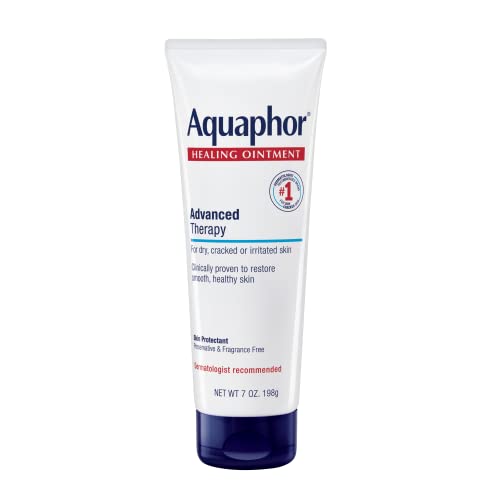
1. Aquaphor Advanced Therapy Healing Ointment
Our pick — over 4.5★ from 52,500+ verified ratings; the strongest balance of quality and price.
The heaviest-hitting barrier here — a 7 oz tube that heals raw, cracked mask-contact skin fast.
For skin that is actually cracked, bleeding, or raw where your mask sits, a simple lotion will not cut it. Aquaphor’s water-free ointment forms a protective barrier that lets oxygen reach the skin while sealing moisture in. That is the exact setup you want overnight: a film thick enough to shield your nose bridge from cushion friction, without needing constant reapplication.
You get more product per tube here than anywhere else in this lineup: 7 ounces versus the 1 ounce in the CPAP Moisture Therapy tube. That matters if you apply it every night across a large mask-contact zone. At 8.45 ounces it outweighs the 0.634-ounce CPAP Moisture Therapy tube by more than 13 times. One nightly application is enough for most people, and a thin layer spreads a long way.
The thing that wins people over is how reliably it clears stubborn dryness. Buyers report that one overnight application “removed dead skin” from chapped lips and left healthy skin underneath. It is fragrance-free and non-stinging, so it does not aggravate already-sensitive skin. There is one catch to know before you commit.
What earns it the top spot
- Water-free ointment forms a protective barrier that lets oxygen reach the skin while holding moisture in
- The 7 oz tube is the largest in this lineup — enough for months of nightly mask-zone application
- Fragrance-free and non-stinging, so it favors sensitive, already-irritated skin
- Works across dry patches, cracked hands, chapped lips, and raw mask-contact areas
The trade-off to weigh
- It is petroleum-based, so over time it can soften silicone mask cushions — rotate equipment if you use it nightly
- Opinions on greasiness are split; some find it heavy enough to affect how their mask sits
- Thick texture means you need only a very small amount — easy to over-apply
Reach for this if: your mask zone is cracked, raw, or peeling and you need the strongest healing barrier available.
Think twice if: you replace masks rarely and want a formula that is fully cushion-safe long-term.
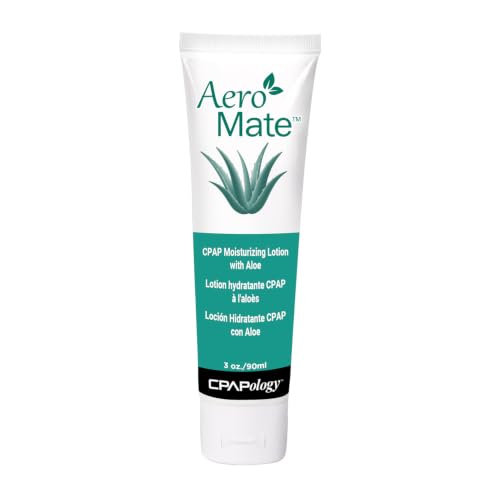
2. AeroMate CPAP Nasal Moisturizing Lotion with Aloe | 3 oz.
A non-petroleum lotion built specifically for CPAP wearers — aloe, shea, and argan oil in one 3 oz tube.
This is the pick for anyone who wants to fix irritation without touching the mask seal. AeroMate’s formula is non-petroleum based, so unlike the Aquaphor ointment above, it will not soften your silicone cushion over time. That makes it a safer daily choice if you have one mask you depend on. It carries aloe, shea butter, and argan oil to soothe and hydrate the skin where the cushion presses in.
The consistency is where it separates from the pack. It is moisturizing but thin — not like Vaseline — which lets you loosen your mask fit slightly and still keep a good seal. Owners mention it does a great job “minimizing leaks” while calming mask irritation, and many say it belongs in the starter kit CPAP users get on day one. One owner with an X-small full-face headgear that was too large and leaked said this lotion helped seal the gap.
Where it shines: If irritation starts as soon as you put the mask on, this calms it while keeping the cushion seated properly. The 3 oz size also lasts a while since a thin coat is all you need.
Small caveat: It is on the lighter side, so very cracked or raw skin may want the heavier Aquaphor instead. And you do need to apply exactly where the mask meets your skin for it to work.
Pick this one if: you want mask-friendly moisture that will not degrade your equipment and helps reduce leaks.
Move on if: your skin is severely broken and needs a stronger healing barrier.
3. CPAP Moisture Therapy – Petroleum Free 1oz

A tiny 1 oz tube of petroleum-free therapy you dab exactly where the mask bites down.
Where the AeroMate spread over a larger area, this one is about precision. CPAP Moisture Therapy is formulated for the specific spots your mask contacts — hydrate the skin there, lock in moisture, and break the dry-skin cycle before it starts. With aloe vera, emu oil, and vitamins A and E, it targets redness and the flaky patches that build up under a nightly cushion.
This tube slips easily into a CPAP travel case because it is compact — 4.92 x 2.99 x 0.91 inches versus the slimmer, taller 1.5 x 1.5 x 7 inch AeroMate bottle. Do not let the small size fool you, though — a pea-sized amount covers the whole mask-contact zone, so it lasts.
What stands out in the feedback is how quickly it turns flaking around. Customers note that flaking around the mask was “nearly gone after 2 uses” and that morning redness fades noticeably. The barrier effect works best if you dab it on and let it air-dry rather than rubbing it in; rubbed in, it disappears without protecting. One honest gripe to plan around.
Why mask wearers keep it
- Petroleum-free, so it will not damage silicone cushions the way ointments can
- Blends aloe vera, emu oil, and vitamins A & E to calm redness and flaky patches
- Small enough to pack in a CPAP travel bag, and a dab lasts many nights
What to expect
- The tube dispenses too much at once — store it cap-end up and squeeze gently
- A few users find the texture too thin and the tube too small for the money
- It only protects if you dab and air-dry rather than rubbing it in
Best for: travelers and anyone who wants precise, petroleum-free spot treatment on the exact mask-contact zone.
Skip if: you want a big, thick barrier for severely cracked skin — that is a different job.
4. Restorz Hydrocortisone 1% Cream Treatment Stick (1 Pack)

When irritation turns into an itch or rash, this chapstick-style hydrocortisone stick goes on hands-free.
The other picks in this lineup hydrate and protect — this one treats. Restorz packs extra-strength hydrocortisone 1% into a twist-up stick, so you can glide it over an itchy, red patch under your mask line without touching the area with your fingers. The formula is water-resistant and locks in moisture, which helps keep the affected skin clean while it calms.
Being hydrocortisone, it is meant for short-term use on rashes, redness, and flares, not as an every-night moisturizer. The stick format is the real draw: it fits in a purse, backpack, or CPAP travel case, so it is right there when a spot starts to sting. It also stands in for a lip balm or covers chapped cheeks in a pinch, which makes it a handy multi-purpose item to keep on hand.
Why it earns a spot: The no-mess applicator beats sticky gels and pads that slide off. It goes on clean, stays where you put it, and the pocket-friendly size means you are never caught without it.
Keep in mind: It is hydrocortisone, so it is for occasional flare-ups rather than nightly barrier duty, and the stick is smaller than some buyers expect.
Who it suits: anyone whose mask wear triggers an itchy rash or red, reactive patch that needs targeted, on-the-go treatment.
Not the pick for: routine overnight moisturizing — save it for flares.
5. Medline Remedy Clinical Silicone Cream, Unscented, 4 oz.

A clinical silicone cream that guards skin with a breathable film instead of heavy grease.
If thick ointments feel too heavy under your mask, the silicone route is worth a look. Medline’s Remedy cream uses a 24% silicone blend with dimethicone to form a breathable film that holds moisture in without the slick, greasy layer Aquaphor leaves behind. The 4 oz tube splits the difference between the small 1 oz CPAP tube and the bulk 7 oz Aquaphor, giving you a decent amount without committing to a giant container.
It is fragrance-free and free of parabens, sulfates, and dyes, which suits skin that reacts to additives. The Remedy Nutrient Complex is meant to nourish and hydrate skin over time. What stands out is how broadly it protects — it works as a barrier for chapped, water-exposed hands just as well as for sensitive facial skin, so it earns its keep beyond the bedroom.
The draw: The non-greasy finish is the headline — it softens and protects without the slip that can shift a mask. Unscented and dye-free, it fits sensitive skin, and the breathable film keeps skin hydrated without smothering it.
Worth knowing: If you want the strongest possible healing barrier for cracked skin, the Aquaphor ointment still leads there. This one trades raw healing power for a lighter, cleaner feel.
Choose this if: you want a non-greasy, fragrance-free barrier that suits sensitive skin and does not slide under your mask.
Look elsewhere if: you need maximum healing for deeply cracked skin.
Know the Specs
Petroleum-based vs petroleum-free
Petroleum-based ointments like Aquaphor form the heaviest protective barrier and hold moisture against the skin best for healing. But petroleum can break down silicone over time, so masks and headgear that touch it nightly may wear faster. Petroleum-free creams, like the AeroMate lotion and CPAP Moisture Therapy, protect with aloe, shea, or emu oil instead — gentler on equipment and still effective.
Silicone and dimethicone
Silicone-based creams, such as the Medline Remedy, use a blend of silicone and dimethicone to lay down a breathable, non-greasy film. That film keeps moisture in and irritants out without the slippery feel of a heavy ointment. This makes silicone creams a good middle path for skin that is sensitive or prone to reactions but not deeply broken.
Hydrocortisone 1%
Hydrocortisone is a mild steroid used to calm itching, redness, and rashes — the kind of reactive flare a mask can trigger. A 1% concentration is the standard over-the-counter strength. Because it is a treatment rather than a moisturizer, it is meant for short-term, occasional use on problem spots, not nightly all-over application. Check with a doctor if the irritation persists.
Barrier vs moisturizer
A moisturizer puts water into the skin; a barrier cream keeps it from escaping and shields the surface from friction. For CPAP irritation, you usually want both — a barrier that also hydrates. Ointments and silicone creams lean toward barrier protection, while aloe-based lotions lean toward hydration. Reading the ingredient list tells you which side a product favors.
Common Questions
Can I use a petroleum-based cream like Aquaphor with my CPAP mask?
Where exactly should I apply cream for mask irritation?
Will cream stop my CPAP mask from sealing?
How long does a small CPAP irritation cream tube last?
Is hydrocortisone safe to use every night on my face?
What is the difference between a barrier cream and a regular lotion for CPAP users?
Can I use these creams with nasal pillows instead of a full face mask?
Which cream is best for very sensitive or reactive skin?
How quickly can I expect skin irritation to improve?
Do these creams work for irritation from oxygen tubing too?
The Bottom Line
For most CPAP users, the standout cream for cpap irritation is the Aquaphor Advanced Therapy Healing Ointment — its water-free barrier heals cracked, raw mask-contact skin faster than anything else here, and the 7 oz tube is the biggest value in the lineup. If you want a petroleum-free formula that will not touch your silicone cushion, grab the AeroMate CPAP Nasal Moisturizing Lotion. And for targeted itch or rash relief on the go, the Restorz Hydrocortisone Stick is the one to slip in your bag. Whichever you choose, apply a thin layer where the mask meets your skin and let it do the work overnight.
How we choose
We do not accept paid placement. Every pick is matched to a real buyer and a real use-case; we do not hands-on test units.
Sources
Specifications: manufacturer listings and product documentation. Review insights: verified customer reviews, as of October 2026. Pricing: not shown on this page (it changes often); check the current price via the retailer link.
As an Amazon Associate, Aappliancez earns from qualifying purchases. This does not affect which products we feature.