Disclosure: Some links in this post are affiliate links. As an Amazon Associate I earn from qualifying purchases, at no extra cost to you. Learn more
Specs are compiled from manufacturer listings and verified buyer reviews and can change over time — please confirm the key details on the product page before buying.
Skin going through chemo or radiation needs a cream that calms instead of stings, and the short answer is this: reach for a fragrance-free, non-greasy moisturizer built for reactive skin, and patch-test anything new on a small area first. The picks below all skip the dyes and heavy perfumes that tend to set off tender skin, and each one is matched to a different situation — a full-body lotion, a rich cream for radiated areas, a two-pack value option, a cream-plus-lip-balm set, and an anti-itch formula for flare-ups. A quick word of caution up front: ask your oncology team before adding any new product, especially one with an active ingredient like hydrocortisone.
This guide is built by comparing the manufacturers’ published specifications and the patterns across verified customer reviews, so you get each pick’s real strengths and trade-offs instead of marketing spin.
What follows is a plain-English breakdown of what each cream actually does, who it fits, and where it falls short, so you can match one to your skin and your treatment stage without guessing. The goal is simple: find the right cream for chemo rash.
Top Picks
How To Choose The Best Cream for Chemo Rash
The single most important thing you can do is keep the formula boring. Skin during treatment is often dry, tight, and quick to react, so the creams that tend to work best are the ones with the shortest, plainest ingredient list — no added fragrance, no dyes, no alcohol. Everything else is a matter of matching the texture and the format to how and where you plan to use it.
Start with what is left out, not what is added
“Fragrance-free” and “dye-free” are the two labels worth hunting for first. Added perfume and artificial color are common triggers on reactive skin, and several picks here spell out exactly what they leave out — alcohol, parabens, artificial colors, lanolin. A cream that lists its exclusions is usually the safer starting point than one that only lists its botanicals.
Match the texture to the body part
A lightweight lotion spreads fast over arms and legs and sinks in before you dress, which matters if you are moisturizing several times a day. A richer cream holds up better on a small radiated patch or on very dry, flaky areas. If you are covering a large area, thin and fast-absorbing wins; if you are spot-treating a tight, tender patch, reach for the richer jar.
Think about how often you will reapply
Treatment skin often needs moisturizing more than once a day, so a formula that absorbs cleanly and does not stain clothes or bedding keeps the routine practical. A cream that leaves a slick film tends to get skipped. Look for “non-greasy,” “absorbs fast,” and “non-staining” in the description — those are the words that tell you it will survive a busy day.
Know when an active ingredient needs a doctor
Some anti-itch creams contain an active drug, such as hydrocortisone, that temporarily relieves itching. That is useful, but it is also the kind of product you want to clear with your oncology team before you use it on treatment skin, since they know your specific situation. Gentle moisturizers are one thing; medicated creams are a conversation.
Side-by-Side Comparison
| Model | Best For | Size | Format | Fragrance | Amazon |
|---|---|---|---|---|---|
| Rejuvaskin Skin Recovery Cream★ Best Overall | Radiated areas and reactive skin | 100 mL | Rich cream | Light scent from botanicals | Amazon |
| PhysAssist Oncology Recovery CreamScent-Free Pick | Scent-sensitive skin, face and body | 4 oz | Lightweight cream | Scent-free | Amazon |
| Vanicream Moisturizing Lotion (2-pack) | Daily all-over moisturizing | 8 fl oz each | Light lotion | Fragrance-free | Amazon |
| PhysAssist Oncology Cream and Lip Balm | Care-package gift with lip balm | 4 oz + balm | Rich cream + balm | Botanical scent | Amazon |
| Theraplex AIM Anti-Itch Cream | Stubborn itching and flare-ups | 3 oz | Medicated cream | Mild coconut scent | Amazon |
Detailed Reviews
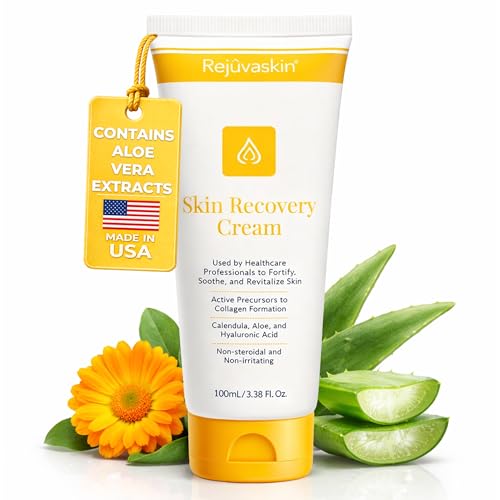
1. Rejuvaskin Skin Recovery Cream, 100 mL
Our pick — 4.5+★ from 750+ verified ratings; the strongest balance of quality and price.
A radiation-dermatitis cream with hyaluronic acid, aloe, and calendula, rated 4.5+ stars by 700+ owners.
If you are dealing with a radiated patch that feels tight, tender, and raw, this is the pick to start with. It is the only formula here built specifically for radiation dermatitis, and it holds 4.5+ stars across 700+ owners. The label says it is safe to apply before, during, and after treatment, which means you are not switching products every week as your skin changes.
What wins people over is the moisturizing. The formula pairs hyaluronic acid (a moisture-holding ingredient that helps skin hang on to water) with aloe vera and calendula, so a thin layer keeps working through the day rather than drying out within an hour. Owners describe it going on smoothly with none of the sticky, slimy feel that makes a cream a chore to apply. It is steroid-free and carries the National Eczema Association Seal of Acceptance, so no active drug goes on raw skin.
Where It Earns Its Place
- Purpose-built for radiation dermatitis and safe to use before, during, and after treatment
- Hyaluronic acid, aloe, and calendula keep skin hydrated without a sticky film
- Steroid-free and carries the National Eczema Association Seal of Acceptance
- Smooth, non-greasy texture that layers easily under clothing
What To Weigh First
- The largest spend of the group for the smallest jar
- Botanical blend carries a faint natural scent, not a fully unscented formula
Best for: anyone in active radiation treatment who wants the cream most associated with that exact job, plus eczema-prone skin after treatment ends.
Think twice if: you react to any scent at all or you are moisturizing a large body area daily — the scent-free PhysAssist pick or the Vanicream two-pack will stretch further.
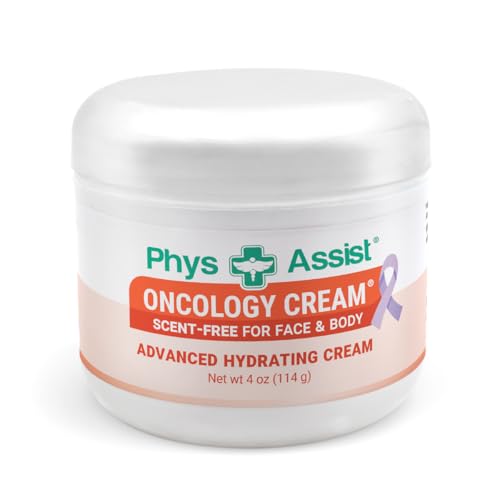
2. PhysAssist Oncology Recovery Cream, Scent-Free, 4 oz
No perfume, no dyes, no alcohol — just a calm, lightweight cream for face and body.
Some people cannot tolerate any scent at all during treatment, and that is exactly the situation this jar is built for. It is scent-free and color-free, made without added fragrance, dyes, alcohol, parabens, or artificial colors. It is formulated and tested as a non-irritant for dry, tight, visibly sensitive skin.
The texture is the other thing that works in its favor. It absorbs smoothly and leaves no heavy after-feel, which makes it easy to use on both the face and the body — a big deal when your whole routine is about keeping skin comfortable without a greasy residue. The blend includes sweet almond oil, jojoba oil, vitamin E, and arnica montana flower extract, ingredients chosen to support the skin’s natural moisture barrier. It is a small 2.75-inch jar at 4 ounces, so it slips into a treatment bag without taking up much room — a physical footprint note next to the Vanicream two-pack, which measures 6 x 6 x 10 inches as a bundled set.
The recurring note is value: a few find it a little pricey for the size. If you want the simplest, quietest formula on this list and scent is your main worry, this is your jar.
What It Does Best: it strips out fragrance, dyes, alcohol, and parabens in one pass, so you are not reading a long label looking for a trigger.
The Small Print: it is a compact 4-ounce jar and it is not the cheapest per ounce here, so heavy daily use on large areas will go through it quickly.
Reach for this if: fragrance is the first thing that sets your skin off and you want one gentle cream for both face and body.
Look elsewhere if: you are covering large areas several times a day and want the biggest bottle per dollar.
3. Vanicream Moisturizing Lotion 2-Pack

Two big bottles of the plain, fast-absorbing lotion your hands and arms will live in.
When your skin needs moisturizing all day, every day, you want volume and a formula that disappears fast — and this two-pack of 8 fl oz bottles delivers both. It is a lighter version of the Vanicream cream, made without dyes, fragrance, masking fragrance, lanolin, parabens, or formaldehyde releasers, so the ingredient list stays short and predictable. For daily use on face, hands, and body, that predictability is the whole point.
What people love most is simply that it works without a greasy finish. It absorbs quickly and spreads easily, which means you can reapply before you head out the door and not feel like you are wearing a film. It is non-comedogenic (unlikely to clog pores), so it is a reasonable option for the face as well as the body. The two-pack format is where the value lives — together the set measures 6 x 6 x 10 inches and weighs 1.32 pounds, so it is a home-and-away arrangement rather than a handbag bottle.
The one honest limit: this is a light lotion, not a rich cream. If your skin is very dry or a radiated patch is flaking badly, it may need to be topped with a heavier cream or used only for daytime. Occasional feedback also notes the effects build over a day rather than landing instantly. For everyday upkeep and handbag-sized top-ups — it fits a purse without a fuss — it is the practical choice.
Why It Belongs Here: a two-pack of 8 fl oz bottles with no fragrance, no dyes, and no parabens is the most economical way to keep the whole household moisturized.
Where It Falls Short: it is a lightweight lotion, so very dry patches may want a richer cream on top, especially overnight.
Best for: everyday full-body moisturizing at home, and anyone who wants a plain, no-fragrance lotion by the sink and in the bag.
skip it if: your problem area is deeply flaky or raw and you need the richer, cream-style formula of the Rejuvaskin or the PhysAssist jars instead.
4. PhysAssist Oncology Cream and Lip Balm, 4 oz
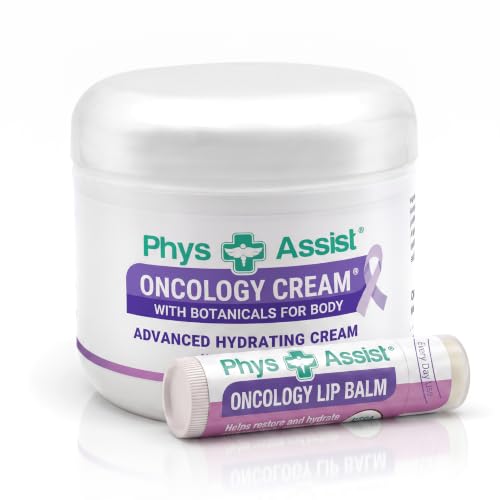
A calendula cream and a lip balm in one box, ready to hand over.
Buying for someone else is its own problem, and this set solves it. You get a rich calendula cream for dry, tight, tender skin plus a lip balm for chapped lips, which makes it a ready-made addition to a chemo bag or radiation kit. The cream is made with calendula, lavender, and peppermint and is free of alcohol, parabens, and artificial colors. It is formulated and tested as a non-irritant for dry, sensitive skin.
What makes it usable day to day is how it sits on the skin. It is non-greasy and non-staining, absorbing without a slick film or white residue — so it should not leave marks on clothes or bedding, which matters when you are moisturizing twice a day. The lip balm is the quiet star of the set; it earns more praise in the reviews than the cream does, and it is the piece people tend to reorder for themselves. A generous 4-ounce jar rounds out the box, and it is manufactured in the USA.
The thing to know is the scent. The lavender and peppermint give it a noticeable botanical smell — most describe it as pleasant rather than off-putting, but it is not a scent-free product. If a strong smell is a problem for the person you are buying for, the scent-free PhysAssist jar above is the better fit. Otherwise, for the combination of a rich cream and a lip balm, this is the most gift-ready option on the list.
Ideal if: you are assembling a care package or a treatment bag and want one box that covers both skin and lips without extra shopping.
Not ideal if: the person you are buying for cannot handle any fragrance — the botanical scent here is noticeable, so go scent-free instead.
5. Theraplex AIM Anti-Itch Moisturizing Cream, 3 oz

The medicated option for the itch that keeps you up at night.
When the problem is not dryness but relentless itching, a plain moisturizer may not be enough, and that is the gap this cream fills. It pairs a moisturizing base with 1% hydrocortisone, which the label calls the strongest non-prescription anti-itch medication. The idea is to calm the itch and the flare-up while the cream repairs and restores the skin’s protective barrier. Because it contains an active drug, this is the one pick here you should clear with your oncology team before using on treatment skin.
What wins people over is that it actually quiets the itch. It is used to temporarily relieve itching linked to minor skin irritations, inflammation, and rashes from eczema, soaps, detergents, cosmetics, seborrheic dermatitis, and psoriasis. The formula includes natural organic coconut oil to soothe and moisturize, and it is made without parabens, gluten, preservatives, fragrance, or lanolin. Buyers report it calms redness and itching enough to sleep through the night, with a mild coconut scent rather than perfume.
Two trade-offs are worth stating plainly. The texture draws mixed reports — the cream can feel gritty or greasy at first, though it absorbs, and some find it too heavy. And it does not work instantly for everyone; relief can take a little time. At 3 ounces it is the smallest jar on this list, and the texture gripe is the most common one. For nights when nothing else quiets the itch, though, it earns its spot in the cabinet.
What Shines Through
- 1% hydrocortisone targets stubborn itching and flare-ups, not just dryness
- Organic coconut oil soothes and moisturizes while it calms
- No parabens, gluten, preservatives, fragrance, or lanolin
- Helps repair and restore the skin’s natural protective barrier
The Real Trade-Offs
- Contains an active drug, so check with your care team before use on treatment skin
- Texture draws mixed reviews — can feel gritty or greasy at first
- Only 3 ounces, the smallest jar here, and it does not work instantly for everyone
Best for: the nights when itching is the problem and you need a medicated cream that calms enough to let you sleep.
Check first if: you are in active treatment or on other medications — this one carries an active ingredient, so get your oncology team’s okay before reaching for it.
Know the Specs
Fragrance-Free vs. Scent-Free
These two labels are close but not identical. “Fragrance-free” means no perfume has been added, though a botanical ingredient may still carry its own faint smell. “Scent-free” signals a formula built to have essentially no smell at all. On treatment skin, either is a reasonable choice, but if scent is a known trigger, lean toward the scent-free option. Look for the full list of exclusions — alcohol, dyes, lanolin, parabens — because a cream that spells out what it leaves out is easier to trust.
Active Ingredient vs. Plain Moisturizer
A plain moisturizer hydrates and supports the skin’s moisture barrier. A medicated cream also contains an active drug — like the 1% hydrocortisone in Theraplex AIM — that temporarily relieves itching. That is more than simple hydration, so it is the kind of product to run past your oncology team before applying it to skin that is raw or actively being treated. Keep the plain moisturizers for daily upkeep; bring in the medicated cream for stubborn itch and flare-ups.
What “Non-Greasy” and “Fast-Absorbing” Really Mean
These words describe how a cream feels after you rub it in. A non-greasy cream sinks into the skin instead of sitting on top, so you are not left with a slick film that stains clothes or bedding. Fast-absorbing means it does not need long to dry before you dress. When you reapply several times a day, a non-greasy, fast-absorbing formula is what keeps the routine from becoming a chore.
Size and Format in Plain Terms
Lotions come in larger bottles and spread thin over big areas, which suits daily all-over moisturizing. Creams come in smaller jars, are thicker, and hold up better on a small dry or radiated patch. A 4-ounce jar is small enough to tuck into a treatment bag; a two-pack of 8 fl oz bottles is a home-and-away arrangement. Match the size to how much skin you are covering and how often you reapply, and you will not run out midweek.
Common Questions
Can I use a regular body lotion on chemo or radiation rash?
Should I ask my doctor before using a hydrocortisone cream on treated skin?
Is it better to use a lotion or a cream for a radiated patch?
How often should I reapply cream during treatment?
Why does fragrance matter so much on sensitive, treatment-compromised skin?
Can I use these creams on my face as well as my body?
What is the difference between the two PhysAssist jars in this list?
Do these creams stain clothes or bedding?
How long will one jar or bottle last?
The Bottom Line
The winner for most people is the Rejuvaskin Skin Recovery Cream, because it is the one formula built specifically for radiation dermatitis and endorsed by radiation centers, with hyaluronic acid, aloe, and calendula to keep raw, tight skin comfortable. If scent is your main worry, grab the PhysAssist Oncology Recovery Cream, which strips out fragrance, dyes, and alcohol entirely. For everyday all-over moisturizing at the best value, the Vanicream two-pack keeps a whole household supplied — and if the itch is what is keeping you up, the Theraplex AIM brings 1% hydrocortisone to the fight, with your care team’s blessing. Whichever you choose, patch-test first and keep your oncology team in the loop; that habit is worth more than any single jar.
How we choose
We do not accept paid placement. Every pick is matched to a real buyer and a real use-case; we do not hands-on test units.
Sources
Specifications: manufacturer listings and product documentation. Review insights: verified customer reviews, as of October 2026. Pricing: not shown on this page (it changes often); check the current price via the retailer link.
As an Amazon Associate, Aappliancez earns from qualifying purchases. This does not affect which products we feature.