Disclosure: Some links in this post are affiliate links. As an Amazon Associate I earn from qualifying purchases, at no extra cost to you. Learn more
Specs are compiled from manufacturer listings and verified buyer reviews and can change over time — please confirm the key details on the product page before buying.
Wet cement does not burn like a flame — it burns like a slow chemical attack. Portland cement mixes are strongly alkaline, and the same calcium hydroxide that cures a slab will keep eating into your skin as long as it sits there. That is why the right product for a cement burn is not a painkiller and not a bandage. It is something that either neutralizes the alkali or seals the damaged skin so it can start closing. Below you get the five options that actually hold up: a pH-buffering spray built specifically for concrete work, a wound-care hydrogel, a sterile burn pad, and two multi-purpose healing salves that double as household staples.
This guide is built by comparing the manufacturers’ published specifications and the patterns across verified customer reviews, so you get each pick’s real strengths and trade-offs instead of marketing spin.
Some choices are about triage and some are about daily skin repair, and the honest answer changes depending on whether you are standing in a pour or healing one. If you work with concrete, mortar, grout, or plaster, this guide walks you through the cream for cement burns options that match your situation.
Top Picks

How To Choose The Best Cream for Cement Burns
Not every product sold as a burn cream does the same job, and mixing them up is the most common mistake. Some are barrier ointments that hold moisture in, some are hydrogels that pull heat out, and one here is a pH buffer that chemically neutralizes the alkali on contact. Knowing which job you are buying for is the whole decision.
Neutralize or Protect — Two Different Jobs
Wet cement leaves behind strongly alkaline residue — calcium hydroxide — and that residue keeps damaging skin until it is removed or neutralized. A pH buffer handles that specific problem by adjusting the skin surface back toward neutral. A healing ointment or hydrogel does the opposite job: it protects skin that is already damaged so it can close. If you are pouring concrete daily, you want the neutralizer. If you are healing at home, you want the ointment.
Match the Format to Where You Will Use It
Format matters as much as formula. A jar of thick ointment is the right call at home on a bathroom shelf. A sealed, sterile pad goes in a glove box, a camp bag, or a tool tote where it needs to stay clean until the moment you open it. A hydrogel dressing conforms to awkward spots like cracked fingers and nail gaps. Ask where the product will live before you buy it.
Check the Ingredients List Before You Buy
Read the panel. A petrolatum-based protectant works by sealing moisture in, while a hydrogel works by keeping the wound bed moist without oil. Some formulas add tea tree oil or panthenol and glycerin, and some are deliberately fragrance-free so they can be used on sensitive or already-irritated skin. If you react badly to fragrance or preservatives, the ingredient list is where you find that out — not the front of the label.
Know When It Is Not a Cream Problem Anymore
A minor burn or a dry, irritated patch can be handled at home. But a cement burn that is deep, blistering, or spreading needs medical attention, and any wound that looks infected should be seen by a doctor before you apply anything. Products labeled for infected wounds should only be used under a doctor’s direction. Buy the right product, but do not use it as a reason to skip care you actually need.
Side-by-Side Comparison
| Model | Best For | Format | Size / Count | Key Ingredient | Amazon |
|---|---|---|---|---|---|
| Aquaphor Advanced Therapy Healing Ointment★ Best Overall | Everyday healing and barrier protection | Ointment | 14 oz jar | Petrolatum 41% | Amazon |
| Dimora Hydrogel First Aid OintmentBest Value | Moist wound care and awkward spots | Hydrogel | 2 packs, 6 oz each | Oil-free hydrogel | Amazon |
| BurnFix Burn Gel Dressing | Instant cooling on minor burns | Sterile gel pad | 4 pads, 4×4 in | Hydrogel with tea tree oil | Amazon |
| Rawleigh Antiseptic Salve Yellow Tin | Family and farm multi-purpose first aid | Salve | 4.5 oz tin | Turpentine, liquefied phenol, petrolatum | Amazon |
| Neutralite Cement Burn Neutralizer | Concrete crew daily skin protection | Spray (crystals, mix with water) | Spray bottle kit | pH buffer crystals | Amazon |
Detailed Reviews
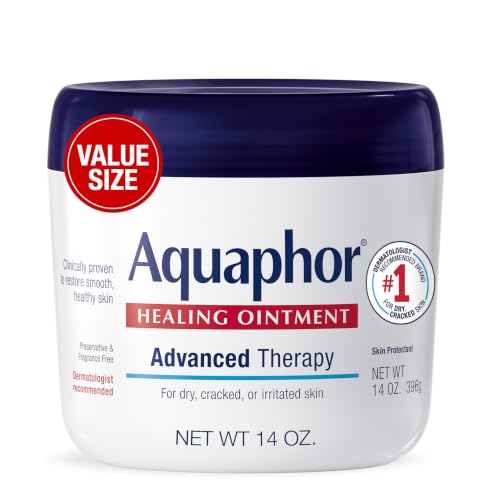
1. Aquaphor Advanced Therapy Healing Ointment
Our pick — over 4.5★ from 88,000+ verified ratings; the strongest balance of quality and price.
A 14-ounce jar of 41% petrolatum that seals cracked, cement-burned skin and holds moisture in.
If you want one product that handles the healing half of a cement burn — the days after, when skin is cracked, red, and too tender to touch — this is the one to buy. The active ingredient is petrolatum 41%, a purified form of petroleum jelly that seals the surface and holds moisture in. That seal slows water loss, which is the single biggest reason cracked skin stays cracked. The jar is a 14 fluid ounce value size, so it sits on a shelf rather than disappearing in a week.
The supporting ingredients are what separate it from plain petroleum jelly. Panthenol and glycerin pull water toward the skin surface, and bisabolol is added to quiet irritation. Just as important, the formula is free of dye and preservatives and carries no fragrance, so you can work it into irritated or sensitive skin without adding a fresh irritant on top of a burn. A little spreads a long way across a palm-sized patch.
The trade-off is honestly about format, not quality. This is a thick, tacky paste, and it will feel greasy on your hands and leave a film on clothing. If you are mid-pour and need something you can spray or peel off and go back to work, this is not that product — the Neutralite spray below is. This is the one you reach for at the end of the day and on the days after, when healing is the job. It is also the household crossover pick, since the review pages sum it up: it leaves skin soft and protected and is made to keep at home.
What Earns It the Top Slot
- Petrolatum 41% creates a real moisture barrier, which is the mechanism that helps cracked, burned skin close.
- Dye-free, preservative-free, and fragrance-free — safe to layer on skin that is already irritated.
- The 14 fluid ounce value-size jar makes it a shelf staple instead of a one-week purchase.
- Cooling, non-sticky formats exist for convenience, but a thick paste like this stays where you put it on a moving joint.
Where It Falls Short
- Greasy, tacky texture — it transfers to clothing and bedding until it absorbs.
- It protects skin but does not neutralize the alkali in wet cement, so it is not a substitute for the Neutralite spray on a job site.
- The jar format is impractical to carry in a pocket or tool belt.
Reach for this if: you are healing at home and want one jar that covers burns, chapped skin, cracked hands, and everyday dry patches.
Look elsewhere if: you need something you can apply one-handed on site and keep working — the texture will stop you.
2. Dimora Hydrogel First Aid Ointment
An oil-free gel built for spots a flat pad cannot cover — cracked fingers, nail gaps, knuckles.
Hydrogel is the format to know if you have ever tried to tape a dressing onto the side of a finger. This Dimora gel is oil-free, which means it keeps the wound bed moist without the greasy film that makes tape slide off. It conforms to irregular contours and tiny positions, so it stays put over joints and supports movement while you work. The pack ships as two 6-ounce containers — that is double the product in the box compared with a single-jar purchase.
The claim that carries the most weight with owners is what the gel does on actual damaged skin, and that is where the formula is designed to help. It hydrates a dry wound and softens dead tissue in a moist environment, which is the condition wound care generally wants. The cooling feel on a fresh minor burn is a real, immediate benefit. Owners also report it works well under hydrocaps and hydrocolloid-style dressings, which matters if you are already using a layered wound-care routine.
Here is the honest caveat you need to hear before buying. This is a moist wound-care product, not a barrier cream, and it is not suitable for wounds with a large amount of fluid — the maker is explicit about that. Users also report a range of skin reactions; some find it soothing, some find it stings on application, so it is worth a small test patch first. A few owners note it works best once scabbing has progressed and that a colloidal silver gel may suit the raw early stage better. Treat it as a product for early, clean, lightly weeping wounds — not for a deep or infected cement burn, which needs a doctor.
The two-pack math: the box gives you two 6-ounce containers, so you can keep one on the shelf and one in the truck without splitting a single jar.
Where it earns its keep: oil-free hydrogel conforms to fingers, nails, and joints far better than a flat dressing strip, and it holds moisture without the greasy residue.
Best for: small, clean, lightly weeping burns and grazes in awkward spots where a flat pad will not sit.
Not for: heavily weeping wounds or anything that looks infected — this product carries an explicit warning about infections and heavy exudate.
3. BurnFix Burn Gel Dressing

Four sterile 4×4 hydrogel pads that cool a minor burn on contact, straight from the pouch.
Four sealed pouches, each holding one sterile 4×4 inch hydrogel pad. The gel cools a minor burn on contact and covers a wider area than a standard bandage strip, which is the difference between treating a splash on the back of a hand and chasing it with gauze. Because it comes preloaded, it deploys in seconds: tear open, gel side down on clean skin, secure with a wrap if needed. Two pads in the kitchen, one in the glove box, one in the camp bag is the intended rotation, and each pad stays sterile until its pouch is opened.
What buyers like most is that the dressing comes off without pulling at the burn. The gel surface does not stick to tender skin, so you are not tearing off a dressing that has bonded to a healing burn — the company states it is safe for children and for use on the face. Tea tree oil is infused into the hydrogel (a water-based gel that holds moisture), and the pad keeps the burn area moist and protected while skin recovers. Camping and grilling are the recurring scenes where owners say this earns its place, with a fire-pit palm burn cooled enough to keep a trip going.
Now the catch, and it is a practical one rather than a formula problem. There is no adhesive on the pad, so there is nothing holding it in place but a wrap, and buyers report it can be wet and slippery. Secure it properly with an Ace bandage or self-adherent wrap before you move around, or you will be picking up a sterile pad off the floor. The flip side is that the pad can be cut down for smaller burns and the unused portion resealed. It is also worth knowing the gel is not what handles a deep chemical burn — for a cement burn, get the alkali off the skin first.
The one detail to plan around: no adhesive means you supply the wrap. Buy a self-adherent bandage in the same order and the pad becomes genuinely usable.
Why crew and campers keep them: sealed, sterile, and instant, with no refrigeration or mixing needed — which is exactly what a burn kit should be.
the balance: minor kitchen, grill, sunburn, and scald care where you want cooling relief the moment it happens.
Think twice if: you are dealing with a chemical or cement burn on a limb — cool it and get it checked, because a gel pad is comfort, not neutralization.
4. Rawleigh Antiseptic Salve Iconic Yellow Big Tin: 4.5 oz
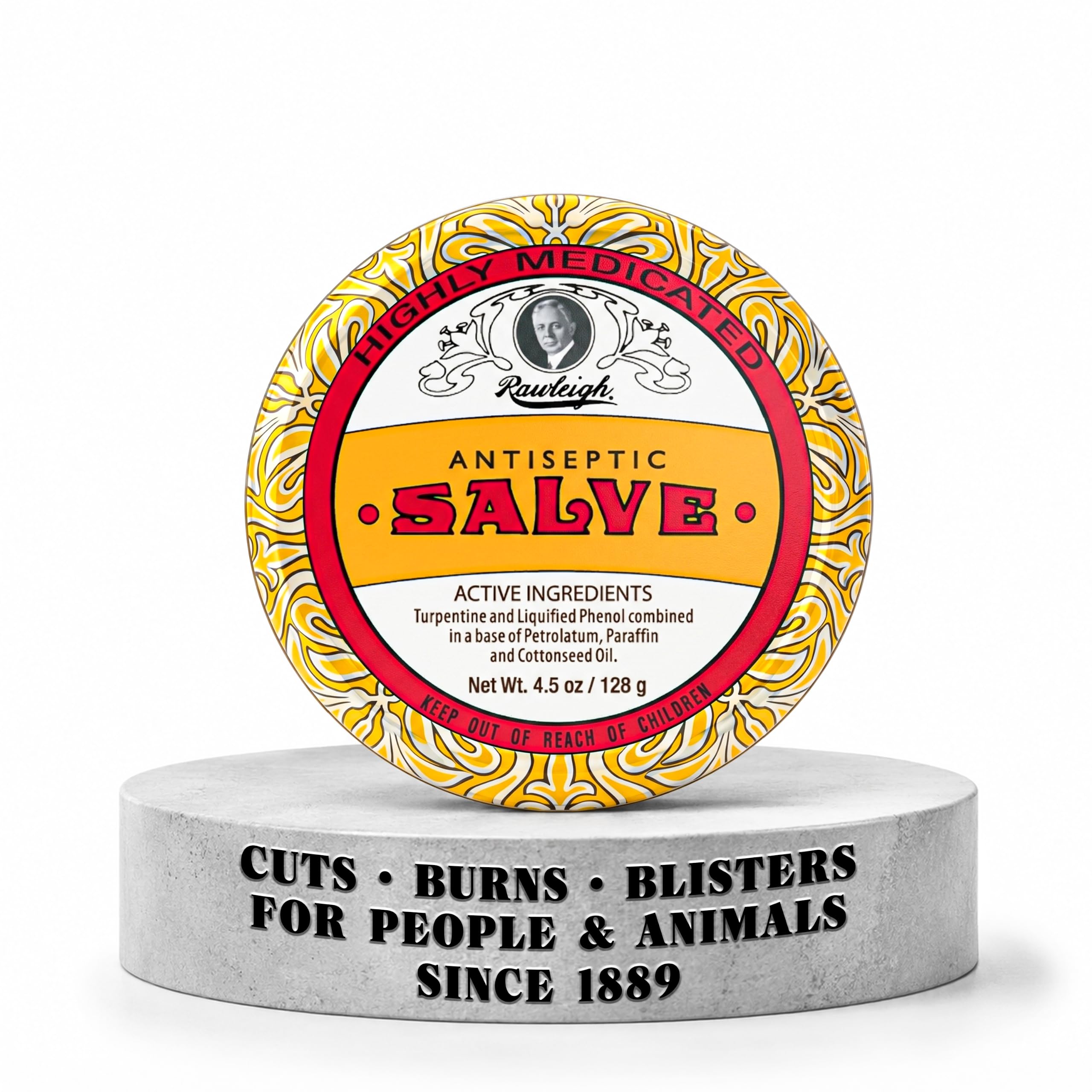
An 1889 turpentine-and-phenol salve in a 4.5-ounce tin, for cuts, burns, chapped skin, and livestock.
The pitch here is breadth. This salve is formulated to handle minor cuts, scrapes, burns, blisters, chapped lips, saddle chafing, and cracked heels on people, and the same tin is meant for horses, livestock, and pets — wire scratches, chapped teats, udder care. It is the only product on this list that crosses the human-and-animal line, which makes it the logical pick for a farm, workshop, or house with animals.
The formula itself is not modern chemistry and does not pretend to be. It is turpentine and liquefied phenol in a base of petrolatum, paraffin, and cottonseed oil. That combination is designed to create a protective barrier that keeps germs out and lets skin heal. The 4.5 ounce tin is the family size — the maker calls it the generous one — and the tin format means it can live in a truck or a barn without leaking. The tin is listed at 6.4 ounces as shipped.
The most-discussed thing about this product is the smell and the thickness, and that is also its most honest limitation. It is a strong herbal salve, and the turpentine is the primary ingredient that catches buyers off guard the first time. It absorbs quickly and leaves no messy residue, so it is not greasy in the way a heavy petrolatum ointment is. For a concrete worker with cracked, hard-working hands, the barrier effect against daily grit is the reason to keep a tin around — but a fresh cement burn still needs the alkali removed first, not salved over.
Why families keep rebuying: one tin does cuts, burns, dry skin, insect bites, and animal care, so it replaces a shelf of single-purpose jars.
The old-recipe trade-off: turpentine and liquefied phenol are the original antiseptic ingredients, not a modern scent-free formula — you either want that character or you do not.
Pick it for: farms, workshops, and households where the same tin serves people, pets, and livestock.
Choose differently if: you want a fragrance-free, dye-free product for sensitive facial skin — this is neither.
5. Neutralite Cement Burn Neutralizer L
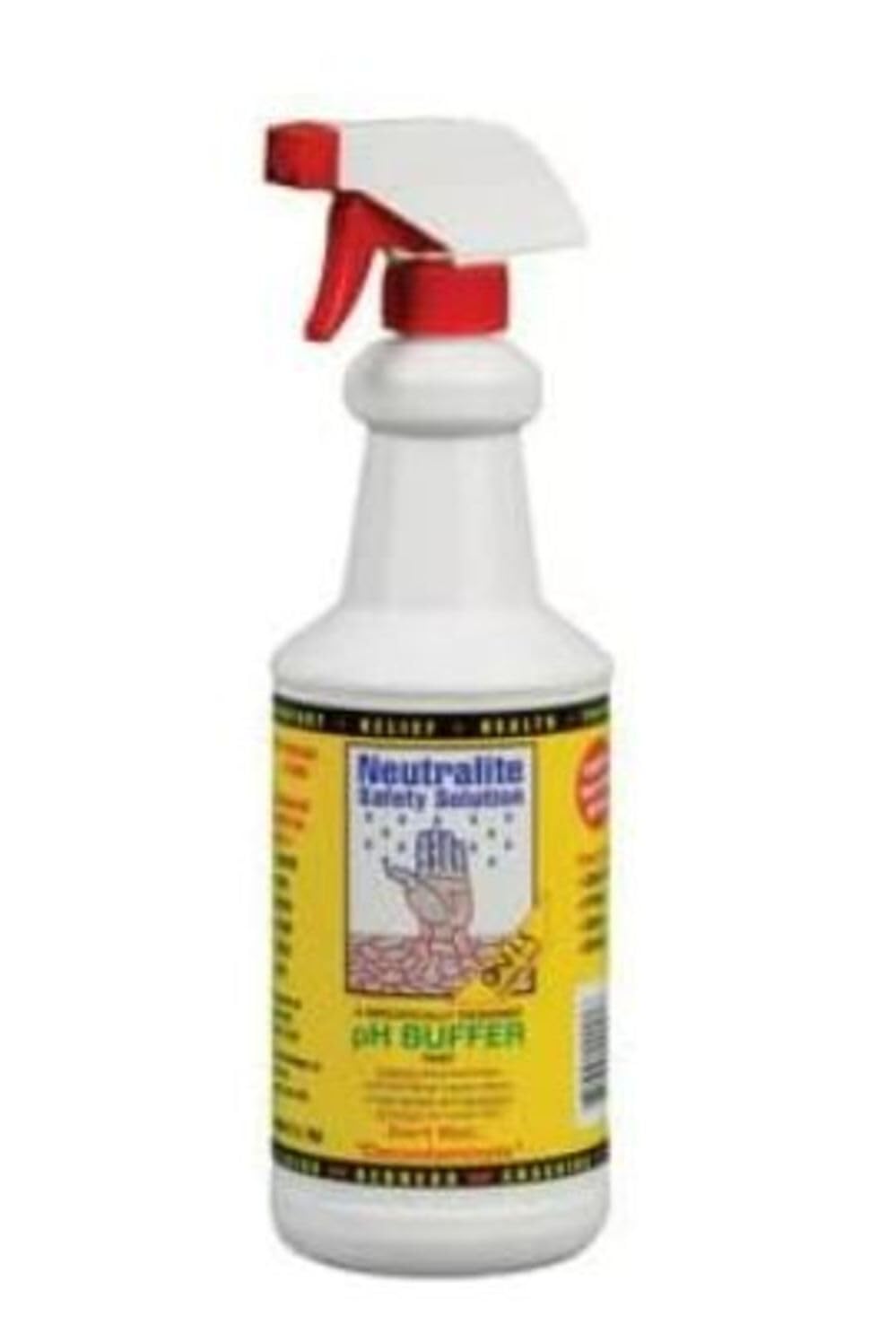
A pH-buffer spray that neutralizes the calcium hydroxide in wet cement instead of just soothing the burn.
Everything else on this list treats a burn; this one is formulated to prevent and relieve the specific irritation that wet cement causes. It is a pH buffer, which means it is designed to push skin surface pH back toward neutral, which is the mechanism that matters when calcium hydroxide — an alkali — is what is attacking the skin. It is also formulated to help with hexavalent chrome exposure, which is an allergen in cement, so it covers both the chemical irritation and the allergic component of concrete work.
The application is designed for a job site rather than a bathroom shelf. The bottle ships holding Neutralite crystals, and you fill it with clean water to activate. Then you wipe off excess cement and drench spray the affected area, rub in, and let it dry. The company advises reapplying periodically on pre-exposure to maintain continuous protection, and notes best results come from consistent daily use.
Two things owners need to understand before buying. First, this is not a barrier cream — the maker is clear that it decontaminates rather than forming a protective layer, so it works differently from the ointments above. Second, it is not a medicine and it does not claim to cure anything. That is exactly why it belongs in a tool tote: it is the product you use the moment your skin is exposed, alongside washing the cement off, rather than the cream you apply three days later. That is also why the practical advice holds — get the alkali off your skin and neutralize it, then treat the burn with an ointment once it is clean.
The chemistry angle: a pH buffer formulated to neutralize calcium hydroxide and address hexavalent chrome, which is the pair that makes cement burns so stubborn.
The site-ready trick: it ships as crystals that activate in water, which means a long shelf life and a spray you mix fresh when you need it.
Buy it if: you work with concrete, mortar, grout, plaster, stucco, or lime and want protection on your skin while you work.
Pair it with: a healing ointment for the following days — a neutralizer gets the alkali off your skin, but it does not close the burn.
Know the Specs
Petrolatum Percentage (Skin Protectant)
Petrolatum is a purified petroleum jelly, and the percentage on the label tells you how much of the formula is actually doing the sealing. A 41% petrolatum formula creates a moisture barrier on the skin surface, which is what slows water loss and lets cracked, burned skin close. Higher petrolatum content means a thicker, more protective film — and also a greasier, tackier feel on your hands. It protects skin, but it does not neutralize the alkali in wet cement, so it is a healing product, not a decontaminating product.
pH Buffering (Alkali Neutralization)
Wet cement is alkaline, and the calcium hydroxide in it is what keeps damaging skin after contact. A pH buffer is a formula designed to shift the skin surface back toward neutral. This is a fundamentally different job from moisturizing, and it is the reason a targeted neutralizer like the Neutralite spray belongs on a concrete site while a healing ointment belongs at home. Look for the words “buffer” or “neutralize” on the label, and understand that a buffering product typically does not form a protective barrier — it decontaminates.
Hydrogel (Moisture Without Oil)
Hydrogel is an oil-free gel that holds water against the wound bed, which is the environment wound care tends to want for early healing. Because it has no oily base, it generally will not stick to tender skin and it conforms to awkward shapes like cracked fingers and nail gaps. Hydrogel formats vary widely — some are thick jar gels, some are preloaded onto sterile pads. The important caveat: a hydrogel is meant for small, clean, lightly weeping wounds and is not suitable for wounds with heavy fluid.
Sterile Vs Non-Sterile Formats
A sealed, sterile pad is packaged so it stays clean until the moment you open the pouch, which matters for any product going into a first aid kit, a glove box, or a tool bag. A jar or tin is not sterile — once it is open, it stays open. That is not a flaw, it is simply a different use case. The rule of thumb: sterile formats for burns on the body, jars and tins for dry, cracked, irritated skin and everyday healing.
Common Questions
What is the difference between a cement burn and a normal burn?
Is a regular burn cream enough for a cement burn?
Can I use a petrolatum ointment like Aquaphor on a fresh cement burn?
How should I store a cement-burn product so it is ready when I need it?
Can I use one of these on children or on the face?
Why does a hydrogel gel sting on some people and not others?
How long should I keep a burn dressing on before changing it?
Does a cement burn neutralizer replace washing the cement off my skin?
Is the two-pack hydrogel ointment a better value than a single jar?
When should I stop treating a cement burn at home and see a doctor?
The Bottom Line
For most people buying a cream for cement burns, the right call depends on which half of the problem you are solving. If you are healing at home and want one jar that covers burns, cracked hands, chapped skin, and everyday dryness, the Aquaphor Advanced Therapy Healing Ointment is the safest all-rounder — 41% petrolatum (a skin protectant that seals in moisture) locks moisture in, and the formula is free of dye, preservatives, and fragrance so it is gentle on already-damaged skin. If you work with concrete, mortar, grout, or plaster and want to protect your skin before the burn starts, the Neutralite Cement Burn Neutralizer is the one to keep in the truck, because it is the only product here built to buffer the alkali itself. And for a fresh minor burn where you want cooling relief the second it happens, grab the BurnFix Burn Gel Dressing four-pack and keep a pad in every kit you own.
How we choose
We do not accept paid placement. Every pick is matched to a real buyer and a real use-case; we do not hands-on test units.
Sources
Specifications: manufacturer listings and product documentation. Review insights: verified customer reviews, as of October 2026. Pricing: not shown on this page (it changes often); check the current price via the retailer link.
As an Amazon Associate, Aappliancez earns from qualifying purchases. This does not affect which products we feature.