Disclosure: Some links in this post are affiliate links. As an Amazon Associate I earn from qualifying purchases, at no extra cost to you. Learn more
Specs are compiled from manufacturer listings and verified buyer reviews and can change over time — please confirm the key details on the product page before buying.
Want cotton against your skin and real squeeze in the calf? The Thick Soft Cotton Compression Socks are the safest buy here — comfort is what wins people over most, and the cotton blend lets your legs breathe in summer heat. One catch before you click anything: cotton compression socks are sized by calf measurement, not by shoe size. Get that number wrong and even the best sock in this list turns into a fight at the ankle.
This guide is built by comparing the manufacturers’ published specifications and the patterns across verified customer reviews, so you get each pick’s real strengths and trade-offs instead of marketing spin.
Every pair below is judged on the two numbers that actually decide your day: the compression level stamped on the label in mmHg, and the calf fit. Here is the honest shortlist of the best cotton compression socks for women, sorted by what each one genuinely does well.
Top Picks
How To Choose The Best Cotton Compression Socks for Women
Three things decide whether a pair of cotton compression socks helps you or ends up folded in a drawer: the pressure rating, the calf fit, and how well the fabric holds its shape after washing. Everything else — colour, packaging, a cute little bag — is a bonus, not a reason to buy.
The mmHg number is the whole ballgame
Compression is measured in mmHg, and the number on the label tells you how firm the squeeze is. A 15-20 mmHg sock gives light, everyday pressure. A 20-30 mmHg sock is the firm end of everyday compression, built for long shifts and long flights. If the label promises 20-30 and your legs feel barely hugged, the sock is not doing the job the box claimed.
Calf circumference beats shoe size
Most buyers size compression socks like regular socks and end up with a top band that rolls or bites. Measure the widest part of your calf with a soft tape, then match that number to the chart — not your shoe size. A sock that fits your calf but runs long can be folded at the cuff; a sock that is too small in the calf cannot be fixed.
Cotton is a trade-off, not a free upgrade
Cotton feels softer against the skin and traps less sweat and odour than an all-synthetic sock. It also stretches less, which is why cotton pairs can be harder to pull on. Expect to work them over your heel the first few times. Air drying keeps the compression and shape intact far longer than a hot dryer cycle.
Side-by-Side Comparison
| Model | Best For | Compression | Pack Count | Standout Feature | Amazon |
|---|---|---|---|---|---|
| Thick Soft Cotton Compression Socks★ Best Overall | Everyday comfort and standing all day | — | — | Cushioned foot, cotton blend | Amazon |
| BBFREY Cotton Compression Socks 20-30 mmHg | All-day shifts and long travel | 20-30 mmHg | 3 pairs | smooth toe, cushioned sole | Amazon |
| LEVSOX Cotton Compression Socks | Nurses and long-haul flyers | 20-30 mmHg | — | Thicker sole and toe build | Amazon |
| Blicount Cotton Compression Socks with Grips | Home, yoga, and unsteady footing | 15-20 mmHg | 3 pairs | Non-slip grip soles | Amazon |
Detailed Reviews
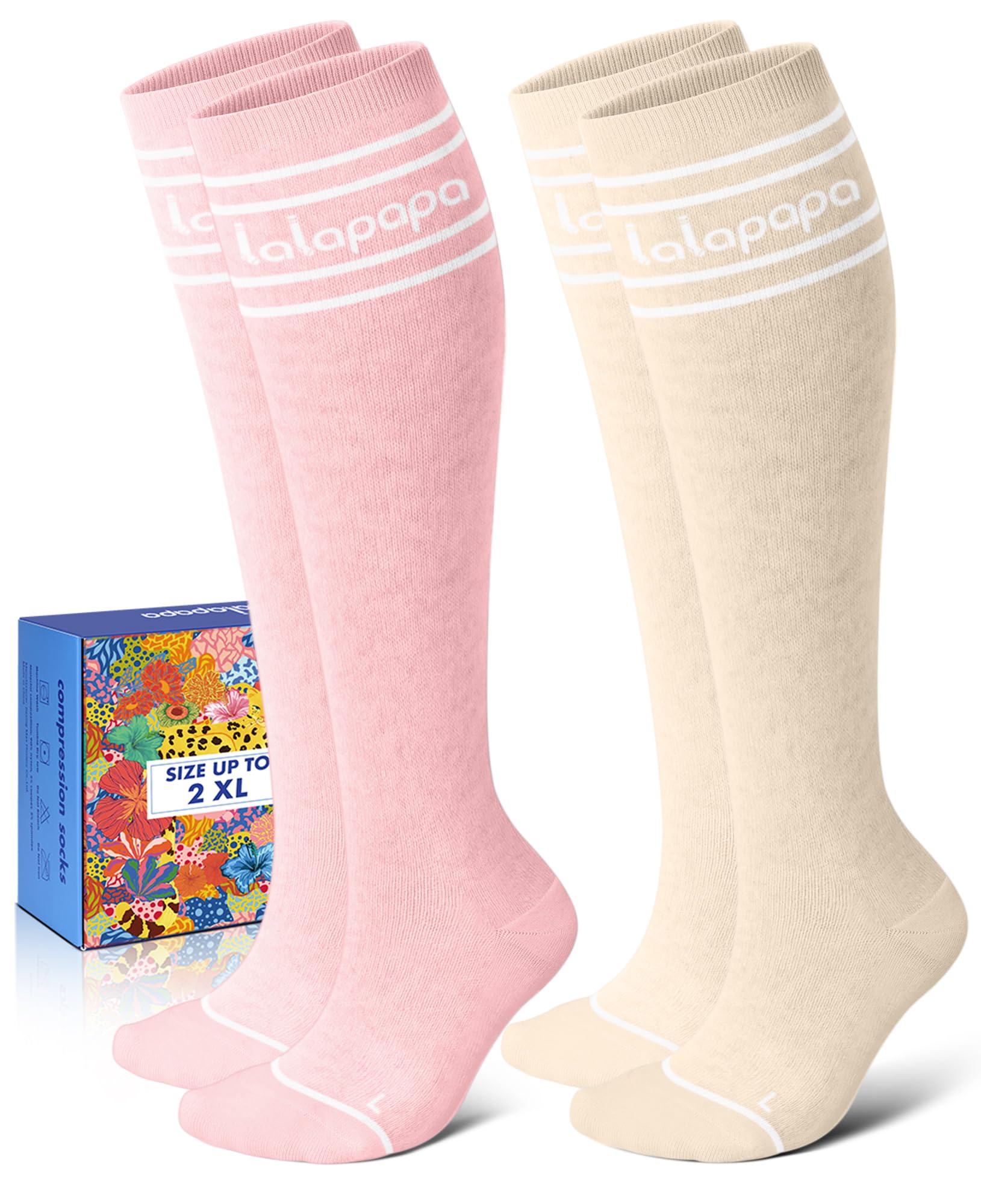
1. Thick Soft Cotton Compression Socks
Our pick — 4.0+★ from 900+ verified ratings; the strongest balance of quality and price.
The cushiony cotton pair that makes compression feel like a normal sock instead of a medical device.
Comfort is what wins people over here more than any other trait, and it comes from a simple combination: a cotton blend that stays breathable, a cushioned footbed, and a toe box that does not squeeze. The fabric reads as medium-weight, which is why this is the pair that turns up in summer wear comments without the “too hot” complaint that follows thicker knits. If your only experience of compression socks is a scratchy synthetic tube, this is the pair that changes your mind.
What surprises buyers who have never worn compression before is that the squeeze is not uniform. The calf gets the real hold and the foot stays comparatively free — great for anyone who hates feeling their toes pinched, less great if you wanted foot-level swelling addressed.
The honest limit is length and the top band. Calves measuring around 15.5 inches in circumference and 15.75 inches floor-to-knee report the cuff sitting slightly long, so taller wearers fold it down to dodge tightness. Shorter wearers report the sock reaching mid-knee. Either way, the calf number on the size chart is the one that decides whether this pair lives up to its comfort reputation.
What buyers keep coming back for
- Cotton-blend fabric that breathes, so it works in warm weather where thicker knits feel heavy
- Cushioned footbed and a roomier toe box for all-day standing
- Easy to pull on and off compared with firmer compression knits
- Colour range that reads as everyday sock, not medical equipment
Where it asks a little patience
- The top cuff can run long — plan to fold it if you are tall in the calf
- The foot area holds less compression than the calf, so mild foot swelling may linger
- Sizing trips up buyers who ignore the calf measurement
Reach for these if: you want cotton next to your skin, a cushioned foot, and a squeeze that feels strong without being clinical.
Measure first if: your calf sits well past 15.5 inches — the top band is where this pair draws its line.
2. BBFREY Cotton Compression Socks 20-30 mmHg, 3 Pairs
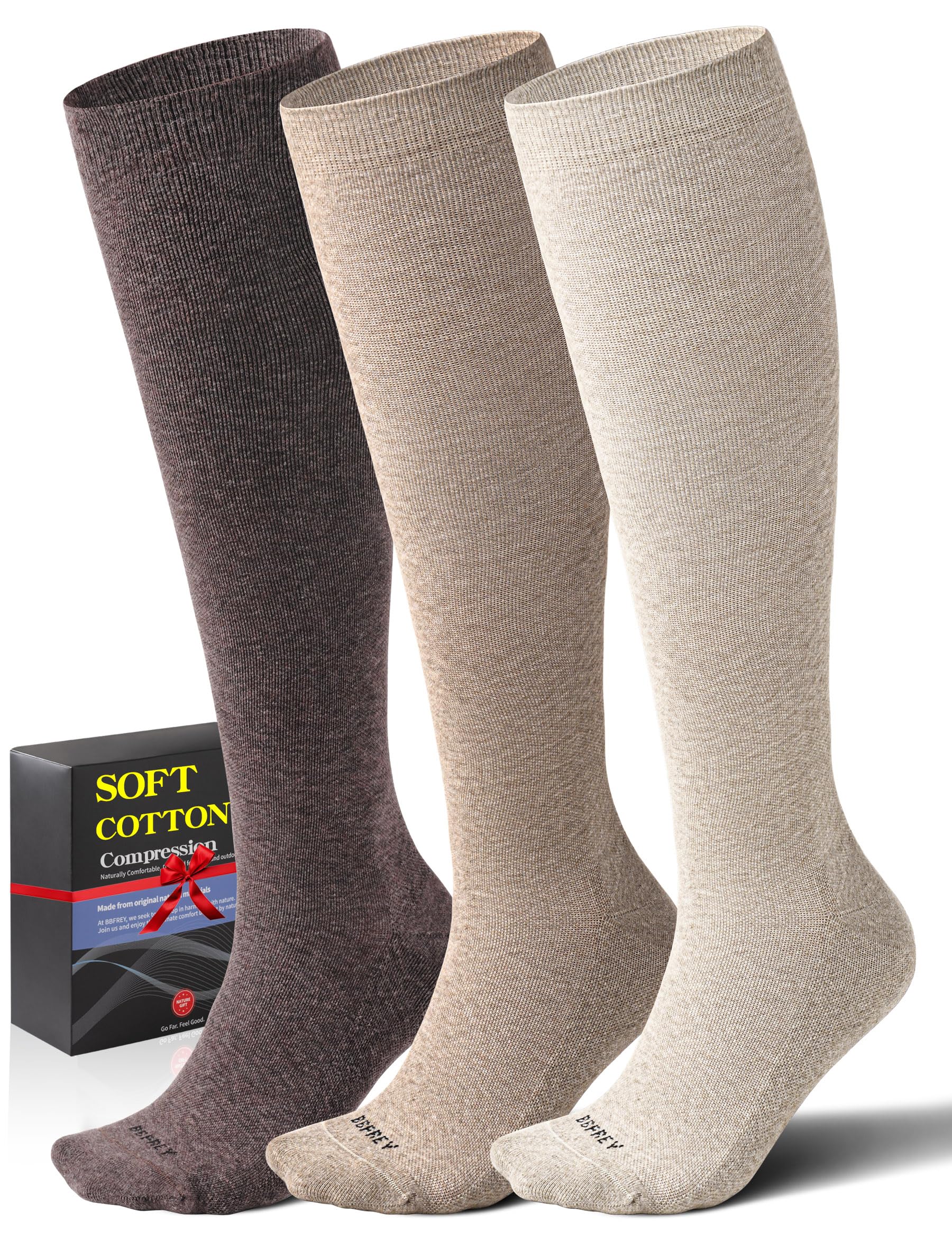
Three pairs of 20-30 mmHg cotton support for the price of a single premium pair.
Three pairs in one box at 20-30 mmHg (millimetres of mercury, the standard pressure rating for compression) is what earns this set its place — that rating is the firm end of everyday compression. For the nurse working a twelve-hour shift or the traveller boarding a long-haul flight, three pairs means one on your legs, one in the wash, one in the drawer — a rotation that actually holds up over a week. The build uses combed cotton with no latex, plus a smooth toe that keeps friction off your toes.
Quality is the thing that holds this pair above the crowd, and the details back it up: a soft cuff built to avoid binding, a cushioned sole for comfort underfoot, and cotton that stays skin-friendly through long wear. Unlike the LEVSOX pair below, which carries the same 20-30 mmHg rating, this one is sold three to a box, which changes the maths if you plan to wear compression daily.
Here is the trade-off you should know about. A few buyers find the real-world squeeze softer than the 20-30 label suggests — as the review pages put it, “It does not feel like a real 20 – 30 compression, 8 to 10 compression at the most.” The upper band is also the recurring gripe: it can roll or sit tight just past the knee. If you need firm, consistent pressure at the top, size up or look at the LEVSOX.
What the three-pack buys you: rotation. Daily compression wearers get a clean pair without hand-washing every night, and the smooth toe plus cushioned sole make the long days bearable.
The honest caveat: the top band is where this pair gets mixed feedback — it runs tight and can roll. Measure your upper calf, not just the widest part, before you commit.
Best suited to: shift workers and frequent flyers who want a firm 20-30 mmHg rating and enough pairs to rotate through the week.
Think twice if: you expect a hard, clinical squeeze at the very top of the sock — this one leans softer.
3. LEVSOX Cotton Compression Socks 20-30 mmHg

The one nurses buy on repeat, with a thicker sole built to survive real shifts.
Durability you can feel in your hand is what puts this pair near the top of the pile: a thicker sole and toe than the rest of this list, aimed squarely at the wear points that punch holes in ordinary socks. Nurses wearing them through long shifts report the compression holding wash after wash — air drying is what keeps the shape honest. It also helps that the top band does not squeeze the knee, a small detail that makes a twelve-hour day noticeably easier.
It carries the same 20-30 mmHg rating as the BBFREY pair, but the cotton knit pulls on more easily. Cotton does the heavy lifting here, which makes these easier to pull on than synthetic 20-30 socks while still delivering a snug, supported leg. For a woman with larger-than-average feet — a women’s 9 to 9.5 — the fit lands well. Travelers wearing them on a ten-hour flight report no shrinkage after a hand wash and air dry.
Two things to weigh. The price sits at the top of this group, and the thicker sole can feel snug inside a wide-width shoe, so they are happiest in roomier footwear or around the house. Length also splits opinion: at around 15.5 inches floor-to-knee, some buyers fold the cuff down. The sock is longer than the Thick Soft Cotton pair above, so if you are petite, folding the top is part of the routine.
The durability case: a reinforced sole and toe, cotton that stays soft after multiple washes, and a top band that respects your knee — this is the pair to buy if you plan to wear compression socks five days a week.
The fitting heads-up: the thick sole is snug in wide shoes, so pair these with roomier footwear or wear them around the house.
Pick these when: you are on your feet all shift and want a cotton sock that survives repeated washing without losing its squeeze.
Look elsewhere if: you wear tight or wide-width shoes all day — the thicker sole needs breathing room.
4. Blicount Cotton Compression Socks with Grips

Grippy soles meet gentle 15-20 mmHg support — a house sock first, a shoe sock second.
Here is the pair for hardwood floors, yoga mats, and anyone who pads around barefoot and wants the ground to stay put under them. The non-slip rubber dots on the soles are the whole reason to buy: they stop your foot sliding forward inside a loose mule or clog and they give unsteady feet a bit more traction on a glossy floor. The pressure is the gentlest here at 15-20 mmHg, which makes this a good starter compression sock if you have never worn one before.
Quality and grip are the two traits that carry this pair, and the build backs them up: soft cotton blend, three colours to a box, and a top band that neither rolls down nor binds. Wearers who hate overheating report these stay tolerable all day. Longer legs get coverage too — the sock runs long enough to pull over the knee or fold below it, and it holds place either way, even with bigger calves.
The catch is precisely the feature you came for. Those rubber dots create real suction, so pushing your foot into a snug shoe or boot turns into a fight — as one buyer put it, they can feel “impossible to slide feet into shoes.” If you want a compression sock for inside shoes, this is the wrong tool. If you want one for home, it is the right one. Sizing also runs small, so size up if you are between sizes.
Why the grip is the selling point
- Non-slip rubber dots hold your foot steady on smooth floors and in loose clogs
- Gentle 15-20 mmHg that suits first-time compression wearers
- Cotton blend that stays comfortable through a full day at home
- Long enough to cover big calves, worn up or folded down
Where this sock stops working
- The grip dots grip shoes too — not the pair for snug boots or trainers
- Runs small; order a size up if you are between sizes
- The top band can sit tight under the knee for some wearers
The right buyer: someone who wants compression support around the house, on a yoga mat, or in slip-on shoes — and who values a foot that stays put.
The wrong buyer: anyone planning to wear these inside fitted trainers or boots all day, where the grip works against you.
Know the Specs
Compression Level in mmHg
mmHg (millimetres of mercury) is the unit that measures how much gentle squeeze the sock applies. The lower range, 15-20 mmHg, feels like a light hug and suits everyday wear, travel, or a first pair. The firmer 20-30 mmHg range is the support level many people choose for long shifts on their feet. Graduated compression means the squeeze is strongest at the ankle and eases as it climbs the leg, which is why the calf and top band are where fit problems show up first.
Calf Fit and Sock Length
Calf circumference, not shoe size, decides whether a knee-high compression sock stays comfortable. Measure the widest part of your calf with a soft tape and match that number to the size chart. Length is a separate issue: a sock that runs long can be folded at the cuff, but a sock that is too small in the calf cannot be fixed. That is why the reviews here keep circling back to the same two spots — the top band and the overall knee length.
Common Questions
How do I know which mmHg compression level I need?
Should I measure my calf or my shoe size before buying?
Are cotton compression socks harder to put on than synthetic ones?
Can I put cotton compression socks in the dryer?
Why does the top band roll down or dig in?
Are grip soles good for wearing inside shoes?
How many pairs should I buy for daily wear?
Do cotton compression socks work for summer heat?
What if my feet swell but my calves fit fine?
Are these socks medical grade?
The Bottom Line
For most women, the cotton compression socks for women winner is the Thick Soft Cotton Compression Socks because cotton comfort, a cushioned foot, and an easy pull-on trade-off make them the pair you will actually reach for every day. If you want a firm 20-30 mmHg squeeze and enough pairs to rotate through the week, grab the BBFREY three-pack. And for a shift worker who needs a durable cotton sock that survives the wash, the LEVSOX pair is the one to reach for. If your days are mostly at home on smooth floors, the Blicount grips pair is the smart pick — just keep them out of snug shoes.
How we choose
We do not accept paid placement. Every pick is matched to a real buyer and a real use-case; we do not hands-on test units.
Sources
Specifications: manufacturer listings and product documentation. Review insights: verified customer reviews, as of October 2026. Pricing: not shown on this page (it changes often); check the current price via the retailer link.
As an Amazon Associate, Aappliancez earns from qualifying purchases. This does not affect which products we feature.