Disclosure: Some links in this post are affiliate links. As an Amazon Associate I earn from qualifying purchases, at no extra cost to you. Learn more
Specs are compiled from manufacturer listings and verified buyer reviews and can change over time — please confirm the key details on the product page before buying.
Copper is one of those minerals you never think about until a lab report puts it on your radar. The tricky part is that copper tablets come in wildly different doses — from a gentle 2 mg to a full 5 mg — and the wrong one can leave you queasy or under-supplemented. This guide sorts the real differences between the top copper supplements so you can match the dose and form to your own needs, not to a marketing page.
This guide is built by comparing the manufacturers’ published specifications and the patterns across verified customer reviews, so you get each pick’s real strengths and trade-offs instead of marketing spin.
You will see how chelated forms work, why zinc and copper are usually paired, and which tablet count actually carries you through a few months.
Top Picks

How To Choose The Best Copper Supplements
Copper is a trace mineral, which means your body needs it in very small amounts. The dose on the label matters far more than the bottle size. Get the dose wrong and you either waste tablets or feel queasy after every dose.
Match the milligram dose to your goal
Copper tablets typically come in 2 mg, 3 mg, and 5 mg strengths. A 2 mg tablet is the gentler daily option and pairs naturally with a multivitamin. A 5 mg tablet is a higher single dose, so many people split it or take it every other day. Check what your other supplements already contain before you add a standalone copper tablet on top.
Chelated versus plain copper
Chelated copper is copper bonded to an amino acid — glycine in most formulas — which is designed to be easier on the stomach. Plain copper salts can be harsher for some people. If you have reacted badly to mineral pills before, the chelated form is the one to reach for first.
Watch the zinc-to-copper balance
Zinc and copper compete for the same absorption pathway in your gut. That is why some formulas bundle them together in a fixed ratio. If you take a separate high-dose zinc supplement, you likely need copper alongside it rather than on its own.
Take it with food
Copper on an empty stomach is a common source of nausea. The simplest fix is to take your tablet with a meal — nearly every formula here works better that way. If queasiness still shows up, a lower-dose tablet taken every other day is the usual workaround.
Side-by-Side Comparison
| Model | Best For | Dose Per Unit | Form | Count | Amazon |
|---|---|---|---|---|---|
| Pure Encapsulations Copper (Citrate)★ Best Overall | Clean-label daily copper | — | Citrate | 60 capsules | Amazon |
| Carlson Chelated CopperHigh-Dose Pick | High-dose chelated tablets | 5 mg | Chelated | 250 tablets | Amazon |
| NutraBio Chelated Copper Bisglycinate | Stomach-friendly chelate | 3 mg | Bisglycinate | 90 capsules | Amazon |
| Santa Cruz Paleo Zinc & Copper | Paired zinc and copper | 1 mg copper + 15 mg zinc | Copper gluconate | 60 capsules | Amazon |
| Swanson Copper Tablets | Low-dose, long supply | 2 mg | Chelated bisglycinate | 300 tablets | Amazon |
Detailed Reviews
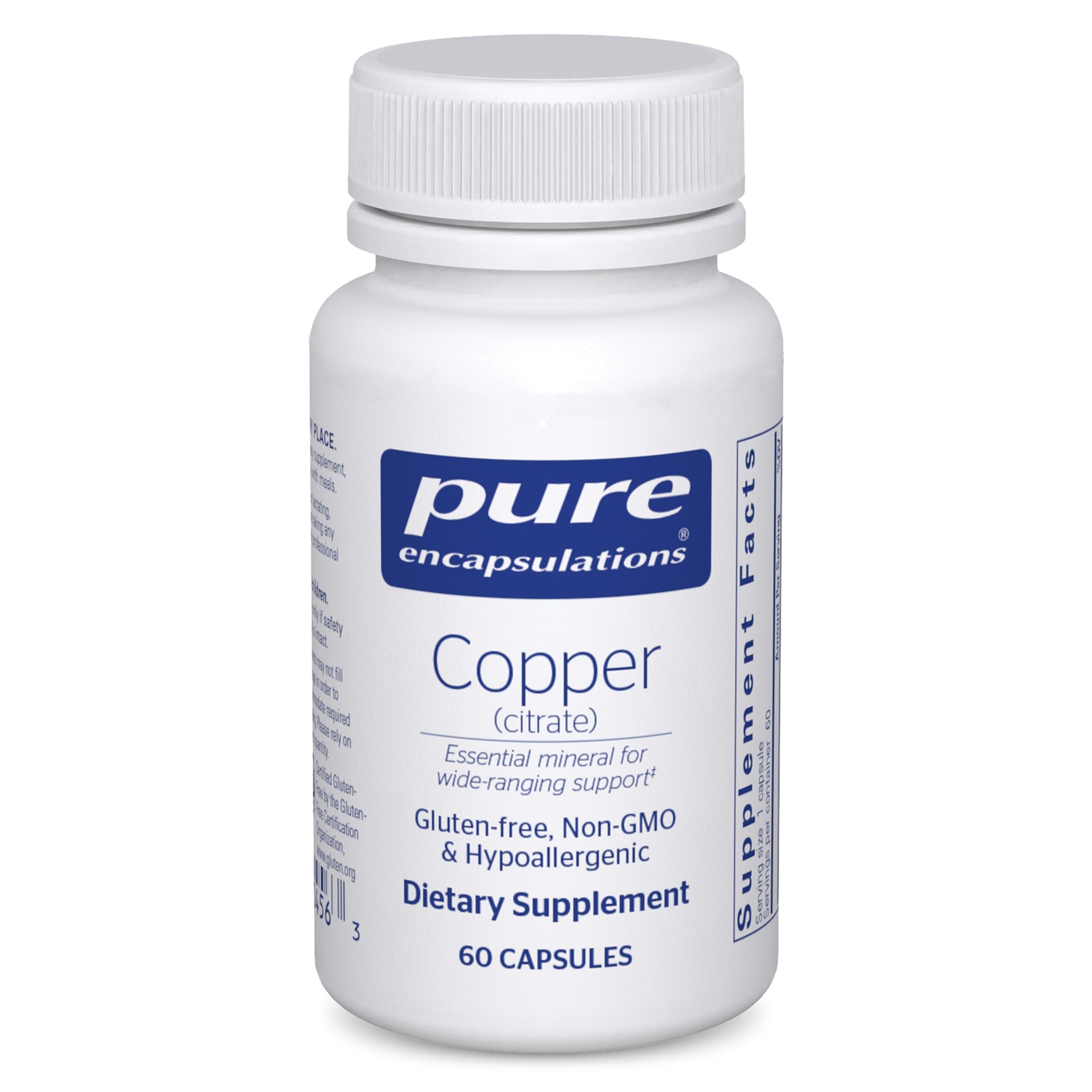
1. Pure Encapsulations Copper (Citrate), 60 Capsules
Our pick — 4.5+★ from 600+ verified ratings; the strongest balance of quality and price.
A clean-label copper capsule for anyone who reads the fine print first.
Pure Encapsulations built its reputation on what it leaves out. This capsule is free from common allergens, artificial ingredients, and GMOs — a real draw if you already parse labels on every supplement you own. The copper arrives as citrate, a form that dissolves readily in the stomach.
What wins people over is how noticeable the results can feel for a mineral this small. Buyers report that this citrate capsule corrected a copper deficiency and sharpened clear, linear thinking. That is the kind of specific, lived experience that explains why this bottle keeps getting reordered. It also comes in a compact size — 0.63 ounces versus the 2.56 ounces of the Carlson bottle — so it disappears easily into a travel kit.
The catch is the count. Sixty capsules means a two-month supply at one a day, and the bottle also earns mixed feedback on its copper quality, so expectations should stay realistic. The label does not print a per-unit milligram figure, so you will want to confirm the dose on the bottle itself before committing. This is still the strongest all-around pick here.
Where It Shines
- Citrate form that dissolves easily in the stomach
- Free from common allergens, artificial ingredients, and GMOs
- Compact 0.63-ounce bottle that packs into a travel bag
- Owners mention clearer thinking and steadier mood after a copper deficiency
What To Keep In Mind
- 60 capsules at once a day lasts only about two months
- Copper quality draws mixed feedback
- Per-capsule milligram dose is not printed on the listing
Go-to choice for: shoppers who want a clean capsule with no common allergens or artificial extras, and who value a compact bottle.
Think twice if: you want a fixed milligram dose stated up front or a bigger supply in one bottle.
2. Carlson Chelated Copper 250 Tablets
The heavy hitter of the group — a 5 mg chelated tablet with a year’s worth of doses.
Carlson’s tablet carries 5 mg of copper per serving, which makes it the strongest single dose on this list. Chelation here is the absorption play — the copper is bound to an amino acid so it is designed to pass through the gut more readily. The bottle holds 250 tablets, so a daily habit lasts the better part of a year. That heft shows up on the scale: 2.56 ounces versus 0.63 ounces for the Pure Encapsulations bottle.
Effectiveness is clearly the selling point, and absorption is the most-discussed theme among its buyers. Value for money gets real traction too — owners note that a bottle of this size stretches across months. One owner with a swayback condition described it as necessary for their routine. Circulation, nervous system, and immune system support are the manufacturer’s stated targets.
Nausea is the recurring caveat, and it tracks with the strong dose. At least one person reported a child throwing up after taking these, and another noted queasiness that forced a switch to a weekly schedule with food. If you know you react to high-dose minerals, a lower-strength tablet would suit you better. For everyone else, this is the value-per-dose workhorse.
The dose math: 5 mg per tablet is a serious single serving, so you can split it if your routine calls for a lower daily intake.
The supply win: 250 tablets is a long stretch of doses in one bottle, which is where the value story lives.
Best fit for: anyone who tolerates higher mineral doses and wants a bottle that lasts most of the year.
Turn back if: you have a sensitive stomach or prefer a gentle 2 mg daily tablet.
3. NutraBio Chelated Copper Bisglycinate 90 Capsules
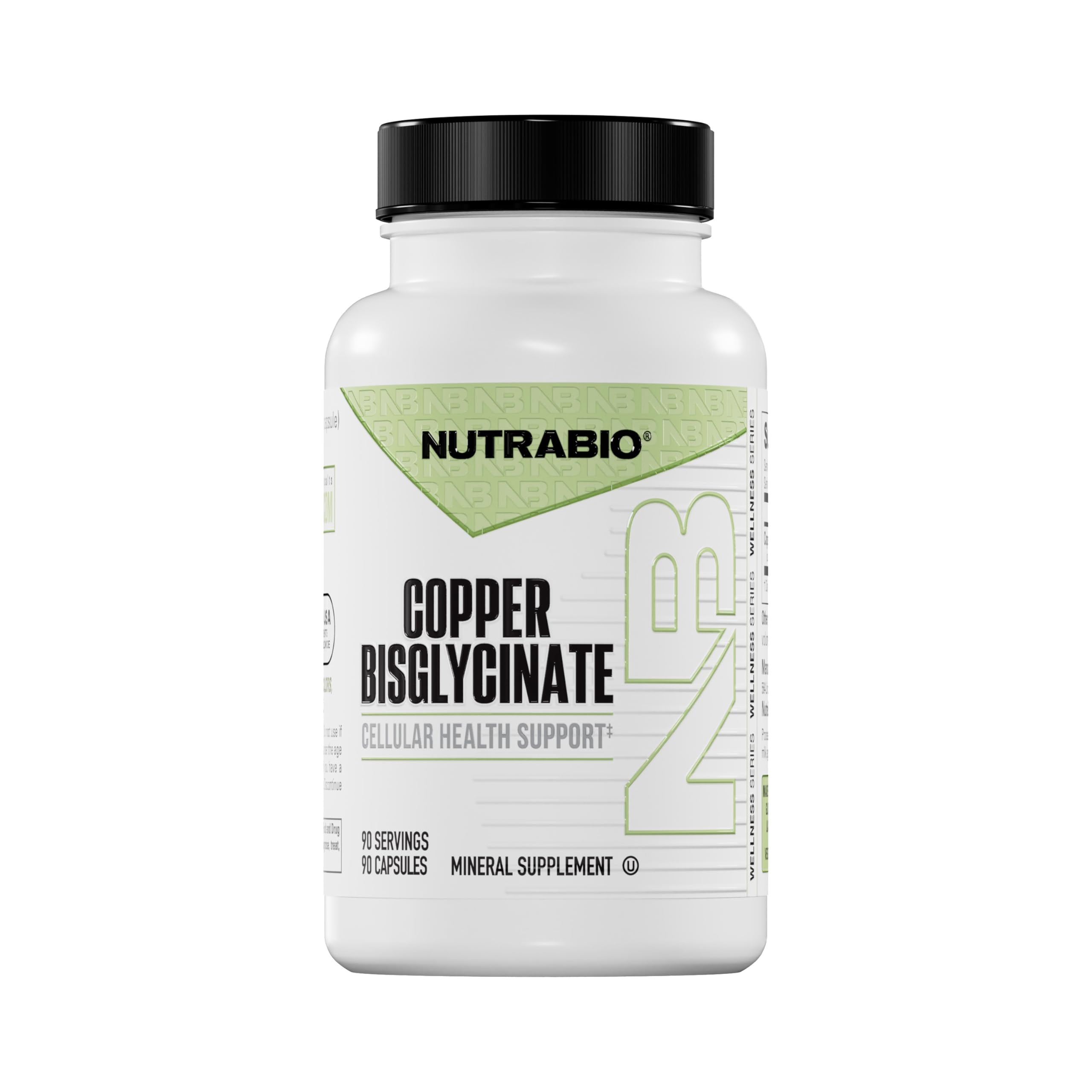
A middle-strength 3 mg chelate aimed at stomach-sensitive buyers.
NutraBio sits in the sensible middle: 3 mg of copper per capsule, chelated with glycine and sourced as Albion copper glycinate. Glycine is an amino acid, and bonding copper to it is the trick that makes the capsule gentler on the stomach than standard copper salts.
Effectiveness and value for money are the loudest notes in its favor. People describe clearer skin texture and more comfortable nerve function, and many reorder the bottle. The antioxidant support angle is built into the label too — copper is a cofactor for superoxide dismutase, an enzyme your body uses to handle oxidative stress. Collagen formation and hemoglobin synthesis round out the manufacturer’s claims.
There is one honest tension to flag. Some buyers argue that 3 mg daily runs higher than the 2 mg many sources cite as a maximum, and those people tend to take it every other day instead. That is a dose preference, not a defect — but if you are dose-cautious, factor it in. Otherwise this is a solid, stomach-friendly capsule.
Reasons It Earns A Spot
- Albion copper glycinate designed for easy absorption
- Glycine chelation makes it easier on the stomach
- 90 capsules outlast the 60-count bottles
- Buyers describe improvements in skin texture and nerve comfort
Before You Commit
- 3 mg daily is higher than the 2 mg some sources cite as a ceiling
- Capsule-only format means no splitting a dose
Pick this one for: a mid-range dose from a chelated form, if your gut has objected to harsher mineral pills.
Pass it by if: you want to stay strictly at or under 2 mg daily.
4. Santa Cruz Paleo Zinc & Copper 60 Capsules

Buy the balance in one capsule: 15 mg of zinc alongside 1 mg of copper.
Most copper on this list stands alone. Santa Cruz Paleo does it differently — each capsule pairs 1 mg of copper gluconate with 15 mg of zinc L-methionine, a form chosen for easy absorption and a gentler touch on the stomach. That fixed ratio is the point, since zinc and copper share an absorption pathway and often compete. If you already take zinc, this is the neat way to keep copper in the picture.
Quality is what people talk about most, and the clean label backs that up. There is no magnesium stearate, no silicon dioxide, no filler binders — just zinc L-methionine, copper gluconate, and a vegetable capsule. Buyers describe immune support and clearer skin. The formula is gluten free, keto, and paleo friendly, and one capsule a day gives a 60-day supply.
Side effects here are mixed rather than absent. Taking it on an empty stomach is the usual trigger for queasiness, and pairing it with food is the fix most people land on. If your goal is copper on its own at a higher dose, this formula is not the tool — the 1 mg copper serving is modest by design.
The ratio play: 15 mg zinc to 1 mg copper keeps the two minerals in one capsule so you never forget the balance.
Sizing note: the capsules are small and only one is needed daily, which makes the 60-day supply easy to keep up with.
Reach for this if: you already take zinc and want copper folded into the same routine without a separate bottle.
Look elsewhere if: you need a standalone copper dose above 1 mg.
5. Swanson Copper Tablets 300 Count
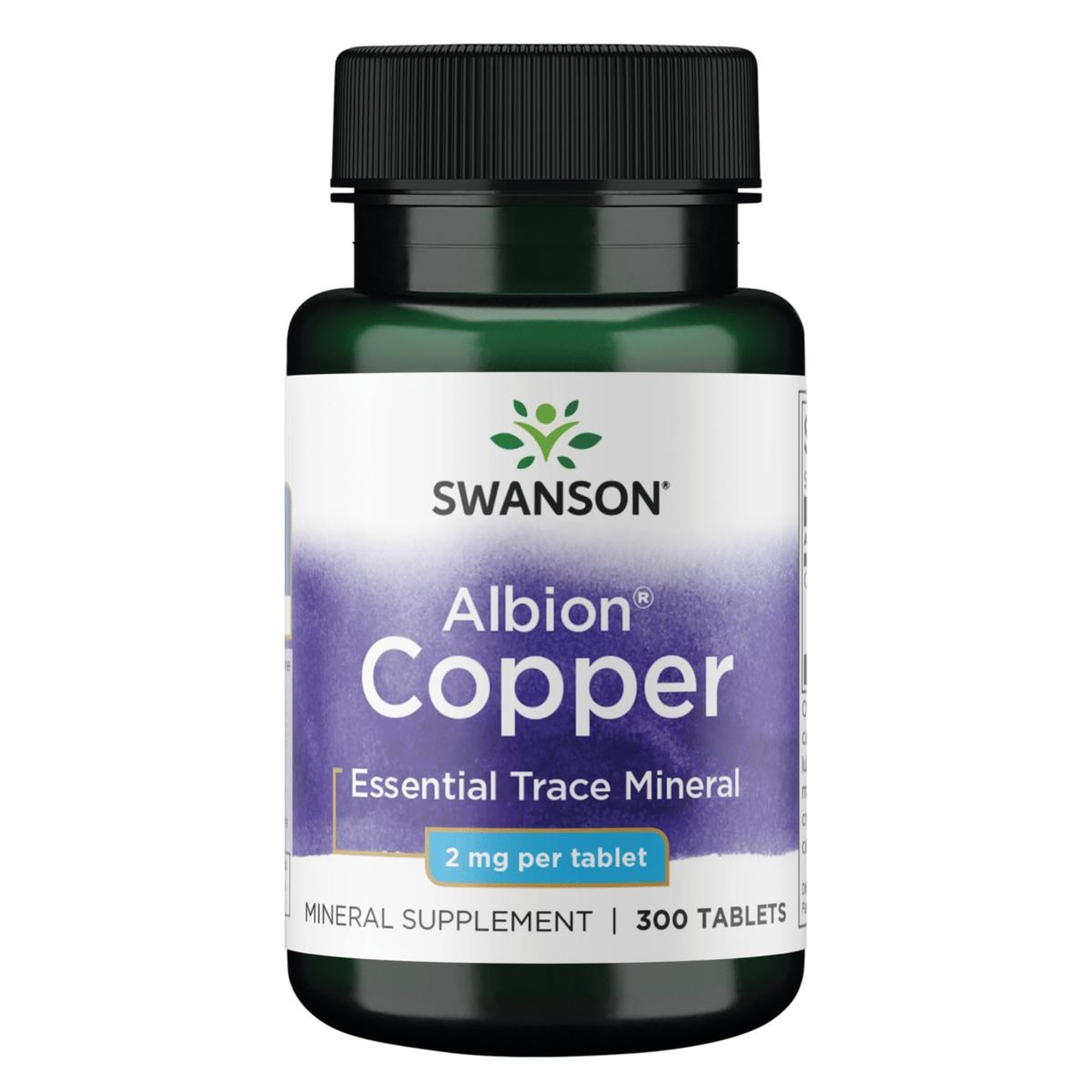
The long-haul bottle: 300 low-dose tablets for people who take copper gently and daily.
Swanson takes the opposite approach to the 5 mg high-dose pick. Each tablet carries 2 mg of copper as a chelated bisglycinate, the lower dose many people prefer for everyday use. The bottle holds 300 tablets, which makes it the longest supply in this comparison — a few hundred days at one a day. If you want to stock a cabinet and forget about reordering, this is built for that.
Effectiveness and value are what owners come back to again and again, and the pill size gets its own nod for being easy to swallow. Hair and skin changes come up often — people describe deeper hair color and more defined eyebrows. One buyer’s lab work showed copper levels returning to normal after starting these tablets. Chelation is the absorption story the label leans on.
The trade-off is the dose ceiling: 2 mg suits a maintenance routine, not a short-term correction of a deeper deficiency. Side effects are mixed here too, mostly the familiar queasiness if you skip a meal. That is an easy workaround, but it is worth knowing before you swallow your first tablet on an empty stomach.
What Keeps It On The List
- 300 tablets is the longest supply here
- Gentle 2 mg dose suited to everyday maintenance
- Chelated bisglycinate for better absorption
- Small tablets that go down without trouble
Where It Falls Short
- 2 mg per tablet may not cover a higher-dose routine
- Empty-stomach queasiness is a reported side effect
Made for: the daily-maintenance buyer who wants a gentle 2 mg dose and a bottle that lasts months.
Skip the bottle if: your goal is a short, higher-dose push rather than long-term upkeep.
Know the Specs
Dose Per Unit (mg)
The milligram figure on the label is the amount of elemental copper in one tablet or capsule. Lower numbers like 2 mg suit a steady daily habit, while higher numbers like 5 mg are often split or taken every other day. Always check your other supplements before stacking, since copper hides inside many multivitamins.
Form: Chelated vs Citrate
Chelated copper is bound to an amino acid such as glycine or l-methionine. That bond is designed to ease absorption and settle the stomach better than plain salts. Citrate is another common form that dissolves readily. If you have had queasiness from mineral pills, the chelated options here are the safer bet.
Zinc And Copper Competing
Zinc and copper travel the same absorption route, so a heavy zinc habit can crowd out copper. Some formulas, like the Santa Cruz Paleo capsule, put a fixed zinc-to-copper ratio in one pill to keep the pair balanced. Taking them together without spacing can blunt each one’s uptake.
Tablet Count And Supply
The count tells you how long the bottle lasts, not how strong it is. A 60-capsule bottle is about two months at one a day, while a 300-tablet bottle stretches across months of maintenance. Compare count to daily serving before assuming a bigger bottle is a better deal.
Common Questions
Is a 2 mg or 5 mg copper supplement better for daily use?
What does chelated copper mean in plain terms?
Can I take copper and zinc at the same time?
Why does copper make me nauseous?
How long does a bottle of copper supplements last?
Is copper citrate different from copper bisglycinate?
Should I take a copper supplement if I already take iron?
Do copper supplements interact with other minerals like magnesium?
Are copper supplements gluten free and safe for keto or paleo diets?
Can I open or crush a copper tablet to split the dose?
The Bottom Line
For most people, the copper supplements winner is the Pure Encapsulations Copper (Citrate) — a clean-label capsule with no common allergens that buyers credit with sharper thinking. If tolerance is your worry, the NutraBio Chelated Copper Bisglycinate at 3 mg is the gentler chelated pick. And for a gentle daily dose that lasts months, the Swanson Copper Tablets stretch across 300 tablets. Match the milligram dose to your goal and take it with food — that is the whole game.
How we choose
We do not accept paid placement. Every pick is matched to a real buyer and a real use-case; we do not hands-on test units.
Sources
Specifications: manufacturer listings and product documentation. Review insights: verified customer reviews, as of October 2026. Pricing: not shown on this page (it changes often); check the current price via the retailer link.
As an Amazon Associate, Aappliancez earns from qualifying purchases. This does not affect which products we feature.