Disclosure: Some links in this post are affiliate links. As an Amazon Associate I earn from qualifying purchases, at no extra cost to you. Learn more
Specs are compiled from manufacturer listings and verified buyer reviews and can change over time — please confirm the key details on the product page before buying.
What an oil can do is help you cook meals that keep you full and fit your calorie goals. The difference between a good pick and a bad one depends on its smoke point (the temperature where it starts burning and turning bitter) and the fat profile printed on the label. This guide matches each bottle to how you actually cook.
This guide is built by comparing the manufacturers’ published specifications and the patterns across verified customer reviews, so you get each pick’s real strengths and trade-offs instead of marketing spin.
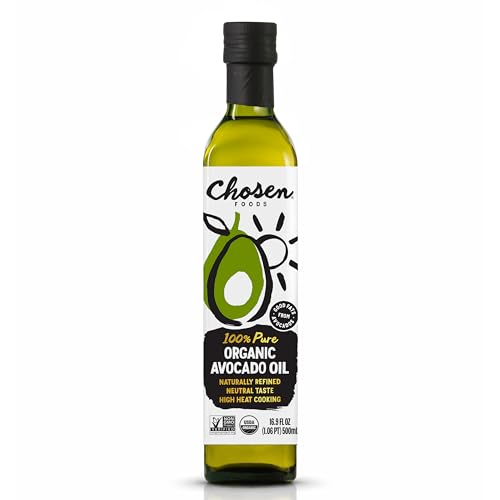
Below you’ll find five kitchen oils ranked by heat tolerance, fat makeup, and how they taste in everyday food. If you want one bottle that does most jobs well, the Chosen Foods Organic Avocado Oil is a sensible starting point for a practical cooking oil for weight loss.
Top Picks
How To Choose The Best Cooking Oil for Weight Loss
Start with how you cook, not with the label. An oil that smokes in your pan at medium heat is wasted money, and it leaves a burnt taste in the food you were trying to make healthier. The first thing to check is the smoke point in degrees Fahrenheit.
Read the smoke point before anything else
The smoke point is the temperature at which an oil starts to break down and give off a blue haze. Once that happens, the oil burns and turns bitter, and your food tastes scorched. A higher number gives you more room for searing, roasting, and deep frying. For raw dressings and low-heat sautéing, a lower number is perfectly fine.
Look at the fat breakdown, not the marketing words
Every oil is a mix of fats, and the percentage of monounsaturated fat (the kind found in avocados and olives) is the number worth checking. Oils rich in this and low in omega-6 seed fats tend to fit better into a cooking plan aimed at steady calories. Words like “pure” and “light” on the front of the bottle tell you very little on their own.
Match the oil to the job
A searing oil and a finishing oil are two different tools. You want at least one bottle that can take high heat without smoking, and you may want a flavorful one for salads and drizzling. Specialized products such as MCT oil belong in your coffee or shake, not in a hot pan.
Side-by-Side Comparison
| Model | Best For | Smoke Point | Bottle Size | Fat Highlight | Amazon |
|---|---|---|---|---|---|
| Chosen Foods Organic Avocado Oil★ Best Overall | Everyday all-round cooking | 500°F | 16.9 fl oz | 10 g monounsaturated fat per serving | Amazon |
| Terra Delyssa Organic Extra Virgin Olive OilBest for Flavor | Dressings and flavorful cooking | — | 25.5 fl oz | High in polyphenols and antioxidants | Amazon |
| Thrive Reserve Pure Algae Oil | Omega-9 focused cooking | 500°F | 16.9 fl oz | 90% Omega-9 monounsaturated fat | Amazon |
| Bertolli Cooking Olive Oil | Big-batch high-heat cooking | 392°F | 32 fl oz | Non-GMO certified olive oil | Amazon |
| Nature’s Way Organic MCT Oil | Coffee and smoothie add-in | — | 16 fl oz | Organic coconut C8 + C10 MCTs | Amazon |
Detailed Reviews
1. Chosen Foods Organic Avocado Oil for Cooking, 16.9 Fl Oz
Our pick — 4.5+★ from 750+ verified ratings; the strongest balance of quality and price.
One bottle that sears at 500°F and still lets your food taste like itself.
The defining number is the 500°F smoke point — the heat level where this oil starts to burn. Chosen Foods lists it against olive oil at around 375°F and coconut oil at around 350°F, which means you can sear steak, blacken fish, or stir-fry without the pan smoking out your kitchen. That single figure is why it takes the top spot on this list: you get one bottle that covers almost every method you cook with.
It is USDA Organic, Non-GMO Project Verified, and made from a single ingredient — pure organic avocado oil — with no canola, soybean, or sunflower blends. Each serving carries 10 grams of monounsaturated fat, the kind that comes from avocados. The taste is neutral, which buyers describe in plain terms: the review pages sum it up as having no avocado flavor at all, working well on a flat-top griddle and over high-heat meats. The thing buyers praise most is the quality of the oil itself, and you can taste why — it lets the food lead.
The catch is cost. Value is the one point where opinions split, and plenty of cooks call it pricey for the size. The bottle is also 16.9 fl oz, which is modest if you deep-fry often. Neither is a flaw in the oil; it is a question of if you want a smaller premium bottle or a bigger everyday one.
Where it earns its keep
- 500°F smoke point handles searing, frying, and roasting without smoking
- Single-ingredient USDA Organic avocado oil with no seed-oil blends
- Neutral taste that works in both savory and sweet recipes
- Dark glass bottle blocks UV light to keep the oil fresh
Worth knowing before you buy
- Reviews on value are mixed — a premium bottle for the size
- 16.9 fl oz goes quickly if you deep-fry in big batches
Reach for this one: home cooks who want a single bottle that can sear, roast, bake, and finish a salad.
Consider a bigger bottle instead: if you fry in large volumes weekly and want more oil per container.
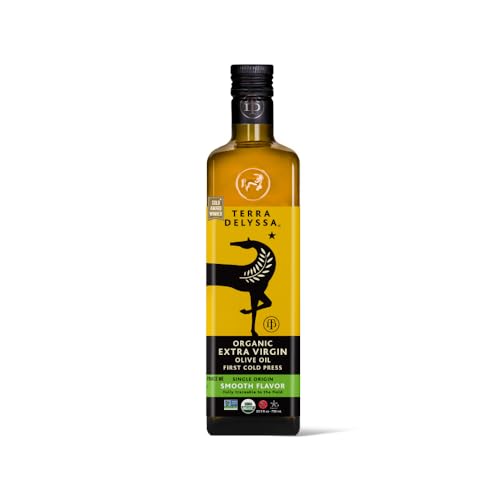
2. Terra Delyssa Organic Extra Virgin Olive Oil, 25.5 fl oz
The olive oil for people who actually taste their olive oil.
Terra Delyssa is grown in the brand’s own orchards in Tunisia and hand-harvested, then cold-pressed within hours. Every bottle carries full traceability, powered by IBM blockchain technology — a digital record that follows the oil from grove to bottle. It has won 34 awards in international olive oil competitions, including NYIOOC and Canada IOOC.
The flavor is the honest draw. Buyers describe it as earthy and fruity with a bold character, and the versatility earns just as much praise as the taste — it works in cooking, baking, and salads alike. A chef-trained friend recommended it through the grapevine, and buyers report it holds up: “A little thinner than the other brands I’ve used but no complaints on taste.” It is certified USDA Organic, Non-GMO Project Verified, kosher for Passover, and bottled in dark glass to protect freshness.
Here is the practical point for your kitchen: extra virgin olive oil is a finishing and medium-heat oil, not a searing oil. If you want one bottle for ripping-hot pan work, the Chosen Foods avocado oil above is the better tool. Terra Delyssa also has a bold flavor that will not suit every recipe — it wants to be tasted.
Why cooks keep it: bold, earthy flavor, single-source Tunisian traceability, and a 25.5 fl oz bottle that outlasts smaller premium options.
The honest limit: bold flavor means it can overpower delicate dishes, and it is not built for high-heat searing.
Made for you if: salads, drizzles, and medium-heat cooking are where most of your oil goes.
Pass it by if: you need one bottle to handle screaming-hot sears and deep frying.
3. Thrive Cooking Oil – Reserve Pure Algae Oil, 16.9 fl oz
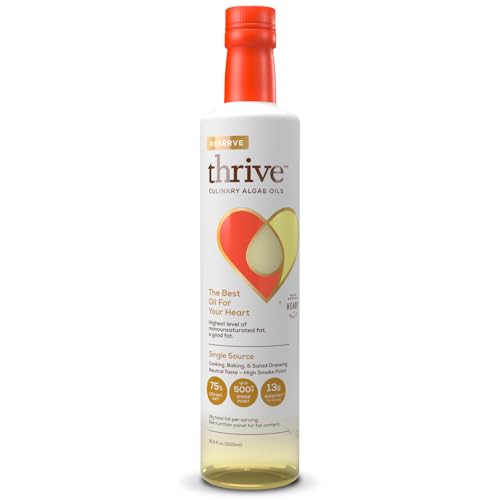
A fat profile built around 90% Omega-9, with the heat tolerance to match.
If the label numbers are what you shop by, this is the bottle to study. Thrive Reserve is pure single-sourced algae oil with 90% Omega-9 monounsaturated fat and very low Omega-6 — the brand says at least 85% less omega-6 than regular cooking oils. It also carries a 500°F smoke point, which puts it in the same high-heat class as the Chosen Foods avocado oil above. One bottle holds the same amount of monounsaturated fat as 34 avocados, according to the maker.
The taste side is where this oil quietly wins people over. It is light and neutral, so it does not fight the food — owners mention it lets the natural flavors shine through and reaches for it over grapeseed or coconut oil. Reviewers discuss its light, neutral flavor more than anything else, with oil quality a close second. Reviewers put it to work in the air fryer, on vegetables and fish, and for searing steak and lamb, and it holds up across all of them.
The one thing worth understanding is its origin. Despite the name, the oil is sourced from the sap of the German chestnut tree rather than from marine algae, which the brand states plainly. At 2.2 pounds the bottle is noticeably heavier than the 1.52-pound Terra Delyssa olive oil, and its 12.8 x 3.2 x 3.2 inch shape is tall and slim, so check your pantry shelf height before it arrives.
The number that sells it: 90% Omega-9 monounsaturated fat with very low Omega-6 — a fat ratio you rarely see on a cooking oil label.
Trade-off to weigh: the premium fat profile comes at a price some buyers question, and the tall bottle needs vertical shelf space.
Best for: cooks who read fat labels closely and want high heat without a strong flavor.
Look elsewhere if: you want a small, easy-to-store bottle or you prefer a bold-tasting oil.
4. Bertolli Cooking Olive Oil, High Smoke Point, 32 fl oz

The 32 fl oz workhorse for anyone who cooks big batches every week.
Most of the appeal here depends on volume. Bertolli packs 32 fl oz into one bottle, and that size is a real convenience if you roast sheet pans of vegetables or fry for a family on the regular — you are not running to the pantry every other meal. The 392°F smoke point is designed for high-temperature cooking, so deep frying, roasting, grilling, and baking are all within range.
Quality and versatility are what buyers talk about most, and the mild flavor is the reason it slots into so many dishes — it respects the flavor of whatever you are cooking rather than covering it up. The oil is Non-GMO certified and Bertolli carries a long history in olive oil, spanning over 160 years. It doesn’t have the flavor punch of the Terra Delyssa above, but that is the point: it is the neutral everyday olive oil most kitchens keep on hand.
Two honest notes. The 392°F smoke point sits below the 500°F you get from the Chosen Foods avocado oil and the Thrive algae oil, so it is not the hottest tool in this lineup. A few buyers also wish for a pour-friendly spout, since the wide mouth makes it easy to over-pour into a pan.
What shoppers keep coming back for
- 32 fl oz bottle cuts down on pantry trips for big-batch cooks
- 392°F smoke point covers frying, roasting, grilling, and baking
- Mild flavor works in almost any recipe without overpowering
- Non-GMO certified with a name that has stayed in olive oil for over 160 years
Small things to know
- 392°F is lower than the 500°F searing oils in this guide
- The wide mouth can lead to over-pouring without a spout
Go with this: if you want one big, neutral olive oil for everyday frying and roasting.
Choose a hotter oil instead: if searing at the limits of high heat is your main cooking method.
5. Nature’s Way Organic MCT Oil, Brain and Body Fuel, 16 Fl Oz
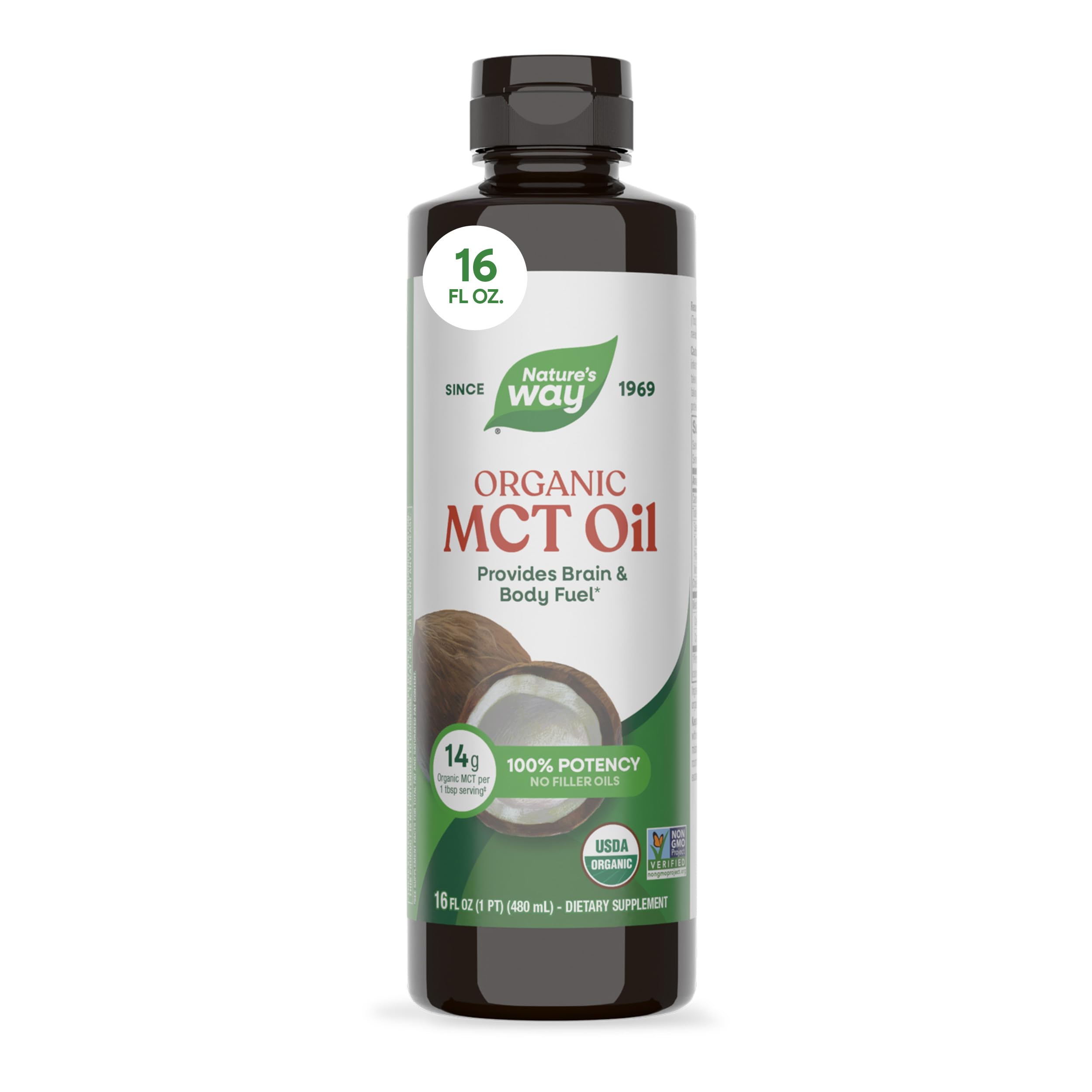
Not a pan oil — a flavorless spoonful for your coffee, shake, or smoothie.
This is the label that most clearly belongs to the weight-loss conversation, and it works differently from the four bottles above. Nature’s Way Organic MCT Oil is a dietary supplement, not a frying oil. You mix it into smoothies, shakes, coffee, and other beverages, or take it by the tablespoon, and it is Paleo, Keto, and vegan-certified. It is made from premium coconuts with no palm or filler oils and is hexane-free.
What people love about it is how easily it hides. It has no flavor and no odor, so it disappears into coffee and blends smoothly into a morning shake. Reviewers praise its neutral taste most, with value for money a close second, and customers note steady energy and longer fullness during fasting and keto routines. As the review pages put it, it is “more bland than coconut,” which is exactly the point for a product you are adding to a drink.
Be honest with yourself about two things. Effectiveness is the split point on this bottle — some reviewers credit it with steady energy, while others notice no change — and a chunk of drinkers deal with stomach cramping or heartburn when they take too much at once. The cap is also fiddly: it takes a firm squeeze and gives little flow control, so expect a stray drip or two. Start with a small spoonful and work up.
Right choice when: you want a flavorless fat for coffee or smoothies during a keto or fasting routine.
Wrong tool when: you are looking for something to fry in — it is a supplement, and it should be measured by the spoon.
Know the Specs
Smoke Point
The temperature at which an oil begins to break down and smoke. Cook past it and the oil turns bitter and burnt-tasting. A 500°F oil gives you room for searing and deep frying; a 392°F or 375°F oil is better suited to roasting, sautéing, and everyday pan work.
Monounsaturated Fat and Omega Ratios
Monounsaturated fat is the kind naturally found in avocados and olives. The percentage of Omega-9 versus Omega-6 on a label tells you how an oil is built, and a high Omega-9, low Omega-6 profile is what health-conscious cooks tend to look for. Every judgment here comes straight from the labels.
Common Questions
Can cooking oil actually help you lose weight?
Which oil here handles the highest heat?
Is avocado oil better than olive oil for weight loss cooking?
Should I cook with MCT oil?
How much MCT oil should a beginner start with?
Does the Chosen Foods avocado oil taste like avocado?
Why is Terra Delyssa olive oil considered premium?
How should I store these oils?
What is the difference between algae oil and avocado oil?
The Bottom Line
For most kitchens, the cooking oil for weight loss pick that covers the most ground is the Chosen Foods Organic Avocado Oil, because its 500°F smoke point and single-ingredient USDA Organic label let you sear, roast, and bake without a scorched-pan mistake. If fat ratios are the number you shop by, the Thrive Reserve Algae Oil leads on 90% Omega-9 with a matching 500°F smoke point. For bold flavor in dressings and medium-heat cooking, the Terra Delyssa Organic Extra Virgin Olive Oil is the one to reach for. And if a flavorless add-in for coffee or shakes is what you are after, the Nature’s Way Organic MCT Oil has the review depth to back that role — the crowd favorite of the group, with 52,000+ ratings behind it.
How we choose
We do not accept paid placement. Every pick is matched to a real buyer and a real use-case; we do not hands-on test units.
Sources
Specifications: manufacturer listings and product documentation. Review insights: verified customer reviews, as of October 2026. Pricing: not shown on this page (it changes often); check the current price via the retailer link.
As an Amazon Associate, Aappliancez earns from qualifying purchases. This does not affect which products we feature.