Disclosure: Some links in this post are affiliate links. As an Amazon Associate I earn from qualifying purchases, at no extra cost to you. Learn more
Specs are compiled from manufacturer listings and verified buyer reviews and can change over time — please confirm the key details on the product page before buying.
Concrete is the hardest surface most adhesives ever meet: it is porous, dusty, often damp, and it moves with the weather. The short answer is that you match the adhesive to the job — a liquid bonding admix mixed into cement for repairs, a fast-grab cartridge for vertical stone and trim, and a clear formula when the joint has to disappear. Get that match wrong and no amount of extra glue saves the bond.
This guide is built by comparing the manufacturers’ published specifications and the patterns across verified customer reviews, so you get each pick’s real strengths and trade-offs instead of marketing spin.
Below you will find five concrete-capable adhesives sorted by what they actually do well, from a mix-in fortifier to a clear grab cartridge. Each entry names the real spec that decides the job, so you can pick the right tube or pail before you open it and find the best construction adhesive for concrete for your own repair.
Top Picks

How To Choose The Best Construction Adhesive for Concrete
The first decision is not brand, it is form. A liquid admix gets poured into your cement or mortar mix and changes the chemistry of the whole patch. A cartridge adhesive sits between two already-cured surfaces and holds them together. Buying the wrong one is the most common mistake on concrete jobs.
Admix versus cartridge: two different jobs
Reach for an admix when you are pouring or patching concrete and want the new material to grip the old. SikaLatex R is that type — you add it as a bonding grout or admixture to cement, concrete, or mortar, and the maker lists a 500 psi bond strength (a measure of how hard the cured material pulls apart before failing).
Reach for a cartridge when both surfaces already exist — a stone facing on a slab, a tile on a wall, a stair riser on old concrete. Here the number that matters is grab time: how long the adhesive holds a piece before you let go. Gorilla’s formula grabs in 30 seconds with a 10 minute working time for adjustment.
Check the cure clock before you plan the day
Grab time is not cure time. A tube can hold a stone in half a minute and still need a full day before it reaches final strength — Gorilla lists a 24 hour full cure, and Titebond TiteGrab Plus lists the same. Plan your project so nothing gets bumped during that window.
Temperature changes the clock in both directions. Loctite’s clear formula is rated from 0°F to 140°F, and Bostik’s hybrid polymer can be applied from 0°F to 105°F even on damp or wet surfaces. Cold slows curing, so a chilly slab will take longer than a warm one.
Match the adhesive to the surface texture
Smooth, non-porous surfaces are where adhesives most often let go. Titebond’s own notes say it does not like smooth surfaces. Rough or dusty concrete needs cleaning first, because a layer of dust sits between the glue and the slab and the bond fails at that dust line, not at the adhesive.
If the joint has to stay invisible — glass, clear tile, finished wood — a crisp formula keeps the repair from showing. Loctite’s version stays clear during application and after cure, which is why it turns up on backsplashes and decorative panels.
Side-by-Side Comparison
| Model | Best For | Type | Full Cure Time | Container | Amazon |
|---|---|---|---|---|---|
| SIKA SikaLatex R Acrylic Concrete Bonding Admix★ Best Overall | Mixing into cement and mortar patches | Liquid admix | 30 days | 1 gal bottle | Amazon |
| Titebond TiteGrab Plus Construction Adhesive 9 Oz. – 6701Vertical Grab Pick | Vertical stone, tile and risers | Cartridge adhesive | 24 hours | 9 oz cartridge | Amazon |
| Loctite Power Grab Ultimate crisp | Invisible joints and wet surfaces | Clear cartridge adhesive | 24 hours | 1 pack cartridge | Amazon |
| BOSTIK Grip n Grab Instant Grab | Heavy vertical pieces, damp concrete | Hybrid polymer adhesive | — | 9.5 oz cartridge | Amazon |
| Gorilla Heavy Duty Construction Adhesive, 2-Pack | Fast grab on uneven concrete | Gap-filling tube adhesive | 24 hours | Two 7 oz tubes | Amazon |
Detailed Reviews
1. SikaLatex R Acrylic Concrete Bonding Admix 1 gal
Our pick — 4.5+★ from 850+ verified ratings; the strongest balance of quality and price.
The white liquid you stir into cement so your patch grabs the old slab for good.
This is a different animal from every cartridge on this list. You pour it into cement, concrete, or mortar as a bonding grout or admixture, and the acrylic-polymer latex cures into hardened concrete rated at 500 psi bond strength — meaning the patch fights much harder before it separates from the surface underneath. It arrives as a 1 gallon bottle weighing 8.5 pounds, and it needs no dilution, so prep is a pour and stir rather than a measuring job.
What wins people over is the grip it puts on old concrete. Buyers report patched scratch coats and stonework holding through a full season outdoors and repeated freeze-thaw cycles without cracking apart. That is the whole point of the acrylic fortifier in the formula: repeated freezing and thawing is what normally breaks a patch, and this is built to resist it.
Set your calendar accordingly. Full cure is listed at 30 days, which is far longer than the cartridge adhesives here, and cold weather stretches it further — the review pages sum it up: “Works as claimed; cold temperatures extended full drying to three days.” Keep traffic and water off the repair while it sets, and do not fuss with it mid-cure. A quick head-to-head: Bostik’s cartridge lives in a 9.5 oz tube, while this is a full 1 gallon of admix, so one bottle covers a patch far bigger than a single tube ever could.
Where the value lands: One bottle handles a whole repair job as a mix-in, and the no-dilution formula means you are not buying a separate primer and a separate fortifier.
The honest catch: It is not a glue for two finished surfaces — if you are sticking a stone onto an existing slab, you want a cartridge instead. It also has a shelf life worth checking on arrival.
Made for patching: Pour-and-mix concrete repairs, scratch coats, and any job where new cement has to bond to old concrete.
Wrong tool: Two cured surfaces that need to be stuck together right now — this one needs its full cure window.
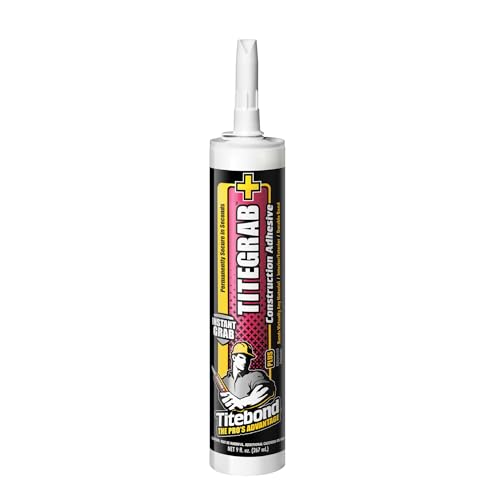
2. Titebond TiteGrab Plus Construction Adhesive 9 Oz. – 6701
A 9 oz cartridge that grabs the piece immediately so you can stop bracing and nailing.
The headline here is the advanced polymer formula, which grips materials right away and cuts the need for clamps or fasteners on vertical and awkward spots. It is a 9 oz cartridge — lighter than Bostik’s 9.5 oz tube — and it bonds a long list of surfaces, wood, concrete, metal, marble, foam board, OSB, ceramic tile, cement board, brick, stone, and painted surfaces included. The maker also calls it waterproof and all-weather, so it will not shrink or go brittle over time on an outdoor slab.
Concrete risers and stone facing are where this shows up. Owners mention gluing plastic riser rings onto a cement septic tank riser, curing a day, then hitting the assembly with a hammer and finding it solid. As customers note: “I let it cure for a day, and the new risers are where they’ll be permanently.” Owners also report veneer stone that stayed put after an earlier adhesive failed, and kitchen backsplash tile is a common job.
The catch is surface texture. This does not like smooth, non-porous surfaces, and smooth glass or polished metal will let you down. Rough or dusty concrete needs a clean first so the polymer gets something to bite. Full cure is listed at 24 hours, and the creamy high-solids formula extrudes smoothly for moldings, flooring, mirrors, and tub surrounds, so you get control at the bead rather than a runny mess.
What it does best
- Grabs immediately, so vertical stone and risers stay put without clamps holding them all day.
- Bonds a wide material list, from concrete and brick to ceramic tile and painted surfaces.
- Waterproof formula that will not shrink or grow brittle outdoors.
Where it stumbles
- Smooth, non-porous surfaces fight it — rough or dusty concrete needs cleaning first.
- 9 oz goes quickly on bigger stone jobs, so plan for more than one cartridge.
Grab it for: Upright work on concrete — risers, stone facing, tile — where waiting for a clamp is not an option.
Pass if: You are bonding two glassy, non-porous pieces with no texture to hold the bead.
3. Loctite Power Grab Ultimate Construction Adhesive 1 Pack
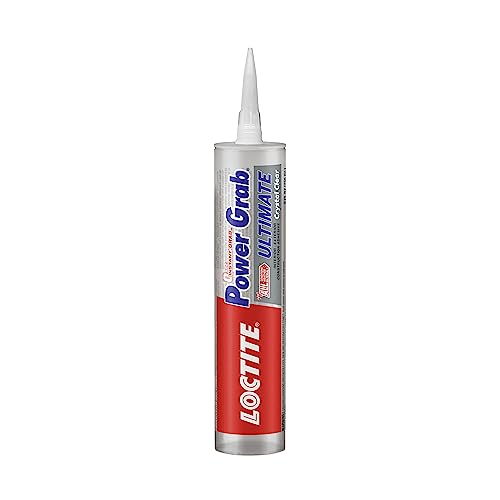
Stays invisible during the job and after it, even when the surface underneath is wet.
Clear is the entire point. The formula reads transparent while you apply it and dries clear, so a repair on glass, tile, or a finished wall does not leave a milky line behind. It also handles conditions that stop ordinary adhesives — it works on most materials including wet surfaces, and can bond two non-porous faces, a job many grab adhesives simply refuse. The weatherproof rating spans 0°F to 140°F, so it is meant for exterior concrete work in real seasons.
Pavers on concrete steps are the classic use. As the review pages put it, one owner reports: “It’s been a year of weather and still holding well.” Owners also report setting decorative ceiling tiles, bonding a stainless steel backsplash, and a steel bracket glued to plywood that held a 5 lb weight after a 24 hour cure. Initial tack is quick, which is what keeps a paver from sliding while it sets. Unlike the Sika admix, this is a cartridge for two already-cured surfaces — you are not mixing it into anything.
Cold is the weak spot. In freezing conditions, cure drags out and a joint can fail without clamps holding it. Cap the nozzle carefully — an uncapped tip hardens, and silicone-like residue cleans up with mineral spirits while it is fresh. Full cure is listed at 24 hours. The 1 Pack cartridge is the format, and it is best used in a caulking gun rather than squeezed by hand.
What buyers actually get: A see-through bond that disappears on exterior concrete, backed by a 0°F to 140°F working range.
The trade-off: Freezing weather slows it and it can fail without clamps — warm, clamped conditions are where it shines.
Choose it when: The repair has to be invisible and the surface may already be damp.
Think twice when: You are working below freezing with nothing to clamp the piece down while it sets.
4. BOSTIK Grip n Grab 9.5oz Adhesive Glue
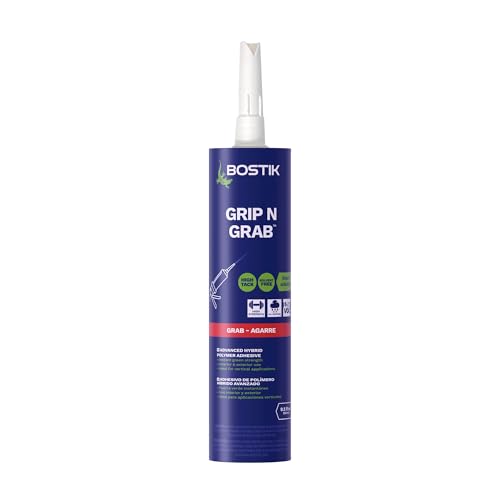
Built to grab heavy pieces on damp, cold concrete without a clamp in sight.
A hybrid polymer adhesive with a 10 minute repositioning window — meaning you can slide a heavy stone or shelf into line before the grab locks. It is a 9.5 oz cartridge, slightly more than Titebond’s 9 oz, and it is 100% waterproof and moisture resistant. The application range is 0°F to 105°F, even on damp or wet surfaces, and the cured bond is rated from -40°F to 200°F. Low odor and low VOC content under 15 g/L makes it comfortable for indoor work.
Hanging heavy material on vertical concrete is the whole reason it exists. Driveway and exterior curtain work, thin brick, mirrors, and stone are in its intended job list. Reviewers point out hanging outdoor curtains without holding them overhead the whole time, curing two days before weight went on. Owners also report re-bonding a granite table top that has stayed put since. One practical note from the same pages: the tube is genuinely hard to squeeze, so budget for strong hands or a gun.
Why contractors keep it loaded
- Grabs heavy material fast with a 10 minute window to reposition it.
- Goes on damp or wet concrete in a 0°F to 105°F range, which is rare for a grab adhesive.
- Low odor, low VOC under 15 g/L, so indoor work stays tolerable.
What to plan around
- The cartridge is stiff and takes real hand strength to squeeze.
- Cure before loading — owners waited two days before hanging weight.
Load it when: The concrete is damp, cold, or the piece is too heavy to hold while a slow adhesive sets.
Look elsewhere when: You need to fill a large void rather than bond two faces together.
5. Gorilla Heavy Duty Construction Adhesive 7 oz 2-Pack
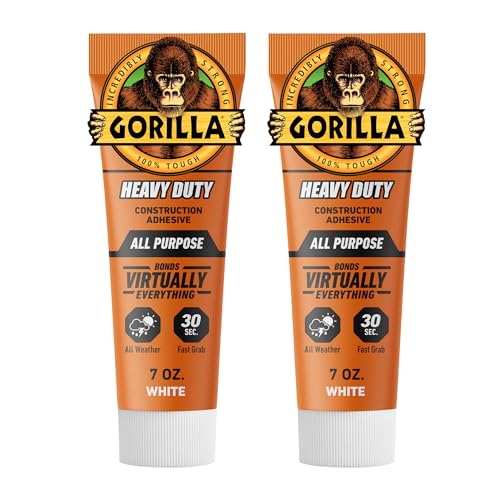
A 30-second grab and two squeeze tubes in one pack for flat concrete and uneven gaps.
You get two 7 oz squeeze tubes in the pack, and the formula is 100% adhesive rather than a filler, so it will not shrink or crack over time. The fast grab sets in 30 seconds with a 10 minute working time, and it is a gap-filling formula — which matters on concrete, where the surface is rarely flat. It sands and paints, paintable as soon as 30 minutes after application and best within 2 days. The tube format skips the caulking gun entirely.
The gap-filling side is what earns its place on concrete. Owners praise the flat stone pool tile work: adhesion in under 5 minutes and a full cure under 24 hours. Reattaching 1 to 2 lb falling stone facade pieces is a common recovery job — a thin ribbon grabs in about 30 seconds and the bond strengthens after 24 hours. Unlike Bostik’s lower-VOC cartridge, this one carries a strong smell, so ventilate the room.
Two things to know before you start. It is thick and tacky, which takes strong squeezing and makes cleanup harder, and it suits flat surfaces rather than deep voids. Rough or dusty concrete needs cleaning first so the adhesive meets the slab, not the dust. Coverage is modest — a little does not set many tiles, so buy the 2-pack for anything bigger than a small repair.
The strength: A 30-second grab plus sandable, paintable gap filling in two 7 oz tubes, so you can cover uneven concrete and touch up the finish.
The honest limit: Thick formula, low coverage, and a strong smell — outdoor or ventilated work suits it best.
Best fit: Quick concrete repairs on flat or slightly uneven surfaces where you want to paint over the joint.
Not the one for: Deep void filling or a big tile run, where thickness and coverage work against you.
Know the Specs
Bond Strength in psi
Psi stands for pounds per square inch — how much pull the cured material resists before it fails. SikaLatex R lists 500 psi bond strength, which tells you it is meant to grip hard in a mix-in repair. Higher psi means the patch fights back instead of crumbling away from the old surface.
Full Cure Time
Cure time is how long the adhesive takes to reach final strength, not how long it takes to grab. Cartridges here list 24 hours, while the Sika admix lists 30 days. Loading a joint before the cure clock runs out is the most common cause of a repair that lets go.
Temperature Range
The application range is the temperature window where the adhesive still works. Loctite’s clear formula is rated from 0°F to 140°F, and Bostik’s hybrid polymer goes on from 0°F to 105°F even on damp surfaces. Cold slows the cure, so a chilly slab needs more time than a warm one.
Grab Versus Working Time
Grab time is how fast the adhesive holds without clamps, and working time is how long you can still adjust the piece. Gorilla grabs in 30 seconds with a 10 minute working time; Bostik gives 10 minutes of repositioning. More working time means a heavier, awkward piece is easier to line up before it locks.
Common Questions
Can construction adhesive bond directly to cured concrete?
What is the difference between a bonding admix and a construction adhesive cartridge?
How long before I can put weight on a concrete adhesive joint?
Will these adhesives work on wet or damp concrete?
Can construction adhesive hold outdoors through freezing winters?
Does construction adhesive hold on smooth or non-porous surfaces?
How much adhesive do I need for a stone or tile job on concrete?
Can I paint over construction adhesive once it is on concrete?
How should I store an unused cartridge of concrete adhesive?
Is a fast-grab adhesive as strong as a slow-curing bond in the end?
The Bottom Line
For most concrete repairs, the construction adhesive for concrete that earns the top spot is the SIKA SikaLatex R because it changes the chemistry of the patch itself — a mix-in admix rated at 500 psi bond strength with freeze-thaw resistance, and the crowd favorite at 4.5+ stars from 800+ ratings. If you are sticking a riser or stone onto an upright slab, grab the Titebond TiteGrab Plus for the immediate grab. And for a repair that has to stay invisible on a possibly wet surface, the Loctite Power Grab Ultimate crisp is the one to reach for. Buy the admix once and you handle the whole patch instead of feeding it a tube at a time.
How we choose
We do not accept paid placement. Every pick is matched to a real buyer and a real use-case; we do not hands-on test units.
Sources
Specifications: manufacturer listings and product documentation. Review insights: verified customer reviews, as of October 2026. Pricing: not shown on this page (it changes often); check the current price via the retailer link.
As an Amazon Associate, Aappliancez earns from qualifying purchases. This does not affect which products we feature.