Disclosure: Some links in this post are affiliate links. As an Amazon Associate I earn from qualifying purchases, at no extra cost to you. Learn more
Specs are compiled from manufacturer listings and verified buyer reviews and can change over time — please confirm the key details on the product page before buying.
If your ankles look like two soft pillows by the end of the day, the fix is not a thicker sock — it is the right amount of squeeze, held in the right place. Most pairs sold as compression are a gentle 8-15 mmHg squeeze, which is closer to a snug normal sock than real graduated support. The picks below cover the whole useful range, from a mild all-day hug up to a 20-30 mmHg sock that stays put through a 14-hour shift.
This guide is built by comparing the manufacturers’ published specifications and the patterns across verified customer reviews, so you get each pick’s real strengths and trade-offs instead of marketing spin.
You will see why fiber blend, mmHg level, and calf width matter more than pattern, and how each pair holds up after washing. Every pick here is a real option for a real leg shape, so your job is matching the squeeze to your day. This list of the best compression socks for women was put together by matching each pair’s millimeter-of-mercury squeeze to how you actually wear them.
Top Picks

How To Choose The Best Compression Socks for Women
The whole purchase turns on one number and one measurement. The number is the compression level in mmHg (millimeters of mercury, the unit that tells you how hard the sock squeezes). The measurement is your calf circumference at its widest point. Get those two right and almost everything else — color, toe style, price tier — becomes preference.
Match the mmHg to your day, not to the label
For travel, desk days, and standing around, a 15-20 mmHg sock (mmHg is the pressure unit used to rate compression) is the everyday balance. Need a firmer squeeze for long shifts, running recovery, or a doctor’s instruction? That is a 20-30 mmHg sock. Many “compression” packs on the shelf sit at 8-15 mmHg, which is closer to a snug fashion sock — fine for a mild hug, not enough if you need real support.
Measure your calf before you pick a size
Wrap a soft tape around the widest part of your calf and note it in inches. Then compare it to the maker’s chart. Most sizing failures — a sock that bunches under the knee or cuts into the ankle — happen because the buyer picked by shoe size alone. If you are between sizes or new to compression, size up for the first pair.
Look at the fiber blend
Merino wool and bamboo blends handle temperature and odour, which matters if you wear one pair through a flight and into a hotel room. Nylon and spandex supply the stretch that holds the squeeze. A sock that is all soft fiber with little stretch will not hold graduated pressure. A sock that is almost all synthetic can feel clammy in heat.
Decide on closed toe or open toe
A closed toe is the standard for running and daily wear. An open toe lets your toes breathe and makes the sock easier to pull on, and it helps if your feet run warm or you want to check toe color. Neither is better — they solve different problems.
Side-by-Side Comparison
| Model | Best For | Compression Level | Fiber Blend | Style | Amazon |
|---|---|---|---|---|---|
| Sockwell Women’s Micro Grade★ Best Overall | Travel, standing, recovery | Graduated, four zones | 32% Merino Wool / 31% Bamboo / 32% Nylon / 5% Spandex | Knee high, closed toe | Amazon |
| Physix Gear 20-30 mmHgTop Performer | Long shifts, shin splints | 20-30 mmHg | Not stated | Knee high, closed toe | Amazon |
| Merino Wool 15-20 mmHgCoziest Pick | Cold weather, all-day wear | 15-20 mmHg | Merino / Lycra / bamboo blend | Over the knee | Amazon |
| 6 Pack Copper Compression | Multi-pack value | Graduated | Copper-infused blend | Knee high | Amazon |
| CHARMKING 8 Pairs | Color variety, daily wear | 15-20 mmHg | Not stated | Knee high | Amazon |
| +MD Open Toe 20-30 mmHg | Toe freedom, swelling | 20-30 mmHg | Not stated | Knee high, open toe | Amazon |
| Shellwei 3 Pairs | Nude tones, flights | 20-30 mmHg | Not stated | Knee high | Amazon |
| Wellow Knee High 18-25 mmHg | Soft feel, workouts | 18-25 mmHg | Not stated | Knee high | Amazon |
| Dr. Motion 4 Pairs | Light all-day support | 8-15 mmHg | Not stated | Knee high | Amazon |
| Comrad Knee High | Sensitive skin, shifts | Graduated | Cotton blend | Knee high | Amazon |
| Zensah Tech+ | Running, sports | Graduated | 82% Polyamide / 18% Elastane | Knee high, anatomical fit | Amazon |
Detailed Reviews
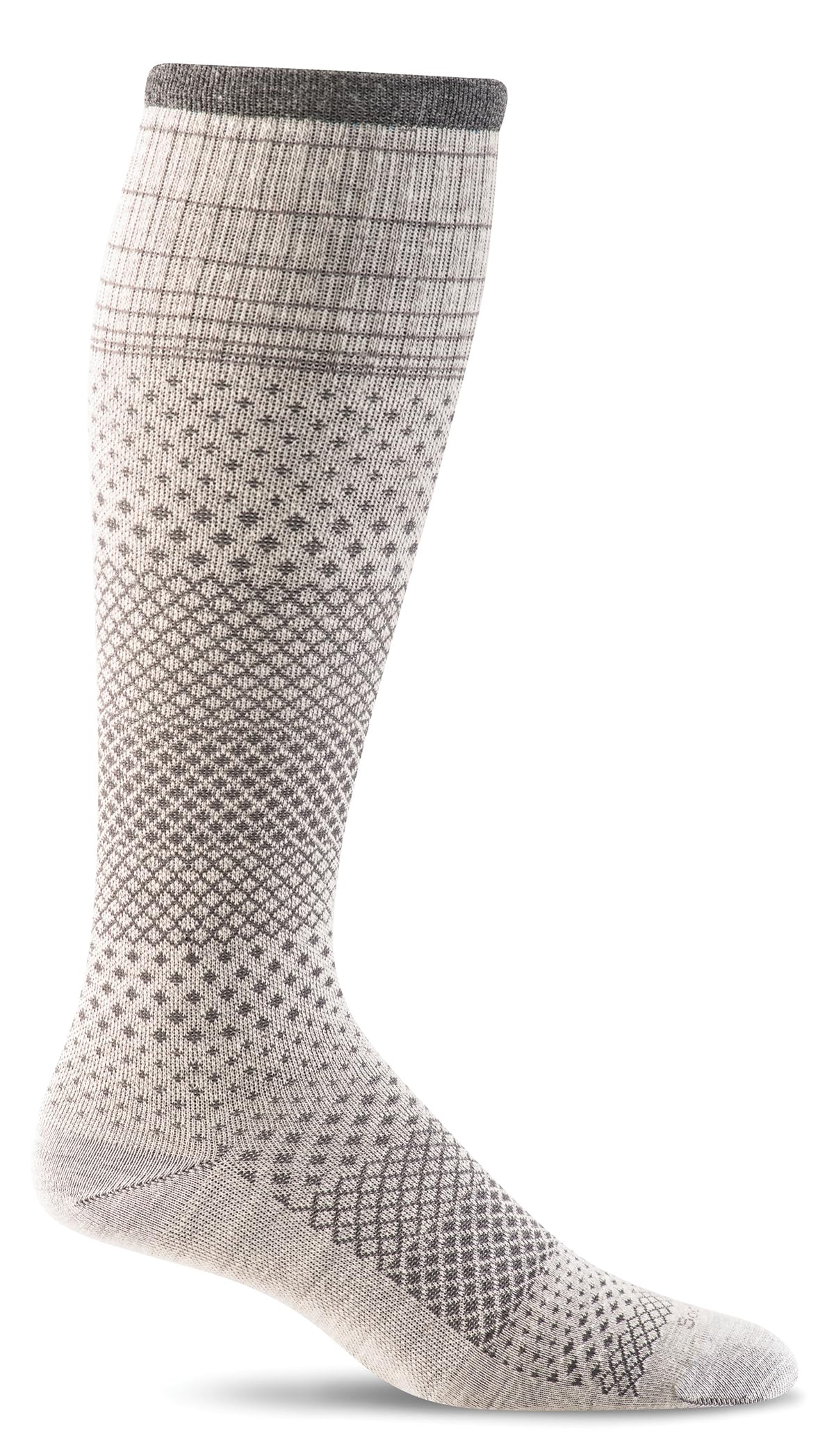
1. Sockwell Women’s Micro Grade
Our pick — 4.5+★ from 850+ verified ratings; the strongest balance of quality and price.
The wool-blend sock that keeps your ankles slim through a ten-hour flight without feeling like a tourniquet.
Merino wool at 32 percent, bamboo rayon at 31 percent, nylon at 32 percent, and spandex at 5 percent — that is the blend behind Sockwell’s biggest selling point. The wool and bamboo keep temperature and odor in check, so the same pair works on a hot train and a cold airport. The nylon and spandex supply the four zones of graduated compression that hold tightest at the ankle and ease toward the calf.
Comfort is what wins people over, and it is not a small margin. The sock sits smooth under a shoe, so you skip the bunching. The smooth toe closure stops the rub at the end of the day, and the arch support gives the foot a structured feel without pinching. Owners describe them as easy to pull on like tights, not a wrestling match. One traveller put it plainly: “I wore them on the 10.5 hour plane ride and arrived with non-swollen ankles.” Another reported a 7-hour car trip that normally swelled the ankles badly and produced no swelling at all.
The catch is sizing. These run as a women’s cut with a set foot length, and a foot in between sizes can end up with a toe that is a touch short or a calf that only gets mild pressure. The socks are also a lighter, non-cushioned build — great under a shoe, less plush if you want a padded sole. Durability draws a mixed word, so hand washing or a cold gentle cycle with air drying is the sensible habit.
What earns the top spot
- Four zones of graduated compression in a 32% merino / 31% bamboo / 32% nylon / 5% spandex blend.
- smooth toe closure and arch support keep the foot comfortable through a full day.
- Breathable and moisture-wicking enough for hiking and hot-weather travel.
- Patterns and colors that read as a real sock, not a medical garment.
Where it asks more of you
- Non-cushioned construction, so the sole feels thin underfoot.
- Sizing runs between sizes for some foot lengths, and the lighter calf pressure may be mild for flying.
- Durability is a mixed report; wash cold and air dry to protect the wool.
Pick this pair if: you want a wool-blend sock that handles travel, standing, and recovery in one garment and looks good doing it.
Look elsewhere if: you need a firm 20-30 mmHg squeeze for a clinical reason — this is a lifestyle-level graduated sock, not a firm one.
2. Physix Gear Compression Socks 20-30 mmHg – Men & Women
A firm 20-30 mmHg sock built for people who are on their feet for twelve hours and cannot afford a sag by lunchtime.
Physix Gear’s defining number is 20-30 mmHg. That is a firm, clinical-style squeeze — noticeably more pressure than the 15-20 mmHg travel socks on this list. The sock is textured, reaches just past the knee, and holds its position. The material is thicker and softer than the cheap spandex packs, which makes it easier to pull on than its pressure level suggests.
What people keep coming back for is endurance. A nurse with seven years of compression-sock experience reported “less ankle swelling than other socks; less indentation under knee” after a 14-hour shift. The sock stayed put at the knee instead of sliding down to the ankle. Another buyer wore a pair through long flights, car trips, and multi-hour field walks with a backpack and called the compression good — with one honest caveat about heat.
The trade-off is warmth and wear. In very hot weather the thicker knit can feel clammy, so it is at its best in cool conditions or air conditioning. The striped fabric above and forward of the heel cup is the wear point — a daily-wear pair can develop a hole there within a couple of months. That is a maintenance cost, not a dealbreaker, and rotating two pairs spreads the wear.
Where the value sits: the firm 20-30 mmHg squeeze, the true knee-high length, and the thicker knit together make this the strongest sub-premium pick for nurses, warehouse staff, and anyone whose legs throb by 3 p.m. The XL fits 15-16 inch calves and a foot around size 10.
Reach for this if: your day is long, hot weather is rare, and you want firm support for shin splints or standing fatigue.
Think twice if: your calves run warm — the thicker knit gets clammy in summer.
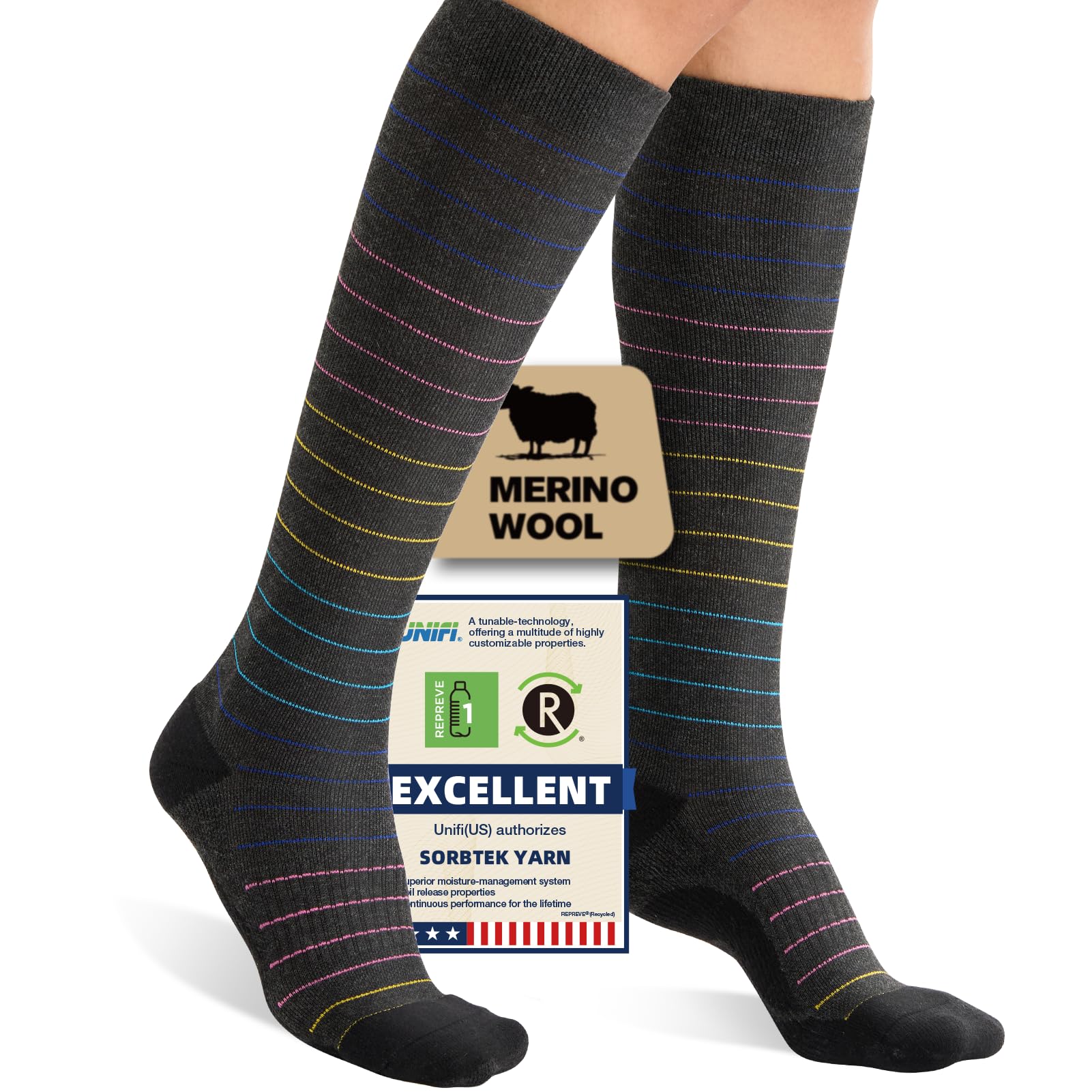
3. Merino Wool Compression Socks for Women Men 15-20 mmHg
Warm, soft, and cut long enough to pull over the knee — the one for cold morning runs and freezing office floors.
A 15-20 mmHg squeeze is the sweet-spot pressure for everyday wear, and this merino blend makes it feel like a cozy sock rather than a support garment. The Lycra-wool-bamboo blend is smooth on the skin, gives definite compression without a vise grip, and runs at a moderate thickness. Warmth is the standout — cold-weather wearers describe them as very, very warm.
Quality is the thing everyone raves about, and it carries the fit with it. The sock goes over the knee (longer than most), does not bunch above the knee on smaller users, and does not roll down even on wide calves. The merino mix also keeps odor under control for repeat wear — a daily-use owner liked them enough to throw out the old sock drawer entirely. Compression holds through overnight wear for puffy ankles.
The honest catch is the wool content. It is a blend, not 100 percent wool, and the top of the sock can itch on sensitive skin. The long cut and tight weave also make them a bit of a job to get on and off. Do not put lotion on before wearing them overnight — that combination can irritate the skin.
The case for merino: a 15-20 mmHg graduated squeeze plus a wool-bamboo blend gives you the best temperature and odor control in the group.
One real limit: the itch at the sock top and the effort of pulling on a long, tight knit are the two things to accept going in.
Best for: cold-weather runners, winter travelers, and anyone with a wide calf who wants warmth without itch.
Skip if: you have sensitive skin at the calf or need a sock you can slip on in five seconds.
4. 6 Pack Copper Compression Socks for Women and Men

Six pairs of graduated copper socks for less than the price of one premium pair — the rotation strategy that actually works.
Graduated compression is the whole idea here: tightest at the ankle, easing upward, the same principle the premium socks use. The copper-infused knit is the dressing, not the mechanism, and the wide top band is built to stop the sock rolling down. With six pairs in the pack you can rotate daily, which is the single best way to make a compression sock last.
Comfort and ease of use are where this pack earns its place. There is no wrestling match to get them on, they feel like normal socks rather than medical hose, and they stay up for hours without riding down to the ankle. They hold up through cold-water washing and air drying without shrinking or fading. A truck driver who sits for long hours reported legs much less achy and tired at the end of the day.
The honest caveats are sizing and durability. One pair out of an occasional pack can run tighter on the calves than the rest, and some buyers find the sock shrinks after machine drying and fights to stay up. Wash cold and air dry to get the best life. The heels are the wear point over time.
Why the pack makes sense
- Six pairs means a clean pair daily, the easiest way to extend life.
- Graduated compression with a wide top band that resists rolling.
- Easy on and off compared with firm single pairs.
- Colors stay bright after cold washing.
The honest trade-off
- Fit is inconsistent pair to pair; one may run tight on the calf.
- Some pairs shrink if machine dried — air dry them.
- Heels can develop holes over long use.
Choose the six-pack if: you want a full week of graduated socks and a budget that goes further with a rotation.
Pass if: you need firm clinical pressure — these are a comfortable daily graduated level, not a firm one.
5. CHARMKING Compression Socks 8 Pairs

Eight pairs at 15-20 mmHg, in enough colors that compression stops feeling like a chore.
You get eight pairs at a 15-20 mmHg squeeze, in the widest color range in this guide. That light-level pressure makes these an everyday wear sock, not a firm shift sock. The fabric has a lot of stretch and feels more substantial than a thin dress sock. The wide top band holds the sock up through a full day of hardwood and carpet.
People who wear compression daily, not occasionally, are the ones this pack clicks for. One buyer wore them 10 to 18 hours a day on hard floors and reported they held up over months and eased blood pooling and pain. Another noted the even compression throughout the calf and a sock that stayed up without sliding down to the ankle. The sock is easy to pull up, which buyers call out as a real relief.
The catches are worth knowing. The patterned colors can leave small indentation marks and a little itch, so plain colors are the gentler pick. Colored socks can arrive with stray loose threads inside pressed against the skin, and durability is a mixed report — the toe area is where holes show up. None of that changes the core: these are a comfortable, low-pressure daily sock.
What the daily wearers say: a light 15-20 mmHg squeeze, strong stretch, and a wide top band make this the easiest pair to wear for 10-plus hours without thinking about it.
Reach for the pack if: you want variety, easy on-and-off, and a light squeeze for everyday wear.
Go firmer if: your legs need real clinical support — 15-20 mmHg is a gentle hug, not a firm one.
6. +MD 2 Pairs 20-30 mmHg Open Toe Stockings
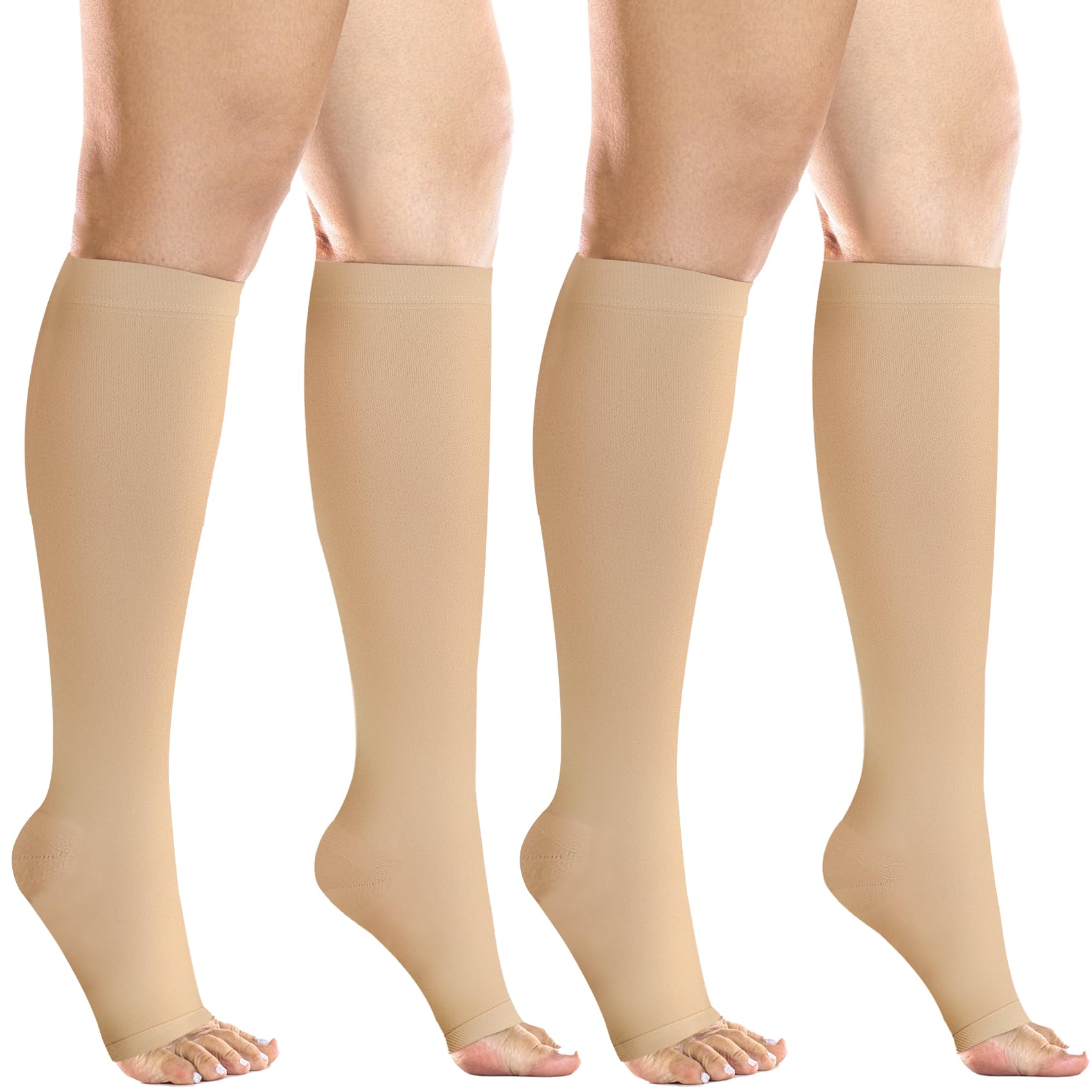
The open-toe design that lets your toes wiggle while a firm 20-30 mmHg squeeze works the ankle and calf.
The open toe is the feature here. Instead of a closed, squeezing foot, the +MD sock leaves the toes out, which keeps them from being squashed and makes the sock easier to position. The pressure sits where it does the most good: the strongest squeeze at the ankle, easing upward through the calf, at a firm 20-30 mmHg level. A foot-cover slider comes with the socks to help you pull them on.
Quality and compression are what buyers consistently note. The spiral-knit construction is built to resist abrasion and hooking, the fabric is a breathable medium thickness for all seasons, and the socks stay up under jeans through a full day. One wearer reported fewer nighttime bathroom trips after starting them, and said the doctor was impressed.
Fit is the honest catch, and it runs in both directions. Some find the sock perfect; others find the size chart misleading and the fit too tight or too long, bunching under the knee or riding up on the foot. If you are new to compression, order a size up for the first pair and give yourself a few days to adjust.
The open-toe benefit
- Open toe keeps the toes free and makes the sock easier to pull into place.
- Firm 20-30 mmHg graduated support with a foot-cover slider included.
- Breathable medium-thickness knit for all seasons.
What to watch on fit
- Fit runs inconsistent — some find it too tight, some too long.
- The size chart is unreliable for some calf shapes; size up if new.
- Toes can ride up on the foot during walking.
The open-toe fan should buy this: it gives firm support with toes that can breathe and wiggle.
Buy with care if: you are between sizes — order up and check the calf circumference against the chart.
7. Shellwei 3 Pairs Compression Socks for Women 20-30 mmHg

Three pairs of firm 20-30 mmHg stockings in nude tones that read as skin, not as hospital wear.
The draw here is the color and the squeeze. Shellwei offers a light beige nude tone that blends into skin, which makes these wearable with dresses and skirts where a bright patterned sock would stand out. The compression is a firmer 20-30 mmHg level, suited to travel and long days rather than a gentle everyday hug. Three pairs per pack gives you a rotation.
Support and softness are the two features that earn the best notes. The material feels soft and luxurious against the skin, the toe box has room to wiggle, and the sock is easy enough to put on for a firm-level stocking. A flight attendant wore them through altitude changes and all-day standing and reported no snags or runs, no ankle swelling, and a sock that stayed up all day. A transatlantic traveller said a 14-hour flight brought no swelling and no sweaty feet.
The catch is sizing. This is a sock that runs small for tall, thick calves, and a foot with a narrow length can feel too big in the foot area. The top just under the knee is tight on some wearers, and the fabric can look shiny on the leg. If the size chart does not match your calf, get the next size up.
The nude-tone advantage: a 20-30 mmHg squeeze in a skin-matching beige that disappears under a dress, in a three-pair rotation.
Before you buy: measure your calf first — these run small for tall, thick calves and the top can feel tight.
Worth it for: anyone who wants firm support that does not announce itself under professional clothes.
Measure first if: you have a tall, thick calf — this is a fit-sensitive sock.
8. Wellow Knee High Compression Socks 18–25 mmHg
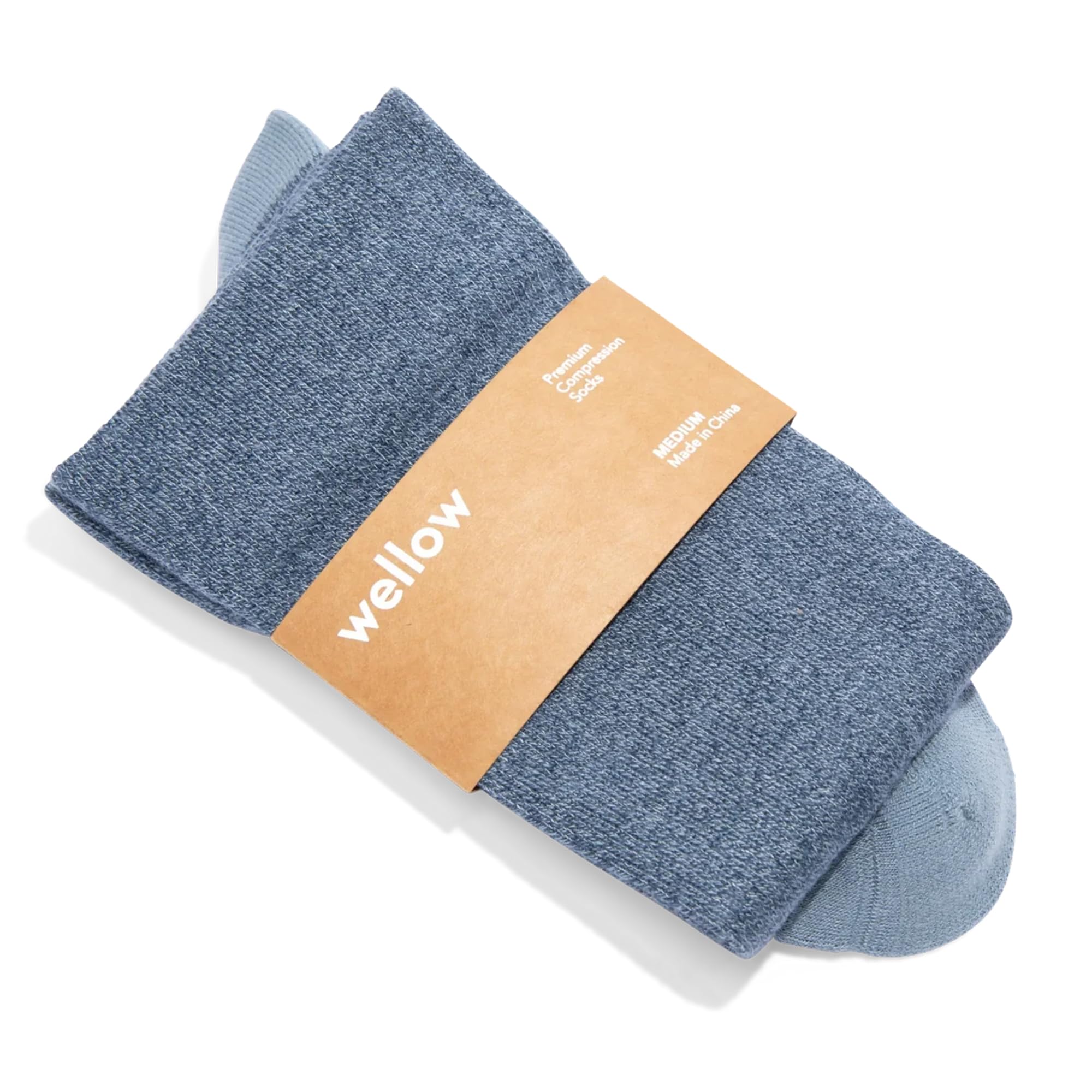
A gentler 18-25 mmHg squeeze in a soft knit that hugs without binding — the one for a full shift or a workout.
The 18-25 mmHg range sits just under a firm clinical sock, which makes Wellow a fit for people who want real support but do not want the firmest squeeze. The knit is where the money goes: the soft feel against the skin is the recurring theme. It hugs the leg without binding, and it is easy to put on compared with firmer stockings. The length is on the long side, so it can be pulled over the knee and folded down if you want.
People who are on their feet all day are the ones who notice the difference. A clinical rep wore them through a full day on her feet and called the compression perfect. A shift worker had no trouble through a 12-hour shift and did not find them too hot in winter. A frequent traveler used them through international flights and reported no ankle swelling.
The honest trade-off is value and durability. These are a premium single-pair ticket, and buyers split on whether the softness justifies it. The skin at the back of the knee can itch for some wearers, and a pair can develop a side hole with heavy use. Wash by hand or on a cold delicate cycle with a short dryer run, then hang to protect the knit.
Where the premium goes: a soft, close knit at 18-25 mmHg that hugs without binding — a gentler firm-level squeeze for a long shift.
Pick this if: softness against the skin matters and 18-25 mmHg is the right pressure for your day.
Go firmer if: you need a true 20-30 mmHg sock, and expect a single-pair premium here.
9. Dr. Motion Compression Knee High Socks 4 Pairs
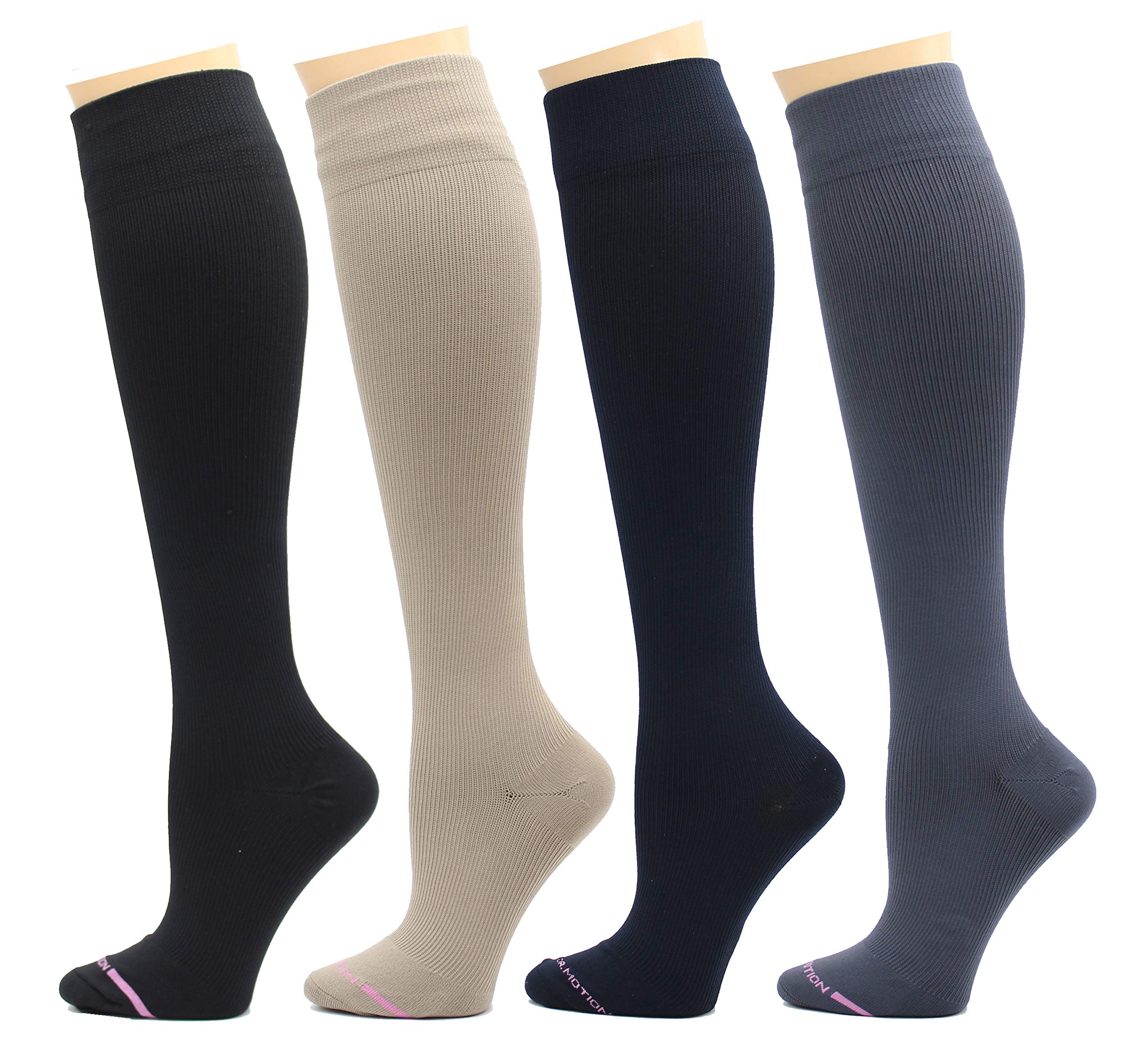
Four pairs of light 8-15 mmHg socks for the days you want a gentle squeeze and a cute pattern, not a clinical hold.
These are a lighter 8-15 mmHg graduated sock, which puts them in the everyday-support category alongside the multi-packs. The graduated design is still tightest at the ankle and looser up the leg, but the overall pressure is gentle. Four pairs per pack makes them a low-effort daily wear option. The toe box is roomy without being sloppy, and the colors hold true after washing.
The selling point is all-day comfort without a fight. Buyers report they go on easier than most compression socks, do not bind at the back of the leg, and stay where you put them. A third-time buyer wears them daily on a doctor’s order and says they stay comfortable all day and wash well in a lingerie bag on a delicate cycle. They also beat the stiff stockings handed out in hospitals for post-surgery wear.
The caveats are the light pressure and the fabric’s snag potential. At 8-15 mmHg these will not give the firm hold a 20-30 mmHg sock does — if you need clinical support, go firmer. The knit can snag on Velcro shoe straps and pull threads. They also run warm in summer. None of that changes the everyday comfort.
What makes them easy to live with
- Gentle 8-15 mmHg graduated squeeze for all-day comfort.
- Roomier toe box that does not pinch.
- Colors stay true; wash well on a delicate cycle.
Honest limits
- Light pressure only — not a firm clinical sock.
- Snags on Velcro and pulls threads.
- Runs warm in summer.
Best suited to: everyday light support with a cute pattern and an easy pull-on.
Not the one for: firm 20-30 mmHg support or very hot weather.
10. Comrad Knee High Compression Socks
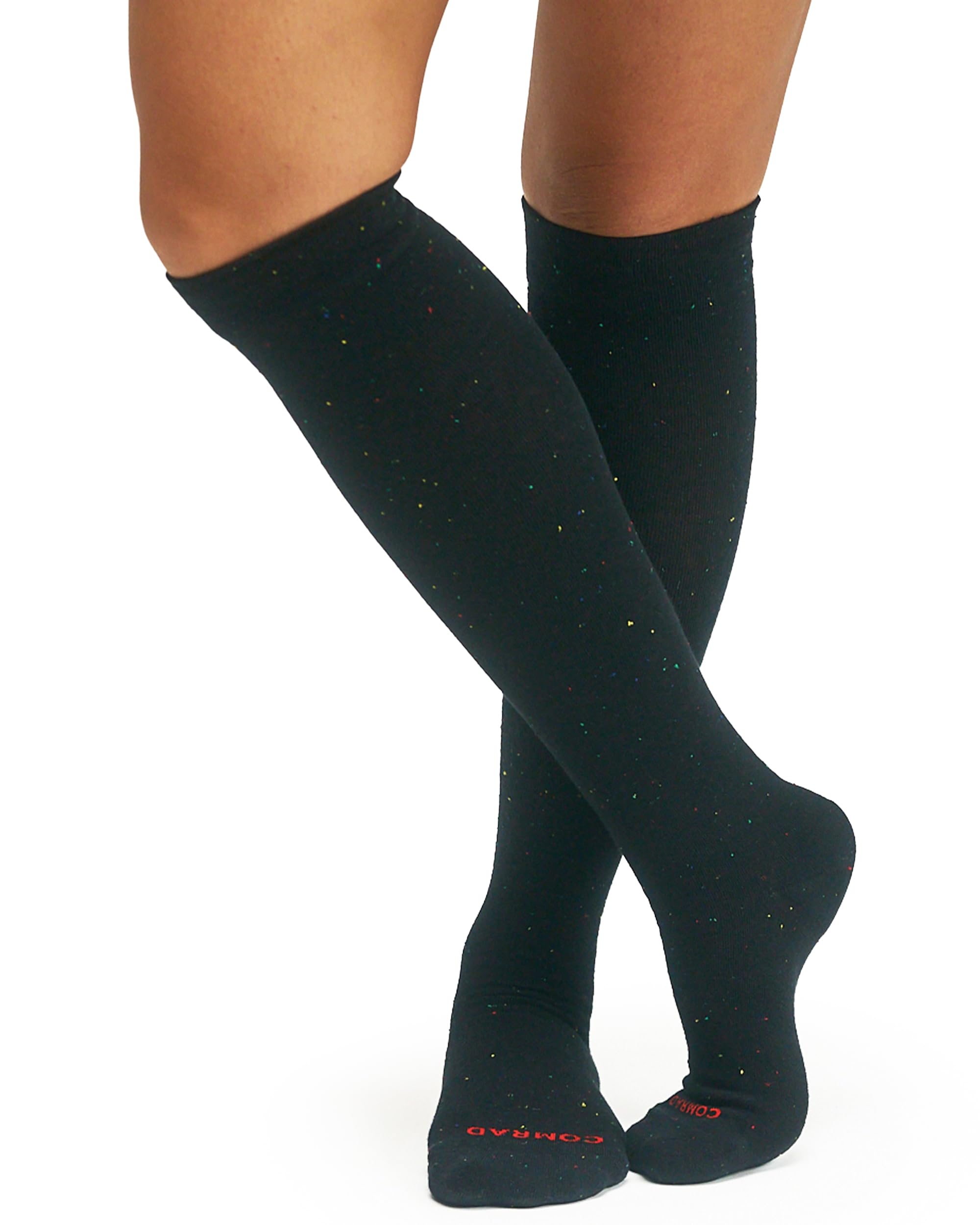
The cotton-blend sock for skin that reacts to synthetic compression hose — soft, breathable, and gentle through a 12-hour shift.
A cotton blend is the differentiator. Comrad uses a soft, non-nylon knit with a padded heel and toe, which is why people with reactive skin reach for it. The compression is graduated — tough to pin a firm number on from the listing, but buyers describe it as a medium level that supports without squeezing. It is a knee-high sock built for long days, and it is machine washable.
The sensitive-skin story is real. One wearer with a nylon allergy wears Comrad comfortably through 12-hour shifts. Another wore it on overseas flights after spine surgery with no irritation. It stays comfortable through 24-hour wear without pinching, and the Medium/Wide Calf cut fits a wide calf without gaping.
The honest catch is length and compression for some bodies. A shorter wearer at 5’4″ found them too long and the compression too light, and had to size down. The medium level also means a very puffy foot on a flight may not fully flatten out. Wash cold and air dry to protect the padding.
Why the cotton matters: a non-nylon knit with a padded heel and toe — the choice for skin that cannot tolerate synthetic hose.
The right pick if: your skin reacts to nylon and you want a soft, breathable medium-compression sock.
Check the length if: you are on the shorter side — these run long and the compression is medium, not firm.
11. Zensah Tech+ Compression Socks – Knee High Running Socks
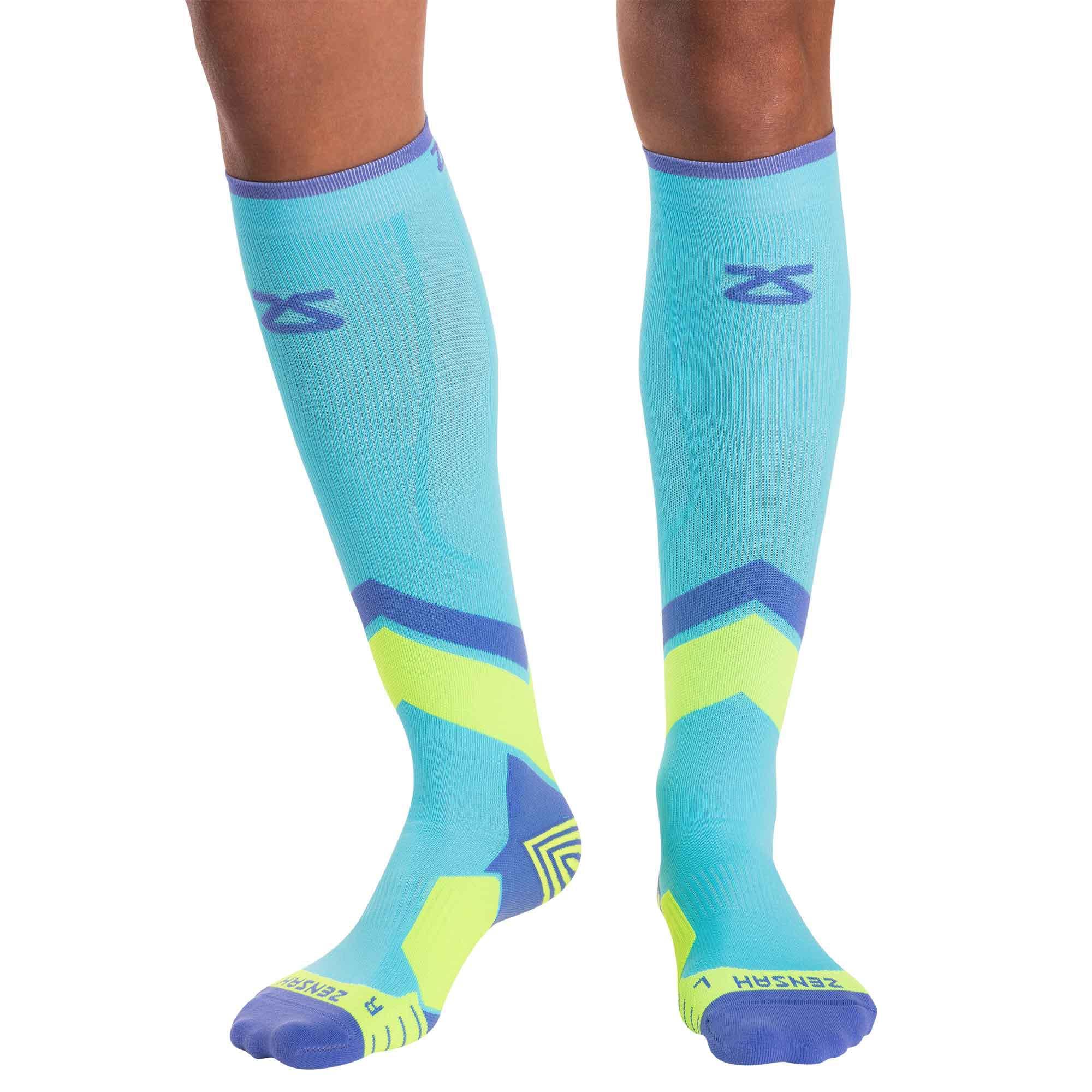
A running-first sock with an anatomical left/right fit and a 200-needle knit that survives a hundred miles.
The knit is the headline: a 200-needle count construction (needle count is how many needles knit each round — higher means a denser, finer fabric) in an 82 percent polyamide, 18 percent elastane blend, made in Italy. That high needle count means a denser, more precise knit that holds its graduated compression where you need it. The sock is also anatomical — made specifically for a left and a right foot — with a smooth toe, an arch-support band, and sewn-in patches for targeted pressure. It wicks moisture and regulates temperature, so your feet stay drier on a long run.
Runners are the core audience, and the reports back that up. One runner used them on five-plus-mile runs and had no blisters, tested them in subfreezing temperatures, and saw around 100 runs with no holes despite sharp toenails. Others used them for hiking, cycling, and long flights. One traveler with a blood-clot history found the smooth toe did not rub and the sock stayed odor-free. Comfort is the most-praised trait in the reviews.
The catch is two-sided: price and the effort of pulling them on. These are a premium single-pair ticket, and the firm fabric makes them hard to wrestle onto a foot — the fix is the inside-out roll-on technique. A cuff band that some wearers feel pinches high on the calf is the other small gripe. Get the pull-on method right and the rest is easy.
The performance case: a 200-needle Italian knit at 82% polyamide / 18% elastane, with an anatomical left/right fit and sewn-in compression patches — built for runners, not for a nightstand.
Made for you if: you run, cycle, or hike and want anatomical graduated support that lasts.
Think twice if: you want an easy everyday sock — the firm fabric fights you on the way in.
Know the Specs
Compression Level in mmHg
The mmHg number (millimeters of mercury) tells you how hard the sock squeezes. A 15-20 mmHg sock is a light everyday hold for travel and desk days. A 20-30 mmHg sock is a firm hold for long shifts and training recovery. An 8-15 mmHg sock is closer to a snug normal sock. Match the number to how you will wear it, not to the boldest label on the pack.
Graduated Compression
Graduated means the sock is tightest at the ankle and looser as it climbs the calf. That gentle gradient is what supports circulation instead of just squeezing evenly. A true graduated sock feels firm at the ankle and light at the top — if it feels equally tight everywhere, it is not doing the job.
Fiber Blend
Merino wool and bamboo blends handle temperature and odor — vital for a pair you wear through a flight and into a hotel room. Nylon and spandex supply the stretch that holds the squeeze. Cotton feels soft on reactive skin but has less elasticity. Read the blend before you buy: an all-soft sock will sag, and an all-synthetic sock can feel clammy.
Open Toe vs Closed Toe
A closed toe is the standard for running and daily wear. An open toe leaves the toes free to wiggle and breathe, and it makes the sock easier to position — but it can ride up on the foot during long walks. Neither is better; the choice depends on whether your toes run warm or you want the extra coverage.
Common Questions
What mmHg compression should a woman wear for a long flight?
How do I measure my calf for compression socks?
Will compression socks help my swollen ankles after sitting all day?
Can I sleep in compression socks?
Are 20-30 mmHg socks too tight to wear all day?
How should I wash compression socks so they keep their squeeze?
What is the difference between 15-20 mmHg and 20-30 mmHg socks?
Are open-toe compression socks better than closed-toe?
Will merino wool compression socks make my feet too hot?
How long do compression socks usually last before they stretch out?
The Bottom Line
For the compression socks for women pick that fits the widest range of days, go with the Sockwell Women’s Micro Grade. A four-zone graduated squeeze in a 32% merino / 31% bamboo blend handles travel, standing, and recovery in one sock — and the wool keeps it wearable through a long trip. Need a firm 20-30 mmHg hold for long shifts? The Physix Gear is the one that stays put past the knee through a 14-hour day. And for a runner who wants an anatomical left/right fit in a 200-needle Italian knit, the Zensah Tech+ is the pair to reach for.
How we choose
We do not accept paid placement. Every pick is matched to a real buyer and a real use-case; we do not hands-on test units.
Sources
Specifications: manufacturer listings and product documentation. Review insights: verified customer reviews, as of October 2026. Pricing: not shown on this page (it changes often); check the current price via the retailer link.
As an Amazon Associate, Aappliancez earns from qualifying purchases. This does not affect which products we feature.