Disclosure: Some links in this post are affiliate links. As an Amazon Associate I earn from qualifying purchases, at no extra cost to you. Learn more
Specs are compiled from manufacturer listings and verified buyer reviews and can change over time — please confirm the key details on the product page before buying.
If your legs swell and ache in the heat, the fix is a sock that squeezes where it helps and breathes where it matters. The problem is that most compression socks are built for winter — thick, warm, and clammy by mid-morning. A good summer pair uses a pressure rating you can wear all day, a thin fabric that pulls sweat off your skin, and a light color that does not bake in the sun. Below you get eleven real options, sorted by what they actually do well.
This guide is built by comparing the manufacturers’ published specifications and the patterns across verified customer reviews, so you get each pick’s real strengths and trade-offs instead of marketing spin.
Pressure levels, fabric blends, and fit all change how a sock feels in hot weather, and getting them wrong makes the whole idea pointless. The picks below show which compression socks for summer heat actually breathe.
Top Picks

How To Choose Compression Socks for Summer Heat
The wrong sock in July is not a small annoyance. It is a wet, itchy, sliding mess by lunchtime, and you end up pulling them off before they ever do their job. Three things separate a pair you will actually keep on from a pair that ends up in a drawer.
Pressure Level: Pick the Range You Can Wear All Day
Compression is measured in mmHg (millimeters of mercury — a pressure scale, where a higher number means a tighter squeeze). The common ranges are 8-15 mmHg, 15-20 mmHg, and 20-30 mmHg. Lighter ranges feel like a gentle hug and suit warm-weather everyday wear; heavier ranges bite harder and tend to feel hot and restrictive on a humid afternoon. If you are new to compression, start light and work up.
Fabric: Thin and Moisture-Wicking Beats Thick and Warm
A summer sock needs to move sweat away from your skin, not hold it. Merino wool, bamboo blends, and synthetic moisture-wicking fabrics dry fast and resist odor. Heavy cotton and heavyweight wool trap heat, which is why a hunting sock and a summer travel sock are two different purchases. Mesh panels across the instep or footbed help more than any label claim.
Height and Fit: Ankle, Crew, or Knee-High
Sock height decides how much of the leg gets squeezed. Ankle socks sit low and stay hidden in running shoes but do nothing for calf swelling. Knee-high socks cover the whole lower leg and suit travel and long standing shifts, but they run warmer. Check the calf size the maker states, because a snug calf band that rolls or digs is the most common fit complaint in this category.
Side-by-Side Comparison
| Model | Best For | Pressure | Height | Pack Size | Amazon |
|---|---|---|---|---|---|
| Swiftwick ASPIRE ONE★ Best Overall | Runners and cyclists | Compression fit | Ankle/crew | Single pair | Amazon |
| Merino Wool Compression SocksBest for Travel | Travel and daily wear | 15-20 mmHg | Over the knee | Single pair | Amazon |
| CHARMKING 8 PairsBest Value | Everyday value and color | 15-20 mmHg | Knee-high | 8 pairs | Amazon |
| Pembrook Copper 3 Pairs | Firm graduated support | 15-20 mmHg | Knee-high | 3 pairs | Amazon |
| Physix Gear 20-30 mmHg | Nurses and shin splints | 20-30 mmHg | Knee-high | Single pair | Amazon |
| Juclise No Show 3 Pairs | Gym and running shoes | Compression fit | No show | 3 pairs | Amazon |
| Juclise Crew 3 Pairs | Running and hiking | Compression fit | Crew | 3 pairs | Amazon |
| 7BIGSTARS Diabetic 5 Pack | Non-binding comfort | Non-binding (no compression) | Mid-calf | 5 pairs | Amazon |
| Different Touch 6 Pairs | Light travel compression | 8-15 mmHg | Knee-high | 6 pairs | Amazon |
| Sockwell The Raj | All-day work wear | Firm (15-20/20-30 mmHg) | Knee-high | Single pair | Amazon |
| Alpaca Wool Boot Socks | Cold-weather hiking | No compression rating | Boot height | Single pair | Amazon |
Detailed Reviews
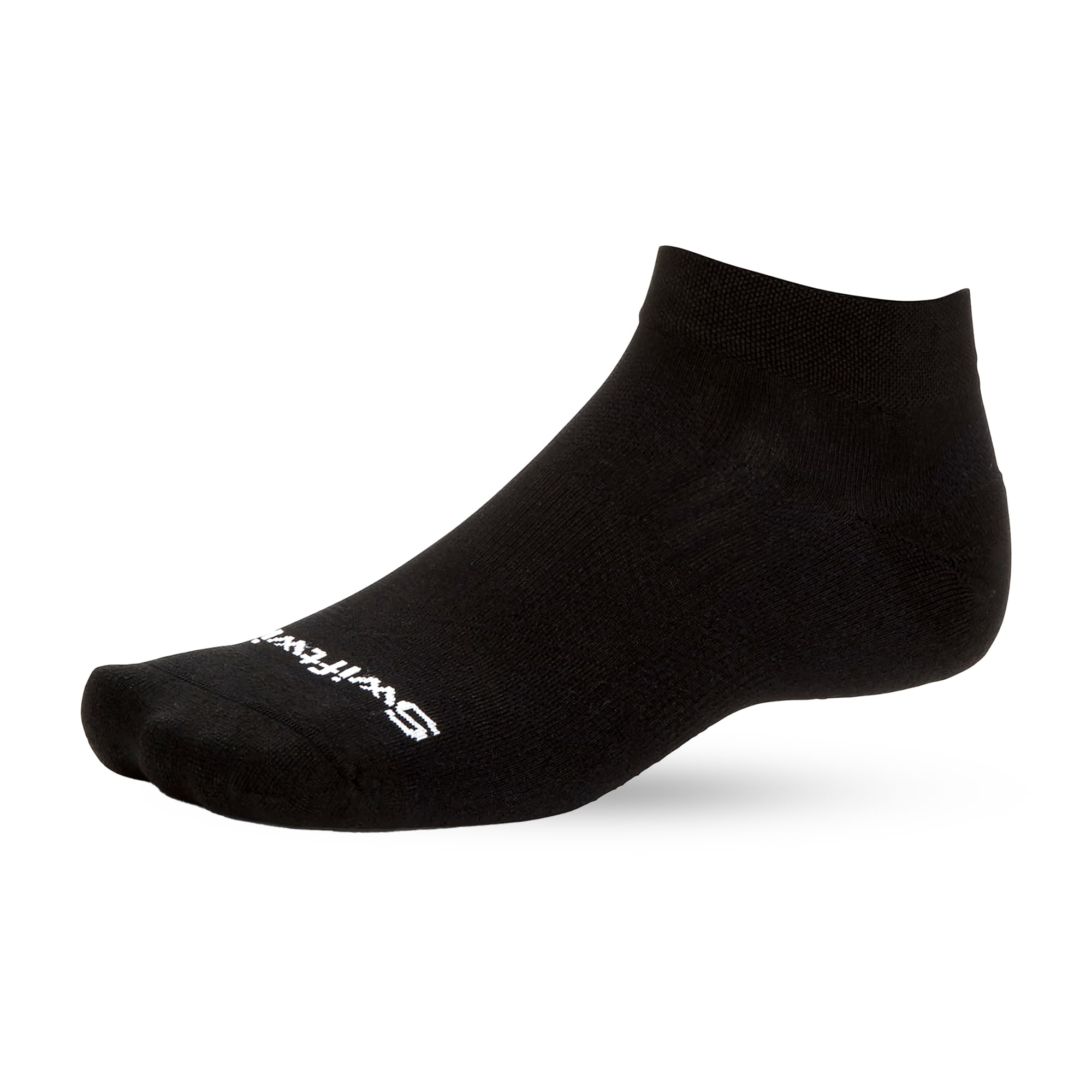
1. Swiftwick ASPIRE ONE Running & Cycling Socks
Our pick — 4.5+★ from 550+ verified ratings; the strongest balance of quality and price.
The thin, no-cotton sock that keeps your feet dry when the pavement is radiating heat
If you run or ride through the hot months, this is the pair that solves the actual problem: no cotton in the fabric at all, which owners say is what ends the sweaty-foot cycle. It is a compression-fit sock rather than a numbered mmHg one, so the pressure is built into how the knit hugs your foot and ankle. That skin-tight-but-not-crushing feel is the whole point — the sock stays put without needing a tourniquet grip.
Comfort is the trait buyers praise most, by a wide margin over every other feature. Owners say the smooth toe (a toe with no stitched seam to rub) is the difference between finishing a long ride fine and finishing it with a hot spot, and one cyclist rode 50+ miles without discomfort, noting the compression is “skin-tight but not overly so.” The fabric pulls sweat off your skin and dries fast, which in humid weather matters more than any cushioning. An ankle band sits snug without cutting circulation, and the socks hold their shape and color through repeated washes.
Now the honest part. These run a size small — a 6.5/7 shoe lands in a medium — so check the chart before you commit. They are also sold as a single pair, and that per-pair cost is the one thing buyers push back on most. Compared with the CHARMKING 8-pair set, you are paying for one sock where the other gives you eight, so this is a pick for someone who wants one good sock, not a drawer full. The sock is rated 4.5+ stars across 500+ owners.
Where it earns its keep
- Zero cotton in the blend, so sweat does not sit against your skin
- smooth toe rides 50+ miles without a blister
- Ankle band holds snug without pinching
- Keeps shape and color through washes and dries quickly
What to go in knowing
- Sizing runs small — verify the chart before ordering
- One pair per purchase, so a full week costs more
- Thin by design, which some buyers find too light
Best matched to: runners and cyclists who want one breathable, no-cotton sock for hot training days.
Think twice if: you want a week’s worth of socks in one order or prefer a heavier, cushioned feel.
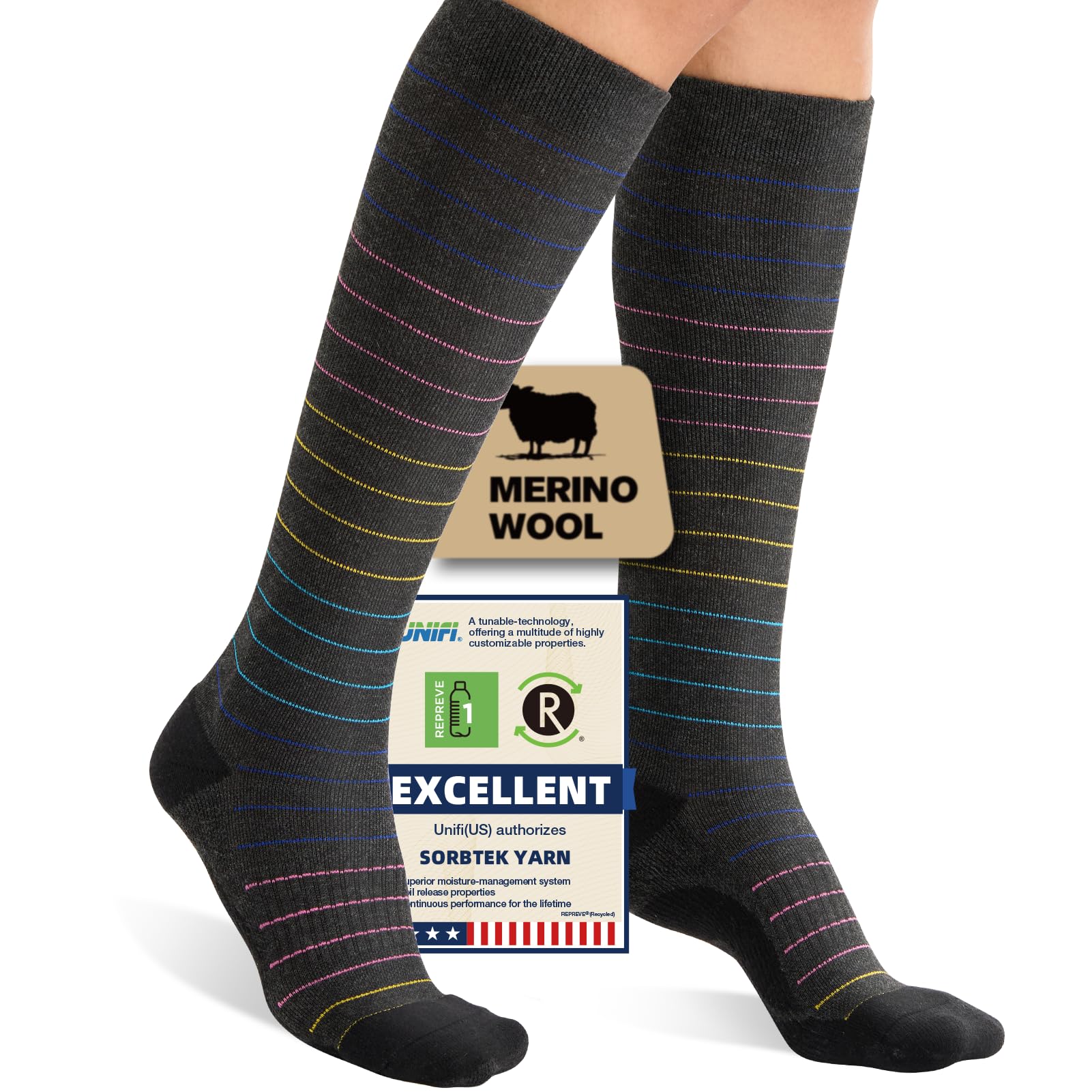
2. Merino Wool Compression Socks 15-20 mmHg
A merino-blend knee-high that lands a long flight with your ankles still looking like ankles
The 15-20 mmHg rating (a measure of gentle graduated pressure) is the balance for travel: real pressure, but gentle enough to leave on for a full day. The merino-wool blend is the summer trick here. Wool regulates temperature and resists odor, so the sock does not turn into a swamp when you are stuck in a middle seat for hours. Buyers report the fabric keeps feet comfortable across long wear, and several describe the compression as present but not crushing.
What people talk about most is the jump in quality — the material feels substantial, the fit stays put above the knee, and the compression is real without digging behind the knee. A vacationer wore a pair through a 3-week trip and called the sizing perfect; another praised the merino mix for staying odor-resistant over daily use. The moderate thickness is enough to add warmth on a chilly morning run while still working for warmer days.
The catch is a wool one. Some buyers find the top band itchy just below the knee, and the blend is not pure wool, so it will not fully behave like a raw merino sock. Length and tightness also make them a bit of a wrestling match to pull on and off, especially over the knee. If you have sensitive skin at the calf band, this is the thing to weigh before buying.
Quality you can feel: The fabric is the star — a merino mix that owners describe as smooth, supportive, and odor-resistant, with compression that helps puffy legs overnight without the tight-calf digging of cheaper socks.
One fit note: The over-the-knee length and snug knit make them a bit of work to get on, and the top band can itch for buyers with sensitive skin there.
Reach for these if: you travel often and want one breathable, odor-resistant knee-high for flights and long days on your feet.
Look elsewhere if: you have very sensitive skin at the top of the calf or want a sock you can slip on in seconds.
3. CHARMKING Compression Socks 15-20 mmHg (8 Pairs)
Eight pairs of knee-high compression for the price of a couple of premium singles
Eight pairs versus the Pembrook’s three — that is the whole story of this pick. If you want compression you can actually live in all summer without doing laundry every other day, having eight knee-highs in the drawer changes how often you wear them. The 15-20 mmHg rating is the everyday range: enough squeeze to help legs feel better at the end of a long day, light enough to wear through warm weather. The pressure is even from calf to instep, and the ankle stays flexible.
What wins people over most is the quality relative to what you pay. The fit is the runner-up strength — these pull up easily without a fight, stay on without sliding down, and keep legs feeling supported through 10 to 18 hours on hardwood or carpet. The colors are a real draw too; patterned knee-highs are hard to find in stores, and these come in a fun range. As owners put it, they are easier to pull up than most compression socks, and shallow swelling does come down overnight.
Here is the honest trade-off. The colored and patterned pairs are known to leave stray loose threads inside that can press into the skin — the solid white pairs show none of it. The very same owners mention patterns can leave tighter indentations and shrink a touch, so if you want fuss-free, stick to solid colors. A couple of pairs have also developed a hole at the heel or toe over time, which is the trade-off for the low per-pair cost.
The value math: You get eight pairs for roughly the cost of a few premium singles, which is why this set has tens of thousands of buyers, and the 15-20 mmHg pressure holds up through wear and washing without losing its grip.
Read before you pick a color: Solid colors run clean and comfortable, while the patterned versions are the ones buyers flag for internal threads and slight shrinkage.
Built for: anyone who wants enough knee-high compression to get through a hot week without repeated washes.
Skip the patterns if: you want a sock with no loose inner threads to fish out.
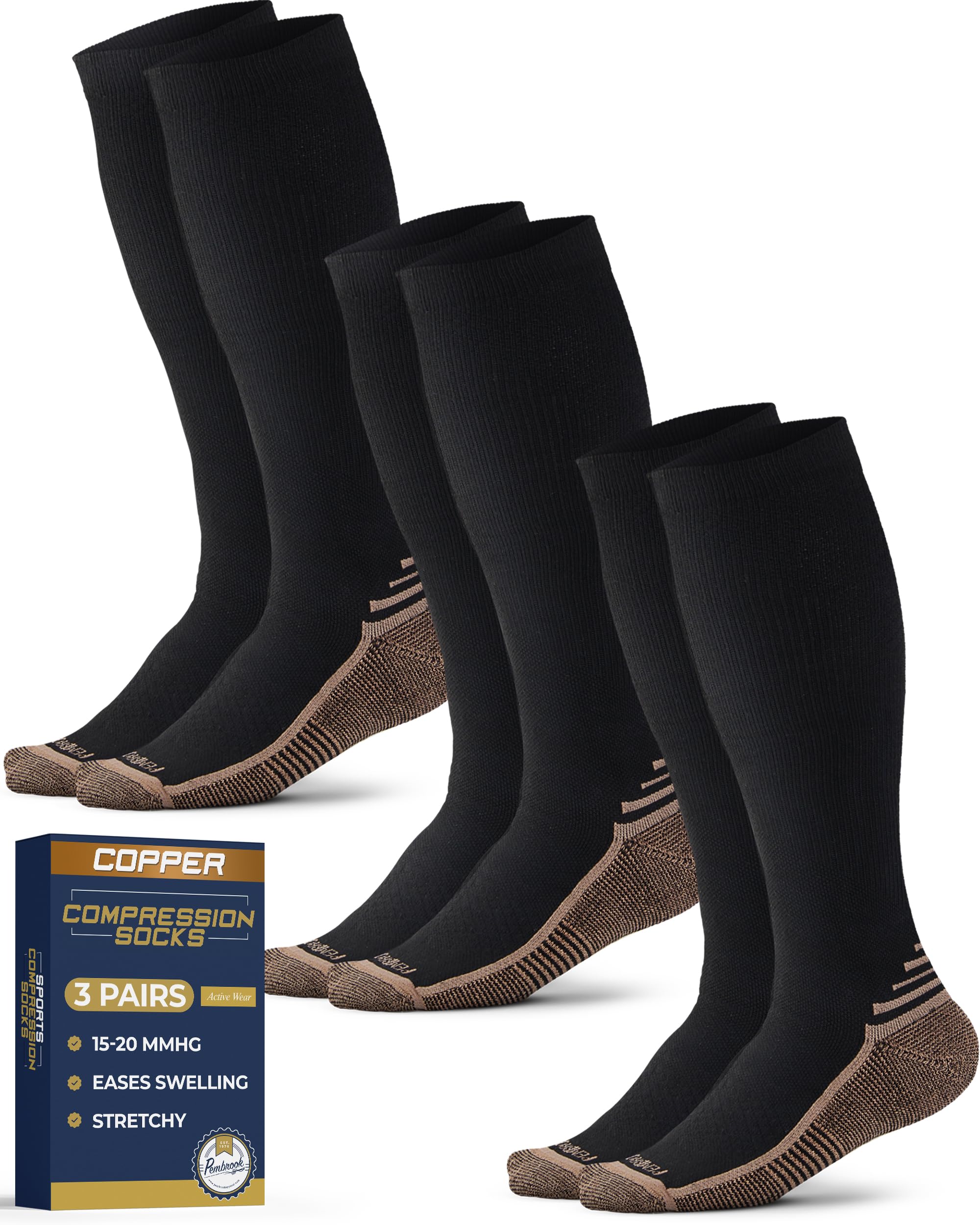
4. Pembrook Copper Compression Socks 15-20 mmHg (3 Pairs)
Graduated squeeze that holds firm through the day, if you can get them on
These are the firmest of the 15-20 mmHg picks in this list, which is exactly what you want if your goal is squeezing fluid back up out of the ankles rather than a gentle hug. The graduated support means the pressure is tighter low down and eases as it climbs, so your ankle gets the most help and the top band does not bite. Customers note no swelling after long wear and comfort from morning to night, and several say the graduated squeeze is doing real work — one reviewer noted the graduated squeeze eased her circulation and peripheral artery discomfort.
The quality is the thing buyers talk about most, and it shows in the thickness — this is a sock with substance, not a papery travel sock. They held up better than a prior brand that developed holes on day one, and they serve as a solid pick for an airplane trip or a long standing shift. The trade-off is that getting them on takes effort. A first-time wearer on international flights found the fit close but workable, and one large-size buyer struggled enough to need help pulling them up.
Sizing is where you want to be careful. The recurring note is that these run small against the stated size, so check your calf and shoe size rather than trusting the label. They also want no dryer — heat damages the elastic — and the odd pair can arrive squeezed from shrink wrap. Treated right, though, they keep their graduated squeeze where cheaper socks let go.
The strongest squeeze of the light group: Travelers and long-standing workers who want firm graduated support will feel the difference at the ankle most.
The trade-off to expect: Extra effort to pull on, and sizing that runs small against the printed label.
5. Physix Gear Compression Socks 20-30 mmHg

The medical-style 20-30 mmHg squeeze for nurses and shin-splint sufferers
The 20-30 mmHg rating is the firmest in this article, and that changes everything about the fit and the feel. This is a sock for serious compression, not a light everyday pair — it is what nurses and people dealing with shin splints or edema reach for. Owners describe the textured fabric as sturdy and easy enough to pull on, and the sock stays up near the knee without sagging. One nurse said the 20-30 mmHg squeeze cut her ankle swelling and felt comfortable by the end of a shift, softening from tight to comfortable as the day wore on.
Support is where it shines: past injuries and swelling benefit from a real squeeze, and the sock reaches just past the knees so your calf gets full coverage. The thickness and soft material make it easier to pull on than thinner compression brands, and durability holds — one nurse reported no wear after roughly 20 washes, while a repeat buyer’s husband has worn a pair daily for construction work for two years.
But this is the pick that fails the summer test for many people. The fabric is warmer than a light sock, and one long-walk wearer found it clammy in heat and late in long walks, calling it best for cool conditions. If you are looking for a breathable summer sock, a firm 20-30 mmHg is the wrong tool. If you need real medical-grade squeeze, this is the tool — just keep your expectations about heat honest.
Who needs this level of squeeze
- 20-30 mmHg is the firmest pressure here, for real support through long shifts
- Stays up near the knee without sagging
- Holds up through about 20 washes in one nurse’s daily rotation
- Thick, sturdy fabric that is easier to pull on than thinner brands
The heat caveat
- Fabric runs warm — one wearer found it clammy in heat
- Firmest range here, so not a light everyday sock
- Arch panel durability drew a complaint after daily use
For genuine pressure needs: If a nurse, surfer, or shin-splint sufferer needs 20-30 mmHg support, this delivers the firmest squeeze on the list.
Not for the hottest days: Anyone buying primarily for hot-weather breathability should look at the lighter picks above.
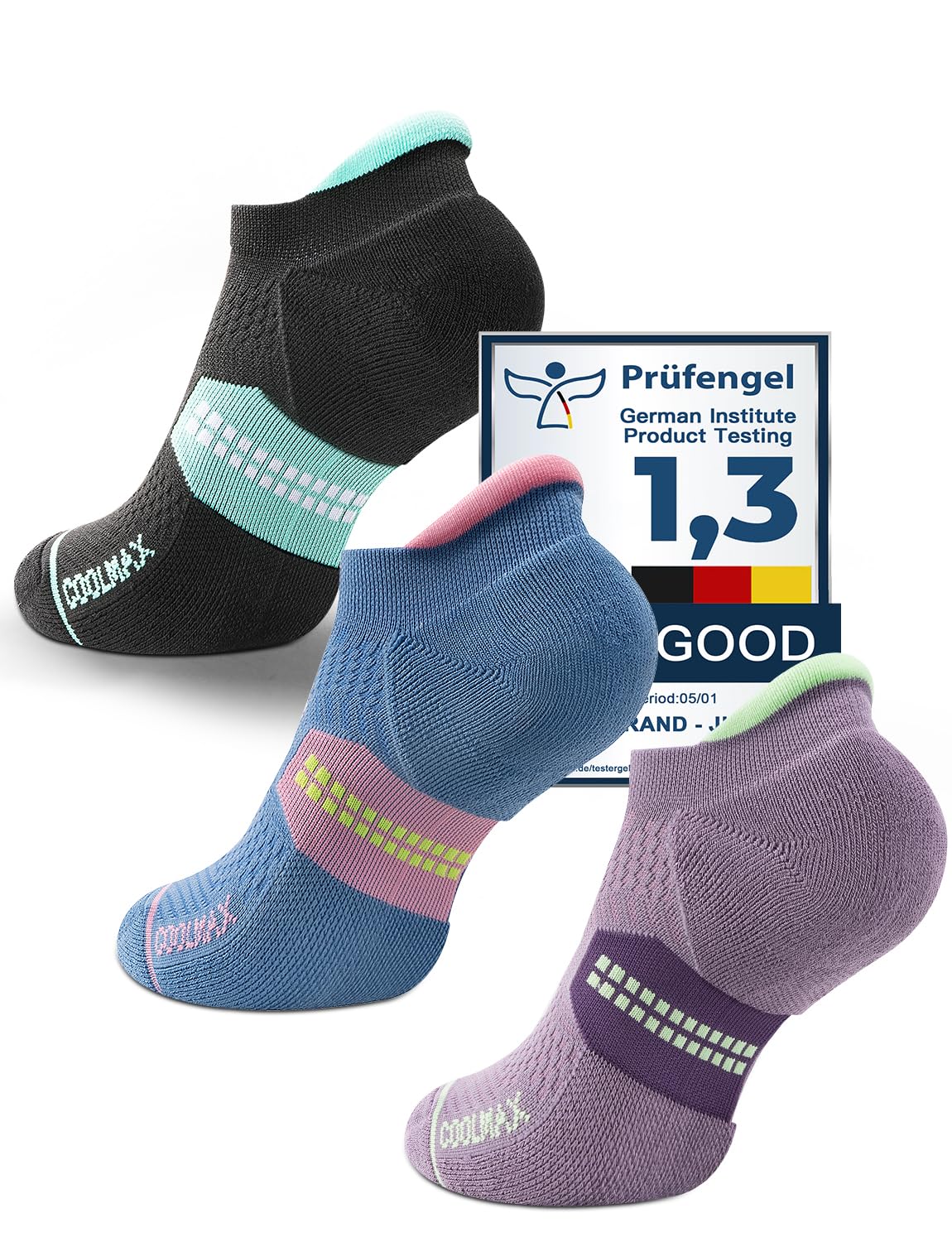
6. Juclise Women’s No Show Compression Running Socks (3 Pairs)
A no-show sock with a mesh vent over the instep — the closest thing to a summer running sock here
The defining feature is the breathable mesh panel covering the instep (the top of your foot inside the shoe), which is exactly where heat builds on a run. It is the most summer-tuned design in the group. Add a hand-made smooth toe and an L and R shaped fit, and the sock sits clean against your foot instead of bunching. Reviewers point out feet staying cool and dry through workouts, with sweating kept in check.
Quality is what buyers mention most, and comfort is close behind. The sock fits without the heel riding halfway up your leg — a common problem for smaller feet — and the arch support is real enough to help with arch pain. A 9 to 9.5 wearer called them thick but not hot and quick to dry after rain, and a 75-year-old runner said the ankle compression eased foot, ankle, and knee pain without the too-tight squeeze of older compression socks.
The honest limits are two. The compression sits mainly through the arch and ankle, not across the ball of the foot, so if you want squeeze there, these will come up short. And the three-pair pack costs more per pair than many bulk options, so you are paying for the ventilated design. The sock is worth it if your goal is cool feet in gym shoes, less so if you want full-foot pressure or a knee-high.
The summer build: The instep mesh vent plus a hand-made smooth toe is a genuinely hot-weather-specific design, and the L and R fit keeps the sock from shifting underfoot.
Where the pressure sits: Compression runs through the arch and ankle; buyers wanting a firm squeeze across the ball of the foot will find it lighter than they like.
Pick these for the gym: Runners and gym-goers with smaller feet who want a cool, low-profile sock that holds its place.
Pass on them if: your priority is full-foot compression or a knee-high that helps calf swelling.
7. Juclise Women’s Compression Crew Hiking Socks (3 Pairs)

Crew-height with mesh across the whole footbed — built for trail days when blisters are the enemy
This is the taller sibling to the no-show pair above, and it goes further on breathability: mesh panels run across the entire footbed, not just the instep. Add a hand-made smooth toe and reinforced padding at the heel and ankle, and you have a sock aimed squarely at long, sweaty trail miles. The heel and ankle padding takes the friction from shoes that causes hot spots, and the tab at the back holds the sock up.
The quality is the standout, with comfort right behind. Someone ran a 10K with no blisters or bruises and credited the firm arch and ankle compression without a squeezed toe, plus the soft, breathable fabric. A nurse on 8-hour shifts found them soft and easy to pull on, though on very long days they grew too snug at the calf. The compression reaches through the arch and lower calf, and it holds a place in boots rather than sliding down.
Two things to weigh. Sizing runs small at the top end — a women’s 9.5 fit a Large better than the smaller size — so size up if you are near the upper limit. And durability is the mixed note: some pairs hold up well, while a few develop fraying after a single wash. They are also a crew sock, so they help the lower leg but are not a knee-high for deep calf swelling.
For trail days: Hikers and runners who want a breathable crew sock with ankle and heel padding to stop blisters will get the most from these.
Size up if: you are between sizes or want a knee-high for full calf coverage.
8. 7BIGSTARS Men’s Cotton Diabetic Mid-Calf Socks (5 Pack)

These are the ones that are NOT compression socks, and that is the whole point if a squeeze bothers you
Let us be clear up front: the maker states outright that these are diabetic socks, not compression socks. So they do not belong in the same pile as the graduated pairs above. Their job is the opposite — to sit loose, smooth, and non-binding so nothing digs into a sensitive foot or swollen ankle. That makes them the answer for anyone who tried compression, hated the squeeze, and still wants a cool, comfortable mid-calf sock through a hot summer. The fabric is a cotton-rich blend, breathable through a mesh weave.
What buyers praise most is the quality of a sock that stays up without binding. Fit runs a close second — it holds the calf without pinching, and the non-binding design is comfortable through a full day. They work for the desk and the office as well as around the house, and the patterned, striped, and argyle options mean the sock looks sharp instead of medical. The loose knit keeps blood moving instead of pinching it off, which is the whole point of a diabetic sock.
The quirk to plan around is length. Sizing is men’s 9-12 shoe in a large, and the five-pack is a generous set. If you specifically want compression pressure, skip these entirely and pick from the mmHg list above.
The no-squeeze niche: A cotton-rich, smooth, non-binding mid-calf sock that stays up without cutting off anything, which is exactly what diabetic and sensitive-foot wearers need.
Heads up on length: They run taller than the listing photos imply, landing mid-calf to near the knee rather than just above the ankle.
Right for sensitive feet: Diabetic and elderly wearers who want a breathable, non-binding sock for hot weather will find the fit gentle and the look neat.
Wrong choice if: you came here for actual compression pressure — this sock has none by design.
9. Different Touch Women’s Knee High Compression Socks 9-11
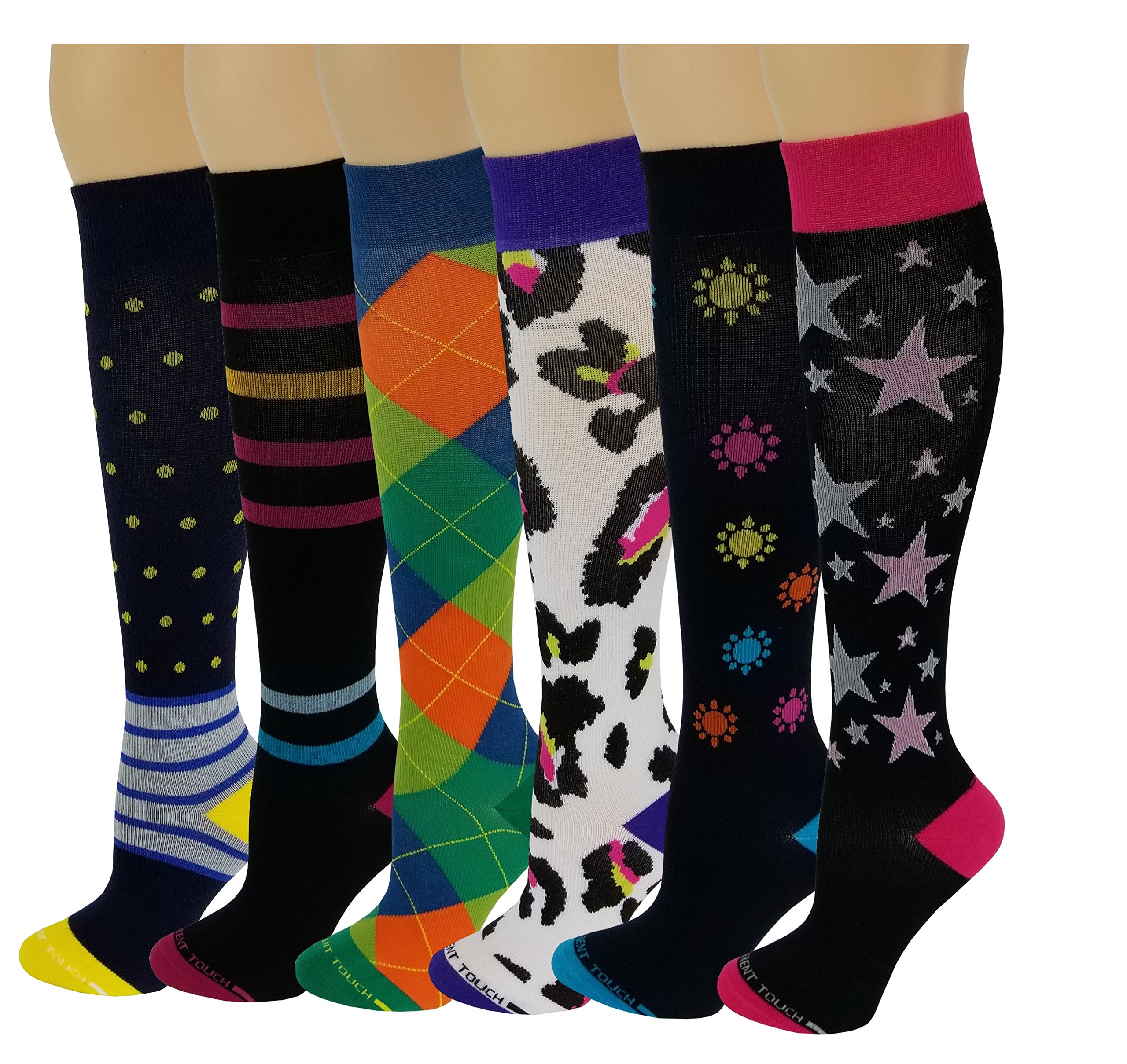
The 8-15 mmHg light squeeze, in six fun knee-high colors
The 8-15 mmHg rating is the lightest pressure in this article, and that is why it works for hot weather. It is enough of a hug to help tired legs after a long day standing or sitting, without the heat-trapping squeeze of a firm sock. Owners wear them through summer days without feeling smothered, and they are soft and moderate to put on. You get six knee-high pairs in the pack, and the colors are the kind you cannot find in a department store.
The fit is where these earn it: comfortably snug, they stay up all day without rolling down, and they work well for plus-size women — a 17-inch calf fits fine, which is rare to find. There is no annoying toe seam, and they handle a whole day with no leg or foot pain at the end. One teacher called them life-changing for long sitting and standing days and bought extra sets as gifts.
The honest note is the foot part. Some slender-footed wearers find the ankle-to-toe section tight and awkward to pull on, even once the sock is up the leg. They also run long for shorter or thinner calves, so they can sit at mid-knee rather than a clean knee-high — foldable, but not a tailored fit. Low-pressure also means light support only; if you need firm graduated squeeze, this is not your sock.
Best for casual help: Anyone who wants light, cool-to-wear knee-highs with cheerful patterns for everyday tired legs.
Keep in mind: The lower leg gets gentle support only, and the foot section can be a fight to pull on for narrow feet.
10. Sockwell Women’s The Raj Firm Compression Socks
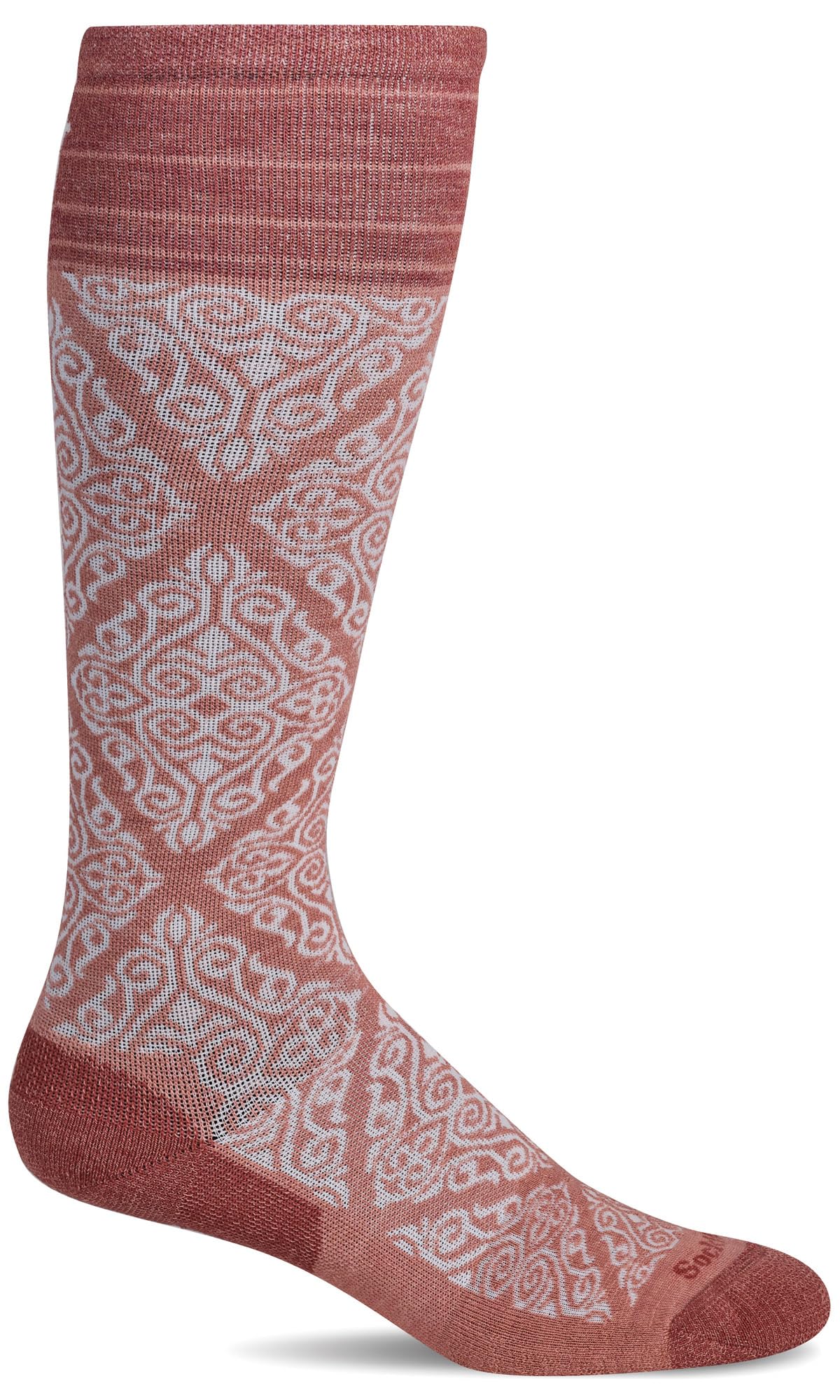
Merino-blend knee-highs that look like trouser socks and work a 12-hour shift
Here is the detail that matters in summer: the sock is built from a fine merino-wool and rayon blend, and wool resists sweat and odor in a way cotton cannot. Owners specifically wear the Raj in summer humidity without the swampy feel of synthetic compression socks. The firm zoned compression comes in 15-20 mmHg and 20-30 mmHg options, and the maker’s four-zone anti-fatigue design runs the pressure where it helps most. This is the dressier end of the category — the patterns read as trouser socks, not medical gear.
Quality and appearance are the reasons people keep coming back. A tall wearer at 5 foot 11 found the stretch generous enough to reach the knee base, staying there without falling or pinching. A long-haul flyer landed with ankles that were not at all swollen, and one hospital worker reported no more aches across 12-hour shifts after switching to these. One buyer with a clot history wears these to keep swelling down on flights while still looking stylish.
The honest caveats cost a star or two. The compression softens with age, so expect the squeeze to loosen over months of daily wear. The toe area can wear out and is not reinforced the way a Gold Toe sock is, and the top can bunch behind the knee unless you pull it down slightly. Some summer users switch to a cotton pair for the three hottest months, so if you run very hot, treat this as a cooler-day and travel sock rather than high-summer.
Why it looks like a dress sock: The merino-rayon blend gives that smooth trouser-sock look, while the four-zone graduated compression does the heavy lifting underneath.
The wear curve: Compression fades over months of daily use, and the toe is not reinforced, so this is a sock to rotate rather than wear daily.
The office-ready option: Women who want a stylish merino knee-high that performs through long shifts or flights should start here.
Plan to rotate them: If you want maximum summer breathability or a sock that keeps its firmest squeeze for years, plan to wear these on cooler days.
11. Alpaca Wool Heavyweight Thermal Boot Socks
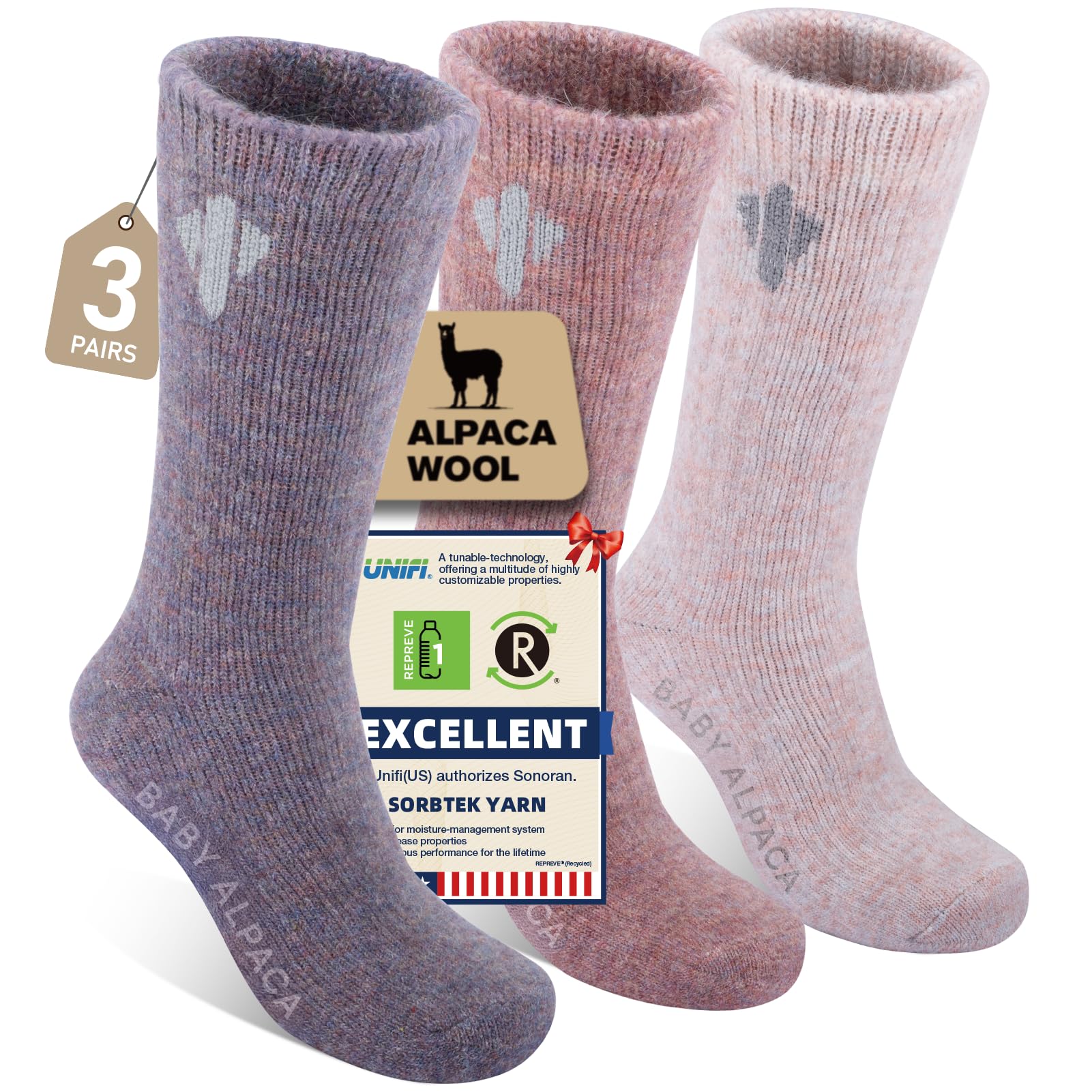
A heavyweight alpaca boot sock for cold-weather treks, not a compression sock at all
We are being honest: this is the odd one out. It is a thick, warm alpaca-wool boot sock made for hunting, hiking, and cold weather — it has no compression rating and it is not a summer sock. So why is it here in a guide about hot weather? Because some buyers in this category are planning for winter hunts and cold-weather hikes and want a wool sock that stays dry, and this one earns its place if that is you. Wood is what makes it breathe, and the wool moves moisture off your feet even when conditions are wet.
Warmth and quality are the two things people rave about. Owners wore them standing outside at 30 degrees and stayed warm, kept warm even with rain-soaked sneakers at 60 degrees, and described them as soft, warm, and non-itchy despite the heavy wool. The 82% alpaca and merino blend is what gives that soft, non-scratchy feel, and the sock does not leave elastic marks at the calf. One owner declared them the best socks they own and gets use out of them in every season.
But if summer heat is your problem, this is the wrong purchase. These are heavyweight thermal socks meant for cold, and they will be far too warm for hot weather. The care is also fussy — cold water only, hand wash or delicate cycle, air dry — and the price per pair is on the premium end. Buy them for a winter hike or a hunting trip, not for a humid July commute.
Why cold-weather buyers love them
- Heavyweight alpaca-merino blend that stays warm in wet, cold conditions
- Soft and non-itchy despite the thick wool
- Wicks moisture, so feet stay dry through long outdoor days
Why summer buyers should look away
- Heavyweight thermal build is far too warm for hot weather
- Cold wash and air dry only
- Premium per-pair cost and mixed feedback on durability
Buy it for the cold: Hunters, hikers, and cold-climate wearers who want a soft, genuinely warm wool sock will get real use from these.
Not a summer sock: For humid July days or compression needs, pick anything else on this list.
Know the Specs
What mmHg Actually Means
mmHg is a pressure unit — said as “millimeters of mercury” — and on a compression sock it tells you how hard the fabric squeezes. Lighter ranges like 8-15 mmHg are a gentle hold that suits warm-weather everyday wear; 15-20 mmHg is the everyday therapeutic range; 20-30 mmHg is a firm medical-style squeeze that runs warmer. Pick the lightest range that does the job you need.
Graduated vs Even Compression
Graduated compression is tightest at the ankle and eases as it climbs the calf, which is what helps move fluid upward. Even compression puts the same pressure throughout. Graduated socks generally cost more to make but do more for swelling; plain compression-fit athletic socks are built for hold and support rather than therapeutic squeeze.
Fabric: Why Wool and Bamboo Beat Cotton in Heat
Merino wool, bamboo, and moisture-wicking synthetics pull sweat off the skin and dry quickly, so they resist odor and stay cool-feeling. Cotton absorbs sweat and holds it, which is why heavy cotton socks turn clammy on a hot day. Look for terms like moisture-wicking, mesh panel, or breathable vent when heat is your main concern.
Sizing: Match Your Calf, Not Just Your Shoe
The most common fit complaint in this category is a calf band that rolls, digs, or runs too small. Always check the calf and shoe size the maker lists, and size up if you are between sizes or have a large calf. The wrong size turns a good sock into a fight every morning.
Common Questions
Are compression socks too hot to wear in summer?
What is the best mmHg for everyday summer wear?
Do merino wool compression socks work in hot weather?
What is the difference between compression socks and diabetic socks?
How do I pick the right size compression sock for a wide calf?
Can I wear compression socks all day in hot weather?
Do compression socks help with swollen ankles on a long flight?
How should I wash compression socks so they keep their squeeze?
Are no-show compression socks as effective as knee-high ones?
Will compression socks keep my feet dry during summer workouts?
Can I wear compression socks if I have diabetes or sensitive feet?
The Bottom Line
For most people buying compression socks for summer heat, the winner is the Swiftwick Aspire One because its cotton-free, fast-drying knit keeps feet dry through hot training days while a skin-tight-but-not-crushing fit holds everything in place. If you want a breathable merino knee-high for flights and long shifts, grab the Merino Wool Compression Socks. And if you want a drawer full of colored knee-highs you can rotate all week, the CHARMKING 8-pair set is the one to reach for.
One honest nudge before you decide: the summer pairs that breathe best are the ones built around a light pressure and a moisture-moving fabric, so match the pair to your hottest days rather than the firmest squeeze. Get that right and the sock stops being something you pull off by noon.
How we choose
We do not accept paid placement. Every pick is matched to a real buyer and a real use-case; we do not hands-on test units.
Sources
Specifications: manufacturer listings and product documentation. Review insights: verified customer reviews, as of October 2026. Pricing: not shown on this page (it changes often); check the current price via the retailer link.
As an Amazon Associate, Aappliancez earns from qualifying purchases. This does not affect which products we feature.