Disclosure: Some links in this post are affiliate links. As an Amazon Associate I earn from qualifying purchases, at no extra cost to you. Learn more
Specs are compiled from manufacturer listings and verified buyer reviews and can change over time — please confirm the key details on the product page before buying.
If your feet tingle, burn, or go numb by mid-afternoon, the right pair of graduated socks can change your whole day — and the wrong pair will squeeze your toes or slide down. The trick is matching the compression level to your calf size, not guessing from the label. Here are five pairs that hold their shape, stay put, and are genuinely comfortable for nerve-pain days.
This guide is built by comparing the manufacturers’ published specifications and the patterns across verified customer reviews, so you get each pick’s real strengths and trade-offs instead of marketing spin.
Neuropathy changes what you need from a sock — pressure has to be firm yet non-binding, and the fabric has to stay soft against sensitive skin. That is the lens this guide uses to rank the best compression socks for neuropathy.
Top Picks

How To Choose The Best Compression Socks for Neuropathy
With nerve pain, the goal isn’t the tightest sock you can tolerate — it’s the one you can wear for eight to fourteen hours without your toes going numb or your calf getting a red welt. Getting that balance right starts with two numbers: the compression level (measured in mmHg, a unit that describes how much pressure the fabric puts on your leg) and your calf circumference in inches.
Compression level: 15-20 mmHg vs 20-30 mmHg
A sock rated 15-20 mmHg offers mild, gentle pressure — a good starting point if you’re new to compression or your feet are especially sensitive to touch. A sock rated 20-30 mmHg gives firmer support and is the level most commonly chosen for swelling, tingling, and long stretches on your feet. Neither is “better” — the right one depends on how your legs feel after a full day. If you’re between sizes, size up for a lighter feel or size down for firmer support.
Measuring your calf so the sock actually fits
Wrap a soft tape measure around the widest part of your calf and record the number in inches, then check that against the brand’s own chart. Getting this wrong is the number one reason a good sock feels terrible — too small creates pressure lines and irritation, too large means it slides down and gives no support. Some brands also publish shoe-size ranges alongside calf measurements, so you can cross-check both before ordering.
Fabric and toe style matter more with nerve pain
Look for materials that feel soft against skin and manage moisture, because rough or sweaty fabric can aggravate already-sensitive feet. Open-toe (toeless) designs let your toes breathe and remove pressure from the tips — especially useful if your toes are tender or swollen. Closed-toe designs give full coverage and extra warmth but can press on sensitive toes. Both styles work fine for neuropathy; the choice is about comfort, not function.
Side-by-Side Comparison
| Model | Best For | Compression Level | Toe Style | Fabric | Amazon |
|---|---|---|---|---|---|
| Physix Gear Compression Socks 20-30 mmHg★ Best Overall | All-day wear, nurses and long shifts | 20-30 mmHg | Closed toe | Nylon/Spandex blend | Amazon |
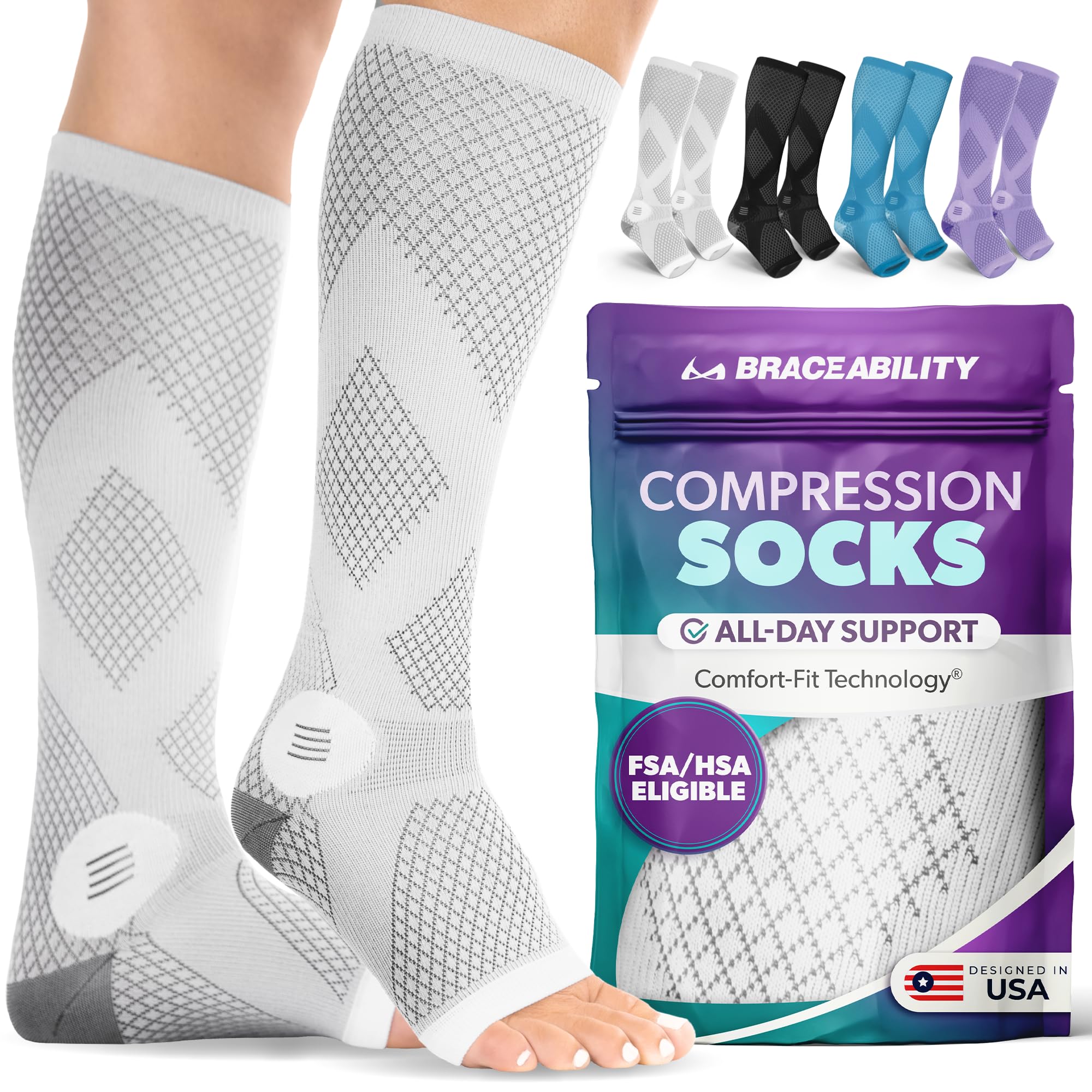
| BraceAbility 20-30 mmHg Knee HighBest for Sensitive Toes | Neuropathy and edema relief | 20-30 mmHg | Open toe | Moisture-wicking, non-binding | Amazon |
| SB SOX Compression Socks 20-30mmHg | Wide calf fit, travel and flights | 20-30 mmHg | Closed toe | 80% nylon / 20% spandex | Amazon |
| +MD 2 Pairs 20-30 mmHg Open Toe | Multi-pair value, sensitive toes | 20-30 mmHg | Open toe | Spiral knit, skin-friendly | Amazon |
| Merino Wool Compression Socks 15-20 mmHg | Cold weather, warm and breathable | 15-20 mmHg | Closed toe | Merino wool blend | Amazon |
Detailed Reviews
1. Physix Gear Compression Socks 20-30 mmHg – Men & Women
Our pick — 4.5★ from 96,000+ verified ratings; the strongest balance of quality and price.
The workhorse pair that nurses buy four at a time and wear through double shifts.
If your feet tingle when you’re on them all day, this is the pair to start with. The 20-30 mmHg graduated support (pressure that’s firmest at the ankle in millimeters of mercury and eases as it climbs) is the level most people reach for when tingling and swelling need real, consistent help. The fabric is a nylon-spandex blend that stays soft and thick — owners describe it as higher quality than cheaper pairs they’ve tried.
These socks keep their squeeze wash after wash, so they still support your legs months later instead of going slack. A waitress who stands all shift called them “a total standout,” and owners say their legs still feel fresh at day’s end instead of sore and exhausted. Nurses with seven years of compression-wear experience report less fatigue and swelling, easier on-off, and less under-knee indentation than tighter pairs leave.
The honest catch is sizing. A small cluster of buyers report the fit runs tight from the start, and some struggle to pull them on at first. That’s normal for 20-30 mmHg — true medical-level pressure is meant to hug, and it loosens with wear. If you’re between calf sizes, size up; and if your toes are especially tender, an open-toe design like the BraceAbility pair below may sit better on your feet.
Where It Shines
- 20-30 mmHg graduated support holds its compression through repeated washing
- Soft, thick nylon-spandex blend that owners say outlasts cheaper pairs
- Stays up near the knee without the deep indentation some tighter socks leave
- Ideal for nurses, waitstaff, and anyone standing eight to fourteen hours a day
Worth Knowing
- Sizing leans snug — consider sizing up if you’re between calf measurements
- Tight to pull on the first few wears until the fabric relaxes
- Closed-toe design may press on already-sensitive toes
Reach for this if: you want one reliable pair for long shifts and all-day standing, with support that genuinely lasts.
Look elsewhere if: your toes are tender enough that an open-toe cut would feel better — the BraceAbility below is built for that.
2. BraceAbility Compression Socks 20-30 mmHg
Built for feet that can’t take pressure on the toes — and it’s the lightest of the five.
When your neuropathy lives in your toes, an open-toe sock (one that stops short of the tips so they stay uncovered and free) is often the difference between wearing compression and giving up on it. This pair leaves your toes completely uncovered while still delivering full 20-30 mmHg graduated support up the calf. The fabric is lightweight, breathable, and moisture-wicking, which keeps feet cool and dry through long stretches on your feet.
The sizing is where this pair earns its keep. The manufacturer asks you to check the sizing chart and size up for lighter compression or down for firmer — and the feedback bears that out. An owner who wears them for neuropathy and edema describes them as “comfortable, not binding an extremely easy to put on.” Others note they’re silky enough for sleep and gentle enough not to dig in.
At 10.5 x 5.5 x 1.25 inches, this package is notably larger than the SB SOX pair below at 5 x 5 x 0.7 inches, so if travel-bag space matters, keep that in mind. A small handful of owners find sizing ambiguous and one reports durability trouble after washing, so check the chart carefully and follow the care instructions. If you’re unsure, size up rather than guessing tight.
Best for tender toes: the open-toe cut removes all pressure from the tips while the 20-30 mmHg calf support stays firm — ideal if closed-toe socks have felt unbearable.
One thing to check: the sizing chart is a touch ambiguous for some buyers, so measure your calf and size up if you’re between sizes rather than risk a snug fit.
Pick this if: toe pressure is your main problem and you want firm calf support without anything touching your toes.
Skip if: you need full-toe warmth in cold weather — a closed-toe sock will suit better.
3. SB SOX Compression Socks for Men & Women (20-30mmHg)
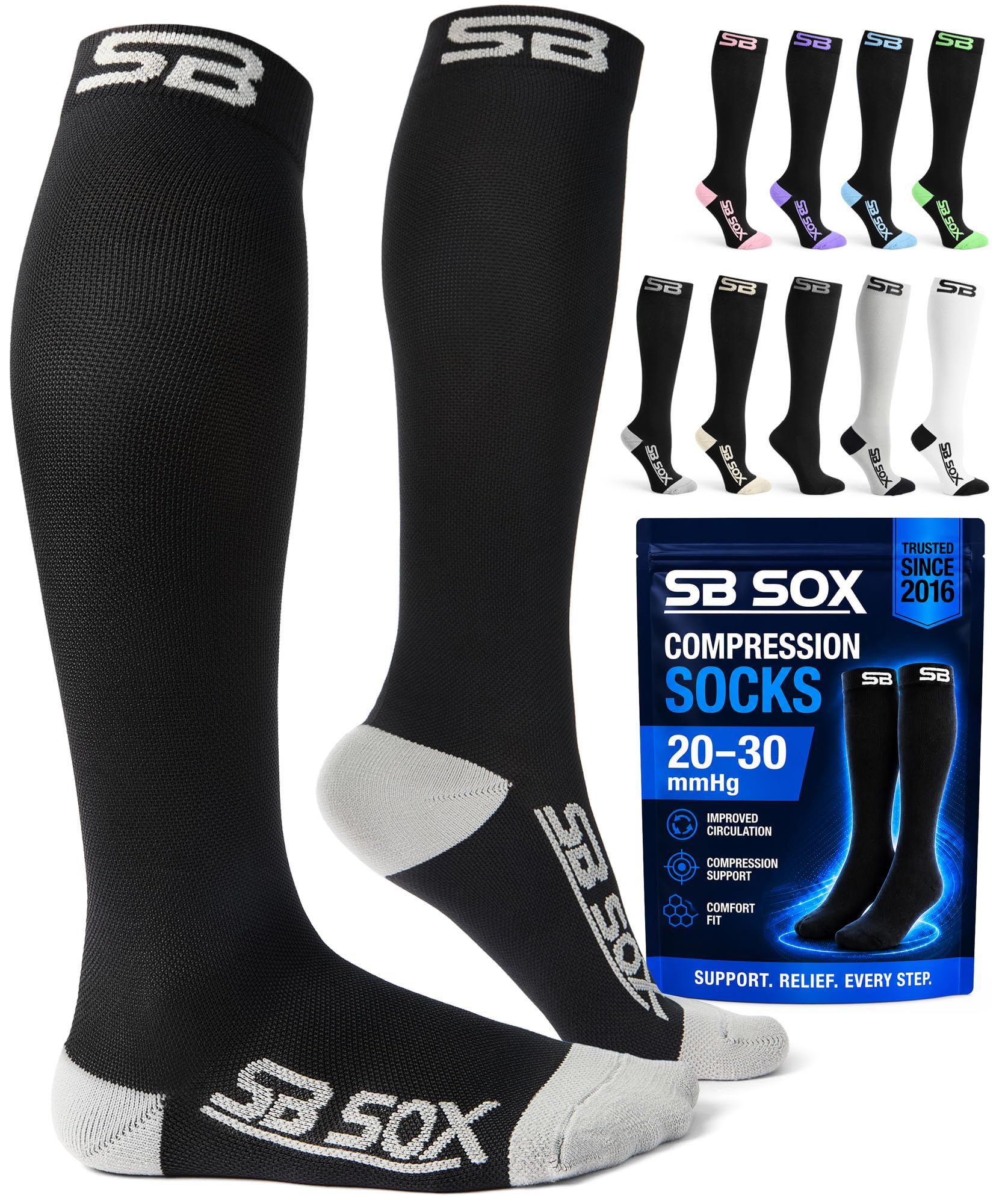
Five published size bands that actually cover wider calves and bigger feet.
If you’ve been squeezed by one-size compression socks, this is the pick that respects your build. The sizing runs all the way out to XX-Large — a 20-24 inch calf — with shoe-size ranges published alongside every band, so you can match both your calf measurement and your shoe size before you order. The fabric is 80% nylon and 20% spandex, with a reinforced cushioned heel and toe that many owners say feels soft rather than scratchy.
What owners mention most is that these hold their shape. Several repeat buyers call them their go-to for long flights — one owner flying between Arizona and Buenos Aires reports no swelling, no skin irritation, and easy on-off, while another says they keep their compression through years of washing and drying. That’s the real test of a graduated sock (one that squeezes tighter at the ankle and looser up the calf): does it still do its job a year in?
One genuine watch-out: the sizing guide isn’t perfect. A sensitive-skin owner got red irritation lines from the chart’s recommended Large and found the XL resolved everything — so if your skin is reactive, start a size up. Think of it as insurance on the fit. And unlike the +MD pair below, this is a single pair per order, not a two-pack.
What Buyers Praise
- Five calf bands up to XX-Large (20-24 inches) with matching shoe-size ranges
- 80% nylon / 20% spandex holds compression through years of washing
- Reinforced cushioned heel and toe for extra comfort underfoot
- Ideal for long flights and travel days with no swelling reported
Where It Could Be Better
- Sizing guide can run small — sensitive skin may prefer to size up first
- Single pair per order, so a full week’s rotation means buying more
Your match if: you have wide calves or large feet and want a sock that finally fits properly.
Consider an alternative if: you want a value two-pack in one order — the +MD below is the better fit for that plan.
4. +MD 2 Pairs 20-30 mmHg Compression Socks for Women & Men
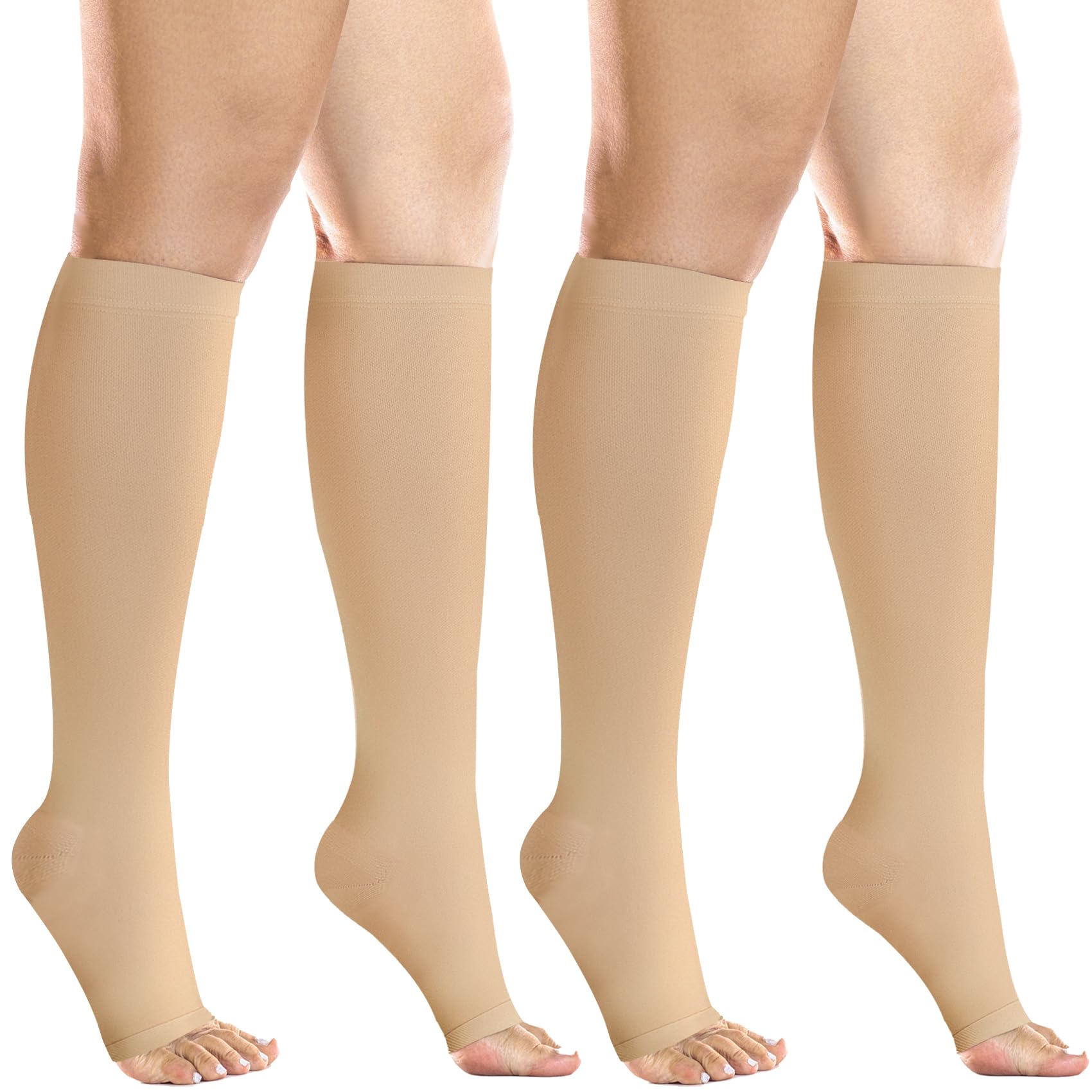
Two open-toe pairs in one order — so you’re never stuck waiting on laundry day.
When you’re wearing compression every day, having a second pair covers the day one is in the wash. That’s what this pick gets right: two 20-30 mmHg knee-high open-toe socks per order, both with the same graduated support. The open-toe cut keeps your toes uncovered, and the spiral knit construction resists abrasion and hooking, which helps the fabric hold up over repeated wear.
The fit here is genuinely split. Some customers note a nice tight fit that’s easy to pull on, while others find it doesn’t match their expected size and takes effort to apply. The manufacturer’s own advice is worth following: if you’re new to compression socks, choose a size larger to start, and use the included foot-cover slider to ease the sock on. Doing both makes the first few wears dramatically smoother.
The fabric is medium-thickness and breathable enough to wear across seasons without feeling sweaty, and the elasticity is designed to keep its compression value over time. The construction instructions ask you to roll the sock up from heel to knee — rather than yanking directly onto bare skin — which protects both the fabric and your calf. Treat that step as non-optional if you want them to last.
Two pairs, one decision: because you get a backup pair in the same order, this works well for anyone wearing compression daily and tired of hand-washing in the evening.
Size-up first: owner feedback swings between “perfect fit” and “too small,” so order the larger size if you’re new to compression — that’s the manufacturer’s own recommendation too.
Best suited to: daily-wearers who want an open-toe sock and a spare pair without reordering.
Less ideal if: you know your exact size and prefer to dial in a single pair — the SB SOX above offers more size bands to choose from.
5. Merino Wool Compression Socks for Women & Men 15-20 mmHg
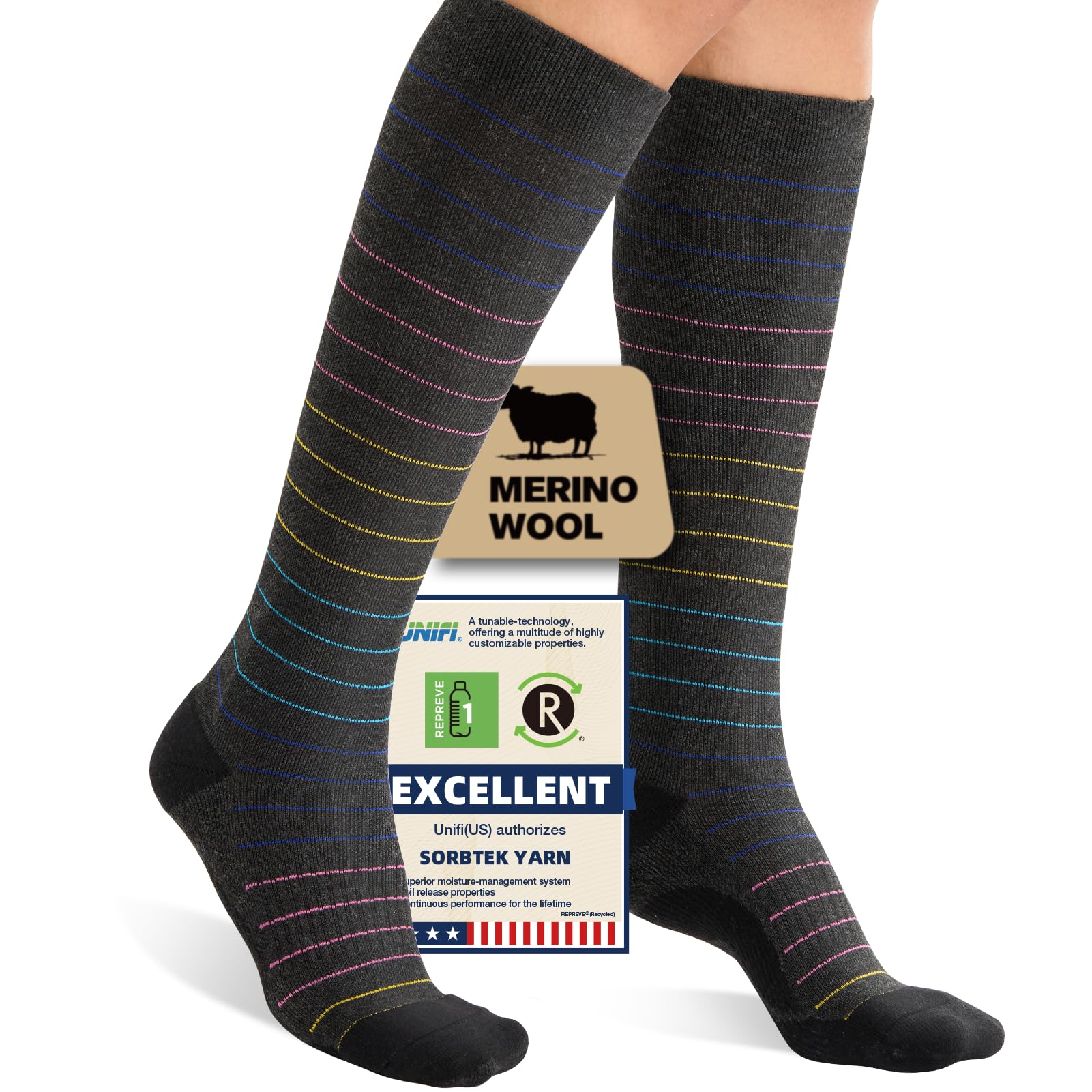
A softer, warmer take on mild compression — the easiest of the five to pull on.
If you’re new to compression or your feet are too sensitive for firm pressure, start here. These run at 15-20 mmHg — the gentler end of the range — in a merino wool blend that owners consistently describe as soft, warm, and easy to slide on. This is the pair for chilly mornings, cold offices, and travel days when a lighter squeeze is all your legs need.
The warmth is the standout. Wool insulates without trapping sweat, and owners note these stay comfortable through long shifts, work well overnight to reduce morning puffiness, and prevent the digging and rolling that cheaper socks cause. One traveler wore them through a three-week vacation and reported that “the compression is just right” and that they “don’t hurt my legs.” Nurses with sensitive skin who get itching and dryness from common compression socks say these stay cushiony and cool.
Two things to weigh. At 15-20 mmHg, this offers milder support than the 20-30 mmHg picks above, so if tingling is severe you may want firmer pressure. And the merino thickness fits loose mesh shoes rather than snug ankle boots, so plan your footwear around the extra bulk.
Why It Wins in Winter
- Merino wool insulates without the clammy feel of synthetic socks
- 15-20 mmHg gives gentle support — the easiest of the five to put on
- Soft against sensitive skin; no itching or dryness reported
- Owners wear them overnight to wake up with less puffiness
Trade-Offs To Weigh
- Milder 15-20 mmHg support than the 20-30 mmHg picks above
- Thick merino fits mesh shoes better than tight ankle boots
- Sold as a single pair, so a full rotation costs more
Choose this if: you want gentle warmth, easy on-off, and soft fabric for cold days or overnight wear.
Want firmer support? Step up to the 20-30 mmHg Physix Gear or BraceAbility pairs for stronger pressure.
Know the Specs
mmHg Compression Levels
mmHg stands for millimeters of mercury — a unit that describes how much pressure a sock puts on your leg at a given point. A 15-20 mmHg sock applies mild pressure, good for occasional swelling, travel, or sensitive skin. A 20-30 mmHg sock applies firmer, graduated pressure that is strongest at the ankle and eases toward the knee, which is the range most often chosen for ongoing tingling and swelling. Graduated means the sock is deliberately tighter at the bottom than the top so it helps blood flow upward rather than pooling in your feet.
Open Toe vs Closed Toe
Open-toe (toeless) socks stop before your toes so the tips stay uncovered — handy when your toes are tender or swollen. Closed-toe socks cover the full foot for warmth and full-coverage feel, but the fabric can press on sensitive toes. Both provide the same calf support; the difference is purely where the fabric stops. If you’ve found closed socks uncomfortable, an open-toe pair is a simple fix.
Common Questions
What is the best mmHg level for neuropathy?
How do I measure my calf for compression socks?
Are open-toe compression socks better for sensitive toes?
How long can I wear compression socks in a day?
Can I wear compression socks all night for neuropathy?
Should I size up or down if I’m between sizes?
How do I wash compression socks without ruining them?
What’s the difference between 15-20 mmHg and 20-30 mmHg?
Will compression socks help with numbness in my feet and toes?
How do I get tight compression socks on more easily?
The Bottom Line
For most people, the best compression socks for neuropathy are the Physix Gear 20-30 mmHg — firm graduated support (tighter at the ankle, looser up the calf), soft thick fabric, and day-after-day durability make them a strong pick for nurses, waitstaff, and anyone standing through long shifts. If tender toes or swollen feet are your main issue, the open-toe BraceAbility 20-30 mmHg keeps pressure off the tips while still delivering firm calf support. And if you want gentle warmth for cold mornings and overnight wear, the Merino Wool 15-20 mmHg pair is the softest, easiest-on choice of the five. Buy one pair, wear it for a week, and let your legs tell you which compression level fits your day.
How we choose
We do not accept paid placement. Every pick is matched to a real buyer and a real use-case; we do not hands-on test units.
Sources
Specifications: manufacturer listings and product documentation. Review insights: verified customer reviews, as of October 2026. Pricing: not shown on this page (it changes often); check the current price via the retailer link.
As an Amazon Associate, Aappliancez earns from qualifying purchases. This does not affect which products we feature.