Disclosure: Some links in this post are affiliate links. As an Amazon Associate I earn from qualifying purchases, at no extra cost to you. Learn more
Specs are compiled from manufacturer listings and verified buyer reviews and can change over time — please confirm the key details on the product page before buying.
Swelling around a replaced knee is stubborn, and a sock that digs in or rolls down makes a long recovery day worse. The picks below are knee-high compression socks graded from light (8-15 mmHg) to firm (20-30 mmHg), so you can match the squeeze to your surgeon’s or therapist’s instructions and to how much help you actually need.
This guide is built by comparing the manufacturers’ published specifications and the patterns across verified customer reviews, so you get each pick’s real strengths and trade-offs instead of marketing spin.
You will see how each sock fits a real calf, how hard it is to pull on in the morning, and where the top band lands. That matters most when choosing compression socks after knee replacement, so every pick here is judged on fit, donning, and staying power, not just the number on the label.
Top Picks

How To Choose The Best Compression Socks After Knee Replacement
Your knee is still the boss here. A knee-high sock has to reach past the knee to do its job, yet it also has to stop below the bend without pressing on a tender joint. The starting point is the compression level your care team gives you, because that number decides how firm the sock feels and how hard it is to pull on.
Match the mmHg number to your own leg
Compression is measured in mmHg (millimetres of mercury), a pressure unit. The light 8-15 mmHg range feels like a gentle hug and is easy to put on. The 20-30 mmHg range is firm and is the level most often named in medical-style stockings. Choose the level you were told to wear, not the strongest one on the page — a firmer sock does not suit a leg that swells only a little.
Measure the calf, then the ankle
Size is not the same as shoe size. Measure around the widest part of your calf and around your ankle, then match both numbers to the maker’s chart. A sock that is short on the calf measurement will bite behind the knee. A sock that is long on the ankle measurement will bunch at the foot.
Think about how you will put it on
Right after knee replacement you may not be able to bend far enough to wrestle on a tight sock. A thinner knit and a wider top band make donning easier. So does putting the sock on inside out first, rolling it up from the toes. Pick a firm sock only if you have help or a sock donner on hand.
Side-by-Side Comparison
| Model | Best For | Compression Level | Pack / Count | Length | Amazon |
|---|---|---|---|---|---|
| Hoplite Premium High Performance Compression Socks★ Best Overall | Firm-enough recovery support plus gym use | Not stated in product data | 1 pair | Knee-High | Amazon |
| ABSOLUTE SUPPORT 3 Pairs Unisex Compression SocksFirmest Support | Firm all-day support across three pairs | 20-30 mmHg | 3 pairs | Knee-High | Amazon |
| Dr. Motion 3 Pairs Knee-hi Socks | Gentle everyday compression that looks like a normal sock | 8-15 mmHg | 3 pairs | Knee-High | Amazon |
| JOBST Relief 20-30 mmHg Knee High Graduated Compression Stockings – Regular Band | Firm, medical-style compression for heavier swelling | 20-30 mmHg | 1 pair | Knee-High | Amazon |
| JOBST Relief 20-30 mmHg Compression Stockings, Knee High, Closed Toe | Easy-on firm compression for daily wear | 20-30 mmHg | 1 pair | Knee-High | Amazon |
Detailed Reviews
1. Hoplite Compression Socks
Our pick — 4.5+★ from 400+ verified ratings; the strongest balance of quality and price.
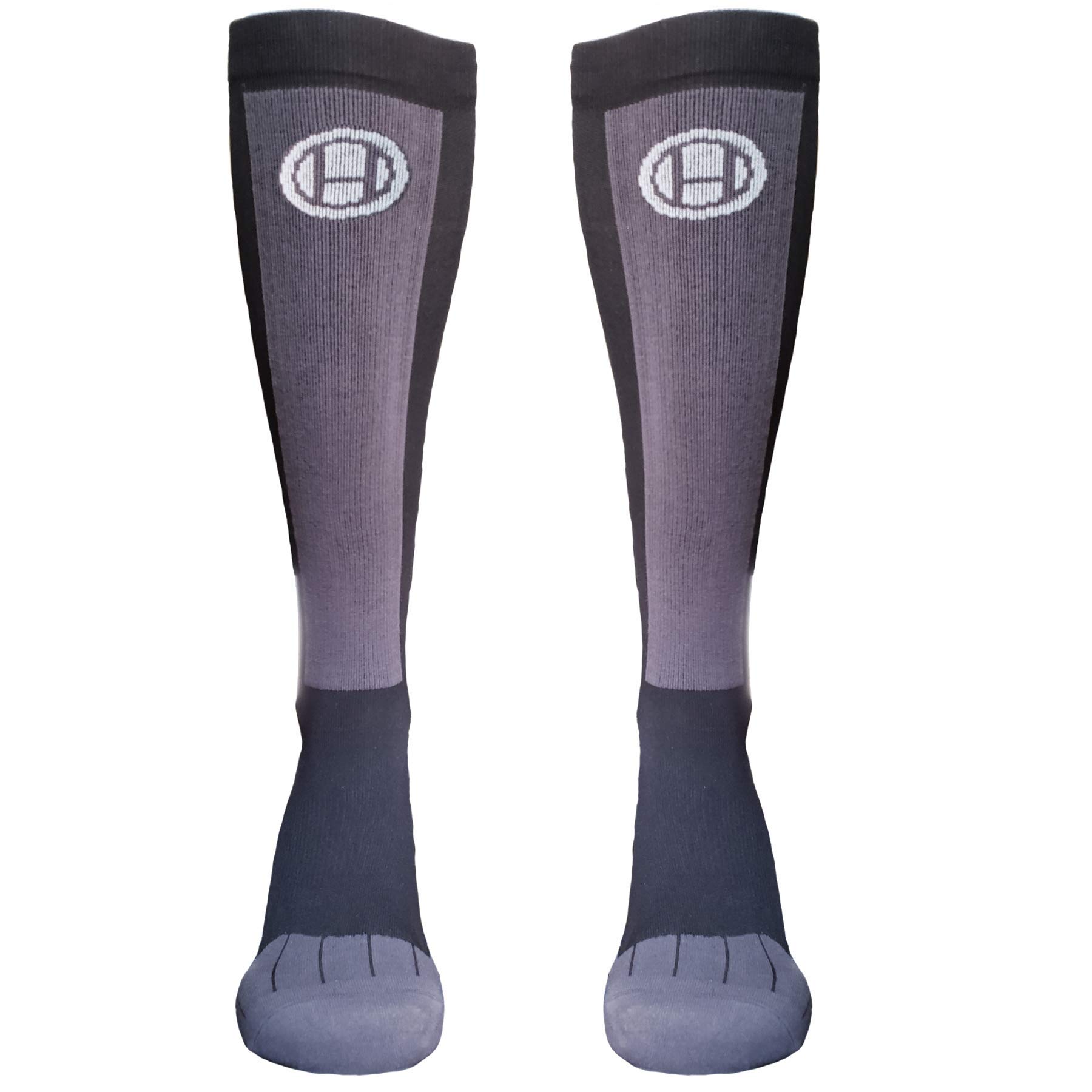
The dense knit that holds its place through mud, sweat, and a full day on your feet.
For a recovering knee that needs steady pressure without a fight getting dressed, this is the pick that blends support and everyday practicality. What wins people over is the tight, grippy knit: it stays anchored on the calf instead of sliding down mid-afternoon. The compression is described by buyers as protective rather than aggressive, which suits a leg that wants help without a hard squeeze.
Weight sits light on the leg at 3.59 ounces (about 102 grams), noticeably airier than the bulky Dr. Motion three-pack at 8 ounces. On a warm day or under a pair of trousers, that thinness matters. The fabric is also thin enough to slide into a normal shoe without bunching at the heel.
The honest catch is the trade-off behind that grip. The knit is tight enough that pulling it on and off takes some effort, so if knee flexion is still limited, plan to put it on sitting down. There is also no cushioning or grip on the sole, so it is not a house sock for padding around barefoot.
What earns its keep
- Dense knit holds firm on the calf so it does not creep down and bunch at the ankle.
- Light at 3.59 ounces, comfortable under trousers and inside shoes.
- Protective pressure that stays comfortable rather than pinching.
Where it takes effort
- Tight fabric means a slow, deliberate donning routine — easier with a sock donner.
- No sole padding, so it is not a lounging sock.
Go for this if: you want a supportive, light knee-high for recovery days and light activity that stays put.
skip it if: your knee is still stiff and you need something you can pull on with one hand — a thinner knit is kinder.
2. ABSOLUTE SUPPORT 3 Pairs Compression Socks
Three firm pairs for the price of one medical stocking, with a band you need to watch.
You get the same firm 20-30 mmHg squeeze in three pairs here, which means you can wear one while another is in the wash. The 20-30 mmHg label is the firm range: it presses harder than a light everyday sock, and it is what people reach for when swelling is more than mild. Buyers praise the compression most, and the 65% nylon, 35% spandex fabric gives it that firm rebound.
Buyers report the pressure is real. One wrote: “Good fit, strong compression, ample length for 16.5″ calf.” That is a leg-sized confirmation, not marketing. The non-slip design and reinforced heel and toe are also noted, so the sock is built to handle daily wear rather than one special occasion.
Here is the honest snag: the top band is narrow, and over time it can roll down and constrict, which the maker’s own reviewers flag as the most-discussed fit issue. Roll it on gently, wear it for shorter stretches, and you get the pressure without the pinch. The sizing also runs tight, so measure before ordering.
What you really get: firm 20-30 mmHg pressure, a non-slip fit, and three pairs in one box — enough to wash and rotate without a gap in support.
The trade-off to plan for: a narrow top band that can roll after long wear, and a tight cut that rewards careful measuring.
Reach for this if: you want firm compression and a spare pair ready while one is drying.
Look elsewhere if: you need a super-wide, ultra-forgiving top band that never digs.
3. Dr. Motion 3 Pairs Knee-hi Socks
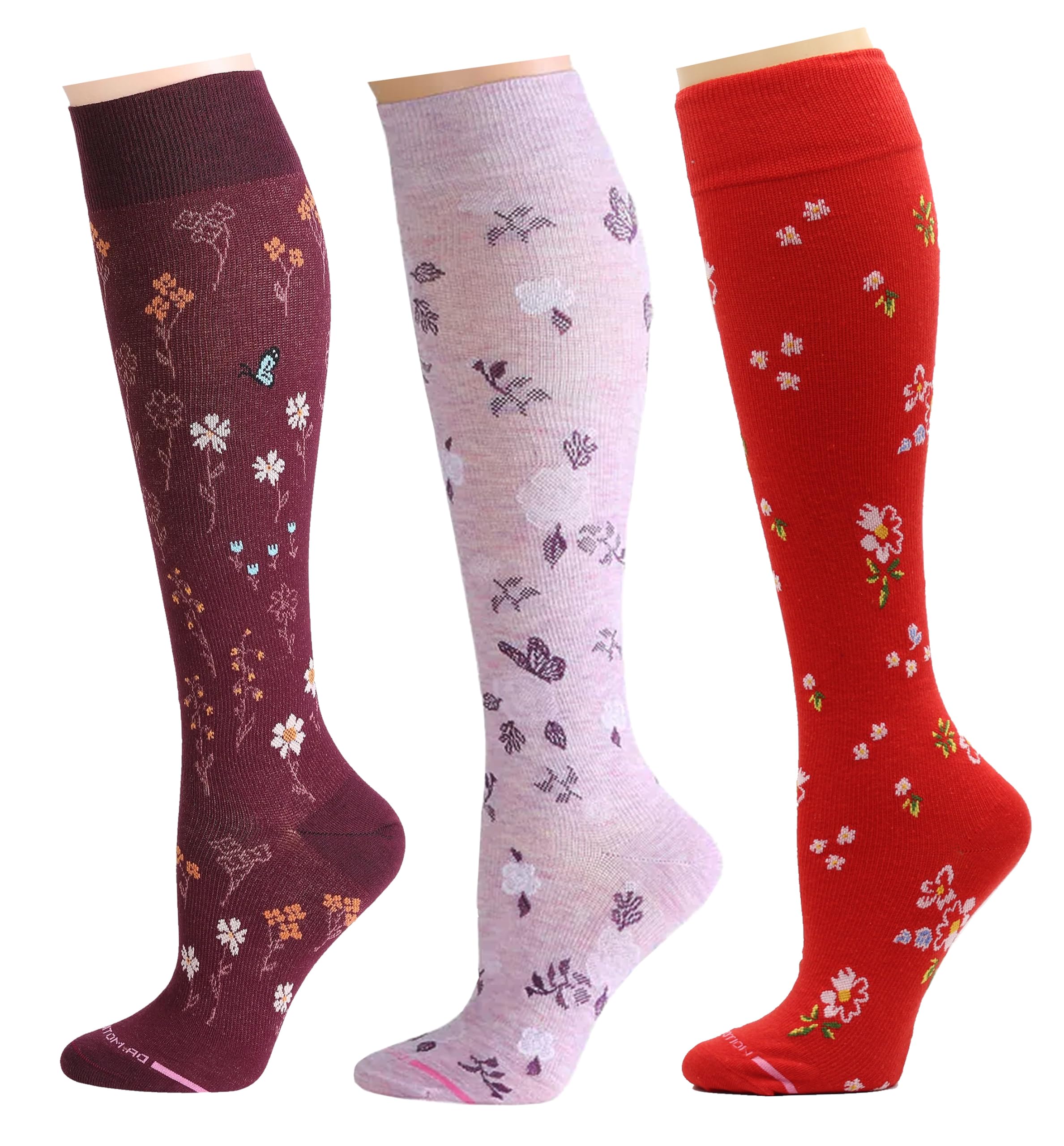
Light graduated pressure that slips on easily and looks like an ordinary knee-high.
The 8-15 mmHg rating here is the gentle end of the scale, which makes it the friendliest option if your knee is still sore and you want pressure without a fight. Graduated means the squeeze is tightest at the ankle and eases as it climbs toward the knee, which encourages flow upward. Compression is the standout here, with fit and value close behind.
Durability is where the story splits. Buyers describe both sides: some say the socks hold up for years, with one noting pairs that lasted five-plus years, while a few report wear after only a handful of washes. Treated gently — cold wash, no fabric softener, hang dry — they tend to keep their shape, and that is the care the maker recommends anyway.
What makes this pick forgiving is how easy it is to put on. Thinner than a firm medical sock, it does not fight back. The trade-off is mild pressure: this is for light swelling and everyday comfort, not heavy swelling that needs a firm 20-30 mmHg squeeze.
Why it feels easy
- 8-15 mmHg graduated pressure, gentle enough for all-day wear.
- Thin enough to slip into fitted shoes and under trousers.
- Simple on-and-off — no heavy tug needed on a stiff knee.
What to keep in mind
- Mild pressure only — not the pick for heavier swelling.
- Durability varies with care; wash cool and hang dry to keep the fit.
Best for: light daily swelling and anyone who wants a sock that looks normal and goes on in seconds.
Not for: a leg that needs firm, medical-level pressure.
4. JOBST Relief Knee High Compression Stockings

The firm, clinical-feeling stocking when swelling is heavy and you need real pressure.
If your care team named a firm 20-30 mmHg level, this is the closest thing to a medical-grade stocking on the list. The sock delivers steady pressure that holds the leg through long days on your feet. Soft, breathable fabric and a wide regular band make it easier on the hand than a tight-knit training sock. Buyers discuss the compression here more than anything else, with comfort a close second.
Firm pressure cuts swelling and fatigue, but this sock’s staying power is the weak spot. The sock can slide down within a mile of walking because there is no silicone grip, so on an active day you may find yourself tugging it back up. Fit and sizing also run tight for some wearers, so measure both calf and ankle before you buy, and buy from a return-friendly seller if you can.
Put plainly, this is the sock you choose when the priority is pressure, not convenience. It feels sturdier and more clinical than the Dr. Motion, and its firmness outpaces the light 8-15 mmHg sock by design. It is the firmest, most established option on this list, and for heavier, longer-lasting swelling that is exactly what you want.
The core strength: genuine 20-30 mmHg graduated pressure in a breathable knit, built for heavy swelling and long days upright.
The honest limit: no silicone dots means it can creep down on a long walk, and the sizing runs tight — measure before ordering.
Choose this if: you have heavier swelling and want firm, medical-style pressure you can trust.
Think twice if: you walk a lot and want a sock that never needs a tug — that is not what this one promises.
5. JOBST Relief Knee High Closed Toe

Firm pressure that goes on and off without the tug-of-war.
The 20-30 mmHg firm squeeze is the same range as the other JOBST pick, but this version is friendlier to put on. Buyers describe it as easy on and easy off, which is a real relief if bending to pull a tight sock over your heel is a chore. One sums it up simply: “Comfortable, stay in place, easy to get on, provide excellent steady compression all day long.” Buyers discuss quality and compression most, and both hold up.
It handles swollen-leg days well and slides over the heel far more smoothly than the tighter-knit Hoplite. That makes it a sensible daily sock if you need the firm level but dread the dressing routine. Durable, washable fabric means it holds up to regular use.
The catch worth knowing: fit opinions are split, and the toe box can run snug. A few find the toes tight enough to be uncomfortable, so if you have wide feet or sensitive toes, size up if the chart allows. Quality has wobbled for some long-time buyers too, so check the batch on arrival.
What stands out: firm 20-30 mmHg pressure paired with an easy on-and-off routine, plus a closed toe that slips over the foot cleanly.
The watch-out: the toe area can feel tight, and fit is mixed — measure carefully and size up if you are between sizes.
Pick this if: you want firm compression but need a sock that is genuinely easy to put on and take off.
Look at the Dr. Motion instead if: you have wide feet or sensitive toes and want a more forgiving toe box.
Know the Specs
mmHg Levels (8-15 vs 20-30)
mmHg is the pressure unit on a compression sock’s label. The light 8-15 mmHg range feels like a gentle hug and is easy to put on, which suits mild swelling and everyday comfort. The firm 20-30 mmHg range presses harder and is the sort of pressure a care team typically names for heavier swelling. Higher is not automatically better: choose the level you were told to wear.
Graduated Compression
Graduated means the squeeze is tightest at the ankle and eases as it climbs up the leg. That ankle-to-knee gradient encourages blood to move upward instead of pooling. Every sock in this list is knee-high and graduated, so the ankle gets the most pressure and the top band relaxes toward the knee.
Regular Band vs Narrow Band
The top band is what stops a sock sliding down. A wider band eases on-and-off and spreads pressure, while a narrow band can roll and constrict after a long day. That is the trade-off to weigh when you compare the wide-band JOBST socks against the firmer-cuffed options.
Pack Size and Care
A three-pair pack gives you spares to rotate while one is washing, useful when support is needed daily. Cold wash, no fabric softener, and hang dry keep the elastic springy so the fit stays snug; machine drying is what wears a sock out fast.
Common Questions
What compression level should I wear after knee replacement?
Will a knee-high sock press on my knee?
How do I put a firm compression sock on without straining my knee?
Why does my compression sock keep sliding down?
Is 20-30 mmHg too tight for everyday wear?
How do I care for compression socks so they last?
Should I wear compression socks all day or just part of it?
Do I need a multi-pair pack after surgery?
Are these socks the same as the ones from my doctor’s office?
The Bottom Line
For most people recovering from knee replacement, the compression socks after knee replacement winner is the Hoplite Premium because its light, grippy knit gives steady support without a hard squeeze, and it stays put through a long day. If you need firm 20-30 mmHg pressure, reach for the JOBST Relief Regular Band. And if the priority is a sock that goes on easily in the morning, the JOBST closed-toe knee-high is the one to grab.
How we choose
We do not accept paid placement. Every pick is matched to a real buyer and a real use-case; we do not hands-on test units.
Sources
Specifications: manufacturer listings and product documentation. Review insights: verified customer reviews, as of October 2026. Pricing: not shown on this page (it changes often); check the current price via the retailer link.
As an Amazon Associate, Aappliancez earns from qualifying purchases. This does not affect which products we feature.