Disclosure: Some links in this post are affiliate links. As an Amazon Associate I earn from qualifying purchases, at no extra cost to you. Learn more
Specs are compiled from manufacturer listings and verified buyer reviews and can change over time — please confirm the key details on the product page before buying.
Your first step every morning should not feel like a punishment. Composite toe work boots for plantar fasciitis have to do two jobs at once — shield your toes from crush hazards on the job and put cushioning and arch support under a heel that hurts — and most boots only get one of those right. The picks below are the ones that genuinely do both.
This guide is built by comparing the manufacturers’ published specifications and the patterns across verified customer reviews, so you get each pick’s real strengths and trade-offs instead of marketing spin.
You’ll see which boots use a removable footbed so your own orthotic drops straight in, which ones run narrow in the toe, and which are light enough to walk miles in. Here is how to narrow down the best composite toe work boots for plantar fasciitis.
Top Picks

How To Choose The Best Composite Toe Work Boots for Plantar Fasciitis
A plantar fasciitis boot has to be picked for the footbed first and the safety features second. The boot’s own insole sits directly against the arch that hurts, and if it is glued in, your custom orthotic never gets a chance to help. Every boot below carries a composite toe cap (a non-metal safety guard that protects the toes without triggering metal detectors). What separates them is what is happening under your heel.
Check whether the insole lifts out
A removable insole is the single feature that decides whether a safety boot is usable for you. Pop the boot’s stock footbed out and your own orthotic sits flat in a deep cavity, rather than stacking on top and squeezing your toes. Boots that publish “orthotic support” or an extra-depth cavity are telling you the room is there. If a listing never mentions a removable or replaceable footbed, assume the liner is fixed and plan around it. Several owners in the picks below solved a hard stock insole by swapping it, which only works when the boot allows the swap.
Match the toe box to your toes, not to the size tag
Composite caps are thinner-walled than steel, so they usually leave a little more toe room at the same size. That room evaporates if the boot’s last (the shape it is built on) is narrow. Boots built on a wide form — the KEEN and orthotic-specific picks here — give your toes somewhere to spread. Size up if you are between sizes, and remember that a thick work sock changes the fit as much as half a size does. A cap that touches a toe all day will make your foot sore long before your arch does.
Weigh the shift length you actually work
Eight hours on concrete is not the same as four hours on a forklift. If you pace a warehouse all day, weight per shoe matters: some picks here are built as sneakers, others are heavier, stiffer leather boots. A boot that feels fine at hour one can leave your heel aching by hour nine. Waterproof membranes help in rain, mud, and freezers but trap heat — useful in wet and cold settings, unpleasant in a hot shop.
Side-by-Side Comparison
| Model | Best For | Toe Protection | Waterproofing | Weight / Build | Amazon |
|---|---|---|---|---|---|
| Puma Safety Conquest★ Best Overall | All-day protection at a working price | Composite toe, ASTM F2413-18 M/I/C EH | BreathActive waterproof membrane | 3 lb, side-zip leather boot | Amazon |
| Orthofeet GraniteArch Support Pick | Arch-first comfort and orthotic room | Composite safety toe | Not listed | Extra-depth build, removable insole | Amazon |
| KEEN Kenton MidFeatherweight Pick | Pacing miles on hard floors | Composite toe | Not waterproof — vented | 18.3 oz / 519 g per shoe | Amazon |
| Timberland PRO Reaxion | Athletic flex with a safety cap | Composite toe, ESD/EH | Waterproof upper | 3.8 lb athletic hiker | Amazon |
| Merrell Moab Vertex Vent | High toe box for sensitive toes | ASTM F2413-11 I/75 C/75 composite | M Select DRY membrane | 5mm lugs, rubber toe cap | Amazon |
| New Balance Cremorne Fresh Foam | Soft landing for heel strikers | Composite toe, Toe Protect | Not consistently waterproof | 3.48 lb, wicking mesh lining | Amazon |
| New Balance Calibre | Long shifts with an easy-on zip | Composite toe, reinforced | Water repellent leather | Acteva foam midsole | Amazon |
| ARIAT Rigtek | Oilfield and chemical exposure | Wide square composite toe | Waterproof | 3.1 lb leather boot | Amazon |
| Timberland PRO Boondock | Freezers and brutal cold | Composite safety toe, puncture-resistant | Waterproof leather | 2.88 lb insulated build | Amazon |
Detailed Reviews
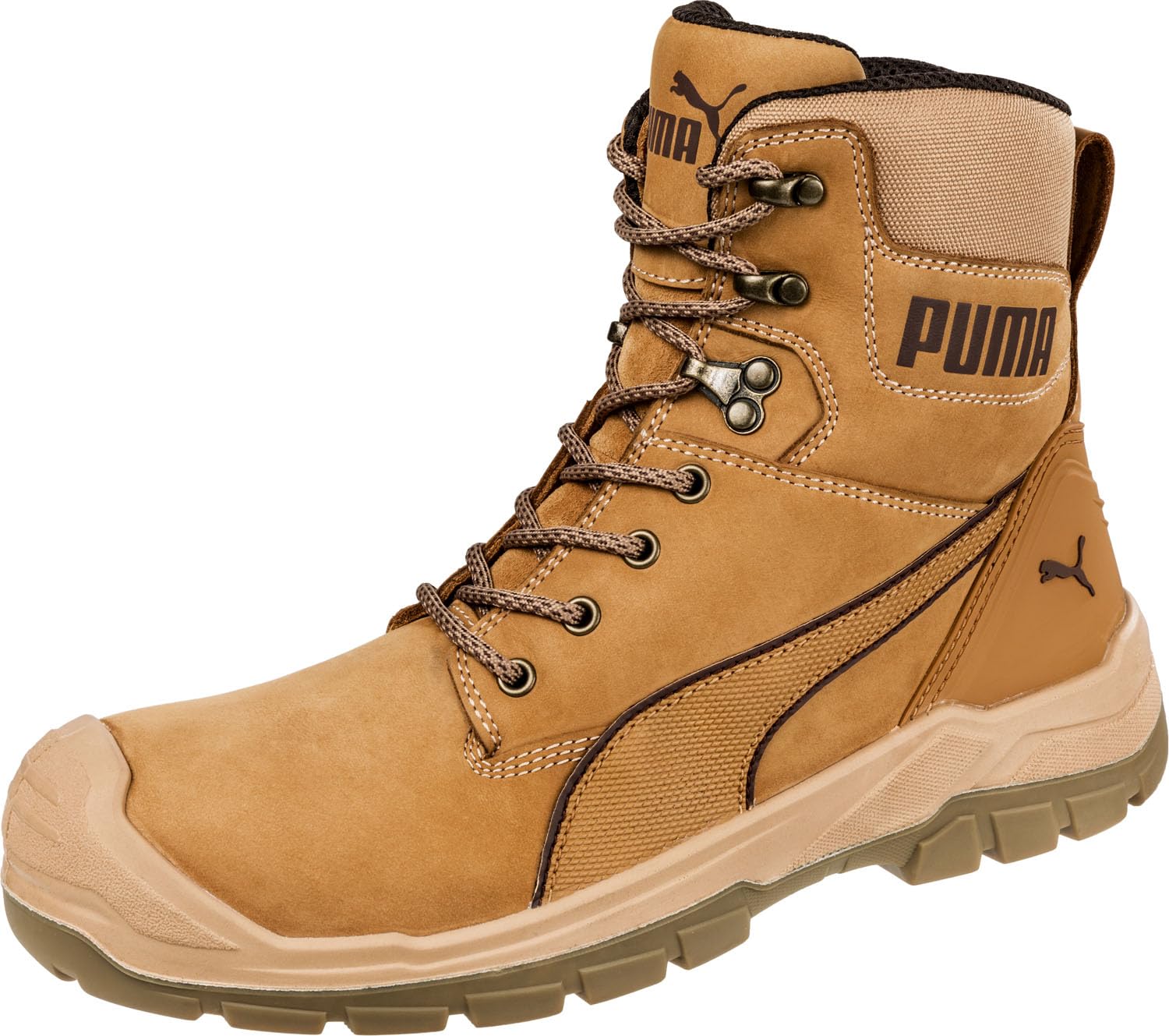
1. Puma Safety Conquest Work Boot
Our pick — 4.5+★ from 750+ verified ratings; the strongest balance of quality and price.
The boot that slips on with a zipper and still passes the safety sheet.
The Conquest is the strongest all-rounder here because it gives you certified protection and a working footbed in one package. The safety line is ASTM F2413-18 M/I/C EH — meaning impact, compression, and electrical-hazard protection all certified to one standard. The composite cap keeps weight off your toes, and the Evercushion footbed plus a PU midsole sit under your arch for shock absorption. A TPU heel support and cells in the heel area steady your stride, which is the part that usually punishes a sore fascia on hard floors.
You get out the door fast because of the zip. A lateral YKK zipper with a gusset (a fabric strip behind the zip that keeps debris out) lets you pull the boot on and off without re-tying laces, which matters on a 5 a.m. start. The oiled nubuck upper is water repellent, so light rain beads off. The BreathActive lining is described as waterproof and breathable, so sweat can escape on a long shift. The rubber outsole is rated slip, oil, and heat resistant up to 572 degrees F — the number to remember if you walk hot floors or catch sparks. Dimensions of 10 x 15 x 6 inches describe the box it arrives in, not the boot.
What wins people over is the out-of-box comfort — no break-in, and the boot does not feel like a heavy boot on. A semi driver doing 10-hour days in mud, snow, and rain found feet did not sweat and stayed warm. A size-11 buyer who had worn an 11 in every boot for a decade had to go up half a size, so treat the sizing as tight. One 8-month construction update is the honest counterweight: the toe rubber held and the waterproofing held through Seattle rain, but the tread wore through and the achilles lining eventually gave out. The price-to-durability math is the thing to watch.
Where the Conquest earns its place
- Certified impact, compression, and electrical-hazard protection in a light-feeling boot
- Gusseted YKK side zip makes early starts and wet-weather entry easy
- Evercushion footbed and PU midsole cushion each step on hard floors
- Heat resistant to 572 degrees F on the outsole
What to weigh before you click
- Sizing runs tight — several long-time size holders needed a half size up
- Tread and heel lining can wear well before the upper does
- Fit and zipper both split opinion, so try them on with your work socks
Reach for these if: you want certified toe and electrical protection, a cushioned heel, and fast zip entry without giving up a breathable leather upper.
Look elsewhere if: you expect a single pair to survive years of constant concrete — the tread and heel lining are the first parts to go.
2. Orthofeet Granite Orthopedic Men’s Work Boots
The one that treats the arch as the main event, not an afterthought.
This is the pick built around your foot rather than around a jobsite. Its Ortho-Cushion system combines a built-in orthotic insole, a shock-absorbing sole, and a pressure-free fit. The insole lifts out and the boot carries extra depth, so most custom orthotics drop in without cramping your toes. Fitting spacers and an Arch Booster come with many styles, giving you a dial to tune support. Multiple widths are offered, and the boots run true to size with the extra-wide option the standout.
The reports that matter come from people who stand the whole shift. A Class 3 heavy highway laborer wore them 55+ hours a week for six months and found them still solid, with the softer leather a welcome change from pricier brands. A truck driver with severe neuropathy in both feet said they were immediately comfortable. And a 2.5-year-old pair earned its replacement — that owner called them premium footwear. Comfort is the headline in these reviews, and the wide toebox is the detail owners name most often.
Here is the catch, and it is worth knowing up front. The sole can peel away from the boot after a couple of months — one owner described exactly that. A buyer who found the arch support thinner than the “orthopedic” label implies sent them back and bought waterproof boots plus separate orthotics instead. Weight is split too: some find them light, others heavy. If you need a boot that takes a hard beating, put your emphasis elsewhere; if you want support and a roomy toebox in a working boot, this is the pick.
Who this suits: anyone whose priority is a support-rich, extra-depth boot that accepts their own orthotic and gives toes room to spread.
The honest limit: the outsole bond is the weak point on a hard-work site, so treat these as comfort-first boots rather than a long-term abuse pair.
Comfort-first buyers: this boot is built for the foot, not the spec sheet — extra depth, a removable insole, and multiple widths.
The risk to accept: outsole separation on heavy-duty sites, and arch support thinner than the label suggests.
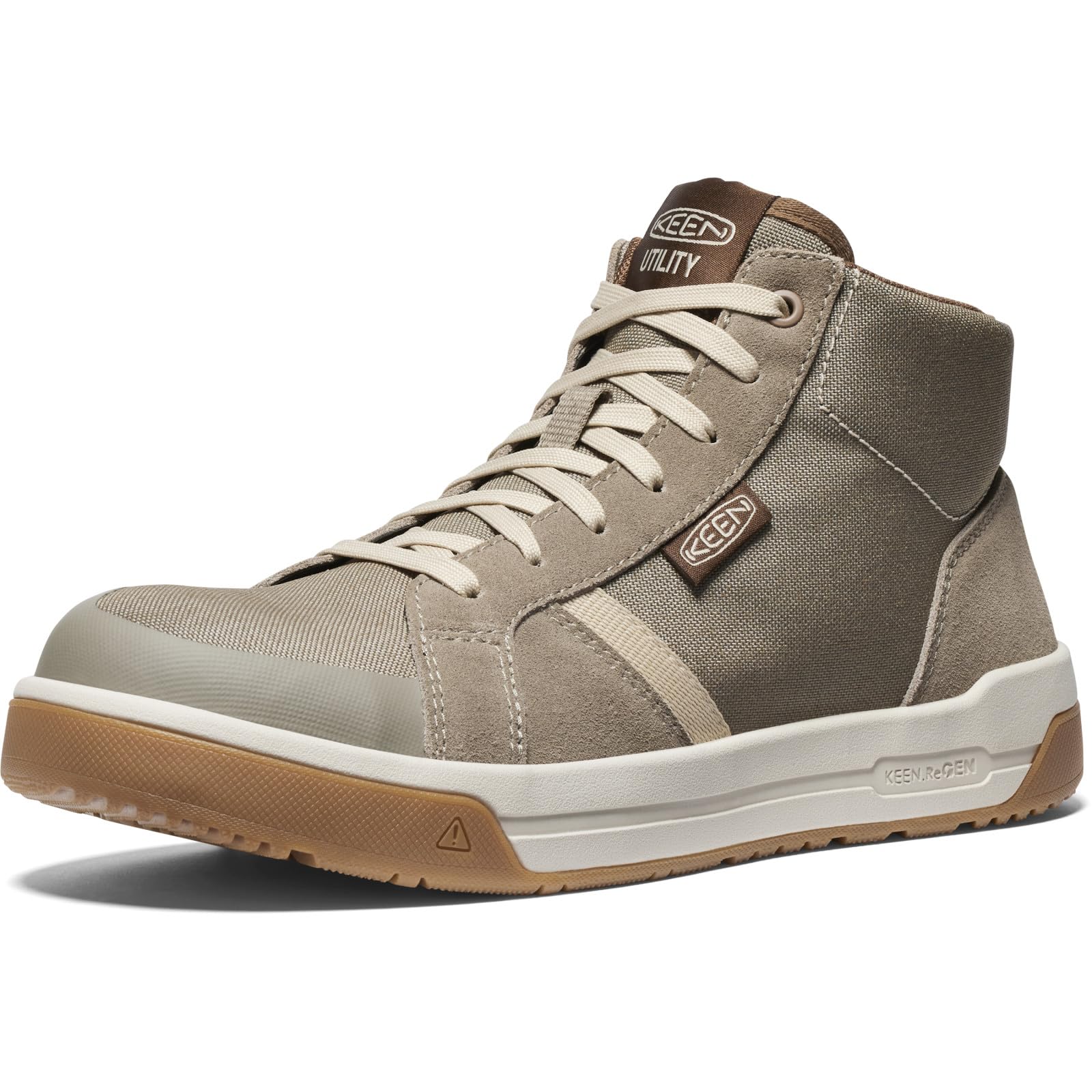
3. KEEN Utility Men’s Kenton Mid Composite Toe Work Sneakers
A sneaker that paces a warehouse all day without dragging your arches down.
Eighteen-point-three ounces per shoe — 519 grams — is the number that changes your day if you walk miles on concrete. Lighter shoes mean less load through your arch with every step, and the Kenton Mid is built on KEEN’s traditional wider form, so your toes get room instead of pressure. The insoles lift out, which is the feature that makes these usable for plantar fasciitis: swap the stock footbed for your own orthotic and the cavity takes it flat. The box measures 12 x 8 x 4.5 inches, and the boot itself is a mid-height sneaker design.
What people notice first is the weight. For a safety-toed shoe, the light build is the surprise, and the skate-shoe looks let these go from site to street without a change. One 2-month update from a hot, humid South Carolina summer reported feet far cooler than leather boots and no lingering odor. That is the deal these boots offer: heat relief and light weight, not a weather shield.
Two honest catches. First, these are not waterproof or water resistant — they are vented by design, so a wet site or a freezer shift is the wrong match. Second, durability splits: an owner logging 50–60 hours a week as a dealership tech found the toe box dug in when kneeling and the uppers failing within six months, while the soles held up fine. Sizing runs large for many, so half a size down is the smart starting point, and the stock insole is firm — factor an aftermarket footbed into the plan.
What makes the Kenton easy to wear
- 18.3 oz / 519 g per shoe — one of the lightest safety-toe builds here
- Wider KEEN form gives toes room; removable insoles take an orthotic
- Vented upper runs cooler than leather in hot shops
- Casual sneaker look works on site and off
The parts that split opinion
- No waterproofing at all — not the boot for rain, mud, or freezers
- Upper durability is inconsistent for heavy kneeling work
- Sizing runs large and the stock footbed is firm
Best fit for: warehouse and assembly work where you are moving constantly and heat is the enemy.
Not the one for: wet sites, freezer shifts, or anyone who kneels all day in a composite toe.
4. Timberland PRO Reaxion Work Boot
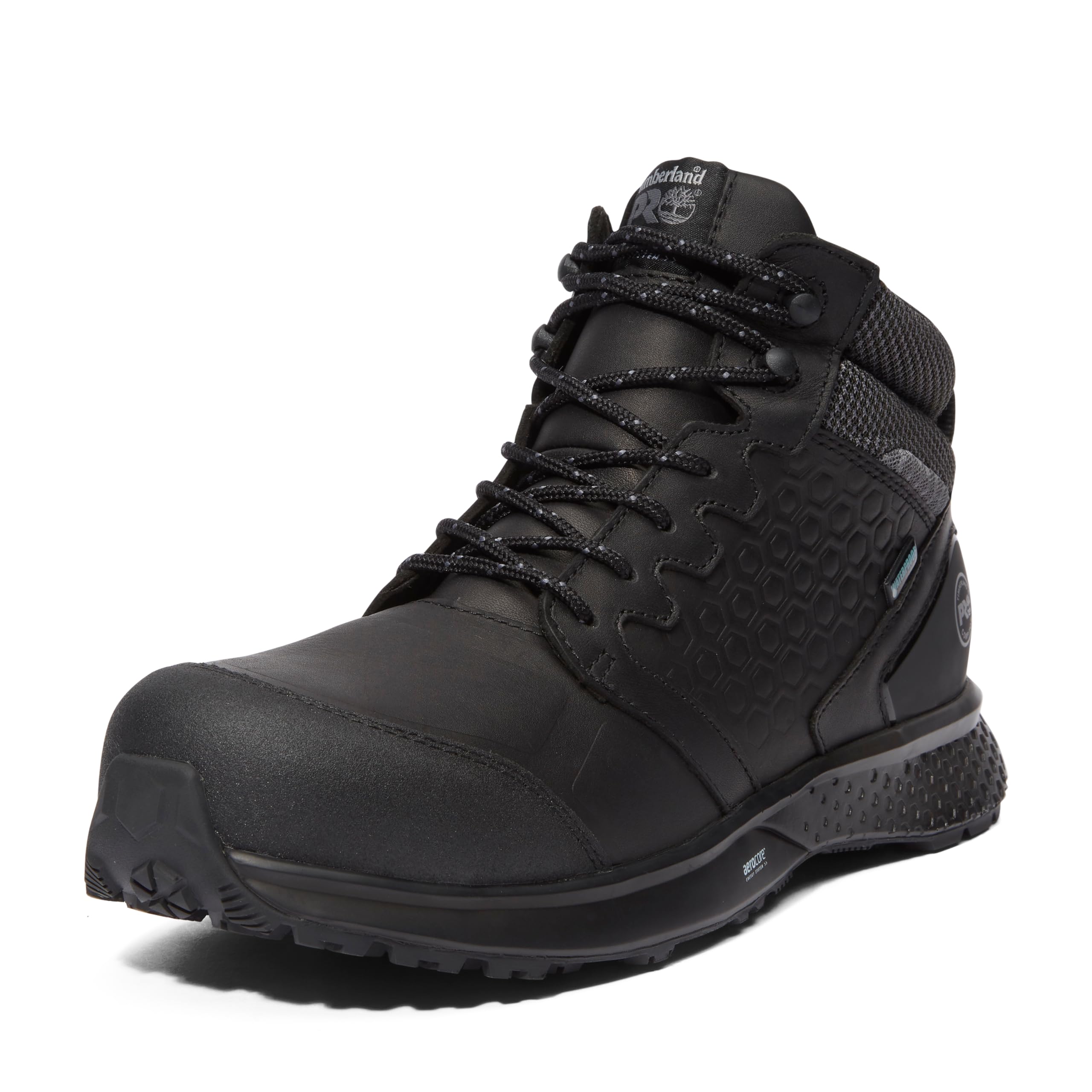
An athletic hiker with anti-fatigue tech under the heel and a real safety cap up front.
The Reaxion pairs a flexible athletic sole with a composite safety toe and ESD/EH protection — that second acronym means it is built for static-dissipative and electrical-hazard environments. The abrasion-resistant upper is waterproof, and the Anti-Fatigue Technology outsole is the piece aimed at the end-of-shift ache. At 3.8 lb, it is heavier than the sneaker picks, which you feel on stairs but which usually buys more structure on rough ground. The box measures 10 x 15 x 6 inches.
Where this boot shines is range. A trim-and-finish carpenter using Timberland for a decade found them more comfortable from the start than comparable Keen boots. A year of concrete construction left the seams blown out but the waterproofing intact. The wide toe box and flexible sole earn praise, and buyers report not feeling tired by the end of the day. Another run used them almost every weekday for a year through drywall, rusty sheet metal, and concrete board without complaint.
The catch is lifespan expectations. A medium-duty assessment put durability at around six months, and one pair came apart inside two months for a buyer doing long shifts. The black colorway’s soles reportedly harden below 30 degrees F while the brown versions do not — a real consideration in a cold shop. Fit runs small for some buyers, so size with your socks on. Think of these as flexible athletic boots for moderate-duty work, not a boot you abuse for years.
What the design gets right: a lightweight-feeling hiker that flexes with your foot, cushions the step, and adds a composite cap and waterproof upper.
Where expectations should land: durability is a medium-duty promise, and cold-weather sole stiffness shows up in the black colorway.
Pick these up if: you want an athletic-feeling waterproof boot with a composite toe for finish work and moderate duty.
Try another pick if: you need one pair to go years of heavy construction, or you work in freezing temperatures.
5. Merrell Mens Moab Vertex Vent Composite Toe
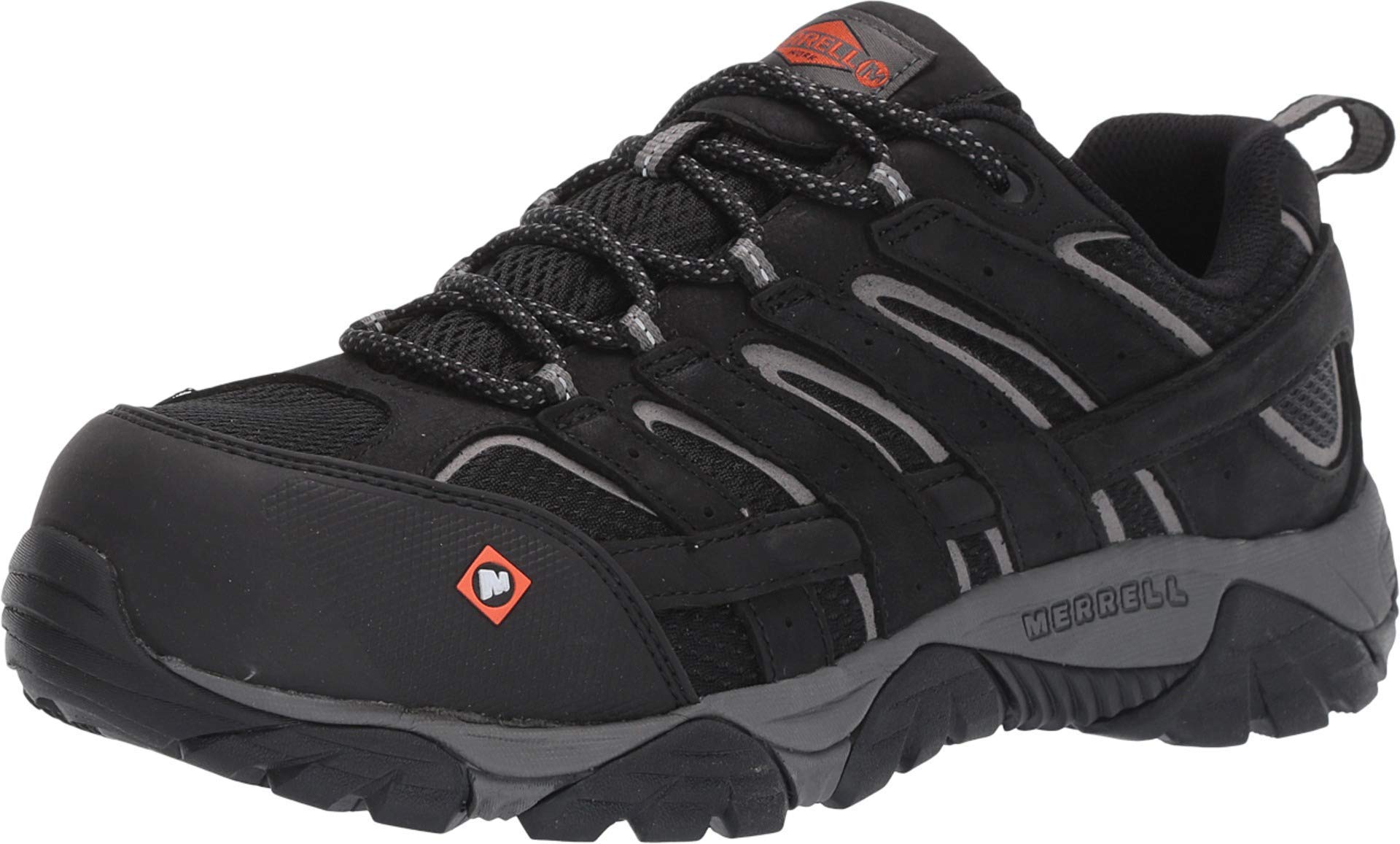
A high toe box for feet that hate pressure, with grip for ladder work.
The Moab Vertex earns its spot on two measures: a toe box tall enough to keep a composite cap off sensitive toes, and 5mm lugs on an oil- and slip-resistant outsole that hold on ladders and wet floors. The toe protection is rated ASTM F2413-11 I/75 C/75 (impact and compression), and the rubber toe cap adds abrasion resistance. A Merrell Air Cushion in the heel absorbs shock, while the COMFORTBASE contoured footbed with breathable foam sits under your arch. The M Select DRY membrane seals water out and lets moisture escape, and the outsole handles brief contact with surfaces over 500F.
The people who love these tend to have specific foot needs. One buyer with post-fusion toes credited the high toe box for making 9-hour shifts of 15,000–28,000 steps possible, rotating three to four pairs to stretch the lifespan. Another found them ideal for ladder work, walking, and climbing. A warehouse worker reported 10 months of use with the water resistance and durable sole still intact. Traction on ladders and wet tile, plus all-day comfort, are the recurring positives.
Two things to weigh. Comfort on the fit is subjective: a few buyers found the toes tight or the shoe stiff and heavy after weeks of break-in, so a 4.0+ rating rather than a perfect score reflects a real split. Durability is mixed too, with some reporting rips within months. These are best for buyers who prize the spacious toebox and grip on hard surfaces, and who rotate pairs rather than relying on one boot to last years.
Why the Moab Vertex has a following
- High toe box keeps the composite cap off sensitive toes
- 5mm lugs and oil/slip-resistant outsole grip ladders and wet tile
- Air Cushion in the heel plus a contoured, breathable footbed
- Waterproof membrane lets moisture escape
Trade-offs to know
- Fit is subjective — some find the toe tight, some find it stiff after weeks
- Durability is inconsistent for buyers who demand years from one pair
Made for: people with sensitive toes and a need for grip on ladders, steps, and slick floors.
Skip over if: you want a soft, flexible boot from the start — the Moab is structured and takes getting used to.
6. New Balance Cremorne Work Shoes

Running-shoe foam under a safety toe, which is exactly the combo a sore heel wants.
The Cremorne’s headline is Fresh Foam — the same soft, springy midsole idea New Balance builds its running shoes on — sitting under a composite safety toe with Toe Protect. That combination is the appeal for plantar fasciitis: cushioning where your heel strikes, plus a lightweight athletic build with a wicking mesh lining. The model weighs about 3.48 lb per the listed package details, and it includes slip-resistant outsoles, electrical hazard resistance, and heat resistance. A high-top ankle collar adds support around the joint.
Comfort is what owners mention most about the Cremorne, and the reports agree. A manufacturing worker on their feet 85% of the day called it a true sneaker for work — cushioned and breathable with no sweat, good for heel strikers specifically. A Baltimore government worker rated comfort and safety outstanding. A freezer selector with over a decade of cold-room work noted the rubber and composite toe (not steel) matters in freezing temperatures, and praised the light weight for fast pacing on 12+ hour shifts. Non-slip tread holds on ladders and wet tile.
Two honest limits. First, these are not made waterproof, and some owners pick up a spray to help. Second, the toe box height is the real variable for foot-pain buyers: one owner found the composite cap dug into their foot joints by the eighth hour and caused bruising, and the heel felt a half size off. Sizing runs big for many, so try your real size first — some buyers who sized up had to return. If you know your toes need vertical room, try these on before committing.
The case for the Cremorne: athletic Fresh Foam cushioning, a composite cap, and a breathable build make long shifts on hard floors easier on a sore heel.
The trade-off: toe-box height can be tight for sensitive toes, and there is no built-in waterproofing.
Reach for this: if you want running-shoe softness under a certified safety toe for manufacturing, warehouse, or freezer work.
Look elsewhere: if you need a waterproof boot or have toes that need extra height in the cap.
7. New Balance Men’s Work & Safety Calibre Comp Toe Work Boots
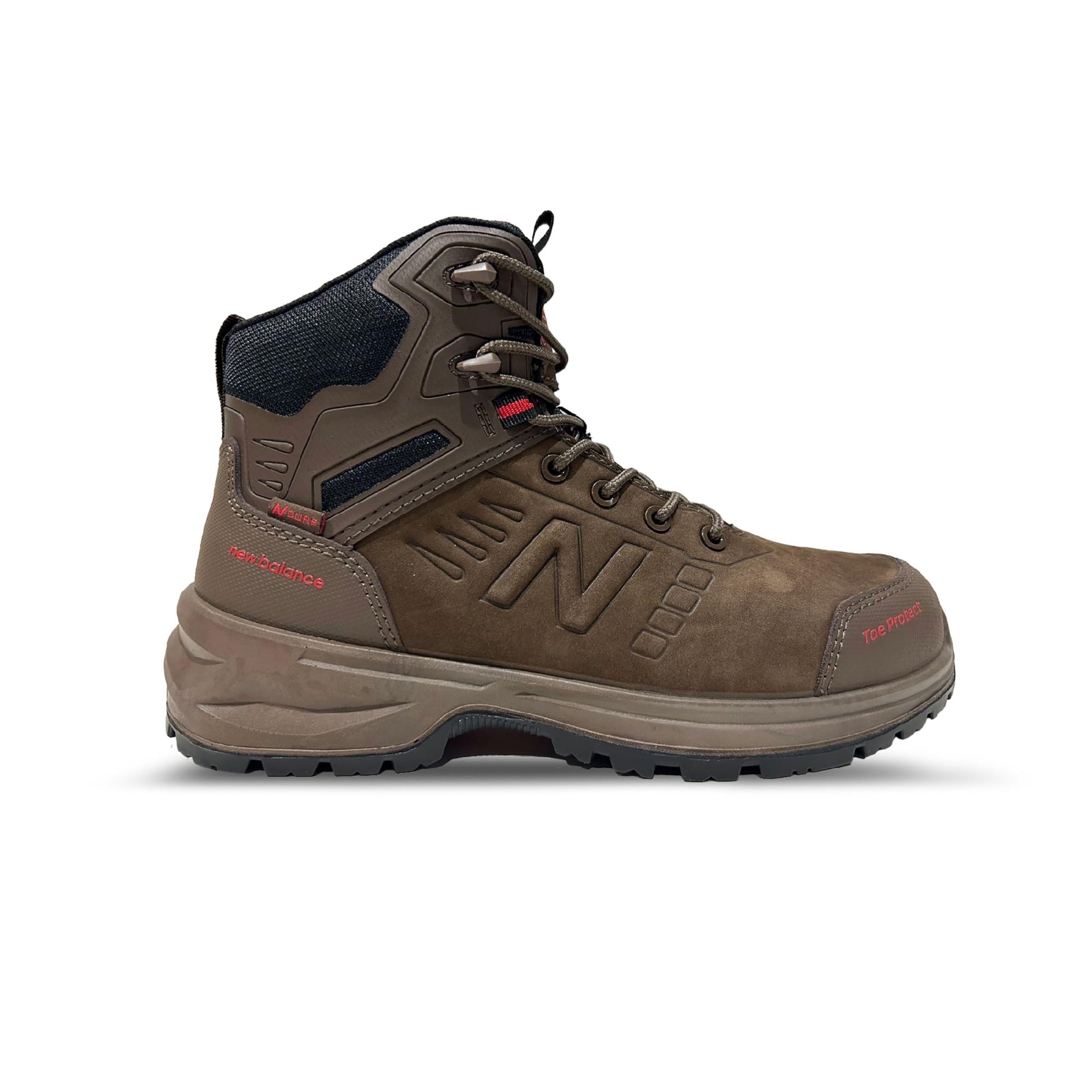
Built for the guy who racks up miles on a concrete floor and still wants to walk after.
The Calibre is a leather boot with an athletic skeleton. Acteva foam in the midsole delivers a mix of support, light weight, and flexibility, while the dual-use outsole tread combines trail and running lug patterns for on- and off-road surfaces. The NB Comfort Insole adds cushioning, and the composite toe comes with extra room — a detail that matters if your safety cap usually presses on your toes. A reinforced toe and a side zip make it practical on a jobsite. The boot is water repellent rather than fully waterproof, so it shrugs off power-washing and splashes rather than standing in puddles.
Comfort ratings run unusually high for a leather safety boot. A warehouse worker walking 3–4 miles a day found the wider toe box better than standard and the zipper an easy on/off win. An overhead crane operator at a steel mill reported these outlasting + boots, getting a full year against the usual under-eight-months. A buyer three days into a long walking stint said they stayed consistently comfortable the whole time — and even drew compliments. A superintendent on their third pair praised the low break-in and true-to-size fit.
The trade-offs come down to build choices. Full leather with no mesh means poor breathability and scuffs that show; the wide fit may want a thicker sock. One buyer found the zipper requires untying first and the lacing cinches oddly from the toe end. Cold-weather use is the other letdown — one owner needed heated insoles for a hard winter, so this is not an insulated boot. Push these toward everything except a frozen site and they hold up well.
Where the Calibre shines
- Acteva foam midsole and NB Comfort Insole keep long shifts comfortable
- Wide toe box leaves room around the composite cap
- Side zip makes early starts quick
- Reinforced toe and water-repellent leather take a working day
Points worth hearing
- Full leather without mesh traps heat and scuffs show
- Not insulated, so a cold site needs added warmth
- Zipper and lacing take getting used to
Worth it for: long indoor shifts on hard floors where comfort and toe room come before weatherproofing or insulation.
Not the pick for: freezing outdoor work or anyone who wants a breathable summer boot.
8. ARIAT Rigtek Work Boot

The square-toe workhorse for oil, chemicals, and long days in bad weather.
Rigtek is built for oilfield conditions and jobs involving chemicals, and it shows in the specification sheet. The wide square toe adds room across the forefoot and the composite safety toe keeps weight off your toes compared to steel. It is waterproof and suited to wet grass, mud, and bad weather, with a rugged Western look that avoids bulk. At 3.1 lb it is a real leather boot, not a sneaker, so the structure you feel is the structure that holds up on rough ground. The box measures 13.9 x 10.9 x 5.1 inches.
Durability stories are strong here. One buyer wore a pair daily for a year of streets and sanitation work — asphalt, sewer and water repairs, snow plowing — through salt, mud, and submersion, outlasting Red Wing pairs before the soles began separating. A second pair a year in was still in great shape. A superintendent on their third Rigtek found them tough, true to size, and easy to break in. The waterproof leather and slip resistance back up the outdoor use. The wide square toe is the differentiator for anyone whose forefoot feels pinched in a round-toe boot.
The catch is entry and toe fit. Getting your foot into the boot is hard — even with a shoe horn for some buyers used to other Ariat models — even though the boot feels comfortable once it is on. The composite toe runs narrow for some buyers and presses into the big toes on the outer side; a high-arched foot can also find the support inadequate. Size down half a size if you are between sizes, and know that a boot this sturdy needs to be pulled on, not slid in.
What the Rigtek brings: oilfield-ready toughness, waterproof leather, a wide square toe with room, and a composite cap that keeps weight down.
The honest caveat: entry is stiff and a narrow composite toe can press on some feet, so fit it carefully.
Reach for the Rigtek if: you face oil, chemicals, and wet weather, and you want a wide square toe with a light composite cap.
Try a different pick if: you have very wide toes that need more room in the cap, or high arches that want more support.
9. Timberland PRO Men’s Boondock Waterproof ST Work Boot
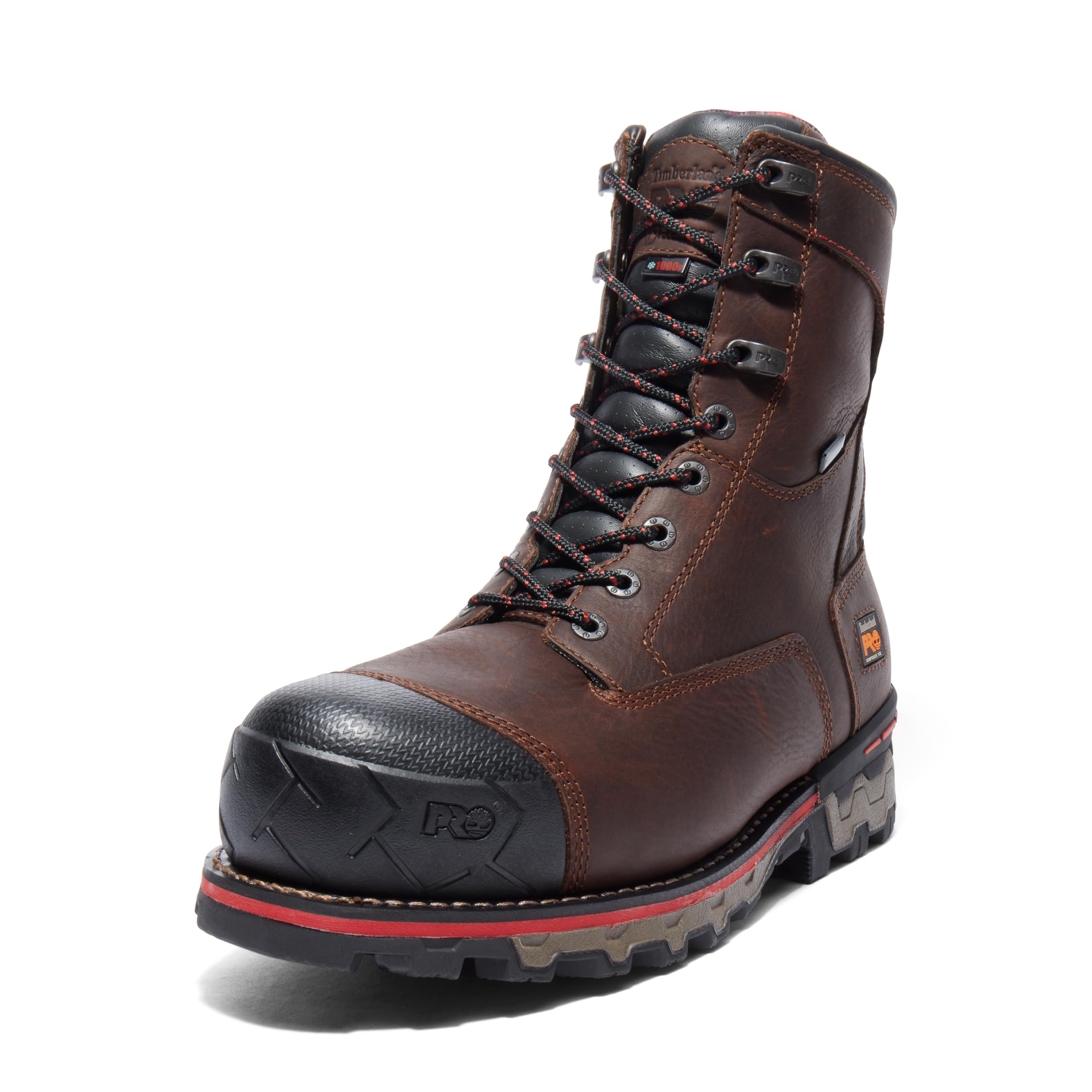
The insulated, waterproof tank for freezer shifts and brutal cold.
If your workplace is a freezer or a winter jobsite, this is the boot that ends the cold-foot problem. The Boondock is waterproof, insulated, and built around a roomy composite safety toe with a structural shank that supports the foot without going rigid. It is the heaviest, sturdiest boot on this list at 2.88 lb, and the bulk is the point — it is puncture resistant and weatherproof in conditions that would defeat a light sneaker. The box measures 10 x 15 x 6 inches. The construction is the kind a full shift in subzero temperatures can rely on.
Cold-weather reports are the strongest evidence. A freezer warehouse picker working eight hours a night at -10F in regular crew socks found feet stayed warm and pain-free, with the soles outlasting a Carhartt pair that gave up inside six months. A buyer who worked in the Arctic wanted warmth and got it. One pair lasted two years of work plus twelve years of wear, with break-in taking about a day before the boot felt pillow-like. For anyone who works cold and wants cushioning, the Boondock is the pick.
The honest trade-off is bulk and price. The boot looks huge on first glance, and people describe it as bulky. It runs large for some and heavy for others, so size with your winter socks in mind. It is also the most expensive boot here, and not the one to pick if you work indoors in warm conditions — you will cook in an insulated freezer boot. But for cold, wet, punishing work, the cushioning is what keeps your arches happy.
Why cold-weather workers trust it
- Insulated and waterproof for freezing and wet conditions
- Roommate composite toe with a supporting shank
- Cushioned enough for long shifts on hard, cold floors
- Puncture resistant and built to last years
Honest downsides
- Bulk and weight are real — not a nimble indoor boot
- Fit runs large for some buyers, so size with winter socks
- The most expensive option here, and overkill for a warm shop
This is your boot if: you work in a freezer, outdoors in winter, or anywhere cold and wet — the insulation and waterproofing do the heavy lifting.
Pass on it if: you work indoors in warm conditions, where the insulated build becomes a liability.
Know the Specs
Composite toe vs steel toe
A composite toe is a non-metal safety cap that protects your toes from impact and compression without the weight or cold transfer of steel. That lighter build is a real benefit if your arches already hurt, because every ounce on your foot adds to the load. The caps meet the same certification standard as steel, so the protection is not weaker — you just feel less of it on your toes in cold weather. If you walk through metal detectors, composite also means no buzz at the door.
Removable insoles and orthotic room
The single most important spec for plantar fasciitis is whether the insole lifts out. A removable footbed leaves a cavity where your own orthotic sits flat and low. A glued-in liner forces you to stack your orthotic on top, which raises your heel and pinches your toes. Look for boots that mention a removable insole or extra-depth fit — most of the picks here qualify. Boots without that detail usually have a fixed liner, so plan to work around it.
Waterproof vs breathable
A waterproof membrane keeps water out but traps heat, because the same layer that stops moisture from entering also restricts airflow. That is the right trade in rain, mud, or a freezer, and the wrong one in a hot shop where your feet sweat. Vented boots let air move but offer no water shield. Pick the side that matches your actual workday — a waterproof pick in a warm building will feel clammy by noon.
Weight per shoe and shift length
Weight per shoe is the spec that predicts how your feet feel at hour eight. Light picks built as sneakers ease the load on concrete and reduce the fatigue your fascia feels with every step. Heavier leather boots offer more structure for rough, cold, or chemical-heavy work. Neither wins on its own — a 3 lb leather boot beats an 18 oz sneaker on a freezer floor, and the reverse holds on a warm warehouse catwalk.
Common Questions
Are composite toe boots better than steel toe boots for plantar fasciitis?
Can I put my own orthotics inside these work boots?
How long do these work boots last?
Do composite toe boots set off metal detectors?
Should I size up in a composite toe work boot?
Which of these boots is best for walking on concrete all day?
Do I need waterproof boots if I work indoors?
What does the EH rating on a work boot mean?
Are these boots good for freezer work?
How should I care for leather composite toe work boots?
The Bottom Line
For most people shopping the composite toe work boots for plantar fasciitis, the winner is the Puma Safety Conquest. It bundles certified impact, compression, and electrical-hazard protection with a cushioned Evercushion footbed and a heat-resistant outsole, all behind a gusseted side zip that gets you out the door fast. If your arch is the priority and you need room for your own orthotic, grab the Orthofeet Granite with its extra-depth build and removable insole. And for a freezer or winter jobsite, the Timberland PRO Boondock is the one to reach for, with insulation and waterproofing built for subzero work.
The pattern across all nine is simple: the boots that ease plantar fasciitis are the ones with a removable footbed for your orthotic and a light enough build to spare your arch. Pick for the footbed first, then for the terrain and temperature of your actual job, and you will get a pair you can stand behind.
How we choose
We do not accept paid placement. Every pick is matched to a real buyer and a real use-case; we do not hands-on test units.
Sources
Specifications: manufacturer listings and product documentation. Review insights: verified customer reviews, as of October 2026. Pricing: not shown on this page (it changes often); check the current price via the retailer link.
As an Amazon Associate, Aappliancez earns from qualifying purchases. This does not affect which products we feature.