Disclosure: Some links in this post are affiliate links. As an Amazon Associate I earn from qualifying purchases, at no extra cost to you. Learn more
Specs are compiled from manufacturer listings and verified buyer reviews and can change over time — please confirm the key details on the product page before buying.
A new smoke detector that will not talk to the brand already wired into your ceiling turns a simple swap into a rewiring job. So here is the short answer up front — the safest pick for most small buildings is the X-Sense 6-Pack Interconnected Smoke and CO Detector, SC06-W. Six linked units cover a whole floor with no wire run and no battery swap. The rest of this guide sorts the hardwired interconnects, the voice-alert models, and the monitoring-only devices, so you can match one to the wiring you already own.
This guide is built by comparing the manufacturers’ published specifications and the patterns across verified customer reviews, so you get each pick’s real strengths and trade-offs instead of marketing spin.
Interconnection (a signal that trips every alarm in a group at once) is the word that decides everything here. Pick the wrong protocol and a simple replacement becomes a rewiring job. The tables, spec notes, and buyer questions below cover every system, so you can choose the right commercial fire alarm systems without overbuying a single unit.
Top Picks
How To Choose The Best Commercial Fire Alarm Systems
Look at the ceiling before you look at any spec sheet. A metal mounting base with a wiring harness behind it means you need a hardwired unit. A bare ceiling means a battery-powered one saves you the electrician’s bill. Getting this one thing right cuts half the shortlist immediately.
Interconnection: the feature you cannot retrofit later
Interconnection means one alarm senses danger and every linked alarm in the group sounds. That is the whole point of a system rather than a scatter of standalone beepers. Hardwired systems do this over a physical signal wire, usually a third conductor in the cable run. Wireless systems do it over a radio link, so you need no new cable but you must pair each unit during setup. A voice-alert model with a location announcement adds one more layer: it tells you which zone triggered, not just that something did.
Power, backup, and what happens in a blackout
A mains-powered unit with a battery backup keeps protecting the building through an outage. A sealed-battery unit skips the wiring entirely and warns you when the cell finally runs low. Both are valid. The difference is if you want an installer on a ladder or you on a stepladder. With no existing alarm cabling in the building, battery units are the straightforward path.
Detection method and nuisance alarms
A photoelectric sensor (a sensor that spots smoke by how it scatters light) reacts to smoldering fires. It also tends to stay quiet around ordinary cooking steam. An electrochemical sensor handles carbon monoxide — an odorless gas you cannot see or smell — so a combo unit covers two hazards from one ceiling point. Enhanced sensing logic that tells real smoke apart from cooking steam is the spec worth paying for anywhere food gets heated.
Side-by-Side Comparison
| Model | Best For | Power Source | Interconnection | Alarm Output | Amazon |
|---|---|---|---|---|---|
| X-Sense SC06-W 6-Pack★ Best Overall | Wire-free whole-floor coverage | Battery Powered | Wireless RF | 85 dB | Amazon |
| Kidde 30CUA10-V, 3 PackVoice Alert Pick | Voice-alert hardwired retrofits | 120V AC + battery backup | Wired interconnect | 85 dB plus voice | Amazon |
| SITERWELL GS886F | Wired or wireless in one unit | AC/DC with 2 AA backup | Wired or wireless | 85 dB plus voice | Amazon |
| X-Sense SC01-W 6-Pack | Live CO readings on a display | 10-Year Sealed Battery | Wireless RF | 85 dB | Amazon |
| Kidde 30CUA10-V, 4 Pack | Ceiling installs with LED indicators | 120V AC + battery backup | Wired interconnect | Voice alerts | Amazon |
| First Alert SMCO100V-AC | Dropping into existing wired bases | Corded Electric | Early warning interconnect | Voice plus location | Amazon |
| Sensaphone 400 | Remote temperature and water watching | Standard telephone line | Not an alarm sounder | Voice call alerts | Amazon |
Detailed Reviews
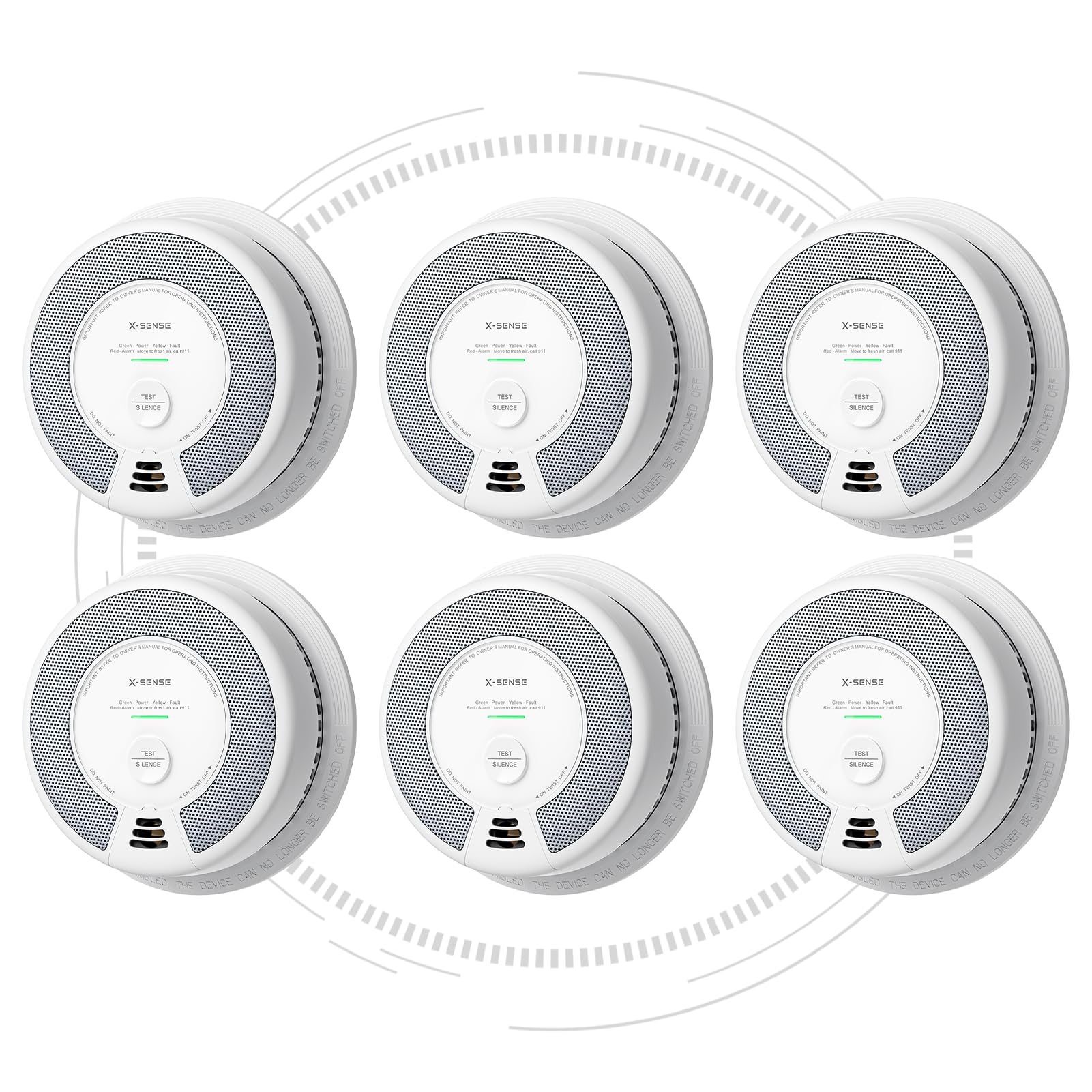
1. X-Sense 6-Pack Interconnected Smoke and CO Detector, SC06-W
Our pick — 4.5+★ from 3,000+ verified ratings; the strongest balance of quality and price.
Six wireless-interconnected combo detectors cover a whole floor with no rewiring and no battery swaps for 10 years.
This six-pack wins its spot on unit count and wiring: you get six interconnected combo detectors in one box for a ceiling with no alarm cable. The SITERWELL GS886F ships as a single unit, so this pack gives you six times the detector count from one product line instead of a patchwork of mismatched alarms.
The sealed 10-year lithium cell in each unit is what keeps you off the ladder. No annual battery change, no drawer of nine-volt replacements, and a low-battery warning when the cell finally wears down. Wireless interconnection means one alarm sounding sets all six off, and a single push of the Test/Silence button handles the whole group at once. Each unit is independently tested to meet UL 217 and UL 2034, the published standards for smoke and carbon monoxide detection. Mounting takes the included bracket, screws, and anchor plugs — no electrician needed for a shop, an office floor, or a rental with bare ceilings.
Buyers report years of quiet, working units, with one false alarm traced to a forgotten exhaust fan. As one long-term owner puts it: “Several years in and they still work properly.” Owners mention the Test/Silence button can sit just out of easy reach on a ceiling mount, which matters if you plan weekly test pushes. Know one thing before you buy — this model supports wireless interconnection only, with no Wi-Fi and no base station, so you cannot check it from your phone.
What earns its keep
- Six interconnected units in one purchase, each rated 85 dB — a loud siren by design
- Sealed 10-year lithium battery with a low-battery warning, so no yearly replacements
- No rewiring: mounts on wall or ceiling with the included bracket, screws, and anchor plugs
- Combo photoelectric smoke and electrochemical CO sensing from a single ceiling point
- Heat-resistant PC enclosure (a plastic shell built to sit in a hot ceiling void)
Where it makes you compromise
- No Wi-Fi or base station — you cannot check status remotely
- The Test/Silence button can be awkward to reach on a ceiling install
- Battery-only power means no mains backup beyond the sealed cell itself
Reach for this one if: your building has sound ceilings but no alarm cable, and you want a whole floor protected without an electrician.
Look elsewhere if: you need remote smartphone monitoring, since this model deliberately leaves Wi-Fi out.
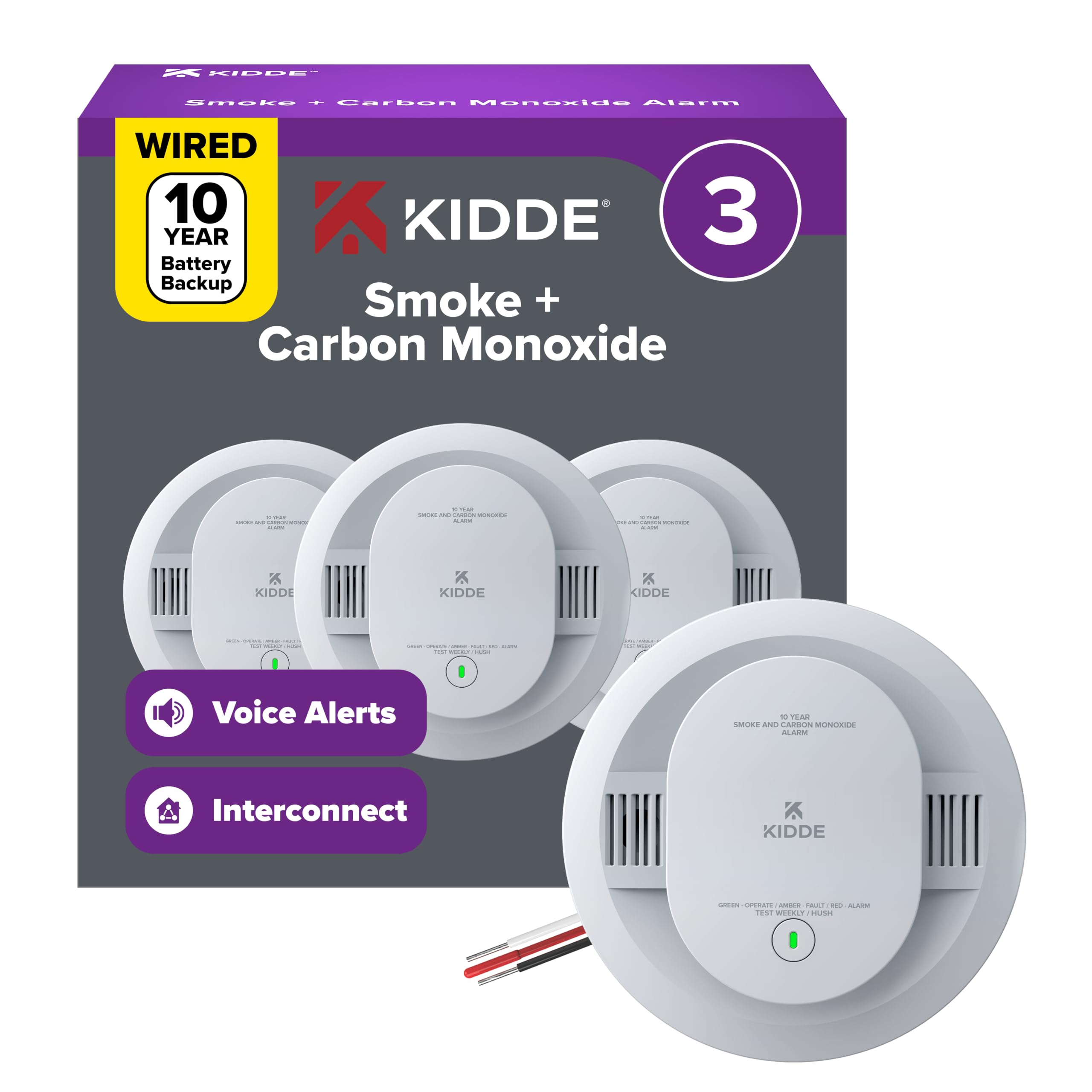
2. Kidde Smoke & CO Detector 30CUA10-V 3 Pack
It names the hazard aloud — “Fire” or “Warning, Carbon Monoxide” — at 85 dB.
Old 120V alarm wiring already in your ceiling is the reason to buy this three-pack rather than start over. Each unit hardwires to mains power and carries a 10-year built-in battery backup, so a blackout does not leave the floor unprotected. At 7.68 ounces per unit it is a fraction of the bulk of the SITERWELL GS886F at 14.08 ounces, which makes overhead ceiling work easier on your arms than the SITERWELL.
Voice alerts are the feature that earns its position. The unit announces “Fire” when smoke is detected or “Warning, Carbon Monoxide” when CO is present, so people know which hazard they are walking toward. Enhanced sensing technology is tuned to separate real smoke from everyday cooking and steam, the largest source of nuisance triggers anywhere with a kitchen. Testing covers UL 217 10th Edition, UL 2034 5th Edition, and FCC standards.
Replacement is quick when the base is already up, which is what the review pages keep returning to. One owner measured it plainly: it took only 15 minutes to replace six detectors. Interconnect capability lets these link with other Kidde alarms so every unit sounds together, and the wiring harness and mounting base come in the box. Plan around one catch — interconnect works with Kidde units only, so a building full of another brand’s alarms will not join the group. Owners swapping out a wired system and wanting the hazard named out loud are the right buyers here; if your ceiling has no cable and you want to stay wireless, this is not your pick.
Why it holds its slot: Over a quarter less bulk per unit than the SITERWELL GS886F (7.68 ounces vs 14.08 ounces) makes ceiling work easier on your shoulders and arms.
The trade-off to weigh: Voice alerts solve identification, not remote monitoring — there is no phone app in this design.
Best fit: owners replacing an existing 120V hardwired system who want the hazard named out loud.
Consider a different pick if: you have no wiring in place and want to stay entirely wireless.
3. SITERWELL Smoke & CO Detector Interconnected
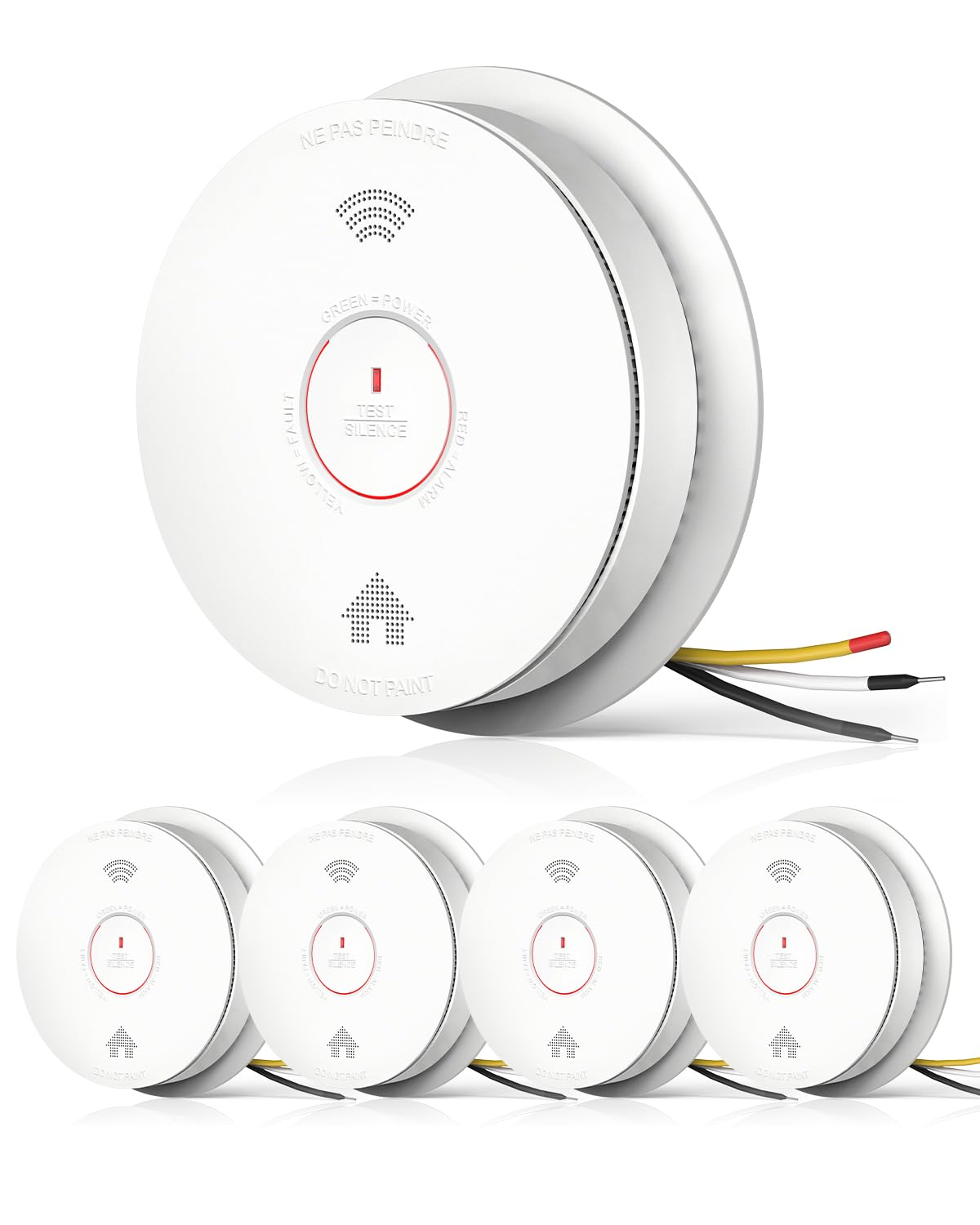
One detector that installs hardwired or wireless, and self-checks for sensor failure.
One unit, two install routes: this detector works hardwired or on a wireless link, so you can decide later. It links up to 12 units total, enough to cover a corridor run or a multi-room floor from one product line. Plan your ceiling space, though — it measures 6.1″ deep by 6.1″ wide by 1.65″ high, against 1.88″ deep by 5″ wide by 5″ high on the Kidde 30CUA10-V, so it asks for more ceiling real estate than the Kidde does.
The self-check function is the quiet standout. Instead of you pushing a test button on every unit, the detector monitors itself and reports a failure the moment it happens — useful when the building is not occupied daily. Backup comes from two AA batteries, so a power cut does not leave you unprotected. The audible warning runs in excess of 85 decibels, which is a loud siren by design. Voice alerts announce which hazard is present, the sensor package is rated for a 10-year life, and the units meet UL 217 and UL 2034 standards.
Long-term confidence, not day-one performance, is where this pick asks for patience. Most owners describe an easy install and a genuinely loud alarm. Reliability is the area where the feedback splits — plenty of units hum along without trouble while a portion stop working over time and leave owners feeling short-changed. Want the least hassle on paper and the widest install flexibility? It delivers. Want the most consistent long-term track record here? The X-Sense SC06-W above is the steadier choice.
what separates it: Wired or wireless from one unit, up to 12 interconnected, with the self-check feature replacing manual button testing.
Honest caveat: reliability is the mixed-bag area of the feedback, so treat it as the flexible option rather than the bulletproof one.
Pick this when: you want the option to hardwire now and add wireless units later, all from the same model.
Steer away when: maximum long-term reliability matters more to you than install flexibility.
4. X-Sense Smoke and CO Detector SC01-W 6-Pack
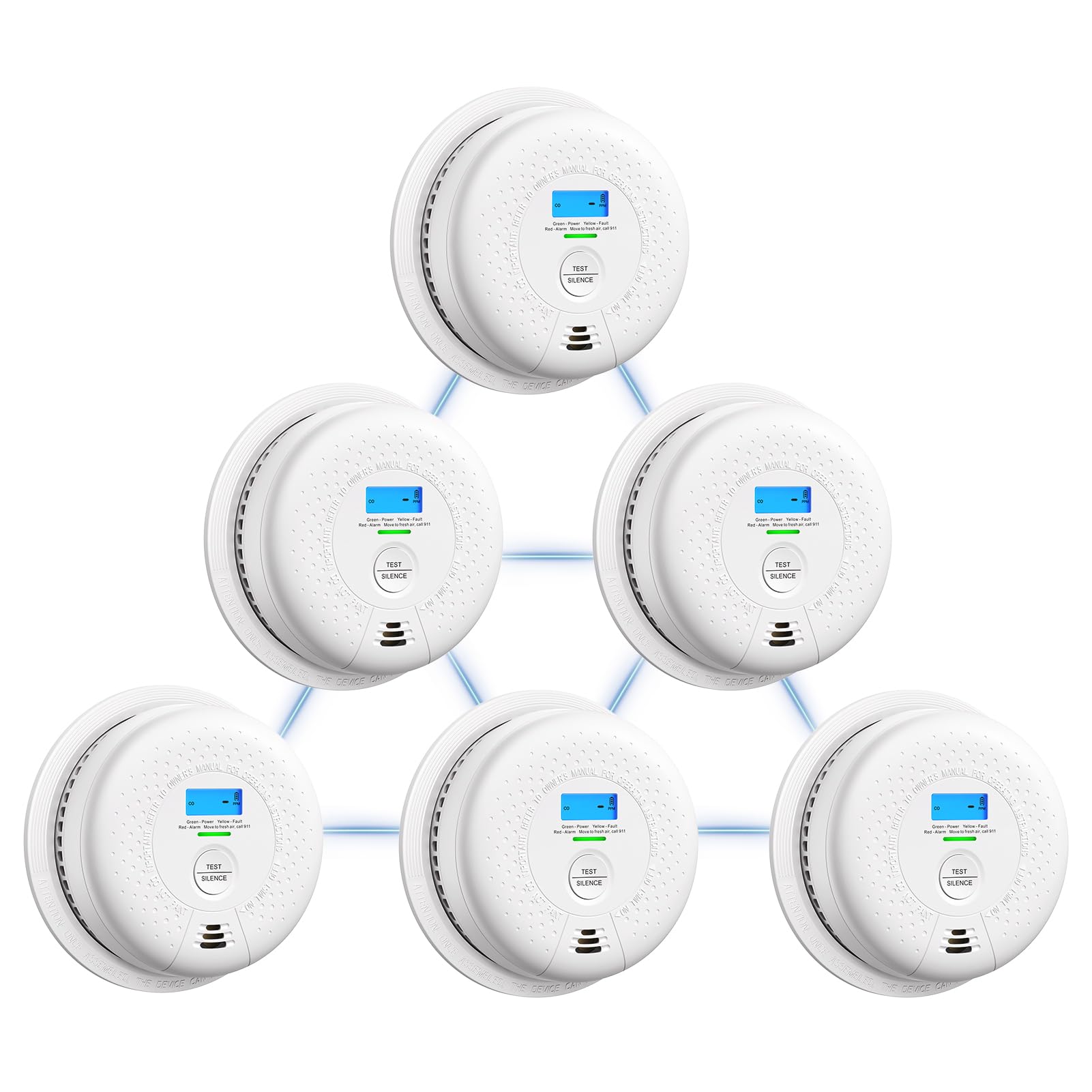
Six interconnected alarms with an LCD that reads live carbon monoxide levels in ppm.
An LCD that reads real-time carbon monoxide levels in the air is what separates this six-pack from the SC06-W, which gives you no readout at all. The same unit also shows battery level and working status, so you can tell whether the alarm is at rest or actually tracking something. Detection is two-in-one: a photoelectric sensor for smoldering fires and an electrochemical CO sensor for the invisible gas, both watching the same ceiling spot.
Installation is a screwdriver and a step stool, nothing more. Units mount with the included bracket, screws, and anchor plugs and need no rewiring, and each is independently listed to meet UL 217 and UL 2034. The sealed 10-year cell in each unit keeps maintenance low. Interconnection over the wireless link means one alarm going off sets all six going, which is the whole reason to buy a pack instead of a single unit.
Reviewers flag two small realities rather than problems. The LCD goes blank in normal operation — that is the design, with a green LED blinking roughly once a minute to show the unit is alive, so a dark screen is not a dead screen. Reach is the other: on a ceiling mount the Test/Reset button can be a stretch, and the display is small enough that reading it from floor level takes a squint. If you want carbon monoxide numbers you can walk up and read, this is the pick; if you would rather have nothing to read on the ceiling, the SC06-W covers you without a screen.
The strong points
- LCD shows real-time CO levels, battery level, and working status at a glance
- Six wireless-interconnected units with a sealed 10-year battery in each
- No rewiring needed — bracket, screws, and anchors all included
- Listed to meet UL 217 and UL 2034 safety standards
Worth knowing first
- Blank LCD during normal operation is intended, which can confuse a first-time owner
- Small display and ceiling-mounted Test/Reset button mean some stretching
- Setup leans on the manual, which customers note is light on the digital-reading features
Your pick if: you want to see carbon monoxide numbers on the unit itself rather than guess from a beep.
Pass it over if: you would rather have nothing to read and a simpler face on the ceiling.
5. Kidde Smoke & Carbon Monoxide Detector 4 Pack

Four 120V hardwired detectors with LED indicators that light the exit path.
LED warning light indicators are what put this four-pack on the list. Alongside the voice alerts that call out “Fire!” or “Warning! Carbon Monoxide!” in plain words, each unit carries lights that show where the danger is in a dark corridor or a room with the door shut. That is a different answer from the display on the X-Sense SC01-W, which shows you a number — this one shows you a direction.
Power runs on 120V AC wiring installed in the ceiling, with a 10-year battery backup behind it, so the alarm keeps working when the mains drop. The sensing technology is tuned to reduce the false smoke alarms that cooking usually triggers, and each unit is tested to meet UL 217 9th Edition, UL 2034 4th Edition, and FCC standards. Interconnect capability means one alarm sounding sets the group off together. At 12.8 ounces per unit it is noticeably less to hoist overhead than the SITERWELL GS886F at 14.08 ounces.
Reliability is where feedback divides: most owners find install and interconnection straightforward, while a share report false alarms or units that stop working with them. Check your existing wiring and interconnect type before ordering, because these units are designed to link with compatible Kidde alarms and the user guide spells out the requirements. Buildings with dark corridors or closed rooms where a light trail genuinely helps people exit are the right fit here. If you cannot confirm interconnect compatibility with your current setup, verify that first or choose a wireless pick instead.
Why it earns a slot: LED warning indicators plus spoken alerts give you both a name for the hazard and a visual trail to follow in low light.
The catch: interconnect compatibility needs confirming against your existing Kidde setup before you commit.
The right call for: buildings with dark corridors or closed rooms where a light indicator genuinely helps people exit.
Think twice if: you are upgrading a system from another brand and cannot verify interconnect compatibility first.
6. First Alert Combination Smoke & Carbon Monoxide Alarm
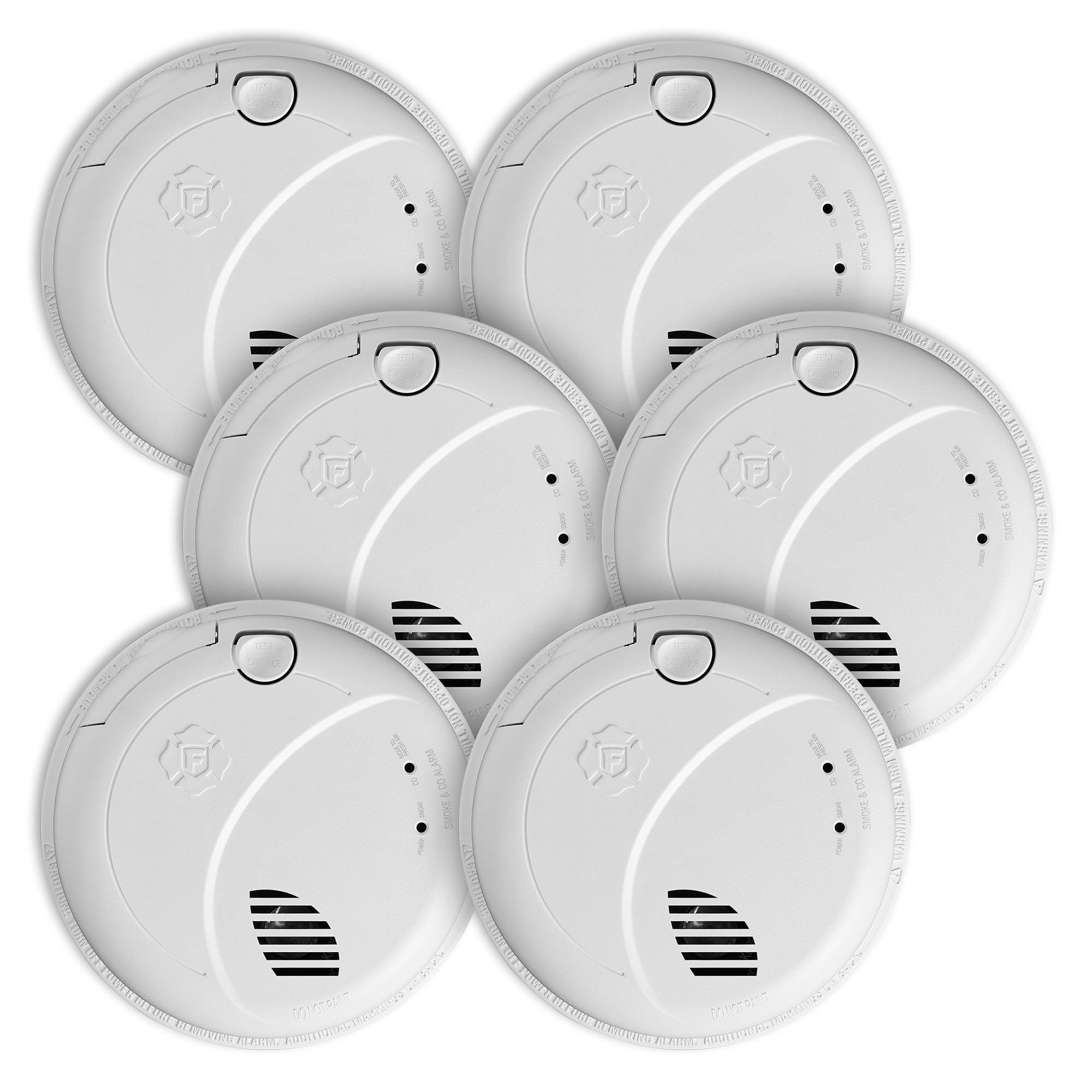
The retrofit that plugs into the existing wired base and announces the hazard’s location.
Owners swapping out expired combo units report this alarm fitting the existing wired base perfectly with a simple plug-in connection, and the adapter plug is included. Voice and location alerts then announce both what the danger is and where it is. That goes beyond the plain hazard naming on the Kidde 30CUA10-V — in a multi-room building, knowing the zone speeds up everything.
Precision Detection advanced sensing technology complies with updated industry standards and is designed to cut cooking nuisance alarms while keeping early warning intact. Battery backup carries the unit through an outage, and AA batteries arrive pre-installed in the box. Interconnect lets compatible alarms sound together for whole-building coverage. The recurring feedback theme is mixed reliability — some reviewers point out years of quiet service, others describe false alarms and early sensor failures — so this rewards buyers who confirm their wiring and interconnect setup before ordering. Its 8-to-10-year service life makes it a long-term ceiling fixture, not a disposable one.
One practical design detail to note: the setup menu cycles only once, so if you miss a step you have to pull and reinstall the battery to run through it again. The alarm lives up to its “voice” name in volume too — loud enough that covering the speaker during setup is a sensible move. If you have wired bases already and want location announcing added, this is your replacement part; if you want a wireless system with no alarm wiring to build on, this one is not for you.
Standout feature: Voice and location alerts name both the hazard and its location, so occupants know where to avoid.
The wart: early sensor failures show up in some longer-term feedback, so buy it as a replacement part rather than a forever unit.
Suits you if: you have existing wired bases and want a drop-in replacement that adds location announcing.
skip it if: you want a wireless system and have no alarm wiring to build on.
7. Sensaphone 400 Monitoring System

Not a smoke or CO alarm — a dialer that phones you when temperature, humidity, or water goes out of range.
Nobody is on site to hear a siren, and that is the gap this unit fills. It sits outside the detector category entirely and accepts up to four external sensors to monitor temperature, humidity, water, and more. It reports over a standard telephone line rather than a data connection or an app. For a seasonal property or a plant room nobody visits daily, it is the difference between finding out today and finding out at the end of the season.
The temperature-sensing range runs from -20° to 150°F (-30° to 65°C), which covers everything from a freezing pipe run to an overheated equipment room. It sends voice alerts and alarm notifications over that phone line, can call several numbers, and supports remote interrogation so you can ask it what the conditions are. Configuration is programmable rather than plug-and-play — plan on downloading and reading the manual before setup, because the menu structure is not obvious on first pass.
What owners consistently value is the visibility into a building they cannot see — it does the job of a daily walkthrough on a room with no phone coverage, no internet, and no one nearby. The catch is structural: alerting runs over a phone line, so a landline or a cellular home-phone setup is part of the install, and a few owners find the reporting noisy and wish unused sensors could be silenced. Two units sharing one line is a technical-support job rather than a self-serve one. Owners of remote or seasonal buildings who need to know about freezing pipes or power loss before they walk in on it are who this is made for — and anyone shopping for a smoke or CO siren should look elsewhere entirely.
Why it does a job nothing else on this list does: Temperature, humidity, and water monitoring reported by phone call from a building with no network and no one inside.
Before you order: you need a phone line or cellular-home-phone setup in place, and be ready to keep the manual within arm’s reach.
Made for: owners of remote or seasonal buildings who need to know about freezing pipes or power loss before they walk in on it.
Not for: anyone looking for a smoke or CO siren — this is a monitoring system, not a life-safety alarm.
Know the Specs
Interconnection Method
A hardwired interconnect uses a physical signal wire — the orange or third conductor often visible in an alarm harness — so when one detector trips, every unit on that circuit sounds. A wireless interconnect does the same job over a radio link with no new cable. With existing wiring in a small building, hardwired is the drop-in path; with bare ceilings, wireless saves you an electrician entirely.
Battery Architecture
A sealed 10-year battery sits inside the unit and never gets replaced during its service life, with a low-battery warning at the end. A mains-powered unit with 10-year backup draws from building power and only leans on the cell during an outage. If your building stays powered, the backup matters most during blackouts; if it does not, the sealed cell is the simpler answer.
Smoke vs CO Sensing
A photoelectric sensor spots visible smoke by the way it scatters light, so it reacts to smoldering fires and generally stays quiet around cooking steam. An electrochemical sensor handles carbon monoxide, an odorless gas you cannot see or smell. A combo unit covers both from one ceiling point and is the most common configuration for a commercial replacement project.
Decibel Rating and Voice Alerts
An 85 dB alarm is a loudness measurement, not a coverage promise — the number tells you how loud the siren is at close range, not how far it carries through walls and closed doors. Voice alerts add the hazard’s identity so people know whether they are dealing with smoke or carbon monoxide, and location announcements go further by naming which zone triggered the alarm.
Common Questions
Can I replace my existing hardwired detectors with wireless ones?
Will the Kidde 30CUA10-V interconnect with my old Kidde alarms?
Do I need a hardwired system or is a sealed battery unit enough?
How loud is 85 decibels and can I hear it through a closed door?
What happens to a wirelessly interconnected system when one unit’s battery dies?
Is a combination smoke and CO alarm better than two separate alarms?
Do I need a phone line for the Sensaphone 400 to send alerts?
How long do the sensors in these detectors last before replacement?
Can the X-Sense units be monitored or tested remotely from a phone?
The Bottom Line
The strongest pick for most small buildings is the X-Sense 6-Pack Interconnected Smoke and CO Detector, SC06-W, because six wireless-interconnected combo units with sealed 10-year batteries cover a whole floor without a single wire run or yearly battery chore. If your building already has 120V alarm wiring, the Kidde 30CUA10-V 3 Pack drops in and names the hazard aloud. And for a remote or seasonal property where nobody is on site to hear a siren, the Sensaphone 400 phones you instead.
How we choose
We do not accept paid placement. Every pick is matched to a real buyer and a real use-case; we do not hands-on test units.
Sources
Specifications: manufacturer listings and product documentation. Review insights: verified customer reviews, as of October 2026. Pricing: not shown on this page (it changes often); check the current price via the retailer link.
As an Amazon Associate, Aappliancez earns from qualifying purchases. This does not affect which products we feature.