Disclosure: Some links in this post are affiliate links. As an Amazon Associate I earn from qualifying purchases, at no extra cost to you. Learn more
Specs are compiled from manufacturer listings and verified buyer reviews and can change over time — please confirm the key details on the product page before buying.
Spraying the ants you can see is why they keep coming back. A commercial ant killer works only when worker ants carry the poison back to the nest and pass it to the queen, so the whole colony dies instead of a few stragglers on your counter. The picks below split into three jobs: gel and bait stations for trails, dusts for cracks and voids, and concentrates you mix with water for a perimeter. Match the product to where the ants actually live and you stop re-treating the same kitchen every spring.
This guide is built by comparing the manufacturers’ published specifications and the patterns across verified customer reviews, so you get each pick’s real strengths and trade-offs instead of marketing spin.
You will see how each formulation behaves, which ant species it targets, and where it falls short. Here is the practical path to the best commercial ant killer for your trail, your wall void, or your yard.
Top Picks
How To Choose The Best Commercial Ant Killer
The first decision is not brand, it is bait versus spray. A bait is food the ants carry home, so it has to taste good enough to recruit a crowd. A spray or dust kills on contact, which is useful for a perimeter but leaves the nest intact if the ants never walk through it.
Match the product to where the ants are living
Ants trailing across a counter need a gel or a station they can find and feed on. Ants nesting inside a wall void or under siding need a dust you puff into the gap. Ants crossing your foundation from the yard need a concentrate you mix and spray as a barrier. Buying the wrong form is the most common reason a treatment fails — the poison was fine, it just never reached the colony.
Understand sweet feeders versus protein feeders
Not every ant wants the same food. Some species chase sugar, others chase grease and protein, and a colony’s preference can shift as it feeds. A gel built for sugar-seeking ants will pull a crowd from one nest and get ignored by another. If your first bait sits untouched for a day or two, the ants probably wanted a different food, not a stronger poison.
Check the label before you buy
Every one of these products lists its target species and its labeled pests on the package, and some carry exclusions. A concentrate that kills fire ants may be labeled as not for carpenter ants or Pharaoh ants, so read the target line before you commit. The label also gives the dilution rate and the reapplication window, which tells you how far a bottle really stretches.
Plan for speed versus colony kill
Contact sprays drop ants fast; baits and non-repellent concentrates take hours to days because the ants must carry the dose home first. If you want the trail gone by morning, expect to see more ants at the bait before you see fewer. That swarm is the treatment working, not failing.
Side-by-Side Comparison
| Model | Best For | Form | Active Ingredient | Target Species | Amazon |
|---|---|---|---|---|---|
| Atticus Tirade 1% Dust★ Best Overall | Cracks, voids, and outdoor nests | Powder | Cyfluthrin | Insects | Amazon |
| Bayer Tempo SC Ultra 240mlBest Perimeter Spray | Whole-home perimeter spray | Liquid concentrate | — | Insects | Amazon |
| Advion Ant Gel Bait | Kitchen trails and sugar feeders | Gel | Indoxacarb | Ant | Amazon |
| Advion Ant Bait Arena 12ct | Pet-safe enclosed stations | Bait station | — | Ants | Amazon |
| Terro T1812 Outdoor Liquid Ant Baits | Yard and foundation stakes | Liquid bait stakes | — | Ant | Amazon |
| Fipronil Plus-C Concentrate | Serious multi-pest cleanout | Liquid concentrate | Fipronil | Insects | Amazon |
| Bifenthrin-Plus-C Insecticide | Large-property barrier spraying | Liquid concentrate | Bifenthrin | Insects, spider | Amazon |
Detailed Reviews
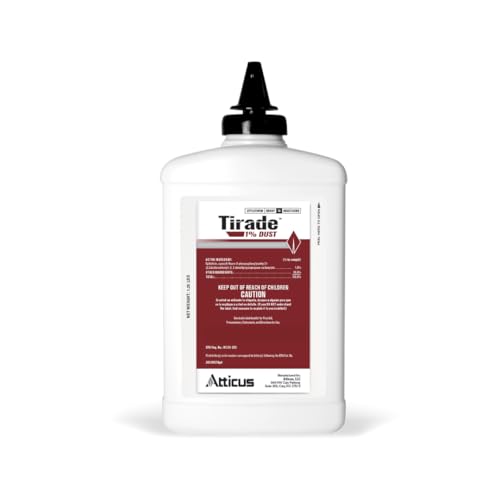
1. Atticus Tirade 1% Dust Insecticide (1.25lb)
Our pick — 4.5+★ from 1,000+ verified ratings; the strongest balance of quality and price.
One puffer bottle reaches the nest you cannot see.
The reason this dust tops the list for a hard-to-reach nest is simple: you never have to see the ants to reach them. Tirade is a powder you puff into a crack, a wall void, or a gap under siding, and the ants walk through the treated dust and carry it home on their bodies.
The active ingredient is cyfluthrin — the same one the leading retail brand uses — delivered in a 1.25 lb bottle, or 20 ounces of powder. The label lists more than 50 household insects, including ants, wasps, roaches, and bed bugs. It is dry and low-odor, so there is no strong smell trailing through the kitchen after you treat. You can also use it outside as a barrier and indoors as a crack-and-crevice treatment.
What wins people over is effectiveness, and the sheer range of hard jobs this dust solves. Owners dusted a wasp nest tucked under metal siding and found zero wasps the next day, after sprays, boric acid traps, and a soap mix had failed. Another buyer dusted four yellow jacket nests around raised beds at 4am and saw no yellow jackets afterward. The recurring gripe is timing — this is not a contact kill, so the ants and wasps take at least 24 hours to stop moving. One label note matters before you buy: it is not sold in Alaska, California, Hawaii, Puerto Rico, or Vermont.
What the powder does well
- 1.25 lb of ready-to-use cyfluthrin dust — no measuring or mixing
- Listed for 50+ insects, including ants, wasps, and roaches
- Low-odor and non-staining, so upholstery and indoor surfaces stay clean
- One-handed puffer format gets powder into gaps you cannot see
Where it asks patience
- Not a contact kill — leave at least 24 hours before judging results
- Safety opinions on the review pages are mixed, so keep pets off treated areas
- Restricted from sale in five states, including California
Reach for this if: the ants or wasps are living somewhere a spray stream cannot land, like a wall gap or under siding.
Look elsewhere if: you want the trail dead within the hour — a contact spray gets that job, this one does not.
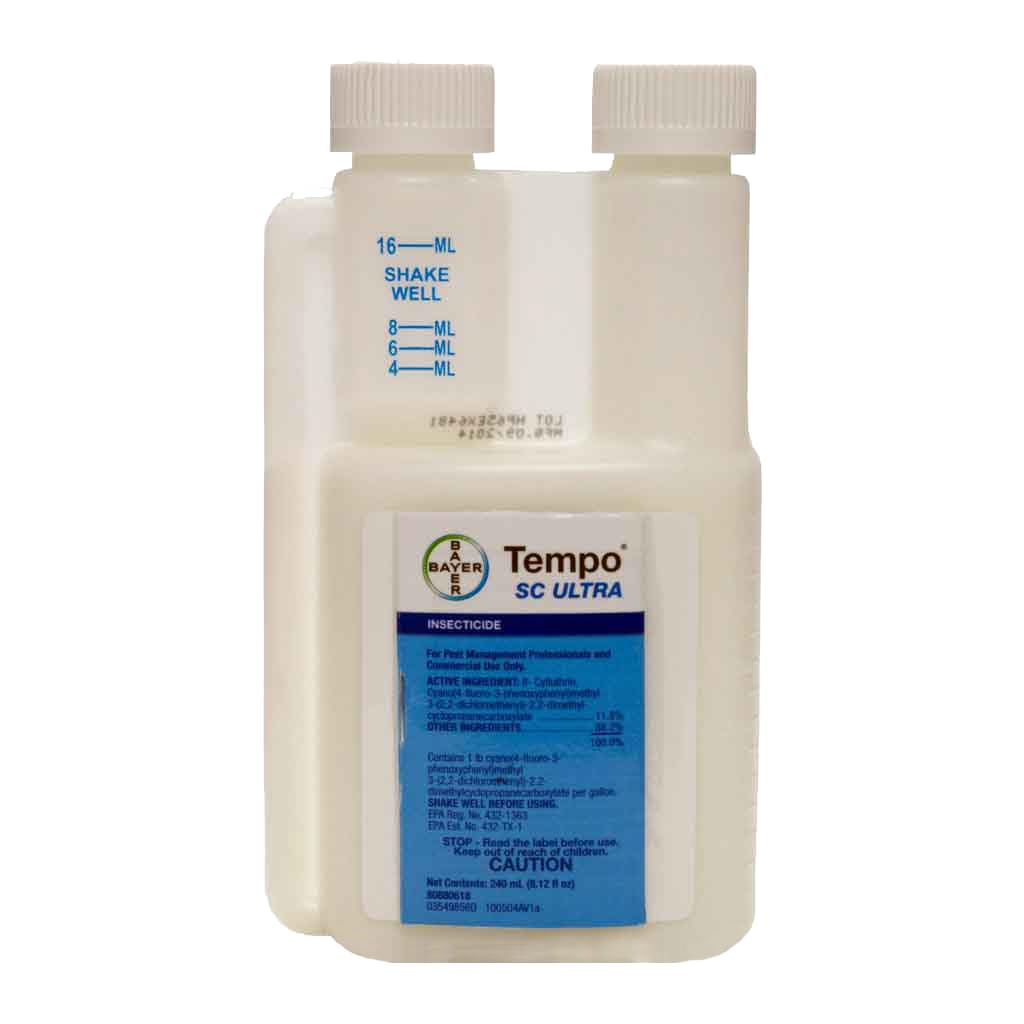
2. Bayer Tempo SC Ultra 240ml
A small bottle that keeps ants from ever reaching the door.
If your ants start outdoors and march in through the breezeway, stopping them at the foundation beats chasing them across the tile. Tempo SC Ultra is a liquid concentrate you mix with water and spray along the perimeter, and the label covers more than 100 nuisance pests with quick knockdown and a long residual — meaning it keeps killing after it dries.
The practical numbers owners work with are simple: mix 16ml into 1 gallon of water and spray roughly every 3 months. That cadence is why the 240ml bottle, or 8 ounces of concentrate, covers a whole season of maintenance rather than a single afternoon.
What buyers care about most is that it keeps working — a bug-free stretch that lasts for years and holds pests away from the house, not just off the floor. One buyer who had paid professional sprayers for four years cleared the spiderwebs across the property within four months of switching to Tempo. It also covers spiders, roaches, and snakes along with ants. Two honest notes: it is toxic while wet, so keep children and pets clear and wear gloves until it dries. And value is genuinely split on the review pages — some find it excellent for the coverage, others do not, so judge it against how much ground you need to treat.
The mixer math: at 16ml per gallon with a quarterly spray, one 240ml bottle is a long-haul tool rather than a one-time purchase.
The wet-stage caution: the label and the reviews agree — treated surfaces are the risk window, not the dry barrier afterward.
Fits best: homeowners treating a foundation line and keeping ants from ever getting inside.
Not the pick: someone with ants already nesting in a wall — you want a dust for that job.
3. Advion Ant Gel Bait, 4 Tubes x 30-Grams
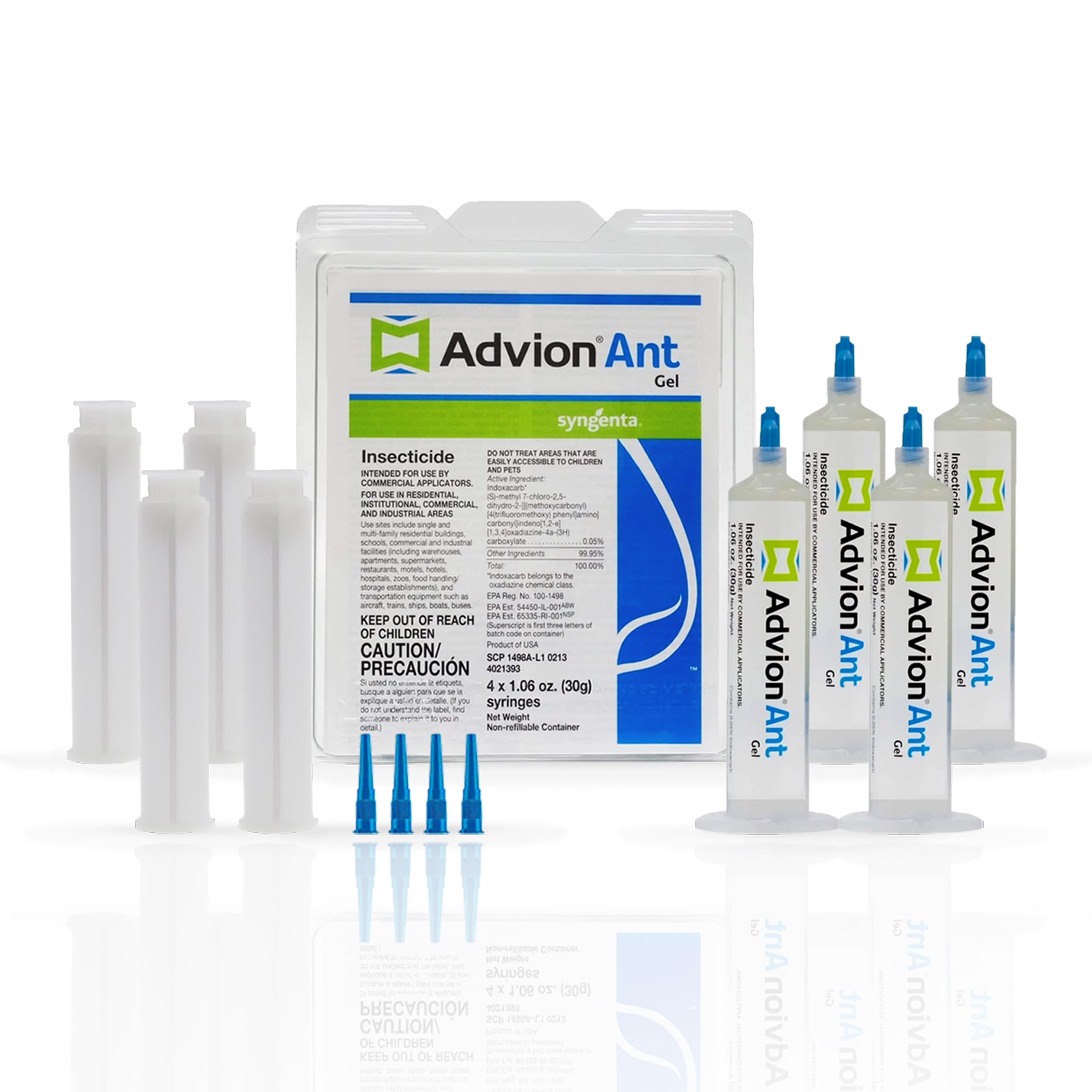
Four syringes of gel that turn a trail into a funeral march.
For ants already inside the house, a gel you place along their trail is the most direct route to the queen. Advion Ant Gel comes as four 30-gram tubes with four plungers and four tips, and the active ingredient is 0.05% indoxacarb — a non-repellent formula, meaning the ants do not sense the poison and avoid it.
The dosing is small on purpose. Pea-sized blobs at the spots where ants are actually trailing get picked up and carried back, and the label lists most major species, including Argentine and carpenter ants. It is odorless, applies to any surface, and works indoors and out. The label also states the MetaActive effect differentiates between target insects and non-target organisms, which is the manufacturer’s wording for why it is unlikely to affect people or pets.
Ant killing is the thing this gel does best, and the speed surprises people. Odorous house ant activity nearly stopped in 4 to 5 days, faster than a common liquid bait. In a hot South Florida kitchen, blobs placed at the sink drain and corners left a single ant by morning. Expect the gel to feel tacky, then dry hard — the recurring note is that it dries up quickly, which is fine because the ants have already carried it home by then. A plunger can ooze if you press hard, so go slow.
Species coverage: targets most major ants, with a documented pull on carpenter ants and the sugar-loving species that ignore other baits.
The handling catch: tacky gel hardens fast and plungers can ooze — a bait station makes cleanup easier if that bothers you.
Choose this when: ants are walking a visible trail and you want colony kill, not a spray that scatters them.
Trade it for a station: if you have toddlers or a puppy that gets into low cabinets.
4. Advion Ant Bait Arena 12ct

Bait that stays inside a plastic shell instead of on your shelf.
Same bait family as the gel above, different delivery. The Arena is a pre-filled plastic station — 12 to a pack — so the poison sits sealed instead of exposed on a countertop. That matters in a home with a dog or a toddler, since the bait stays contained until something breaks in.
The formulation targets most pest species of ants, including the key sweet feeders, and the bait keeps its integrity for extended periods. The stations are self-enclosed with a solid base you can set at angles or upside-down, and the resealable bag keeps unused stations fresh.
Here is the honest part: effectiveness is genuinely mixed on these stations, and it splits along food preference. Pavement ants, which chase protein, cleared out within 24 hours of the traps going down after another brand failed. Pharaoh ants, the tiny species that shrug off standard treatments, also went down, ending a multi-year infestation. But the stations have weak innate attraction: the ants have to find them first, and sugar-only feeders may walk right past. One buyer found only about 10% of their ants preferred this protein bait over a glucose bait, then used it as a rotating backup. The practical method is to start here, then switch to a sugar bait once the colony’s preference shifts.
Why the sealed format earns a spot
- 12 pre-filled stations — no gel to squeeze or dry out on a surface
- Enclosed shell keeps bait contained around pets and kids
- Strong on protein-loving ants, including Pharaoh and pavement species
- Solid base sets flat, angled, or upside-down
What to know before you place them
- Weak lure — the ants must stumble onto the station themselves
- Sugar-only feeders may ignore it entirely
- Mixed reports overall, so treat it as one tool rather than the whole answer
Good match: a household with pets or small kids that wants bait locked inside a shell.
Pair it up: keep a sugar bait on hand, because these stations lose the ants once the colony switches food.
5. Terro T1812 Outdoor Liquid Ant Baits – 6 Pack

Push a stake in the yard and cut the colony off at the source.
Outdoor ants should be handled outside, before they find the door. Terro T1812 is a liquid bait in a stake you push into the ground, sold as a 6-pack, and it is aimed at the sweet-eating species — acrobat, crazy, ghost, little black, odorous house, and pavement ants.
The setup is a two-step job: insert the stake, break the tab, and let the ants find the liquid. Workers drink it and share it with the rest of the colony, so the bait reaches ants you never see. The label promises a significant drop in ant traffic within a few days, and the liquid format is what pulls the fast drinkers in.
Ant reduction is the strong suit here, and the results hold across a season. Ten traps set beside four garden nests before a week away came back to zero nests and empty bait. Placed along a fence line, the stakes kept ants out of the yard all summer. A severe fire ant infestation that two years of professional spraying had not fixed stopped entering the house once these stakes went down. The drawbacks are physical: the traps must stay upright after opening or the liquid spills, and a stake set right before rain is a wasted stake.
The seasonal win: a perimeter of stakes set early keeps sweet-eating ants from ever reaching the foundation.
The spill risk: once the tab is broken the trap has to stay level — tip it and the bait is gone.
Best suited to: yards, garden beds, and fence lines where sweet-eating ants nest outdoors.
Skip the stake method: if your ants are fire ants deep in a mound — the label targets the sweet feeders, not every species.
6. Fipronil Plus-C Insecticide Concentrate, 16 oz
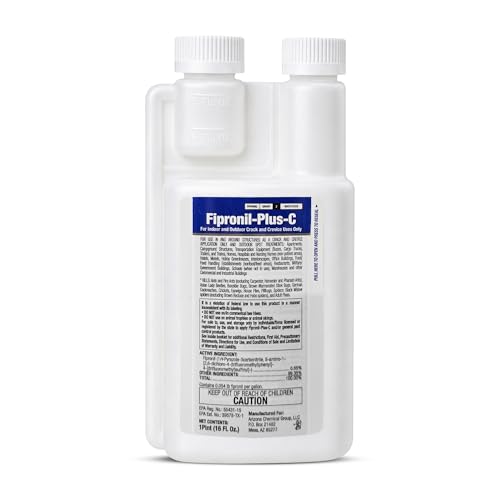
The undetectable dose the colony carries home to the queen.
Most ant sprays are repellent — the ants smell them and reroute to the next room. Fipronil Plus-C is built the opposite way: it is undetectable to insects, so roaches and ants walk through a treated crack, pick it up, and pass it to nestmates including the queen. The label says it kills in 24 to 36 hours, which is why the colony collapses over days instead of scattering.
The formula carries 0.65% fipronil — the same active ingredient used in professional-grade termiticides — plus a Cellulose Entrapment Technology developed by a board-certified entomologist. That coating shields the active ingredient from UV and microbial breakdown for 30 to 90 days of residual control with reduced drift. A 16 oz bottle makes up to 21 gallons at the maintenance rate, and the built-in measuring chamber uses three label rates: 0.25 oz per gallon for maintenance, 0.75 for an initial cleanout, and 1.5 for severe infestations.
The pest list is where it earns its label: German cockroaches, fire ants, spiders including black widows, house flies, and adult fleas, plus control of ants and several beetles and bugs. It is explicitly not for carpenter, harvester, or Pharaoh ants, or for brown recluse and hobo spiders — check your species first. Buyers report it works on both large carpenter ants and tiny red ants. One coastal homeowner sprayed the 1.5 oz severe-infestation rate along the foundation line and saw nothing by day ten. Some mention it does not mix well with water, so stir patiently.
The colony math: a non-repellent fipronil spray reaches the nest because the ants never know they crossed it.
Species honesty: this is not the pick for carpenter, harvester, or Pharaoh ants — the label excludes them outright.
Made for: a recurring multi-species problem where sprays keep relocating the bugs instead of ending them.
Check the label first: if your ants are Pharaoh or carpenter, this formula is not the right one.
7. Bifenthrin-Plus-C Insecticide, 96 oz
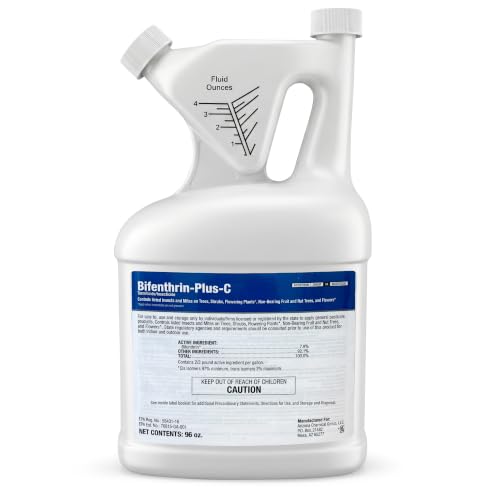
The bulk bottle for a property line instead of a single kitchen.
This is the concentrate you buy when the job is a whole property. Bifenthrin-Plus-C comes in a 96 oz bottle — 6 pounds of liquid — that you mix with water and spray as a barrier across foundations, patios, gardens, and living spaces. The label covers termites, wasps, roaches, and ants, indoors and out.
Where the Fipronil bottle above is built for undetectable colony kill, this one is built for coverage. It is a low-odor formula the label describes as pet and family-safe once applied, and it mixes with water for termite and ant treatment without an exterminator visit. That bulk volume is what makes it the pick for large yards and repeated perimeter work.
Effectiveness is the headline — it kills bugs for months and builds a barrier that holds up against weather. Ant and spider problems around an exterior perimeter stopped after spraying, and one reviewer noted cockroaches gone quickly. The trade-offs are practical: value is split, with some finding the cost well worth it and others not, and duration is also divided, with reports ranging from months of control to shorter stretches. Treat it with care — one user felt hot, sensitive skin for a day after contact, so wear protective gear. It also leaves a cloudy residue on glass and a slight smell that fades as it dries.
Why the big bottle works
- 96 oz of concentrate stretches across a full property perimeter
- Low-odor and mixes with water for no-exterminator treatment
- Label covers ants, wasps, roaches, and termites in one spray
- Barrier holds up against the elements
Handling notes
- Wear protective gear — skin contact can leave arms sensitive for a day
- Can leave a cloudy residue on glass and a faint smell until dry
- Reports on how long the barrier lasts are split
The right buyer: a homeowner with a large lot, multiple entry points, and a sprayer ready to go.
Overkill for: a single indoor trail — that is a gel or a station job, not a 96 oz barrier.
Know the Specs
Active Ingredient
The active ingredient is the chemical that actually kills the ant — cyfluthrin in a dust, indoxacarb in a gel, fipronil or bifenthrin in a concentrate. Non-repellent actives like indoxacarb and fipronil let the ant walk through without noticing, so it carries the poison back to the nest. Contact actives kill on the spot but leave the colony intact if the ants never cross the treated surface. Match the active to how the ants are behaving, not to which bottle looks strongest.
Dilution Rate
A concentrate is mixed with water at a labeled rate, and that rate sets both how strong the spray is and how far the bottle stretches. A maintenance rate is a lighter mix for routine barriers; an initial or severe rate is stronger for a cleanout. Always read the label for the exact ounces per gallon, because the same bottle can cover very different areas depending on which rate you use.
Residual Control
Residual means how long the treatment keeps working after it dries. A dust in a wall void sits out of the weather and stays put; a perimeter concentrate faces sun and rain, so it needs reapplying on a schedule. Long residual is what lets you treat a foundation monthly or quarterly instead of every weekend.
Target Species
Ant species do not share the same food preference or the same susceptibility. Some chase sugar, some chase protein and grease, and the colony’s taste can shift as it feeds. A bait labeled for sweet feeders may get ignored by protein ants, and a concentrate may explicitly exclude carpenter, harvester, or Pharaoh ants. The target line on the label is the first thing to check before you buy.
Common Questions
Is a gel bait or a spray better for ants inside the house?
How long before I see results from a commercial ant killer?
Why are there more ants after I put the bait down?
Will Fipronil Plus-C work on carpenter ants?
Can I use these products around pets and children?
How often do I need to reapply a concentrate?
Does a dust or a bait station work better in a wall void?
What is the difference between a non-repellent and a repellent ant killer?
Can I switch between a sugar bait and a protein bait?
How much area does a concentrate actually cover?
The Bottom Line
For most homes fighting ants in cracks, voids, or outdoor nests, the commercial ant killer to start with is the Atticus Tirade 1% Dust — a ready-to-use cyfluthrin powder that reaches the nest you cannot see. If the ants are trailing across a counter, grab the Advion Ant Gel Bait and let them carry the colony kill home. And for a full perimeter that keeps ants from ever reaching the door, the Bayer Tempo SC Ultra is the one to reach for.
How we choose
We do not accept paid placement. Every pick is matched to a real buyer and a real use-case; we do not hands-on test units.
Sources
Specifications: manufacturer listings and product documentation. Review insights: verified customer reviews, as of October 2026. Pricing: not shown on this page (it changes often); check the current price via the retailer link.
As an Amazon Associate, Aappliancez earns from qualifying purchases. This does not affect which products we feature.