Disclosure: Some links in this post are affiliate links. As an Amazon Associate I earn from qualifying purchases, at no extra cost to you. Learn more
Specs are compiled from manufacturer listings and verified buyer reviews and can change over time — please confirm the key details on the product page before buying.
Here is the short answer: buy a columnar oak for the width, not the height. A columnar oak grows straight up like a pillar on a footprint a few feet wide, so it can screen a neighbor’s window or line a driveway without swallowing your yard. Get the planting window and the hardiness zone wrong and you will be buying the same tree again next spring.
This guide is built by comparing the manufacturers’ published specifications and the patterns across verified customer reviews, so you get each pick’s real strengths and trade-offs instead of marketing spin.
Below you will find the picks that actually hold a slim shape, the zones each one tolerates, and the shipping snags that cancel orders in a few states. Read on for the best columnar oak trees for tight yards and privacy screens.
Top Picks

How To Choose The Best Columnar Oak Trees
Most people shop for a narrow tree by height, then discover the canopy still spreads wider than the gap they had in mind. Work backward instead: measure the strip you want to fill, then match the tree’s habit and mature spread to that strip.
Start with width, then height
A columnar tree keeps a tight vertical profile, which is what lets it sit close to a fence, a walkway, or a property line. A wide-spreading oak does the opposite. The Live Oak in this list can reach a spread between 60 and 100 feet, so it is a shade tree for open ground, not a screen. Match the habit to the space before you fall for the foliage.
Check your hardiness zone first
The USDA hardiness zone is a cold-tolerance rating — it tells you the coldest winter a plant is expected to handle. A tree rated for a colder zone than yours will usually sail through winter; one rated warmer may not. The Ginkgo here is listed to Zone 4 and hardy to minus 30 degrees Fahrenheit, while the Shumard Oak is listed for Zones 5 to 9. Pick a zone warmer than yours and the first hard freeze can kill the tree before its first spring.
Read the pot size and shipped height carefully
A nursery pot size tells you how much root system travels with the tree. A 1-gallon pot is a small, young plant; a 4-5 ft live plant arrives with more top growth and more roots. Expect a small tree to look underwhelming on arrival. That first season it is building roots underground, not adding height above it.
Know the shipping rules before you buy
Live plants carry state restrictions because of agricultural rules. One pick here cannot ship to Alaska, Arizona, Hawaii, or Oregon, and the order is cancelled rather than delayed. Check your state against that list before you pick a planting spot.
Side-by-Side Comparison
| Model | Best For | Expected Height | Habit / Form | Cold Rating | Amazon |
|---|---|---|---|---|---|
| Brighter Blooms Sky Pencil Holly★ Best Overall | Tight vertical screens and entryways | 10 feet | Columnar evergreen | — | Amazon |
| Nuttall Oak (Perfect Plants)Fast Shade Pick | Fast shade with fall color | — | Shade tree | — | Amazon |
| Live Oak Tree (Simpson Nursery) | Wide shade canopy in warm zones | 80 feet | Wide-spreading evergreen | Zones 7-10 | Amazon |
| Columnar Ginkgo (Rocky) | Cold climates and amber fall color | 40 feet | Very upright columnar | Zone 4, to -30°F | Amazon |
| Shumard Red Oak (3-pack) | Resilient multi-tree planting | — | Tall straight trunk, rounded crown | Zones 5-9 | Amazon |
Detailed Reviews
1. Brighter Blooms Sky Pencil Holly Tree, 3-4 ft.
Our pick — 4.0+★ from 30+ verified ratings; the strongest balance of quality and price.
The slim evergreen that screens a window without taking the patio with it.
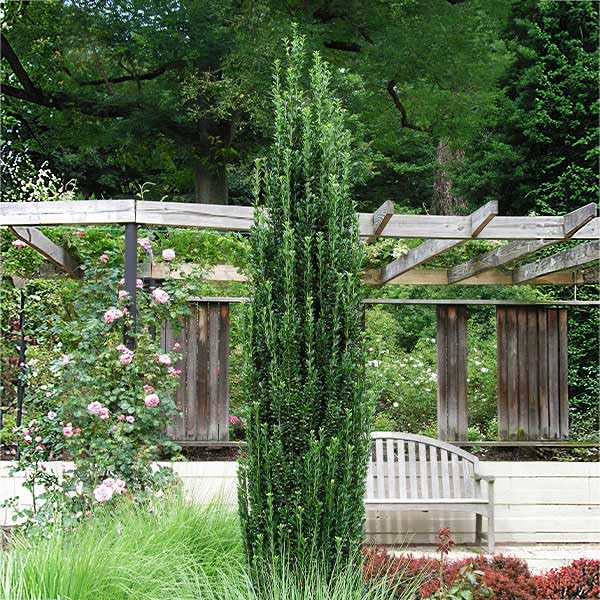
If your problem is a narrow gap — between a porch post and a fence, or along a driveway edge — this is the pick to beat. Ten feet is the expected plant height for the Sky Pencil Holly, which puts it in the height range of a good privacy screen rather than a full shade tree. It holds that shape as an evergreen, so the screening you plant is the screening you keep through winter.
What wins people over is health on arrival. Across the review pages, plants arriving alive, leafy, and still thriving after a month is the honest headline, and quality is the second theme that repeats. Arrival condition is the real gamble with any boxed live plant, and this holly lands healthy more consistently than most. One owner’s small tree went straight into the ground and started pushing new leaves inside the first month.
The trade-off is plain: ten feet is the ceiling here, so it screens a window line, not a two-story roofline. Do not expect it to replace a mature oak in the shade department, either. Moderate watering keeps it going, and low maintenance is the pitch — but you still have a young evergreen to water through its first summer. It also cannot ship to Alaska, Arizona, Hawaii, or Oregon, so check that before you plan the planting hole.
Why this one leads
- Expected plant height of 10 feet gives you a real vertical screen in a footprint a spread oak would never fit.
- Evergreen foliage keeps the narrow silhouette covered all winter, not just in summer.
- Arrives healthy — plants thriving a month after delivery is the recurring story.
- Low-maintenance habit suits a first-time tree buyer.
Where it stops short
- Ten feet of expected height will not shade a tall wall or hide a two-story roofline.
- Order is cancelled outright in Alaska, Arizona, Hawaii, and Oregon.
- Moderate watering means a first-season commitment, not a plant-and-forget tree.
Pick this if: you need a narrow evergreen screen at window height and want it green year-round.
Look past it if: your gap needs a tree in the 30-40 foot class — that is a different product entirely.
2. Nuttall Oak 4-5 ft
A boxed live oak that arrives with the feeding and planting plan already inside.
The single number that carries this pick is 16 pounds — the item weight of a live plant shipped in its pot with soil, which is what you feel when you lift the box off the porch. That weight traces straight back to the size of the plant: this is a 4-5 ft specimen, sent with a bag of special-blend fertilizer and a planting guide. Compare it to the 5-pound Live Oak from Simpson Nursery, and the difference in what lands on your step is obvious before you open the box.
The arrival story is what sells it. Buyers report trees arriving over seven feet tall with leaves intact and fall color showing, well packed, still moist, and accompanied by clear directions. One review puts it simply: “Very healthy and great size larger than expected. Will be ordering more!” “Taller than expected” is the phrase that keeps recurring in these reviews — the rare nursery error that works in your favor.
Here is the honest catch: measurement is inconsistent. One buyer’s box held a tree measured in inches, not feet — “This item WAS NOT 5 to 6 ft. Inches yes.” Treat the listed height as a target rather than a guarantee, and photograph the tree as you unpack it for the warranty claim. Fifteen days of warranty protection is the window you have to raise a problem, so do not leave the tree in the box waiting for the weekend. Fall color also means this is not your evergreen screen — it goes bare in winter.
Why it earns second spot: the plant plus fertilizer plus directions bundle removes the guesswork from a first oak planting, and the taller-than-listed arrivals back it up with real weight in the box.
The patience tax: measurement varies from box to box, and the warranty clock runs just 15 days from delivery.
Reach for this if: you want a substantial oak to plant now and value the fertilizer and guide arriving in the same carton.
Pass if: you need a specific measured height guaranteed — this is a live plant, not a machined part.
3. Live Oak Tree, 2-3 ft Tree Height, 1 gal. Nursery Pot

Buy this one for shade, not for a screen — it wants room and it wants warmth.
Start with the number that decides everything: 80 feet is this tree’s expected plant height, with a spread between 60 and 100 feet at maturity. That is a shade tree for open ground. It is the opposite of a columnar habit, so if you searched for a narrow oak to hug a fence line, this is not that tree — and pretending otherwise will cost you a planting hole you have to dig up.
What you do get is a fast-growing evergreen with leathery, dark green leaves that stay on through the year in Zones 7-10, surviving cold down to roughly 5 degrees Fahrenheit. A 1-gallon nursery pot and 5 pounds of shipping weight tell you honestly what arrives: a small, young tree, not a head start on a mature canopy. Acorn production is listed as variable, so do not count on a heavy crop every year. The upside is real once it settles — regular watering through establishment, then generally drought tolerant, with acidic soil and minimal pruning in its favor.
The mixed part sits squarely on early survival. New trees sometimes arrive yellowed with broken top stems, and some fail after going outside before planting. What turns that around is the planting method rather than luck: a hole three times the root ball size, then patient watering, and several of these small trees push new leaves within weeks. One small tree went in the ground and leafed out inside a month. Plant in fall or early spring, keep it watered, and give it a little shade while it hardens off.
What it really is: a fast-establishing, warm-zone shade tree rated for Zones 7-10, built to spread wide and cast serious shade once it settles.
Where buyers stumble: small stock arrives with a rough start sometimes, so the first month of watering and careful acclimation decides the outcome.
Choose it if: you are in a warm zone with open lawn and want shade that will grow fast.
Steer clear if: your goal is screening a narrow strip — the 60-to-100-foot spread rules that out.
4. COLUMNAR Ginkgo Tree – Ginkgo biloba Rocky – 2 – Year Tree

The narrowest cold-tolerance story in the group — and the smallest box on arrival.
If you garden where winter bites, this is the shape worth a look. The Rocky ginkgo stays very upright and columnar, reaching 40 feet at maturity, and it is listed for USDA Zone 4 with cold tolerance down to minus 30 degrees Fahrenheit. That is the hardiest rating on this page, and it is paired with the outstanding amber fall color the listing promises. It ships in a container with soil, which gives the roots a gentler trip than bare-root stock.
What you actually unpack is the part to plan around. The size complaints are the loudest theme in this listing — customers describe the tree as seriously tiny, and some note it does not resemble a two-year-old specimen. A few report no visible growth three months after planting. For a slow-starting columnar you have to expect a modest first season, but the gap between expectation and the box is real here, so buy it for the habit and the hardiness, not for instant height.
Once it settles, the practical list is long: deer-resistant, container-friendly, low maintenance, and happy in full sun or partial shade on sandy soil. Fall is its season — the tree blooms and is best planted in fall, which is also the smartest time to put a young ginkgo in the ground. Full sun suits it best if you want that amber show to build. Give it a spot you can see from a window, because the first two years are a waiting game.
What the Rock(y) brings
- Cold-hardy to minus 30 degrees Fahrenheit, listed for Zone 4 — the toughest winter rating here.
- Very upright columnar habit that suits a narrow border.
- Outstanding amber fall color as its seasonal feature.
- Ships in a container with soil and tolerates full sun or partial shade.
Set your expectations
- Small on arrival — size is the most-repeated shortfall in this listing.
- Early growth can be slow, with some trees showing little movement in the first few months.
- A 2-year plant reaching 40 feet at maturity means the payoff is years out, not seasons.
Worth it when: your winter rules out tender trees and you can give a young ginkgo a sunny spot and a couple of seasons.
Not the one when: you want a screen this summer — this plant is a long game.
5. Shumard Red Oak 3 Live Trees
Three oaks in one order, priced to let you plant a small grove at once.
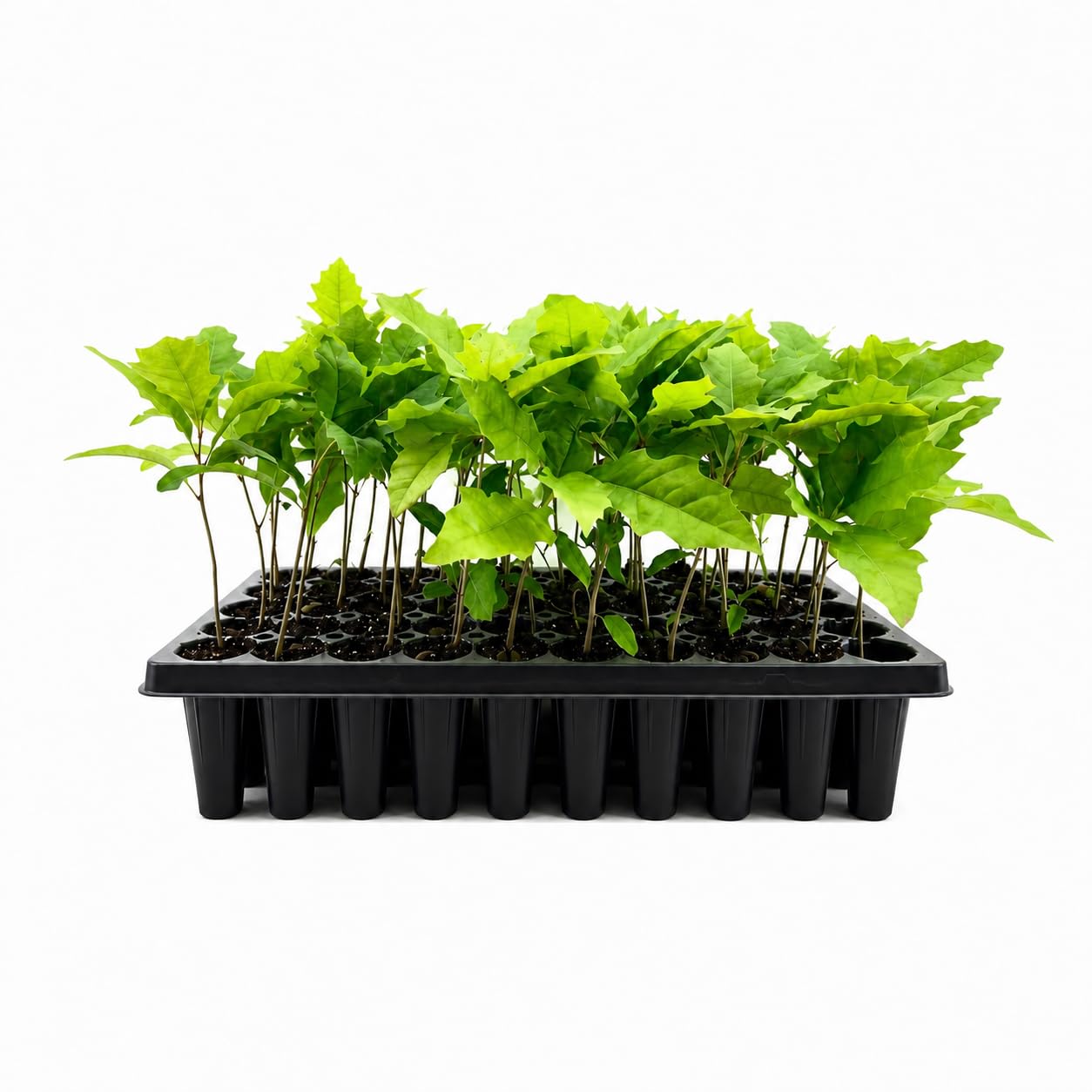
Count the trees first: this order carries 3 live trees, against 1 for the Sky Pencil Holly — a three-to-one head start on filling an open stretch of yard. The Shumard Oak grows tall and straight with a rounded crown, averages about 2 feet of growth per year, and is listed as the fastest-growing red oak. It handles floods, droughts, and strong winds, and it tolerates Zones 5 to 9 in nearly any soil condition. That toughness is why it shows up in furniture and flooring as much as in yards.
Healthy arrivals do happen and they look the part — trees landing in a timely manner, well sized, with leaves still on the branches. The bare-root risk is the other side of the coin. One buyer’s trio arrived bare rooted and looking dead, and not one of them turned green. When the roots ship naked, the tree’s first days in your soil matter more than usual, and a generous planting hole plus steady water is your best insurance. Planting in fall gives the roots a cool season to settle before summer asks anything of them.
At 5 pounds for the trio, these are young, light plants — you are buying three seasons of patience in exchange for three chances to get a shade tree established. Nothing about this tree expects much from you beyond decent soil and sun. If you have ever tried a fussy tree in a soggy corner or a dry pasture and watched it sulk, this is the species that tends to shrug that off.
The three-for-one logic: a resilient, fast-growing red oak rated to Zones 5 to 9, arriving as 3 trees so a failed start does not end your planting scheme.
The honest risk: bare-root shipping is unforgiving, and the first weeks in the ground decide whether all three come back green.
Best fit: anyone planting a row or a grove who wants a tough oak that handles bad soil and rough weather.
Think twice if: you need guaranteed survival on arrival — with bare-root stock, that is not something any listing can promise.
Know the Specs
Expected Plant Height
This is the size the grower expects the tree to reach at maturity, not the height in the box. A 10-foot expected height means a screen at window level; an 80-foot expected height means a shade canopy that will dominate the lot. It is the number to match against the space you have, because it decides how much room the roots and crown will eventually want.
USDA Hardiness Zone
The hardiness zone is a cold-tolerance map — it groups climates by the coldest winter temperatures a plant is expected to survive. A tree listed for Zone 4 is rated colder-hardy than one listed for Zone 7. Choose a zone equal to or colder than yours and you are usually safe; choose warmer and the first hard freeze can end the story.
Nursery Pot and Item Weight
A 1-gallon nursery pot is a small, young plant with a modest root ball, and the shipping weight mirrors that. A 16-pound shipment usually means soil, a larger plant, and more roots traveling with it. Heavier is not automatically better, but it does tell you how much plant is in the carton.
Habit and Spread
Habit is the tree’s natural shape — columnar means tall and narrow, spreading means wide and umbrella-like. Spread is how far the branches reach at maturity. A columnar pick keeps a tight vertical line for screening; a wide spread needs open ground. Matching habit to your gap is the single most useful decision you will make.
Common Questions
Which oak here actually grows in a narrow column?
Will a columnar oak survive a cold winter in my area?
Why was my live plant order cancelled?
How big will the tree be when it arrives?
Do these trees ship bare root or in soil?
How fast does the Shumard Oak grow compared with other oaks?
What happens if my tree arrives damaged or dies?
When is the best time to plant these trees?
Do these trees need full sun or can they take shade?
Are columnar oaks good for privacy screening?
The Bottom Line
For most people hunting the columnar oak trees, the Sky Pencil Holly is the right first purchase — it keeps a narrow evergreen shape, holds an expected height of 10 feet, and arrives healthy enough to be putting out new leaves within a month.
If shade and fall color are the goal rather than a screen, the Nuttall Oak brings more plant in the box at 16 pounds, arrives with fertilizer and a planting guide, and is worth the small risk that the listed height runs a little optimistic. And when the winters are brutal, the Columnar Ginkgo earns its spot on cold tolerance alone — Zone 4, minus 30 degrees Fahrenheit, upright to 40 feet.
One last nudge: order early enough in the season that your tree goes in the ground in fall, and give a young plant the generous hole and steady watering it needs. That is the difference between a screen you keep and a hole you refill next spring.
How we choose
We do not accept paid placement. Every pick is matched to a real buyer and a real use-case; we do not hands-on test units.
Sources
Specifications: manufacturer listings and product documentation. Review insights: verified customer reviews, as of October 2026. Pricing: not shown on this page (it changes often); check the current price via the retailer link.
As an Amazon Associate, Aappliancez earns from qualifying purchases. This does not affect which products we feature.