Disclosure: Some links in this post are affiliate links. As an Amazon Associate I earn from qualifying purchases, at no extra cost to you. Learn more
Specs are compiled from manufacturer listings and verified buyer reviews and can change over time — please confirm the key details on the product page before buying.
If oncoming LED headlights turn into a white wall in front of your windshield, the fix is not a darker lens — it is the right tint and a polarized filter working together. That is the whole game with color lenses for driving, and this guide sorts out which pairs actually cut glare from the ones that only turn headlights yellow and call it a night. You get the picks that hold up on a real commute, plus the honest limits of each one.
This guide is built by comparing the manufacturers’ published specifications and the patterns across verified customer reviews, so you get each pick’s real strengths and trade-offs instead of marketing spin.
A yellow or amber lens brightens contrast in dim light, while a polarized filter removes the flat sheet of reflected glare off wet asphalt. Read on for a straight breakdown of the color lenses for driving.
Top Picks


How To Choose The Best Color Lenses for Driving
Driving lenses are not one product — they are two different jobs wearing the same frame. Day driving wants a dark polarized lens that kills the glare off the hood and the road. Night driving wants a yellow or amber tint that lifts contrast and softens headlight bloom without darkening the road ahead. Pick the wrong one for the wrong job and you will swear the glasses do nothing.
Tint color decides the job, not the price
A yellow lens shifts the color balance toward warm light, which makes headlights and lane markings stand out against a dark road. Gray and blue-mirror lenses cut overall brightness for daytime sun. The catch: a yellow lens at noon turns the whole world amber, so treat it as a night and foul-weather tool, not an all-day pair.
Polarization is the glare filter — check for it honestly
Polarized lenses block light bouncing off flat surfaces like wet tarmac, water, and the hood of your own car. Many night lenses skip polarization on purpose because it can mask the sheen of ice or a wet patch. If you drive dark rural roads, weigh that trade carefully.
Fit over prescription glasses changes the whole purchase
If you wear glasses, a fitover frame is the difference between usable and useless. Look at the bridge width and the temple arms — a pair that clamps onto your everyday frames will slide down your nose at the worst moment. Many buyers find the fit is the make-or-break spec, not the lens itself.
Frame material and weight matter on a long drive
A featherlight frame disappears on a four-hour drive; a heavy one leaves dents on your nose by hour two. TR90, aluminum-magnesium, and carbon fiber frames are the light options you will see here. Spring hinges help the arms flex over a wider head without squeezing.
Side-by-Side Comparison
| Model | Best For | Rating | Lens Type | Frame Material | Amazon |
|---|---|---|---|---|---|
| CARFIA CA5354 Polarized★ Best Overall | Day driving into sun | 4.5+ | UV400 Polarized | Acetate | Amazon |
| ZENOTTIC TR90 Night VisionBest Night Glare Pick | LED headlight glare at night | 4.0+ | UV400 Polarized yellow | TR90 | Amazon |
| FEIDUSUN Classic PolarizedBest Value | Everyday glare, light tint | 4.5+ | UV400 Polarized TAC | Plastic (PC) | Amazon |
| STORYCOAST Polarized Sport | Rough outdoor and water use | 4.0+ | 99% UV400 Polarized | Plastic | Amazon |
| SUNGAIT Ultralight Rectangular | Featherweight day comfort | 4.5+ | UV400 Polarized HD | Al-Mg alloy | Amazon |
| Night Vision Fit Over (BT3026) | Night driving over specs | 4.0+ | Anti-glare polarized | TR90 | Amazon |
| B BLOOMOAK Night Driving | Snow and low-visibility driving | 4.0+ | UV400 Polarized | — | Amazon |
| YIMI Polarized Photochromic Z87 | One pair, day into night | 4.0+ | UV400 Photochromic | Aluminum-magnesium | Amazon |
| HAOLOTA Yellow Tinted NT | Style-led night comfort | 4.0+ | Yellow tinted | — | Amazon |
| ZENOTTIC Carbon Fiber Square | Light frame, low-light use | 4.0+ | UV400 Polarized yellow | Carbon fiber + TR90 | Amazon |
| GEGURI Night Vision Fitover | Tight-budget first try | 3.5+ | TAC Polarized yellow | PC flexible | Amazon |
Detailed Reviews
1. CARFIA Polarized Men’s Sunglasses UV400 Protection CA5354
Our pick — 4.5+★ from 4,500+ verified ratings; the strongest balance of quality and price.
The acetate frame that kills a windshield-wide glare sheet on the drive to work
For the driver who spends the morning commute facing a low eastern sun, the CA5354 is the pair that does the job without turning the world into a dim tunnel. The UV400 lens blocks the full range of UVA and UVB rays that reach through your glass, and the polarized filter handles the flat glare bouncing off the hood and the dashboard. A 4.5+ star score across thousands of buyers sits higher than any other pair here, which is why it takes the top spot over cheaper picks with bigger review counts. It is not a night lens; it is a daylight tool built to keep the road readable when the sun sits low.
The glare-cutting polarization is what owners praise most. Drivers report it slices through windshield reflection when they drive into the sun, and it keeps working after long use — buyers report the lens has survived a scratch, a chip, a dent, being sat on, and a good bending, with no heat damage or peeling. The acetate frame (a plant-based plastic that holds its shape) earns compliments too, and the box holds a real case, cloth, UV check tab, booklet, and box. One buyer sums up the listing: “This brand actually cares.” At this price, that combination of polarized glare-cutting and a sturdy acetate frame is tough to top.
Know this before you order: the standard frame runs a little small. One husband’s face filled it fine, but another buyer wanted it closer to the larger Costa shape, so a wide head should size up with that in mind. Consistency slips too: one long-time owner who bought three pairs got a used, scratched set on the last order. That is the outlier, not the pattern, but check the box before your return window closes. And unlike the GEGURI fitover, the CA5354 is a single-frame pair, not an over-glasses shell — a cleaner look, but it will not slide over your prescription, so check the fit before you commit.
Polarized UV400 lens
- Real polarized filter cuts windshield and hood glare when driving into sun.
- UV400 lens blocks full UVA and UVB, so eyes stay comfortable on long daytime runs.
- Acetate frame feels sturdier than the price tier suggests, and owners mention it survives a sit-on and a bend.
- Package includes case, cloth, and care extras most pairs in this tier skip.
Smaller face fit
- Standard frame runs a touch small; wide faces should plan for the fit.
- An occasional order has arrived used or scuffed — check it from the start.
- Daylight-only tool: no yellow tint for night driving.
Bright daylight drives: you face a low sun on your commute and want a single clean pair with a real polarized filter.
Wide faces: you wear prescription glasses underneath — this is a standalone frame, not a fitover.
2. ZENOTTIC Polarized Sunglasses
A TR90 square frame built for the driver who dreads the oncoming LED wall at dusk
If the part of your drive that worries you is the six o’clock run home in the dark, this is the pick to start with. The yellow-tint UV400 lens is aimed straight at LED headlight bloom, and the TR90 frame flexes to fit without pressing. It is a mid-tier pair aimed at people who want a lightweight night lens, not a fashion statement.
The most-talked-about aspect is glare reduction — and honestly, the feedback splits both ways. Some drivers say the yellow tint clears the LED bloom enough to feel safer; for others it only turns the headlight yellow and the glare stays put. What lands more consistently is the comfort side: buyers with cataracts and aging eyes find it does ease the strain of a night drive, and the fit gets a lot of love. The build feels solid, the lens arrives with a case and cloth, and the frame sits flat on the nose. As a yellow-tint aid for LED headlight bloom rather than a full glare cure, it does its job.
The trade you pay is clarity. A few owners find the lens quality drags down sharpness, and the yellow color can feel odd at first. It is not fully polarized in the way a daytime pair is, so don’t expect the glare off wet asphalt to vanish entirely. The trick is to wear it, adjust to it over a couple of drives, and judge it against your own route rather than against the marketing. Compare the ZENOTTIC fit to the SUNGAIT above, and notice the ZENOTTIC is the one geared toward night use while the SUNGAIT is a daytime polarized cross.
Featherweight TR90 frame: yellow-tint lens softens LED headlight bloom and eases eye strain on a night commute.
Thin arm flex: glare reduction is inconsistent across drivers, and lens clarity is the recurring gripe — treat it as a night aid, not a fix.
All-day wear: LED headlights at dusk are your main pain and you want a lightweight TR90 frame.
Rough handling: you need absolute clarity at speed — daytime polarized pairs serve that better.
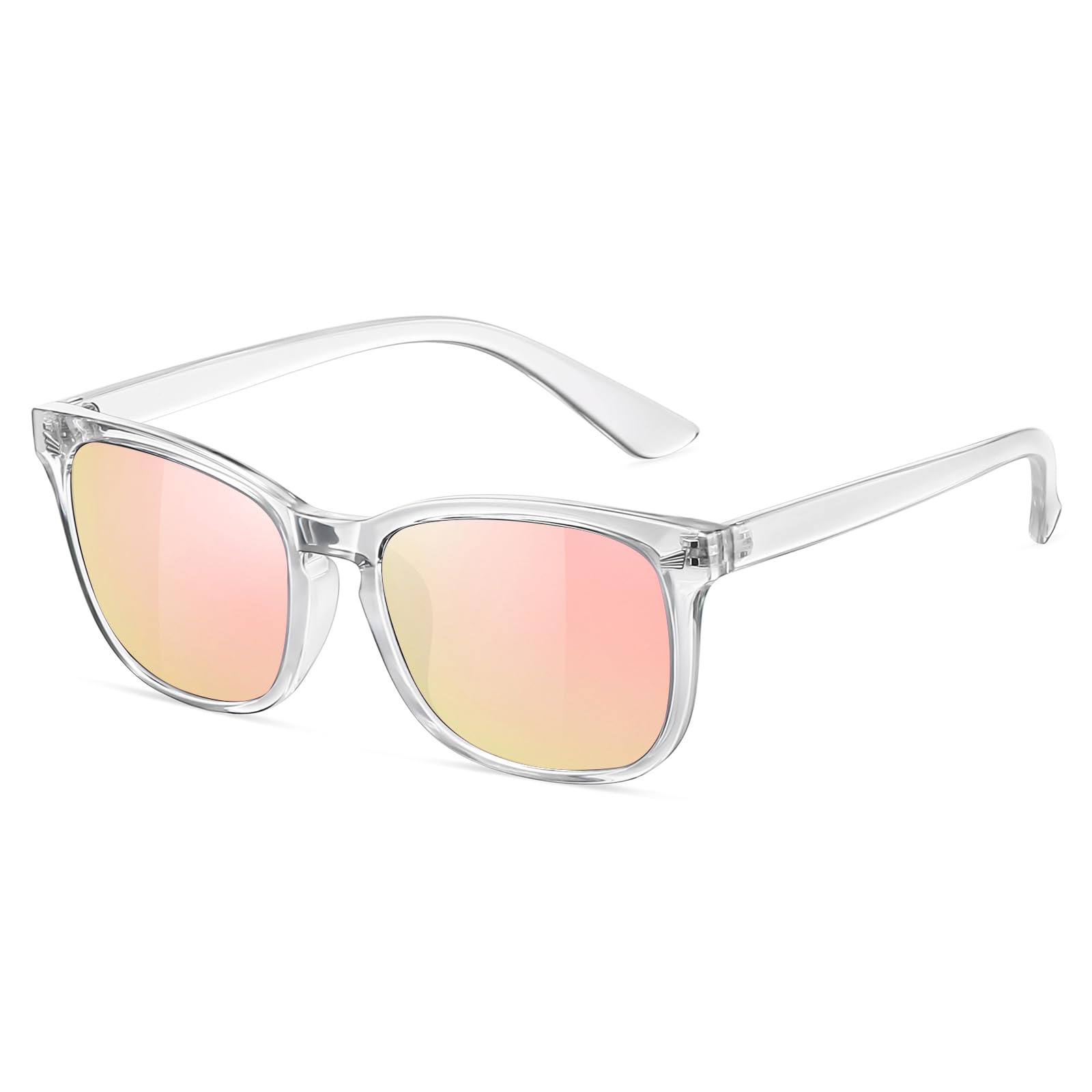
3. FEIDUSUN Polarized Sunglasses
A light-tint everyday pair that lets you read your dash without squinting
The reason this pair shows up in a driving round-up is simple: the tint is light enough that you can still make out the phone screen, the dashboard, and the car interior. The TAC polarized lens, a layered plastic filter that cancels glare without over-darkening, hits a genuinely useful middle ground. A UV400 coating blocks UVA and UVB across the whole lens. The 15-millimeter bridge is a slightly narrower gap than the 17-millimeter bridge on the STORYCOAST below, which means this is a tighter, neater fit on a smaller face.
Owners tend to come back to two things. The quality is the most-raved-about trait — buyers compare it to sunglasses that cost much more and call it spot on for the money. Then there is the slippery earpiece fit: the arms are snug enough that they stay put without squeezing, which is a surprisingly important detail at a stoplight. The frame is a lightweight PC plastic, the design is a rectangular shape with a softer round edge, and the list of colors runs from transparent rose gold to a gold lens. It doubles as a decent holiday and cruise pair you won’t stress about losing.
Where it falls short is contrast. On a hard, bright day the light tint won’t do the deep-glare work a gray or blue-mirror lens would. That is the trade — you gain readability of screens and gauges, you give up the total daylight blackout. If you drive mostly at dawn, dusk, or in light sun, the balance is right. If you need heavy sunlight suppression at noon, look at the STORYCOAST or the CARFIA above.
Everyday errands: you want a light, comfortable polarized pair that keeps the dash and phone readable while cutting sun glare.
Sport sessions: you need total blackout at high noon — a darker tint does that better.
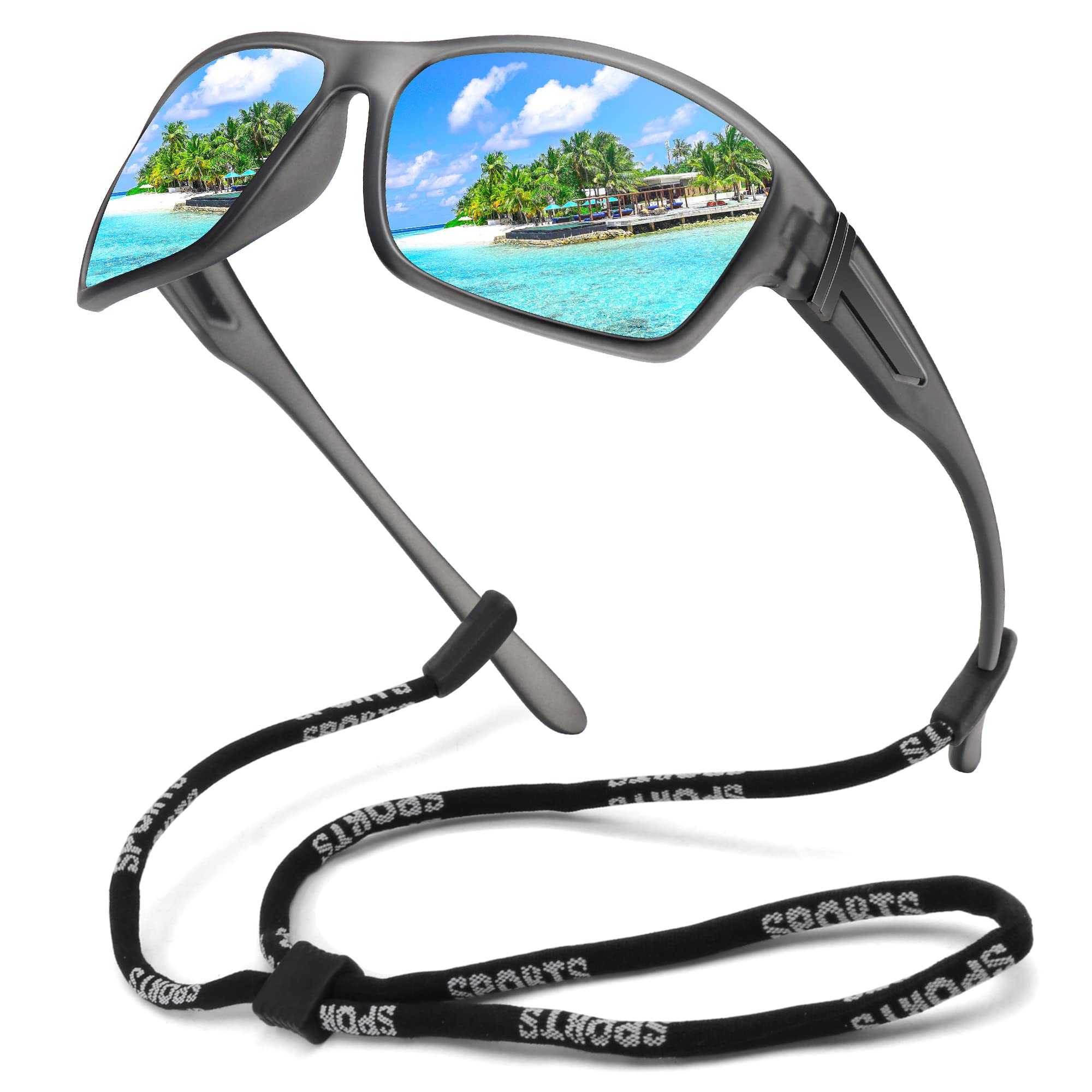
4. STORYCOAST Polarized Sports Sunglasses
A sport wrap built to shake off drops, splashes, and a boat deck
This is the workhorse pair for the driver who also fishes, cycles, or hikes — the lens takes hits a dress frame would not. The polycarbonate lens (a tough plastic that resists impact) shrugs off scratches, and the 99% UV400 coating blocks nearly all UVA and UVB rays (the two main types of sun ultraviolet). The 17-millimeter bridge leaves a slightly wider gap than the FEIDUSUN’s 15-millimeter, so it sits on a rounder face without pinching. It is also the highest-volume pair in this guide by a wide margin, with a serious following to match.
Owners talk about two things above all else: quality and value. Quality leads the conversation, and value sits right behind — a lot of drivers note they get two pairs for what they would spend on one. The frame has a reputation for surviving a real beating: drops, a stuffed bag, a boat deck, and it keeps coming back. The polarization handles water glare for fishing but works just as well for cutting through low sun on the road. Fit gets a lot of praise; a wide, round head finds the universal-fit frame friendly. The blue-mirror lens is a favorite of buyers who like a bit of flash, and the clear gray frame handles bright light cleanly.
The honest limit is the plastic. The durability aspect reads mixed, and a few drivers find the frame is brittle enough to crack if it takes a hard hit — treat it with a little care and it holds. One lens arrived unseated from the green variant but pushed back in easily. The included strap also feels bulky depending on how you attach it. These are small, real caveats on an otherwise over-performing pair for the tier. It is a different sort of lens from the light-tint FEIDUSUN — this is the darker, harder-working pair.
Wraparound sport grip: a wide, secure sport wrap that locks on and doesn’t slip during a quick head turn at the wheel.
Plastic feel: the frame is tough but brittle — a hard fall can still crack it, so treat the arm hinges with care.
Cycling and running: the driver who wants a rugged, value-priced sport wrap for road, water, and trail.
Dressy outings: anyone who wants a lightweight dress frame — this one is built for durability first.
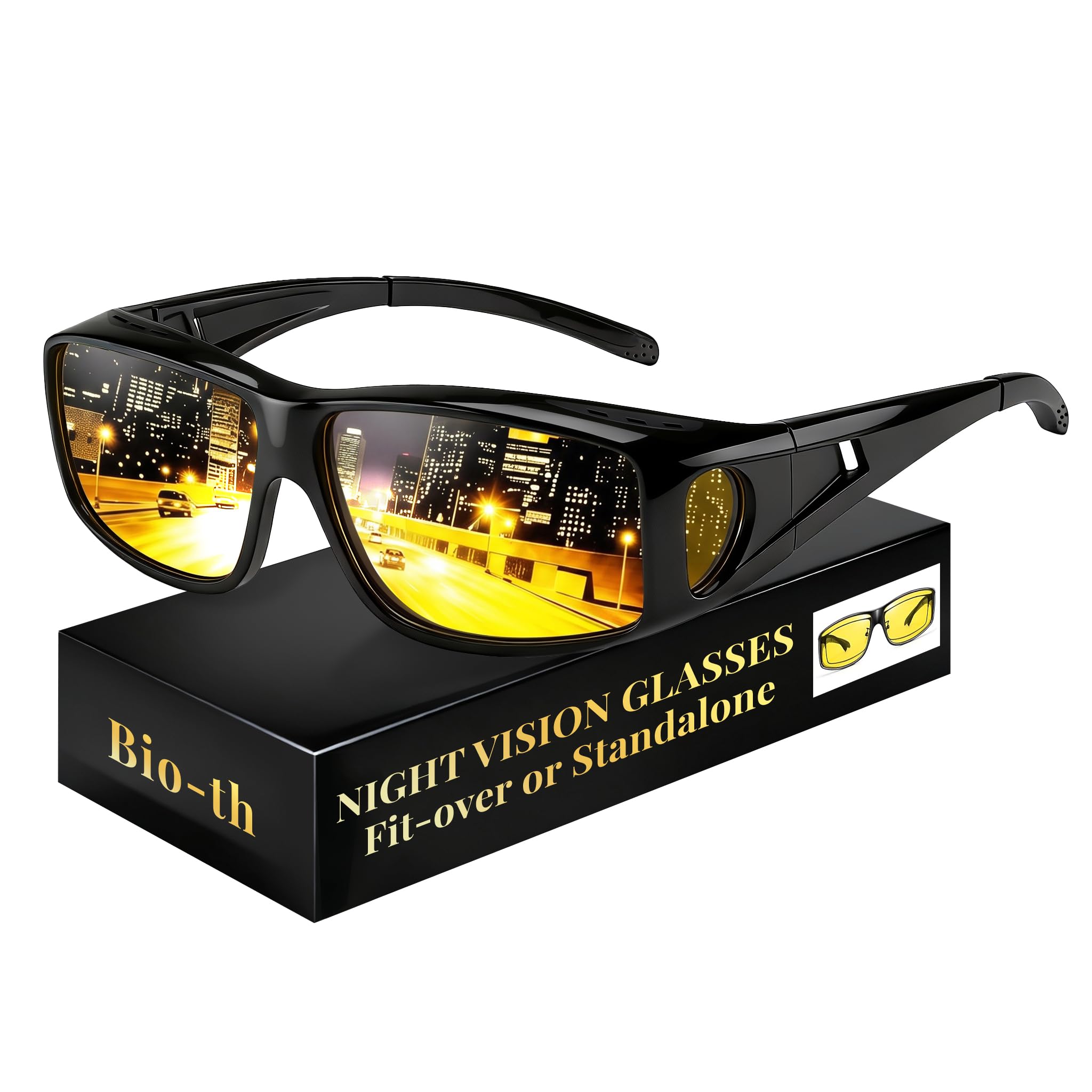
5. Night Vision Driving Glasses
The fit-over that lets prescription wearers keep their glasses on the night drive
If you already wear prescription glasses, this pair answers the “do I take them off” question. The TR90 frame (a flexible nylon plastic) bends over your everyday specs and stays put, and the yellow-tint lens is tuned to cut the blue-heavy fringe that modern LED headlights throw. The polarized filter is the secondary job. The frame feels featherlight — you forget you’re wearing it — and the package measures 6.42 x 2.4 x 1.65 inches, longer and flatter than the CARFIA’s 5.91 x 2.76 x 1.97-inch frame, which is exactly the shape a fitover needs to wrap your specs.
Customers note that the LED glare actually comes down, and the contrast in rain and fog gets better. The yellow lens brightens the road in front of you rather than darkening it, so you see lane markings clearer than you would with a dark tint. Fit is a recurring win: the frames sit over prescription glasses without pressing into your nose or ears. Lightweight and comfortable round out the list, and reviewers point out the frame and lenses are built well for the price. For a fitover night lens, that is a package that delivers on its core promise.
The trade-off worth naming: on a small number of cars the lens changes the color of the headlights without actually reducing the glare, and the polarization test card can fail for some users. A rare pair runs tight enough over glasses to feel sweaty, so if you have a wide head plus thick frames, try the fit before committing. And unlike the CARFIA above, this pair only makes sense for night and low-light use — do not wear it under a bright sun. For prescription wearers who need a night lens that slips over their specs, it is the pick.
Dusk commutes: you wear prescriptions daily and want a night-driving lens that slips over them with one hand.
Sunny afternoons: you don’t wear glasses — a standalone frame will fit tighter and look cleaner.
6. SUNGAIT Rectangular Polarized Sunglasses

A sub-ounce aluminum pair that vanishes on your face during a long haul
Some drivers want a lens they can forget about, and at 0.88 ounces this pair is lighter than almost anything else in this guide. The aluminum-magnesium frame feels more like a bike part than a plastic sunglass. The HD polarized UV400 lens blocks UVA, UVB, and UVC (all three bands of ultraviolet light), so the light that reaches your eye is clean. The screwless hinge is riveted straight into the temple — no tiny screw to loosen and drop on the third year of the drive.
The build holds up over time. Buyers most often flag the frame quality and the value they get for it, with appearance right behind. The spring-loaded ear pieces flex over a wider head, and the nose pads keep their grip. The finish on the arms has a reputation for not chipping or corroding over years of use, and the polarization does the right jobs: it reads into water for fishing, cuts glare off the bonnet, and blocks the sun when you drive west in the afternoon. The look leans toward the big-name shape without copying it exactly, and the included bag and screw keychain are a nice touch.
The honest weakness is that the frame is plastic in the areas that take a knock, so treat it as the price tag suggests. A rare lens has popped out after a month and refused to seat back in. And it does not come with a hard case — you get a pouch. Weigh that against the 0.88-ounce weight and the price tier, and it isn’t a reason to walk. Compare this with the CARFIA above and you see the trade clearly: the CARFIA gives you an acetate frame and a case, the SUNGAIT gives you aluminum and an almost weightless fit.
Rectangular slim profile
- 0.88 ounces on the nose — you barely know you’re wearing it on a three-hour drive.
- UV400 lens blocks UVA, UVB, and UVC, so a daytime drive is a clean visual experience.
- Screwless riveted hinge means no tiny screw to lose over the years.
- Spring-loaded arms flex to a wider head without pinching.
Basic case
- No hard case in the box — you get a bag and cloth only.
- Plastic in a few structural spots; a rare lens has popped out.
- Neutral rectangular lens, not a yellow-tint night pair.
Office to street: you want a featherweight day-driving frame that reads the road cleanly and disappears on long trips.
Heavy sweat: you need a hard case and aluminum-grade toughness from the first day.
7. B BLOOMOAK Night Driving Glasses

The pair for a white-out drive when the road itself turns into glare
If you drive into snow, sleet, or fog more than you drive at night, this is the pick to look at first. The polarized yellow lens adds definition to a landscape that otherwise disappears into a white sheet, and the UV400 protection keeps the light you are reading clean. It carries a full sport frame that locks onto your face during a long drive, and the package includes a case and a cloth.
Where it shines is really specific: buyers who drive through heavy snow say it improves the ability to see contrast on the road, and one buyer notes it worked well during several snowstorms. Night driving reports are mixed — some drivers find it cuts the glare on a dim road, others find it just turns headlights yellow. That is the trade you are making: this is a low-visibility lens, and on a clear bright day the yellow tint is more of a novelty than a benefit.
An honest fit note: this is a sport frame, not a dress pair. It reads best on a face that can take the wrap shape, and it sits heavier on the nose than the SUNGAIT above. If you drive to the mountain through snow and want a lens that pulls the road out of the white-out, this is the pair. If what you actually want is a clean night drive on a rural road, the ZENOTTIC above is a better tool.
Late drives: snow, sleet, and fog drives where contrast on the road matters more than style.
Daytime glare: for a dress pair or a pure night-driving lens — this is a low-visibility tool.
8. YIMI Polarized Photochromic Driving z87 Sunglasses

One pair that shifts from a bright daylight tint down to a night-drive lens
The pitch here is convenience: a photochromic lens, a lens that darkens when ultraviolet light hits it and clears when you move indoors, so one pair covers the drive in and the drive home. The aluminum-magnesium frame plus spring hinges keeps it comfortable on a long day, and the 2.82-ounce weight is light enough to stay on for hours. The TAC polarized lens blocks glare from roads and water, and there is a blue-light layer for screen time between drives.
Comfort and appearance draw the strongest praise. Owners call it comfortable on the night drive and stylish enough to wear by day, and the fit adapts thanks to spring hinges and adjustable silicone nose pads. The 57-millimeter lens size has a following — one buyer calls it the perfect fit. The included microfiber cloth and case are a nice touch, and the photo shows a genuine tint shift when UV hits it. For a mixed commute that runs from bright morning to dim evening, one photochromic pair is a reasonable compromise.
The honest limit: the photochromic shift (the lens darkening in sunlight) is subtle in daily use for many drivers. A few shoppers say the lens barely darkens in sun, and the night-glare effect is not as strong as a dedicated yellow lens like the ZENOTTIC above. Some buyers report the “z87” marking in the name is not actually stamped on the frame, so don’t buy this for safety-glasses duty. As a convenience pair for a mixed commute it does fine; as a full night-glare solution it comes up short. The YIMI’s 2.82-ounce weight also runs heavier than the SUNGAIT’s 0.88 ounces — skip it if featherweight matters most.
Photochromic z87 shield: a single pair for the morning bright drive and the evening dim drive, so you stop swapping frames at the door.
Slow tint shift: the tint shift is gentler than the marketing suggests, and the night-glare cut is weaker than a dedicated yellow lens.
Changing light: you want one pair for a mixed commute and like the idea of a lens that reacts on its own.
Instant shade: hard night glare is the main pain — a yellow-tint pair does that job better.
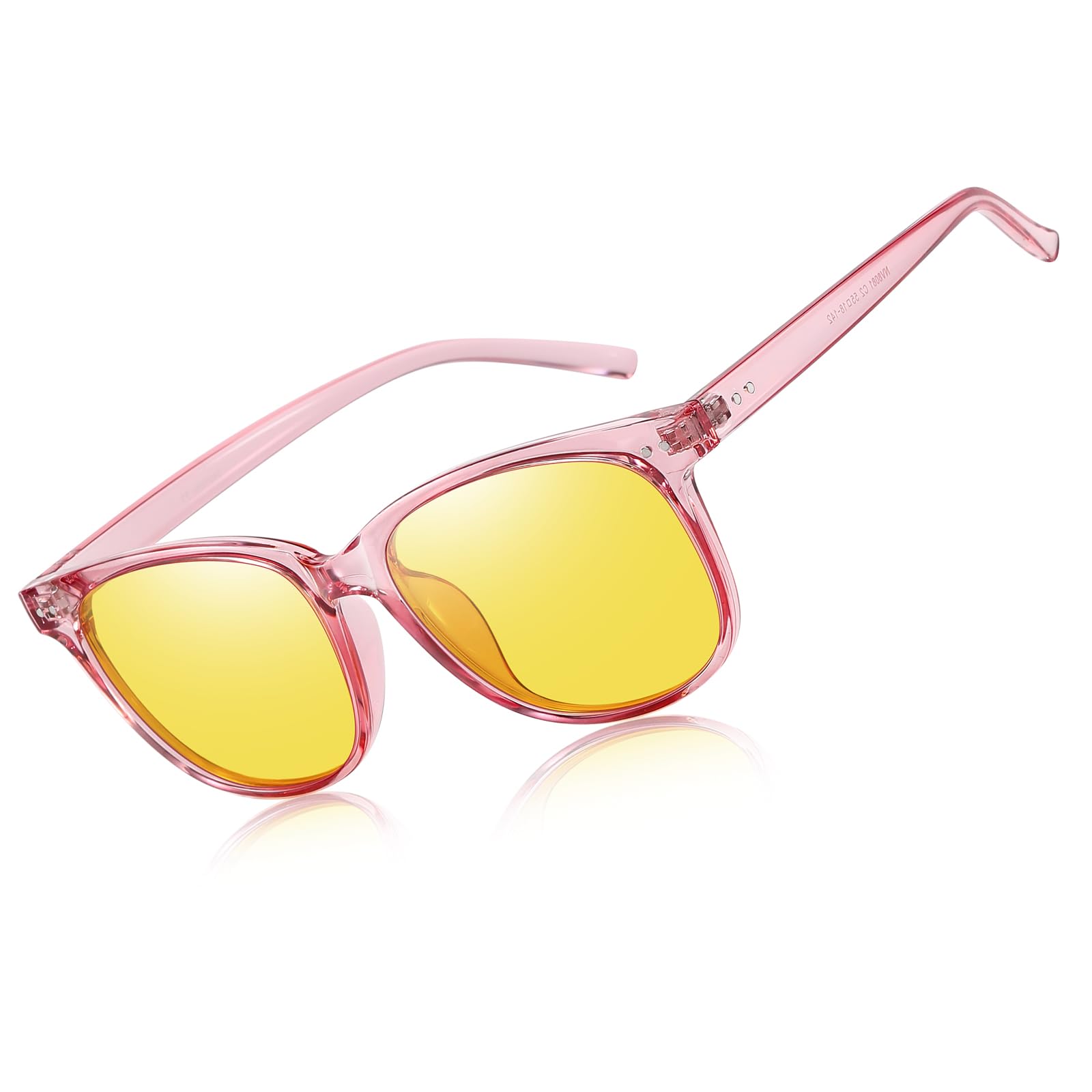
9. HAOLOTA Night Vision Driving Glasses
A yellow-lens pair with a feminine frame that keeps the drive comfortable
This pair reads less as a technical night lens and more as a comfortable everyday frame with a yellow tint. The frame shape has a softer, more feminine cut than the sport wrap on the ZENOTTIC, and owners mention that it works as well in daytime sun glare as it does after dark. The yellow lens is there to soften the harsh edge off oncoming light, and the frame stays light on the face across a long drive.
What buyers clearly like is the fit and the style. Frame fit leads the praise, style comes next, and drivers note the yellow tint works on a dim street. Inside the house in low light it lifts fine detail, and one night-shift worker with astigmatism says it cleared a 42-mile commute through fog, rain, and snow. That is the upper end of the scale, but it speaks to the right use case: this is a lens that adds comfort when the road is dim.
The honest read is that the night-glare cut is not universal. A fair number of buyers find the yellow lens just turns the headlights yellow rather than reducing the glare, and a few note the vision is actually a touch darker, which is not ideal for weak eyesight. That is the recurring trade with a tinted lens this light. Buy it as a comfortable frame for a dim commute, not as a hard glare-cutter with a guarantee. And if you wear glasses underneath, you’ll want the fitover-style Night Vision pair above instead.
City night driving: you want a comfortable, style-forward yellow-lens pair for a dim but not pitch-black drive.
Off-road use: you need hard glare relief or wear prescriptions underneath — this won’t do that job.
10. ZENOTTIC Square Polarized Sunglasses
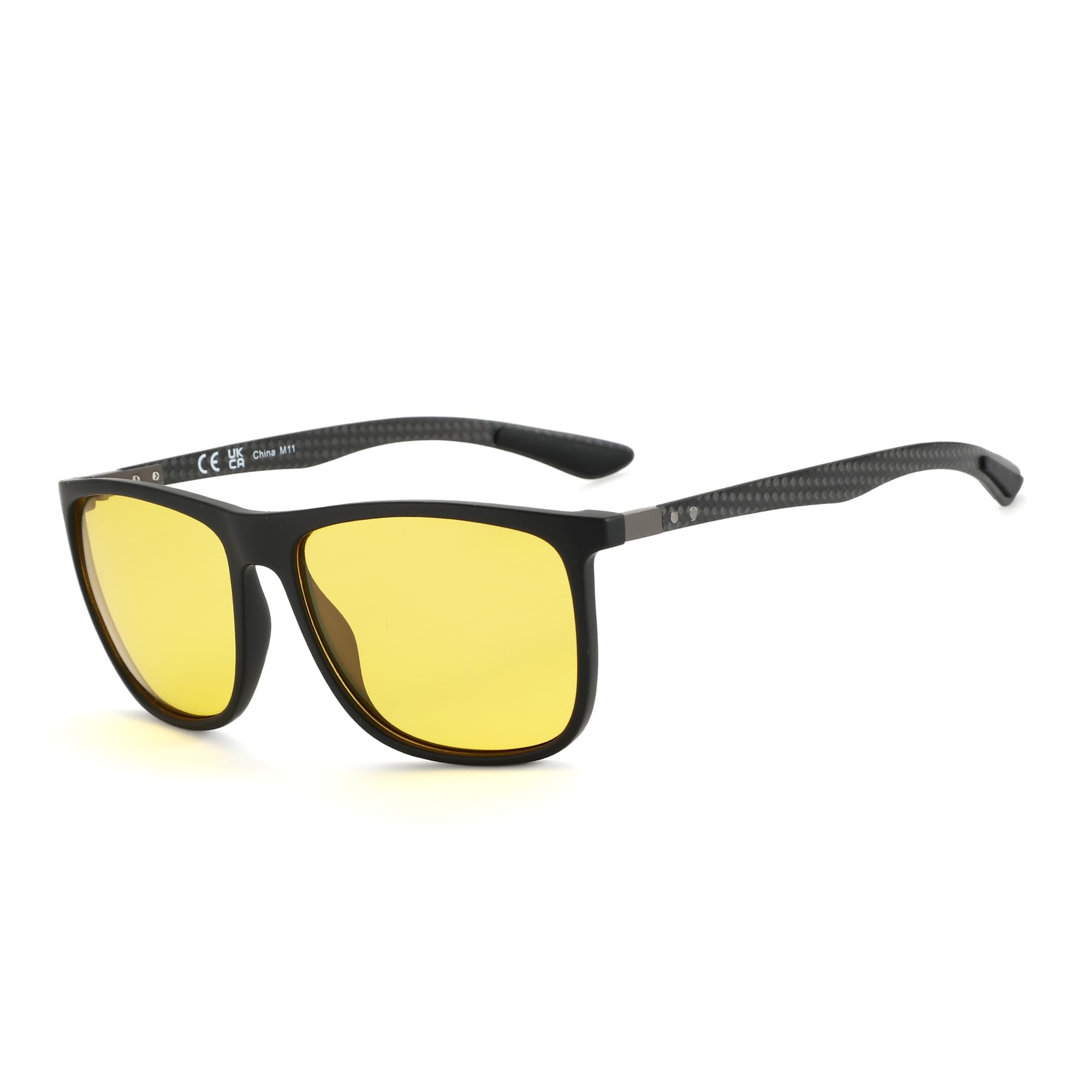
A carbon-fiber frame with a yellow lens aimed at low-light road contrast
You get a sturdier frame here without giving up the yellow tint. The TR90 and carbon-fiber frame is a light step up from the pure plastic pairs, and the lens is a 58-millimeter width with UV400 and polarization. It is the premium-tier option in this guide, aimed at the buyer who has already tried a cheaper yellow lens and wants a frame that lasts.
Owners talk most about quality and then the night vision itself. The lens gets called out for handling rain, snow, fog, and a dark road with better contrast, and a few customers note it dims oncoming traffic lights so you’re not blinded. One buyer who tried it for a post-cataract night drive found the yellow tint actually lifted the dark patches instead of cutting them, which is the right way to use it. Fit reads as good, and the frame stays light on the face. The 58-millimeter lens is a bit wider than the 56-millimeter on the ZENOTTIC TR90 above, so it fits a wider face more comfortably.
The honest caveat is that this is a -ish tier pair with a mixed reputation on effectiveness. And it has an early durability strike — a rare pair broke after a couple of months. If you want a premium-feel frame for a low-light drive, it’s a fair buy. If you want the absolute most effective night lens, the dedicated ZENOTTIC TR90 above may suit you better, in part because it costs less and has a bigger buyer base behind it.
Square ultralight frame
- Carbon-fiber and TR90 frame reads as a step up over budget plastic.
- UV400 and polarized — handles glare and sun without doubling up on frames.
- 58-millimeter lens fits a wider face more comfortably than most of the pairs here.
- Post-cataract users report the yellow tint helps in low light.
Loose hinge feel
- Effectiveness is mixed — some drivers find it no better than a cheap tint.
- A rare frame has failed early; think of it as a light-duty pair.
- Price tier is the highest here, so the value case is thinner.
Long commutes: you want the carbon-fiber frame and a wider lens fit, with a yellow tint for low-light driving.
Tight fit needs: you want the most proven night lens in this guide — the budget ZENOTTIC still has more to lean on.
11. GEGURI Night Vision Glasses
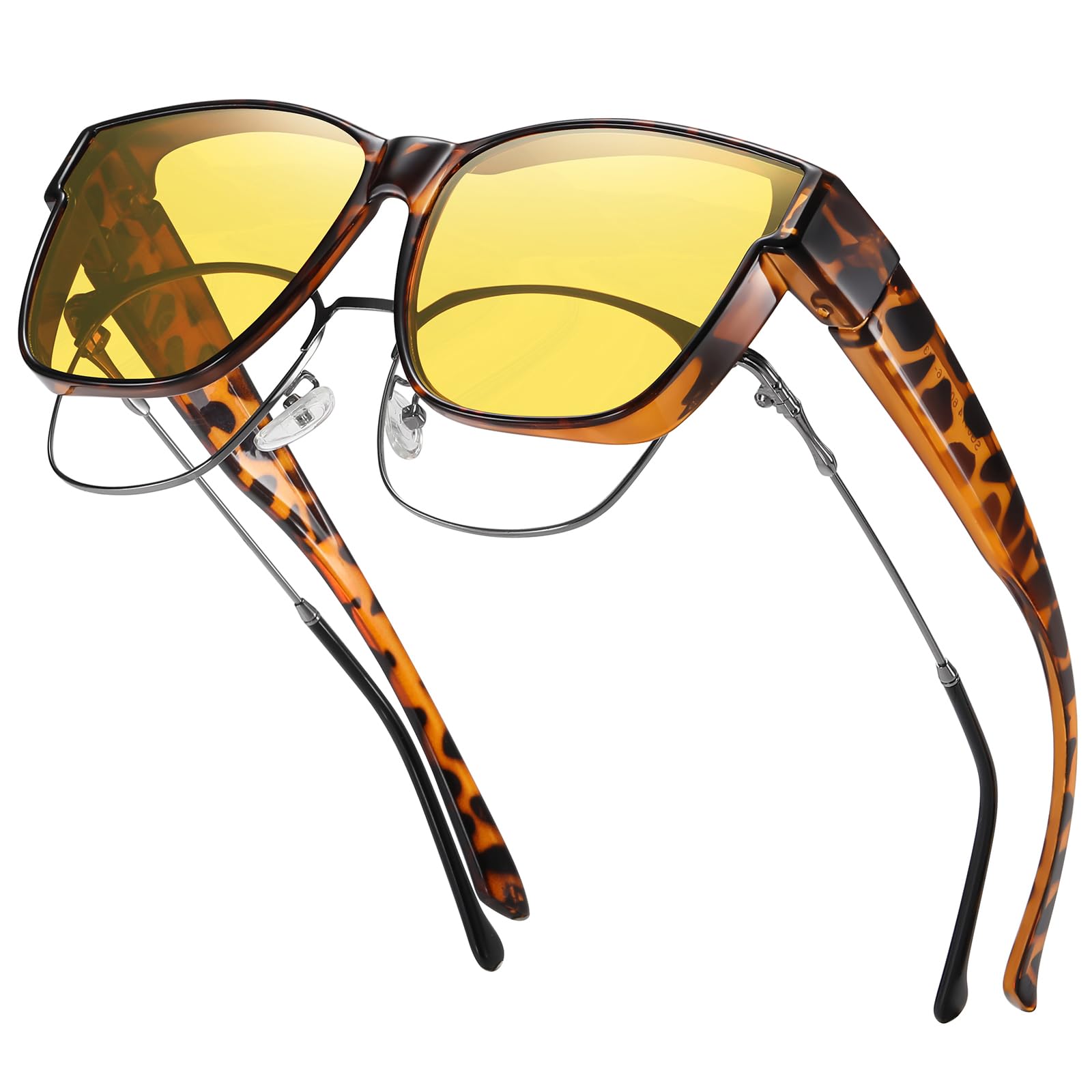
The entry-level fitover for a driver who wants to try a yellow lens first
If you are not sure whether a yellow night lens will actually help you, this is the cheapest way to find out. The TAC 1.1-millimeter lens and flexible PC frame make a fitover aimed at drivers who already wear prescription glasses, and the screwless design means there is nothing to loosen. The package comes in at 6.42 x 2.4 x 1.65 inches and 1.76 ounces, so it is a light, wide pair that slides over your specs.
The one thing buyers do like is the yellow shade itself — it does soften bright lights and add a bit of contrast on a dark road, and the anti-glare intention is there. At this price, it is the cheapest way to test whether a yellow tint suits your eyes. It is also the smallest, least expensive way into the night-lens category, so if a yellow tint turns out not to work for your eyes, you haven’t committed to an expensive pair.
The catch matters, though. The frames don’t stay on top of prescription glasses reliably — the ear hooks don’t fully solve it — and one lens has been reported to fall out during a gentle cleaning. The night vision result is the real issue: some drivers simply could not tell a difference with or without them. If you wear glasses and want a fitover that holds, the Night Vision pair higher up in this guide is the safer call. Treat this one as a low-cost experiment, not a long-term solution.
Prescription wearers: you want the smallest commitment to see whether a yellow night lens works for your eyes.
Slim frames: you wear prescriptions and need a fitover that actually holds on and stays put.
Know the Specs
UV400 Protection
UV400 means the lens blocks UVA and UVB light up to a 400-nanometer wavelength — the range that reaches your eyes through a windshield and causes long-term strain. For daily driving, this is the baseline. Every pair on this list says UV400, so treat it as a starting point, not a differentiator.
Polarized vs Tinted
Polarization is a filter layer that cancels out reflected light, which is why it cuts glare off wet asphalt and the hood of the car. Tint is just color — a yellow lens shifts contrast toward warm light without removing the glare. A good night pair often chooses tint over polarization on purpose. A good day pair usually wants both.
Yellow and Amber Tints for Night
A yellow lens increases the contrast between an oncoming headlight and the dark road behind it, which is why it helps some drivers at night. The trade is that it can wash out colors by day and darken the whole scene a touch. Use it as a low-light tool, not an all-day lens.
Photochromic Lenses
A photochromic lens reacts to ultraviolet light, darkening when you go outside and clearing indoors. It lets one pair go from day to night without a swap. The catch is that the shift is gradual and can be subtle in a car, where the windshield already blocks much of the UV the lens needs to react.
Fitover Frames
A fitover is built wider and deeper so it slides over prescription glasses. The bridge width and the temple arms decide whether it stays put on a drive. Lookat how the pair flexes over the frame arms without pinching — a stiff fitover will slide down your nose at a stoplight.
Frame Materials
TR90 is a lightweight, flexible plastic that bends rather than cracks. Aluminum-magnesium alloy is a light metal frame that barely registers on the nose. Carbon fiber is the lightest and most rigid option. Spring hinges let the arms flex over a wider head without squeezing. On a long drive, a featherweight frame is the difference between forgetting you’re wearing glasses and feeling them by hour two.
Common Questions
Do yellow driving glasses actually reduce headlight glare at night?
Can I wear my prescription glasses underneath a fitover night lens?
Are polarized lenses safe for night driving?
What is the difference between UV400 and polarized?
Will a yellow lens help me see better in rain or fog?
How do I know if a pair of driving sunglasses is really polarized?
Do photochromic lenses work behind a car windshield?
How long should a pair of driving glasses last?
Is a light gray or blue mirror lens better than a yellow lens for driving?
Can I wear a yellow night lens during the day?
The Bottom Line
For most drivers facing a low sun on the commute, the CARFIA CA5354 is the one to start with — a real polarized UV400 lens that cuts windshield and hood glare without dimming the road, and the strongest review base of any pair on this list. If LED headlights after dark are your pain, the ZENOTTIC TR90 is the night-focused pick, with a yellow tint and a featherlight frame. And if you wear prescription glasses every day, the Night Vision fit-over is the one to reach for so you don’t have to choose between your specs and the glare.
The honest summary: pick the tint for the light you actually drive in, not the label on the box. Day commuters want a dark polarized lens. Night commuters want yellow, plus a fitover if they wear glasses. Mixed commuters want a photochromic pair and should accept a gentler tint shift. And anyone who wants to try a yellow lens without committing should look at the budget GEGURI first — the sentiment across the CARFIA pages says it best, and it’s the same logic for every pair here: the brand that cares about the details tends to win drivers over.
How we choose
We do not accept paid placement. Every pick is matched to a real buyer and a real use-case; we do not hands-on test units.
Sources
Specifications: manufacturer listings and product documentation. Review insights: verified customer reviews, as of October 2026. Pricing: not shown on this page (it changes often); check the current price via the retailer link.
As an Amazon Associate, Aappliancez earns from qualifying purchases. This does not affect which products we feature.