Disclosure: Some links in this post are affiliate links. As an Amazon Associate I earn from qualifying purchases, at no extra cost to you. Learn more
Specs are compiled from manufacturer listings and verified buyer reviews and can change over time — please confirm the key details on the product page before buying.
The mineral drops you add to a glass of water are either tasteless or they are not, and that single difference decides whether you actually keep using them every day. Most people buying liquid minerals are trying to put back what a reverse-osmosis or distilled filter stripped out. The five picks below are the ones that hold up on that job — and the crowd favorite earns 4.5+ stars across 570+ ratings.
This guide is built by comparing the manufacturers’ published specifications and the patterns across verified customer reviews, so you get each pick’s real strengths and trade-offs instead of marketing spin.
Below you will find the full-spectrum liquid formulas ranked by what actually matters: how many elements they carry, how they taste in plain water, and how long a bottle lasts. Every pick here is a liquid concentrate you drop into water, juice, or coffee — so read on for the best Colloidal Minerals your glass can hold.
Top Picks
How To Choose The Best Colloidal Minerals
Liquid mineral drops are a small bottle with a big job: replacing the trace elements that a water filter removes. The trick is that two bottles that look identical on the shelf can behave very differently in your glass. Here is what to weigh before you buy.
Count the elements, not the hype
The head-line number on these bottles is how many minerals and trace minerals the formula carries. A bottle listing 70+ trace minerals covers a broad spread; one listing 79 verified elements goes wider still. Match that count to your goal — general daily replenishment, or topping up water that has been stripped almost bare by a reverse-osmosis (RO) system, which pushes water through a membrane fine enough to remove dissolved solids.
Taste decides whether you stick with it
Mineral concentrates carry an earthy, salty edge because that is what concentrated minerals taste like. Some formulas are effectively tasteless in water; others are bitter enough that you will want a chaser. If you know you are sensitive to mineral flavor, look for a bottle described as neutral or tasteless, or plan to add a squeeze of lemon or a splash of juice.
Serving count and bottle size
A 100 mL bottle delivering 200 servings, or a 32 fl oz concentrate dosed by the tablespoon, tells you far more about real value than the bottle’s height. Think about your daily dose and multiply it out. If you drink mineralized water all day, a larger bottle or a multi-bottle pack saves repeat orders.
What is the mineral carried in?
These formulas sit in different bases. A silica base is a mineral carrier used in some ionic blends; a fulvic acid base is a plant-derived carrier that some makers extract from humic sources using purified water. Neither is a gimmick — they simply suit different preferences and different taste profiles.
Side-by-Side Comparison
| Model | Best For | Format / Size | Element Count | Base | Amazon |
|---|---|---|---|---|---|
| Eidon Ionic Minerals Multiple Minerals★ Best Overall | Tasteless daily top-up | 18 oz liquid, 1 tbsp per day | Full-spectrum blend | Silica | Amazon |
| Youngevity Plant Derived MineralsBroadest Profile | Broad plant-derived profile | 32 fl oz concentrate, 600 mg per serving | 77 minerals | Plant-derived | Amazon |
| LyteLine Trace Mineral Drops | Servings per bottle | 100 mL, 200 servings | 79 verified elements | Ionic concentrate | Amazon |
| Vital Earth Minerals Fulvic Minerals | Neutral-tasting fulvic | 32 oz liquid, 30-day supply | — | Fulvic acid | Amazon |
| ConcenTrace Trace Mineral Drops | Great Salt Lake source | 4 fl oz, 48-day supply | 70+ trace minerals | Ionic | Amazon |
Detailed Reviews
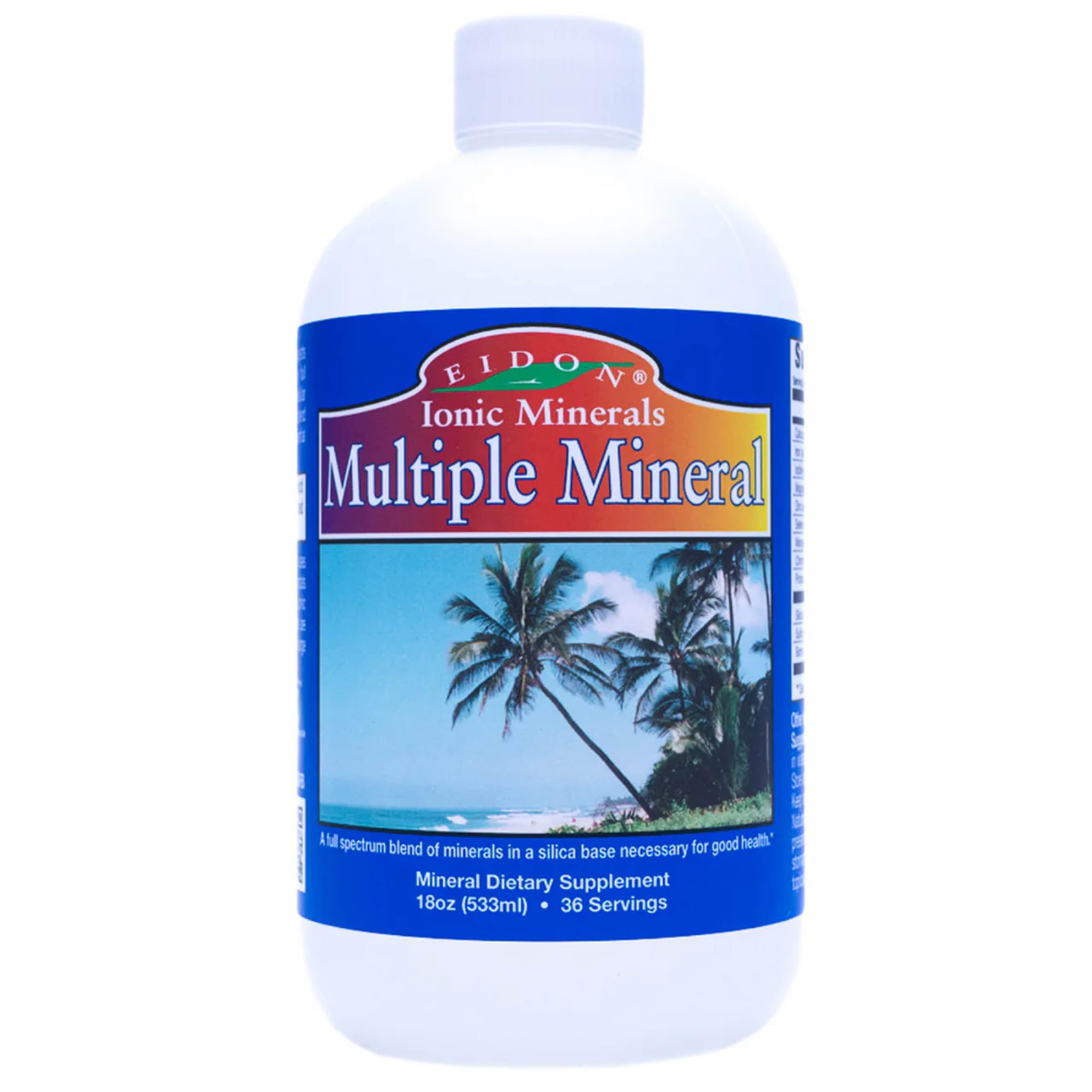
1. Eidon Ionic Minerals 18 oz
Our pick — 4.5+★ from 550+ verified ratings; the strongest balance of quality and price.
The one that disappears into your glass — a full-spectrum mineral blend you will actually drink daily.
The dose is one tablespoon a day, mixed straight into drinking water — that is the entire routine for the 18 oz bottle. Eidon builds this on a silica base, which is the mineral carrier holding the blend together. The formula is a full-spectrum mix of minerals and electrolytes, and the maker states it uses no artificial preservatives, colors, or additives. That matters to you because it means the bottle is doing one job — putting minerals back into water — without a long list of extras you have to read up on.
What wins people over is the taste. This is the backdrop of Eidon’s reputation: it is largely tasteless and odorless, so it does not alter the flavor of water. If a bitter mineral concentrate has made you quit before, a tasteless tablespoon is the difference between a habit and a bottle in the cupboard. Buyers report using it specifically to restore minerals to distilled water, and the taste is the reason it stays in the routine. One owner described it as “tasteless, easy, and mom-approved,” adding it to the family’s water bottles with “no complaints, no weird flavors.”
There is a second way to take it that changes the experience. Owners mention taking roughly one dropper under the tongue for 20-30 seconds and describe it as “slightly bitter but tolerable” that way, preferring it to mixing in water for faster delivery. So the mixed-in route is the smooth one; sublingual is the quick one. Eidon has been making minerals since 1996, which is a long track record in a category full of new labels. What most people want to know, though, is simpler: will it change how my water tastes? No — it leaves your water tasting like water, which is why it takes the top spot.
What earns it the top spot
- Tasteless and odorless in water, so it never fights your drink
- One tablespoon a day is the whole routine
- Silica base with a full-spectrum mineral and electrolyte blend
- No artificial preservatives, colors, or additives stated by the maker
Where it asks something of you
- Sublingual dosing runs slightly bitter, so mixed-in is the smoother route
- An 18 oz liquid bottle is a shelf-space commitment next to a small dropper bottle
Reach for this if: you want minerals back in filtered or distilled water without tasting them at all.
Think twice if: you would rather a tiny dropper bottle — the LyteLine packs 200 servings into 100 mL, where this is a full 18 oz bottle.
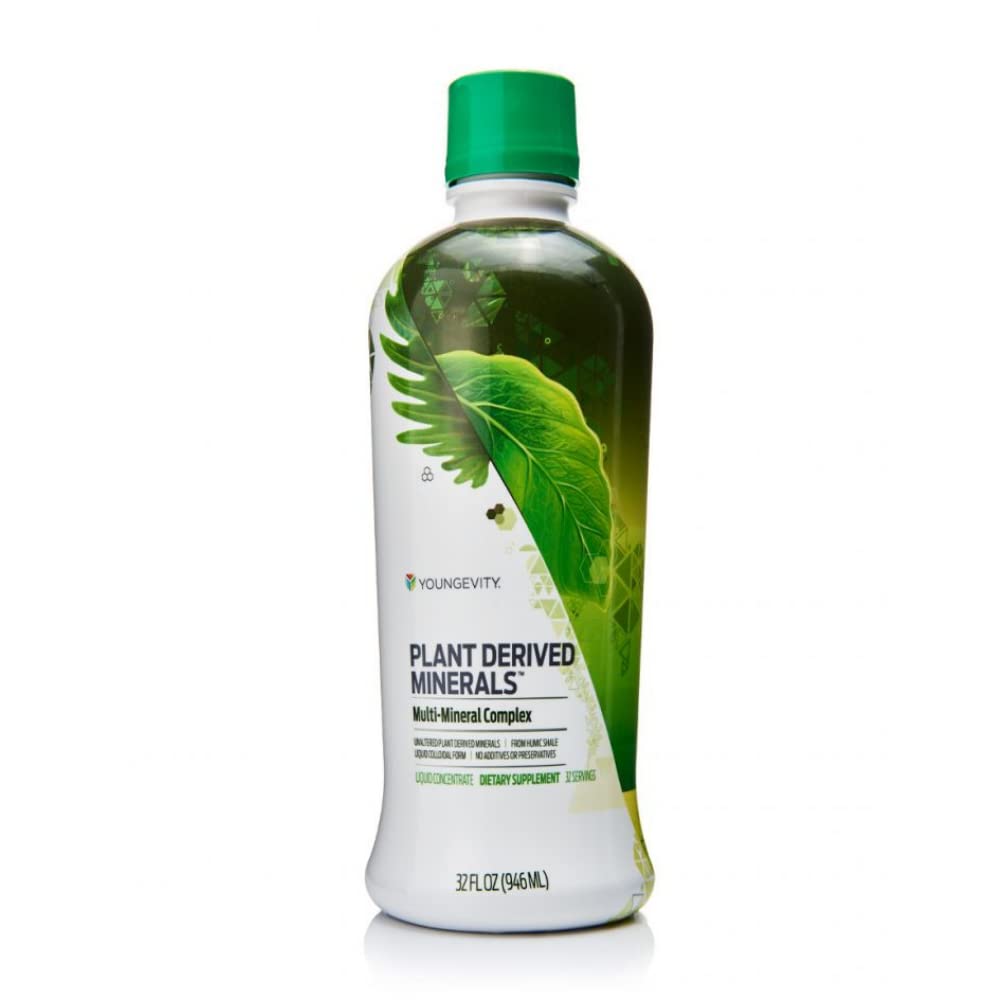
2. Youngevity Plant Derived Minerals 32 fl oz
A plant-derived concentrate with the widest mineral list in this group — and the boldest taste.
You get a real, measurable dose here: 600 mg of plant-derived minerals per serving, stirred into water, juice, or whatever you already drink. That is a set amount you can count, not a vague “splash.” The Youngevity bottle is a liquid concentrate made from plant-derived minerals, and the reviews describe it as carrying over 77 minerals — the broadest listed profile among these five picks. If you want genuinely wide coverage rather than a handful of electrolytes, this is the bottle that answers that.
Here is the honest catch, and it is the one that decides everything: the taste. Buyers are split straight down the middle on it. Some find it mineral-like but tolerable; others call it very bitter and keep a chaser ready. As buyers put it: “”Worst taste ever, but my skin looked brighter after five days,” one buyer wrote.” The lesson tucked inside that is worth knowing — most people who love this bottle found their own delivery method. Taken as a shot in water morning and evening, or chased with juice, the flavor stops being the obstacle. This is not a tasteless formula, so do not buy it expecting one.
What the plant-derived angle buys you is a broad spread of minerals in one bottle rather than a narrow electrolyte mix. The size is real, too: a 32 fl oz concentrate that you mix by serving, so it stretches out over time in daily use. Compare it to the Eidon above and the trade-off is clean — Eidon gives you a tasteless tablespoon a day, Youngevity gives you the wider mineral list with a flavor you have to work around. If you are shopping for the widest mineral list, that flavor trade is usually worth making.
Where it delivers: 600 mg per serving and a plant-derived formula with a listed profile past 77 minerals — the widest spread here, mixed to your own strength.
The honest trade-off: the mineral flavor is strong and the reviews split on it, so budget for a chaser or a juice mix if you are taste-sensitive. One bottle rather than a multi-pack means you are trialing the flavor before you commit to more.
Pick this one if: maximum mineral variety matters more to you than a clean-tasting glass.
Pass on it if: you already know bitter mineral flavors put you off — the Vital Earth fulvic liquid is the neutral-tasting alternative.
3. LyteLine Trace Mineral Drops 100ml

Two hundred servings crammed into a 100 mL bottle that fits in a kitchen drawer.
Count the servings before anything else. This bottle holds 200 servings in 100 mL, which is the kind of number that makes a mineral habit affordable to keep going. Customers note the 100 mL bottle makes at least 50 US gallons of mineralized water — “good value” in their words. That works out because one serving goes into 32 oz of water to make what the maker calls an isotonic beverage, meaning the mineral concentration matches your body’s own fluid balance closely enough to absorb easily.
Where LyteLine separates from the pack is the element list: 79 verified elements, stated as Generally Recognized as Safe (GRAS, a regulatory safety status) and third-party tested. No sodium is added. That last point is the one to notice if you are watching salt — this formula is the low-sodium route, and it is built specifically to put trace minerals back into everyday filtered water. The maker also notes the concentrate is made through a natural solar concentration process that takes an average of two years, which is a slow way to make a small bottle.
Sizing up against the others is easy. The LyteLine bottle stands 5 inches tall and 2 inches at the base — the smallest footprint here, a fraction of the Youngevity bottle’s 10.47 inches of length. That travel-friendly profile means one goes in a gym bag and another stays by the tap. The flavor is light but present; buyers describe it as very little flavor that you notice for a few days, and the maker suggests a squeeze of lemon or a splash of juice if you are sensitive.
The standout spec: 79 verified elements, no sodium added, and 200 servings in 100 mL — the longest-running bottle in this lineup.
One thing to weigh: it is a trace-mineral formula only, so it is not a replacement for the bigger macro minerals like calcium, magnesium, and potassium that some drinkers top up separately.
Best fit for: anyone remineralizing reverse-osmosis or distilled water who wants a drawer-sized bottle that almost never runs out.
Look elsewhere if: you want added sodium in your electrolyte mix — this one is deliberately sodium-free.
4. Vital Earth Minerals Fulvic Minerals Liquid, 32 Oz

Fulvic acid in a neutral-tasting liquid — the one that drinks like plain water.
If the bitter-mineral problem has kept you out of this category, start here. Vital Earth’s fulvic liquid is described as having a neutral taste and can be mixed into non-chlorinated water, juice, or coffee. Fulvic acid is the plant-derived carrier in this formula, and the maker extracts it from humic sources using purified water and no chemicals. Buyers consistently describe it as thin and tasteless — “tasteless like water, no chaser needed” is the note that keeps showing up.
The pH is the number worth knowing: between 7.8 and 9.0, which the maker frames as naturally balancing your water’s pH. Each BPA-free bottle holds a 30-day supply, dosed by the included 1-ounce BPA-free cup. That fixed 30-day window is a real planning tool — you know how long a bottle lasts before you open it, and a teaspoon dose stretches it further for those who find a full ounce too much. Compare that to the LyteLine’s 200 servings and the framing differs: this is a set monthly supply, not a bottle counting servings.
One practical note from the reviews: this is a liquid people take for years, and the convenience is the reason. No capsules to swallow, and the dose sits in your hand as a cup, not a handful of pills. The honest limit is that results here are described as subtle and personal — the reviews describe it as a simple formula without extra ingredients rather than a fast-acting one, so adjust the dose to your own response.
Why it earns a podium spot
- Neutral taste — reads as tasteless mixed into water, juice, or coffee
- Alkaline pH between 7.8 and 9.0
- Fulvic extracted with purified water, no chemicals used in the process
- BPA-free bottle with an included 1-ounce BPA-free cup
The fine print to expect
- A set 30-day supply per bottle, so heavy shared use runs it down faster
- Fulvic is a narrower mineral source than the broad-spectrum blends above
Go with this if: you want a fulvic acid liquid that genuinely tastes of nothing.
skip it if: you are shopping by element count — the Youngevity and LyteLine bottles list theirs openly, and this one does not.
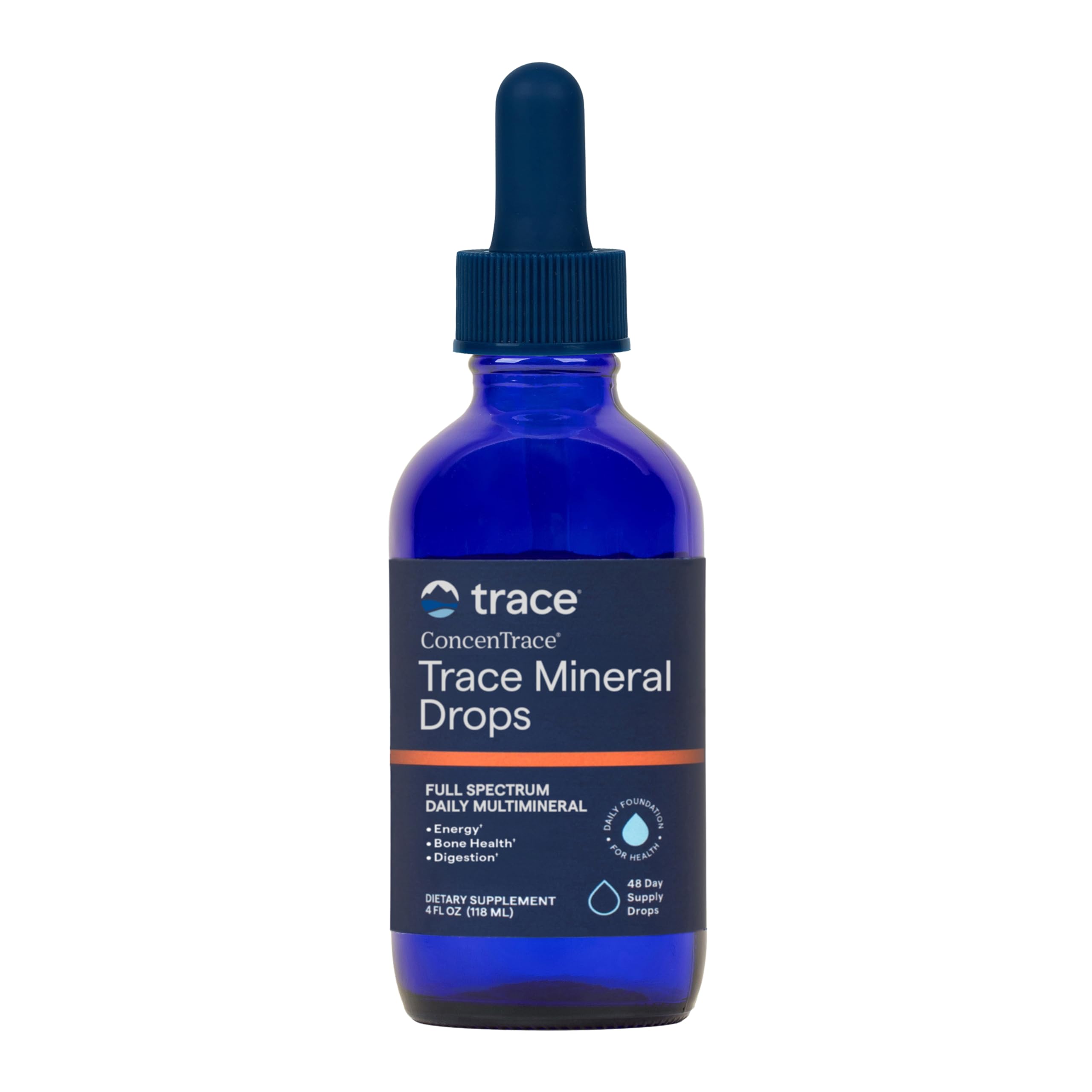
5. ConcenTrace Trace Mineral Drops, 4 fl oz, 48 Day Supply
Seventy-plus minerals pulled from the Great Salt Lake — a dropper staple for twenty years.
The origin story is the point with ConcenTrace. The 70+ trace minerals are ionic minerals sourced naturally from the Great Salt Lake, which is a different supply chain from the plant-derived and fulvic formulas above. The drops are a low-sodium concentrate with no additives, third-party tested for quality and purity. The 4 fl oz bottle is described as a 48-day supply, so it lands around a month and a half of daily use — a mid-length window stacked against Vital Earth’s fixed 30 days and LyteLine’s 200 servings.
Getting the dose right is a two-step process that rewards patience. Start with 10 drops and work up daily to your own level; you are not meant to hit your full dose on day one. Reviewers point out using around 20 drops per gallon of reverse-osmosis or distilled water to improve the taste, which makes the bottle stretch further than the headline supply suggests. The flavor is the catch — some drinkers find it adds no unusual taste to water, others call it terribly bitter. The trick that keeps showing up is volume: put the drops in at least a liter of water rather than a small glass, and the edge softens.
What you are really buying here is the mineral setup behind the drops — a single natural source, a third-party testing step (an outside lab checks the batch), and a formula simple enough that it is just minerals and water. That documented sourcing and testing is what you are paying for. Set it against the LyteLine and the split is sodium and sourcing: ConcenTrace is explicitly low-sodium and lake-sourced, where LyteLine is sodium-free and solar-concentrated (sun-dried rather than heat-processed). Both are dropper bottles, so the choice depends on source and how well you tolerate the taste.
What you are paying for: 70+ ionic trace minerals from one natural source, third-party tested, in a low-sodium formula with no additives.
What to plan around: the taste is divided — mix into a full liter rather than a glass, and start at the 10-drop mark to find your own level.
Worth it for: reverse-osmosis drinkers who want a naturally sourced, low-sodium dropper with a long use history behind it.
Not the one for: a tasteless experience — the Eidon and Vital Earth liquids are the neutral-flavor choices.
Know the Specs
Element count (70+, 77, 79)
This is how many distinct minerals and trace minerals the formula carries. A wider list usually means broader coverage, but it says nothing about taste — a 79-element bottle can still be bitter. Match the count to your goal, not the marketing.
Servings and bottle size
A 100 mL bottle at 200 servings and a 32 fl oz concentrate dosed by the tablespoon are different value equations. Multiply your daily dose by the servings to see how long it really lasts, then compare that against how often you want to reorder.
Base: silica vs fulvic vs plant-derived
The base is what carries the minerals. A silica base is a mineral carrier; a fulvic acid base is a plant-derived carrier extracted from humic sources; a plant-derived formula draws from plant material. The base shapes both taste and how the liquid pours.
Taste profile
Liquid minerals carry an earthy edge — that is the nature of a concentrate. Tasteless formulas mix invisibly into water; bitter ones want a chaser or a juice blend. Know your own sensitivity before choosing — a formula you dread drinking is one you will stop taking.
Dose and dilution
Some formulas dose by the tablespoon, others by the drop, and a few are dosed as a shot. Dilution matters — a bitter formula in a liter of water tastes far milder than the same drops in a small glass. Follow the label’s daily direction and adjust to your own response.
Sodium content
Electrolyte formulas differ on sodium. Some are explicitly low-sodium or sodium-free, others include it. If you are watching salt intake, read the label and pick the formula that matches your own limit rather than assuming all mineral drops are the same.
Common Questions
Should I add mineral drops to reverse-osmosis or distilled water?
Why do some mineral drops taste bitter and others taste of nothing?
How many drops of ConcenTrace should I start with?
What is the difference between fulvic minerals and trace mineral drops?
How long does a bottle of mineral drops actually last?
Are these drops safe to put in coffee or juice?
Do trace mineral drops replace calcium and magnesium supplements?
What does full-spectrum mean on a mineral supplement label?
Can I use mineral drops in my pet’s water?
Is a higher element count always the better bottle?
The Bottom Line
For most people, the colloidal minerals to start with is the Eidon Ionic Minerals Multiple Minerals, because it mixes into water without a taste and takes one tablespoon a day — the two things that decide whether a mineral habit sticks. If a wider mineral list matters more to you than a clean-tasting glass, grab the Youngevity Plant Derived Minerals. And if you want the smallest bottle with the longest run, the LyteLine Trace Mineral Drops packs 200 servings into 100 mL.
How we choose
We do not accept paid placement. Every pick is matched to a real buyer and a real use-case; we do not hands-on test units.
Sources
Specifications: manufacturer listings and product documentation. Review insights: verified customer reviews, as of October 2026. Pricing: not shown on this page (it changes often); check the current price via the retailer link.
As an Amazon Associate, Aappliancez earns from qualifying purchases. This does not affect which products we feature.