Disclosure: Some links in this post are affiliate links. As an Amazon Associate I earn from qualifying purchases, at no extra cost to you. Learn more
Specs are compiled from manufacturer listings and verified buyer reviews and can change over time — please confirm the key details on the product page before buying.
If your air conditioner is blowing warm air and the outdoor unit looks like a felt blanket of lint, you do not need a new system — you need to get the dirt out of the fins. A coil cleaner is a foaming or spray-on detergent that loosens the dust, grease, and pollen packed between the thin aluminum fins so air can pass through again. The five picks below cover the whole job: a concentrated condenser cleaner you mix yourself, a ready-to-spray quart for quick touch-ups, and three foaming cans for window units, RV air conditioners, and fridges. Match the format to how much cleaning you actually do — the reviews below break down which is which.
This guide is built by comparing the manufacturers’ published specifications and the patterns across verified customer reviews, so you get each pick’s real strengths and trade-offs instead of marketing spin.
You will see exactly how each formula is applied, what it does to aluminum and copper, and where the fumes and dilution ratios matter. Every pick here is a real coil cleaner with a real track record, and this breakdown of the best coil cleaner tells you which format fits your unit before you spray anything.
Top Picks

How To Choose The Best Coil Cleaner
Your coil cleaner choice depends on three things: how dirty the unit is, whether you can rinse it with water, and how much fin area you have to cover. A window air conditioner with five years of dust needs a different formula than a rooftop condenser you clean every spring. Nail those three and the format picks itself.
Concentrate Versus Ready-To-Spray
A concentrate is a bottle of strong detergent you mix with water before spraying. It goes further per bottle and lets you dial the strength up or down — a stronger mix for a first deep clean, a weaker one for routine upkeep. A ready-to-spray bottle skips the mixing step, which is handy when you are up a ladder and just want to coat the fins and rinse. If you clean one unit once a year, a ready-to-spray bottle skips the measuring. If you maintain several units, a concentrate is the more economical route because one bottle lasts multiple jobs.
Foam, Spray, and Dwell Time
Foaming cleaners expand into the gaps between fins, lifting dirt so it can be rinsed or wiped away. The foam needs time to work — a few minutes of dwell time is typical — before you rinse. A plain spray wets the surface and relies on the detergent to break down grime. Neither wins every job: foam reaches deeper into tight fins, while a spray is easier to aim at a specific patch. Whichever you choose, read the label for how long to leave it on, because leaving a strong cleaner on too long is its own risk.
Metal Safety and Fumes
Coil fins are usually aluminum, and the tubing is often copper. A non-acidic cleaner is the safer default because acid formulas can attack aluminum if left too long. Strong detergents also give off fumes, so work in open air, wear gloves, and keep a respirator on hand for a concentrated mix. Gloves, ventilation, and a respirator at strong mixes make the job safe rather than skippable.
Side-by-Side Comparison
| Model | Best For | Form | Size | Rinse | Amazon |
|---|---|---|---|---|---|
| Coil King 1 qt Condenser Cleaner & Brightener★ Best Overall | Deep condenser cleans | Concentrate | 1 qt | Rinse required | Amazon |
| Lundmark Coil CleenBest Value | Easy spray-and-rinse | Ready-to-spray | 32 fl oz | Rinse required | Amazon |
| Foaming AC Coil Cleaner (19 oz) | Window and RV units | Foaming aerosol | 19 oz | No-rinse or rinse | Amazon |
| 46822 Foaming Coil Cleaner | Odor removal | Foaming aerosol | 18 oz | No-rinse, no-wipe | Amazon |
| QwikProducts Foaming Coil Cleaner | Multi-surface use | Foaming aerosol | — | Self-rinsing | Amazon |
Detailed Reviews
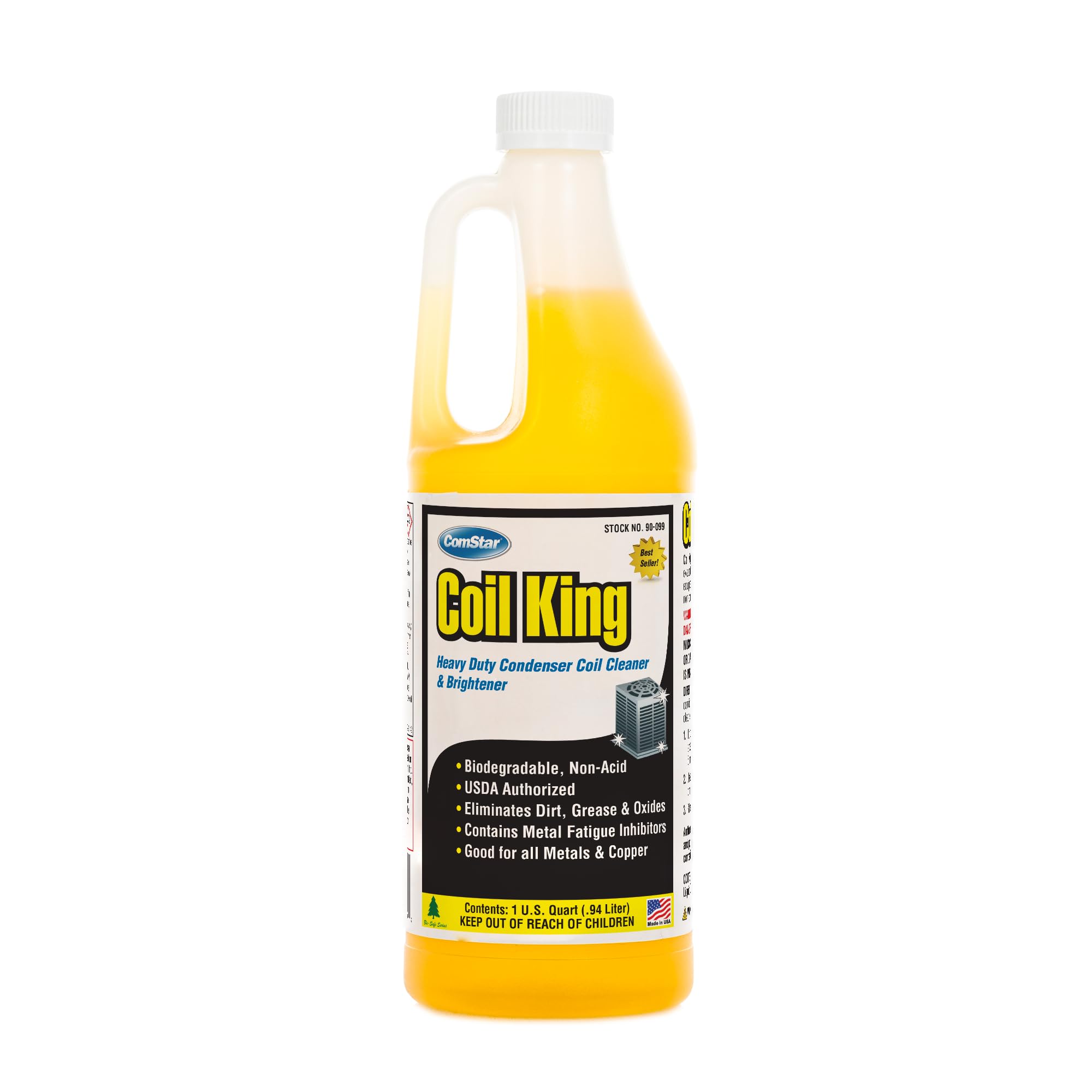
1. Coil King 1 qt Condenser Cleaner & Brightener for HVAC
Our pick — 4.5+★ from 450+ verified ratings; the strongest balance of quality and price.
One small quart that you stretch with water and it still outlasts a shelf of spray cans.
This is the pick for the homeowner who maintains a real condenser and wants to mix their own strength. It is a concentrate, so you dilute it 3:1 to 10:1 with water depending on how grimy the unit is. That dilution range is the whole value story: a stronger mix handles a first deep clean, a weaker one handles routine upkeep, and the bottle keeps going across multiple units. The formula is non-acidic, which means it is designed to be safe on aluminum, copper, and other metals in the condenser you are cleaning.
What wins people over is the foaming action, which climbs into the gap between fins and flushes out lint, dirt, and grease so the coil is clean and bright again. Buyers report a typical mix-and-apply routine: “Mixed 1:1, applied via pump sprayer; foam took minutes to start, sat ~7 min, rinsed ~50 gal.” That is the rhythm — spray, wait a few minutes, rinse thoroughly. Several owners use a pump or backpack sprayer for coverage rather than the bottle itself, and a small bottle really does go a long way when you dilute it.
The catch is strength in both directions. A strong mix generates heat during use and has a strong smell, so work outside, wear gloves, and use a respirator when you lean over the unit. One reviewer noted the solution stings and the vapor irritates lungs at a 3:1 mix, and another mentioned a chemical burn on skin. That is a reason to mix weaker, cover up, and rinse well, not to skip the cleaner. A pH still high after rinsing also means you want to keep runoff away from plants you care about until the spray has been flushed through.
Where it pulls ahead
- Dilutes 3:1 to 10:1, so one quart covers multiple units
- Non-acidic formula safe on aluminum and copper
- Foams into the fins and leaves the coil bright and clean
- No acidic smell, unlike older cleaners some buyers had used before
What to plan around
- Strong mix gives off fumes and heat — needs gloves and a respirator
- Requires water for a full rinse, so it suits outdoor or hose-accessible units
- Not a spray-and-forget can; you supply your own sprayer
Reach for this if: you have one or more condensers, a hose, and a sprayer, and you want the strongest cleaning per bottle.
Look elsewhere if: you want a no-mix, no-water aerosol for a window unit — the foaming cans further down are the better fit.
2. Lundmark Coil Cleen 32-Ounce
A spray-on, wait, rinse-off quart that cleans a decade of dust without a mixing step.
Not every cleaner needs dilution, and this one skips the whole mixture ritual. It comes ready to spray in a 32-ounce bottle with a trigger, so you point, coat the fins, wait, and rinse. That spray-sit-rinse flow is why the effectiveness is what buyers praise most — the formula does the work while you stand there, not while you scrub. The maker lists it as safe for the surrounding landscaping and eco-friendly, and it is made in the USA.
Where it earns its place is on outdoor condensers and mini-split coils that have built up real grime. Owners mention it clearing “18-month-dirty 15 SEER roof heat pump coils effectively; used only half a quart with generous spraying,” which speaks to how far a single quart stretches. It handles 10-year accumulation on a residential unit, and it works on 3-ton coils and mini-splits just as well. The scent is a light rain-type fragrance that most people do not find bothersome.
The honest trade-off is drift and fumes. Because it is a spray, mist can carry on a breezy day, and overspray fumes can sting eyes and throat if you are hovering right over the coil. Gloves, eye protection, and a calm day make the job pleasant. A few buyers also got a bottle with a faulty trigger, though the cleaner inside still worked. Plan to rinse thoroughly with a hose, since this is not a no-rinse formula.
Why it competes: it is the simplest path to a clean coil for a DIY owner — no mixing, no measuring, and a ready-to-use quart that coats a full condenser.
Fit note: the spray format means you need a hose for the rinse and a still day for the application, so it suits outdoor units better than a tight indoor closet.
The easy button: pick this when you want to skip dilution and just spray, wait, and rinse a mini-split or condenser.
Swap it out if: your unit sits indoors with no drain nearby — you will want a no-rinse foaming can instead.
3. Foaming AC Coil Cleaner: 19 oz for Evaporators & Condensers
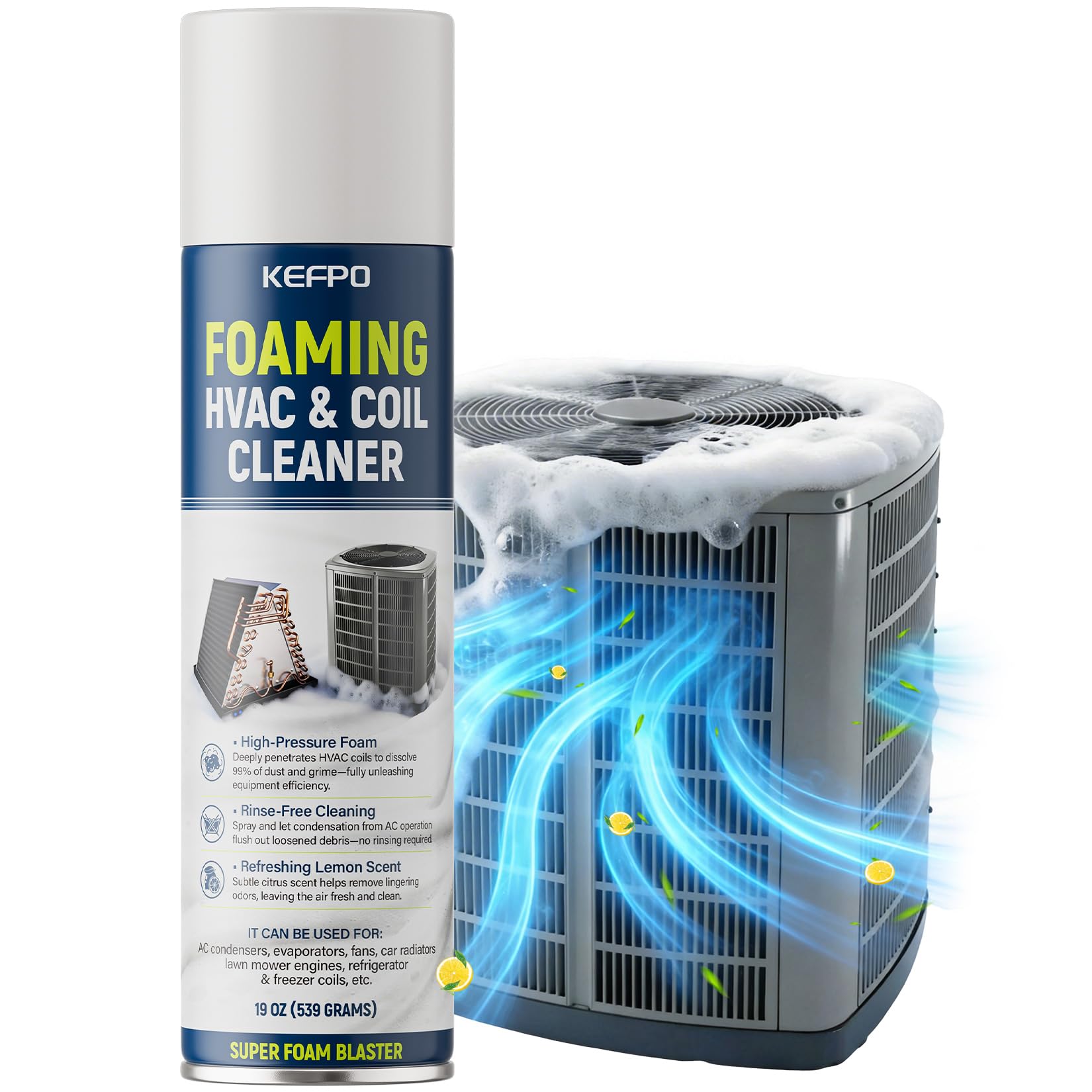
A 19-ounce can that resurrected a five-year-old window unit without taking it out of the wall.
Window air conditioners and RV units are the target here. They are hard to remove, hard to reach, and often the dirtiest coils in the house. This is a foaming aerosol that expands into tight fins and loosens dust, grease, and buildup, and it gives you the choice to rinse with water or leave it to work. For a unit you cannot easily pull out and hose down, that no-rinse option is the point.
Customers note a standout rescue: “Foaming coil cleaner restored a 5-year-old window AC to like-new performance without removal: sprayed on, waited 15 minutes, wiped exterior, plugged back in.” That job used only about a quarter of the can, so it avoided the cost of a replacement unit. The foam also reaches the small crevices on camper and RV coils, and one can per unit is the usual amount for a thorough clean. Buyers praise cleaning performance most, and it holds up on moldy window units too.
Two small catches. The spray works best when the can is held upright, which is awkward on an RV roof unit that sits at an angle. And value has split opinions — some find it worth it and some feel a second can was needed for heavy grime. Also note the extension straw is no longer included, though the maker says that does not affect the cleaning. For most single-unit jobs, one can does the work.
Best match for: window ACs, RV rooftop units, and any coil you cannot pull out for a full wash — the foam does the reaching for you.
Know before you buy: there is no extension straw in the box and the can sprays best upright, so plan your angle on a slanted RV unit.
4. 46822 Foaming Coil Cleaner – 18 oz.

An 18-ounce no-rinse, no-wipe can built for the musty coil that makes the whole room smell.
If the problem is not just warm air but a smell coming out of the vents, this is the can to reach for. It is an 18-ounce aerosol that removes organic odors and leaves no harsh fumes, and it is designed as a no-rinse, no-wipe product — you spray it on and let it go. That makes it the pick for a fridge coil, a window unit, or an outdoor condenser where you want the cleaning without dragging a hose over.
Effectiveness is what buyers praise most, and the deep-clean results are the reason. Reviewers point out AC fins going from grey to silver after a single application, with the rinse water still running black even after a pass with a glass cleaner first. It also melts grease and grime that has the consistency of gum, and people use it well beyond the coil — garbage cans, driveway spots, a tub, even shoe trim. One can handles a large outdoor unit.
The catch is foam volume. Some users find it does not produce a thick head of foam, so what looks like a light application still does the job but does not give the visual satisfaction of a big bubble-up. A few also find it costly relative to a concentrate. Treat it as a strong no-rinse spray rather than a theatrical foam show. And because it is powerful, do not leave it dwelling for a long stretch or use it year after year on the same coil — a shorter dwell and occasional use protect the aluminum.
What it does best: kills the musty coil smell and lifts deep grime without a rinse step, which suits fridge coils and hard-to-hose units.
Where it falls short: the foam is not always dramatic, so do not judge the clean by how many bubbles you see — judge it by the water and the fins afterward.
Grab this for: odor problems and no-rinse jobs — a smelly window unit, a fridge coil, or a quick outdoor touch-up.
Think twice if: you want a big visible foam and a hose-down rinse — the concentrate at the top gives you more control over strength.
5. QwikProducts Foaming Coil Cleaner
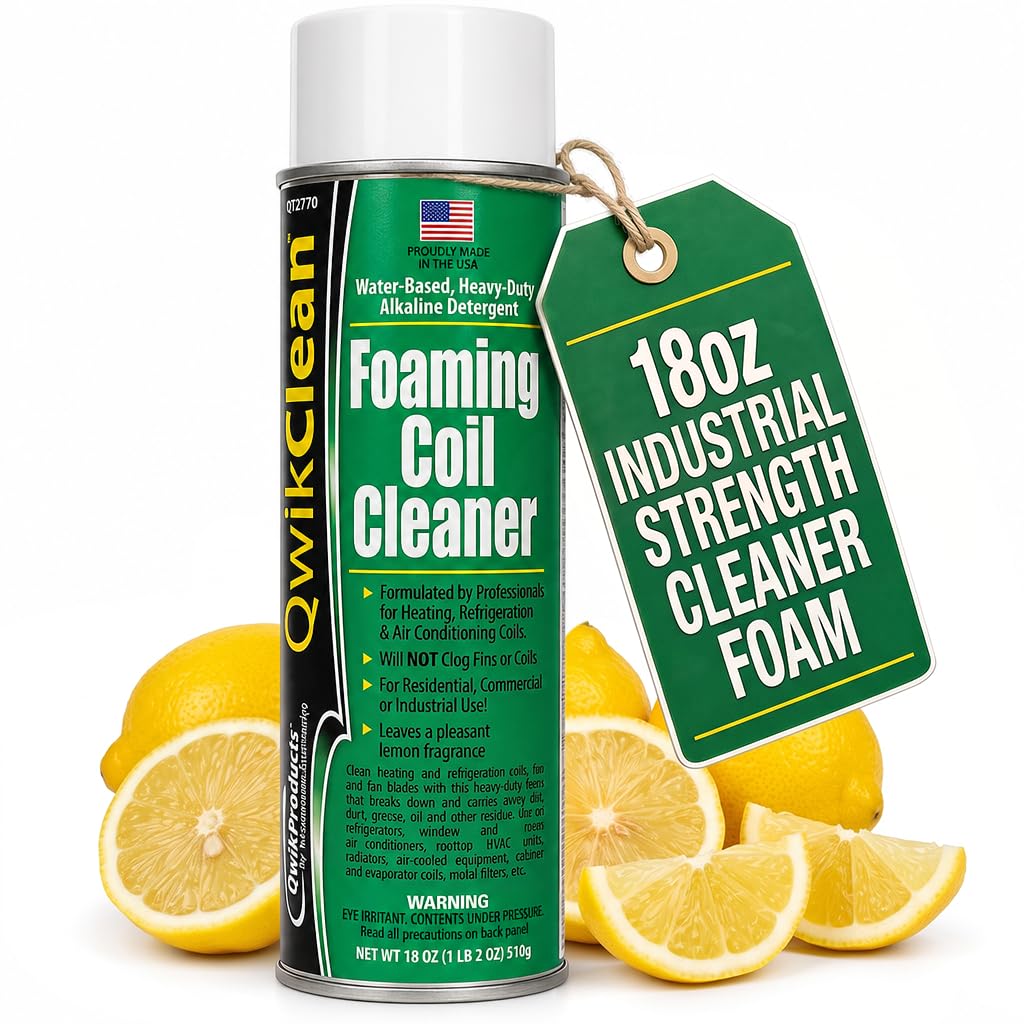
One self-rinsing can that goes from rooftop HVAC to fridge coil to car radiator without a hose.
This is the can for the person who cleans everything with coils. The maker lists it for refrigerators, whole-house air conditioners, rooftop HVAC units, auto radiators, and air-cooled equipment, and it is a self-rinsing formula — you spray it on and let it work instead of chasing it with water. It breaks down dirt, dust, grease, and oil, and it is designed not to clog the fins. One can was enough for a condenser and a small mini-split together.
The scent is the standout — it is a pleasant lemon fragrance that helps neutralize odors rather than stinking up the room, and that is what buyers praise most. Shoppers say it foaming and expanding well on window AC coils, CPU heatsink fins, nicotine residue, and car evaporators. It is described as non-corrosive to metal and gentle enough that it will not cause leaks even without rinsing. That self-rinsing trait means it handles a job where water is not practical, and several owners call it their go-to cleaner for restoring cooling.
The honest caveat is consistency. Effectiveness and foaming are mixed — some units spray nicely and foam, while others report it barely foams and does not clean as strongly. That split may come down to how dirty the coil is and how much product you lay down. Value opinions divide for the same reason. It is a solid, versatile can, but it is not the strongest single-purpose cleaner on this list, and the strongest cleaning per dollar still goes to the concentrate up top.
Suits you if: you maintain a fridge, a car radiator, and an HVAC unit and want one self-rinsing can that covers all of them with a lemon finish.
Pass if: you need a guaranteed thick foam on a heavily soiled condenser — a concentrate mixed strong will out-clean it.
Know the Specs
Dilution Ratio
On a concentrate, the dilution ratio is how much water you add — a 3:1 mix is three parts water to one part cleaner, and 10:1 is ten parts water to one part. A stronger mix cleans harder but fumes more and needs a respirator; a weaker mix is safer for routine upkeep. Ready-to-spray and aerosol cleaners skip this entirely, which is the whole reason they exist.
Foam Versus Spray
Foam expands into the gaps between fins and lifts dirt so it can be rinsed or wiped away, while a spray wets the surface and lets the detergent break down grime. Foam reaches deeper into tight fins; a spray is easier to aim. The label’s dwell time matters either way — leaving a strong cleaner on too long is a risk on aluminum.
No-Rinse Versus Rinse-Required
A no-rinse formula is designed to be left in place, which saves you a hose-down and suits window units, fridge coils, and RV units you cannot easily reach. A rinse-required cleaner needs water flushed through the fins to carry the loosened dirt away. If your unit sits where you cannot run a hose, choose no-rinse.
Metal Safety
Coil fins are usually aluminum and the tubing is often copper, so a non-acidic formula is the safer default. Acid cleaners can attack aluminum if left too long, which is why the label’s dwell guidance matters. Match the formula to the metal and the job, and rinse thoroughly when the label calls for it.
Common Questions
Will a coil cleaner work on my window air conditioner without removing it?
Do I need to rinse after using a coil cleaner?
Is a coil cleaner safe on aluminum fins?
How much coil cleaner do I need for one outdoor condenser?
Can I use a coil cleaner on a refrigerator coil?
What is the difference between a foaming coil cleaner and a spray?
Do I need a respirator when using a concentrated coil cleaner?
Can I clean a mini split coil with these cleaners?
Will coil cleaner damage my plants if it runs off?
How often should I clean my AC coils?
The Bottom Line
For most people maintaining a real condenser, the coil cleaner winner is the Coil King 1 qt Condenser Cleaner & Brightener. Its 3:1 to 10:1 dilution lets you dial the strength to the job, and one quart covers several units. If you want to skip the mixing and just spray, wait, and rinse, grab the Lundmark Coil Cleen — the ready-to-spray quart is the easiest path to a clean coil. And for a window AC, RV unit, or fridge coil you cannot pull out and hose down, reach for the Foaming AC Coil Cleaner. Pick the format that matches your unit, wear gloves and eye protection, and rinse thoroughly — the cleaner does the work, you just give it the right conditions.
How we choose
We do not accept paid placement. Every pick is matched to a real buyer and a real use-case; we do not hands-on test units.
Sources
Specifications: manufacturer listings and product documentation. Review insights: verified customer reviews, as of October 2026. Pricing: not shown on this page (it changes often); check the current price via the retailer link.
As an Amazon Associate, Aappliancez earns from qualifying purchases. This does not affect which products we feature.